Culture Clash

This is my review of Martha Marcy May Marlene [DVD] [2011].

The combination of names "Martha", "Marcy May" and "Marlene" reflects the "different faces" and mental confusion of Martha, a young woman who has drifted into life in a cultish commune in the remote Catskill Mountains. Will we ever learn how or why? The film begins with her escape from the community to take refuge with her conventionally middle-class, materialistic sister and her new husband.

The film is unusual in cutting continually back and forth between her life with her sister, in which Martha becomes increasingly more withdrawn and disturbed, and the two years spent in the commune, under the influence of the charismatic but at times menacing, possibly psychotic Patrick, who reminded me of tales of Charles Manson. You need to concentrate hard, not only because of the fragmented storyline, but also owing to the "naturalistic" filming technique, in which people often mumble as in real life, take part in normal, mundane activities and drift across the hand-held lens, perhaps appearing fleetingly at one edge of the screen. Occasional acts of violence erupt suddenly. At times, it has something of the "amateurish" visual quality of "The Blair Witch Project". Much is implied and little specifically stated.

Martha's problems of adapting to "normal life" are portrayed well, together with her relatives' predictable reaction, as when she bathes naked in the lake because that was what she did at the commune. The clash in their values is made clear. One's perception of the commune gradually darkens. At first, it just seems a throwback to pre-female equality days, as we see the women waiting to eat after the men, or the former selecting clothes off a communal rack. Then there is the shocking scene of Martha's ritual initiation to sex with the leader, and so it all gradually gets worse as we come to understand the reasons for her acute distress, complicated by the fact that she is genuinely drawn to an unmaterialistic, commununal way of life.

Although the idea behind the film is interesting, I do not feel that it reaches its full potential. It is too slow-paced and confusing at times and although I do not expect everything to be neatly sewn up, the ending left me dissatisfied.

⭐⭐⭐ 3 Stars

New Take on Vertigo

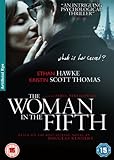
This is my review of The Woman in the Fifth [DVD].

The opening scenes promise a moving and intriguing drama as we are introduced to the confused and dysfunctional world of Tom, an American lecturer and writer, estranged from his French wife and barred from seeing his small daughter. He gradually falls under the spell of Margit, a mysterious older woman, played by Kristin Scott Thomas, "the woman in the fifth" by virtue of her address, and possibly something else as well. In the background we see the initially plain, childlike Polish waitress who who may bring Tom a truer peace than Margit,

Proceeding at a slow pace, with lingering shots of distinctive faces, a balcony with a blurred suggestion of the Eiffel Tower in the background, red insects on dark tree bark, threadlike spiders spinning webs in a police cell, this film weaves a sense of tension, even menace, and begins to insert surreal moments between scenes of clear rationality.

When it ended quite abruptly after little over 80 minutes, I was left feeling cheated, trying to work out exactly what had happened, wondering what clues I had missed, but not doing so too hard since it seemed that the director had resorted to the realms of the supernatural, or madness, to provide a denouement. This reminded me afterwards of Hitchcock's "Vertigo", recrafted for the present day.

The film is based loosely on a novel which seems to have prompted mixed reviews and perplexed readers in a similar fashion.

⭐⭐⭐ 3 Stars

Age cannot wither

This is my review of The Best Exotic Marigold Hotel (DVD + Digital Copy).

I would be interested to know whether you need to be over (or close to) retirement age to relate to this film, or even to opt to see it in the first place.

The plot revolves round seven rather different characters who have in common the facts that they are (with one exception) middle class, retired, mostly lonely and/or hard up. An inexpensive hotel located in the exotic Indian city of Jaipur and designed for long-term stay by the elderly attracts them as a possible solution to their problems.

The hotel, run by a charming dreamer (played by Dev Patel of Slumdog Millionaire fame) is predictably shambolic, a partially ruined former palace of stunning beauty, with picturesque neglected gardens from which it is moving to watch a pure white stork as it flaps improbably, as if on the point of sinking, up into the blue.

Some members of the group adapt readily to the colourful bustle and intriguing history of India – others cannot wait to return to England. Graham, the high court judge who lived in India in his youth, harbours a secret which is gradually revealed.

Although I feared from trailers that the film would merely be a chance for seven famous actors – including Judi Dench, Maggie Smith, Bill Nighy and Tom Wilkinson, to ham it up in a visually striking location in north India, thereby boosting its tourist trade, I was relieved to find that they were given quite subtly developed roles which give scope for their skills.

There are some implausible aspects to the plot e.g. how could Bill Nighy and his self-absorbed wife be reduced to poverty by the loss of his civil service pension from unwise investment when it is likely to be paid regularly on a final salary basis? Yet overall, the story has a bittersweet quality which leaves you guessing to the very end as to whether it will end happily in general. In addition to continually amusing scenes, we see not only the vibrancy of India (perhaps the poverty is underplayed) but also hints of the new development in the slick call centre employing Indian graduates, and the concrete and glass blocks emerging on the sites of former slums and dusty makeshift cricket pitches.

This is a lightweight film, but well-made without being too cloying and sentimental.

⭐⭐⭐⭐ 4 Stars

A Convert to Coriolanus

This is my review of Coriolanus [DVD] [2011].

Although based on a dark, grim and bloodthirsty Shakespearean tragedy, I was very impressed by this film which I went to see with some trepidation.

Well-paced and not excessively violent (compared to what it could have been) the acting is excellent, the words spoken with such expression and clarity that the sense comes through very strongly, even to someone like me unfamiliar with the text. It does not bother me that some passages and plot details may have been omitted in the interests of making the plot easier to digest. Likewise, a dialogue which sounds at time surprisingly modern compensates for the lack of any memorable "To be or not to be"-style soliloquies which may not come across well in a film.

The modern setting is not irritating and gratuitous as is too often the case, but also enabled me to see the film's relevance to our divided and violent world. Rome is represented as a typical concrete western city, ruled by the cynical "haves" ("patricians") while the mass of "have-nots" are beginning to riot over lack of bread, although they are easily swayed by cunning politicians.

Rome is under threat from a Balkan-type community called the Volscians, against whom the professional soldier Caius Martius (Ralph Fiennes) gains a celebrated victory over the city of Corioles, thus being rewarded with the surname "Coriolanus". This leads naturally to his appointment as a consul, but "honest to a fault", he refuses to conceal his contempt for the people. His political enemies play on this to get him banished, which of course turns him from a loyal supporter of Rome to a man bent on revenge.

On a personal level, this is an interesting psychological study of pride, fanaticism and jealousy. The complex relationship between Coriolanus and his mother Volumnia, played brilliantly by Vanessa Redgrave, shows how a strong man may be controlled as a tool of his physically weaker but mentally stronger mother's ambition.

If I had studied this play at school, I think I might have hated it – although a good teacher enabled me to appreciate the drama of Julius Caesar. Hopefully, this intelligent modern rendition may enable many students – and general viewers as well – to understand and value this very interesting play.

⭐⭐⭐⭐⭐ 5 Stars

Latin Morse

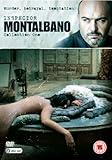
This is my review of Inspector Montalbano: Collection One (2 Disc) [DVD].

In our insatiable thirst for detective thrillers, foreign language productions have the benefit of introducing us to a different way of life in a setting which might well suggest the location of our next holiday.

In this case, the drama is set in the fictional Vigata, a quaint old stone-built town spreading over a hilly Sicilian coastline bathed in perpetual sunshine. Detective Montalbano occupies an elegant flat overlooking the Mediterranean where he can relax swimming at the end of each stressful episode.

We are introduced to a slow-paced (apart from the crimes, that is) way of life revolving round food – a man will put the enjoyment of a good meal before rushing to greet his lover – and the extended family, where relatives and workers gather on a sunny terrace to consume plentiful meals together.

Smartly turned out and astute, Montalbano somehow commands the respect of his staff despite the kind of volcanic outbursts which would have him sent on an anger management course in Britain. Like most detectives, he is on shaky terms with more senior officials, perhaps in part owing to his tendency to break the rules, but survives in his post, probably because he always seems to solve the crime in hand, usually through his ability to make deductions from very slim evidence.

The denouement is often unpredictable, partly because the very complicated plot tends to have a few twists which are hard to follow – and to be honest at times implausible. It's quite fast-moving, so with the sub-titles as an added constraint you have to concentrate.

Overall, it's worth watching as the characters are well-developed, the dialogue is amusing, the cases have intriguing aspects, and all does not end happily in every respect – there is a gritty undercurrent, say in the suffering of Tunisian immigrants in "The Snack Thief" or the continual hints at bribery and corruption amongst higher ranking officials, making the "honest" Montalbano a rarity.

⭐⭐⭐⭐ 4 Stars

Don’t count on it

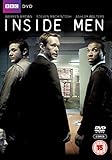
This is my review of Inside Men [DVD].

Manager of a counting house, through which huge quantities of cash are shipped, John cuts a sad figure as a man frightened of life. Uptight and tense, bullied by his boss and mocked by his staff, perhaps impotent, he maintains an unlikely position as best performing manager through obsessive hard work, assisted by being prepared to make up from his own pocket any small shortfall in the accounts. For the most part he is almost robotically lacking in emotion, but under pressure the underlying rage on occasion bursts out.

Then John's discovery of a petty theft by two of his employees triggers the idea for the heist with which the drama opens.

As much a psychological drama as a thriller, the intricate and intriguing plot switches back and forth in time over a period of months, in order to explore the motivations of the "inside men" and reveal both the complex details of the planned theft, and how it works out in practice. The three main characters and the women in their lives are all strongly developed with distinct personalities.

In a reverse of the norm, the earlier parts of the drama are in many ways more suspenseful and gripping than the denouement. I can understand why some viewers have reported feeling let down by the ending. My sense of disappointment was short-lived when I realised that, in leaving some morally ambiguous outcomes, the plot leaves us with a good deal of food for thought.

⭐⭐⭐⭐⭐ 5 Stars

Physician Know Thyself

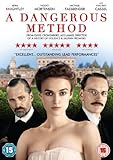
This is my review of A Dangerous Method [DVD].

Cronenberg's "A Dangerous Method" is mainly about the relationship between two early giants of psychoanalysis, Freud and Jung, played by Viggo Mortensen and Michael Fassbinder . This is captured in some witty, often humorous and well-acted scenes which made me want to find out more about both the men and their theories. Freud hopes that Jung, almost two decades his junior, will carry on the torch of his controversial ideas on the sexual basis of mental disorder, but cannot tolerate Jung's tendency to follow his own independent line, including telepathy and psychic powers, which Freud finds simply potty, not to mention the irritation of having his authority challenged.

A further complication is Jung's treatment with his new "talking cure" of the hysterical young Russian Jewess Sabina Spielrein, who recovers to become a celebrated psychoanalyst in her own right, but not before providing a fatal attraction for Jung.

The photography is beautiful, with many scenes of Swiss lakes or striking statues against a background of Viennese palaces. The large amount of "walking and talking" reflects the fact this film is based on a stage play by the ubiquitous Christopher Hampton. I also liked the attention to the period detail of the early 1900s: Jung's wealthy wife works on her embroidery the day after giving birth to her first child, while a buxom wet nurse suckles the infant. Freud's identification with Spielrein, as a Jew, and growing awareness of Jung as an Aryan, foreshadows the horrors of the Holocaust.

The quality of the acting is mainly excellent, with Fassbinder in particular showing a clear progression from controlled, ambitious up-and-coming physician, to a wreck on the verge of a nervous breakdown himself, troubled by dreams of carnage which we know are remarkably prescient on the verge of World War 1. Keira Knightley's portrayal of madness in the opening scenes seems grotesquely exaggerated, and her recovery remarkably rapid – she is most frightening when "sane" but thwarted in love.

Although neither a great film nor as good as it might have been, overall this is a well-made contribution to a fascinating theme. At 1 hour 40 minutes, it avoids the error of going on too long.

⭐⭐⭐⭐ 4 Stars

More of a Minor Car Crash

This is my review of Carnage [DVD].

Most reports of the stage play "God of Carnage" find it hilarious, I enjoyed the playwright Yasmina Reza's comedy, "Art" and admire Polanski's skills as a director. So, why did I approach the film "Carnage" with such reservations? Mainly because the critics have been very cool about it, plus I personally found the script of the play very disjointed, with laboured humour – a bit boring in places, to be honest.

In fact, the film proved better than I expected – but not that great.

This short film is true to the original play "God of Carnage" as regards both the dialogue and the "unities" of time, place and action, enacting the whole drama in a Brooklyn flat, transposed from the original setting in Paris.

One boy has struck another, permanently damaging his teeth. The parents of the victim, Penelope and Michael, invite Alan and Nancy, parents of the aggressor, round to their flat to discuss how to handle the affair. At first on their best behaviour, the foursome gradually lapse into childish squabbling and the boys are almost forgotten as the cracks in their respective marriages become apparent. This is quite a promising basis for a play, and there are some funny lines and amusing incidents, such as the lawyer Alan's preoccupation with his mobile phone, on which he conducts sensitive business conversations to the growing irritation of everyone else.

However, I was never moved, and always aware of watching the actors. It may not have helped that this is very much a filming of a stage play, yet one can rarely see all the characters interacting at the same time as one does on the stage, since the camera inevitably tends to focus on one or two faces at a time.

It also bothered me that Penelope, the highly strung writer of books on Africa who cares so deeply about moral issues, is so ill-matched with the superficially easy-going but essentially coarse Michael, who earns a living flogging saucepans and lavatory flushes.

Strongest reservation of all: the serious point of the play, that even in the most civilised people barbarism is only skin-deep, does not seem very well illustrated by this particular drama.

The point I liked the most – not in the original play – is the glimpse at the very end of the two boys apparently chatting together amicably in the park, unaware of their parents' bickering.

⭐⭐⭐ 3 Stars

Does power corrupt?

This is my review of Borgen – Series 1 [DVD] [2010].

Borgen is an absorbing Danish political drama in which each episode focuses on a different issue, as we trace the path of Birgitte Nyborg, the party leader who unexpectedly finds herself in the position to form a coalition government. Bearing in mind that the Danes are used to this form of government, the wheeler-dealing and spinning involved suggests a certain tongue-in-cheek mix of humour and cynicism over their political system. To be honest, I am not sure "Borgen" is a good advertisement for coalitions!

The series introduces non-Danes to some interesting problems, such as relationships with Greenland which has clearly suffered socially from a leaching of its population and a lack of local opportunity. There are also the more familiar topics of sexual equality for women, reducing pollution, corruption in high places, and attempts to control the media.

The characters are mainly strongly developed, with an on-off relationship between two ambitious, attractive characters: on one hand the cynical spin doctor Kasper who is too good for Nyborg not to employ, and on the other the photogenic TV presenter Katrine who cares deeply about free speech and exposing the truth, except, of course in her personal life.

At first, Nyborg's family life seems too good to be true: a handsome husband who has put his career on hold to be the prime carer of their two children. I feared for a few episodes that the series would degenerate into an admittedly well-acted and entertaining soap, but the later episodes gradually inject a darker side, as Nyborg is perhaps inevitably changed by the experience of power. We see how her dedication combined with growing confidence and skills in politicking at work impact on her personal life, where by turns negotiating and acting tough to get one's way are not always either appropriate or sufficient.

My single reservation is disbelief over the lack of domestic support employed by Nyborg to help with her children and running the home. Many working couples with much lesser jobs would have a nanny, and you could say that the Nyborgs' failure to sort this out is implausible and smacks of incompetence.

⭐⭐⭐⭐ 4 Stars

Telling it like it is

This is my review of The Help [DVD].

"The Help" on which the film is based is a page-turner with its skilful coverage of human resilience and the sowing of the seeds of rebellion as prejudice begins to crack in 1960s Mississippi, told through the viewpoint of two black maids, Aibileen and Minnie, and Skeeter, an idealistic but naive young white woman with ambitions to become a writer.

In the film, a strong cast of actors bring to life the key characters in the book. Aibileen is the narrator, compassionate and shrewd beneath her subservient air, until writing about her experiences as a general dogsbody and nanny for a succession of white children finally releases her into a sense of freedom. Then there is Minnie, a brilliant cook, but unable to hold down a job because of her feisty talk – yet she allows herself to be beaten by her drunken husband. The villain of the piece is the ghastly, control-freak Hilly, who rules her simpering white "friends" with a rod of iron, with the power to destroy the livelihoods of black servants (not merely her own!) who displease her.

The film version of "The Help" is true to the essentials of the original in that it is a chastening reminder of the casual prejudice of the American South as recently as the 1960s, and is often very moving, yet the poignancy is leavened with a good deal of humour. In view of the complexity of the book's plot, it has been necessary to leave out or compress many details – thankfully not the scene of Minnie trying to hoover the dust off a huge stuffed grizzly bear in an old colonial house. These omissions tend to be disappointing if you have read the book before seeing the film. In particular, I would have liked more of the very moving tales which the maids have to tell.

The film finds time to show not just the main theme of the humiliation and unjust treatment of black Americans but also the discrimination against young white women, who are expected to have no ambition above hooking a man. Skeeter is hired by the local newspaper, but only to write a column on cleaning!

I found some of the black maids' dialogues hard to follow, which is a pity as in the book they are often very funny and full of insight.

Perhaps the film's ending is a touch too sentimental and neatly "sown up", some of the subtle depth of the original has been lost, but overall it is worth seeing.

⭐⭐⭐⭐ 4 Stars