Less is More – Minimalist Music in Words

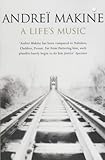
This is my review of A Life’s Music by Andreï Makine,Andrei Makine.

With little in the way of plot – although it manages to build up quite a head of tension at times – , scant character development or dialogue – although it builds up clear impressions of most of the characters in only a few words- , this novella is a clear example of "less is more": it is more moving and insightful than many longer works in its portrayal of how human lives were damaged and destroyed by Stalin's Reign of Terror.

Alexei, on the brink of a career as a concert pianist, is warned by chance that the police have come for his parents. By chance, he assumes the false identity of a dead soldier and this sets a pattern for the random events which set him back at some points, but help him to survive at others.

Since this book is so short, you can concentrate on every word.

An example of the writer's insight on how self aware people in terrible situations may feel the delusion of being set apart from the crowd because they can analyse what is going on:

"I can put a name to our human condition and therefore escape from it. The frail human reed, that knows what it is and therefore….'Hah, that old hypocritical device of the intelligentisia'…"

A comment on what this book is all about:

"In this life there should be a key, a code for expressing in concise and unambiguous terms, all the complexity of our attempts, so natural and so grievously confused, at living and loving."

Or just a very apt and original description – which must also owe something to the excellent translation:

"In the frozen air the aggressive acidity of the big city stings the nostrils."

My only reservation is the device of having an anonymous narrator – who hardly seems necessary – introducing the idea of "longsuffering Soviet man" and describing the context of his meeting with Andrei, in chapters which "book-end" Andrei's account of his life.

I was interested to see that this was written originally in – and presumably translated directly from – French, although the author is Russian. I shall certainly look out for more of his work.

⭐⭐⭐⭐⭐ 5 Stars

Would have liked a wider survey

This is my review of Map of a Nation: A Biography of the Ordnance Survey by Rachel Hewitt.

I agree with the view that this is a (no doubt precociously shrewd) cashing in on a PhD thesis. The author really should have brought this history of the Ordnance Survey up to date with recent developments in map-making. I also found the links to Enlightenment thought and poetry inspired by the British landscape too waffly.

⭐⭐ 2 Stars

“Brilliant and maddening” – I’d like to give 6 stars

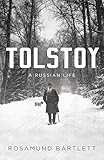
This is my review of Tolstoy: A Russian Life by Rosamund Bartlett.

I don't know why this biography is described on the back cover as "unorthodox" unless it is because of the author's frank, but very well supported criticisms of Tolstoy.

It is a relief to find a biography of a widely revered writer which reveals him warts and all. I was intrigued to read that the author finds Tolstoy an unappealing young man, sanctimoniously writing over-ambitious lists of worthy resolutions, only to spend a few days in prison for failure to attend lectures, or weeks in a clinic to be treated for venereal disease.

When a young man, he was forced to sell villages along with serfs to pay for his gambling debts, and then used some of proceeds together with bail-outs from long-suffering friends, to lose still more money.

He is portrayed as promiscuous – apparently quite common for wealthy young men of his day – controlling, for instance of the long-suffering wife who was a teenager, half his age, when he married her, and very opinionated, prone to falling out with friends – once, he even challenged his friend Turgenev to a duel.

It is interesting to learn that Tolstoy cared more for his "ABC" primer for children than his most famous novels. Although he spent many months researching them and trying out different plots, he was bored with "War and Peace" before it was finished, and struggled with "Anna Karenina" which became for him, a "banal.. bitter radish".

As his social conscience developed, Tolstoy tried to free his serfs, only to discover that they mistrusted his intentions and refused to cooperate. Then, he was one of the first to found a school for his serfs' children. It was remarkably child-centred for its day. Yet, he left it after only a few matter of months to research educational practice in Europe, then closed it down completely in order to move on to other interests. This kind of flitting from one obsession to another was typical. To be fair, from the age of 7 X 7 = 49 (he was very superstitious), he was consistent in his attempt to lead an ethical life, passing through the phases of "religious maniac" to "Holy Fool". Tolstoy's run-ins with the ludicrous censor make fascinating reading. Eventually, he was excommunicated for his inflammatory writing in an extraordinary procedure in which he was declared "anathema" but this only aroused yet more interest in him, by then far more popular than the Tsar.

We are told that the only reason the Tsar did not consign the outspoken Tolstoy to a remote monastery in later life was because he did not want to give him the oxygen of the publicity.

Even Tolstoy ceased to deny, in fact came to revel in, his weaknesses which included self-absorption and insensitivity, in particular to the wife ground down by childbearing, domesticity and isolation in the countryside, with whom he vainly tried to practise "sexual abstinence" but totally refused to use contraception. Yet he was a visionary thinker, genuinely concerned with inequality and the meaning of life and possessed a rash courage. It is interesting to speculate what would have happened to this pugnacious individualist if he had been born into a poor family.

Although the book sometimes gives too much space to minor details – such as which relatives came for Christmas one year – it is mostly very clear and readable – not only concerning how Tolstoy produced his books – with his wife copying out "War and Peace" several times by hand – and the complexity of his personality but also in bringing to life C19 Russia in a period of dramatic change.

The author raises the intriguing question of the extent to which Tolstoy's anarchic views triggered revolution. She highlights the sad irony of the speed with which the Bolsheviks adopted a schizophrenic approach – revering Tolstoy's novels whilst condemning his anarchic views and persecuting his followers even more fiercely than the Tsar's regime had done. How would Tolstoy have reacted to Stalinism? As the author suggests, he would no doubt have been promptly shot.

⭐⭐⭐⭐⭐ 5 Stars

“Natasha’s Dance: A Cultural History of Russia” by Orlando FigesInteresting but would have been better with a good edit!

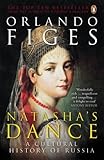
This is my review of Natasha’s Dance: A Cultural History of Russia by Orlando Figes.

“Natasha’s Dance” weaves a dense canvas of information round the average reader’s ragbag of knowledge about Russia.

Figes begins with Peter the Great’s attempt to drag Russia into the mainstream of European culture with the imposition of the classical style city of St. Petersburg on the marshlands of the River Neva. He contrasts this with Moscow and “Old Russia” based on the Eastern Orthodox Church, onion domes and icons, and the close ties with the land, and the sometimes romanticised simple life of the serfs. He traces the early attempts of some aristocrats, radicalised by fighting alongside their serfs against Napoleon, to introduce the democracy which Russia has never really been able to achieve. Then there is the strong influence of Asia, brought partly by the Tartars sweeping in across the vast steppes.

The chapter I enjoyed most was “Russia through the Soviet lens” in which the authorities rejected “art for art’s sake” and tried to use it as a tool to transform workers into efficient and compliant machines. The sense of loss of those who were forced into exile is moving, as is Stalin’s crazy persecution of those who remained.

Although I am very interested in the subject matter, I found this book hard going. It is quite longwinded and repetitious, as if the author himself sometimes loses sight of the wood for the trees in the vast amount of information he has gathered. There are too many overlong extracts from novels and romantic poems which now seem quite dated. However, I liked the inclusion of Akhmatova’s poetry, perhaps because it conveys so vividly what it was like to live under the Soviet regime.

Figes refers to a large number of lesser known writers and composers, no doubt in the interest of academic rigour but this is off-putting for the general reader – the names are hard to take in and we learn too little about them for it to be worth the effort. Perhaps this type of detail would have been better in a glossary at the end.

Coverage of major figures is quite fragmented which can be confusing. The author’s choice of whom to cover and in what depth seems quite arbitrary. I now have a much better appreciation of Stravinsky but Tchaikovsky gets far less mention than the female poet Tsetaeva who is no longer widely known.

Although the book would have benefited from a thorough edit, on balance I recommend it for the wealth of fascinating anecdotes. To do it justice, it needs to be read a second time, possibly after a few months at least, to give time to absorb more of the detail – say to get a better grasp of the roles of Prokofiev as opposed to Shostakovitch.

⭐⭐⭐⭐ 4 Stars

And we forget because we must

This is my review of The Hand That First Held Mine by Maggie O’Farrell.

You could easily miss "And we forget because we must", which is the author's quotation for this book. Perhaps it should have concentrated more on Ted, whose lost memories lie at the heart of the story.

"The Hand That First Held Mine" adopts the same technique as "The Vanishing Act of Esme Lennox" : two threads run in parallel, with episodes alternating between the present and the recent past of a previous generation. However, the former has a more rambling plot, with few links between the two threads until the final denouement. This latest book is also less dramatic and shocking, since some key events are described rather than "acted out" on the page, plus O'Farrell has an annoying habit of telling you what is about to happen – say when someone is due to die.

The strongest sections of the book for me are those centred on Elina, the young Finnish artist as she struggles with the post-natal trauma of her son's birth, when she almost dies, combined with the total disruption of every aspect of her life, practical, personal and creative by a demanding baby whom she both loves but also find a burden. Some may find the endless details of childcare tedious – they are somewhat exaggerated, but often relieved by humour and likely to bring back wry memories or make the present more bearable.

I suspect this book will appeal mostly to women, although Ted's feelings about fatherhood and its effects on his relationship with his partner Elina are covered sensitively. The abrupt triggering of Ted's puzzling childhood memories did not seem quite plausible for me, although it makes for a mystery to keep one reading on.

The thread based on Lexie, the free spirit at the dawn of the Swinging Sixties is less satisfying. Her dizzy life in the world of publishing is entertaining, but left me for the most part unmoved. The sinister Margot and her ghastly "twirling" mother Gloria seem particularly unconvincing, with inadequately developed roles, which matters as they are crucial to the plot. I also find aspects of Felix's behaviour very unlikely.

I often felt I was reading "exercises in creative writing" – as when O'Farrell rewinds time in order to move Lexie back to an earlier scene. Then there is the detailed description of the cafe which had once been the offices of Innis Kent's magazine. O'Farrell likes to dwell with nostalgia on how buildings have been altered, and their occupants have changed over time.

I was irritated by the narrator's occasional arch collusion with the reader in the Lexie thread – "Here is Lexie"…."This is where the story ends" etc.

The book has a fragmented quality, since it has several styles and themes which perhaps could have been woven together more effectively. It verges at times on chick lit or worse. Yet, I can see why many women will love all the feelings and memories to which they can relate and be intrigued by the plot.

⭐⭐⭐⭐ 4 Stars

Glass Half Empty

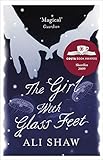
This is my review of The Girl with Glass Feet by Ali Shaw.

As someone who is not a fan of magic realism, I had to suspend my prejudice to read this book for a group discussion.

Although the description of Ida turning to glass at the end – I don't think this is giving too much away! – is well-written, much of the rest seems quite amateurish or immature. The plot is thin, with scenes which serve no purpose, underdeveloped characters and unconvincing dialogues. It appears that, apart from the basic idea of a girl turning to glass in a sad love affair with a unhappy adolescent boy, the author does not really know where to take the story. A short story on this theme might have been more powerful.

A few trivial details riled me, such as the unlikely combination of geographical features in the Scottish (?) island on which it is set, and the fact the author describes cooking a breakfast when he has clearly hasn't done so – starting on the eggs before the sausages!

⭐⭐ 2 Stars

Aim High with Kites in the Pursuit of the Blue

This is my review of Les Cerfs-Volants (Folio) by Romain Gary.

"Les cerfs-volants" (The Kites) is a good read for those wishing to brush up their French, say from A Level. This novel by Romain Gary, who won prizes under both this pseudonym and that of "Emile Ajar", presents the reminiscences of Ludo Fleury who grows up between the Wars in a Normandy village under the care of his eccentric Uncle Ambroise, celebrated throughout France for his skill in making kites of famous historical characters, and leading men of his day.

After a slow start, I gradually became caught up in the story, as Ludo falls for Lila, the self-centred and over-indulged daughter of a Polish count who hires a house for his family in the neighbourhood during the summer. Although Lila appears to return Ludo's love, she also enjoys the adoration of two other youths, and enjoys playing one off against the other, so the relationship seems doomed. I feared a kind of over-sentimental variation on "Le Grand Meaulnes", but once World War 2 breaks out and the French, much to their mortification, are so easily overrun by the Germans, the story gathers pace and depth. Ludo uses his reputation for being a bit mad to be an active member of the resistance. I liked the very French theme of the local restaurateur's controversial attempt to "cock a snook" at the invaders, by treating them to the highest quality French cuisine, thereby showing the unbeatable superiority of the French where it really matters.

Although the plot is quite clunky in places and not all the characters seem entirely realistic – Lila's father, for instance – there are some striking visual and atmospheric descriptions e.g. Bruno playing the piano on the shore. I like the scenes where Ludo so much wants to be with Lila that he imagines her presence. The story is strengthened by the fact that Ludo is not blind to Lila's faults, and uses a good deal of irony in his conversations with her.

Perhaps the ending is a little idealised, but it is comforting to end such a dreadful period on a note of hope.

It is therefore all the more shocking to learn that Gary committed suicide soon after completion of the work.

⭐⭐⭐⭐ 4 Stars

The New York Trilogy: “City of Glass”, “Ghosts” and “Locked Room” by Paul Auster – Erudite Brownian Motion

This is my review of The New York Trilogy: “City of Glass”, “Ghosts” and “Locked Room” by Paul Auster.

“City of Glass”, the first part of “The New York Trilogy”, sets up an intriguing situation. The friendless and bereaved Quinn who, writing under a pseudonym, somehow manages to earn a living as the author of detective novels, allows himself to be caught up in a real life case. The bizarre young man, Peter Stillman, mistaking him for the private eye Paul Auster (yes, the author includes himself in the tale), hires Quinn to intercept his father on his imminent release from jail. Stillman Senior has served a long sentence for incarcerating his own son in a room to observe how he develops language. The man is clearly a crazy academic – or have Stillman Junior and his beautiful wife made up the whole story?

It soon becomes clear that Auster has no serious interest in developing the plot, or realistic relationships between the characters. His main concern is to use the book as a vehicle for philosophising on the nature of language, or the meaning of identity and reality, plus to show off his own literary knowledge and theories about such famous works as “Don Quixote”.

At first I did not mind this as I was so impressed by Auster’s own mastery of language. He held me with a chain of insights – the reasons why grief-stricken people gain solace from endlessly pacing the streets of a sprawling metropolis like New York, a shocked understanding of how the obsession with understanding the development of language could blind one to the cruelty of isolating a young child, empathy with Quinn’s jealousy over the sight of Auster at home with his beautiful wife Siri and innocent young son Daniel – a situation made ironical with the knowledge of hindsight as to what happened in reality.

In Chapter 12 Auster, decides to have Quinn begin to “lose his grip” and I rapidly lost interest over the implausible and apparently directionless series of events. Skimming on through the next two parts, with the introduction of new characters and little action, I could not detect any clear thread holding the whole thing together – it all seemed like erudite Brownian motion. So I decided not to invest any more time on it.

I must admit that the bestseller I turned to instead seemed rather trite. Reading Auster has made me question my rejection of a well-written book for its lack of plot and character development, when I am unlikely to do the opposite. However, for a writer of Auster’s talent, I expect all three: style, story and relationships with the power to move me, as he has achieved more recently in “Sunset Park”.

⭐⭐⭐ 3 Stars

Survival in a Kafkaesque World

This is my review of The Betrayal by Helen Dunmore.

A gripping tension builds up in the early chapters as a panicstricken doctor manages to foist onto Andrei the dubious honour of trying to heal the perhaps terminally ill son of Volkov, a high-ranking Soviet official in the dreaded Ministry of State Security.

The book is convincing in capturing what it must have felt like to live through the final months of Stalin's Reign of Terror. Ordinary, decent people learned to keep their heads down and their mouths shut, anything to avoid attracting notice, even to the extent of suffering the harassment of malicious neighbours in overcrowded apartment blocks.

Helen Dunmore is skilful at portraying the minute details of people's relationships, their shifting thoughts and emotions. There is even subtle evidence of sympathy between Andrei and Volkov. She makes us care about Anna, the nursery school teacher whose life has been so restricted through the crime of having a free-thinking writer for a father, her artistic teen-age brother Kolya who is like a son to her, and her principled, sensitive husband Andrei. The fear of the "knock on the door at night", the helpless anger over the mindless destruction of one's possessions by the police, the shock of realisation that so-called friends and colleagues are too frightened to help, all come across vividly.

What could be a grim story is lightened by Dunmore's poetical prose – the descriptions of the landscape, and the wry observations on human nature, as some people spout slogans to wangle their way to the top. I always felt optimistic for Anna and Andrei because they are survivors of the terrible siege of Leningrad – I realised too late that "The Betrayal" is a sequel to "The Siege", but it can stand on its own.

The final chapters do not build up to a strong climax, and the narrative loses momentum, becoming almost dull in places, with some potentially dramatic events reported rather than acted out. This approach may well be "true to life". It may also reflect the author's liking for short stories which do not require the development and maintenance of a plot over many pages.

I admire the quality of the writing (although sometimes the children's author voice slips through a bit patronisingly), the plot idea is excellent. It is only the handling of the denouement that could have been defter.

⭐⭐⭐⭐ 4 Stars

Clear, attractive and informative – but a few gaps in meeting my needs

This is my review of Burgundy (Drive Around) by Andrew Sanger.

I am finding this book very useful in helping me to get my head round the detailed planning of an itinerary which includes the Dijon area (Burgundy), reached from Paris (Fontainebleau), and the Rhone Valley. It goes into more detail than the Eyewitness Guide for the whole of France ( a good starting point for an overview) without getting too bogged down in details. The presentation is very clear with a road map for each section, town plans to show key points of interest, and attractive photographs.

My main criticism is the lack of an index at the end to find places quickly e.g. like Geneuille, Chonas d'Amballan or Grignan where I have already booked overnight stops.

The guide would have been of more use to me if it had also included Franche-Comte i.e. places like Besancon, Ornans and Ronchamp, which one is very likely to want to visit when travelling in the Dijon area. So, I have had to invest in a Michelin Guide on Burgundy-Jura as well in order to cover Franche-Comte, which means duplication and adds to the cost and weight of books carried.

⭐⭐⭐⭐ 4 Stars