“Russia’s Cold War: From the October Revolution to the Fall of the Wall” by Jonathan Haslam – Fascinating subject – often confusing read

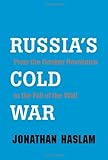
This is my review of Russia’s Cold War: From the October Revolution to the Fall of the Wall by Jonathan Haslam.

This deeply serious history, unadorned by any photographs, even on the cover, is distinctive for presenting the Cold War from a Soviet perspective, and for making use of “previously inaccessible” archives. It increased my understanding of, say the level of US ignorance of European geopolitics during and just after World War II, and of Stalin’s machinations, largely based on fear of the intentions of any person or state that might threaten his power. It contains many pithy and revealing quotations. The extent of leakage of British and US correspondence and plans via Russian spies is also intriguing.

However, I found this a hard read. The author makes little attempt to consider the needs of his readers. Some of the main events, such as the terms of the Yalta Agreement are referred to as if one is already familiar with them. This rather begs the question as to why one would need to read the book. Space which could have been used for brief explanations is instead taken up with a string of “minor characters” who, when they prove hard to recall on an unforseeable reappearance, sometimes cannot be found in the rather inadequate index. I also found a few distracting typos e.g. 1939 instead of 1919. I formed the impression that this book has been culled rapidly from copious notes by a busy academic, with the result that some paragraphs seem full of non sequiturs, which even after several readings may remain fairly unclear. For instance, on page 72 a paragraph begins:

“In March 1946 London and Washington finally cemented intelligence cooperation with the UK-USA agreement which updated its predecessor, BRUSA, concluded in 1943. Kennan’s long telegram relaunched his idling career. It arrived just as the White House had to make sense of continued failure to redress Truman’s attention.” Why is this section separated by a good deal of digression from that on page 71 which explains some of the contents of the telegram?

Likewise, on page 82, a section headed “The Truman Doctrine”, does not clearly explain what this is. “The Truman doctrine was thus proclaimed in a ‘panic move’. Addressing Congress on March 12, Truman anathematized communism in general on the false assumption that it was entirely directed from the Kremlin as it had been before 1941.” Very interesting, but what exactly was the Doctrine, and why should communism be condemned on the above grounds?

Worse than this, on page 95, a section headed, “No more communist uprisings for now” launches into references to the PCF and PCI policy (whatever they are) and references to Thorez, without making the context at all clear, even after the reader has struggled to work it out using the index. It all makes for a confusing read.

Owing to the need to cover systematically the period from 1917 to the fall of the Berlin Wall, this boils down to a rather dense poitical history of modern Russia, often jumping from one sub-section to another with a very different theme, rather than a succinct analysis of the “Cold War”.

With better editing, this could be an excellent book. As it stands, it calls for a reader with a good deal of time and patience. Perhaps its value is mainly as a reference book for students. I have made a note to return to it after I have tried a few other takes on Soviet Russia, and the “Cold War” to see what it may add at that stage of my understanding

⭐⭐⭐ 3 Stars

“Comedy in a Minor Key” by Hans Keilson – Too Low Key?

This is my review of Comedy in a Minor Key by Hans Keilson.

I was inspired to read this by the recent obituary for the author Hans Keilson, who died aged 101. Forced to flee as a young Jewish man from Nazi Germany to the Netherlands, he drew on this experience to write this short novel about a Dutch couple, Wim and Marie, who agree to hide a Jewish man in their spare room, only to find themselves confronted with the problem of how to dispose of his body after his untimely death.

With its focus on the mundane practicalities of ordinary life, this book seem very realistic, but is mostly saved from seeming boring by the author’s ability to create drama out of simple incidents. Without giving too much away, there is the scene where Nico, the Jew in hiding, is drawn downstairs by the smell of milk burning on the stove at the very moment when the fishmonger knocks on the door, expecting to gut some fish in the kitchen for Marie. Even though you know that “it will be all right”, this is a situation of real tension, as is also the case when Wim and the doctor remove the body from the house under cover of darkness. Having said this, I think the book would have benefited from more heightened drama, say at the end when the couple are uncertain whether or not they have “got away” with their subversive act of harbouring a Jewish refugee.

Revealing his insight as the psychiatrist he later became, the author provides telling descriptions of the characters’ small shifts in emotion. For instance, despite his gratitude, Nico hates a vase that Wim brings home and begrudges the couple their pleasure in it, because it symbolises the freedom that he has lost to go out and buy a luxury item on a whim (no pun intended).

I agree with the reviewer who found the shifting back and forth in time at the beginning rather confusing, although I do not think it matters unduly. However, in terms of structure, it might have been more moving to show the relationship growing up between Nico and his saviours, without knowing from the outset that he is going to die. When this death comes, it could have been portrayed as more of a shock. I also found the characters a little wooden at times, and did not care about them as much as I thought I should.

Although much of the translation is excellent, a few passages seem rather trite, such as the account of Wim and Marie’s relationship after Nico has died. I think this weakness has to be laid at the author’s door, and the final pages – which should be the climax of the book – are somewhat rushed and, as stated above, to be a missed opportunity for a final burst of powerful drama.

I am left uncertain as to how “good” a writer Keilson was. Is his understated approach a strength, or the result of a limited capacity to express himself? He has used his knowledge to create a compelling situation, but could he have done more with it?

Perhaps we should appreciate a writer who steers clear of overblown prose. The odd observation stands out, such as the use of the description of the door of Nico’s room after his death to convey how his visit has changed the couple’s lives permanently:

“The black door handle remained at the horizontal, as always.

But it seemed to them both that the door was closed in a way it had never been closed before.”

⭐⭐⭐⭐ 4 Stars

Watching paint dry

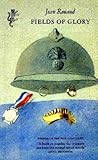
This is my review of Fields of Glory by Jean Rouaud.

This English translation of the original Goncourt Prize winner, "Les Champs d'honneur" is useful for deciphering some of the obscurer French paragraphs, but I found the style intolerably stiff and unnatural. Is the translator a German speaker? This might account for what seemed like the over-literal translation which cries out to be edited line by line to create some semblance of natural flow.

The story itself may resonate for French people with memories of taciturn chain-smoking grandfathers driving leaky Citroen 2CVs through the interminable drizzle of the Lower Loire. With the admitted extra handicap of being an English speaker reading the original French version "Les Champs d'honneur" in translation, I found the whole chapters devoted to driving a beaten up 2CV, the rain, or the religious mania of a spinster aunt the literary equivalent of watching paint dry.

There were some striking descriptions, say of the landscape of Provence, and the book culminates in some haunting scenes on the experience of a gas attack in the First World War, or the exhumation of a brother, hastily buried by a stranger after a battle, but for me the build up to this was too slow and tortuous.

I gradually realised that the book was a study of how the First World War blighted the lives of not only the generation who suffered it directly but also their descendants. However, in "working backwards" through a series of in the main very mundane incidents with attention to minute detail of little interest, not to mention the endless digressions, I felt that I was reading fragments of a story in a fog.

I was always unclear in exactly which decade the narrator's boyhood was set and I was left quite confused by the last chapter at the cemetery (it's an unremittingly gloomy book) as to the blood relationship between the various characters, which until then I thought I just about understood.

⭐⭐ 2 Stars

Fragmented in the Mist

This is my review of Les Champs d’Honneur by Jean Rouaud.

This may resonate for French people with memories of taciturn chain-smoking grandfathers driving leaky Citroen 2CVs through the interminable drizzle of the Lower Loire. With the admitted extra handicap of being an English speaker reading this in translation, I found the whole chapters devoted to driving a beaten up 2CV, the rain, or the religious mania of a spinster aunt the literary equivalent of watching paint dry.

There were some striking descriptions, say of the landscape of Provence, and the book culminates in some haunting scenes on the experience of a gas attack in the First World War, or the exhumation of a brother, hastily buried by a stranger after a battle, but for me the build up to this was too slow and tortuous.

I gradually realised that the book was a study of how the First World War blighted the lives of not only the generation who suffered it directly but also their descendants. However, in "working backwards" through a series of in the main very mundane incidents with attention to minute detail of little interest, not to mention the endless digressions, I felt that I was reading fragments of a story in a fog.

I was always unclear in exactly which decade the narrator's boyhood was set and I was left quite confused by the last chapter at the cemetery (it's an unremittingly gloomy book) as to the blood relationship between the various characters, which until then I thought I just about understood.

The only motivation for reading this book was to improve my "literary" French, in which regard it serves a useful purpose.

I used the translation by Ralph Manheim to guide me through some of the obscurer passages. It did not help that the translation seems very stilted and I had to wonder if English was Manheim's first language!

⭐⭐ 2 Stars

Tales contrived from grids of tarot cards

This is my review of The Castle Of Crossed Destinies (Vintage Classics) by Italo Calvino.

As in "The Canterbury Tales", a disparate group of travellers share tales, but here the similarity ends, since they have lost the power of speech and are forced to communicate by setting out tarot cards, which Calvino also describes as "arcani".

At first, I found the stories unengaging fairy tales, of the knight errant encounters in forest fair maiden who turns out to be ugly old hag variety, although I had an uneasy sense that I might be missing all sorts of allusions through my ignorance of classical and medieval mythology.

Any interest lay partly in working out or grasping what the succession of cards mean. This is not easy as, particularly for the tales told in the castle, the cards are reproduced in such a small size that it is hard to see what they represent. The set of tarot cards used for the second set of tales from "The Tavern of Crossed Destinies" are drawn a little larger and bolder, so easier to decipher. Although it might have added too much to the cost of the book, it would have been better if each card could have been reproduced at least quarter page size, and positioned at the point in the text where it is mentioned. Although there are a few coloured plates of tarot cards in the middle of the book, they are not the "major players" in the stories.

Also, once I realised that, for the castle stories, cards are laid in two parallel rows or columns to form part of an overall grid, whereas for the tavern stories, each one occupies an overlapping block in the grid, further interest stemmed from noticing how the cards for the end of one story are the beginning of another, and how the same card may represent totally different incidents in separate stories. For instance, a card showing cups could mean the celebration of a wedding, or could signify looking down from a city on rows of tombstones. Although sometimes intriguing, the need to preserve the order of the cards often makes for tales that seem contrived and limited.

Occasionally, a story caught my interest, and I began to see "deeper philosophical layers". This first occurred in the Tale of Astolpho on the Moon: on a mission to retrieve the lost sanity of the irreplaceable warrior Roland, Astolpho is sent to the moon where an endless storeroom preserves "the stories that men do not live, the thoughts that knock once at the threshold of awareness and vanish forever, the particles of the possible discarded in the game of combinations, the solutions that could be reached but are never reached.." Much later, in "The Tale of Seeking and Losing", Parsifal concludes, "The kernel of the world is empty, the beginning of what moves in the universe is the space of nothingness, around absence is constructed what exists, at the bottom of the Grail is the Tao" and he points to the empty rectangle at the centre of the grid of tarot cards. All this may of course leave you cold!

However,the stories seem to me to go seriously off the rails at the end where Calvino tries to tell his own story, which becomes very rambling, including reference to paintings in galleries of St Jerome with his lion and St George with the dragon, of which we are not provided any visual examples to help us appreciate his points, whilst he then presents as a grand finale a story which somehow combines bits of King Lear, Hamlet and Macbeth.

Although I can understand the fascination of weaving stories out of a grid of cards, this book is for me no more than a clever gimmick. Calvino has apparently discarded some tales because he thought they did not work, but it seems to me that most of those retained would have benefited from a thorough redrafting. Often the events are quite rushed and garbled, and the characters two-dimensional (card?!) and so lack the power to arouse any sympathy. Perhaps owing to the translation, the wording is at times very stilted or jarring.

⭐⭐⭐ 3 Stars

Paving the Way

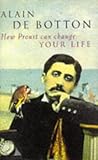
This is my review of How Proust Can Change Your Life by Alain de Botton.

I thought this quirky mixture of selective biographical details and literary analysis might pave the way to my good intentions to complete at least the first volume of Proust’s “Remembrance of Times Past”. Presenting his ideas in short sections under subheadings makes for an easy, if fragmented read.

Proust spent much of his adult life in bed, was plagued with illness and pain although probably also a hypochondriac, and sounds distinctly bi-polar in, for instance, his obsession with the distracting effects of noise, and occasional bursts of manic activity, as when he translated Ruskin’s work, despite having a very limited initial knowledge of English. Were these traits critical to his unusual ability to observe, describe and philosophise about minute aspects of human behaviour and motivation?

I would have liked more detail on this complex man whose excessive politeness led his friends to coin the verb “to proustify” but who also held that friendship expresses itself in futile conversations which only “indefinitely repeat the vacuity of a minute” and is in the end no more than a lie to make us believe that we are not irremediably alone”.

I was impressed that De Botton was only about 28 when this book was first published. There is something “young fogeyish”, facetious and a little too clever by half in his tone, but he succeeds in highlighting some thought-provoking aspects – perhaps the essence – of Proust’s writing, from which he quotes very effectively. For instance, Proust noted that there is nothing particularly special about the poplars Monet loved to paint, but through the painter’s interpretation, one can learn to appreciate the trees in one’s own experience more. Reading can open one’s eyes to the surrounding world, but writers should not be worshipped: even the greatest books have limitations – they do not provide blueprints for living or conclusions, but only “incitements” to understand more. So, it is ironical that the very ordinary village of Illiers has added the suffix “Combray” from Proust’s imaginary settlement and become a place of pilgrimage where visitors buy madeleines supposedly of the type Proust so famously described.

It is easy to understand why Virginia Woolf was so elated by the “vibration and saturation” of Proust’s writing, yet also depressed by the sense that she could not begin to write as well- although in her own original way, she achieved greatness.

Selecting the above points has made me realise the degree of skill De Bouton has exercised in expressing his ideas, but I think he has limited his impact by being a bit too jokey and trite, particularly at the end of chapters.

⭐⭐⭐⭐ 4 Stars

Too Scrambled

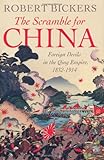
This is my review of The Scramble for China: Foreign Devils in the Qing Empire, 1832-1914 (Allen Lane History) by Robert Bickers.

"The scramble for China" must be culled from "the scramble for Africa" but seems less apt since the British, French and American officials were sent to nineteenth century China not to colonise a disparate group of kingdoms and tribal areas, but to infiltrate the coastal regions of a vast area under the centralised if sclerotic control of the Qing dynasty.

This book contains a good deal of social history which seems fairly unremarkable and so of limited interest. For instance, it seems only natural that British workers sent to China should send for familiar products from home. The author's tendency to switch backwards and forwards in time with frequent digressions makes for a confusing read.

I was most interested in the major historical events – the Opium Wars or Taiping Rebellion – for the issues they raised. How could the upstanding Victorians possibly think it was in order to purchase Chinese goods with opium? To what extent did exposure to Christian missionaries trigger rebellion that was so troublesome to the Qing? However, too many very condensed sentences, weighed down with detail, in which it is at times hard to work out who or which settlement is being referred to tried my patience too far, and I have reluctantly set this book aside. The subject matter is potentially fascinating and the author clearly very knowledgeable and unpretentious, but the tortuous written style is hard going.

⭐⭐⭐ 3 Stars

Is Western Dominance a Temporary “Blip”?

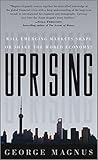
This is my review of Uprising – Will Emerging Markets Shape Or Shake the World Economy? by George Magnus.

In "Uprising", the economic advisor George Magnus asks to what extent the "emerging markets" of BRIC – Brazil and Russia, but more importantly India and in particular China will wrest economic power from the United States. He shows how China was inadvertently implicated in the 2008-9 economic crisis, by depositing so much of its foreign exchange earnings from exports into US banks, thus stimulating the "credit mania" of speculation in, for instance, the subprime housing market.

Taking a different perspective from other writers in this field, Magnus warns against extrapolating trends into the future and predicting the dominance of China. He reminds us of how the Soviet leader Khruschev mistakenly warned the West "we will bury you", how the Japanese miracle faded, and the US recovered from the problems of the 1970s-80s against the odds.

Despite the size, dynamism and "world creditor nation status" which make it a global power, China has certain basic problems which it has yet to address. With an ageing population and growing gender imbalance, China is demographically weaker than the US. With most of its development on the coast, China has internal regions which are important for resources and supply lines, but which may prove politically unstable. China also lacks to date the "infrastructure" of financial and legal institutions necessary for sound development, and its centralised culture discourages innovation. Can China handle the growing internal demands for consumer goods? Can it achieve western levels of income per head without massive pollution? What about increased pressure for freedom of expression?

Many of the points covered can be gleaned from regular reading of a broadsheet newspaper, but it is useful to have them summarised in one place. There is a good deal of repetition – perhaps useful to help one absorb key points. Occasionally, I felt I was being given contradictory statistical information, but only the general trends seem to matter, as most of the precise figures supplied will soon be out-of-date.

I am not sure how accessible this book is for someone with no economic knowledge – perhaps a chapter or appendix to explain certain principles -say on trade surpluses and deficits, might have been useful. Also, some of the diagrams are too small and make little sense when two or more line graphs showing different things are both reproduced in the same black print.

Perhaps a separate chapter on each "BRIC" country or (group of) emergent economies with a final summary analysis would have made for a clearer and less repetitious read.

Magnus raises questions which he cannot answer but at least he makes us think about the complexity and importance of the issues. Overall, this is informative and free from "author's ego" and bias – although I did wonder on what basis he describes the US education system as the best in the world. Also, perhaps more attention could have been given to the Chinese investment – tantamount to economic colonialism -in say, Africa which has annoyed Hillary Clinton so much.

On balance, despite the author's confidence in the resilience of the United States, I think we in the UK have cause to worry…..

⭐⭐⭐⭐ 4 Stars

Pride before a Fall

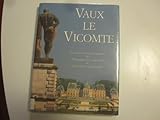
This is my review of Vaux le Vicomte by Jean-Marie Perouse de Montclos.

I read this as an introductory guide prior to a visit to the palace of Vaux-le-Vicomte. The large number of high quality photographs of plans, internal rooms, details of artwork and external elevations and vistas past and present combine to give a good overall impression.

I found the opening sections on the background history the most interesting part. The work was commissioned by Foucquet, the ambitious bourgeios financier who bought his way to high office as Louis X1V's Superintendent of Finance, embellished the palace to entertain the king in grand style in 1661, only to be charged with corruption and imprisoned soon afterwards. It seems that jealous rivals such as Colbert traded on the King's unease over the possible threat posed by such a wealthy and able subject not to mention the rumours of Foucquet's interest in his mistress Louise de la Vallière. So, Foucquet may have been no more corrupt than other holders of high office – clearly not much has changed….!

Details of the recent restoration of the palace are also informative.

⭐⭐⭐⭐ 4 Stars

Less would be More

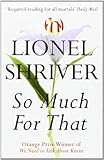
This is my review of So Much for That by Lionel Shriver.

The inadequacy of the US health insurance system; the complex, shifting emotions within a relationship in which the wife is struck by possibly terminal cancer; the dynamics of a family in which one child has a degenerative disease: these themes could combine to make a moving and opinion-changing masterpiece, but call for a subtlety and lightness of touch to make so much pain bearable. For the first half of the book I felt oppressed by the opposite, that is, the tsunami of words, the detailed, by turns pettifogging or unsavoury descriptions, lengthy digressions and rambling rants, always three or more examples where one would do. There are also some very original or telling comments, although they are at risk of getting lost in all the verbiage.

The story begins with Shep Knacker packing a bag to present his wife with an ultimatum: the time has come for him to travel to the idyllic African island where he has decided to settle, and he plans to take off whether she accompanies him or not. This could serve to reveal a good deal about our "hero" but instead becomes a pretty negative description of his wife. I would much rather have discovered what Glynis is like through situations and dialogues than be told what to think. Admittedly, some descriptions are very striking:

"..in art school, Glynis had not chosen her medium by accident. She naturally identified with any material that so fiercely refused to do what you wanted it to, whose form was resistant to change and responded only to violent manhandling. Metal was obstreperous. Were it ever mistreated, its dents and scratches caught the light like grudges." It's the last sentence that stands out for me.

Then the story moves on to Shep's "best friend" Jackson, whose exaggerated diatribes I admit to finding amusing and telling. It took me a while to realise that his sparky but odd daughter is in fact disabled with an obscure physical condition that blights not only her life, but that of the entire family. I felt very discouraged at this stage. Was so much suffering really necessary?

Also, in the midst of the wealth of unpleasant detail about bodily malfunctions, the opportunity is missed to enact, rather than report second-hand , some dramatic scenes, such as the point at which Glynis tells Shep she has cancer, and his initial reactions as his chance to escape evaporates, or to explore his feelings towards a woman he is prepared to leave until he hears of her need for his health insurance. This would not only have made the story more emotionally engaging, but also shown a clearer progression of the character's thoughts. Yet Shriver is capable of being very incisive, as when she closes a chapter with Shep's admission to himself that he only has enough money to realise his dreams if Glynis "dies soon".

As it is, the links between stages in both dialogue and scenes are at times clunky and contrived, and major new developments may seem to occur too abruptly, such as the degree to which Jackson has "reached his limit", when you might have expected Shep to be in this state.

Another limitation is that none of the characters seems to be afflicted by the sense of anguish based on deep love, or the fear of loss of a companion. This may be acceptable for Shep because he is ultra practical and pragmatic, but makes for a less moving story, in which you care too little for in many ways unlikeable people.

Perhaps I became inured to all this suffering, but the book improved for me as I persevered, and the last hundred pages or so seem the best: well-paced, plot strands coming together well, an ending which was remarkably positive, and avoided sentimentality, mawkishness or the cop out of not knowing how to finish the dilemma one has created. However, even here there is a superficiality in the personal relationships, a kind of "cold heart" and skimming round the depths of real grief.

I acknowledge Lionel Shriver's undoubted talent, but wish she had made the book shorter, checked her narrative for overkill (no pun intended), and toned down some of the cynical wisecracking humour, perhaps the product of an attempt to write like an American male.

⭐⭐⭐ 3 Stars