This site will share with you hundreds of book and film reviews written since 2009. Also a chance to discuss these reviews together with some of my creative writing to be added.
I plan to include a fair review of the play itself, but need to point out that the "Reclam" edition, although attractive price-wise, includes footnotes and an "afterword" only in German, which I failed to see until it was too late to return the book and get a refund.
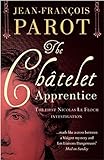
This first novel in the Nicholas Le Floch detective series, set in C18 France, reminds me of William Sansom's Shardlake series because of its attention to the details of social history and its intricate plotting. There is a whiff of Agatha Christie in the denouement to which Nicholas invites all the interested parties – still left alive- and summarises the situation: this was helpful in confirming that I had not "lost the plot".
Nicholas is an attractive hero, saved from the irritation that his good looks and charm might provoke by a refreshing capacity to commit blunders as well as the thoughtful and introspective side to his nature. This seems to stem from his experience as an orphan of unknown parentage, who has often met with resentment because of the generous support of his godfather, le Marquis de Ranreuil.
Armed with a letter of introduction from this benefactor, Nicholas travels to Paris and is taken on by the capricious and calculating Monsieur de Sartine, newly appointed Lieutenant General of Police and a rising star with King Louis XV himself. After his initial training, despite his youth, Nicholas is given the assignment to find what has befallen a missing colleague, and the complicated plot spins off from this point.
Apart from some rather gruesome corpses, the sex and violence in this book would not shock a maiden great-aunt – except perhaps for the hero's casual but probably true-to-life relationship with a prostitute. Some scenes are unlikely and a bit clunky, as when the brothel keeper, La Paulet, provides sensitive information too readily without checking Nicholas out, or when he eavesdrops on a revealing conversation involving de Sartine by entering a room without being noticed! His victory over an arch-villain in a swordfight is also implausible.
On the other hand, I enjoyed the "Frenchness" of it all – the obsession with eating well, the discussions about the pros and cons of haute cuisine, the details of how to cook pigs' trotters, a tasty working man's dish. Also, Parot often demonstrates his classical education "as a matter of course" , taking it for granted that the reader will understand an allusion, or be pleased to be told about it.
Although some of the cast e.g. the promiscuous Louise Lardin are a bit caricatured, Nicholas is an interesting character with quite a complex personality. I was a bit irritated by the Sherlock Holmes ploy of having him work out a solution on very slim evidence, but not reveal it to the reader for some time!
The translation may not quite do justice to Parot's literary talents, but the slightly stilted style fits with the period. I recommend this for those in search of a new detective series in an admittedly old-fashioned mode with an essentially predictable end if you want to try to work it out.
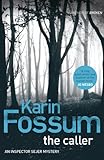
In the spate of crime novels pouring out of Scandinavia, the Norwegian Karen Fossum's "The Caller" is more of a Barbara Vine-style psychological study than the frenetic action combined with political messages to be found in Stieg Larsson, or the self-absorption of Mankell's angst-ridden Wallander.
We know from the outset that the "caller" is Johnny a disturbed adolescent who gains a sense of power from carrying out cruel pranks on strangers. Fossum shows how these often quite elaborate hoaxes have unexpected, disproportionately adverse effects on the mental state of each victim.
Yet, she also succeeds in revealing the appalling parenting which has sent the highly intelligent but immature Johnny down the wrong path, distorting his "normal" sense of compassion. This is not totally absent: he shows great kindness to his sick grandfather, and to his pets.
Fossum skilfully makes us feel some sympathy for Johnny, even to the extent of wanting him to escape harsh punishment, out of a morally ambiguous sense that maybe these pranks are "not that bad". Once one has realised they tend not to cause physical harm, one can be lulled into taking them less seriously, and in being mainly intrigued to find out what the next ingenious trick will be.
Yet, there is always an underlying sense of menace – eventually a prank must backfire with some unintended calamity. The story grows darker towards the climax of the novel, creating the death toll normally associated with a crime thriller. Although I guessed a key twist at the end, the denouement is unlikely to be totally predictable.
The ending may seem a little too neat, possibly too rapid and condensed, and therefore less moving, but "The Caller" is, in short, an entertaining, well-written morality tale, which reveals the complexity of cause and effect, good and evil, and the risk of unintended consequences.
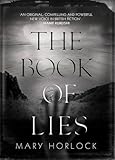
Set on Guernsey, this debut novel interweaves the lives of two characters: bright but unpopular and emotionally disturbed teenager Cathy, revealed through the black comedy of her diary , and her deceased Uncle Charlie, whose suffering under the German occupation is recorded in interviews with his brother Emile, also Cathy's father. Before his recent death, Emile was a local historian, obsessed with exposing the truth, but he may have been unable to cope with facts that proved unexpected, or impossible to prove beyond doubt.
In the first few pages Cathy confesses to the murder of her former best friend, but we know she is an unreliable witness. Other reviewers have been repelled by her coldness, but I see it as a kind of defence against a lack of parental affection and bewilderment over the loss of a father whom she clearly admires, but who died before she could "get to know him".
I found the genre hard to place – psychological drama, perhaps? Some scenes are very amusing. At times, it reads like a teenage cartoon strip, yet there is always an underlying sense of the grim legacy of the Nazi occupation. Guernsey is presented in a negative light – somewhat leavened by humour – as claustrophobically small, overrun by tax-dodging foreigners, with a local population concealing their guilty secrets over collaboration with the Germans. The web of lies makes it hard to know the truth, and triggers a chain of misunderstandings and long-term wrongs.
The story held my attention, despite the distracting footnotes, intended to show Cathy's precocious attempts to write like an academic historian, but many of the comments could easily have been included in the main body of the two parallel story lines.
Although I expected to be disappointed by the denouement, it is potentially better than I had feared. I like the ideas of an ambiguous ending, but some of the final revelations seem unnecessarily rushed and I was left too unclear as to exactly what role Cathy's mother has played. I also dislike the note of moral blackmail on which the book ends – it is neat, but overly cynical. I want the book to be more than just a clever construction.
Perhaps the portrayal of the malevolent Nic could have been more nuanced, although she is of course seen from Cathy's distorted viewpoint. Also, you may feel that sometimes the author steps in and inserts a little too much mature self-knowledge into Cathy's adolescent diatribes.
Overall, the novel is like a Chinese meal, giving short-term gratification but leaving you a little unsatisfied and wanting something more substantial.
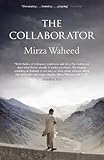
This novel exposes the plight of muslims living in the Indian-controlled sector of Kashmir, doomed to suffer whether or not they are militant. It has the ingredients for a powerful and moving tale, narrated by the anonymous son of a village headman in the wild, beautiful mountains close to the disputed border. One by one, members of his close-knit group of teenage friends disappear, leaving him haunted with questions. Why did they not include him in their plans to leave? Have they really crossed the border to join Pakistani training camps? How many have been killed in attempts to infiltrate back as terrorists? When, sickened by military reprisals, all the villagers have decamped apart from his stubborn father and long-suffering mother, the narrator is forced to become a "collaborator", searching the mutilated corpses of infiltrators to collect ID cards and weapons. Is his main motivation just to earn money for his family, or does he seek to find the bodies of his friends?
Although I wanted to be gripped and impressed, I found this book very hard to read. The plot is too slight to sustain a full-length novel, without very skilful writing. In the lengthy first part, the author rambles through the chapters like a traveller without a compass. Despite the vivid descriptions of the striking landscape and the villagers' simple lives, when it comes to the relations between characters, the style becomes stilted and wooden. I found it hard to distinguish individual characters or to care about them. The narrator's endless speculation over his friends' fates becomes repetitious and tedious.
The narrator's "voice" is inconsistent: sometimes, he is a confused teenager, at other times he sounds more like the author, describing the village as "settling down to stasis". The writer's penchant for flowery writing works quite well for passages on spiritual matters, the burning of corpses to save them from desecration, and so on. However, when describing incidents, the style often becomes quite clumsy, with prose inadequate to the task and a frequent jarring misuse of words – I had to resist the urge to seize a red pen and correct it.
To give just one example of how the clotted prose undermines the dramatic effect:
"…Ramazan Choudhury's elder son – the same man who had worked on the mosque and whose two children I had seen at Noor's shop buying éclairs and whose full name, Ishaq Jan Choudhary, I only got to know now when we were paired together in the hunt for X's body – and I were scouring the area around the dirt track that goes away from the village and tails off into the footpath to the valley, when we saw X's ..body lying near a narrow stream running down from the mountain."
What were the editors fulsomely cited at the end, not to mention the author himself who is a BBC editor, thinking of?
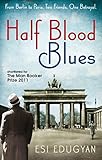
Since I don’t care for jazz and have little in common with hard-drinking Black American male musicians, why was I so quickly hooked on “Half Blood Blues”? At first, it was the dry, wisecracking wit, and the rhythm of the Black American speech patterns which didn’t grate as I would have expected – “he stood..leaning like a brisk wind done come up” or “Man, Sid, ain’t you ever going to clean up? You live in plain disrepair” and so on.
Then, I was struck by the spate of vivid, original similes. “He got oddly thin lips, and with the drink still glistening on them they looked like oysters”.
I realised too that there is scope for a compelling drama in a situation where a group of jazz musicians, some black, realise that the world of swing in 1930s Berlin has suddenly turned dark as the Nazis brand it “degenerate art” and begin to beat up black artists.
The author knows how to create tension. From the opening sentence, “Chip told us not to go out”, the first chapter builds up a sense of impending calamity, as the narrator Sid reluctantly accompanies Hiero, a youthful prodigy on the trumpet, in his unwise quest for a drink of milk in occupied Paris, where his high visibility as a Black German combined with a lack of the right papers place him at risk of deportation to a death camp.
Esi Edugyan takes risks in introducing the real-life Louis Armstrong to the plot, but carries it off convincingly. She also succeeds in helping me to understand the appeal of jazz music. She finds apt words to describe in detail how Hiero’s playing sounds to Sid.
“Hiero thrown out note after shimmering note, like sunshine sliding over the surface of a lake, and Armstrong was the water, all depth and thought, not one wasted note. Hiero, he just reaching out, seeking the shore; Armstrong stood there calling across to him. Their horns sounded so naked, so blunt, you felt almost guilty listening to it, like you eavesdropping.”
This is not just a tale of a jazz group under pressure, surviving violent fist fights with the brutal “boots” (Nazi soldiers) but also a subtle psychological study of the interplay between the members of a group, providing a keen insight into personal and professional jealousy. Almost until the end, we are unsure whether Sid betrayed Hiero long ago, exactly how, and if he is a reliable narrator.
Some of the minor scenes drag a little and I found a few points implausible e.g. would it really take so many weeks to make a single record, without actually completing it, would/could the seductive singer Delilah make a headscarf out of a stiff, dusty theatre curtain? Despite this, overall “Half Blood Blues” is an original, well-plotted and beautifully written work. I shall certainly look out for Edugyan’s future novels.
⭐⭐⭐⭐⭐ 5 Stars
Half Blood Blues: Shortlisted for the Man Booker Prize 2011
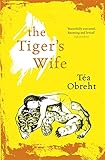
It is easy to see why this book won the 2011 Orange Prize for Fiction. It has an unusual theme and approach, weaving together a grandfather's tall stories based on Balkan-style folktales and the experience of Natalia, a young doctor trying to cope with the aftermath of the grim war which caused the recent fracture of the former Yugoslavia, and with the death of her much-loved grandfather. Still only in her mid-twenties, the author is a gifted storyteller with an impressive command of English learned as a second language. I am not sure whether she sometimes misuses words by mistake, or is just trying to be original and poetical, but you cannot deny Tea Obreht's striking and unusual use of language.
Although I am no lover of magic realism, I was most impressed by the storytelling, in particular the tale of the "deathless man" who cannot be killed, even if shot through the head or drowned – a sceptical scientist, Natalia's grandfather is tantalised by the mounting evidence for this which flies in the face of reason. Obreht clearly loves animals, of which there are some wonderful descriptions – the tiger leaving footprints in the snow, round as dinner plates, or the elephant recaptured after its escape from the war-damaged zoo.
At first I was irritated by the lack of clarity as to exactly which country we are in – Montenegro, Croatia. Bosnia ? – which border we are close to, and so on. Then I realised that this is not the point. Obreht simply wants to create a sense of the superstition and prejudice, the deep-seated and irrational hatred between Christians and Moslems, the brutality and unthinking futility of war, and the residue of damage for the survivors. Then there is of course the simple expression of grief over the death of a close relative, regardless of whether there is peace or war.
I found the descriptions of Natalia's work the least satisfying, too many minor scenes of little interest, and in need of editing. Some of the later tales told to Natalia by her grandfather become rather tedious and rambling, getting bogged down in excessive back story about the early lives of Luka the sadistic butcher, Darisa the bear hunter and the village apothecary.
From the outset, Obreht skilfully manages to arouse the reader's interest by covering events through a series of separate scenes which move back and forth in time. Natalia's attempt to find out more about her grandfather's death and to obtain his belongings has a touch of the detective novel. Towards the end, the plot loses structure and pace. Again perhaps deliberately, it becomes even more fragmented and further parts company with reality, proving a little too fey and nebulous for my taste, although there is a persistent rather odd attempt to provide rational explanations for implausible events.
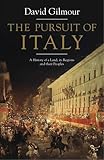
"Italy," complained Napoleon,"is too long." It is hard not to warm to a book that begins in this vein. I think that Gilmour's aim is to show not only how Italy came into existence as a single nation state, but why it has proved so difficult both to achieve and sustain unification. Even now, the economic and social divide between north and south remains far stronger and more bitter than that of England.
The author uses his obvious knowledge and enthusiasm for Italy to create a popular history in which each chapter is like a self-contained essay, drawing not only on key events but also on the diverse geography, different regions, peoples and cultures of Italy. For instance, after World War 2, five peripheral regions had to be given special status, including a good deal of autonomy to stem strong separatist demands based on physical separation, as for Sicily and Sardinia, or different languages, as in northern areas speaking mainly French, Italian or Slovene. There are some useful maps to help identify the various regions.
I appreciate why Gilmour felt that a full analysis required him to go back in time to the Bronze Age traders travelling through Alpine passes. After an initial chapter to spell out the physical and social diversity of Italy, he moves systematically forward in time, with a unifying theme for each chapter e.g. the various empires which dominated Italy, starting with the Romans; the growth of city states from the Middle Ages or the period from C15 when Italy was a battleground for foreign warring armies.
Some chapters e.g. 5 on "Disputed Italies" proved hard to follow without a level of background knowledge which would have made it unnecessary to read the book in the first place! I can see that Gilmour wanted to avoid getting bogged down in facts, but perhaps needed to think himself more into the position of a willing reader who may not know enough about the history of say, the Hapsburgs in Austria and Spain versus the French dynasties to understand their complex activities, warring and installing puppets on Italian soil, from 1494 to the early 1800s.
I resorted to reading the chapters in reverse order. Perhaps because they interest him most, Gilmour seems to write best about more recent events such as the modern resurgence of "centrifugal Italy" and the rapid rise of the racist and divisive Northern League under Bossi. Once I had absorbed all the fascinating events from say, Garibaldi through Mussolini to Berlusconi, I had the motivation to go back further in time and make the effort to understand the more distant, important yet often less engaging detail which underpins the current situation.
Overall, this is quite an ambitious work, which might benefit from a slightly clearer stated aim, and sometimes becomes too fragmented in its attempts to provide a synthesis, but on balance it is for the most part informative and readable.
It ends on a provocative note. Despite creating "much of the world's greatest art, architecture and music and…one of its finest cuisines" and possessing "some of its most beautiful landscapes and many of its most stylish manufactures", united Italy has never lived up to its founders hopes, "predestined" by its history and geography "to be a disappointment….never as good as the sum of its people".
The term "prestige" refers to the product of a magic trick – the rabbit pulled out of a hat.
"The Prestige" is the tale of a feud between two rival magicians in the late Victorian age, the working class Borden who makes good use of his skills as a cabinetmaker to conceal people during tricks, and the aristocratic Angier, forced by the poverty of being a younger son to make a living out of a hobby. Told largely through extracts from their journals, starting with Borden's viewpoint, this makes for a clunkily plotted read. Many incidents are reported, which detracts from the drama, and the tone is often stilted, although this may be an attempt to adopt a suitably Victorian style. At any rate, the characters come across as rather wooden.
Borden's prize act is "The Transported Man", for which the obsessive desire to work out an explanation drives Angier to distraction. The only possible solution seems to be that Borden has a double, but there is no evidence for this. In his desire to outdo Borden, Angier is driven to devise a transportation trick of his own, making use of the new power of electricity to move himself instantly from one place to another, although the process gives rise to a certain persistent problem… I was interested to learn that the electrical engineer Tesla really existed and had a laboratory at Colorado Springs, with a contraption called a "magnifying transmitter" which emitted arcs of electricity 7 metres in length. However, I share the disappointment of readers who prefer a story of magic where the suspense lies in working out how it is done, rather than one which relies on science fiction to create effects. This raises a real problem in reviewing the book fairly, since scifi is by its nature generally implausible. You just have to like it (which I don't) or judge it for its originality. On this count, the book scores quite highly, but it would have worked better with more skilful development of the plot.
I agree with those who think that the modern storyline of the magicians' descendants, wrapped round the basic plot, proves to be a further twist too far. This may be why it has been dropped totally in the film version of the book, which I happened to see a few years ago before reading "The Prestige" for a book group. I also think the film version works better because the visual recreation of the various tricks and acts of sabotage is obviously more entertaining than a series of descriptions. Interestingly, I enjoyed the film right up to the end when the multiple cloning of men and black cats by electrical transmission seems too ludicrous. This particular twist is not in the book.
Although I would say that the story works better as a film, you could argue that the book version of "The Prestige" has two advantages. It includes analyses of what motivates magicians and of the nature of magic, and insights on the relationships between the main characters which are lacking in the film. These combine to make it more thought-provoking, yet this quality sits uneasily with an ending which could be said to "go off the rails".
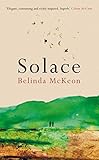
The following is an attempt to analyse why a book which has been well reviewed so far disappointed me.
This slow-paced novel commences with descriptions of places – the Irish countryside – and small incidents – buying a ball of twine. The reader is left to work out who the main protagonists are, what the characters are like and what is going on, and that is fine. We meet Tom the farmer, his son Mark who has returned to assist him, with an infant daughter Aoife in tow. Where is the child's mother? Is Mark's excessive anger over his father taking the child with him to buy twine without telling him a cover for some deeper-seated resentment? There are all the ingredients for the unwinding of some moving Irish tale and my expectations are suitably kindled, but nothing much happens over and above what is given away on the flyleaf.
As the book progresses, I find it hard to engage with any of the characters. I think this is because the differences in their personalities are not very clearly drawn and sustained. The most dramatic incidents seem strangely muted. The description of someone discovering she is pregnant, another of someone dying in an accident – the events and people's reactions, none of this moves me as it should. Likewise the old grievance between the fathers of Mark and Joanne does not strike me with sufficient force, given the flyleaf's reference to "spectacular…wrongs" and "betrayal". I think part of the problem is that, once the book gets under way, there is too much "telling" rather than "showing". Also, events seem too disjointed.
Pehaps the plot is too slight to sustain a book of this length in the absence of a strong narrative drive. I feel that I am reading the words of someone with an ambition to write, who loves putting words down on paper or the keyboard but does not as yet have much to say.
Yes, the simplicity is to be admired, but needs to provide new insights or find ways of expressing truths that we cannot produce for ourselves.
For examples of "less is more" I cite the work of the late Brian Moore and also William Trevor.


 Antenna Reviews