“A long journey out of the self”

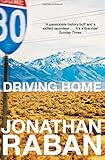
This is my review of Driving Home: An American Scrapbook: An Emigrants Reflections Pb by Jonathan Raban.

I discovered Jonathan Raban through “Arabia”, confirmed his brilliance in “Bad Land” and read “Driving Home” in the hope of rekindling some of the old magic. This is a collection of essays published in magazines and newspapers in the period 1991-2009, following his decision, as a middle-aged “Brit” to move to Seattle.

For me, Raban is at his best as a travel writer, the observant rolling stone who combines descriptions of landscapes and people met in passing with history, politics and culture to create a vivid sense of place. This is typified by the essay used for the book title, in which Raban drives a round trip from Seattle “a western city built in the wilderness and designed to dazzle” , over the Coastal Range and the Cascades, across various river valleys to the dead level plateau of the Christian Right where it is “a big thing to raise a tree”, since only stunted sagebrush grows there naturally. To give us background, he weaves in anecdotes about the explorers Lewis and Clarke, and introduced me to two neglected literary talents, the poet Roethke and the novelist Bernard Malamud, whose writing captured the spirit of the north-western states.

Raban’s political articles on the aftermath of 9/11, the newly elected Obama and characters like Sarah Palin are entertaining, informative but perhaps not as “striking” as some of his other work since so much has already been written on them by others, plus this material will date quite fast.

His essays on famous literary figures probably require some prior knowledge of their work. For instance, I enjoyed the article on the in many ways rather unpleasant Philip Larkin, and was interested to learn how much he feared death and pleased to be taught to appreciate his poem “Aubade”. However, the piece on William Gaddis left me cold and caused me to begin to skip in search of essays with more immediate appeal.

In the main, Raban can make watching paint dry interesting, but the occasional piece requires too much effort to be worth the trouble. The least successful category seems to me to cover those on a specific theme like “On the waterfront” which appears too much of a contrived exercise in writing.

If these essays were thrown together in a single book to earn a few bucks, I don’t blame Raban. His tendency to write articles based on his daughter, or to name-drop holidays with “the Therouxes” detracts somewhat from his writing.

Despite a few reservations, there are sufficient excellent passages in this book to make it worth reading and keeping on one’s shelf to revisit later.

⭐⭐⭐⭐⭐ 5 Stars

The passion of geriatrics

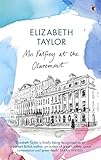
This is my review of Mrs Palfrey At The Claremont: A Virago Modern Classic (Virago Modern Classics) by Elizabeth Taylor.

This well-structured tale of an elderly widow seeing out her days in the 1960s as one of a group of lonely and under-occupied paying guests at a London Hotel may not sound a very engaging theme. Everything hinges on Elizabeth Taylor's renowned skill as a novelist. From the outset I was struck by examples of her original, acerbic wit, and strong sense of the humour of the incongruous. We are told that our heroine Mrs Palfrey "would have made a distinguished-looking man and sometimes, wearing evening dress, looked like some famous general in drag." She had a "magnificent calm" and was "unruffled" to find her first home as a young bride "more than damp" from the floods "with a snake wound round the banisters to greet her".

Depressed but stoical in the company of the small-minded, gossipy group of paying guests, who tend to use cruelty, alcohol or eavesdrop "with ears sharpened by malice" to assuage their own loneliness, Mrs Palfrey is saved by a chance meeting with Ludo, a charming and essentially decent young penniless writer. For all her conventional past, Mrs Palfrey is attracted by the young man's natural sense of mischief and vitality, without losing her commonsense. United by a surprising and unexpected friendship, they do each other good turns, although would Mrs Palfrey be quite so well-disposed to Ludo if she knew she was a source of notes for his first novel based on her own comment on the Claremont Hotel, "We aren't allowed to die here"?

The book is inevitably a little dated in reflecting the prejudices of early sixties Britain, but any real weakness lies in scenes like the fraught drinks party which descends into pure farce. Although witty, this lacks the subtle observations and real insights into the mixture of small joys, sorrows and missed opportunities of ordinary life which mark most of the novel.

Despite the room for optimism in an ending which leaves something to your imagination, this is a sad book. It is not only a portrayal of old age as a time when one feels useless, superfluous and often in pain, but also a comment on how an exaggerated concern with convention and respectability can limit one's life unduly. Elizabeth Taylor died comparatively young in her early sixties, and was perhaps glad to escape the darker or drearier aspects of ageing.

⭐⭐⭐⭐⭐ 5 Stars

A question of survival

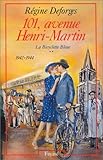
This is my review of La bicyclette bleue, Tome 2 : 101, avenue Henri-Martin : 1942-1944 by Régine Deforges.

In this sequel to "La Bicylette bleue" we see the feisty young "femme fatale" Lea Delmas enduring France under occupation in World War 2. The story is realistic as we see her struggling with a lack of food, the agony of not knowing what is happening to friends fighting with the Resistance, the uncertainty of how much to believe the news on the radio. Less plausible is the ability of suave teflon-coated superman François Tavernier to turn up in the nick of time to save her in a tight spot – and if not him, the slimebag Raphael Mahl, for whom we are supposed to have a soft spot because of his artistic nature and devotion to Lea. Tavernier's patronising male chauvinism towards Lea is possibly excusable for the 1940s, but I would like more detail on the nature of his important work and source of wealth.

Although I might be more critical if French were my first language, this is what you might call "a cracking yarn", eventful with many ingenious twists, by turns moving, tongue-in-cheek humorous and deeply shocking – the author has a vivid imagination. It provides a very entertaining way of extending one's vocabulary and knowledge of idioms.

Otherwise, what I have gained most is a greater appreciation of what it is like to be occupied, how lucky we are in England that this has not occurred for a thousand years, and how divided families are likely to be, with every reaction from total collaboration for personal gain, through passive acceptance out of fear of reprisals, to commitment to resisting, whatever the cost. So Lea switches between staying in Paris to support her sister Françoise who has had a baby by a German officer and accepting all the material benefits of this connection, to living back in the beloved family vineyard at Montillac, where her friend Camille is in continual illicit contact with her husband Laurent, deeply involved in the Resistance.

I shall certainly read the series up to the end of World War 2, but am less sure that my interest will last through all ten novels in the saga.

⭐⭐⭐⭐ 4 Stars

The deadly ticking of a thousand hungry clocks

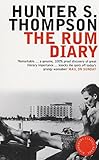
This is my review of The Rum Diary (Bloomsbury Classic Reads) by Hunter S. Thompson.

Written when the author was little more than twenty and based on personal experience, this is the tale of Paul Kemp, cynical, hard-drinking journalist who takes up a post on the San Juan Daily News, a rag produced on the Caribbean island of Puerto Rico.

At first I was reluctant to read this book group choice, imagining it would be a prolonged drunken rant. Although said to be an example of "gonzo" journalism – "bizarre, crazy, exaggerated, subjective and fictionalized style" to use a dictionary definition, from the outset I was struck by Hunter Thompson's remarkably spare and lucid, razor-sharp style ( for one who is rarely sober) and the sense of anticipation that something interesting is going to happen. In fact, the book is short enough for one not to feel let down by the slightness of the plot which is not really the point.

As you might hope for a reporter, Thompson is very strong on creating a sense of place : "old Spanish Puerto Rico..where one part of the city looked like Tampa (Florida) and the other ….like part of a medieval asylum". The whole paragraph is much better than this but too long to quote. Or there is the description of his drive to a friend's house during which he encounters for the first time the native Puerto Rico: "I was not prepared for the sand road.. I went the whole way in low gear, running over land crabs, creeping… through deep stagnant puddles, bumping and jolting in ruts and chuckholes…"

This is a backwater that attracts conmen, petty crooks, failures and drifters, like Kemp – all at times subjected to his remarkably perceptive analysis for such a young man. The author describes very effectively the kind of disillusion with small town America that drives a man to travel the world, uncertain what he is seeking, often making astute observations, but always a rootless outsider.

At times I grew tired of the drunkenness, which led to some unsavoury if realistic incidents: the looting of a liquor store during a carnival, which reminded me of the UK city riots of 2011, or a man casually beating up his girlfriend. I could not work out whether the chauvinism displayed to some extent by Kemp and even more so by his wild colleague Yeamon was an unconscious product of the 1950s or meant to be a parody of male insensitivity.

I could not say that I liked this book, but the quality of the writing impressed me. I could have wished he had applied this talent to a less drink-sodden world. He would probably have said that the rum helped him to write. Yet he was all too aware of the "quiet deadly ticking of a thousand hungry clocks, the lonely sound of time passing" and perhaps being wasted, but he lacked the will power to avoid this.

⭐⭐⭐⭐⭐ 5 Stars

“Lawyers, I suppose, were children once”

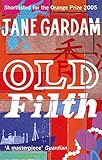
This is my review of Old Filth by Jane Gardam.

The misleading title "Old Filth" refers to the nickname derived from international lawyer Edward Feathers' joke on himself: "Failed In London Try Hong Kong". The book begins with him in old age knocked off course by the sudden death of his wife Betty. The chapters, each of which is often a short story in its own right, then shift back and forth in time from the death of Filth's mother giving birth to him in Malaya, leaving his father, still traumatised from the First World War, unable to give him any love. Imaginative, original, often very funny, the underlying sad theme of this story is how the "Raj orphans", shipped back to England "for their health" were often neglected, even abused, and left unable to form sound emotional relationships.

From the first page, you feel in the hands of a very skilful writer, confident in her ability to write on a theme which may at first seem unappealing. However, I was actively hooked from the point at which Filth discovers that his worst enemy in the legal world has come to live next door to him. Some of the humour arises from whole scenes, such as Filth's hair-raising drive across England to meet a cousin – more of an expedition for him than finding his "way round the back streets of Hong Kong and the New Territories". At other times it is more subtle, arising in dialogues and little asides. Gardam is adept at letting the true, often colourful or moving aspects of Filth's supposedly dull life slip out gradually, but you have to concentrate hard not to miss something. A dark undisclosed secret haunts the book with the anticipation of some final climactic revelation, from which the fact you can guess it long beforehand does not detract unduly.

To nitpick over mild criticisms, there is a slight inconsistency in the style in that some chapters are pure farce, and therefore entertaining rather than moving, whereas others are a seamless blend of comedy and poignancy. I found the "Albert Ross" character very unconvincing, and the details in the last part of the book seem rather rushed compared to the beginning.

Yet, overall, it is well-constructed, a bold attempt by a sensitive female writer to enter into the mindset of an emotionally repressed, highly logical but unimaginative man, resulting in an unusual and original read. I shall look out for more of Jane Gardam's work, starting with "The Man in the Wooden Hat" which tells the story of Betty's life. This sequel may also explain some of the gaps in "Old Filth".

⭐⭐⭐⭐ 4 Stars

All things pass

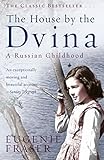
This is my review of The House by the Dvina: A Russian Childhood by Eugenie Fraser.

Her memories of distant childhood perhaps sharpened with age, Eugenie Fraser became an admired author at the age of 80 with a fascinating account of early life as the daughter of a Russian father and Scottish mother, living mainly in Archangel near the Arctic Circle and "midnight sun", in the final years of the Tsar's Empire and the chaos of the Russian Revolution.

Some of her best anecdotes were related to her by relatives, such as her grandmother's courageous journey across frozen wastes, braving frostbite and wolves, despite being eight months' pregnant to beg for clemency from the Tsar to release her husband from prison. At first, it irked me that the author never seemed to question the Tsar's right to exert such power, nor the comfort and luxury in which her family lived. However, having built up strong images of an idyllic childhood, her descriptions of the stupid bureaucracy, incompetence, and gross injustice perpetrated after the Revolution greatly increased my sympathy for her viewpoint. I was impressed by her bitter analysis of the Allied Intervention during World War 1, which only supported the White Army temporarily because it was anti-German, since "in reality the Allies did not care what government took over Russia". As her step-uncle bitterly commented, "Why did they come at all? We shall pay a heavy price for this."

In the middle of the book, I began to find the introduction of an endless succession of Russian relatives too much to take. I grew bored by her preoccupation with trivial matters while "glossing over" important issues such as her parents' relationship. Yet I am glad that I persevered because of the poignant and thought-provoking, not to say exciting, final chapters. She shows not only the intensity of the will and ingenuity to survive, abut also how the strongest spirit may break under intense hardship.

I am sure that many readers will enjoy without criticism the evocation of a lost past, with the exhilaration of the sleigh ride across the frozen Dvina, the camaraderie of the communal baths where even the wealthy went to wash, the observance of rituals and the colourful characters in a large extended family.

Throughout the tale there are continual comparisons between northern Russia and Dundee in Scotland, where Eugenie was fortunate enough to be able to take refuge.

⭐⭐⭐⭐⭐ 5 Stars

“Pure”: No master but reason?

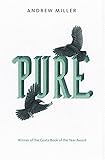
This is my review of Pure by Andrew Miller.

This unusual and imaginative take on the France of 1785, with unrest brewing in the streets of Paris and mines of the north, introduces us to Jean-Baptiste Baratte, the insecure young engineer from the provinces who is given the unwanted task he cannot refuse – the removal of the ancient cemetery of les Innocents, which is polluting the air and soil, threatening the cellars of the surrounding houses. It is not just a question of making the air “pure” but also on another level of relieving France of the corruption of the monarchy and the dead hand of the church, as indicated by one of Miller’s well-chosen quotations: “The time will come when the sun will shine only on free men who have no master but their reason”. We know, of course, that the imminent French Revolution will be flawed by the atrocities of men like Robespierre, just as we can appreciate our foreknowledge of the fate of the kindly Doctor Guillotin who assists Baratte.

The detailed account of the macabre operation of clearing bones rotting metres deep is saved from becoming too oppressive by Miller’s ability to create vivid pictures of the life of the Paris streets, combined with a cast of colourful characters, not to mention the slightly sinister cat Ragout, equally at home in a charnel house as on a lady’s lap.

Although some readers may be troubled by odd events which may be hard to explain, at least they provide scope for discussion. This is quite a dark read at times, with unsettling whiffs of necrophilia, yet also soft-centred, as in the portrayal of the perhaps too good to be true, refined tart Heloise. I found a good deal of wry humour in the book, such as the earnest and upright Jean-Baptiste allowing himself to get caught up in a drunken escapade to paint political slogans on city walls, calling himself “Beche”, but keeping shtum and feeling vaguely proud when the name “Beche” continues to appear for months afterwards.

Sometimes I felt Miller is playing to the gallery to boost book sales, but overall this is skilfully plotted, very well-written with many striking images, and some interesting points raised for you to mull over as regards say, how we may be corrupted by unpleasant tasks, how we may sell our souls, humiliate ourselves or others in the pursuit of ambition, and so on.

⭐⭐⭐⭐⭐ 5 Stars

Crossing the line

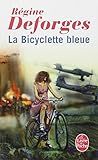
This is my review of La Bicyclette Bleue (Le Livre de Poche) by Regine Deforges.

The first in what I believe to have become a saga of ten novels, it is easy to see the initial resemblance to "Gone with the Wind". In Lea, daughter of a wealthy vineyard owner, we have a spoilt, sexually alluring young woman who is set on the one man she cannot have, Laurent, the pale and frankly not very interesting neighbour who insists on honouring his longterm commitment to marry his frail, and to Lea pathetic, cousin Camille.

Any similarities to Margaret Mitchell's famous work do not matter, since we have the different location of France on the brink of World War 2 with all its potential for drama – initial complacency followed by the horrors of bombing, the shame of occupation, temptation to collaborate and the dangers of taking part in the resistance. Yes, this story is riddled with implausible coincidences, and could be a candidate for a bad sex award, but it's excellent for testing and extending one's knowledge of French – full of idioms and useful vocabulary, with a good pace and clear development of a variety of complex, flawed characters to provide continuous interest. There are some genuinely moving and shocking moments, as well as humour. I have also learned more about, for instance, the differences between the occupied and "free" zones established by the Germans working with Pétain, and realised how families were often split over the issue of giving support to either Pétain or De Gaulle.

It may not be great literature, I might feel a bit sheepish about spending time on it if I were French, but recommend it as an enjoyable way of improving one's French from a base of A Level.

⭐⭐⭐⭐ 4 Stars

Paved with Good Intentions

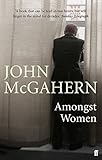
This is my review of Amongst Women by John McGahern.

Aloof and uncompromising, Moran is disappointed with the independent Ireland for which he has fought, and vents his frustration in an ongoing battle to dominate his children, compliant second wife Rose and even his old friend McQuaid who shares his memories of the past. Perhaps Moran only felt alive in his days as a guerrilla leader, perhaps he was traumatised by some of the brutality in which he was caught up.

Although this is one of those tales in which not much happens, I was soon hooked by McGahern's spare prose and subtle ability to convey a sense of place and of human relationships as he describes in minute detail the nuances of family relationships in the rural Ireland of around 1960. On the one hand, I was repelled by the narrow restrictions, the over-concern with convention and religious rituals. On the other, McGahern makes us aware of the value of family ties, working together on the land, taking pleasure in the small simple things of life, enjoying the familiarity and beauty of the farmland. All this is made more poignant by our knowledge of the transience of this way of life, as inevitably the children leave to make a better living in Dublin or London – or to escape the tyranny of a man whom most of them regards as "always…. the very living centre of all parts of their lives".

Moran's bullying, sarcasm and desire to stand on his dignity and have the last word do not endear him to me. Much of the quiet tragedy of this book is the high price he pays for his behaviour in terms of the loss of his old friend McQuaid, even his eldest son. It is quite hard at times to understand how his stoical wife Rose manages to turn the other cheek.

Highly recommended, this is a thought-provoking and moving read which enhances our understanding of ordinary life, with a wry humour to counter what may sound like the downbeat misery of the theme.

⭐⭐⭐⭐⭐ 5 Stars

An Arctic Turn

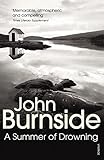
This is my review of A Summer of Drowning by John Burnside.

At first I thought this would be a tale of suicides by drowning and disappearances with a possibly supernatural cause, fed by the folktales of northern Norway and the setting on Kvaløya, a real vaguely clover leaf shaped island west of Tromsø, north of the Arctic Circle where in summer the midnight sun drives people to insomnia, hallucinations, even madness.

Then I decided it is an intense psychological study of Liv, a highly intelligent, observant , introspective girl brought up in unusual isolation by her mother, a talented but selfish and coldly objective artist.

In the end, I could not ignore Liv's conviction that an evil spirit or "huldra" is at work in the body of a local girl. Yet, some events remain unexplained or ambiguous, so that you can, if you choose, attribute them to Liv's possible descent into madness.

What impressed me most is the description of Kvaløya, with its sense of the suspension of time as we know it – there is a good deal in this book about reality being an illusion and vice versa, made credible in this location. Burnside is also very skilled at encouraging us to reflect on the nature of our existence – at first it seems odd, even shocking, that a bright girl like Liv has no friends, wanders about for hours on end doing nothing in particular, but her reflections help us to see that in many ways our frantically busy, occupied, materialistic lives may lack real meaning.

Burnside's poetry gives his prose great intensity. There are many striking images: the arctic terns which follow the sun, dipping into the water for silver fish, the blurring of the land, sea and sky into the same colour, a spirit conjured by a folktale evident through "the tremor in a glass", and so on.

When it comes to the analysis of thoughts, with every look and phrase examined from many angles, yet much left cryptic or open to question, his writing can be a little too much to take. Yet, the intensity, combined with some repetition, contribute to the hypnotic quality of the writing.

Minor criticisms are the tendency to tell us what is going to happen, the prologue which seems to me like the statutory hook required by a publisher – and in this case quite misleading as to the nature of the novel – and the shortcomings of the "dramatic climax".

Burnside is a talented writer and much of this is a gripping read, although I felt that the mixture of the pragmatic with the supernatural ultimately does not quite work. If nothing else, he has introduced me to the wonderful paintings of Harald Sohlberg.

⭐⭐⭐⭐ 4 Stars