Lost Lessons of Truth Stranger than Fiction

This is my review of Return of a King: The Battle for Afghanistan by William Dalrymple.

Fearing Russian designs on India in "The Great Game", the British tried to gain influence in the potential Achilles' heel of Afghanistan. Ignoring expert advice, they chose the wrong side in reinstating the honourable but hidebound Shah Shuja whom they imagined would be more malleable than the shrewd reigning monarch Dost Mohammed.

If this regime change reminds you of more recent events, there are also parallels in the lack of strategic planning and a "longer view", and neglect of the topography, climate and culture of the area. In breathtaking arrogance admittedly combined with crazy courage, the first 1839 British invasion of Afghanistan set off in winter, ignoring the several feet of snow in the mountains, omitting to clear rough terrain for gun carriages or to protect themselves against ambush and constant sniping once they entered the narrow mountain passes. The problem was compounded by the thousands of camp followers, women and children with presumably no means of support if they stayed behind.

If the detail is often overwhelming, the quirky truth which is stranger than fiction grips one's attention: three hundred camels needed to carry the military wine cellar whilst elsewhere troops could not advance owing to lack of camels to transport vital supplies. One regiment even brought its own foxhounds, which somehow survived to hunt jackals later!

It is all the more poignant that, having reached Kabul after suffering terrible privations yet still gaining the upper hand, the army squandered its advantage under dithering leadership so that in the ill-advised, typically chaotic eventual retreat only one man made it back to Jalalabad, not counting the thousands left behind as captives.

In what resembles an epic novel, Dalrymple describes how the British sent an Army of Retribution to salvage a little honour by taking brutal reprisals which would now be regarded as the most vicious war crimes, but in the end the government wrote off the vast sums spent on the unsuccessful regime change.

Apart from the numerous astonishing anecdotes and vivid character studies, one of the most interesting aspects of the book is the extensive quoting from the colourful prose of the historians of the day: "Abdullah Khan Achakzsi…..launched an attack like a fierce lion or the serpent that inhabits the scented grass".

Although Dalrymple supplies a list of all the main characters with accompanying explanations, I found this too indigestible as an opener, and recommend keeping your own notes of "who's who".

My only criticism is the inadequate maps. Also, apart from the reduced weight, this is less suitable for a Kindle in that maps and family trees are illegible on the small screen, plus it's too fiddly checking out details from previous pages as is often necessary in this type of book. It's also harder to appreciate on the Kindle that the main text is shorter than it seems, the last 30 per cent of the book being notes.

This is a fascinating account, although it focuses narrowly on 1839-42. For a wider sweep, try "Butcher and Bolt" by David Loyn.

⭐⭐⭐⭐⭐ 5 Stars

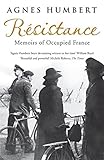
Resistance: Memoirs of Occupied France by Agnes Humbert – Fighting to prevent war

This is my review of Resistance: Memoirs of Occupied France: Translated by Barbara Mellor by Agnes Humbert.

Although I read this in French, which I would recommend for the natural, unpretentious style and vivid idioms, these comments may be useful for the English version.

An early feminist with the confidence of a senator's daughter, left-wing with a career in a Paris museum, two grown up sons, divorced from her artist husband, when the Vichy government decided to collaborate with Hitler, Agnes Humbert felt obliged to take action. Her "Journal de Résistance", for practical reasons probably written mainly after many of the events covered, is less about her work typing and distributing propaganda, and much more an account of life as a political prisoner, sent to Germany as a slave worker.

She makes us aware of the ingenuity of prisoners, their overwhelming desire to communicate, and the poignant rapid adaption to a state in which one can barely remember any other way of life. She describes in detail lying on the floor to enable one's voice to pass under the cell door, making a ball out of fruit wrappers, only for a sadistic guard to hear the sound of her playing with it and transfer her to a dirtier cell with no window as a punishment.

The grimmest section is the record of life operating the machinery in a rayon factory, which meant exposure to acid, blistering the skin, damaging eyesight and affecting breathing. This may well have contributed to Humbert's death later in her sixties. Despite her efforts to produce shoddy goods (reels of silk with hidden knots) I could not help noting the irony that her factory work probably contributed more to the Nazi cause than the activities which landed her in prison damaged it.

The final part shows her resilience, regaining a joie de vivre very quickly once freed. Her spirit uncrushed, she challenged the local German women to set up a soup kitchen and hospital for everyone in need, regardless of origin, and was pro-active in denouncing local Nazi activists. Her scathing view of the Poles is a little hard to understand, although one can sympathise with her irritation over the Americans' lack of vigour to see justice done, and their preference for "taking the easy path", not having suffered in war as she had done. At the end, she showed a degree of tolerance, able to see that some Germans were good people despite lacking the courage to resist Hitler.

⭐⭐⭐⭐ 4 Stars

Revealer of secrets

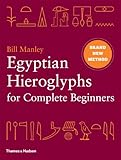
This is my review of Egyptian Hieroglyphs for Complete Beginners: The Revolutionary New Approach to Reading the Monuments by Bill Manley.

A visit to Egyptian temples where at least some hieroglyphics have survived the vandalism of fanatics from other religions is likely to kindle an interest in this subject. In a book that is attractively presented as you would expect from Thames and Hudson, but not too expensive since it is illustrated in black-and-white, Bill Manley succeeds in explaining the principles of hieroglyphics from scratch.

I have no idea how an expert would rate it, but I found it easy to grasp that many picture symbols in fact represent sounds: an owl is "m" and a ripple of water "n". You need to digest each principle before moving on to the next step, since Manley quickly introduces complications: 2 sound and then 3 sound signs, moving on the the "difficult to grasp" concept of "sound complements" which I found hard to understand as I was trying to go too fast. Then, there are the ideograms, or elements of "picture writing" such as the representation of the god Anubis as a dog lying on a shrine. Other symbols with a special sign added denote whole words, such as "mouth".

It is fascinating to realise that, whilst spoken Egyptian obviously had vowels, these were rarely written in the hieroglyphics, which in sense form "word skeletons" of consonants – like text speak! Also, hieroglyphics can be read in either direction, according to the direction in which the symbols are facing. Although knowledge of how to read this ancient script was lost for centuries, its similarities to Egyptian Coptic eventually provided the key to translating it.

If you do not wish to work systematically through the book, a good deal of enjoyment can be gained from browsing with a focus on lists of words and annotated diagrams which interpret inscriptions on famous monuments. What makes this book both distinctive and successful as an absorbing introduction is that the chapters are designed round a number of stelae – carvings – selected from monuments erected between 3000 and 1100 BC. Avoiding the risk of becoming a dry grammar, Manley takes care to include an explanation of Egyptian culture along with the language instruction.

An experienced teacher, the author is clever in his approach, since skimming through the book whets your appetite to make the effort to get to grips with the detail and so obtain the satisfaction of getting more out of viewing monuments in the future.

⭐⭐⭐⭐⭐ 5 Stars

It’s a vlog innit!

This is my review of Collins Scrabble Dictionary: Deluxe edition.

Receiving this as a present just after having purchased "Official Scrabble Words" for someone else has made me aware of the large amount of merchandising accompanying this popular game. It seems a little "over the top" to have a hard slip cover for this hardback book, but I suppose this is the only way it can be described as "Deluxe", gold edging being perhaps too costly!

I particularly like the fact that it explains the meanings of words like "noilier", thus convincing one that they really exist, like "vugg" and "vugh", apparently variations of "vug", a small cavity in a rock vein, usually containing crystals.

At first I found it easier to use than the latest cheaper since non-deluxe word list. With just a single alphabetical list of words regardless of length, you do not have to think how many letters a word might have. It is also very concise so that words can be found more quickly than in a conventional dictionary. The downside is the frustration of knowing that it omits words you know exist in other scrabble cribs – but don't you feel a bit of a cheat gaining points with "aa" or "snotrag"? But it's more annoying to be unable to use words you are pretty sure exist in a large standard dictionary.

So, I'm a bit ambivalent about this book. At least, I now know what a "vlog" is (video weblog). Yet, should I be pleased that it permits the use of "innit"?

⭐⭐⭐⭐⭐ 5 Stars

From aa to za

This is my review of Collins Official Scrabble Words by aa vv.

This compilation of words approved by WESPA (The World English-Language Scrabble Players' Association) has a tantalisingly brief one-page introduction. It seems that "addios" and "ciaos" are no longer accepted, as was formerly the case, but "blingy" and "mwah" are now "playable". In the search for high scoring words, qin, coxib, boxty, juvie, soz and figh are all allowed, but what do they all mean? The main shortcoming of this book is that we are not told, but I suppose that it would be too thick to open if we were. Then, of course, there are the "7's" to note: neetroot, noilier and snotrag!

Perhaps of more use for the amateurish player like myself, is the revelation of all the two letter words permissible, from "aa" to "za". The book consists in fact of two lists in alphabetical order, five columns a page: firstly two to nine letters, then ten to fifteen for those in a higher league.

Using this book has enhanced my scores, although to learn from it one has to bend the rules and let everyone consult it, which can slow down the pace of the game!

⭐⭐⭐⭐ 4 Stars

Brilliant evocation of a past Sicily to understand the present

This is my review of The Leopard: Revised and with new material (Vintage Classics) by Giuseppe Tomasi Di Lampedusa.

Intrigued by what has been described as "perhaps the greatest novel of the (C20) century" and assisted by Colquoun's excellent translation, I was soon absorbed in the decaying feudal world of "The Leopard", Don Fabrizio in 1860s Sicily on the brink of yet another political change, with Garibaldi's uprising and the move to Italian unification.

At first, Don Fabrizio seems no more than a selfish despot, neglecting and terrorising his children, humiliating his wife by not bothering to conceal an after-dinner visit to a mistress, compromising the long-suffering Jesuit priest Father Pirrone by giving him a lift into town on the way. Then we begin to appreciate his complexity. He will talk to his organist Don Ciccio on equal terms when they are out hunting together, then insist the man agrees to be locked up in the gun-room for hours so he cannot prematurely reveal a piece of information confided to him by the Leopard.

Sympathy grows as we grasp the deep interest in mathematics and astronomy which makes him most happy when gazing through a telescope at the stars. He understands all too well the plight of Sicily, "for twenty-five centuries … bearing the weight of superb and heterogeneous civilizations, all made from outside…none that we could call our own". This is why the Sicilians have turned in on themselves, become backward-looking, locked in tradition and unresponsive to any opportunities the new "free State" might bring. "Our sensuality is a hankering for oblivion, our shooting and knifing a hankering for death". The violence of the landscape and cruelty of climate, so well-described throughout this book, have added to the Sicilians' "terrifying insularity of mind".

So it is that Don Fabrizio leaves it to his wily, appealing nephew Tancredi to play an active part in the new world, and ensures he has the financial means to do so by letting him marry Angelica, the beautiful daughter of the local peasant upstart Don Calogero who has enriched himself at the expense of landowners, not least Don Fabrizio, too indolent through a sense of entitlement to bother to manage their affairs shrewdly.

Despite the underlying theme of stagnation and decline, this book is in fact entertaining and wrily humorous. The remarkably vivid prose makes any other novel you may be reading seem lightweight. It needs to be read slowly and more than once to appreciate its quality, perhaps because the author infused so much into the only novel he ever wrote.

I agree with reviewers who feel that the book tails off towards the end. The climax is Chapter IV, "Love at Donafugata" in which Don Fabrizio elaborates on the state of Sicily, clarifying impressions sown gradually in previous pages. Perhaps it should end at Chapter VI, "The Ball", with the Leopard looking up at Venus. The following chapters on his death (given in the heading so not a spoiler) and the sadness of his spinster daughters' lives in old age make good short stories, but undermine the arc of the main plot set in the pivotal years of change in 1860s Italy.

⭐⭐⭐⭐⭐ 5 Stars

Tennessee Williams with a comic twist

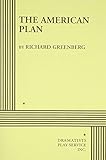
This is my review of The American Plan by Richard Greenberg.

First produced in 1990, but dated in its fifties setting, this play with its focus on a neurotic young woman reminded me strongly of Tennessee Williams but with an often comic dialogue which seems at times out of kilter with the underlying pathos and forewarnings of possible tragedy.

In the remote Catskill Mountains, a beautiful although apparently unstable girl flirts with a young man who climbs up from a lake onto the jetty where she sits reading. Is her widowed German Jewish mother really a control freak who has spent several previous summers scaring off her daughter's boyfriends, and will she do so again? Is the young man himself quite what he seems? Who is the the publisher of about the same age who insinuates himself into the isolated household shortly afterwards?

This is about the blighting effect of lies, and the way in which people may be reduced to inaction by conflicting desires and emotions.

Greenberg develops some interesting relationships, such as that between the snobbish, prejudiced mother and her enigmatic black servant, who is prepared to "play her part" in public whilst communicating with her in an almost equal role of companionship in private. The author establishes an intriguing drama which promises much, although I found the ending rather flat and disappointing. His suggestion that "happiness is for others" seems a bit trite, simplistic and unmoving in its self-absorbed excuse for passive acceptance of life's blows.

⭐⭐⭐⭐ 4 Stars

Seize Hope Discard Stigma

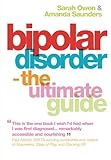
This is my review of Bipolar Disorder – The Ultimate Guide by Sarah Owen,Amanda Saunders.

Apart from the hint of manic "grandiosity" in its claim to be "the ultimate guide", this well-designed and informative book by two cousins whose families include several members with "bipolar disorder" proves to be refreshingly honest and sensibly optimistic.

Based on the answers to wide-ranging practical questions, the chapters move systematically through causes and symptoms, treatment, support, hospital, care, lifestyle choices and "living with bipolar" – here I just wish they'd add "condition" if they can't face "disorder".

I found the frequent case studies very useful, because they help a friend or relative to gain some comfort and reassurance from the recognition of common symptoms, the resultant problems experienced also by others, the guilt over having got someone sectioned, the encouragement of learning that a severely bi-polar person may be able to lead a satisfactory, even happy life outside hospital.

I was most moved by the comment in praise of "self-management": "It's spring, I'm normally in hospital now."

Although the writer Paul Abbott found the book "accessible and nourishing", I sympathise with those sufferers from bipolar disorder who find it depressing because it makes them feel a burden as they realise the problems they create for others (although if you love or like someone you just want to help them), or who argue that each case of bi-polarity is highly individual, so that it may prove ineffectual, even harmful, to foist on a sufferer some measure which worked well in one of the case studies. So, whilst excellent for carers, the book is probably only useful for sufferers who are "on the mend" from an episode, with a degree of insight and acceptance.

⭐⭐⭐⭐ 4 Stars

Having one’s cake and eating it at a price

This is my review of Bel Ami by Guy de Maupassant.

An ex-soldier of humble origin, Georges Duroy finds work in Paris where he is irked by his poverty until he discovers that his success with women brings financial and social advancement. Employed as a journalist, his greed and corruption increase as he rises in a world where the powerful and influential come to admire his risk-taking guile. His nickname "Bel-Ami", coined by the precocious daughter of his mistress, becomes widely adopted, although the child has in the meantime lost trust in him, disappointed by his fickle insincerity.

This is a cynical study of C19 Parisian society. It is entertaining, full of wry humour, quite pacy in its plot and surprisingly modern in its frank exploration of psychology. There are many gripping studies: Duroy facing death on the eve of a duel, an aspect I have not seen covered before; Duroy and his equally scheming wife looking into each other's eyes in a moment of truth about their relationship, yet each unable to know what another human being is thinking; an old journalist revealing to Duroy the horror of death which haunted Maupassant himself. I also admire his vivid descriptions of, say, the countryside, the changing sky, the sinister unfamiliarity of a rural forest to a citydweller, the vitality of Les Folies Bergers.

Maupassant's characters are flawed but "real" in their complex, shifting motives and emotions. He writes with a searing simplicity, free of any artifice or pretension, and a fluidity that makes it seem effortless.

⭐⭐⭐⭐⭐ 5 Stars

Piacere!

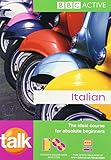
This is my review of Talk Italian: The Ideal Couse for Absolute Beginners (Book & CD) by Alwena Lamping.

If you wish to gain a smattering of spoken Italian for a short visit, this attractively presented booklet with 2CDs is useful. Most of the short numbered sections are cross-referenced to tracks which focus on realistic dialogues at what sounds like a "natural speed". If you replay them enough, some basic vocabulary and phrases become embedded. Answers to exercises and quizzes are included at the end. The chapters cover the usual essentials of greeting people, asking for directions, shopping, dealing with hotel reception, public transport and ordering meals. The approach is direct and practical, with little explanation of grammar.

If I have any criticism, it is the inclusion of a slightly arbitrary list of countries and nationalities, without providing the pronunciation for each one. Similarly, a few occupations are included e.g. accountant, architect and secretary, which hardly seem typical. Why not include categories such as teaching, finance, administration, computing etc. which might be more useful? Also, perhaps there could have been more focus on practical issues such as finding a car rental office, seeking advice on an ailment at a pharmacy, asking at reception for a hair dryer or needle and thread etc.

Overall, you can get quite a lot out of what looks like a slim booklet, but if I seriously wished to learn Italian I would go for a more in-depth and systematic approach.

⭐⭐⭐⭐ 4 Stars