Capturing the leopard

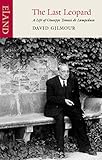
This is my review of The Last Leopard: A life of Giuseppe Tomasi di Lampedusa by David Gilmour.

If Lampedusa, who in due course became the Duke of Palma, comes across as rather dull, it was partly due to his intense introversion with strangers and also because his life seemed to revolve round consuming literature, history and cakes in prodigious quantities. The author succeeds in showing how Lampedusa's only published novel,"The Leopard", sadly rejected until just after his early death from cancer, was the fruit of decades of musing about his aristocratic family, the state of Sicily and the reading which must have developed his sense of style.

The most interestig part of the book are the final chapters on "The Leopard", which you need to have read beforehand, with an exploration of the extent to which the leading character Don Fabrizio was modelled on Lampedusa's great-grandfather Prince Giulio during the Risorgimento in the 1860s, which brought about the unification of Italy and the break up of the old feudal estates, or on the author himself. Like Don Fabrizio, Giulio was a keen astronomer, but he was probably less of an autocrat. As regards his "sceptical intelligence ….. long periods of abstract thought… and pessimistic view of Sicily and Italian unity….. Don Fabrizio is more autobiography than invention", but he is also "transformed into the person the writer would like to have been".

On the author's own admission, the charming Tancredi is based partly on his adopted son Gio, although "as for his morals….Gio is fortunately much better than him". Yet Tancredi also seems to be an amalgam of some of the young Sicilan aristocrats who joined Garibaldi, for excitement rather than out of conviction.

The huge, violent and mixed reaction to "The Leopard" also makes fascinating reading. Many who thought they knew Lampedusa were astonished that this polite, self-effacing man could hold such cynical and negative opinions. One of the strangest criticisms was that, in being readable with clear characters and conventional syntax, the book failed to achieve the kind of "avant-garde experimentalism" which was in vogue in 1950s Italy.

Another critic even attacked Lampedusa for writing about animals in a "silly" way when in fact the portrayal of the faithful hound Bendico is one of the most humorously touching aspects of the novel, revealing the love of dogs, above people, which Lampedusa displayed in real life.

His marriage is intriguing: he braved his possessive mother's wrath by marrying a formidable pyschoanalyst, who also happened to be a wealthy Latvian aristocrat, but soon settled into what seems to have been a largely intellectual relationship with her, choosing to live with his mother until her death rather than with his wife, since the two women could not get on. Gilmour comments that "flames for a year, ashes for thirty" seems to have been both Don Fabrizio's and Lampedusa's view of love for their wives.

I would have liked the final chapters to have been longer, and more on the socio-political events which formed a background to both Lampedusa's life and his famous novel. The photographs which I discovered at the end of my kindle version are well-chosen.

⭐⭐⭐⭐ 4 Stars

Tone curl

This is my review of Gone Girl by Gillian Flynn.

"Everyone knows it's always the husband": Nick is the obvious main suspect when his wife Amy disappears on their fifth wedding anniversary. Yet what kind of a mixed-up mess is she, after a lifetime of providing the model for her parents' money-spinning set of stories about "Amazing Amy", a modern Pollyanna designed to entrance both children and parents?

Gifted with a rampant imagination, Gillian Flynn has devised an intriguing situation with a labrynthine plot which hooked me because I sensed both that what I was being led to believe was false and that what I thought I was being clever in anticipating would prove a red herring as well. I like the gradual revelation of events in which truth and lies are hard to disentangle, the shifting relationships between the main characters, some sharp script-writerly dialogue, moments of real comedy in what seems to be mainly a black farce, and the continual parodying of the media-driven, hokey, faddish side of American culture. I liked it less when I started to suspect that the author herself might be too much part of this so that some of these parodies were imagined on my part.

Too often, the style lapses into a cheap magaziny tone, abetted by the author's love of creating adjectives ending in "y". I became irritated when the spate of quirky wit and imagination sank into slapdash banality. Are the false notes of trashiness unintentional or part of a plan to lure readers along with just enough but not too much violence and soft porn?

Although the commonly used device of alternating chapters between first person Nick and Amy works well, they both indulge in too much "telling" of their self-knowledge. Then, there is the continual underlying voice of the same caustic-tongued yet also often tweely sentimental female – incongruous for Nick in the midst of all his macho lingo and activities culled by the author from an obliging husband. I learned the latter in the acknowledgements at the end, which I mistook at first for Amy's play-acting of what an author's falsely modest, saccharine sign-off should be.

The nature of the final twist seems quite apt to me, but I was disappointed by its execution. I agree with reviewers who have found the final chapters too rushed and weakly developed – including some major flaws on the plausibility front.

Overall, I can see why this is a best-seller, probably one in a run of many. It is a page turner, good distraction for an economy airline flight, and a trigger for lively discussion at a book group if this does not cause an irrevocable rupture between the pulp fiction addicts and blue stocking readers, but with a little more care over style it could have been brilliant.

⭐⭐⭐ 3 Stars

The madness of reason

This is my review of Proof by David Auburn.

Although professional critics have marked this play down as shallow, I found it absorbing and moving – likely to prove challenging and rewarding for both the four actors involved and their audiences.

Clearly influenced by the at times tortured life of the mathematician John Nash whose intriguing blend of madness and genius has been portrayed in the probably better known "A Beautiful Mind", "Proof" focuses more on the effects of mental instability on other family members. Although mathematics lies at the heart of this play, we are never given a specific theory or real analysis but this does not matter since, apart from the fact it would be incomprehensible to most of the audience, the details are not the point.

The strength of this play is that you can take from it what you wish. What about the daughter who has sacrificed her own mathematical talents in order to care for her sick father? Has she inherited both his genius and his malady? Is this what helps her to empathise with him so strongly? Should we blame her pragmatic sister for going off and making a life of her own? She has at least supported the others financially, but are her good intentions unforgivably insensitive? How sincere is the young man so keen to trawl through the sick man's notes in search of some revolutionary proof? Is he motivated by a respect for academic achievement, or something more self-serving?

I suppose you could argue that to raise so many issues without providing any resolution of them is a weakness, but I would say that this play gives you a chance to understand and reflect on aspects of human behaviour and relationships which most people do not encounter, or, if one does have to deal with madness, this provides some thought-provoking, even comforting points of connection and reference. Despite a theme that may sound depressing, the dialogue is often funny and never dull while a slight plot is skilfully developed through a strong structure.

⭐⭐⭐⭐ 4 Stars

Releasing truth

This is my review of Cassandra at the Wedding (New York Review Books Classics) by Dorothy Baker.

How do you react when your identical twin sister announces her intention to get married? Particularly if you have spent your entire childhood in the self-contained bubble of a rural backwater, with an academic philosopher for a father, encouraging you to dissect every thought, and a novelist mother to feed your preoccupation with words? What if your parents have laboured to make you different in superficial matters, overlooking the fact that you differ in the deep sense that one twin wishes to share the same life forever whilst the other wishes to break free into adulthood?

This recipe for high drama is a gripping page turner. I could not wait to get to the end, knowing that I would need to go back later to milk Baker's keen prose for the full sense of all her sharp and original observations. It often reads like the plays for which the author was well-known, with the advantage that a novel gives scope for the deeper introspection and exploration of the characters' inner thoughts.

The book is written from the alternating viewpoints of the two sisters: Cassandra and Judith, which gives you in time their very different takes on the same situations. Cassandra is neurotic, manipulative, a keen observer of others, with a biting wit, but an utterly unreliable narrator who lacks a sense of proportion, a source of huge irritation but also great sympathy to the reader. This is a tragi-comedy with many moments of great humour, and a light touch which adds to the pathos of the sadder events without making them too heavily dreary or depressing. Unlike some reviewers (including Lowri Turner in the introduction to my copy, which was a total spoiler so I am glad I did not read it beforehand), I did not find the ending disappointing – rather neat yet also satisfyingly ambiguous in some ways.

It is surprising that such a modern-seeming novel should have been written fifty years ago by someone born in 1907. It does not seek to shock, because it does not need to do so to stand out, with its subtle and distinctive approach. I am sure that, if written today, it would be on all the major prize shortlists.

⭐⭐⭐⭐⭐ 5 Stars

Warped insight

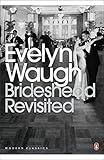
This is my review of Brideshead Revisited: The Sacred and Profane Memories of Captain Charles Ryder by Evelyn Waugh.

Vivid and original descriptions, sparkling streams of consciousness with perfect grammar and impeccable punctuation, telling observation of character, sharp dialogue, and high comedy mixed with bitter irony – all the evidence for Waugh's reputation as one of England's greatest novelists is here. I can appreciate his nostalgia for a no doubt rose-tinted view of a past way of feudal life and the novel also provides some intriguing social history of the lives of a privileged few between two World Wars, as when an Oxford undergraduate casually expects a friend's drunken vomit from the night before to be cleaned up by a servant.

On the other hand, the snobbishness, treatment of "the lower classes" as a lesser breed, and frequent racist and chauvinist comments which seem to be a product of his own prejudice prevent Waugh from seeming a great novelist in terms of vision.

The most interesting aspect of the novel for me is the parallels to be found with Waugh's own life, despite his attempts to deny them. The bored Captain Charles Ryder doing his war service is Waugh stuck in England on petty exercises rather than seeing real action. Ryder's infatuation with Brideshead and the Marchmain family is Waugh's with Madresfield and the Lygons. Sebastian Flyte is partly the captivating, alcoholic drifter Hugh, and Julia is modelled on his beautiful sister Maimie, denied the opportunity to marry royalty because of a family scandal. Julia's fiancé Mottram's comical attempts to convert to Catholicism at any price are reminiscent of Waugh's own rather bizarre exchanges with the priest he had to satisfy to achieve his own conversion. The flamboyantly gay, precociously effete Anthony Blanche is, on Waugh's own admission, two-thirds Brian Howard and one-third Harold Acton, reciting poetry through a megaphone.

A weakness in the plot seems to me to be the scandal of the Earl's flight to Venice with his mistress Carla – his offence does not seem "bad" enough to justify the blight on the Marchmains. In this, truth was more dramatic than fiction: Earl Beauchamp (William Lygon), a major Whig politician, was forced into exile to avoid an Oscar Wilde-type humiliating trial when his officious brother-in-law threatened to make public his rampant homosexuality.

The part I find hardest to understand is Waugh's treatment of Catholicism which he saw as crucial to the work. He suggests to me that Hugh and Julia are "screwed up" by a religion that tortures them with a sense of guilt over the "sins" they are too self-indulgent to deny themselves. Using Ryder as mouthpiece, Waugh does a pretty good job in sending up Catholicism, exposing the confusion and illogicality of its practice. Yet, he clearly implies that, like him, Ryder converts to this faith, but Waugh does not supply a clear explanation as to why and how this occurred.

Whilst being a compelling read, this is one of those novels which need to be revisited to appreciate it fully. It is also ideal for a book group, since there is so much to discuss about style, structure, plot, characters and aim, plus it is likely to divide opinion quite sharply.

⭐⭐⭐⭐ 4 Stars

The entertainment value of psychopaths

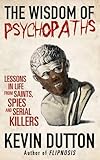
This is my review of The Wisdom of Psychopaths by Kevin Dutton.

Ruthlessly cool under pressure, fearlessly risk-taking, charming, manipulative, lacking in empathy and focused – these are the characteristics of clinically insane psychopaths, but also of many CEOs, surgeons, soldiers and bomb disposal experts i.e. people who make a vital contribution to society.

Although I was keen to read more about this from a "renowned psychologist" (see back cover), I soon became frustrated with this book. It is partly the tendency to gallop off at a tangent, losing the thread in the process. The subjective nature of many observations, coming from a scientist, made me uneasy. "But there's evidence to suggest that, deep within the corridors of the brain, psychopathy and sainthood share secret neural office space."

Experiments are cited but they often seem chosen for their gimmicky appeal with confusing explanations of the research methods used. I could have done with a simple diagram of the various parts of the brain and an explanation of things like synapses and neurons in context!

I was also put off by the roller-coaster of Kevin Dutton's overblown prose style. "Streaming behind our fuel-injected, turbo-charged brains are ancient Darwinian vapour trails stretching all the way back to the brutal, blood-soaked killing fields of prehistory."

Too often, there is a breathless capital letter. At the start of every phrase. When he is getting carried away. To quote from his meeting with an American con man. "At close quarters. I distinctly remember our meeting in New Orleans. And how I felt at the time. Enthalled but creeped out …… Despite the millionaire yachtsman vibe, I was under precious few illusions as to the kind of man I was dealing with. Here in all his glory was a psychopath. A predatory social chameleon. As the champagne flowed, and the slow southern twilight glinted off his Rolex, he would colonise your brain synapse by synapse without even breaking a sweat. And without you even knowing." (But surely you do know if you are only interviewing him because of your interest in psychopaths, plus most normally discerning people would be wary of his type anyway).

I am sure many readers will find this book entertaining, but I prefer the more systematic and objectively informative approach to the intriguing but painful and damaging topic of mental disorder, such as to be found in "Madness Explained: Psychosis and Human Nature" by Richard Bentall.

⭐⭐⭐ 3 Stars

Good yarn a little frayed

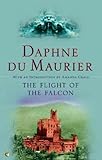
This is my review of The Flight Of The Falcon (Virago Modern Classics) by Daphne Du Maurier.

Armino Fabbio, a competent but jaded tour guide, feels responsible for the death of someone perhaps recognised from his childhood. This takes him back to Ruffano, the quaint Italian hill town of his birth, which revives memories not only of the destructive effects of World War 2 on his family but also of his domination by Aldo, the charismatic elder brother shot down as a pilot.

Despite a promising beginning and my huge admiration for gripping psychological dramas like "Rebecca" or "My Cousin Rachel", I was sufficiently unengaged by this novel to notice with disappointment the flaws: two-dimensional characters, stilted dialogues, unlikely coincidences, some rather tedious surfeit of detail. Yet many passages are brilliant, apparently effortless in their clarity and striking impact. I was also tantalised by my inability to grasp the geography of the place, and would have liked a streetmap.

Published in 1965, twenty-seven years after Rebecca, this novel may be a bit dated, the work of a popular novelist still spinning yarns in the style of earlier decades, without any further development as a writer. In spite of my reluctant reservations, although I guessed the key twists in advance, and some of the plot is a bit ludicrous, I was gripped eventually – I think by the idea of Fabbio being able to pass himself off as a stranger in familiar territory, even with people he once knew. This intriguing aspect of "false identity" is often employed by Du Maurier.

I found Fabbio an emotionally cold character, which could be attributed to his dysfunctional childhood, but was interested to read that Du Maurier herself often seemed rather chilly and remote.

⭐⭐⭐⭐ 4 Stars

“Beware of Pity” by Stefan Zweig – Pitfalls of Pity

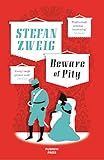
This is my review of Beware of Pity (Stefan Zweig’s classic novel) (B-Format Paperback) by Stefan Zweig.

Set in the Austro-Hungarian Empire just before the outbreak of the First World War, a story which you might expect to find dated proves very gripping. It is written from the viewpoint of Anton Hofmiller, as he looks back ruefully to the time when, as a young cavalry officer, emotionally undeveloped after spending his adolescence in army training, he was first flattered to be wined, dined and treated with unwonted respect in the house of a wealthy local aristocrat, then moved by the plight of the teenage daughter of the house, paralysed by an unspecified illness.

Although you may guess the general direction of the tale it is remarkable for the depth with which Zweig explores the narrator’s complex emotions, and for the vivid evocation of a world about to end – the privileged, snobbish, ritualistic ostrich-like world of the ossified Austro-Hungarian army. He describes with great realism the joys of riding in close formation with one’s men, or galloping freely across the countryside, the huge social pressure to conform in this community rife with gossip and banter bordering on bullying. The book reminds me strongly of Roth’s “The Radestky March”.

If the style sometimes seems anti-semitic, this must be a reflection of the times, since Zweig was himself a Jew. I admit to finding the emotional intensity overwhelming at times, although Zweig has a gift for taking you to the limit of endurance and then introducing a fresh development which releases the tension and shifts you to a contrasting mood – which may in turn become too much. In view of Zweig’s suicide during World War 2, a few years after this book was written, one wonders how much it reflects the overwrought emotional rollercoaster of his own thoughts.

I understand why some reviewers feel the plot is too slight for a full length novel, but on balance Zweig “carries it off” as a psychological study and period piece. I could have done without the “frame” device used, apparently quite popular in the early C20, i.e. to commence with another narrator describing how he meets Hofmiller who implausibly recounts the story in great detail.

Recommended for reading on Kindle.

⭐⭐⭐⭐ 4 Stars

Sadly no rabbit

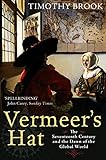
This is my review of Vermeer’s Hat: The Seventeenth Century and the Dawn of the Global World by Timothy Brook.

The idea of using paintings mainly by Vermeer as a cue to explore aspects of the development of trade in the seventeenth century and "the dawn of the global world" is an interesting approach. Although I was expecting the focus to be on the Dutch East India company, there is a good deal about French and Portuguese colonisation.

One problem for me was that the links often seem too tenuous. Vermeer's hat serves as "the door inside the painting which we will open", the point being that it is probably made of beaver which became available when the Frenchman Champlain began to trade with the Huron Indians in the course of his search in what is now Canada for a route through to the Pacific and the wealth of China. Too much of the commentary on the paintings is speculation: "..we don't know whether he owned that particular hat".. his wife was hard up after his death "and might well have sold it" and so on.

There's a kind of banality in much of the analysis: "the stories I have told in these pages have revolved around the effects of trade on the world, and on ordinary people. But between the world and ordinary people is the state which was powerfully affected by the history of trade and had powerful effects in turn". Isn't the reader likely to know this already? Is this an example of an academic underestimating the general reader?

Perhaps an avoidable downside of its thematic approach, the book rambled too much for me and I was left frustrated by the dullness of what could have been gripping.

⭐⭐⭐ 3 Stars

A lost sheep

This is my review of La neige en deuil by Henri Troyat.

This explores the tension between two brothers: Isaïe who lives the quiet life of a shepherd in a remote Alpine village after suffering brain damage following a tragic accident which cost him his career as a respected guide, and Marcellin, the much younger ne'er-do-well brother on whom he dotes. A life-changing drama is triggered by a plane crash on the icebound mountain above the village. I assume Troyat had some knowledge of mountaineering, since the book describes a nail-biting ascent. The story is well-constructed with strong dialogue revealing the psychology of the two men and vivid, original prose. The most striking aspect of this powerful novella is the description of the ice and snow at high altitude in changing weathers and times of day, and the hallucinatory effects these can wreak on a lone traveller.

⭐⭐⭐⭐⭐ 5 Stars