Fear, hope and uncertainty

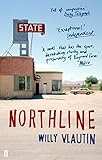
This is my review of Northline by Willy Vlautin.

Allison has missed out on her education, has low self-esteem and uses alcohol as an escape. When she is drunk, bad things happen to her, although her tragedy is limited by her ability to get paid work easily and to display a surprising competence when sober. In her imaginary conversations with the actor Paul Newman which never fail to draw her out of the darkest despair, he is always the voice of her revived reason and commonsense.

At first, I was predisposed to dislike a book which I expected to be a lightweight reworking of the well-worn theme of losers and drifters with "their hearts in the right place". In fact, the simple prose conveys a vivid sense of the life of ordinary people trying to make a living in cities like Las Vegas or Reno. In their resilience and acts of unexpected kindness to each other, they arouse sympathy and respect. Even Allison's abusive lover Jimmy has redeeming features – his thirst for knowledge, even if it leads to bigoted opinions, or his desire to make a fresh start in a state like Montana beyond a "northline".

Vlautin's measured development of a succession of personalities and gradual release of details is quite skilful. A short work, you could call it an example of "less is more". I also like the way that, at the end of a carefully constructed book, Vlautin avoids sentimentality by leaving certain points unresolved, rather like life.

Although the inclusion of a CD of the author's music designed to reflect the feel of the book seems at first a little self-indulgent and gimmicky, it proves slow, rhythmic, rather melancholy. Quite pleasant to listen to, it lacks the darker, more violent moments of the story, and seems to cover less varied emotions than the book itself.

⭐⭐⭐⭐ 4 Stars

Incarcerated in the wrong life

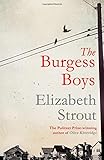
This is my review of The Burgess Boys by Elizabeth Strout.

Brothers Jim and Bob Burgess escape the provincial world of Shirley Falls, Maine for employment as New York lawyers. In contrast to the ambitious high-flyer Jim, Bob is "a nice guy" but portrayed as a bit of a failure (despite being a qualified lawyer), whose borderline alcoholism may have its roots in his early childhood, when he played a part in the tragic event that blighted his family. When the brothers' dysfunctional nephew commits a criminal act against the Somali immigrants who have begun to arouse the suspicious resentment of the conservative white community of Shirley Falls, Jim and Bob are forced to revisit the town, and old memories.

The strongest aspect for me is the core of the book, the portrayal of the complex relationship between the two brothers, and there are some wry, realistic dialogues. On the other hand, my enthusiasm was eroded from the outset by the to my mind unnecessary device of using a prologue to provide a narrator's advance summary of some of the key facts of the book (more than I have above), with the implication that the following chapters are her "story of the Burgess kids", possibly including a degree of speculation since, "Nobody ever knows anyone".

The story tends to lack dramatic tension, since opportunities to develop or explore situations are frequently missed. Yet plots are probably less important to Elizabeth Strout than people's thoughts and behaviour. Although it is probably meant to be a kind of "stream of consciousness", the many long, rambling sentences with banal word repetition grated on me. This may be a cultural thing – a British reader's criticism of a style that is accepted as the norm in modern American writing. Also, the continual switching between at least six points of view make the story often seem unfocused.

So, I swung between thinking this either "in the mould of Anne Tyler" or "soft-centred women's magazine material". My doubts were allayed in Book 4 which, with an increase in pace and improvement in the quality of the writing, brings the threads together for the unpredictable ending which proves satisfying for those who like to be left with a little room to imagine what they wish.

⭐⭐⭐⭐ 4 Stars

Not as effective as I’d hoped

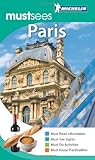
This is my review of Paris Must Sees Guide (Michelin Must Sees) (Michelin Must Sees Guide) by Michelin.

Relatively inexpensive and easy to carry round, I thought this would be a useful guide with its businesslike approach of:

– dividing central Paris into areas with a map for each and suggested walking tours with highlights noted

– classifying Paris by attractions on a one to three star scale, and by places of interest such as galleries, markets or parks and gardens.

In fact, I found it quite hard to use. The maps proved too small – a double-page spread for each would have been better. The routes proved an unsatisfactory way of exploring an area since I (or my companion!) was constantly attracted by more interesting alleys and buildings off to the sides. In such a "bitty" book in which information is so fragmented, a fuller index is necessary. For instance, you cannot find the Pantheon or the Latin Quarter in the index, which is annoying when you are trying to obtain details quickly.

I wondered at times how well the author(s) really knew Paris. How can you write about say, le Pont des Arts without mentioning that its glittering appearance is due to the thousands of padlocks attached to it in an informal ritual practised by couples? How can you write about the Pantheon without mentioning the long-term plans for its renovation and the beautiful church of St. Etienne nearby, and the tower which is all that remains of an adjacent church which was abandoned and destroyed because the Pantheon was meant to replace it – until it was decided to make it a secular building? Why not mention the fact that the Jardin des Plantes adjoins a zoo, and that quite a few sections of the area seem closed or run down?

On a more practical note, when mentioning boat trips, why omit some of the alternatives to the famous Bateaux-mouches such as the Bateaux Parisiens which seem very popular and why not be precise about where to pick up the useful Batobus, for which the eight stops could easily be listed?

In short, although there is a good deal of information in this book, it is too brief and chopped up to be readily absorbed and easily used.

⭐⭐⭐ 3 Stars

A human act of becoming

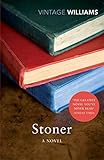
This is my review of Stoner: A Novel (Vintage Classics) by John Williams.

Given the chance to escape from toiling on his father's barren farm to an agricultural course, the aptly named Stoner makes a guilty switch to English literature, for which he has conceived an abrupt and unlikely passion. Pursuing this with his customary determined labour, Stoner achieves a measure of success, but a mixture of misjudgements and fate blight his path.

The book opens with his death, describing him as "held in no particular esteem when … alive", so that our motive for reading is to learn what secrets or underestimated qualities he may ironically have taken to the grave, or which may be revealed to bring him recognition too late. It then becomes apparent that this is a detailed study of the life of an ordinary man who evokes sympathy in his resilience, his integrity, his capacity to appreciate nature, his occasional moments or periods of great joy which show that he does not lack feeling or the ability to love. When he is wronged, I felt anger on his behalf.

Yet, he is a flawed man as well. His preoccupation with his work often seems escapist and selfish, which matters if an innocent person suffers as a result. His passivity and usual habit of avoiding conflict also seem weak, although perhaps a man from humble origins, without connections and too straightforward to make them, cannot be expected to win out in the political jungle of a university campus.

This book reminds me of Bernard Malamud's brilliant "A New Life" and C.P. Snow's tales of academic rivalry, like "The Master". You may wonder at the revived interest in a "lost classic" of 1965 that now seems a little old-fashioned. In a strictly linear plot, Williams develops and disposes of each episode in turn almost too neatly. There often seems to be too much "telling" – as each character is introduced, Williams informs us what to think about them. The "villains" of the piece seem rather exaggerated, and I am not sure Williams' portrayal of women – with the exception of Karen Driscoll – is very convincing. If Stoner has been won over to literature by Shakespeare, I am unclear why he is so bound up in what seems a rather dry obsession with grammar and the classics.

Despite this, the clear simple prose carries you along and I like the efficiency with which all the characters are given a clear function in the plot. The author's ability to express fine shades of meaning is astonishing. Some striking insights make a sharp impact. These may vary according to the reader, but I have made a note to study the Shakespearean sonnet number 73 which was instrumental in converting Stoner to literature. I was also struck by his ability to see the essential unimportance of some of his problems – although perhaps that makes him too quick to accept the unhappiness of others. His thoughts on the nature of love are thought-provoking.

⭐⭐⭐⭐ 4 Stars

Brief Encounters

This is my review of The Man In The Wooden Hat (Old Filth Book 2) by Jane Gardam.

This second part of a trilogy revisits the quirky and poignant world of "Old Filth", misleading acronym of a nickname, "Failed in London Try Hong Kong" for Edward Feathers, the brilliant QC emotionally damaged by a motherless childhood and grief-stricken colonial administrator father. Not a sequel but a filler in of gaps, the focus here is on Edward's wife Betty whose suspected passion for his arch rival Veneering is now revealed.

It is Catch-22 in that you will miss a good deal by not reading "Old Filth" first – the clunky attempt to explain the main details of his early life in the opening pages is no substitute – but if you have read it, some of the "surprise factor" is inevitably lost since you will often know what to expect and recognise incidents repeated from the first novel.

Some of the chronology is a little odd if not slapdash. How could Betty manage to be in a Japanese POW camp, at Oxford and breaking codes at Bletchley Park in such a short space of time? Yet, perhaps this does not really matter. Gardam is less interested in plot, and more in creating a sense of a place or emotional feeling, together with an eye for the ridiculous and the odd hint of ghostly presences.

I felt as if I were reading extracts from a genteel soap opera, with the lure of escapism for the majority of readers who will not have experienced firsthand the main characters' privileged, bittersweet lives. Apart from Old Filth, most of them are too sketchily drawn to be truly moving. Least convincing for me is Loss, the Chinese dwarf, who in his resemblance to a carving of a man in a wooden hat gives his name to the second novel for no obvious reason to me, except his tendency to appear as a threatening presence at critical moments in Betty's life.

Although it is forgivable that Gardam seems to have fallen in love with this set of characters, and enjoys replaying their story from different angles as writers do, the extension of the process into a trilogy so far seems a little self-indulgent. From an artistic viewpoint, I wish she had stopped with "Old Filth" and left us guessing.

⭐⭐⭐ 3 Stars

In the land of the free

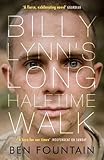
This is my review of Billy Lynn’s Long Halftime Walk by Ben Fountain.

After a heroic attack on the enemy which just happened to be filmed by an embedded TV crew, "Bravo squad" is touted round the States for a disorienting fortnight in an insensitive PR bid to revive flagging support for the Iraq War.

Billy Flynn is one of the soldiers, a decent and perceptive young man beneath a fairly thick layer of nineteen-year-old laddishness. As he tries to make sense of his unreal situation, we see the Bravos pawed like public property, fawned over by celebrities, glamorous couples and business tycoons who would not normally give them the time of day.

Inevitably, conversations tend to descend to the prurient question of what it is like to kill a man. Billy always manages to fob people off with the gung-ho answers they want to hear, but is left feeling that he has betrayed his comrade Shroom who died in the "heroic" attack. Beneath it all lurks the knowledge that Billy must return to the front, where there is a high probability he will meet his own death.

Although this may sound grim, the novel is often very funny – a blistering attack on the worst aspects of American culture: the tasteless mixture of God and mammon, rednecked patriotism, unquestioning sense of superiority fed by crass ignorance of the rest of the world. Since it will probably only appeal to the anti-war converted I cannot imagine what those parodied in the book would make of it.

I had to concentrate hard to grasp Ben Fountain's quicksilver train of ideas and cope with the American slang. I understand the criticism that Billy's inner thoughts are too often tangled up with the knowing, cynical voice of the articulate third person narrator, but you could argue this is the influence of Billy's deceased intellectual friend Shroom.

The unshackled style veers between moments of original beauty and moving insight, hyperbole, occasional corniness and cartoon-speak. I like the way Fountain uses the sounds of words rather than their correct spelling to convey how Billy often feels overwhelmed by his unfamiliar surroundings and lets everything "wash" over him: Eye-rack, Eaaaar-rock, nina leven, soooh-preeeeme sacrifice, etcetera. This also highlights the emptiness, lack of meaning of the sentiments poured over the Bravos.

I am not sure at what point Fountain's original and creative prose tips over into gimmickry,

but

the

whiiiiirrrrrrr

BAM

of it all is sometimes a bit too much to take.

The scene where Billy returns home for Thanksgiving lost some of the momentum of what perhaps should have been a shorter novella for maximum effect, and reduced the tale to soap opera for a while.

Overall, it's an imaginative, somewhat shaming take on modern America.

⭐⭐⭐⭐ 4 Stars

“Teaching people not to think”

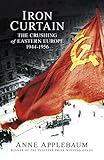
This is my review of Iron Curtain: The Crushing of Eastern Europe 1944-56 by Anne Applebaum.

Would Eisenhower have allowed the Russians to take Berlin in order to spare his troops if he had foreseen that the Soviets would go on to impose Communism on Eastern Europe for almost half a century? With a focus on Poland, Hungary and East Germany, Anne Applebaum draws on the memoirs of people who lived through the period, to dissect the evidence for how the USSR managed to crush opposition: mass deportations to fit nationalities within the "correct" boundaries, promotion of "Moscow men" into key positions, indoctrination of the young, suppression of the Catholic church, control of the media, to name a few aspects. Repression grew under the "High Stalinism" of the early 50s once the complacent belief that east Europeans would vote for communism was seen to be a delusion.

The chapters take a thematic approach, working logically from such topics as communists and policemen through politics and economics to issues of "socialist realism", "ideal" planned cities, and reluctant collaborators. So, you can pick out what catches your interest, although it is most valuable to follow the author's train of thought. With the clear aspiration to be taken seriously as an academic work, this may contain too much detail for the general reader to retain, and the unpronounceable Polish names do not help, but Anne Applebaum is always cogent and relevant.

I was particularly interested in the exploration of how "the need to conform to a mendacious political reality left many people haunted by the sense that they were leading double lives". Freudian psychoanalysis was taboo in the USSR, and therefore in due course banned in, for instance, Hungary as well, because it was "too focused on the individual", eventually dismissed in the chillingly humourless jargon of the regime as "the domestic psychology of imperialism". We read of a boy's terror when his father angrily pointed out that the arrest of a general in a show trial did not mean that he was guilty. This "banal truth" felt "like an earthquake" for if his father was right, the authorities must be arresting innocent citizens, but surely, only an enemy could think this was the case……

The helpful glossary of abbreviations and acronyms of the often suppressed political parties and of the notorious secret police organisations could have been supplemented with a reference list of the main individuals mentioned, and a timeline of events. The chapter on the abortive revolutions of the mid-fifties could have been expanded, although perhaps they are dealt with briefly since already well-covered elsewhere. Yet these are minor criticisms of a fascinating analysis which merits being kept on one's shelf as an ongoing reminder of the folly of the attempts to develop a "perfect" society through the exercise of unquestioned, unbending authority, not to mention the dangerous cult of the "supreme leader" in a society which ironically suppresses individuality.

⭐⭐⭐⭐⭐ 5 Stars

Solving the riddle and unwrapping the mystery

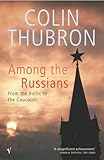
This is my review of Among The Russians by Colin Thubron.

At first I wondered if it was worth spending time on a travelogue of 1980s Soviet Russia written before "perestroika" and "glasnost" triggered the fall of communism. Was the book only of interest to those who could relate with nostalgia to, say, being pestered for jeans, instructed to take hands out of pockets when filing past Lenin's coffin, intrigued by the job creation scheme of a middle-aged lady seated on every hotel corridor, and depressed by the lack of goods for sale in the gloomy grandeur of the GUM state department store?

Relevance seemed unimportant as I became ensnared by the novel-like quality of Thubron's writing, so that I was not surprised to note that he has in fact written a good deal of fiction.

Also, the book proves of value, in its vivid and perceptive analysis of Russia as a basis for understanding how it reached its current state – apparently materialistic, corrupt and increasingly unequal.

Thubron asks whether "the easy Russian submissiveness to God and tyranny….the unwieldy immensity of Russian bureaucracy" is the result of a people crushed by the vastness and impersonal isolation of their country. Yet, some of them like nothing better than picking mushrooms in the birch woods.

An extreme example of conditioned thinking is the woman who insists a statue is holding a torch. "The torch should be there, so it was there. It was an emotional fact". Yet in complete contrast a man falters, "Not to be subjected to a laid-down principle, only to be governed by what you find is so. It's harder but right."

Thubron introduces us to unexpectedly beautiful towns off the tourists' beaten track, like Suzdal, with its dozens of paired medieval churches set in a landscape of streams, meadows and chickens squawking along unpaved streets. I have resolved to visit Armenia after reading of Echmiadzin, with the oldest state-built Christian church in the world, and Garni, with its "perfect and solitary" Greek temple on the edge of a steep bluff.

There are some funny anecdotes: when a Lada saloon drove up alongside Thubron's car to reclaim a drunken girl he had befriended, "in the back seat a formidable pair of grandmothers added their Gorgon stare to the barrage of accusation, until the whole car resembled some livid and scandalized hydra, which said not a word."

On the negative side, claiming to speak "only hesitant Russian", how did Thubron manage to conduct such complex exchanges with the locals he encountered? How genuine are his records of conversations? I would have liked a larger, clearer map, an index and some photographs, although Google has shots of many of the places and buildings mentioned. Some of Thubron's descriptions seem too studied, and my interest flagged on the way to the Caucasus but he brings the book to an effective conclusion with a reminder of the underlying menace of continual surveillance.

⭐⭐⭐⭐⭐ 5 Stars

Not much beyond the punchline.

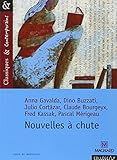
This is my review of Nouvelles a chute by Collectif.

All the short stories in this little book meet the requirement to have an unexpected or surprising ending, as promised by the title. I assume from the annotations to explain less familiar vocabulary and the questions at the end that this is designed for French school students who have to learn how to analyse a text. I feel a bit sorry for them as regards how this could destroy one's simple enjoyment of a story.

I imagine the book could be useful for "A Level" class discussion in England, and the stories went down quite well in my French group for British adults. The tales by various successful modern writers are on diverse themes, but tend to have in common the approach of developing a particular situation in depth, such as a man enjoying the habit of taking a girl out for a meal, or the plight of a small boy bullied by his playmates. They also share the trick of leading the reader into some kind of misconception, which is abruptly shattered at the end.

I cannot say more without introducing spoilers, but it is perhaps a limitation of these tales that, if you remove the "surprise factor" at the end, there is not much left to consider.

⭐⭐⭐⭐ 4 Stars

Ring of uncomfortable truth

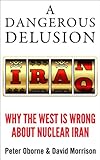
This is my review of A Dangerous Delusion: Why the West Is Wrong About Nuclear Iran by Peter Oborne,David Morrison.

It surprised me that this hard-hitting attack on US and UK policy towards Iran is the work not of a John Pilger-type polemicist, but of two journalists, one of whom has worked for the Daily Telegraph.

This short book makes uncomfortable reading as it hammers out arguments backed by apparently valid sources: the US overthrew a democratically elected President Mossadeq in the `50s, replacing him with the puppet Shah who was allowed to acquire nuclear reactors with a view to generating electricity. When he was in turn ousted for a regime "that wasn't to the west's taste", although Iran had signed the Nuclear Non-Proliferation Treaty (NPT), offered to "abide by the rules" in producing enriched uranium for civilian purposes and even assisted the US after 9/11, the US has persisted in misrepresenting Iran as an aggressive power hell-bent on acquiring a nuclear bomb, using this as justification for harsh sanctions which have caused ordinary Iranians considerable hardship. Meanwhile, the US has practised double standards in permitting its allies Israel and India to obtain nuclear weapons after refusing to sign the NPT.

I appreciate the viewpoint of the reviewer who felt that this book does not address sufficiently the reasons why the US may justifiably fear the nuclear arming of a powerful Islamic state, but one could argue that, in trying to redress the balance of misinformation fed through the western media, and to reduce the ignorance of the general public, the authors must focus on the "dangerous delusion" of the title, since if "the west is wrong about nuclear Iran" the price is the counterproductive provocation of the very hostility and negative action that is feared.

⭐⭐⭐⭐ 4 Stars