“The Essex Serpent” by Sarah Perry – Cleaving hearts

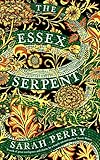
This is my review of The Essex Serpent by Sarah Perry.

This imaginative yarn set in the 1890s revolves around Cora Seaborne, the unconventional young widow who acknowledges her sense of relief over the death of a sadistic husband. Within days of his demise, she has left the bustle of London with its sharp social divisions for the stark beauty of the Essex coast, often obscured by shifting mists, accompanied by Martha, the competent nanny who never left and son Francis, who would nowadays be considered autistic. With his inability to show the normal affection of a child, and his obsession with collecting objects, Francis is a continual source of puzzled concern, but Cora obtains emotional support from Martha, who manages to combine this with her commitment to persuading wealthy men like her admirer Spencer to invest in the replacement of the London slums with decent housing for workers.

It being the 1890s, Cora is thought to have a “masculine mind”. Although a wealthy woman with the means to dress fashionably, she often tramps the country dressed like a bag lady, in a man’s tweed coat with grimy fingernails. Apart from being practical gear for a geologist, perhaps this is a sub-conscious desire to conceal her femininity, having been so abused by her husband. It is hard to believe that such an independent-minded woman would have submitted to this, but perhaps she was trapped by her initial youth and the social attitudes of the day.

Absorbed in her fashionable pursuit of fossils, Cora is intrigued by the “Essex Serpent”, a creature of local folklore who is thought to have made a recent return to prey on the the inhabitants of Aldwinter, terrifying them in the process. Cora harbours dreams of making her name as a female geologist through the discovery of some giant ichthyosaurus. Frustrated by his parishioners’ superstition, local vicar William Ransome is driven to hac away the carving of a sea serpent which adorns the arm of a church pew. Although holding diametrically opposed views on religion, William and Cora are drawn to each other by a powerful meeting of questioning minds, the joy of conversing and bouncing ideas off each other. But can such a friendship endure in 1890s England, when does friendship become love, and what is to be done since William Ransome already has a beautiful, sensitive wife whom neither William nor Cora could bear to hurt – although she is conveniently frail and consumptive, so perhaps they can have their cake and eat it if their love can survive all the interim setbacks?

At first, I found the characters somewhat unconvincing, such as the brilliant, eccentric surgeon Luke Garrett, and his wealthy friend Spencer. Too often both dialogues and descriptions seem artificial, clunky contrivances for informing the reader about the burning social issues of the day. Yet, the descriptions of the Essex countryside and shoreline, together with the unsettling suspected presence of the serpent, are well-written and evocative, and once William Ransome is established alongside Cora to provide the two most fully developed central characters, I found myself more fully engaged in the story. Sarah Perry is also good at writing about children.

Overall, it is a modern writer’s take on the late Victorian world a generation after the period of Dickens and Wilkie Collins. Written somewhat in their vein, it avoids cloying sentimentality, yet is over-long and repetitious in places, and soft-centred at its core, although these are all features of the writing of this period.

⭐⭐⭐⭐ 4 Stars

Crazed with guilt

This is my review of All We Shall Know by Donal Ryan.

With a masters in journalism, a frustrated would-be writer, her prose searing and insightful in print, but foul-mouthed in her speech, self-absorbed, quick to fly off the handle, swinging between extreme attachments and violent dislikes, unstable to the point of being a little mad, the inaptly named Melody is difficult to like. Donal Ryan contrives to hook us onto this sad, often violent tale, by the power of his quicksilver flow of words, the original, striking descriptions and wry Irish turn of phrase which makes one wonder how such articulate people can so often fail to avert trouble by sheer verbal skill alone.

We know from the first paragraph that Melody has got herself pregnant by seventeen-year-old Martin Toppy, a pupil almost half her age, the handsome, illiterate son of a famous Irish Traveller. Although not prepared to risk telling her husband Pat the truth about the baby’s parentage, it is clear that she expects the pregnancy to bring to an end what has evidently been a tempestuous marriage, with Melody’s unpredictable, unreasonable behaviour the root of the problem . As Melody reveals her past, layer by layer, it becomes ever more apparent that her ability to relate positively to others has been blighted by a profound sense of guilt over her treatment years before of her former best schoolmate, Breedie Flynn. Melody's current striking up of an almost obsessive friendship with the young Traveller Mary Crothery becomes an attempt to atone for the past actions which haunt her. Even in this, she may be accused of a degree of manipulative control-freakery.

Judging by this and Donal Ryan’s first novel, “The Spinning Heart” which I found superior perhaps because less intensely bleak as regards the unrelenting piling up of misfortunes, the author’s central theme is the interplay of dysfunctional families and neighbours in close-knit, claustrophobic small-town Irish communities, riddled with Catholic guilt, struggling to adjust to external pressures for change.

If I had not known to the contrary, I would have said this novel was the work of a woman, as the chapters chart the course of Melody’s pregnancy, week by week. Yet I am not sure a woman would be likely to take with such apparent ease the course of action she takes at the end of the novel, by way of expiating past sin.

⭐⭐⭐⭐ 4 Stars

Those whom the Gods would destroy

This is my review of Clinton / Trump : L’Amérique en colère by Christine Ockrent.

Anyone who has followed the fascinating but appalling path of the US Presidential election over the past year or more will already be familiar with the content of French journalist Christine Ockrent’s analysis of Clinton/Trump, “L’Amérique en colère” – Angry America. Yet there is some value in rereading an account of the overall course of events with the advantage of sobering hindsight. It is a like reading a series of colour supplement articles, with quite an effective analysis of the situation as at the end of August 2016. The personalities of the main protagonists are explored quite fully, although there is a lack of in-depth consideration of the factors which might have induced quite thoughtful and moderate ordinary people vote for Trump, despite his shortcomings.

I picked up a few fresh snippets, such as Bernie Sanders’ respect for Hillary Clinton, well-disguised in his campaigning, and her taking advantage of his hamstringing reluctance to call for gun control, being a representative of Vermont, where hunting is a major pastime. As for the many revealing lesser known anecdotes about Trump, there is his choice of a non-threatening running-mate in the form of Mike Pence, whom he introduced with his typical chaotic style of oratory, in which the only clear thread was praise for his own achievements. I was reminded of Trump’s past support for Democrats, further indicating that he was motivated by the desire for power rather than principle, having calculated that he was more likely to win if he took a stand against Hillary, playing on Republican prejudices in the process.

A point of which the Democrats could perhaps have made more was the suspicious possible link between the Trump team’s move to abandon a Republican-favoured pledge to give arms support to the Ukraine, and the Campaign Director Paul Manafort’s lucrative but undeclared remuneration as a lobbyist for the deposed Ukrainian President Yanukovitch, a Kremlin protégé. Of course, the wily Trump knew there was no need to worry about such a subtle Achilles heel as this, since he could rely on bamboozling his target audience with razzamatazz and crude slogans to chant about building walls to keep out Mexicans, "lock her up" at every mention of Hillary and "Let's America great again" without ever quite explaining how.

No doubt aiming to pip rivals to the post, Christine Ockrent had this book published in mid-September 2016, too late to include Trump's slogan to "Drain the swamp", with the major downside that not only had the three major debates yet to take place, but other major dramas were still to unfold. On one hand, there was the leaking of the tapes demonstrating Trump’s lewd boasting about molesting women, as recently as 2005 . On the other, there was the extraordinary intervention of FBI director James Comey only ten days before the election, raising the spectre of 650,000 emails to be investigated but then announcing there was nothing incriminating against Hillary some forty-eight hours before the main polling day. In omitting the last two months of the campaign, the book was unable to convey their surreal quality, and the oppressive nastiness combined with a sense of foreboding which affected foreign observers in the final stages, and must have “turned off” many American voters.

Apart from those who wish to practise their French, this being a good source of idioms and political vocabulary, the book may now seem as redundant as an old newspaper, unless Christine Ockrent chooses to update it by filling in the gaps, and providing a powerful analysis of the outcome which caught out many pundits and how it was reached.

⭐⭐⭐⭐ 4 Stars

Still beating heart of darkness

This is my review of Notre-dame Du Nil by Scholastique Mukasonga.

The statue of the Virgin at the source of the Nile gives its name to the Catholic boarding school for the daughters of the Rwandan élite, located in the remote highlands to isolate them from any temptation which might jeopardise their destined role as good wives and mothers. Having said this, the spineless Mother Superior and creepy sidekick Père Herménégildé take the easy course of turning a blind eye to a number of dubious activities.

At first, the novel seems like an African take on Enid Blyton’s “Mallory Towers”. As the girls return at the start of a new term, we see a dust-covered Immaculée cadging a lift in her friend Gorettis’s chauffeur-driven car, having thought it best not to ride pillion on her boyfriend’s motorbike right up to the school gate. Frida, daughter of a flashily-dressed ambassador causes a stir with her brutally straightened hair, and full-skirted red dress to match the colour of a long, two-seater convertible in which she lounges, as if in bed. A primitive tribal culture lies uneasily just below the surface trappings of western-style materialism.

The presiding force is Gloriosa, secretly nicknamed “the Mastodon”, the domineering daughter of an important Hutu government minister, brimming with resentment over the enforced quota of Tutsi girls which prevents “the real Rwandis, the majority people, the hoe-carriers” from obtaining their rightful secondary school places.

After losing some thirty-seven members of her family in the appalling Rwandan genocide of 1994, author Scholastique Mukasonga could be forgiven for either rejecting any attempt to write about it, or for creating a novel of unbearable cruelty and violence. Instead, she has chosen to make satirical humour an integral part of her book, telling an interviewer that irony is a fundamental characteristic of her Tutsi culture, even in adversity. Her aim is to act as a “memory bearer”, to help readers understand what happened, as a way of mourning and a “homage to the dispossessed”. In this respect, humour creates a certain distance from the raw horror without belittling the suffering.

Despite the tongue-in-cheek tone, there are hints of menace from the outset. The photographs of the famous inauguration of the Virgin’s statue have been hidden away, the features of most of the dignitaries struck out with red ink – because they were Tutsis. Tension builds towards a final grim climax, as Gloriosa hatches a ludicrous plan to replace the statue’s Tutsi nose with a Hutu one. This reflects the white colonialist’s ill-judged role in emphasising the beauty and past nobility of the Tutsi minority, to the irritation of the majority of more stockily-built agricultural Hutus.

Dialogues often seem unnatural and the storyline to meander in a series of unconnected incidents, some banal, such as the stir caused by a hippy white male teacher’s long flowing hair, others bizarre such as the eccentric coffee planter M. de Fontenaille’s obsession with making Veronique and her friend Virginia, the bright girl from a rural Tutsi background, into reincarnations of former Tutsi queens. There is also a touch of “magic realism” in say, Virginia’s dealings with the sorcerer from whom she seeks advice on how to propitiate the queen whose spirit she is disturbing by assuming her identity.

Although this book “speaks for itself” if one reads between the lines, I would have found a postscript to explain the political and social background useful. I would also have liked a glossary of the Kinyarwandan words used, since the meaning is not always sufficiently clear in context, and I struggled to find definitions on line. Yet despite reservations over the story’s style and structure, the author’s first-hand knowledge and understanding of her culture and the events which led to the crisis give the novel a kind of authenticity and sobering food for thought which cannot be gainsaid.

⭐⭐⭐⭐ 4 Stars

Everyman’s devil

This is my review of Azazeel by Youssef Ziedan.

It is interesting to be reminded that the Middle East was once briefly Christian, and as unstable and riven by violent dissension as it is now.

In the ruins of a monastery near Aleppo, archaeologists unearth a tightly sealed wooden book, containing parchment manuscripts, the memoirs of a fifth century Egyptian-born monk and self-taught physician called Hypa, whose wanderings took him to Alexandria, Jerusalem and Antioch.

A thoughtful and observant man, his avid reading, including of “forbidden books” has stimulated his questioning mind. In a period preceding the rise of Islam, he sees Christians behaving with a savage bigotry to rival a modern-day IS fighter: their brutal murder of his father, for quietly following his pagan beliefs, or of the gifted female mathematician Hypatia (from whom he has taken his adopted name), denounced for heresy by the vicious Bishop Cyril of Alexandria. On a personal level, he wrestles with the overwhelming desire to love the beautiful Martha, which is incompatible with his chosen life as monk. On a larger scale, there is the use of abstruse differences in doctrine as a weapon in power struggles over a religion divided between Cyril who looks to Rome, and Bishop Nestorius, who has become Hypa’s friend through a shared love of books, based at Antioch.

As he writes, Hypa is continually distracted by Azazeel, one of many names for the devil, yet clearly the voice of Hypa’s own “inner voice”.

At one point, Azazeel asks Hypa, “Did God create man, or was it the other way round?” He answers his own question: “Hypa, in every age man creates a god to his liking and his god is always his visions, his impossible dreams and his wishes”. When Hypa whispers, “But Azazeel, you are the cause of evil in the world.” Azazeel responds, “Hypa, be sensible. I’m the one who justifies evil. So evil causes me.” Later he urges, “Wake up, Hypa, and come to your senses. Your desire for her (Martha) is crushing you and breaking your heart. Go to her, take her and leave this country. Delight in her and make her happy, then heap curses on me because I tempted you. Then all three of us will thrive, having fulfilled ourselves.”

The book may be an “acquired taste”, perplexing and tedious for someone with either little knowledge of or no interest in religion. Although the translation from Arabic is in general excellent, some descriptions are over-detailed, dull and hard to follow. Yet the book creates a vivid impression of what life might have been like fifteen centuries ago, with realistic characters revealing all too recognisable human flaws. The author also shows the appeal of a life of contemplation: there is a striking passage in which Hypa observes the habits of the wild doves, who mate indiscriminately with each other, care jointly for the young, living together in a seemingly peaceful community, causing him to wonder why humans cannot do the same. It occurs to him that another monk throws stones at the birds because he is afraid of the fact that at heart, he likes them.

I do not know to what extent the slow pace and precise detail are a feature of Arab writing. Some readers have criticised the Muslim author’s interpretation of rival early Christian doctrines but this does not seem to me to matter. What is important is the portrayal of a humane and conflicted individual to whom we can relate, despite the radical differences in our lives.

⭐⭐⭐⭐ 4 Stars

The Romantic Poets and Their Circle (National Portrait Gallery Insights) by Richard Holmes – Captured creativity

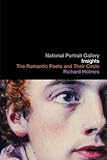
This is my review of The Romantic Poets and Their Circle (National Portrait Gallery Insights) by Richard Holmes.

The National Portrait Gallery’s Insights series uses paintings and sketches from its collections to illustrate themes, in this case the “Romantic Poets” and members of their circle: the artist Haydon; razor-witted critic Hazlitt; courageous all-rounder Leigh Hunt, prepared to face imprisonment for his “seditious libel” of “this fat Adonis”, the Prince Regent, and to publicise the talents of rising stars like Shelley; the astronomer of “supernatural intelligence” Herschel who inspired Coleridge, Byron, Keats and Shelley; the great scientist Davy who linked seamlessly the “two cultures” of art and science, to name a few. It is interesting how, after achieving so much, many of them came to a somewhat sad end.

Most of the images, a full page for each character, are striking in their realism, surprisingly “modern” faces of people we can readily imagine meeting today or passing in the street : Haydon’s vigorous and lifelike head and shoulders’ sketch of Wordsworth; a bluff Sir Walter Scott, churning out pot boilers at this desk to pay off the debts of a bankrupt publishing house; Blake glancing up, pencil in hand, to capture some fresh vision or Amelie Opie staring with direct candour at her husband as he painted her, and therefore of course at us as well,

With his profound knowledge of the period, the biographer Richard Holmes is an excellent choice to provide supporting commentaries. “The dazzling Lord Byron” gets pride of place, “young…brooding, beautiful and damned”. We can be in no doubt about his charisma, combined with understandable, at times absurd vanity, in part perhaps a compensation for his club foot.

Allotted only a page or two for the rest, Richard Holmes manages to make every individual a distinct character, striking the right balance between a brief explanation of each person’s role, and finding a few revealing details or anecdotes. So we grasp Mary Shelley’s intellectual brilliance, precocious writing talent, and concern to create a “normal”, conventional life for her son after the traumatic loss of her other children, and Shelley’s drowning. The country boy John Clare’s sense of insecurity, of being an outsider in London society despite the ready recognition of his talent, is very apparent.

The author takes care not to omit women from the collection, although all too often they have been forgotten, like Felicia Hemans, “the most successful parlour poet of her age” famous for such lines as “The boy stood on the burning deck when all but he had fled”. How many, like the working-class poetess Isabella Lickworth “like the wild flowers on the mountain, unknown, unheeded lie”.

These details can only whet one’s appetite to discover more, and enhance the fascinating pictures for which they provide a context.

⭐⭐⭐⭐⭐ 5 Stars

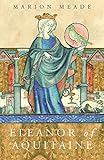
“Eleanor of Aquitaine: A Biography” by Marion Meade – Making the most of a woman’s lot

This is my review of Eleanor of Aquitaine: A Biography (WOMEN IN HISTORY) by Marion Meade.

Eight centuries on, records still remain to prove that Eleanor of Aquitaine was a remarkable woman: beautiful, robust, energetic, courageous, resilient, intelligent, cultured and a shrewd negotiator when given the chance. In a world where the status and security of feudal lords depended on the possession of lands, her inheritance of the extensive and prosperous French Duchy of Aquitaine made her an attractive marriage partner for two rival kings: firstly, the indecisive and monkish Capetin Louis VII of France, whom she grew to despise, and later by complete contrast the Angevin Henry II, Plantagenet ruler of England, a vigorous, driven man with an uncontrollable temper and insatiable sexual appetite.

Eleanor accompanied Louis on an ill-fated Crusade, slowing the procession down with her vast quantities of baggage. She often risked dangerous voyages, even when heavily pregnant, and almost up to her death, aged eighty-two, embarked on tours round her lands to maintain the loyalty of vassals and foil rebellions.

In the unlikely event of her being as promiscuous as painted by detractors, this would have fallen far short of Henry’s predatory treatment of women. Scandalous gossip, embellished long after her death, buzzed round her close friendship with handsome men like Uncle Raymond of Antioch, her probably mythical, failed attempt to elope with Saladin, and demand for divorce from Louis and immediate marriage to Henry, fourteen years her junior. Yet ultimately she was always to be constrained by the superior power of men: the Pope blocked her divorce until Louis decided to end the marriage because of her apparent inability to bear sons. Ironically, she produced four boys in rapid succession for Henry, the ill-fated John born some years later being the last of her ten children. When, in the 1170s, Henry’s heavy-handed mismanagement of his sons provoked their revolt, Eleanor’s support for them was punished with sixteen years of imprisonment, but this did not break her spirit.

When it suited Henry to let her administer affairs in his frequent absences from England, she performed with great competence. Similarly, in her self-imposed exile to Aquitaine, unable to tolerate close at hand the humiliation of Henry’s overt affair with the legendary Rosamund Clifford, she again stabilised with her shrewd and fair management a region which Henry had only disturbed. Yet again, when her favourite son Richard Coeur-de-Lion succeeded Henry, she ran Aquitaine in his absence and drummed up a heavy ransom for his release when he was kidnapped by, of all people, the Duke of Austria.

Marian Meade’s journalistic style, which sometimes slips into quaint phrases involving “hie” and “goodly”, and often seems padded out with purple prose, succeeds in breathing life into what could be a tedious, indigestible wade through long-forgotten events. I have to believe her assertion that “none of the dialogue is invented”, but the continual references to, say, Eleanor’s thoughts, together with a lack of clear sourcing of anecdotes (at least in the edition I read) make this seem like “faction” rather than academic biography. Whatever the truth, this very readable account brings home the insecurity of Medieval life. Apart from the risk of sudden death, feudal property-owners were forced into a continual soap opera of shifting allegiances, trying to take advantage of each other, or avenge some past wrong. It is fascinating to appreciate the lack of a sense of “nation state”, the ease with which castles, lands and marriageable offspring were traded: even the Lionheart did not speak English! The ephemeral fragility of the Angevin Empire which Eleanor worked so hard to build with Henry gives sobering food for thought.

⭐⭐⭐⭐ 4 Stars

Qui sommes-nous au juste?

This is my review of Ce que le jour doit à la nuit : Volume 1 by Yasmina Khadra.

When Younes is transported from dire poverty in the slums of 1930s colonial Algeria to live under the new name of Jonas with his prosperous uncle, good looks ease his path but do not save him from the snobbery of new acquaintances who will never forget he is an Arab. The story is strong on descriptions of native poverty, and also on Jonas's conflicted emotions and loyalties when civil war breaks out over the demand for Algerian independence. Jonas is continually drawn back to his old home, haunted by memories of relatives and neighbours. Under pressure, he feels impelled to speak out on behalf of the oppressed Arabs, he even begins to learn about the history of the struggle, but although you may be carried along by the expectation that he is about to take up arms against his former friends, this may not be in his passive and introspective nature.

Against the background of the deteriorating political and social situation, Khadra confronts Jonas with a moral dilemma which changes the course of his whole life. I sympathise with readers who are unconvinced by his behaviour – which is of course necessary to sustain the plot – and admit to finding him almost masochistic, wallowing in adverse situations.

The story seems long, often repetitive and over-reliant on coincidences. The passages describing carefree teenage years with friends are rather dull and stereotyped, although perhaps necessary as rose-tinted memories on which he can dwell in later life. The style of emotional passages is somewhat overblown. This suggests the likelihood of a rather sentimental film version, which I plan to avoid.

The text is cliché-ridden, a mixed blessing for a non-French reader: I noted many idioms, but it was time-consuming looking them up. Does Khadra use so many stock platitudes because he was taught English as a second language? Khadra is of course a man, who adopted the female pseudonym of `Yasmina' to avoid adverse repercussions whilst he was still employed by the Algerian army.

The novel fosters a greater appreciation of the term `Nostalgerie', coined to describe the tendency of 'pieds-noirs', exiled in France, to exaggerate the pleasures of life in pre-independence Algeria, refusing to face up to recent changes, rather like some of the characters at the end of this novel, although not Khadra himself.

Jonas reaches some telling conclusions about life, but these might have come better at the end. For me, the dramatic climax and appropriate ending is Chapter 17, which could have been revamped to come after Chapter 19, thus removing the Final Section 4, set in the early C21, which ties up loose ends, but drags the story on too long into the realms of sentimentality and leaving nothing to the imagination.

Much shorter, more tightly written and plotted, `Les Hirondelles de Kaboul' seems a considerably more profound and moving work, perhaps ironically in view of Khadra's Algerian origins.

⭐⭐⭐⭐ 4 Stars

Katiba by Jean-Christophe Rufin – Between two worlds

This is my review of Katiba (LITTERATURE FRA) (French Edition) by Jean-Christophe Rufin.

Published in 2010, this political thriller is prescient as regards recent terrorist attacks in France and the radicalisation of young Muslims. Author Jean-Christophe Rufin’s experience as a globe-trotting doctor, aid worker, diplomat and historian have made him a novelist interested in serious political and ethical issues, with the first-hand knowledge to weave dramas around them. Having enjoyed his book of short stories based on far-flung parts of the world, “Sept histoires qui viennent de loin”, I had high hopes of this political thriller named “Katiba” after the training camps for Islamist fighters in the remote desert areas of North Africa.

It was therefore disappointing to find that, after a dramatic opening chapter, the novel becomes quite clunky and disjointed. This is partly because the author has chosen to switch continually between different characters in various locations as a way of juggling several parallel story threads. At first Jasmine seems to be the key character, an enigmatic young woman whose half-Arab origins have not prevented her gaining a post in protocol at the Quai d’Orsay, the French Ministry of Foreign Affairs. Is anyone quite what he or she (although there aren’t many females in this book) seems, be it the charismatic Kader, an effective trafficker in drugs, cigarettes and arms, or Archie, the suave Director of Providence, the US-based private intelligence agency contracted to sniff out suspected Islamic terrorist plots? The one person we know to be working “under cover” is Dimitri, the disarmingly naïve young medic deployed to a Mauritanian hospital to spy on a possible cell of radical fanatics among the doctors.

Rufin can be quite long-winded and pedestrian over the banal details of an event, although the description of how to assemble a suicide belt makes compulsively shocking reading. In an attempt to create a sense of tension, he leaves some key points unclear for long periods, which can be confusing. Yet, when he chooses to enlighten us, there is too much reliance on having one character explain the situation to others, a device which is obviously for the benefit of the reader, when it would be much better, although clearly more of a challenge for the author, to reveal what is really afoot through dramatic scenes.

Admittedly, the plot builds up to a final climax, there are striking descriptions of the barren Sahara, which proved very accurate when I googled photos of it, and some perceptive observations, not least the recurring reference to the Senegalese proverb that “a dog may have four paws, but cannot follow two paths at the same time”. Yet overall, I found too many of the large cast of characters either stereotypes, or undeveloped. The complex, contrasting motivations of the key players were not explored in much depth, a missed opportunity.

On the other hand, this is a worthwhile read for practising one’s French and is also likely to divide opinion, so is a good basis for discussion.

⭐⭐⭐ 3 Stars

Brilliant passages but misses the mark overall

This is my review of The Little Red Chairs by Edna O’Brien.

It is not surprising that the enigmatic, charming Doctor Vladimir Dragan, self-styled healer and sex therapist causes a stir in the Irish backwater of Clooniola, steeped in Catholic tradition and Celtic superstition, but beginning to feel the effects of the EU, bringing funds for a motorway and a stream of east European workers to revive the tourist trade.

Is Vlad truly spiritual or a charlatan? He is clearly escaping from his previous life, but is this as a victim, or perpetrator of war crimes? Has grumpy ex-Schoolmaster Diarmuid hit the nail on head in likening him to Rasputin? To what extent is he a thoroughly human mix of strengths and failings for which there are extenuating circumstances?

The “little red chairs” of the title refer to the 643 set out along the main street in Sarajevo to commemorate the number of children who died in the long siege conducted by Bosnian Serbs, with 11,541 red chairs to mark the overall death toll. Edna O’Brien is ambitious in attempting to combine a portrayal of the psychology of a leader driven to genocide with an understanding of the ongoing suffering yet resilience of the migrants forced to leave their families and possessions in an attempt to form a more secure home in a very different and often unwelcoming culture.

Not having read Edna O’Brien for years, I was at first impressed by her distinctive style, poetical Irish whimsy with flashes of sharp wit, but would have been tempted to give up around page 89 if this had been the work of a less celebrated and experienced writer. I found it hard to forgive some very unconvincing scenes, like the farcical book group in which the locals read “the chapter called Dido from the Aeneid, Book IV”. Apart from the fact that the Irish are too often portrayed as stereotypes or caricatures, there is a surfeit of characters, not leaving enough space to develop them as individuals. I never had a sense of what really “makes Vlad tick” and agree that using a deceased friend in one of his dreams to reveal some of his guilty past to the reader is one contrivance too many. I don’t know to what extent Edna O’Brien has used real examples for her portraits of migrants, but their stories are too often provided in over-long monologues in an artificial style which jars as unrealistic. I know it is hard to create authentic “voices” for characters using English as a second language, but everyone appears to have a “voice” which is a variation of Edna O’Brien’s.

I found some of the author’s “vignettes” moving or amusing – the young bartender Dara, intrigued but puzzled by Vlad, the description of a robin “same tilt to the head, the little flirt, with her tricks, landing then darting off into the thickets”, Fidelma's persecution by the malicious cleaning supervisor Medusa, with her snake-like plait, the satnav which had “lost its navigating marbles”. However, there seem to be too many digressions, so that a potentially powerful theme based on a thinly-disguised Radovan Karadzic is dissipated, tailing off into a somewhat sentimental conclusion.

⭐⭐⭐ 3 Stars