Promising much but delivering less

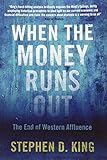
This is my review of When the Money Runs Out: The End of Western Affluence by Stephen D. King.

Frustrated by politicians' refusal to admit that western economies may be in permanent decline, and their wrangling over austerity versus stimulus as the key to restoring growth which may be a chimera, I leapt eagerly on King's topical book.

I like King's rejection of economists' recent preoccupation with obscure models, and his concern to take historical, political and social factors into account, although I think some of his analyses would make academics in these disciplines wince.

The most original aspects seem to be his comparisons between the current situation and previous events, such as the decline after a period of promising growth of both Argentina and Japan, the bubble of "subprime" investment in the original American railroads, or the crises of the 1990s from which "Tiger economies" like South Korea or Malaysia, recovered quickly owing to their lack of a sense of entitlement, or so the author claims.

His examination of the recent financial crisis is clear, but has already been well-covered elsewhere. Yet his approach to economic terms seems inconsistent: the "loss aversion" which occurs in periods of stagnation is defined at some length, but I am not aware that he explains at any point how bond yields work, or the difference between monetary and fiscal policies, all crucial to an understanding of the economy. A glossary of economic terms would have been useful.

There is a good deal of space-taking repetition and some of his observations seem unduly subjective and perhaps a little confused, such as frequent references to the guilty role of "baby boomers" who are "having their cake and eating it". Does he expect this group to opt for early euthanasia so they can hand their ill-gotten share of resources on to the next generation?

I was disappointed by his recommended policies, which are presented in a rather rushed and woolly fashion in the final chapter. Some, too complex to explain fully here, on say, rating creditors for the quality of their decisions, or setting up "fiscal clubs" or encouraging more mobility of labour seem too theoretical, taking little account of the realities of nationalism, democracy or the implications for local services. Other policies seem based on flimsy arguments: I am unconvinced that banks have been forced to pursue risky ventures promising higher profits by the need to subsidise such "social commitments" as ATMs, or telephone and internet banking services for small savers.

⭐⭐⭐ 3 Stars

Capturing the leopard

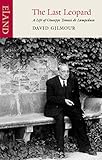
This is my review of The Last Leopard: A life of Giuseppe Tomasi di Lampedusa by David Gilmour.

If Lampedusa, who in due course became the Duke of Palma, comes across as rather dull, it was partly due to his intense introversion with strangers and also because his life seemed to revolve round consuming literature, history and cakes in prodigious quantities. The author succeeds in showing how Lampedusa's only published novel,"The Leopard", sadly rejected until just after his early death from cancer, was the fruit of decades of musing about his aristocratic family, the state of Sicily and the reading which must have developed his sense of style.

The most interestig part of the book are the final chapters on "The Leopard", which you need to have read beforehand, with an exploration of the extent to which the leading character Don Fabrizio was modelled on Lampedusa's great-grandfather Prince Giulio during the Risorgimento in the 1860s, which brought about the unification of Italy and the break up of the old feudal estates, or on the author himself. Like Don Fabrizio, Giulio was a keen astronomer, but he was probably less of an autocrat. As regards his "sceptical intelligence ….. long periods of abstract thought… and pessimistic view of Sicily and Italian unity….. Don Fabrizio is more autobiography than invention", but he is also "transformed into the person the writer would like to have been".

On the author's own admission, the charming Tancredi is based partly on his adopted son Gio, although "as for his morals….Gio is fortunately much better than him". Yet Tancredi also seems to be an amalgam of some of the young Sicilan aristocrats who joined Garibaldi, for excitement rather than out of conviction.

The huge, violent and mixed reaction to "The Leopard" also makes fascinating reading. Many who thought they knew Lampedusa were astonished that this polite, self-effacing man could hold such cynical and negative opinions. One of the strangest criticisms was that, in being readable with clear characters and conventional syntax, the book failed to achieve the kind of "avant-garde experimentalism" which was in vogue in 1950s Italy.

Another critic even attacked Lampedusa for writing about animals in a "silly" way when in fact the portrayal of the faithful hound Bendico is one of the most humorously touching aspects of the novel, revealing the love of dogs, above people, which Lampedusa displayed in real life.

His marriage is intriguing: he braved his possessive mother's wrath by marrying a formidable pyschoanalyst, who also happened to be a wealthy Latvian aristocrat, but soon settled into what seems to have been a largely intellectual relationship with her, choosing to live with his mother until her death rather than with his wife, since the two women could not get on. Gilmour comments that "flames for a year, ashes for thirty" seems to have been both Don Fabrizio's and Lampedusa's view of love for their wives.

I would have liked the final chapters to have been longer, and more on the socio-political events which formed a background to both Lampedusa's life and his famous novel. The photographs which I discovered at the end of my kindle version are well-chosen.

⭐⭐⭐⭐ 4 Stars

Overblown nostalgia

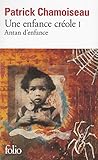
This is my review of Une Enfance Creole 1/Antan D’enfance (Collection Folio) by Patrick Chamoiseau.

The first part in a trilogy by the prize-winning author from Martinique, Patrick Chamoiseau, captures the spirit of life in the capital of Fort-de-France fifty years ago: the stultifying heat, fear of fire in the communal wooden houses contrasting with the need to deal with leaks in the rainy season, ravages of a cyclone, colour and chaos of the markets and uproar of occasional riots. He recreates the preoccupations of a sensitive small child in a constrained world, dissecting insects and playing with forbidden matches under the stairs, terrified in the dark by demons and the three-legged phantom horse, fascinated by tales of the shop-keeper who married a sorceror but made the mistake of burning his abandoned skin so that he could not return to her in his "normal" life.

Although these anecdotes may sound entertaining in retrospect, I found the book hard-going and tedious. This was owing to the many Creole terms which I had to keep stopping to look up, sometimes without success, and the pretentious language which grated when applied to childhood memories. I was irritated by the author's decision to call himself "le négrillon" all the way through, and I often felt that he was investing his pre-school self with adult observations, say on the sales techniques of the Syrian shopkeepers, and embellishing some points to the extent of making things up. There was little sense of any characters apart from the powerful and dominating mother figure who despite working every hour of the day was often short of cash, so she had to resort to sending her son out shopping in the hope that his appeal would soften the hearts of shop-keepers reluctant to add yet more expenditure to her credit tab. There is occasional pathos, say in the mother's frustrated childhood desire to be a singer, and we wonder what sorrows the father may have been trying to drown in rum at every opportunity.

⭐⭐⭐ 3 Stars

So many words obscure the light

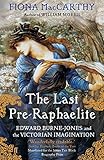
This is my review of The Last Pre-Raphaelite: Edward Burne-Jones and the Victorian Imagination by Fiona MacCarthy.

Burne-Jones sought lifelong escapism into the world of mythical romance as a reaction to the ugliness of a childhood in industrial Birmingham. When his deep friendship with William Morris was finally fractured by the latter's involvement with active socialism, Burne Jones wrote of his desire to take refuge in the artistic work which he could control.

He had some strokes of luck: Rossetti found commissions for him to design stained glass – often for the very wealthy industrialists responsible for the world he hated; Ruskin paid for a couple of trips to Italy where he discovered at that time little-known painters such as Botticelli or Piero della Francesca who were to influence his work, and despite his uncertain income Burne-Jones seems to have been welcomed by her parents as a fiancé for Georgie Macdonald. His repayment for her loyalty was a steamy affair with the flamboyant Greek artist Maria Zambaco, the muse for some of his most famous paintings, as were also some of the pale and interesting younger women with whom he liked to flirt. Highly successful and made a baronet in his lifetime, Burne Jones was a prolific artist, despite his disorganised approach.

It is understandable that Fiona MacCarthy's encyclopaedic knowledge, the result of six year's spent researching Byrne-Jones, led her to produce a work of 536 pages, excluding notes, so heavy that it splits at the seams as you read it (although a Kindle version is available) but I found it on balance a laborious slog not only because of the length but also the structure. The decision to base each chapter on a different location linked to the artist's life in chronological order leads to a fragmentation of themes and repetition of some points. I wanted less description and more analysis and insight that was more than vague suggestions of what might have been the case. What exactly was the goal or philosophy of the Pre-Raphaelites and what was their impact, how did Burne-Jones fit into the group, what was his method of painting and so on? I would have liked more focus on a few major works, illustrated in the text, with a full discussion of each one. I gleaned little more about the painter's personality than may be found in the preface.

If some of the peripheral detail e.g. on the painter's cronies had been omitted, there would have been the space to develop some neglected aspects.

⭐⭐⭐ 3 Stars

Savage harshness made complete

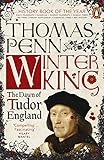
This is my review of Winter King: The Dawn of Tudor England by Thomas Penn.

A reign which may seem less glamorous and colourful than that of his descendants Henry VIII and Elizabeth proves on closer inspection to be highly intriguing. Penn shows how Henry Senior sowed the seeds for a successful dynasty, and captures the spirit of an age still trapped in medieval superstition, but with the stirrings of humanism, democracy and "enlightenment".

Henry Vll's mistrustful and calculating nature must have been influenced by a youth spent on the run from the Yorkists, often at risk of being traded for funds and military aid from whoever was on the English throne during the final years of the Wars of the Roses. Once king, marriage to a Yorkist princess was not enough to consolidate Henry's tenuous claim nor to deter disgruntled nobles from passing off a string of impostors as say, one of the Princes in the Tower with a better claim.

It is perhaps to Henry's credit that he preferred negotiating to war – setting out early in his reign to fight the French, he allowed himself to be bought off with a pension. He grasped that he needed money, both to impress everyone with great pageantry and ritual but also to purchase influence on the continent, not least with the impecunious Hapsburg emperor.

The problem was the methods used to obtain money. In an increasingly harsh network of tyranny, Henry hired a mixture of shrewd lawyers and thugs to devise means of depriving subjects of their wealth – the lands of widows and orphans, the simple-minded, or those whose loyalty was suspected were taken over and the profits siphoned off; to hold office under Henry, it might be necessary to pay a large sum as security for good behaviour; in an increasingly Kafkesque world , ordinary people could be fined on trumped up charges. All this was done through new committees and courts set up outside the common law, undermining Magna Carta, "concerning the liberties of England".

Ironically, when Henry Vlll succeeded, although two of his father's main enforcers, Dudley and Empson were scapegoated, they were condemned by men who were also guilty and "much of the private system of finance and surveillance" which under Henry Vll's "obsessive gaze" had "assumed primacy over the legally constituted exchequer" was simply made official.

Unlike some reviewers, I did not mind that Penn has tried to leaven his scholarly work with somewhat jarring colloquialisms. I was fascinated by "trivial" anecdotes such as Margaret Beaufort's sudden death after her son's coronation feast, "it was the cygnet that did it", or how when a blue carpet was laid out for a royal procession, the London crowd descended on it afterwards to hack off bits as souvenirs.

Extracting the gold from this book was hard going because of a wordy style, combined with Penn's habit of introducing more minor characters than I for one could absorb: X the step-son of Y who had married the widow of Z's brother, and so on. The background to say, the frustrations of the Calais garrison or the ambitions of the famous scholar Erasmus, bog the reader down in excessive detail.

⭐⭐⭐⭐ 4 Stars

Shielding Elizabeth from Storm

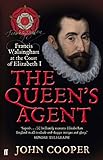
This is my review of The Queen’s Agent: Francis Walsingham at the Court of Elizabeth I by John Cooper.

This begins like a novel with Walsingham, the English ambassador in Paris, risking his life by harbouring a Huguenot in a vain attempt to save him from the St Barthelomew's Day Massacre in 1572. This appalling event was critical in convincing Walsingham of the absolute necessity of preventing a Catholic invasion of England.

Although destined to play second fiddle to Lord Cecil, Walsingham filled a major role as Principal Secretary to Elizabeth, heavily involved in foreign policy, negotiating the thorny paths of her phony marriage plans, promoting early abortive attempts to extend English influence by founding colonies in North America, but most of all organising a network of secret agents to glean evidence of plots amongst Catholics at home and abroad.

Cooper provides a somewhat repetitive but fascinating analysis of how English Catholics who mostly just wanted to be free to worship "in the old way" were hardened into plotting against Elizabeth by the influence of priests who set up seminaries abroad and ventured into England, at great risk and personal cost, to spread the word. It was a vicious circle in which repressive laws, an inevitable result of foiled rebellions and plots, only made the English Catholics feel more persecuted and rebellious. Cooper debates whether Walsingham was guilty of "entrapment" by infiltrating Catholic families with agents who encouraged them to intrigue against the Queen.

Some events, such as the Throckmorton plot, are not easy to follow since they are presented in a rather fragmented way, and the whole structure of the book is a little disjointed, so that the abrupt switch from Walsingham's reliance on ciphers and code breakers to troubles in Ireland and attempts to found a colony at Roanoke feels like reading two fresh books in which he scarcely figures.

Yet, a sense of Walsingham the man comes through clearly: puritanical but not fanatical, loyal and industrious, stymied by the queen's periods of indecision. While giving her lavish presents, he was reduced to debt partly through being obliged to pay for some of his security work himself, not to mention the indignity of having an ungrateful queen throw a slipper in his face. His occasional bursts of written frustration to others seem almost modern in tone, and very human.

A few clear maps would have been useful, say of the ill-fated colony on Roanoke Island, the ports ravaged by Drake in the Spanish Empire, or even the route taken by the Armada. A timeline and list of main characters for easy reference would also assist the general reader. The illustrations are interesting, but need a full page each to do them justice.

⭐⭐⭐⭐ 4 Stars

Authors collect materials in the living of their lives

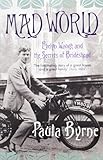
This is my review of Mad World: Evelyn Waugh and the Secrets of Brideshead by Paula Byrne.

This very readable biography of Evelyn Waugh focuses on his fascination with the aristocratic Lygon family and the ambiance of their ancestral home Madresfield, which inspired his famous novel "Brideshead Revisited". Paula Bryne recaptures the poignancy of the drama to rival a Shakespearean tragedy in which the cultivated and socially conscious Earl Beauchamp, one of the last Liberal grandees, was driven into exile because of his blatant homosexuality,a victim to the hypocrisy of the day and the jealousy of his brother-in-law, the Duke of Westminster. On the other hand, Beauchamp seems to have used his powerful position to prey upon attractive young servants, rather in the style of a modern celebrity disc jockey.

Paula Byrne paints a sympathetic portrait of Waugh, highlighting his wit, companionship and loyalty to those he liked or admired, his special gift for platonic friendships with women, his courage and cheerful resourcefulness under pressure, "for he liked things to go wrong". Admitting that he was snobbish and often sharp-tongued, she makes allowances for him continually: his outrageous comments were often "meant to be jokes", when in later life he played the part of the crusty lord of the manor "in love with the past" he became a parody of himself, but the knowledge that hosts he thought he was entertaining found him a bore "broke his spirit".

It is interesting how biographies differ. Perhaps wisely for the sake of the length and coherence of the book, the author glosses over his friendships with other writers like Grahame Greene, his unconventional conversion to Catholicism, his possibly neglectful or exploitative relationships with his second wife and children, and the details of the alcoholism and drug-taking which aged him prematurely, drove him into periods of temporary insanity and eventually killed him "before his time". She makes light of the selfishness as when, it must have been through lack of thought, he accidentally started a fire in his father's precious bookroom.

Whom is one to believe? Hugh Carpenter's biography claims that Waugh was not given men to command in World War 2 because he found it hard to relate to working class soldiers. Paula Byrne makes light of Waugh's insistence when in the Royal Marines on "etiquette and proper procedures" and his attempt "to convince the young men how much better the world was before the invention of electricity".

One of the most interesting aspects of the biography is speculation on the extent to which Waugh's writing drew on his own experiences, places he had visited but most particularly the people he knew, often amalgamated to create a character.

With only minor reservations over some repetition which suggests a lack of editing, this book sets Waugh in context and is an inspiration to read more of his work for the humour and quality of the writing, even if much of the social comment now seems very dated.

⭐⭐⭐⭐ 4 Stars

Waughped talent

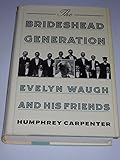
This is my review of Brideshead Generation: Evelyn Waugh and His Friends by Humphrey Carpenter.

This biography provides a vivid portrait of Waugh's personality and the factors which may have affected it, but falls short in the method used to include some of the author's influential acquaintances such as Harold Acton, Graham Greene and John Betjeman to name only a few. This involves frequent digressions which make for a read that is often rambling and baggy in structure, particularly in the early chapters. In a book that cries out for a good edit, I was put off by the opening chapter's lengthy imaginary conversation between two horribly precocious young Etonians which, although it may have satisfied Humphrey Carpenter's ambitions as a novelist, seems unnecessary when there is so much "real" information to cover.

Waugh comes across as a witty and articulate man with a keen sense of the ridiculous, but on the negative side also a bully, an appalling snob, irritable, often remarkably rude, which may have had something to do with being frequently drunk. We are told that in World War 2 he was judged unsuitable to command a company of soldiers because he could not relate to junior ranks. All this may have been in some way the result of a lack of affection as a child, a sense of exclusion from the "cosy friendship" his father apparently formed with Waugh's older brother and the humiliation of his first wife, "She-Evelyn" going off with another man.

He also revelled in gossip, exaggerating the misfortunes of others, including so-called friends. He could not resist the barbed repartee as when Graham Greene observed that it would be fun to write about politics rather than God. Waugh rejoined: "I wouldn't give up writing about God at this stage if I were you. It would be like P.G. Wodehouse dropping Jeeves halfway through the Wooster series."

There seems to be a strong autobiographical thread in much of his writing. "Vile Bodies" which established his reputation and began to earn the income which enabled him to live the life of a country squire, shows both the brittle gaiety of the endless parties of the "Bright Young Things" but also the cynicism of the generation reaching adulthood just after World War 1 and their rejection of the values of the fathers who had sent their sons to die.

It is sad to read that, only in his early sixties, prematurely aged by alcohol, cigarettes and "sodium amytal", he was longing for death and claiming to be so bored that he breathed on the library window to play "noughts and crosses with himself, drinking gin in the intervals between play". Even before that, suffering from hallucinations and an enhanced persecution mania triggered by large quantities of alcohol combined with medicinally prescribed drugs, Waugh heard voices accusing him of the actual charges that he probably found most cutting: that he was snobbish, had fascist sympathies, was guilty of "sentimental overwriting" at times, and may have been an "insincere" convert to Catholicism, together with the charge of homosexuality.

Although the final chapters of this book are the best, I was disappointed by the rather pat ending, suggesting that Evelyn Waugh's reactionary views had been proved justified by the turn of events evident in the 1980s – "the remarkable way in which ancient institutions seem to have outlived the egalitarian zeitgeist".

⭐⭐⭐ 3 Stars

A Question of Justice

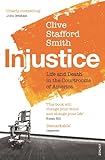
This is my review of Injustice: Life and Death in the Courtrooms of America by Clive Stafford Smith.

I was drawn to this book through admiration for lawyer Clive Stafford Smith's dedication to fighting and exposing injustice. It focuses on the case of Kris Maharaj who was sentenced to death for the murder of two business associates in 1986, and as at 2012 has spent a quarter of a century in security gaols, his sentence having been commuted to life on a technicality. As a formerly successful businessman, a British subject whose racehorse once beat the Queen's at Royal Ascot, Maharaj is a far cry from the usual Death Row inmate: poor, black and ill-educated.

By covering the case from every aspect, witness, prosecution, defence and so on, Stafford Smith shows in detail how a man who appears to be innocent could have been found guilty. Maharaj's main error seems to have been that, overconfident of acquittal, he hired a cheap fixed fee defence lawyer. To get a reasonable hourly return, this man cut corners e.g. failing to call vital witnesses to prove an alibi, giving prosecution witnesses an easy ride, not digging out evidence held by police which would have indicated that Maharaj was framed for murders actually committed by a Colombian drugs cartel. There is a also a suspicion that the defence lawyer himself may have been intimidated. Add to this a corrupt judge and police at various points, and a prosecution "conditioned" to regard defendants as guilty and determined to "refashion the evidence to fit their view of the truth", and we see how the guilty verdict was a foregone conclusion.

Stafford Smith also explains how the appeal system is loaded against the defendant. For instance, evidence which was not challenged in the first trial cannot be raised on appeal. This practice is meant to discourage appeals which diminish the public's regard for the legal system, leading the author to observe, "Yet presumably the state should only be allowed to impose punishment if the punishment is just." A further problem is the lack of state funding, to finance either fair trials for penniless defendants in the first place or their appeals.

The author cites the chilling statistic that on average judges he canvassed would accept an 83% level of belief in a person's guilt as sufficient for a conviction "beyond all reasonable doubt". This is enough to lead to the execution of more than 500 innocent people currently on Death Row. Since an academic study shows that two-thirds of "capital cases" feature serious errors leading to a new trial, a fifty-fifty coin toss procedure would lead to a more reliable outcome!

Without undue sensationalism, the author makes a powerful case against the death penalty, but even if you support it, he raises clear concerns over the operation of the justice system in the US, where lawyers, politicians and police are tarnished by shoddy practice and too many have lost sight of the example they should be setting as a large and powerful democracy. We cannot know to what extent his case may be biased in favour of Maharaj, and explanations are at times too compressed when he is trying to present arcane arguments in a book which sets out to be more gripping than many courtroom crime novels. Yet, more than a hundred pages of small-print notes at the end add weight to his evidence.

Overall, "Injustice", which should disturb everyone who reads it, is a major contribution to the cause of keeping alive what freedom and democracy ought to be about.

Comment Comment | Permalink

⭐⭐⭐⭐⭐ 5 Stars

All things pass

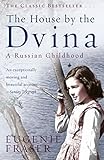
This is my review of The House by the Dvina: A Russian Childhood by Eugenie Fraser.

Her memories of distant childhood perhaps sharpened with age, Eugenie Fraser became an admired author at the age of 80 with a fascinating account of early life as the daughter of a Russian father and Scottish mother, living mainly in Archangel near the Arctic Circle and "midnight sun", in the final years of the Tsar's Empire and the chaos of the Russian Revolution.

Some of her best anecdotes were related to her by relatives, such as her grandmother's courageous journey across frozen wastes, braving frostbite and wolves, despite being eight months' pregnant to beg for clemency from the Tsar to release her husband from prison. At first, it irked me that the author never seemed to question the Tsar's right to exert such power, nor the comfort and luxury in which her family lived. However, having built up strong images of an idyllic childhood, her descriptions of the stupid bureaucracy, incompetence, and gross injustice perpetrated after the Revolution greatly increased my sympathy for her viewpoint. I was impressed by her bitter analysis of the Allied Intervention during World War 1, which only supported the White Army temporarily because it was anti-German, since "in reality the Allies did not care what government took over Russia". As her step-uncle bitterly commented, "Why did they come at all? We shall pay a heavy price for this."

In the middle of the book, I began to find the introduction of an endless succession of Russian relatives too much to take. I grew bored by her preoccupation with trivial matters while "glossing over" important issues such as her parents' relationship. Yet I am glad that I persevered because of the poignant and thought-provoking, not to say exciting, final chapters. She shows not only the intensity of the will and ingenuity to survive, abut also how the strongest spirit may break under intense hardship.

I am sure that many readers will enjoy without criticism the evocation of a lost past, with the exhilaration of the sleigh ride across the frozen Dvina, the camaraderie of the communal baths where even the wealthy went to wash, the observance of rituals and the colourful characters in a large extended family.

Throughout the tale there are continual comparisons between northern Russia and Dundee in Scotland, where Eugenie was fortunate enough to be able to take refuge.

⭐⭐⭐⭐⭐ 5 Stars