Watching paint dry on the house that Jack built

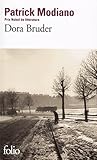
This is my review of Dora Bruder (Folio (Gallimard)) by Patrick Modiano.

In an example of "autofiction", "fictionalizing a real event in a writer's life", Modiano is obsessed for years by his chance discovery in a Paris newspaper dating from December 1941 of a "missing person's notice" for the fifteen-year-old Dora Bruder. She is the only daughter of Jewish immigrants who have sent her to a local Catholic boarding school perhaps partly in an attempt to protect her. Half-Jewish himself, the author readily identifies with the poignancy of her position in seizing a brief freedom before the largescale "round-up" of Jews, including women and children, the following year.

Modiano embarks on a forensic study of records to find out more about her, made hard by the widespread destruction of documents once it was clear that the Nazis had lost. He fills the gaps with speculation which I often found irritating since it is based on such thin data: did she travel between home and school by metro, with or without her parents, and by which stations? As he traces the streets she must have frequented, repeatedly wandering them himself in a mood of reflective nostalgia, I began to wish he had included a few maps and photographs. With his interest extending to her Jewish neighbours, he notes how large areas of the locality have been demolished as if in an attempt to erase some of the guilt of French involvement in the holocaust. At the same time, he manages to weave in experiences from his own troubled teenage, even drawing parallels with his brief arrest for causing a "breach of the peace" with his father and his running away from home. He is annoyingly vague about these events, for which ironically he has the details.

There is great potential in his approach of trying to piece together the past, exploring half-memories and lingering influences of previous lives conducted in streets which are partly remarkably unchanged, partly derelict, partly superimposed by a new wave of construction and a heedless modern existence. It could be argued that the factual description and heavy reliance on speculation highlight the pathos of the theme: that people could be deported to Auchwitz for omitting to wear a yellow star often enough for mean-spirited neighbours to notice. Yet for me, the banality and most of all the excessive repetition of details were at times intolerable. Modiano's insistence on providing several times over, for instance, precise addresses and information on whether street numbers are odd or even made me wonder if he had OCD. Detractors have criticised the fact that many of Modiano's novels have the same basic approach of gathering information to trace the past of a missing person, and this deters me from reading more of his work, apart from his autobiographical "Un Pedigree" (for another book group) although his straightforward prose is good practice for improving one's French.

Some reviewers have compared Modiano's work to Sebald's "Austerlitz", which for me was a much more striking, impressively original and moving work, more worthy, I would have said, of a Nobel Prize.

⭐⭐⭐ 3 Stars

Seeing the wood for the trees

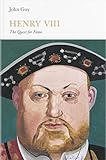
This is my review of Henry VIII (Penguin Monarchs): The Quest for Fame by John Guy.

The "Penguin Monarchs" series sets out to provide a separate concise and readable introduction to each of the British rulers from Athelstan to Elizabeth ll, written by a different specialist in each case. Well-known for his accessible coverage of the Tudor period, John Guy has chosen to focus on Henry's quest for fame. This was not achieved in quite the fashion intended, since he is mainly infamous for his often mistreated six wives, whereas his desire to be crowned in Paris as the rightful King of France or to become the "the arbiter of international disputes" came to nothing.

Perhaps because the details are quite condensed, the author succeeds in highlighting some key aspects of Henry's personality and the motivation for his actions. Charismatic in his youth, handsome, shrewd, interested in the arts yet also athletic, prepared to promote competent men of lowly origin like Wolsey or Cromwell, he could have left a positive legacy. Yet, childhood experiences of Yorkist rebellions triggered the fear which bred his almost paranoid mistrust of others, perhaps also fed by his calculating father's cynical example. With the additional effects of the physical excesses which ruined his health, and the impatience and arrogance which made some see him as "the most dangerous and cruel man in the world", inevitably many of his policies became corrupted.

To free England from papal authority and end the greed of the great monasteries may have been beneficial in the long-term, but these ideas were the unintended by-product of Henry's obsession to find a way to divorce an infertile wife for one who could provide the male heir needed to secure not only his dynasty but the security of the realm. Also, to use the monks' plundered wealth to finance unnecessary and abortive wars or to execute those who would not renounce the old faith were indefensible acts. Henry's concern to judge people via the legal system and to legalise change using Parliament was laudable but the resultant manipulation of justice by his henchmen and crushing of true democracy were tyrannical. His belief that the King of England really was Christ's deputy ironically led him to seek to re-impose what was in effect a form of Catholicism without the Pope.

The author's concluding points are telling: Henry's vast and costly wardrobe designed to impress, Holbein's portraits which revealed "the sitter's soul" in an unflattering way which Henry perhaps fortunately failed to observe, and, in true "Ozymandias" style, the grandiose planned mausoleum left unassembled in a workshop until the bronze was sold off a century later – to fund a future war. There's also a useful bibliography at the end for those who wish to know more.

⭐⭐⭐⭐ 4 Stars

Sweet tart with a heart

This is my review of Josephine: Desire, Ambition, Napoleon by Kate Williams.

The unsophisticated daughter of a Creole family whose Martinique sugar plantations ran on slave labour, Josephine was shipped to France for what proved a tragic and short-lived arranged marriage. Widowed with two young children in the dangerous and unstable world of the French Revolution, she soon acquired the requisite skills to become the mistress of a succession of wealthy and powerful men, culminating with Napoleon.

Her extravagance was shocking in its excess, her behaviour manipulative and devious, perhaps the most appalling example being her eagerness to marry her daughter off to one of Napoleon's least appealing brothers, in an attempt to compensate for her own inability to provide the French leader with a son and heir.

Despite all her faults, the author is clearly on Josephine's side, and emphasises the qualities which made her attractive to men and popular with the public: she was graceful, a good listener, and kind to those in trouble. Her main achievements seem to have been providing an attractive figurehead to offset Napoleon's boorish and intimidating image, her public relations role in organising social events and dealing with people, and the private passion for gardens, including, exotic plants, birds and wild animals imported from abroad, which led her to develop the beautiful estate of Malmaison.

This is an entertaining biography with some moments of real poignancy, as when, having at last steeled himself to announce his divorce of Josephine, Napoleon still hankers for her company so much that he cannot resist coming over to Malmaison to walk with her in the rain.

On the other hand, the somewhat tabloid style and focus on the more sensational aspects of Josephine's life made me wince at times, or feel the need to look to other sources to verify the author's interpretations, particularly of Napoleon. She presents him as a capricious and crude megalomaniac, chronically indecisive at times, but over-prescriptive at others, a shameless sexual predator once success provides the confidence to demand "droits du seigneur". I agree with the reviewer who has criticised the "one-dimensional" portrayal, which gives an inadequate impression and exploration of his greatness.

⭐⭐⭐⭐ 4 Stars

“To go on with vigour and to hope for the best”

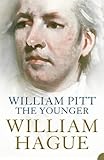
This is my review of William Pitt the Younger: A Biography by William Hague.

"Apparently uninterested in sexual relationships…in music, art, society or modern languages and literature", Pitt the Younger does not prove a very engrossing subject for a near-600 page biography. The fascination lies in the late eighteenth century times though which he lived.

The stellar reputation of his father, "The Great Commoner" elevated to the title of the Earl of Chatham, and the hothouse classical education which honed his debating skills, gave Pitt the confidence and eloquence to take on the role of First Minister at the age of only twenty-four, although this was less remarkable at a time when the Commons was dominated by the sons of peers bent on advancing their fortunes and waiting to inherit titles.

One of Pitt's main talents was for prudent budget management and paying off national deficits, which chimes with present-day preoccupations. Sadly, the pressure of European wars and need to oppose the menace of Napoleon caused this to unravel into renewed debt and largescale borrowing, the invention of a form of income tax being one of Pitt's innovations.

Regarded as personally incorruptible "honest Billy", Pitt resorted from the outset to offering peerages as a way of getting supporters on side, on a scale which makes the recent MPs' expense scandal look like chicken feed. For a man with such an eye of administrative detail, the chaos of his personal finances is also surprising, but Hague explains this as the result of his workaholic obsession with the holding of power to serve his country. The excessive consumption of alcohol which contributed to his early death at forty-six may also have contributed to his negligence over personal affairs. This was not entirely his own fault, as from an early age he was encouraged to dose his frequent periods of ill-health with a daily bottle of port.

Although sociable within his circle of loyal friends, Pitt often seemed stiff and arrogant in public. It is tantalising that no explanation survives of the "decisive and insurmountable obstacles" which prevented him from marrying Eleanor Eden, the woman to whom he came closest to "courting".

Sadly, many of the Pitt's early causes – abolition of the slave trade, Catholic emancipation and parliamentary reform – foundered, either because he accepted the need to be pragmatic or perhaps lost his youthful idealism. Some of his patchy success seems to have been the chance benefit of indecision or procrastination. Perhaps it was inevitable that the sheer length of time in office was accompanied by a decline in his reputation, the final hammer-blow being the defeat of his fickle Europeans allies at Ulm in 1805. It was interesting to note how much support depended on the British providing subsidies for the armies of other nations.

There is much more meat in Hague's description of a Parliament without clear parties as we know them (although they are currently in a state of flux) and a King George III still retaining a considerable degree of power to obstruct matters – refusing to accept the republican thorn in the flesh Charles Fox as a minister, or sabotaging Pitt's attempts to give Irish Catholics the right to hold office. Pitt's dependence for political survival on the sanity and survival of the king is all too clear.

The minute detail, inclusion of many friends' and politicians' names, before and after ennoblement, and extensive quotations from the convoluted prose favoured in the C18, make this a demanding read at times. I would have liked a little more background context, say on the evolution of the "Whigs" and embryonic Tories; more on the prevailing political situation in the rest of Europe and its colonies and a "glossary" of contemporary politicians would have been useful.

Overall, it is an impressively researched if at times somewhat dry biography.

⭐⭐⭐⭐ 4 Stars

Soaring from the cage

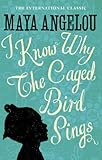
This is my review of I Know Why The Caged Bird Sings (Virago Modern Classics) by Maya Angelou.

As a young girl, Maya Angelou was raped by one of her mother's partners, and later, barely into her teens, was knifed by her father's jealous lover. Such experiences were surely enough to drive her either mad or bad, but she was saved from her charismatic but rackety and self-absorbed parents' neglect by the more solid grounding of time spent with her grandmother. This industrious and enterprising women ran the general store in Stamps, an Arkansas backwater only a step away from slavery. Maya Angelou provides chilling descriptions of the local sheriff who thinks he's doing the family a good turn when he warns her crippled uncle to hide from a possible visit from the local Ku Klux Klan on a warpath of random revenge, or when a respected white dentist has no shame in refusing point black to treat her urgent dental problem, although her grandmother gave him credit during the worst years of the recession.

A varied succession of colourful, by turns funny, moving and violent events, are the tinder for the author's vivid and original prose. This must also have benefitted from the surprisingly good basic education she received against the odds. She describes how, when she was still very young, she wanted to perform a Shakespearean scene at home, but was deterred by the knowledge that her grandmother would winkle out of her the fact that he was not a black writer. That this may be one of many anecdotes which have gained in the telling does not really matter.

One forgives much from an author who, as a mature adult can write: "To be left alone on the tightrope of youthful unknowing is to experience the excruciating beauty of full freedom and the threat of eternal indecision…. Most surrender to the vague but murderous pressure of adult conformity. It becomes easier to die and avoid conflicts than to maintain a constant battle with the superior forces of maturity".

Although I am not sure I want to continue with her subsequent autobiographical works, since I suspect that the descriptions of Stamps may supply the most powerful and authentic passages, this book has increased my understanding and empathy for, as Maya Angelou puts it: " the Black female… caught in the tripartite crossfire of masculine prejudice, white illogical hate and Black lack of power".

⭐⭐⭐⭐ 4 Stars

Sins of the father

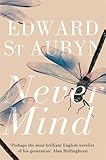
This is my review of Never Mind (The Patrick Melrose Novels) by Edward St Aubyn.

In this first novel in the “Melrose” series, we are introduced to Patrick, the five-year-old son of the charismatic but brutal David Melrose. Such is the narrator’s power that I felt the urge to tear through the page to save this poor little boy from the daily torture and abuse meted out to him by a man who had probably been damaged in the same way and which Patrick himself seems at risk of inflicting on his own children in due course.

Although desirable to read the five Melrose novels in order, this is not strictly necessary, as I came to them through “At Last" and “Mother’s Milk”. Since I did not realise they are heavily autobiographical, I rejected them at first for the author’s obsession with the idle and dysfunctional rich, wishing he would apply his striking talent to more worthy topics. The very day I read in “Never Mind” the shocking scene in which David Melrose rapes his own son, I saw Edward St Aubyn being interviewed on the TV by John Mullan, and realised that these books have been a form of carthasis for him, to some extent saving his sanity: he was Patrick. This has entirely altered my view. I note that some reviewers condemn the "shock factor" of the rape scene, perhaps unaware that something like it really happened to the author, traumatising until he could find some outlet through writing about it.

The author’s capacity to put thoughts into words with such apparent ease, bending them to fit the most complex thought and make it clear is remarkable. What is at times profoundly sad is made bearable by his razor-sharp and caustic wit. I like the brevity of the book which ends unexpectedly, leaving you wanting more of the addictive prose. On reflection, it concludes with an important insight, comparing the dreams of David and his son.

It may be a while before I can face reading the remainder of the series, because of the sense of pointless cruelty and tragic self-destruction which it engenders. Perhaps the first book, in its novelty, will prove the best, but I recommend this partly for the quality of the writing and partly because to survive such ill-treatment and put it to artistic use merits some kind of recognition. Ironically, as the author turns his skill to less harrowing and personal subjects, he may lose some of his unique edge.

St Aubyn may feel sore over missing the Man Booker Prize for "Mother's Milk". I would argue that any prize should be awarded for the whole series. I also note the plan to make the series into a film, which will suffer from the loss of the searing and brilliant prose.

⭐⭐⭐⭐⭐ 5 Stars

When doing harm is unavoidable

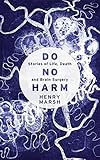
This is my review of Do No Harm: Stories of Life, Death and Brain Surgery by Henry Marsh.

"The idea that emotions and reason, that memories, dreams and reflections should consist of jelly is simply too strange to understand… Yet..if I stray into what neurosurgeons call eloquent brain, I will be faced with a damaged and disabled patient."

It is this kind of honesty that makes Henry Marsh's memoirs so compelling, overriding the initial concern that I might be reading the book solely out of a kind of ghoulish voyeurism. Henry Marsh was clearly drawn to this field by the challenge and element of danger, akin to what drives people to climb mountains. He describes with great clarity and insight the sense of shame when what should be a straightforward operation goes wrong, perhaps through a moment of hubris or distraction, but it could also be because one has given a more junior colleague the practice he needs in order to improve, or just bad luck, a sudden haemorrhage for no obvious reason. On the other hand, inexperience – or memories of a recent disaster- may make a surgeon over-cautious as regards something as simple as trying to adjust the clip on an aneurism.

Marsh patiently explains various medical conditions, mainly tumours, in terms a layman can grasp. I found it hard to read more than about three chapters at a time, not because the book is depressing – Marsh manages to weave in a surprising amount of humour – but because the experiences of many of his patients seemed to demand a certain amount of respectful reflection before rushing on to the next trauma.

Marsh reserves his bile for hospital management and government targets or cuts. He may be a bit of a dinosaur in some respects, but makes his case very convincingly. The 48 hour Working Time Directive causes more frequent shift changes so that staff often do not know the condition of patients they are treating as well as they used to. Bureaucratic rules enforced by junior staff no longer so in awe of consultants and senior surgeons often mean that patients have to wait longer for operations, and suffer more often the stress of last minute postponements. He condemns Private Finance Initiative (PFI) schemes as a "very expensive way of building second rate public buildings" which "some would consider to be an economic crime, although nobody is to be held responsible for it."

If anything, this book has eroded my confidence in the NHS as a whole, but has made me more understanding of the surgeon's dilemma. Often, he really does not know whether on balance it is better to operate or not. As regards patient consent, the percentage risk of death from the operation may equal that of eventually dying from a tumour, but if one survives the former, there is the incalculable benefit of peace of mind. Even such an eminent surgeon as Marsh may have to face charges of indefensible error, say for delay in diagnosing an infection: "it was painfully clear, as I had always known – that the case could not be defended… The final bill…was for six million" to settle it. One is left thankful that there are people with the courage and motivation to persevere in this complex medical field.

⭐⭐⭐⭐⭐ 5 Stars

Where is the enemy?

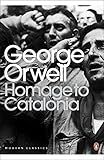
This is my review of Homage to Catalonia (Penguin Modern Classics) by George Orwell.

This vivid account of a few months spent fighting the Fascists in the Spanish Civil War reminded me that Orwell was a talented journalist as well as a writer of satirical fiction. He pulls no punches in describing the chaos and lack of resources in periods of mainly uncomfortable inaction punctuated with occasional hairy sorties.

My respect for his judgement was shaken a little by some of his observations – for instance, that he should find it “rather fun….in a boy-scoutish” kind of way to crawl about trying to take pot shots at the enemy without being hit himself, or the unconscious elitism of “Any public school OTC in England is far more like a modern army than we were.” He admits to longing for a powerful gun with which to pulverise the other side, but redeems himself with an admission of real fear when he has to expose himself to enemy fire. Similarly, his account of the experience of being wounded is interesting, together with such insights as the camaraderie between soldiers who know they would be shooting at each other in a different situation. His description of Barcelona as a briefly classless society in which there was no rank or status, and people treated each other as equals, is thought-provoking as regards “what might have been”, but clearly seemed too utopian to last, particularly since the bourgeoisie was simply lying low.

It is revealing that the chronic shortage of weapons may have been part of a deliberate government plan to prevent groups of anarchists or pro-revolutionary Marxists from gaining influence in the struggle. However, Orwell’s self-confessed lack of interest in the political side of the war is both surprising and disappointing, since it is clearly crucial to an understanding of what was going on in this complex struggle, and the outcome of events. Thus, the dramatic chapters on the counterproductive riots between anti-fascist groups in Barcelona – perhaps akin to fights between different revolutionary sects in modern-day Syria – are quite hard to understand. Orwell goes some way to redress this in the two Appendices, which were chapters integrated into the original text, but the result is needlessly disjointed and still somewhat unclear.

Although he produced this book in 1938, too early to judge the tragic outcome, at least Orwell had the prescience to predict that Franco would win, thus setting Spain back for decades.

⭐⭐⭐⭐ 4 Stars

A Divided Nation

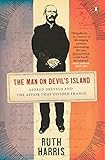
This is my review of The Man on Devil’s Island: Alfred Dreyfus and the Affair that Divided France by Ruth Harris.

It is hard to identify a modern event which has had as much impact on society as the trials and imprisonment of Alfred Dreyfus on what we now believe to be a trumped up espionage charge of relative insignificance. Having read recently Piers Paul Read's very detailed yet clear and moving account of this, from the arrest of Dreyfus in 1894 to his pardon and reinstatement in the army in 1906, I turned to Ruth Harris for a wider analysis of Dreyfusards versus anti-Dreyfusards.

In the promising introduction, Harris emphasises how families were divided by the Dreyfus affair, with people on both sides often holding contradictory and conflicting views about everything except the innocence or guilt of the man at the heart of it all, or at least his right to a retrial or declaration of innocence. The author presents "two Frances" fighting "for the nation's soul": on one hand, the Dreyfusards, mainly republicans, Protestants, or socialists, upholding Truth and Justice in their demands for a retrial versus the anti-Dreyfusards, often Catholic, anti-semitic, with monarchist sympathies, champions of Tradition and Honour, either convinced of the guilt of Dreyfus or prepared to sacrifice him rather than overthrow the ruling of a military court when they were concerned to support and build up the army after the humiliation of defeat in the Franco-Prussian War.

I do not mind that only brief sections of this book are devoted to Dreyfus himself. I admire the author's depth of research and evident deep knowledge, and perhaps, with 137 pages of notes and bibliography, this is not intended for a general reader. Much as I wanted to get absorbed, I found the reading of this excessively hard going. There is a surfeit of detail in an indigestible form, made worse by a fragmentation of information e.g. on the anti-Dreyfusard Maurice Barrès, and the inclusion of specialist terms with inadequate explanation for a non-expert e.g. page 137 (paperback version) references to revolutionary Blanquists and revanchists from the Ligue de la patrie française. In short, there is a failure to distinguish clear, major points from a morass of over-condensed detail on too many characters and attitudes.

I would like to find another book on this of period of French history, but was forced to the disappointed conclusion that it was not worth the expenditure of time to plough through this, referring to other sources for clarification on the way.

⭐⭐⭐ 3 Stars

Satisfying need and greed

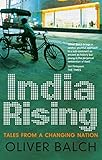
This is my review of India Rising: Tales from a Changing Nation by Oliver Balch.

Themed under the headings of Enterprise, Aspiration and Change, the ten chapters of interviews with a wide range of Indians can be picked and mixed in any order. With the stated “overarching goal..to gain a flavour of the place… the approach is unapologetically subjective” and anecdotal. In this, the author succeeds, but is it enough? I admire Balch’s enthusiasm and confidence, but found myself crying out for more context and analysis, as I searched for nuggets of information in the often banal padding and attempts to showcase Balch’s budding skills as a journalist.

Some of the least likely chapters are the best, as in “Actor Prepares” where the author tracks down Naval, the wannabee Bollywood director who has broken with tradition by giving up the course financed by his father, without telling him. In the process, Balch describes the urban tragedy of the hideous, jerry-built concrete housing blocks in unfinished suburbs where recent migrants to Mumbai are crammed without the money or knowhow to equip themselves adequately.

After visiting the artificial bubble of a western style shopping mall, which girls can only attend chaperoned or with friends, Bauch interviews the retail millionaire who feels that aspiration levels, even amongst the poor of India, are now too high to halt the growing tide of consumption: “material things are rewards for performance”. Can Gandhi’s opposing philosophy of the importance of inner peace and harmony survive against this? It is interesting to read how the ingenious poor of India are beginning to set about achieving their ends. There is the “microfinance” (controversial in view of the interest rates levied) which enables groups of women in the slums to borrow money for small-scale activities, guaranteeing repayments for each other as necessary. Similarly, in remote villages off the beaten track, it is again women who operate like “Avon ladies” selling small packets and jars of cleaning agents. When asked if she is happy with her purchases, an old lady gives the telling response, “Before, we washed our dishes with ash”.

On page 250, a rare piece of analysis asserts, “India is travelling at multiple speeds as in multiple directions. New India is a story of fits and starts, not linear progression.” And in the conclusion: “India is too diverse, too full of paradoxes, too confident ever to be homogenised” or swallowed up by global capitalism. But is this too simplistic? India is clearly in transition, with the poverty of the majority highlighted in the process: state-funded space research versus stagnant villages and mushrooming slums in filthy, lung-searing, gridlocked cities. Will the sheer scale of the economy create such pressures of pollution and instability that India plays a major part in the destruction of our global civilisation as we know it? “India Rising” never probes as deeply as this.

⭐⭐⭐ 3 Stars