This site will share with you hundreds of book and film reviews written since 2009. Also a chance to discuss these reviews together with some of my creative writing to be added.
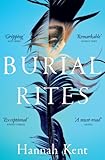
On a visit to Iceland, Australian teenager Hannah Kent became fascinated by the story of Agnes Magnúsdóttir, the last woman to be executed there in 1829. Agnes was convicted with two accomplices of involvement in the brutal double murder of herbalist Natan Kedilsson and his visitor Pétur Jónsson, setting fire to his house in an attempt to conceal the crime. Keen to explore the ambiguity of her guilt, what had shaped Agnes as a person who might commit such a crime yet retain some humanity and evoke sympathy, Hannah Kent went on to research the case in depth for a PhD which included a creative novel on the subject, leading to the publication of this bestseller, “Burial Rites”. I liked the way in which imagined scenes are interspersed with documentary evidence.
My first attempt to read this book failed as I found many of the characters somewhat two-dimensional and written too much in the same “voice”, the dialogue stilted, the prose often overblown. Much of the book is quite slow-paced and repetitive, continually reinforcing the bleak detail. Forcing myself to finish it for a book group, my main reservation became that too many events are told statically, rather than shown dramatically, through the device of Agnes relating them to a third party. I accept that this could reflect the oral tradition of relating Icelandic sagas over interminable dark winter evenings. It also raises the intriguing question as to her reliability as a witness. However, the storyline, which is quite well-developed as regards Agnes’s relationship with the ailing wife and two contrasting sisters at the farm to which she is sent pending her final sentence and execution, becomes fragmented and confusing as regards the events leading up to the final crime. Again, this could be intentional as regards suggesting ambiguity.
My conclusion is that Hannah Kent is an enthusiastic researcher rather than a talented writer, so that the main interest lies in the detailed portrayal of the harsh life in northern Iceland and social customs of the day. Whereas we now think of Iceland as a sexually liberated country, in the early C19, women farm workers had a raw deal, forced to choose between accepting the advances of their employers or being thrown out to possibly certain death in the bitter weather, at the same time risking the consequences of bastard children or the anger of a farmer’s wife.
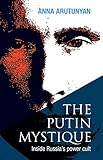
A Moscow-based Russian-born journalist who was raised and educated in the States, Anna Arutunyan seems unusually well-placed to interpret Putin’s mystique in a way that Western readers can readily grasp. Although this book contains some fascinating information if you are prepared to make the effort to glean it, I was disappointed to find that the disjointed journalese makes for an often confusing and laborious read.
We are familiar with photographs of a macho Putin displaying his muscular torso as he rides on horseback through the wilderness, or wades in a river to catch salmon, of him diving in the Black Sea to retrieve ancient Greek urns in what proved to be a staged stunt, or co-piloting a plane to dump gallons of water to extinguish a forest fire. This personality cult which began in around 2001 is partly a top down process of which Anna Arutanin provides further examples: Kremlin ideologist Surkov’s organised demonstrations of support by the activist youth group “Nashi” whose members were rewarded with payment or career opportunities; the elaborate charade in which Putin showed his concern for alumina factory workers demanding their pay by berating on film the oligarch Deripaska who had halted production at their workplace. This included forcing him to sign a probably fake contract and even throwing a pen at him, for which humiliation Deripaska was compensated by some massive monetary bail-outs. The author also identifies more spontaneous actions with commerce in mind, such as the “pin-up” calendar showing the twelve moods of Putin or the erotic calendar of obligingly posed girls presented to him for his birthday. Having been groomed by the oligarch Berezovsky to take over as a President who would provide some stability and order after the chaos of Yeltsin’s regime, Putin adapted readily to mirror the kind leader many Russians wanted to look up to.
The Russians have a history of developing a cult round their leaders as a means of keeping control in a vast, often harsh land of scattered and ethnically diverse people. “Russia may never have had the close-knit communities that foster democracy and legal institutions”. So, we see the persistence of a “patrimonial” rather than a legal-rational state. The Tsars were often venerated like gods, with their subjects literally prostrating themselves in their presence; the Stalinist cult was developed by his inner Bolshevik circle before “spilling out” in a nationwide adulation which in a form of “doublethink” was not incompatible with viewing him as a “bloody tyrant”.
This book was published too late to cover the shocking murder of the charismatic Boris Nemtsov, but the failure to analyse the recent annexation of the Crimea and the issues raised by the poisoning of Litvinenko, along with the murder of a number of investigative journalists critical of the regime, are glaring omissions. Perhaps there are boundaries the author prefers not to cross: although her portrayal of Putin is negative, precise accusations of a serious nature are avoided and charges often veiled. It is suggested, for instance, that widespread financial corruption and human rights’ violations are often beyond Putin’s control, despite the “myth of his omnipotence”, because they are conducted by people on whom he depends to keep order – as in the case of the Chechnyan strongman Ramzan Kadyrov. In reporting recent middle-class protests against Putin’s “corrupt, authoritarian and self-serving regime”, the author suggests that Putin’s opponent, rising star Navalny has himself shown signs of developing a personality cult, including an aggressive stance and the favouring of questions from supporters, as if this somehow weakens criticisms of “the Putin mystique”.
One of Putin’s reactions to the recent backlash has been to align himself more closely with the Church, a respected institution since its recent revival. This may explain the harsh crackdown on “Pussy Riot”, the girl band who performed their blasphemous anti-Putin ditty in a Moscow Cathedral.
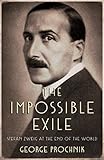
The subject of a recent revival of interest, for instance as author of the short story on which the Oscar-winning novel, “The Grand Budapest Hotel” was based (“Beware of Pity” or “The Post Office Girl” give a better idea of his talent), Stefan Zweig was for decades a phenomenally prolific and popular writer, mainly of novellas and biographies: he preferred to write about “the defeated” rather than successful people – “it is the task of the artist to picture those…who resisted the trend of their time and fell victim to their convictions”. For him, literature was not an end in itself, but, to quote George Prochnik, “a bridge to some hazy higher mission on humanity’s behalf”.
This kaleidoscopic take on Zweig’s life which often reads more like a novel than a biography, focuses mainly on the experience of exile, when the rise of Hitler forced him to leave the cultural hothouse of Vienna in search of a refuge which he always hoped might be temporary but which, whatever its advantages, never quite met his needs. In Bath he found the society too cliquey and suspected that British calmness denoted a lack of imagination- he was not confident that the UK could defeat Hitler. In New York, he deplored the commercialisation which pressed everyone to look and behave the same, the education system which emphasised learning facts rather than understanding them. At first, he loved Brazil for its racial tolerance (ironically overlooking some of its overt anti-semitism) and open attitudes to sex compared with his uptight Viennese upbringing before he became jaded by the monotony and isolation of his days, waiting for the mail to arrive. He was horrified by events in Europe, felt guilty over having survived, old at sixty with nothing more to give future generations. Zweig ended up improbably in the Brazilian tropical mountain winter resort of Petrópolis where he committed suicide with his much younger first wife Lotte who was devoted to him and his writing. Zweig’s “work orginated in friendships.. and it was lack of personal contact with friends, homesickness for human companionship.. that brought him to his end.”
His inability to cope with exile was continually evident in his writing: “We are just ghosts – or memories…..The abyss of despair in which, half-blinded, we grope about with distorted and broken souls…. .The predicaments of exile which aren’t resolved when freedom is gained”. This seems at odds with his view that the Jewish Diaspora was preferable to founding a Jewish homeland, and that Judaism had given him “the absolute freedom to choose among nations, to feel a guest everywhere, to be both participant mediator” – a highly rose-tinted view of what was the reality for the majority of the less privileged Jews.
Prochnik suggests that despite his privileged background, great success and outward urbane confidence, Zweig did not really know how to be himself. He was a product of the Viennese gaiety “always mistaken as the self-expression of a vivacious, life-loving people, while, in fact, it was but a mask behind which people were hiding in their Schwermut – hopelessness , despair, and a feeling of insecurity and abandonment – the true Austrian philosophy of fatalism.”
An innate tendency to depression must have added to his problems. Lotte came to understand that “writers, owing to their imagination and on account of the fact that they are free to indulge in pessimism instead of their work, are more liable to be affected by these depressions than others.” Yet she too was also eventually worn down by illness, isolation and his influence, although one can never know how much he might be blamed for this.
The author’s own family history of enforced flight to the United States – his grandfather adapted well, but not his grandmother – has stimulated in him a strong interest in the nature and effects of exile. This book reminds me a great deal of Sebald’s “The Emigrants”, even down to the small, often amateurish black-and-white photos inserted into the text, which do not need captions, although a list of these is supplied at the end.
I admit that the lack of a chronological approach or an index may make it hard to grasp the sequence of events in Zweig’s life, but the well-chosen quotations, often amusing anecdotes, sharp insights and sense of past time and place make this book far more informative than many traditional biographies which attempt a more systematic and comprehensive coverage.
On a positive note, the shock of Zweig’s suicide “provoked a surge of life-affirming unity” amongst many of his friends in exile, whilst his philosophical biography “The World of Yesterday” on “what it meant to be alive between 1881 and 1942” was one of the few books about the past which slipped into the post-war Austrian school curriculum, ironically in a literature rather than a history class.
⭐⭐⭐⭐⭐ 5 Stars
The Impossible Exile: Stefan Zweig at the End of the World
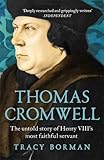
Thomas Cromwell is perhaps best known for the Dissolution of the Monasteries, both to raise money for Henry Vlll and to disband subversive centres of loyalty to the Pope. He also masterminded the legislation required to make the King head of the Church of England and to declare invalid his first marriage to Catherine of Aragon.
Tracy Borman portrays Cromwell as a man of contrasts. He was ruthless in disposing of enemies by "act of attainder" which meant they could be convicted and executed without the right to put their case in court. He used torture to extort a probably false confession that the circle of young men surrounding Anne Boleyn, including her own brother, had been her lovers. Yet when his friend the poet Thomas Wyatt was inadvertently arrested in this affair, Cromwell found the time to reassure and get him released. There is irrefutable evidence that Cromwell took bribes, for instance in return for letting farmers stay on their lands affected by dissolution of religious houses. When enlarging his property at Austin Friars, he moved the garden fences to encroach twenty-two feet on neighbours' land, confident that no one would dare to challenge a rising star in the King's service. Yet he regularly ensured that dozens of poor people were fed at his gate, and often helped friends and acquaintances in trouble.
Largely self-taught, highly intelligent with a remarkable capacity for hard work, Cromwell also possessed a perhaps unexpected wit and charm. In the poisonous, back-stabbing hothouse of the Tudor court where Cromwell was despised for his working class origins as a blacksmith's son, he had to be a tough risk-taker to achieve what he did, although arguably he went too far in frustrating and humiliating his nemesis the mighty Duke of Norfolk. Ostensibly Cromwell's undoing was the unfortunate choice of an unattractive fourth bride for Henry, "the Flanders mare", Anne of Cleves. In fact, he overreached himself in deviating from his usual pragmatism to follow a sincere belief – his continued support for the introduction of Protestantism, one of his main achievements being the installation of an bible in English in a large number of churches. This alarmed a King who was at heart a conventional Catholic (papacy apart) and allowed himself to be convinced that Cromwell was plotting his downfall. Capricious and paranoid with advancing age, "a little over seven months after the former chief minister's execution" the king was heard to reproach his ministers for having persuaded him "upon light pretexts" to execute " the most faithful servant he ever had".
Tracy Borman has made a complex history accessible to those with no prior knowledge, also providing enough fresh detail to hold an informed reader. My sole criticism is the lack of consistency in including some quotations in modern spelling, others in the written anarchy of the day which make them hard to read, together with the way many words have changed in usage. Cromwell's spelling seems particularly mangled: " your most….obbeysand ….subiett and most lamentable seruant and prysoner".
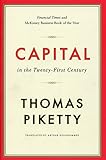
The Industrial Revolution saw an increase in inequality resulting from increased capital accumulation by the wealthy. The economist Kuznets misread the evidence in arguing that an "advanced phase" of industry would lead to a more equal spread of wealth, for "the sharp reduction in income equality in rich countries between 1914-1945 was due to the violent economic and political shocks resulting from two world wars…. The resurgence of inequality after the1980s was due to political shifts as regards taxation and regulation of finance". Piketty aims to enhance his academic credentials by analysing and presenting a vast amount of data between 1700-2010 to explain the above more fully and to support his central thesis that there is no natural, spontaneous process to prevent destabilising, inegalitarian forces from prevailing permanently.
At first, the style seems very clear, well-translated, with minimal use of obscure formulae beloved by economists and graphs which relate to actual numbers on the axes rather than indicate trends, although Piketty admits that such complex data over long periods of time comes with many caveats. He tends to reiterate points, which apart from reinforcing learning helps readers who wish to dip into chapter sections. However, such repetition adds significantly to the length of the book.
Length seems a major problem. If I were an economics student, I would not wish to trawl through so much verbiage to glean the useful nuggets of knowledge. As a general reader, although the history of wealth distribution is quite interesting, I am most concerned about the final section on regulating capital, that is, the reduction of destabilising inequalities of wealth in this century. Here, I find the author skirting round the problem in a woolly and diffuse fashion, as in the single 25 page chapter (out of 577 pages, excluding notes) in which he considers aspects of "A Global Tax on Capital" which he introduces, not for the first time, as a utopian idea "which it is hard to imagine the nations of the world agreeing to any time soon". Other chapters in this section each go off at a tangent without being clearly related to the book's central theme of "capital", such as Chapter 14, "Rethinking the Progressive Income Tax" which is confined to examples from the US, France, Germany and Britain .
The author's heart is in the right place but since the arguments for redistribution are controversial, they need to be thought through and presented more strongly. A shorter book would have been more effective: the first part his research, the second his reasoned case. How many of the purchasers who made this a best-seller have actually read it?
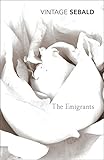
Like the recent French Nobel Prize winner Patrick Modiano, author W.G. Sebald was preoccupied with memory, nostalgia for the past and a haunting sense of loss. In a superb, sensitive translation from the German, "The Emigrants" comprise four freestanding sections, each recording the life of a man forced to leave Germany at some point in the last century, either to find employment in the States or to evade Nazi persecution.
Sebald has a very distinctive style, often described as dreamlike – and in the course of his meandering he sometimes resorts to recalling in detail real or imagined dreams, and tends to merge plain fact with probable invention. Slotted into the text to illustrate points, the frequent small, grainy photos of people, houses, scenery and objects are in some cases evocative and compelling, in others just quirky, such as a couple of keys for opening a cemetery gate, which in fact do not work. The first person narrator often finds out about his emigrants through the memories of others – perhaps emigrants themselves – but slots their commentary into his text without any inverted commas, creating in the process a stream of consciousness.
Opinions will differ, but I was most impressed by the final section on "Max Ferber". for which I would give five stars. In this, Sebald reveals himself to be an immigrant: a young German postgraduate student who came to Manchester in the `60s and found that he preferred not to return permanently to his homeland with its amnesia over the recent guilty past. Sebald "never ceased to be amazed by the completeness with which anthracite-coloured Manchester, the city from which industrialisation had spread across the entire world, displayed the clearly chronic process of its impoverishment and degradation". But the most moving part is his friendship with the reclusive Jewish painter Ferber, who was sent on a flight to England by his once wealthy parents before they were themselves deported. Ferber inspires some of the author's most magical prose. The artist's method was to apply paint in a thick layer, only to spend hours scratching it off, leaving "a hardened and encrusted deposit of droppings mixed with coaldust..in places resembling the flow of lava". Ferber "never felt more at home than in places where matter dissolved, little by little into nothingness." He reflects: "I gradually understood that, beyond a certain point, pain blots out the one thing that is essential to its being experienced – consciousness – and so perhaps extinguishes itself". Ferber gives to Sebald the journal kept by his mother, which the author incorporates into his account – how much of this he actually writes himself is unclear. In any event it is a fascinating description of an ordered, carefee life in the one-third German village of Steinach at the start of the C20, all the more poignant since, "It goes without saying there are no Jews in Steinach now".
This strange account of people damaged by loss has the power to alter one's perception of life and is worth rereading for the quality of the writing and the insights expressed.
I embarked on this great slab of a historical biography – 820 pages excluding sources and notes – in an attempt to understand to what extent Napoleon was truly "great", particularly after reading a popular biography of Josephine which seemed to sell him short.
In the course of wading through the mud and slaughter of his interminable military campaigns, I concluded that he was a remarkable man whose greatness stemmed from enormous energy and vision, insatiable curiosity, the capacity to absorb a huge volume of facts, the confidence to take risks in putting ideas into practice, great tactical skill, flexibility and speed in conducting campaigns – when he had a single enemy to contend with and a small enough army to control personally – undeniable courage, a keen sense of self-publicity and understanding of how to motivate men at all levels – this sometimes deserted him – through a mixture of praise, rewards and decisive orders when needed. He was also capable of moments of refreshing candour and regret as to his shortcomings, and possessed a sense of humour and charm which captivated even some of his enemies.
On the downside, his desire to emulate Caesar and Alexander the Great may have led to megalomania, his attention to detail made him a control freak, as Emperor he made himself an unbridled political dictator, although he listened to the opinions of others and adopted a more democratic approach towards the end when he was fatally weakened. His continual exaggeration of enemy losses and playing down of his own may have been judicious PR, but suggests a failure to face up to his frequent squandering of the lives of the men he had inspired to follow him. He was a male chauvinist – although perhaps most men were at the time – and he made some major errors.
The most costly of these was the attempt to fight on two fronts simultaneously – Russia and Spain, and to allow himself to be lured as far as Moscow, over-extending his supply lines and then underestimating the time needed to limp back to France before the onset of winter. The shocking death toll of more than half a million soldiers, and the destruction of his horses made it hard to put up an effective defence with fast-moving cavalry when the extent of his conquests set most of the rest of Europe against him. He picked the wrong issues for stubborn obsessions, such as an unworkable scheme to block trade with Britain with which he annoyed the Tsar by trying to impose it on Russia, or the rejection of fairly reasonable peace terms when his luck had run out.
In an academic yet mainly very readable text, the author fired me with some of his own enthusiasm for Napoleon. I found myself rooting for him and wishing he had desisted from some campaigns to build his reputation as a social reformer – even as a prisoner on Elba, he arranged the provision of fresh water, improvement of roads, irrigation schemes, etcetera. He may of course have been in a cleft stick, in that he had to wage war to avoid being overrun by belligerent neighbours outraged by his assumption of a crown.
I realise that many chapters on military campaigns are unavoidable, and was impressed to learn that the author had clearly tramped many of the sixty main battle sites in person, but I found the information perhaps inevitably too condensed with indigestible lists of names of commanders, companies, details of troop movements, villages and rivers. It is frustrating that maps are not always supplied, and when included, often omit place names mentioned in the text, an indication of location, topography and scale to help one understand the course of events. I did not want to interrupt my reading to go and search for these details elsewhere. It would have been helpful to include more of the factual information in clear tables, charts and timelines – together with better maps- for easier reference.
Overall, this is an impressive work which has increased my understanding and appreciation of a fascinating historical figure.
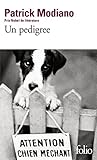
The publication of a debut novel in his early twenties set Modiano on course for his unexpected winning of the Nobel Prize for Literature almost half a century later. “A Pedigree” differs from his other novels, often attacked as the same tale retold, in being an autobiography of his first twenty-one years. Yet it could be said it is in the same vein as the others, being in essence part of an ongoing search for identity.
In a postscript, he describes how his first two decades formed a life which did not feel like his own – “tout défilait en transparence and je ne pouvais pas encore vivre ma vie”. He portrays this sense of disengagement with “a simple film of facts and gestures” in which there is nothing to confess or clarify, he has no interest in introspection or examining his conscience. The more things are obscure or inexplicable, the more interest they hold for him, whereas he tends to look for mysteries where there are none. The only event which Modiano admits to having affected him deeply is the death of his brother, aged ten, for which he provides no explanation.
As a result, the prose is often reduced to reeling off lists of his mother’s friends, his father’s business associates, the books he has read, and so on, a tendency also very noticeable in “Dora Bruder”, the only other book of his I have read. The problem with this approach is that it makes for an intolerably boring read.
Modiano’s early life was clearly dysfunctional and in many respects sad. Yet this must also have been very significant in forming him as a person and a writer, and could surely have been presented in a much more moving and gripping way. Estranged from early on, his parents occupied two apartments, one above the other, with a connecting internal staircase which was initially walled in and then destroyed when the animosity grew more intense. Modiano’s mother was a Flemish actress with a maternal love bypass, often so strapped for cash that she begged from friends or encouraged her son to steal goods for sale. She is portrayed as almost cruel in her neglectfulness, yet her friendship with the avant garde writer Queneau may have given Modiano the vital break in his writing career.
By contrast, his Jewish father was insensitive in his control-freakery, dismissing his son’s literary ambitions and bent on giving him a good academic education, yet always in grim boarding schools. Modiano wonders what drove this obsession to get his son out of his life on his own terms, and imagines “une autre vie” in which as adults they could have walked openly arm in arm, the father delighting in his son’s success, the son discovering details of his father’s mysterious path. Yet, the father’s Jewish origins must also have shaped Modiano’s writing. Escaping deportation from Paris in an undercover life selling items on the black market, the father went on to become a financial backer of shady deals, which cannot have been very successful since the bailiffs sometimes came to call.
The book contains some striking passages which break the mould of tedium when least expected, but for me these are pearls in a barren, disjointed series of lists and descriptions which make a short novel seem interminable. The ideas behind Modiano’s work, the attempt to write a different type of novel are interesting, but reaching the end left me with a sense of relief, akin to no longer being poked in the eye.
In an example of "autofiction", "fictionalizing a real event in a writer's life", Modiano is obsessed for years by his chance discovery in a Paris newspaper dating from December 1941 of a "missing person's notice" for the fifteen-year-old Dora Bruder. She is the only daughter of Jewish immigrants who have sent her to a local Catholic boarding school perhaps partly in an attempt to protect her. Half-Jewish himself, the author readily identifies with the poignancy of her position in seizing a brief freedom before the largescale "round-up" of Jews, including women and children, the following year.
Modiano embarks on a forensic study of records to find out more about her, made hard by the widespread destruction of documents once it was clear that the Nazis had lost. He fills the gaps with speculation which I often found irritating since it is based on such thin data: did she travel between home and school by metro, with or without her parents, and by which stations? As he traces the streets she must have frequented, repeatedly wandering them himself in a mood of reflective nostalgia, I began to wish he had included a few maps and photographs. With his interest extending to her Jewish neighbours, he notes how large areas of the locality have been demolished as if in an attempt to erase some of the guilt of French involvement in the holocaust. At the same time, he manages to weave in experiences from his own troubled teenage, even drawing parallels with his brief arrest for causing a "breach of the peace" with his father and his running away from home. He is annoyingly vague about these events, for which ironically he has the details.
There is great potential in his approach of trying to piece together the past, exploring half-memories and lingering influences of previous lives conducted in streets which are partly remarkably unchanged, partly derelict, partly superimposed by a new wave of construction and a heedless modern existence. It could be argued that the factual description and heavy reliance on speculation highlight the pathos of the theme: that people could be deported to Auchwitz for omitting to wear a yellow star often enough for mean-spirited neighbours to notice. Yet for me, the banality and most of all the excessive repetition of details were at times intolerable. Modiano's insistence on providing several times over, for instance, precise addresses and information on whether street numbers are odd or even made me wonder if he had OCD. Detractors have criticised the fact that many of Modiano's novels have the same basic approach of gathering information to trace the past of a missing person, and this deters me from reading more of his work, apart from his autobiographical "Un Pedigree" (for another book group) although his straightforward prose is good practice for improving one's French.
Some reviewers have compared Modiano's work to Sebald's "Austerlitz", which for me was a much more striking, impressively original and moving work, more worthy, I would have said, of a Nobel Prize.
The "Penguin Monarchs" series sets out to provide a separate concise and readable introduction to each of the British rulers from Athelstan to Elizabeth ll, written by a different specialist in each case. Well-known for his accessible coverage of the Tudor period, John Guy has chosen to focus on Henry's quest for fame. This was not achieved in quite the fashion intended, since he is mainly infamous for his often mistreated six wives, whereas his desire to be crowned in Paris as the rightful King of France or to become the "the arbiter of international disputes" came to nothing.
Perhaps because the details are quite condensed, the author succeeds in highlighting some key aspects of Henry's personality and the motivation for his actions. Charismatic in his youth, handsome, shrewd, interested in the arts yet also athletic, prepared to promote competent men of lowly origin like Wolsey or Cromwell, he could have left a positive legacy. Yet, childhood experiences of Yorkist rebellions triggered the fear which bred his almost paranoid mistrust of others, perhaps also fed by his calculating father's cynical example. With the additional effects of the physical excesses which ruined his health, and the impatience and arrogance which made some see him as "the most dangerous and cruel man in the world", inevitably many of his policies became corrupted.
To free England from papal authority and end the greed of the great monasteries may have been beneficial in the long-term, but these ideas were the unintended by-product of Henry's obsession to find a way to divorce an infertile wife for one who could provide the male heir needed to secure not only his dynasty but the security of the realm. Also, to use the monks' plundered wealth to finance unnecessary and abortive wars or to execute those who would not renounce the old faith were indefensible acts. Henry's concern to judge people via the legal system and to legalise change using Parliament was laudable but the resultant manipulation of justice by his henchmen and crushing of true democracy were tyrannical. His belief that the King of England really was Christ's deputy ironically led him to seek to re-impose what was in effect a form of Catholicism without the Pope.
The author's concluding points are telling: Henry's vast and costly wardrobe designed to impress, Holbein's portraits which revealed "the sitter's soul" in an unflattering way which Henry perhaps fortunately failed to observe, and, in true "Ozymandias" style, the grandiose planned mausoleum left unassembled in a workshop until the bronze was sold off a century later – to fund a future war. There's also a useful bibliography at the end for those who wish to know more.
 Antenna Reviews