“Nickel Boys” by Colston Whitehead: disturbing for good reason.

After his parents’ departure to make a better living in California, Elwood is left to grow up in the Florida of the 1960s in the segregated black neighbourhood of Frenchtown, Tallahassee. He is kept on the straight and narrow by his stern but loving grandmother. A bright, thoughtful boy, he is fatefully influenced by a record of Martin Luther King’s speeches, which he plays obsessively.  His potential is spotted by a teacher, who eases his path to a technical college, the route to a better life.

Through an unlucky chain of events, he is obliged to hitch a ride to his first day at college, and just happens to be picked up by the driver of a stolen car.  With a prejudiced court, the penalty is disproportionate This leads to his incarceration in the grim institution of the Nickel Academy, based  on a  former real reform school, Dozier School in Florida, which operated for more than a century.  It was exposed recently as the scene of much appalling violence against pupils, including unrecorded deaths and burials. Not only this, but the inequity between the treatment of the  black and white students, and the cynical exploitation on the part of local people, including influential members of the local “clan”, Ku Klux implied, in siphoning off food and equipment intended for the boys, added to the injustice which Colson Whitehead clearly felt impelled to make more widely known.

Thinking I had read enough fiction about boys being abused at school for one lifetime, I avoided reading this at first. However, having walked out of the highly praised film version of it, because I could not engage with the technique being used, I decide to read the book in order to grasp exactly what it was about. This would be an unbearably bleak read were it not for the vivid descriptions of a society which kept flagrant inequality alive with a casual, unthinking acceptance, and the author’s flashes of dry, ironic humour, against the odds.  The novel resembles his debut novel, “The Underground Railway” in tending to digress into the lives of various minor characters, but is different in the authentic ring of its sense of place, rather than any hint of magic realism.

He also lightens the plot by shifting forward in time for much of the final Part 3, to show us the life of an adult Elwood who has survived the Nickel Academy to make a living, but we see the permanent scars in apparent difficulties in sustaining emotional relationships, and no evidence that he has managed to fulfil his intellectual promise.  Sometimes, the narrative drive seems to lose momentum, but the plot comes into sharp focus with a dramatic and unexpected twist at the end.

I was interested to read Colston Whitehead’s description of the two central characters as the  “two different parts of my personality”, with Elwood Curtis being “the optimistic or hopeful part of me that believes we can make the world a better place if we keep working at it”, and his friend Jack Turner, “the cynical side that says no—this country is founded on genocide murder, and slavery and it will always be that way.”

“The Nickel Boys” is a book that all young white people would benefit from reading, to gain an understanding of the wrongs suffered by black Americans over time. Whitehead is a talented writer who merits being one of the few to win the Pullitzer Prize twice.
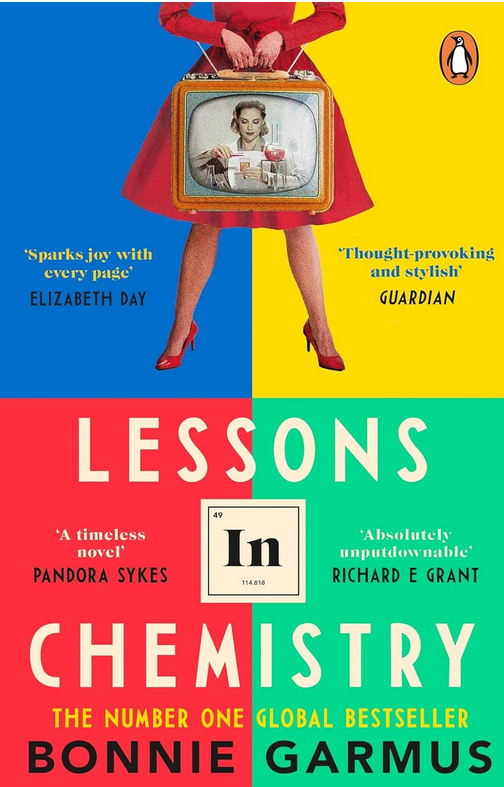
Lessons in Chemistry by Bonnie Garmus

An instant bestseller in the US, quickly translated into many languages (one wonders at what cost to the quirky American humour and cultural references) and reproduced as a television mini-series, this is the debut novel by a former copywriter and creative director which at first made me suspect cynically that it just was a successful exercise in lucrative marketing. I modified this view slightly on reading that Bonnie Garmus was 65 years old when “Lessons in Chemistry” was finally published, having been rejected, it is claimed, some 98 times.

I find it hard to assess this tale of Elizabeth Zott, an ambitious young chemist embarking on a career in the 1950s, when women were expected to be mothers and homemakers, meekly occupy junior supportive roles in the workplace, generally give up their jobs on becoming pregnant, and fired if this happened “out of wedlock”. Perhaps as a result of coming from what sounds like a very dysfunctional family and possibly being somewhere on what is now called “the autism spectrum”, Elizabeth does not comply with the social norms of the day: everything is taken literally; she says exactly what she thinks, and stubbornly refuses to give up her goal to make groundbreaking advances in the field of abiogenesis – the early stages of evolution involving chemicals in “non-living matter”.

Eventually finding herself a single mother with a desperate need to earn a living after being debarred from research work by appalling levels of male prejudice, jealousy and rank abuse, she lands a job on early evening TV providing the nation’s housewives with wholesome family recipes, which she of course presents as a form of chemistry lessons. Oblivious to the fact that it was her looks which got her the job, Elizabeth mesmerises her viewers with the way she encourages them to think for themselves, have the confidence to pursue their interests and aim high, all in the course of providing scientific explanations for what makes a good pie.

Why has this theme hooked so many readers? It’s probably the sharp humour mixed with the kind of injustices which arouse readers’ sympathy. There are “marmite” characters, like the daughter who is being brought up to be astonishingly precocious, with a daily homily in her lunch box, or “Six-Thirty”, the faithful dog who thinks like a human and really seems to understand the hundreds of words Elizabeth claims to have taught him.

On the downside, apart from the over-reliance on coincidences, and chain of ludicrous events, virtually all the male characters are portrayed as unredeemed sexist monsters, in an overlong, convoluted plot which leads to a somewhat contrived, feeble conclusion. All this means that it is difficult to take this novel seriously – perhaps one is not meant to. Admittedly, it must remind older readers of how bad sexism was before the days of Equal Opportunities legislation, and is perhaps an eye-opener for younger women who do not realise how much has improved, even if not enough. It could spark debate on issues worth discussing. It’s certainly an easy read for someone, probably female, waiting for hours in an airport lounge or for some relatively minor ailment in A&E – or just simply sunbathing on a beach.

Was I supposed to be left wondering whether the author had meant to show that the extremes of good fortune, not just the ill luck, which Elizabeth experience, are all due to the influence of some man, i.e. not really her own efforts?

Demon Copperhead by Barbara Kingsolver: facing one’s demons.

This modern American take on Dickens’ David Copperfield is set in an impoverished part of the Appalachians, where closure of the coal mines has destroyed the local economy, and too many people, particular the young, fall prey to drug pushers and “Big Pharma” schemes to encourage consumption of their opioid painkillers like Oxycontin which led to widespread substance abuse and addiction.

The narrator is Damon aka Demon Copperhead, born on a trailer floor to a drug-addicted teenage single mother, shortly after his young father’s death by drowning. This is the cue for the author, who has switched her focus from the environment to social injustice, to expose the failings of the foster care system, the ravages caused by the underregulated use of drugs like “Oxy”, and the unfair labelling, even mockery, of the rural poor who in fact may benefit from a stronger sense of community and closeness to the natural world than their urban counterparts. Perhaps Barbara Kingsolver’s love of nature, which prompts some of her best prose, has made her express this view through Demon, who comes to believe that the “rural poor” do not deserve to be mocked as “hillbillies” since they can at least hunt or produce their own food without the need to “hustle” for cash, and are prepared to relate to strangers by looking them in the eye.

It may be beneficial to have read David Copperfield recently enough to be able to match the modern characters to the original ones, but this is not essential. The author’s ability to enter the mindset and sustain the speech pattern of a bright, talented, resilient but sadly deprived, ill-educated and often mistreated young man is an achievement, assisted by her personal knowledge of the language that years spent later outside Appalachia “tried to shame” from her tongue. On the other hand, the corny, wisecracking style often grates.

This novel is hard going for a non-American reader by reason of the copious slang, unfamiliar cultural references and acronyms – a few footnotes would have been useful. Heaven knows how it will stand translation into other languages. Dickens had to write his novels in instalments for magazines, presumably leaving readers panting for more, but I found it mentally exhausting to read Demon Copperhead for more than a few chapters at a time. This was partly owing to the style, but also to the relentless piling on of depressing, often unduly sordid events, leavened only occasionally by the odd dollop of sentimentality, or rare stroke of good fortune which one knows cannot last.

However, it is the sheer length of this book which is the problem. At nearly 550 pages in paperback, it would have benefited from the stripping out of a good deal of repetition and “filler” – something that it was much harder for Dickens to do, obliged to publish early chapters before he had finished the whole story. So perhaps the author has gone too far in imitating Dickens, by reproducing some of his flaws, also including a tendency to produce stereotypes or somewhat exaggerated, unconvincing characters

Yet Barbara Kingsolver has created a sympathetic person in Demon, raised awareness of some important social issues, and been quite ingenious at times in her reworking of Dickens’ original plot and cast of characters.

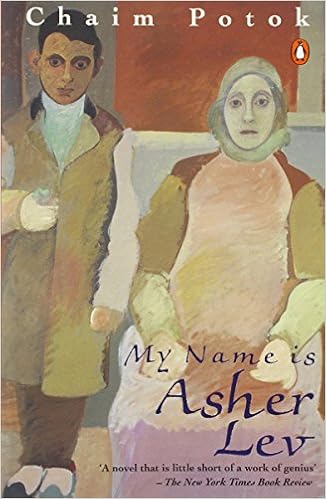
My Name is Asher Lev by Chaim Potok: an outstanding novel which must not be forgotten

Growing up in the New York of the nineteen fifties and sixties, Asher Lev belongs to a strict, tight-knit Jewish Hasidic community presided over by the benevolent dictatorship of the Rebbe, whose interpretation of the Master of the Universe’s wishes is not to be questioned. From an early age, Asher is obsessed with drawing every detail observed in his small world. While his gentle mother urges him to draw “pretty pictures”, and is in due course sufficiently sympathetic to buy him paints and accompany him to art galleries, until driven away by the shock of seeing “forbidden” Christian art, his serious-minded father impatiently dismisses a fad he hopes will soon pass. Frequently absent on trips to Europe where he sets up Jewish schools and helps Jews escape from Russia, he is angered by Asher’s poor grades at school and bemused by the Rebbe’s pragmatic decision to allow Asher to be taught by an eminent artist, completely secular despite being Jewish. The parents’ dawning admiration when some of Asher’s art is acquired by a major museum is outweighed by their refusal to attend any exhibition displaying his portraits of nudes.

As the novel builds to a tense climax bewildering and shocking or sadly comprehensible according to one’s viewpoint, some may find it too slow-paced. Yet the repetition reflects the narrow world in which Asher feels trapped and the often minute detail gives a profound understanding of his development as an artist and a fascinating psychological study of the main characters. It also conveys a strong sense of place, convincing dialogue, and many moments of wry humour amidst the angst.

I am not sure how a deeply orthodox Jewish reader would respond to this novel, and the author himself was intriguingly both a rabbi, inspired to become a writer by reading “Brideshead Revisited” as a teenager, and an artist. However, for an atheist reader like me, it portrays very vividly the tension between religion, ritual and duty on one hand contrasted with and tending to stifle or drive to extremes creativity and personal freedom on the other. In its perceptiveness, it shows how achievement as an artist may require a single-minded dedication which at times appears utter selfishness and self-absorption. There is also the ironic contradiction that art is often exploited for financial gain, the value of an artwork may be artificially inflated and it may be purchased as an investment or trophy by someone who cares nothing for art.

The novel draws on Potok’s own experience in that he was also a painter, like Asher producing Chagall-like portraits of dreamlike Jewish ritual scenes and animals. So Potok’s painting career somewhat paralleled the journey of Asher Lev: a young man, very creative and very religious, who does not fit with his community. “I began to paint when I was about nine or ten years old,” Potok once said in an interview. “It really became a problem in my family, especially with my father, who detested it.” Potok even painted a Brooklyn Crucifixion of his own, resembling the painting in his novel.

This reminded me of “A Tale of Love and Darkness”, the autobiography of the early life of Amos Oz, yet despite being a portrayal of fictional characters, Potok’s novel feels more authentic and and in some ways more insightful, perhaps because it is in fact an exploration and development of his own situation, than a simple account of it.

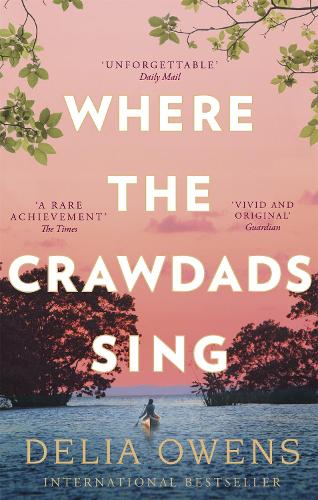
“Where the crawdads sing” by Delia Owens – how to explain the path taken

Where the Crawdads Sing (Paperback)

In the marshland of North Carolina, still unspoilt in the early 1950s, inhabited only by a few down-and-outs or those escaping justice, branded “marsh trash” by the residents of nearly Barkley Cove, six-year-old Kya knows there is something amiss when her mother leaves their decrepit coastal shack, carrying a suitcase. Kya’s four older siblings soon follow suit, driven away by the violence of their drunken father. Expected to earn her keep by doing chores, she avoids him as much as possible, seeking refuge collecting shells and watching herons with flocks of the gulls soaring over the lagoon shore. Bribed with the promise of chicken pie, Kya endures a day of bullying at the town school, but evades the truancy officers thereafter. Abandoned by her father, she manages to survive alone with the help of strangers, including a boy called Tate who teaches her to read. So she somehow grows into a beautiful and intelligent woman, desperately lonely but unable to fit into the community of Barkley Cove, where she is scorned as the “Marsh Girl”.

This storyline alternates and contrasts with a mystery in 1969 when the body of Chase Andrews is discovered in the mud at the base of an old fire tower near Barkley Cove, with foul play soon suspected. Handsome, athletic popular and married, he is also known to have been a womaniser, with Kya among his list of conquests.

This novel is remarkable for its mesmerising descriptions of the natural world, informed by the author’s knowledge as a zoologist combined with a skill which has won her at least one award and plaudits for nature writing. One can visualise every change in the landscape and wildlife as Kya makes her first journey alone by boat between the low-hanging limbs of giant trees, where “duckweed colours the water as green as the leafy ceiling, creating an emerald tunnel” then out to an estuary where “waves slammed against one another awash in their own white saliva….. breaking with loud booms …. then… flattened into tongues of foam”.

The novel is also strong on the psychology of someone who has lost trust through repeated abandonment and also the impact of the world on one accustomed to isolation. So, on her first journey by car to a distant large town, travel on a main road is akin to a roller coaster without a security harness, in contrast to the wide skies of the marshes, mountains are disturbing because the sun keeps setting behind them only to reappear while the tower blocks and crowds of people at her destination are bewildering.

Some who know North Caroline have criticised the factual accuracy of certain points but I can accept any errors as “dramatic licence”. It is harder to deny the implausibility of a young child being able to survive for so long, in apparent perfect health and no major accidents with such poor food, no innoculations. To have been left in this state is unlikely. Kya’s ability to teach herself to such a high level, express herself so articulately, seems far-fetched. Like many novels, the plot is awash with coincidences, most of the characters are stereotypes, the harshness of Kya’s situation is too often leavened with excessive sentimentality, the final twist is rendered improbable by previous arguments and presented as morally justifiable when it is in fact questionable.
The author herself caught my interest by reason of her time in Africa where she and her former husband became embroiled in controversy over their campaigning against ivory poachers, in circumstances which may have inspired this book in some respects.

Despite my reservations which are clearly a minority view on this international bestseller, I found it a page-turner and worth reading although I would be interested to know how male readers tend to rate it.

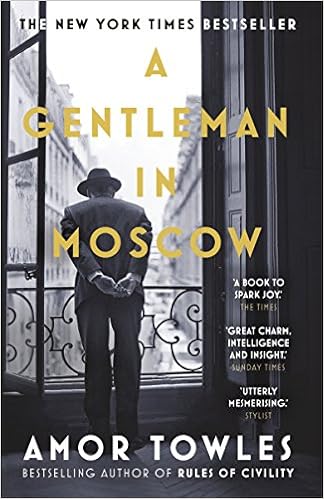
A Gentleman in Moscow by Amor Towles: In for the Count

In the newly Communist Russia of 1922, Count Alexander Ilyich Rostov, as a gentleman, prides himself on having no occupation, and describes his pastimes as, “dining, discussing. Reading, reflecting. The usual rigmarole”. Found guilty of posing a threat to the ideals of society, he is sentenced to life imprisonment in the Metropol Hotel near Red Square where he has resided for four years: if he sets foot outside, he will be shot. Although still permitted to frequent the hotel’s grand restaurant and bar, he is obliged to vacate his grand suite for a former servant’s room in the attic.

Over some 460 pages, the author sustains a flowery prose with fanciful digressions and far-fetched incidents which chime with the Count’s ebullient eccentricity, all likely to charm some readers but irritate others. Falling at first into the latter category, I abandoned this novel until forced to resume it by a pressing book group deadline which caused me to revise my initial prejudice, although I never came to terms with the intrusive narrator, and the useful but distracting footnotes to explain the history.

After a somewhat turgid start, the author manages to entertain the reader with his ingenuity, provide a very articulate expression of the Count’s thoughts and develop a farce which proves quite effective in revealing the flaws and contradictions of the Soviet system. As party officials begin to wine and dine at the hotel, it is simply a case of one privileged élite replacing another. The ignorant and incompetent are over-promoted for their loyalty to the Party, and bureaucratic measures intended to impose equality have ludicrous consequences. Following a complaint from the waiter whom the Count has imprudently humiliated as regards knowing the correct wine to drink with Latvian stew, an order comes from on high for all the labels to be removed from the bottles in the hotel cellar to destroy any concept of some wines being superior to others – an outrage to a connoisseur of fine wines like the Count, who can of course still detect a superior favourite by the trademark design of the bottle.

This is essentially a soft-centred, escapist read, which gives more space to the count’s eternal word games (“name famous threesomes”, “ a black and white creature”) than to the sufferings of individuals, glossing over the true grimness of life for millions under Stalin. The fate of the young prince who has been reduced to playing for diners in a string quartet is relegated to a footnote: he is questioned in the Lubyanka prison for having committed the crime of possessing a picture of the deposed Tsar which happened to be in one of his books, and banned from ever entering any of the country’s six main cities, while the eminent musician who hired him suffers the worse fate of being sent to a labour camp.

One could argue that this tale of how the count manages to pass thirty years in the hotel, unable to walk through the swing doors of the entrance through which he can glimpse the outside world, is an exploration of the resilience of the human spirit, and a consideration of how one can make something positive out of adversity. Perhaps a period of lockdown is a particularly relevant time to read it!

Since, the Russians have tended to restore and value some of their great buildings from the past, or emulate them “for the people” as in the Moscow metro system, it is interesting to look up online images of the Metropol hotel as it is today.

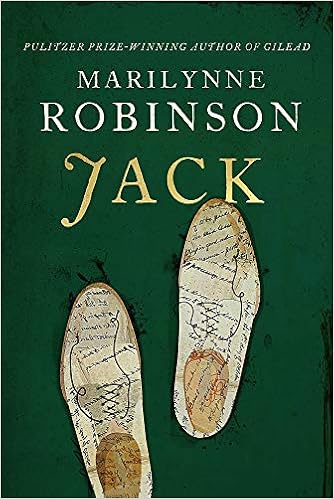
“Jack” by Marilynne Robinson: Theft of Happiness

I am not sure what readers will make of this, if they have not already read Gilead (2004), Home (2008), and Lila (2014), novels about members of the Ames and Boughton families, set in the fictional rural Iowa backwater of Gilead. Certainly, it seems necessary to have read “Home” to make more sense of Jack Boughton, black sheep of the family from which he has exiled himself for years, most particularly from his pious clergyman father’s attempt to bring him back into the fold, even to the extent of twisting his Presbyterian doctrine into contradictory knots.

Apparently, the author did not originally intend to write a book about Jack, but her ideas about him must have evolved over the years to make this seem imperative. Chronologically, it covers a time before the other novels, I believe in the late 1940s. Jack is a complex character, hard to pin down. I was continually aware of his self-absorption and tendency to overthink everything while trying to define the qualities which make him appeal to those who look beyond the frayed cuffs and raffish air. Intelligent, good-looking, musical and artistic, charming, polite, surprisingly competent when he puts his mind to a practical task, Jack is also a loner and drifter, who finds it hard to fit into the world as it is, fated to blow every chance he gets, his life being a chain of tragicomic mishaps.

Apart from inexplicable misdeeds, he has a tendency to do the wrong thing for the right reason. As a child he was always slipping off, thieving objects he did not really want for reasons he could not explain, and challenging his father with theological questions. Is the root of his problem the tendency to “think outside the box” but to have been born into a profoundly respectable family, and a set of beliefs and sense of duty he was bound to kick against instinctively? Has he been influenced by the Presbyterian doctrine of predestination into thinking that he is fated to fail, so when things are going badly he tries to have as little contact with others as possible?
Matters only grew worse when he got a local girl pregnant and flunked college. Years later we find him shabby and on the breadline, a compulsive kleptomaniac who drinks to ward off his mental pain, doing odd jobs but reliant on the envelopes of cash his kindly brother leaves for him. A recently served prison sentence was ironically for a crime he did not commit, although arguably a just penalty for all his petty thefts. Life is made doubly hard by his obvious education and genteel manner which set him apart from the kind of company he has been reduced to keeping.

With his talent for making life difficult, he falls for Della, a beautiful young teacher who shares his love of poetry but just happens to be black in the segregated city of St. Louis, where it is a crime for them have a relationship, and unwise even to be seen together. Perfect in his eyes, Della remains an enigma. We never really know what makes her tick, but she seems drawn to him by his “pure soul”, essential innocence, plus perhaps the appeal of his patent vulnerability.

The two establish their fateful bond during a night spent in the St Louis cemetery where Jack has gone because he has let out his room to make some money, and she has been accidentally locked in. In a section of nearly eighty pages, more than a quarter of the book, the dialogue often seems stilted, artificial, even obscure, although this may be deliberate to contrast with their later easy but still thoughtful exchanges. It also shows symbolically how, if the two could exist in a world of their own, without society’s restrictions and taboos, they could be happy. Perhaps only a writer hailed as one of the greatest in this century could have risked such a difficult and for many off-putting beginning to a book. Perseverance pays off, since many of the succeeding sections are quite lively and humorous, although poignantly so.

This is the kind of novel which needs to be read slowly and thoughtfully, probably at least twice, to appreciate the insights on human relations which are really more important than plot, and may also explain why the ending just fades out. Marilynne Robinson is clearly steeped in religious philosophy which sometimes lost me. She casually using words like “apophatic” which strike an incongruous note in the more down-to-earth passages and wry humour. Taken as a whole, the four related novels are intriguing, although I suspect an acquired taste.

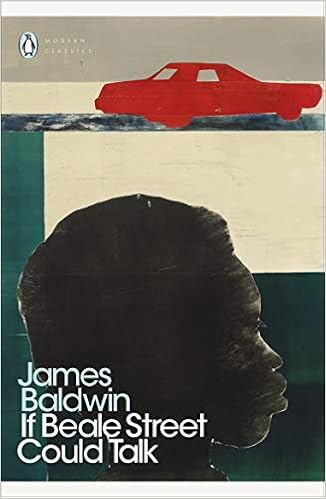
If Beale Street Could Talk by James Baldwin: when love is growing up

Written half a century ago and read against the backdrop of “Black Lives Matter” this modern classic is a reminder of the persistence of racial injustice, given added authenticity by the black American author’s personal experience. Nineteen-year-old Tish has a steady job and close-knit family, who accept with almost unbelievable equanimity her unplanned pregnancy, just when her fiancé and childhood sweetheart Fonny, who has ambitions to be a sculptor, has been arrested for a serious crime on a charge trumped up by a vicious racist white police officer. Made all the more poignant by the depth of the couple’s love, this novel is an unflinching portrayal of how the cards may be stacked to destroy the lives of an innocent couple simply because of their colour.

The approach is unusual in that the male author sets himself the challenge of getting inside the mind of a young woman, even to the extent of describing her orgasm. James Baldwin is also experimental in the flexible structure of the book. Tish narrates the novel in the first person, presumably to involve the reader in a more vivid experience of the drama, but when it suits him he replaces her voice with his own observations in his own style, as when he launches into an analysis of the mental differences between women and men. To portray events in which, say, Fonny’s friend Daniel is previously framed by the police and put in prison, or Tish’s mother Sharon visits Puerto Rico to make contact with the woman who has been manipulated into picking Fonny out of an identity parade, the author simply takes “writer’s licence” and has Tish describe scenes as if she has witnessed them in person.

With strong opening scenes, dialogues and sense of place, as the facts are revealed, I found myself engrossed in how they would play out. Although it seems inevitable that Fonny would be found guilty, would some twist expose a fatal flaw in the prosecution? The sympathetic white lawyer might be prepared to work virtually “pro bono”, but how would Tish’s family and Fonny’s loving but weak father Frank manage to scrape together the money for his bail, without themselves taking to illegal activities which might cause them to fall foul of the law?

The “bad” characters are too often caricatures with no redeeming features, like Fonny’s religiously fanatical mother who seems inexplicably hostile towards him – most mothers love their sons. His thinly sketched sisters are also pointlessly disagreeable. Although I am often intrigued by ambiguous or inconclusive situations leaving one free to form one’s own conclusion, in this case I was surprised and disappointed by an ending so abrupt as to seem incomplete. Yet perhaps for Baldwin, the development of specific scenes was more important than the arc of a plot.

“History of Wolves” by Emily Fridlund: “The false belief that anything could ever end”.

Narrator Madeline, called Linda at school, recalls her childhood in the backwoods of northern Minnesota, where her lapsed hippie parents scrape a living after the failure of their commune. A teenage loner with no real friends, she lives in a kind of emotional vacuum between her strong, silent father “who always made it seem a great kindness… not to ask too many questions” and self-absorbed, insensitive mother with her half-finished projects, of which Linda is one. Expected to undertake adult tasks from an early age – chopping wood, feeding and exercising the dogs, walking miles in the dark after school to fetch drain unblocker – yet also given total freedom to roam, Linda observes people with the same forensic eye she applies to the natural world, but is often unable to interact “normally”, to the point of seeming autistic. She tends to become obsessed with other “outsiders”, like teacher with a shady past, Mr Grierson, who may have seduced pliant Lily, mocked for being part-Indian, which she never denies.

When the Gardners occupy a lakeside house in the area, Linda is paid to childmind their precocious four-year-old son Paul, and is surprised by the unfamiliar sensation of bonding with the little boy, also perhaps developing a crush on his mother Patra, who seems at times like an older sister. Linda notices Patra’s moments of “breathtaking tenderness” for her son, only to neglect him in her abject need to please dominant husband Leo. He turns out to be a third generation Christian Scientist which sits oddly with his profession as an academic astronomer. Members of this religion will not be pleased with the portrayal of their beliefs in this book, as troubling signs of something amiss in the Gardner family gradually builds up to a tragedy in which Linda is implicated.

This highly original, quirky novel is marked by a string of striking descriptions which enable one to visualise or sense situations even if entirely outside one’s experience: the changing colours in the sky above a lake as the night draws in; the behaviour of dogs; the pleasure of watching a child’s absorption in doing a jigsaw; a mother’s fruitless efforts to induce her teenage daughter to talk to her.

There are sharp insights, and bitter ironies as in the case of Mr Grierson who may have been punished for actions he only thought of committing – a twist of the Christian Scientist belief that “it’s not what you do but what you think that matters”.

Yet the critical incident, which arguably haunts and defines the rest of Linda’s life, remains unclear in some key respects and insufficiently explored. This may be deliberate since the author is more interested in capturing an individual’s thought processes together with the fragmented, even inaccurate impressions she may draw from a situation.

What may seem like a weakness in what I found to be the artificial, unconvincing conversations involving Leo and later Linda’s lover Rom may also be intentional, in that Linda either does not understand what the former is saying or resents the latter’s attempt to pin her down.

Perhaps a novel such as this can only have an ambiguous ending, but I was somewhat disappointed by what seemed a creative writer’s damp squib of a final twist which provides a somewhat weak conclusion. It left me with a sense of sadness over a life which seems needlessly blighted, since Linda is portrayed for much of the book as a bright, resilient person with a wry take on the world.

Overall, deservedly shortlisted for the Man Booker Prize, this novel probably needs to be read more than once to appreciate it fully.

“Silver Sparrow” by Tayari Jone: “Only lying to people we love”.

Silver Sparrow by [Jones, Tayari]

“My father, James Witherspoon, is a bigamist”. So does narrator Dana hook us into this drama set in African American Atlanta. From early childhood, Dana knows that James has another wife called Laverne, and a daughter Chaurisse, but what lasting damage is done to a five-year-old when told not only that she must not tell other people this, but that she, Dana, is “the one that’s the secret”? Wanting the best for her daughter, resentful that she always comes second as regards receiving her father’s attention and the material benefits he can provide, Dana’s mother Gwendolin seems blind to the additional damage caued by taking Dana on stalking expeditions, to spy on the favoured “first” family. The pair may draw some satisfaction from seeing that Laverne and Chaurisse seem less beautiful and intelligent than their counterparts, but cannot know that, despite their apparent blissful ignorance of James’ deception, they too have their own sorrows.

Rising above the underlying sadness, there are many amusing situations and a humorous tone to the writing, which gets away with the risky device of introducing past conversations involvng third parties into the first person narrative. With a gift for storytelling and strong dialogues, Tayari Jones enables us to empathise with all the characters to some degree. Somewhat belittled by Dana and Gwendolin in the first part, Chaurisse and Laverne come into their own as much more rounded and positive, generous, competent characters in the second half, when Charisse takes over the narrative. Although James rarely appears more than weak, wanting to have his cake and eat it, and exploiting the love of those close to him, the complex tie which binds him to Charisse is also gradually revealed. The psychological drama of the relationship between his two families is further compounded by the strongest bond of all, his friendship from childhood with dependable “Uncle Raleigh”, always on hand to help him maintain his double life, while managing to be the man that both Charisse and Gwendolin sometimes think they probably should have married. The question is, what will happen if the precarious equilibrium which James and Raleigh have managed to construct is ever upset by Laverne and Charisse discovering the truth?

This novel also rings true in its vivid insight into life for black Americans only a step or two on from segregation and inequality, yet also with their own internal social pecking order. One of Charisse’s main regrets over having to leave school early is the loss of her books – second-hand, battered copies handed down by white kids, filled with their notes which her mother painstakingly erases where possible. Raleigh’s light skin, the result of his mother being raped whilst working nights for a white family, mean that he is not quite accepted by either community. James has chosen the role of self-employed chauffeur for its sense of freedom, in control at the wheel. Dana’s seemingly independent-minded friend Ronalda asks her at one point if she really wants to go to the sought-after mixed Holyoke College, where she will know for the first time “what it feels like to be black” and so on.

In this society, boys are definitely more highly prized than girls, one reason why Gwendolin prays fervently that her rival Charisse will not give birth to a son. Generally, boys are shown as more indulged, less responsible than the girls who seem to end up doing the hard graft to provide for their children. The preoccupation with hair, the grim straightening with chemicals versus the easier option of weaves and wigs is also a recurring theme in black female writing, such as Adichie’s “Americana”.

Having also read An American Marriage, I find Tayari Jones an excellent writer, who makes some powerful points without falling into the traps of melodrama or sentimental happy endings. You can read this on two levels: an absorbing exploration of the effects of bigamy or a deeper portrayal of what it means to be a black American.