This site will share with you hundreds of book and film reviews written since 2009. Also a chance to discuss these reviews together with some of my creative writing to be added.
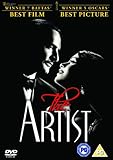
Entirely in black and white, and largely without speech, this modern film made in the style of a silent movie is a clever and entertaining take on the effect of the arrival of the "talkies" on "George Valentin", the over-confident established star of Hollywood silent films of the 1920s. Just as these did, it relies heavily on appropriate musical scores – at one point we see an orchestra playing just below the screen, as a rapt audience watches the wordless drama.
It made me realise how much can be conveyed simply by facial expressions and body language, although all movements need to be slightly larger than life.
As we watch George disintegrating, forced to observe the mercurial rise of the vivacious, yet kindhearted Peppy Miller, and to realise too late that he has made a fatal mistake in laughing at talking films, we expect a happy ending, at least of a sort. However, there are also many humorous touches, striking visual effects, such as when George watches himself on film from behind the screen, or is sucked down very symbolically into filmic quicksand, and there are even some genuinely moving moments on the way, assisted by the best actor of them all, George's performing dog. As someone quips, if only he could talk!
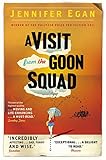
This is likely to divide opinion sharply since it rejects the convention of a clear plot, and flits back and forth in time with a variety of viewpoints and sheer number of characters which may prove confusing.
It is a series of short stories rather than a novel, focusing in turn on different members of an amorphous group who have in common only some kind of link to the music industry – they know, or know someone who knows, either Bennie the driven music manager, or Sasha, his light-fingered assistant whose kleptomania may have some deeper emotional cause.
I enjoyed the quirky incidents and offbeat humour of the first seven chapters, and the game of anticipating which character mentioned in passing would turn up as a key player in the next episode. I liked the way the author always managed to overcome my irritation at being dragged away from one group of characters, by skilfully hooking me in to the next one, only to be disappointed again at having to leave the new story with strands left unresolved, perhaps forever.
Some of the relationships are genuinely moving, such as the hard-bitten, selfish, corrupt Lou's love for his sweet, gentle son, whom he cannot help inadvertently damaging, just through being the bastard that he is. I was impressed by the study of Scotty, mentally ill but managing after a fashion, who convinces himself half the time that being a failure is as good as being a success.
My good opinion suffered a blow in Chapter 8, an over-farcical account of a disgraced PR manager trying to make ends meet by advising a genocidal dictator of some unnamed country, which was an annoyingly unconvincing mixture of Arab desert too close to lush African jungle. The there are two sections I grew too bored to read properly: an intentionally bad , I think, parody of a journalist's interview with a movie star, followed by an attempt to relate to an autistic boy, and to show his thought processes, through a PowerPoint presentation – a novel idea, but it goes on for 74 pages – has the author not heard of death by OHP? After that, the return of the final chapters to some of the original characters lacks the power to engage me, in a work which seems to have lost its way – perhaps because the subjects are essentially rather uninteresting and underdeveloped players in an artificial and shallow world.
On one hand, this book is unusual, often creative and original, with what you might call brave experiments (but shouldn't the author be clear-eyed enough to see where they may have fallen short?), yet there is too much that is contrived, gimmicky or glib for me to rate this as an indisputably worthy Pulitzer winner.
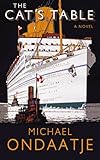
The cat's table is "the least privileged place" in the dining room aboard an ocean liner bound for Tilbury from Ceylon in 1954. The narrator, Michael , recalls how, as an eleven-year-old, this is where he meets not just two other unaccompanied boys, but a group of eccentric adults. In the accurate belief that they are invisible, at least until their mischief brings them to the captain's notice, these three racket around, experiencing the complex life of a ship, straying below deck and into first class, eavesdropping as they lie hidden in the lifeboats where they gorge the emergency chocolate rations, getting involved in bizarre events, hearing quirky, often unsuitable anecdotes, all of this related in short chapters which add to the fragmented, dreamlike quality of the voyage.
The "main plot" of the story, which revolves round a mysterious shackled prisoner who is brought out for exercise at night, proves rather thin and implausible with an unsatisfying ending, yet does not appear to be the author's main concern.
The novel seems to be mostly about the nature of memory and the way people relate to one another, so that fleeting impressions, brief incidents and passing friendships from early life may prove unexpectedly enduring and significant in adulthood.
I found the description of the voyage and numerous rambling into vignettes very evocative and absorbing. Less satisfactory are the frequent "flash forwards" to Michael's later life. His adult relationships with his cousin Emily and with his friend's sister Massi do not prove as convincing and moving as I think they are intended to be.
It is interesting to speculate to what extent the events of the voyage make Michael permanently mistrustful , someone who breaks too "easily away from intimacy", although having rather distant parents and uncaring relatives who think it in order to send him unaccompanied on a long voyage is probably the main reason.
Overall, this is an unusual novel which lingers in one's mind. It is brilliant in ways that will differ according to the reader's own cast of thought. An example of this for me is the description of the night-time sailing through the Suez canal, which years later Michael's friend Cassius captures in paintings which only Michael can appreciate have been drawn "from the exact angle of vision Cassius and I had that night". I like the humour in Michael's list of the irascible captain's "crimes committed (so far)" most of which are actually the children's fault. However, the tale is also flawed when some allusion or plot development misses the mark or falls flat.
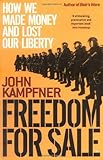
The journalist John Kampfner examines in turn a wide range of modern states which have to varying degrees traded personal freedom for the promise of increased security, prosperity or both.
He opens with a fascinating chapter on Singapore, the self-styled "most successful state in the history of humanity" where Lee Kuan Yew has micro-managed his state to create a well-behaved, conformist population, in which extreme poverty has been eradicated, people are kept happy with shopping and recreational facilities, and alarm bells only begin to ring when you realise that free speech is trammelled, dissenters are harshly punished, and the rate of capital punishment is "regarded as secret" but said to be among the highest in the world. As a local sociologist observes, "Understanding the limits of freedom is what makes freedom possible". As Kampfner adds, "perhaps it depends on which freedoms and which limits."
Subsequent chapters cover China and Russia, where the West made the cardinal error of assuming that the encouragement of the free market after the collapse of communism would automatically lead to greater democracy. Then we move on to the "consumer excess" of the United Arab Emirates, supported by near-slave immigrant labour, the "functioning anarchy" of India, and Italy under Berlusconi.
The next section on Britain with a focus on the development of the "surveillance state" under Blair, seems the least successful, perhaps because the details are already familiar but too condensed and partial.
The "tainted dream" of the United States provides the final case study, with the Bush regime's sharp clampdown to minimise the terrorist threat after the shock of 9/11: in one case, a dragnet based on tip-offs which rounded up 80,000 people, mostly illegal immigrants, did not lead to a single conviction for terrorism.
All this shows that the "difference.. between countries roughly in.. the `authoritarian camp', and those who pride themselves on their `democratic' values may be one of degree".
The author notes in his interesting postscript how he has been attacked as "anti-capitalist" on one hand and an "apologist for dictators" on the other – a misreading of his argument on both counts. He simply presents the facts in a lively style, and leaves us to reflect on the nature of our freedom, and whether we have as much as we think, or need.
Offering ideas, but no easy solutions, he ends with the sad irony that many nations' freedom has been "bought off with a temporary blanket of security and what turned out to be illusory prosperity" after the economic crash which has affected Singapore, China and Dubai as well as the US and Europe.
For a readable book of this length, Kampfner has done a good job. My reservations are twofold. Firstly, he glosses over what freedom and democracy really are, tending to assume that readers will already know – unlikely if few of us really have them! Secondly, this book (which needs to be updated regularly) would benefit from a fuller and more realistic analysis of how countries facing economic collapse could take the opportunity to re-align the balance between wealth-creation, security and liberty.
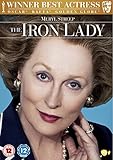
Meryl Streep lives up to expectations with her strikingly accurate recreation of Margaret Thatcher, at least as she has appeared in the media. It is interesting to be reminded of the violence of the 1980s – the Poll Tax riots, the IRA hunger strikers and bombing of the Grand Hotel in Brighton, the bitter Miners' Strike, the tensions and mishaps of the Falklands War offset by the exaggerated euphoria over the eventual victory. However, all this is covered so quickly that I am not sure what those too young to remember will make of it.
The best yet most controversial aspect of this film is the portrayal of the former Prime Minister as an old lady suffering from dementia, often imagining that her husband Denis is still alive, a dramatic ploy for remembering her past life and revealing her personality through imaginary exchanges with him, ably although perhaps too sympathetically portrayed by Jim Broadbent.
These scenes of dementia about a person still living left me feeling a little uneasy. Perhaps they are based on a recent book by Carol Thatcher, but I understand the family has not given their approval for the film. Maybe the "Anyone for Denis?" stage show paved the way for this kind of intrusion into their lives. I noticed that Mark Thatcher has a remarkably low profile in the story, possibly with avoidance of lawsuits in mind.
There is perhaps too much focus on Thatcher as an elderly lady, giving too little time to develop past events. The process by which she becomes Prime Minister is rushed through, perhaps so as not to bore the audience. Some important aspects of her premiership are neglected. I would have liked more about her famous lack of humour, more on her relationship with Ronald Reagan and her dealings with EU partners – "We want our money back" – possibly a bit, not too much, about monetary policy. Her cabinet ministers come across mainly as grey ciphers, and perhaps more of them could have been clearly differentiated for the benefit of those who remember them.
Thatcher is shown as descending into megalomania, largely responsible for her downfall. Yet, the film does succeed in arousing some sympathy for a woman who had to overcome the snobbish prejudice of the old style Tory party to become the first female British head of government.
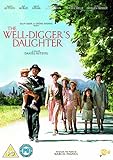
Set in the sundrenched Provence countryside near the town of Salon at the outbreak of World War 2, this soft-centred but often surprisingly moving tale follows the well-worn trail of the innocent young girl who falls for a wealthy cad. In this case, Patricia, daughter of a simple but fiercely proud well-digger finds herself pregnant after Jacques, spoiled son of the owner of the local hardware store, has been sent off to fight at the front. How will her father react when he learns that his "angelic princess" is no better than other girls? Will Jacques's doting mother feel her son should "do the decent thing" and marry the girl? As the well-digger observes, "You can't trust people who sell tools but don't use them."
Patricia is more than just a pretty face. In addition to receiving a period of education in Paris with a wealthy benefactor, she has a strong sense of honesty and integrity which may pierce Jacques's worldly cynicism, although you wonder whether he would be capable of being faithful to her in the long run.
There are some entertaining further plot twists in the dogged devotion to Patricia of Félipe,assistant to the well-digger Pascal. In turn, Félipe is loved in longsuffering silence by Patricia's younger sister Amanda. Then there is Pascal's blend of shrewdness and stubborn stupidity, his rueful shouldering of the burden of six daughters after his wife's death.
We see an exploration of some of the dilemmas of French rural society. It is shameful for a daughter to have a bastard child, yet a man's dearest wish is to have a boy child to bear his surname, even if at one remove as a grandson….
The film is well-directed by the respected French actor Daniel Auteuil who also plays the role of the well-digger, apparently drawing on his native southern accent. Although his acting may seem a little over the top at times, I have met Frenchmen prone to the vivid expression of such deep and rapid shifts of emotion.
Recommended as a watchable and entertaining if lightweight drama.
During the film the audience around me laughed continually, the opening scenes of red-robed cardinals filing in to vote on the next pope are very striking, and the end of the film is well-judged and moving. The basic plot idea is good: an unassuming old prelate, sensitively played by the octogenarian Michel Piccoli, prays not to be elected pope, which seems unlikely in view of the odds. When his worst fear is realised, he suffers a panic attack on the famous balcony, seconds before his announcement to a vast, eager crowd. A celebrated psychoanalyst, who happens to be an atheist, is called in to cure him, but the reluctant pontiff succeeds in escaping into the Rome crowds.
At this point, the plot loses its way. Despite the many amusing incidents and some expressive acting, it is unclear whether the film is meant to be pure comedy and farce – as in the overlong and therefore tedious scene where the psychoanalyst organises a volleyball championship to keep the cardinals occupied while held in seclusion pending the pope’s reappearance – or an attempt to explore deeper issues beneath a light-hearted veneer. It therefore misses the mark on both counts. What is the director’s intended message? He portrays a church steeped in magnificent but archaic and empty ritual, bedevilled with cynical politicking and obscene wealth, not to mention the self-indulgent, elderly male cardinals, yet I don’t think the film is meant to be anti-Catholic.
The film is certainly about a simple man’s sense of unworthiness but fails to develop this. The unwilling pope demonstrates himself time and time again not to be up to the job, which makes for a thin drama. I expected that he would show himself to be a truly good man, assisting the ordinary people he encounters with his wisdom. Instead, he appears self-absorbed, petulant under pressure and clinically depressed. Far from experiencing the lives of ordinary, real people, he gets mixed up in a theatrical troupe spouting Chekhov and it turns out he would really like to have been an actor but was rejected for drama school – another jibe at the catholic priesthood, it seems.
I do not object to the prominent role the director has given himself as the flamboyant psychiatrist, but it might have been better if he had remained in the wings to take stock of the film’s intended and actual impact.
This is an excellent history of modern China, very readable despite the small print and thin pages. Admittedly, it requires a good deal of time and dedication, but repays the effort. Clearly very knowledgeable but modest with it, Spence knows what points to select from a mass of detail to convey a clear understanding of how and why China evolved from a vast empire, which had turned its face inward against western-style development, to the world's largest communist state, now rapidly embracing economic growth.
He starts with the decline of the late Ming dynasty in the late C17, enough to capture the flavour of a highly centralised, bureaucratic, top-down society which has been the nature of China since the first unified Qin dynasty of 221BC, but he doesn't make the mistake of getting bogged down in detail that far back.
In the subsequent Qing dynasty, we see the first painful enforced contacts with the west, including the shameful role of the British, in flogging opium to save having to spend silver on purchasing Chinese goods. In addition to the usual problems of natural disasters and the difficulty of collecting taxes in such a vast area, the Qing had to contend with major rebellions but managed to survive for a surprisingly long time up to 1912, partly owing to the effectiveness of some impressive campaigns under remarkable Confucian-trained leaders, motivated by their loyalty to traditional Chinese values. Despite this, and a belated willingness to reform, the Qing eventually fell, leading to a prolonged period of chaotic civil war between a succession of warlords.
It is clear that the impetus for radical change came from men who, from the C19, had the opportunity to travel abroad where they could gain access to western political ideas of both liberal representative democracy – an alien concept in China – and Marxist-Leninism. Spence provides a clear analytical account of the rise to power of the Guomindang movement, inspired by Sun Yat-sen and led by Chiang Kai-shek until his exile to Taiwan. He traces the development of the communist People's Republic of China, by no means a foregone conclusion. The machinations of leaders like Mao Zedong as they tighten their grip on power, the Orwellian twists in accepted views make fascinating reading, even to those familiar with the basic facts. To quote Spence on the abrupt fall from favour of Lin Biao under Mao Zedong's regime: "The credulity of the Chinese people had been stretched beyond all possible boundaries as leader after leader had been first praised to the skies and then vilified."
Deng Xiaoping is an intriguing character, as he steers his vast nation towards economic development with periodic crackdowns on free speech, the most shocking and tragic being the killing or wounding of thousands in Tiananmen Square – worse violence perhaps than any single incident in the recent "Arab Spring".
Every section starts with a useful summary, and there is a full glossary at the end in the likely event of your finding it hard to retain the confusingly similar names of many people and places. Although there are many maps to describe the numerous military campaigns, I would have liked a brief section at the outset to highlight key aspects of the geography.
I am most interested in present-day China, but this book provides an essential foundation to understanding this country's complex mix of sophistication and barbarity – developing beautiful artefacts hundreds of years before say the UK, only to smash them wantonly in the misnamed Cultural Revolution of the 1970s. The historical approach enables us to appreciate how the protests of the Chinese who spoke out against repression in the 1970s and 1980s echo those of the past, not just the anti-Guomindang and the anti-Qing of the late C19, but even the Ming loyalists of the C17.
Last updated in 1999, this seminal work is now due for a brief update to cover recent developments as China invests in Africa and copes with the effects of global recession.
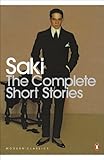
It is easy to understand why H.H.Munro, pen name Saki, is still regarded as one of the greatest writers of short stories. His elegant, ironic prose reminds me of P.G. Wodehouse with a sharp sting in the tale.
Although Saki mocked the snobbery and hypocrisy of upper class Edwardian England, he himself seems to have been limited by unexamined prejudice against the lower classes, women in general, and new social movements of his day like female suffrage and socialism.
Organised by date of collection, the tales show a clear progression. The early "Reginald" stories are remarkably short, often barely a page, very dated and a bit too precious in style for my taste. As the years pass, the stories gain in length and depth, culminating in works like "The Square Egg". This captures the muddiness of trench life in World War 1 – the streaming mud walls, the inches of soup-like mud at the entrance to the dug-out, the muddy biscuits eaten with mud-caked fingers. This story also shows Saki's talent for going off at an imaginative tangent, in this case based on a wily Frenchman's novel idea for using the idea of "square eggs" from specially bred hens to try to get some money out of the narrator.
I particularly enjoyed the stories which focus on real emotions and psychology which could be relevant to any age and society: "Peace Toys" in which an uncle tries to give his nephews toys which will discourage them from violent play; "Tobermory" which speculates on the practical disadvantages of having a cat which has learned to speak about all the compromising goings-on it has witnessed as it creeps around unnoticed; "The Lumber Room" in which a small boy takes advantage of a rare chance to have his revenge on a pious, bullying aunt – the many stories about children getting their own back on control-freak adults may stem from painful experiences in Saki's own motherless childhood. Then there is "The Story-teller" where a bachelor distracted by noisy children on a train ride subverts the normal rules about telling children only improving stories.
I have mixed feelings about Clovis, a favourite recurring character of Saki's, who acts as a mocking observer of the class to which he has been born, while sponging off it, and snobbishly maintaining many of its prejudices. Yet "Clovis on Parental Responsibilities" is amusing where, in a Pinterish talking at cross purposes with a Mrs Eggelby, bored by her endless prattle about her children's accomplishments, Clovis undermines all the accepted views on bringing up children.
I would have liked a brief introduction on Saki's life. It seems important to know that, enrolling as an ordinary private soldier when in his forties, he was killed by a sniper's bullet after vainly asking a colleague to put out the cigarette which was emitting a tell-tale trail of smoke.
It is easy to understand why H.H.Munro, pen name Saki, is still regarded as one of the greatest writers of short stories. His elegant, ironic prose reminds me of P.G. Wodehouse with a sharp sting in the tale.
Although Saki mocked the snobbery and hypocrisy of upper class Edwardian England, he himself seems to have been limited by unexamined prejudice against the lower classes, women in general, and new social movements of his day like female suffrage and socialism.
Organised by date of collection, the tales show a clear progression. The early "Reginald" stories are remarkably short, often barely a page, very dated and a bit too precious in style for my taste. As the years pass, the stories gain in length and depth, culminating in works like "The Square Egg". This captures the muddiness of trench life in World War 1 – the streaming mud walls, the inches of soup-like mud at the entrance to the dug-out, the muddy biscuits eaten with mud-caked fingers. This story also shows Saki's talent for going off at an imaginative tangent, in this case based on a wily Frenchman's novel idea for using the idea of "square eggs" from specially bred hens to try to get some money out of the narrator.
I particularly enjoyed the stories which focus on real emotions and psychology which could be relevant to any age and society: "Peace Toys" in which an uncle tries to give his nephews toys which will discourage them from violent play; "Tobermory" which speculates on the practical disadvantages of having a cat which has learned to speak about all the compromising goings-on it has witnessed as it creeps around unnoticed; "The Lumber Room" in which a small boy takes advantage of a rare chance to have his revenge on a pious, bullying aunt – the many stories about children getting their own back on control-freak adults may stem from painful experiences in Saki's own motherless childhood. Then there is "The Story-teller" where a bachelor distracted by noisy children on a train ride subverts the normal rules about telling children only improving stories.
I have mixed feelings about Clovis, a favourite recurring character of Saki's, who acts as a mocking observer of the class to which he has been born, while sponging off it, and snobbishly maintaining many of its prejudices. Yet "Clovis on Parental Responsibilities" is amusing where, in a Pinterish talking at cross purposes with a Mrs Eggelby, bored by her endless prattle about her children's accomplishments, Clovis undermines all the accepted views on bringing up children.
I would have liked a brief introduction on Saki's life. It seems important to know that, enrolling as an ordinary private soldier when in his forties, he was killed by a sniper's bullet after vainly asking a colleague to put out the cigarette which was emitting a tell-tale trail of smoke.


 Antenna Reviews