Does not bear close scrutiny

This is my review of Green Philosophy: How to Think Seriously About the Planet by Roger Scruton.

Green philosophy is clearly a neglected topic, but, articulate and learned though he is, Roger Scruton adds little to the debate. His central thesis is that the current focus on transnational organisations and multinational e.g. EU legislation to solve the problems of the environment is doomed to fail , since it ignores the fact that ordinary people will not be engaged by this, and will evade regulations in which in which they have no stake. This premise seems open to debate.

He rejects the international movements like "Green Peace" which tend to make environmentalism seem like a left-wing cause, and which often take steps that make people feel uncomfortable. Instead, recalling how Odysseus sacrificed much to return to his beloved home or "oikos", Scruton calls for a move to encourage people to take care of their homes, in the broadest sense, and work to maintain them through local associations. He cites the example of his father, who despite being left-wing, was so appalled by the top-down socialist-inspired destruction of the communities of the Manchester "slums" to make way for concrete tower blocks, that he formed a local society to preserve the environment of his new "oikos" of High Wycombe. However, all this seems a very parochial view and a very partial consideration of a complex issue. Even in this narrow field, Scruton does not address issues like "nimbyism" or the problems of maintaining communities which are subject to great change through, say immigration.

Scruton's points could be contained in one essay, leaving space for others on a philosophical "green approach" to, for instance, the development of scarce resources to meeting growing demand worldwide without triggering excessive pollution. He seems to feel that some of these problems are too vast for us to grasp, so the solution is to "start small" on a local scale that we can handle. This appears to be a cosy, complacent approach to major problems which may have implications for concepts like "individuality" so fundamental to western thought.

The main value of this book is to inspire debate, but it only scratches the surface. A series of essays by a range of philosophers, economists and related disciplines might have made for a more useful contribution to this important theme.

⭐⭐⭐ 3 Stars

More of a Minor Car Crash

This is my review of Carnage [DVD].

Most reports of the stage play "God of Carnage" find it hilarious, I enjoyed the playwright Yasmina Reza's comedy, "Art" and admire Polanski's skills as a director. So, why did I approach the film "Carnage" with such reservations? Mainly because the critics have been very cool about it, plus I personally found the script of the play very disjointed, with laboured humour – a bit boring in places, to be honest.

In fact, the film proved better than I expected – but not that great.

This short film is true to the original play "God of Carnage" as regards both the dialogue and the "unities" of time, place and action, enacting the whole drama in a Brooklyn flat, transposed from the original setting in Paris.

One boy has struck another, permanently damaging his teeth. The parents of the victim, Penelope and Michael, invite Alan and Nancy, parents of the aggressor, round to their flat to discuss how to handle the affair. At first on their best behaviour, the foursome gradually lapse into childish squabbling and the boys are almost forgotten as the cracks in their respective marriages become apparent. This is quite a promising basis for a play, and there are some funny lines and amusing incidents, such as the lawyer Alan's preoccupation with his mobile phone, on which he conducts sensitive business conversations to the growing irritation of everyone else.

However, I was never moved, and always aware of watching the actors. It may not have helped that this is very much a filming of a stage play, yet one can rarely see all the characters interacting at the same time as one does on the stage, since the camera inevitably tends to focus on one or two faces at a time.

It also bothered me that Penelope, the highly strung writer of books on Africa who cares so deeply about moral issues, is so ill-matched with the superficially easy-going but essentially coarse Michael, who earns a living flogging saucepans and lavatory flushes.

Strongest reservation of all: the serious point of the play, that even in the most civilised people barbarism is only skin-deep, does not seem very well illustrated by this particular drama.

The point I liked the most – not in the original play – is the glimpse at the very end of the two boys apparently chatting together amicably in the park, unaware of their parents' bickering.

⭐⭐⭐ 3 Stars

Creating a song by singing it

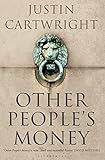
This is my review of The Song Before it is Sung by Justin Cartwright.

This unusual novel was inspired by the friendship, strained by the outbreak of World War 2, between the Oxford-based Jewish philosopher Isaiah Berlin and the German aristocrat Adam Von Trott who took part in Von Stauffenberg's abortive assassination attempt against Hitler in 1944.

Cartwright has changed the names of the main characters, which gives him more freedom to fictionalise events, omitting some and altering others.

In the prologue, we learn that Mendel, based on Berlin, is haunted by guilt over the hanging of Von Gottberg (Von Trott), suspecting that, if he hadn't portrayed the German as a Nazi with delusions of restoring Germany's dignity and greatness, admittedly without Hitler, the Allies might have given more support to the July plotters. There is also a question of Mendel's motivation in undermining Von Gottberg – possible sexual jealousy over his ability to charm women. Mendel bequeaths his papers concerning Von Gottberg to a former student, Conrad Senior, described as "not my most brilliant student… but the most human". Conrad comes across as highly sensitive, possibly mentally unstable, his marriage on the rocks.

The story does not follow a conventional linear narrative, but flips back and forth in time, providing fragments of incidents from the various characters' lives, extracts from old letters and conversations to piece together "what really happened". The result is quite disjointed, with some aspects foreshadowed and repeated too often, but others left a little confusing and underdeveloped. For instance, Conrad seems deeply affected over some act of betrayal by his father against Mandela and the ANC in South Africa. Perhaps understanding the Mendel-Von Gottberg drama will help Conrad to come to terms with this, but this plot strand is never made clear. Similarly, Von Gottberg's love affairs (in particular with Rosamund) are not as strongly drawn and moving as perhaps intended. Most lacking is a sufficiently deep exploration of Von Gottberg's and Mendel's motivations.

This novel often seems primarily an opportunity for Cartwright to use philosophical insights or descriptions he has noted down for use, as writers often do – the Oxford college chairs "so battered over the years that they can be sat in from any direction" – Von Gottberg's lake, "shimmering like the wings of a dragonfly" – "Why did evolution find that it was more effective to have an individual mind?" – "life is created by those who live it step by step" and so on. These show why Cartwright is so highly regarded, but are not always enough to compensate for the inchoate plot which left me feeling that some promising ingredients have been stirred up into a rather disappointing recipe.

In the Afterword, Cartwright expresses the aim of shedding light on the riddle of how Nazism could have taken hold so quickly and deeply in such a civilised country as Germany, but the novel does achieve this.

Overall, the book seems to me to lack the power and humour of some of his other works, like "To Heaven by Water".

⭐⭐⭐ 3 Stars

“Van Gogh” by Steven Naifeh: “What things I might have done”

This is my review of Van Gogh by Steven Naifeh,Gregory White Smith.

This vast biography is a gripping and often heartbreaking account of a tortured genius, probably suffering from what would now be diagnosed as a bi-polar disorder, which both fed his strikingly original work but also hindered his recognition as a great artist in his lifetime.

The joint authors paint a generally unflattering portrait of Van Gogh, although he was clearly well-intentioned, and showed occasional flashes of self-knowledge and touching, excessive humility or regret over past errors. Argumentative and excitable, he upset virtually everyone he met and drove away potential friends and lovers by being too intense, smothering and controlling. The only woman he ever managed to possess was the worn down prostitute Sien Hoornik, with whom he set up house, together with her baby, to his clergyman father’s distress, only to abandon her for some new obsession with little evidence of any sense of guilt.

After a number of “false starts” as an art dealer who felt honesty-bound to tell customers the shortcomings of artworks for sale, a teacher, a theological student and a missionary in the grim coalmining area of the Borinage, he spent the last decade of his life as a self-taught and astonishingly prolific artist.

The book is strong on Van Gogh’s development as an artist, and the various influences on his work, such as Delacroix’s startling use of colour. We see his progression from detailed ink drawings, produced with the use of a grid, through a period of dark paintings, exemplified by his sludge-coloured representation of a group of peasants eating potatoes, to the great explosion of works in colour which began in Paris, expanded under the brilliant blue skies and arid landscapes of Provence, and ended in a final burst of activity in the picturesque riverside town of Auvers near Paris, where he died mysteriously from a gunshot wound.

His complex relationship with his brother Theo is covered in depth, as he cajoled, wheedled and bullied the young art dealer (who had taken over his job) into sending up to half his income each month to pay for the extravagant follies Vincent thought necessary for his work – studios, models for the portraits, and vast quantities of canvas and paint.

The chaotic days in the “yellow house” at Arles leading to the famous incident in which Vincent cut off his own ear are also brought to life, with a detailed comparison of the “chalk and cheese” differences between Vincent and Paul Gauguin who had been persuaded to visit him, as part of Van Gogh’s self-deluding dream of setting up a community of artists. The painful contrast is made clear between the nervous Vincent, painting real scenes in the open air with spontaneity and lashings of paint, yet to find a single real buyer for his work, and the confident, manipulative Gauguin, who had just begun to enjoy a market for the pictures carefully planned and produced from memory in the studio, with the focus on symbolism and minimal use of paint.

The book lapses too often into a wordy, overblown, repetitious style from which suitable editing would have shaved off, say, at least 200 pages. This would have left more space to ensure that each reference to a key painting or description of a Van Gogh work is accompanied by a colour plate at a suitable point in the text. Failing this, you can in fact track down on Google imagesmost of the paintings mentioned.

If pressed for time, you may prefer to read Martin Gayford’s much shorter, “The Yellow House: Van Gogh, Gauguin, and Nine Turbulent Weeks in Arles”. Van Gogh’s letters are also revealing, and may give a more balanced view through greater focus on his detailed reflections on life and art.

⭐⭐⭐⭐ 4 Stars

Does power corrupt?

This is my review of Borgen – Series 1 [DVD] [2010].

Borgen is an absorbing Danish political drama in which each episode focuses on a different issue, as we trace the path of Birgitte Nyborg, the party leader who unexpectedly finds herself in the position to form a coalition government. Bearing in mind that the Danes are used to this form of government, the wheeler-dealing and spinning involved suggests a certain tongue-in-cheek mix of humour and cynicism over their political system. To be honest, I am not sure "Borgen" is a good advertisement for coalitions!

The series introduces non-Danes to some interesting problems, such as relationships with Greenland which has clearly suffered socially from a leaching of its population and a lack of local opportunity. There are also the more familiar topics of sexual equality for women, reducing pollution, corruption in high places, and attempts to control the media.

The characters are mainly strongly developed, with an on-off relationship between two ambitious, attractive characters: on one hand the cynical spin doctor Kasper who is too good for Nyborg not to employ, and on the other the photogenic TV presenter Katrine who cares deeply about free speech and exposing the truth, except, of course in her personal life.

At first, Nyborg's family life seems too good to be true: a handsome husband who has put his career on hold to be the prime carer of their two children. I feared for a few episodes that the series would degenerate into an admittedly well-acted and entertaining soap, but the later episodes gradually inject a darker side, as Nyborg is perhaps inevitably changed by the experience of power. We see how her dedication combined with growing confidence and skills in politicking at work impact on her personal life, where by turns negotiating and acting tough to get one's way are not always either appropriate or sufficient.

My single reservation is disbelief over the lack of domestic support employed by Nyborg to help with her children and running the home. Many working couples with much lesser jobs would have a nanny, and you could say that the Nyborgs' failure to sort this out is implausible and smacks of incompetence.

⭐⭐⭐⭐ 4 Stars

Telling it like it is

This is my review of The Help [DVD].

"The Help" on which the film is based is a page-turner with its skilful coverage of human resilience and the sowing of the seeds of rebellion as prejudice begins to crack in 1960s Mississippi, told through the viewpoint of two black maids, Aibileen and Minnie, and Skeeter, an idealistic but naive young white woman with ambitions to become a writer.

In the film, a strong cast of actors bring to life the key characters in the book. Aibileen is the narrator, compassionate and shrewd beneath her subservient air, until writing about her experiences as a general dogsbody and nanny for a succession of white children finally releases her into a sense of freedom. Then there is Minnie, a brilliant cook, but unable to hold down a job because of her feisty talk – yet she allows herself to be beaten by her drunken husband. The villain of the piece is the ghastly, control-freak Hilly, who rules her simpering white "friends" with a rod of iron, with the power to destroy the livelihoods of black servants (not merely her own!) who displease her.

The film version of "The Help" is true to the essentials of the original in that it is a chastening reminder of the casual prejudice of the American South as recently as the 1960s, and is often very moving, yet the poignancy is leavened with a good deal of humour. In view of the complexity of the book's plot, it has been necessary to leave out or compress many details – thankfully not the scene of Minnie trying to hoover the dust off a huge stuffed grizzly bear in an old colonial house. These omissions tend to be disappointing if you have read the book before seeing the film. In particular, I would have liked more of the very moving tales which the maids have to tell.

The film finds time to show not just the main theme of the humiliation and unjust treatment of black Americans but also the discrimination against young white women, who are expected to have no ambition above hooking a man. Skeeter is hired by the local newspaper, but only to write a column on cleaning!

I found some of the black maids' dialogues hard to follow, which is a pity as in the book they are often very funny and full of insight.

Perhaps the film's ending is a touch too sentimental and neatly "sown up", some of the subtle depth of the original has been lost, but overall it is worth seeing.

⭐⭐⭐⭐ 4 Stars

“War Horse” [DVD] [2011] – Horse Power

This is my review of War Horse [DVD] [2011].

The actress Emily Watson has observed that, in “War Horse”, Spielberg has made an anti-war film for children. To some extent this excuses the undeniably sentimental tone of the film together with some improbable coincidences.

Films of successful books are often failures, but despite some carping from the critics, Spielberg’s version seems to me to work well. Against the striking backdrop of Dartmoor, we see how the young farmer’s son, Albert, breaks in the beautiful thoroughbred Joey, purchased in a rash moment by his drunken farmer. When the horse is purchased by the army on the outbreak of the First World War, we trace Joey’s adventures through some technically brilliant battle scenes. Once Albert is old enough to join up, how will it be possible for the two to meet again? No doubt for practical reasons, Spielberg dispenses with the book’s central device of seeing the world through the eyes of the horse.

Views of life and warfare in the trenches which may be all too familiar are offset by the less well-known focus on the use of horses in this war, mainly to carry soldiers in an antiquated cavalry charge or to haul heavy artillery up steep muddy slopes, with a high death rate due to sheer exhaustion. Impressive skill is used in training the horses to take part in these scenes, or creating convincing images of this, apparently with minimal use of computer graphics.

The film is entertaining with a few low points , such as the scenes between the besotted French grandfather and his pert daughter both speaking English with strong accents because apparently American audiences prefer this to subtitles. Yet there are also some moving incidents, as when an English soldier collaborates with a German in No Man’s Land to save a horse, an act of humanity over a symbol of beauty in the living hell of war. There is plenty of violence, but it is portrayed as folly, or waste, rather than glorified or dwelt on for its own sake. Examples of the class divide in Britain a century ago are also quite telling.

Overall, it may prove a welcome break to leave the normal cynical, corrupt world of “feel bad” adult films to watch this.

⭐⭐⭐⭐ 4 Stars

“The Descendants” DVD – Tarnished Paradise

This is my review of The Descendants DVD.

I came to this film with no great expectations, having heard it panned by some critics, apart from praise for George Clooney’s strong presence to carry it. In fact, I found an absorbing, often amusing tale, and, if I was not deeply moved as I perhaps should have been, the story has stayed in my mind, and my opinion of the direction has risen on reflection.

What could be a morbid or mawkish tale is saved by humour, often at unlikely points, and by some excellent acting from the whole cast, not just from George Clooney. He plays Matt, a workaholic lawyer who has to cope with his two difficult daughters when his wife is left brain-damaged in a coma following an accident water-skiing. To cap it all, his elder daughter Alex reveals that her mother has been having an affair with an unknown man. Appalled that he had no inkling of this, Clooney is at once consumed with the desire to discover the man’s identity, and confront him.

A further twist is Matt’s role as trustee for a family landholding in one of the few remaining unspoilt stretches of coast in Hawaii. Passed down through the generations from a marriage long ago between a Hawaiian princess and a western missionary, this land is now seen by the descendants, (hence the film’s title) who have mostly blown all their wealth, as an opportunity to sell to developers for a fat profit. What will Matt decide, and why?

The Hawaiian setting, with the need to hop round between islands by plane, Clooney sporting a succession of flowery shirts, adds character to the tale. The lush green hills, vividly blooming shrubs and the beautiful sunlit coastline are offset by the American influence which has spawned ugly concrete urban tower blocks, commercialised the local food and made the traditional music sound like country and western, and by the evidence of a poor underclass such as you would find in other places which make no claim to be paradise.

Perhaps it is a weakness in the plot that the sick wife, indulged in the past by her domineering rough diamond father, evokes so little sympathy, while Clooney always appears decent and principled, although largely clueless when it comes to managing his daughters who run rings round him to get their own way, until the reality of their mother’s illness undermines their self-absorption.

I was not bored by the slow pace but felt that some of the final scenes could have been cut.

⭐⭐⭐⭐ 4 Stars

“Obsessed by what he saw”

This is my review of Henri Cartier-Bresson: The man, the image & the world: A retrospective by Philippe Arbaïzar,Jean Clair.

This large and heavy paperback may not fit easily on your shelves,but makes an enticing coffee table book with its large selection of Cartier-Bresson's celebrated black-and-white photos, usually with the black border showing that the original negative has not been cropped, and covering the span of his career (mainly 1930s – 1970s) spent travelling the world as a photojournalist, trying to capture "the decisive moment" or "fugitive instant" to represent the meaning of a scene or event. His gift for remaining unobtrusive, yet acting with feline speed when required, enabled him to obtain some striking but unposed and therefore more natural images.

The book includes a few biographical chapters and also interesting examples of his work as a small-scale film producer in the studio of Jean Renoir, plus the drawings and paintings to which he turned in old age, virtually abandoning the 35mm Leica which had made photography "his way of life".

You will find yourself poring for minutes on end over the spontaneous shots which preserve striking patterns of light and shade, geometric shapes made from the natural interplay of objects, insights into the lives of ordinary people captured in his "street photography" and impressions of landscapes, often resembling paintings in their composition.

⭐⭐⭐⭐⭐ 5 Stars

“At Last” by Edward St Aubyn – A Finale of Flashbacks

This is my review of At Last by Edward St Aubyn.

If you have not read the previous novels in the Patrick Melrose series, in particular “Mother’s Milk”, embarking on this novel may feel like walking into a room full of mainly pretentious or snobbish strangers who talk across you about people and incidents you know nothing about.

The author tells you quite a bit about past events, but not enough to plug all the gaps.

Driven to drugs and drink in previous episodes, his marriage destroyed, the anti-hero Patrick’s neurosis is focused on the failings of his mother, Eleanor, like him to some extent the victim of a wealthy upper class but dysfunctional family background. Perhaps her greatest folly has been to insist on giving away her beautiful house in France and fortune to members of a spiritual, do-gooding cult who appear to be hypocritical rogues on the make. “At Last” begins with her cremation, a cue to bringing together previous characters in the series, and an opportunity to draw Patrick towards a sense of closure, perhaps a chance to draw a line and move on. Thus, “At Last” forms a suitable finale to the series.

In “At Last” you have to wade through too many highly condensed explanatory flashbacks to find any of the striking descriptions, sharp dialogues and amusing situations which carried me through “Mother’s Milk”. As with the latter, many characters are caricatures or rather two-dimensional, and the idea of a plot seems incidental. The opening monologue from the ghastly and unexplained upper-class bore Nicholas Pratt seems implausible during a cremation, a contrivance to recap on Patrick’s troubled family, and makes for an off-putting beginning. Then, the succession of digressive flashbacks about Patrick’s past addictions and relations with other characters, sit oddly in the middle of the ongoing scene of the funeral.

Overall, the structure seems too rambling. The many references to past events are likely to seem repetitive to those already familiar with them, but confusing and indigestible for newcomers. As a result of all this, the book is not as moving as it should be. It is as if St Aubyn has become addicted to the Melrose theme, and keeps dribbling it out, with a few details added, in successive books over several years, whereas perhaps from a literary viewpoint it would have been better digested and restructured into a different format.

So, I think you need to be a well-informed “Melrose addict” really to enjoy this book. Although St. Aubyn can prove a talented writer, “At Last” does not seem to be one of his best works.

⭐⭐⭐ 3 Stars