The Price of Innocence

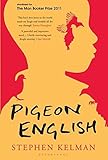
This is my review of Pigeon English by Stephen Kelman.

I avoided this novel for a while, fearing it might be exploitative of the recent Damilola Taylor tragedy, another example of truth being more searing than fiction. I have now read it for a book group, with an eye to deciding where I stand on the controversy over its shortlisting for the Man Booker.

As far as I can tell, Stephen Kelman makes a good job of getting into the mind of Harrison Opoku an inquisitive, impressionable, well-intentioned but vulnerable eleven-year-old boy uprooted from Ghana and thrown into the life of a tough inner London suburb, complete with grafittied tower blocks, menacing teenage street gangs and comprehensives ineffectual in the face of dysfunctional youth culture.

Harrison is both shocked and fascinated by the police crime scene marking the fatal stabbing of a boy at his school. As clues about the identity of the killer begin to emerge, Harrison naively sets about playing the part of a juvenile detective, unaware of the fact that many people already know or suspect who the attacker is, but are too scared to say anything.

Harrison's take on the world is by turns both very funny and poignant. I enjoyed his sparky exchanges with his sister. His frequent forgivable misreadings of situations alternate with some astute observations of the grim urban world which is "the norm" for too many children. An innocent "clean slate", he is singing hymns in church one minute, hanging out with an alcoholic thief and longing to own his dangerous dog "Asbo" the next, never seeing the incongruity of this. As teenage gang members bully and goad him to prove himself prepared to break the law, we fear he will be sucked into their sick world of knives, guns and gratuitous violence, but a basic decency always seems to return him to a better path – we even see him maturing a little from his experiences as the book builds to a possibly unexpected but on reflection inevitable conclusion.

Like some other readers, I was quite irritated by the occasional but increasingly frequent appearance of the philosophising italics-using pigeon who seems invested with some kind of all-knowing spirit. The little pictures of signs, and double page spread of T-shirt slogans are a little too gimmicky.

A more serious reservation is that I am unsure how authentically Ghanaian Harrison's language is, and I agree that many of the other characters are caricatures, and there could have been more backstory about Harri's family, which could have been skilfully implied in his account of various scenes.

I do not mind that the story proceeds in a series of disjointed episodes, since overall they carry the story forward to a finale which leaves a few loose ends on which readers are left to speculate.

This often feels like a book for teenagers rather than adults. It would make a powerful tool for raising awareness through class discussion, although the frequent swearing would probably get it banned for this purpose. However, I am not convinced it has the quality of prose, or originality to deserve a Booker-type award.

⭐⭐⭐⭐ 4 Stars

Storm-lashed islands where all happened once

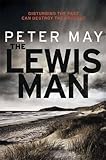
This is my review of The Lewis Man (The Lewis Trilogy) by Peter May.

Understandably troubled by his son's death in a hit-and-run accident, Fin divorces his wife, retires from the police and returns to his childhood home of the Hebridean isle of Lewis to restore his ruined family croft. His arrival coincides with the discovery in a peat bog of the well-preserved body of a young man who just happens to have the same DNA as Tormod Macdonald, father of Fin's former lover Marsaili, and so the plot thickens.

Apart from a few corny dialogues and the fact that I guessed fairly easily some of the main points in the denouement, this is a tightly plotted and often exciting tale, with some genuinely moving aspects, such as the plight of a vigorous old man who is sinking into dementia.

As in "The Blackhouse", first novel in the trilogy, Peter May creates a vivid sense of the Hebridean Islands, from Lewis in the North down to Eriskay in the south, now linked by causeways and ferries. He conveys an idea of the ever present wind and the sheer scale of the largely treeless landscape, sometimes hidden in mist or driving range, occasionally a peaceful idyll beneath a clear blue sky, more often with the sun breaking through the clouds to cast shifting patterns over the moors, or to brighten a far strip of beach or the sea.

I was interested to learn of the practice of sending Catholic orphans from the mainland to provide cheap labour for childless crofters. The device of revealing the past through Tormod's memories, so much clearer than his confused perception of the present is also skilfully handled.

I noticed the strong similarities between the plot of this novel and "The Blackhouse". Without giving too much away, we see themes of orphaned children, subject to bullying and prone to agree to stupid dares, people falling to their death from high places, paeodophiles abusing positions of trust, and characters twisted by grief who seek revenge by trying to wreak on others the pain they have suffered. Yet there is also enough that is "different" in the "The Lewis Man", which seems to me to have a slightly more plausible and satisfying plot.

I believe that, a former journalist, May has incorporated real characters like Bill Lawson of the Seallam Visitor Centre, together with descriptions of actual places. I spent some time googling to check these out. I just hope that the books do not attract such a wave of tourists to these islands that the single tracks road become congested, and the wild beauty of the isolated beaches lost.

Comment Comment | Permalink

⭐⭐⭐⭐⭐ 5 Stars

What is Truth?

This is my review of Absolution by Patrick Flanery.

Set in post-apartheid South Africa, "Absolution" focuses on the celebrated but prickly novelist Clare Wald, who has permitted the little-known young Sam Leroux to interview her for a biography on the thin basis that "I've read your articles and don't think you're an imbecile".

Flanery succeeds in building up a sense of suspense and secrets to be revealed. Born to a liberal family, how did Clare manage to stay in South Africa and continue to write without falling foul of the authorities? For what sins does she crave absolution? She is clearly haunted both by the death of her sister Nora and the disappearance of her daughter Laura, for whose terrorist leanings she feels in some ways responsible. Does she recognise Sam, and what is his role in her past? What is Sam's ulterior motive in seeking her out? Why do these two find it hard to ask each other the questions which they need answered?

The story unfolds against a background of disappointing yet perhaps inevitable ongoing corruption and violence, with a vivid portrayal of the insecurity felt by whites in modern South Africa combined with a residual excessive privilege, the continual fear of robbery and elaborate security precautions which make them virtual prisoners in their luxurious homes.

The core of the book is an examination of the difficulty of knowing the truth about events, on both a personal and a political level, despite the work of the "Truth and Reconciliation Committee". This is due to people's differing perceptions of the same event, the gaps in memory caused by trauma, the desire to cover one's tracks, or to spare the feelings of others.

What other reviewers have seen as deep and impressive complexity appears to me to be unnecessary convolution. The use of four main parallel plot strands, combined with the device of describing the same event in different ways, makes for confusion at times. There is too much repetition of certain thoughts and memories, whilst details of some key events are left vague – perhaps this is intentional. Ironically, after leaving so much open to interpretation for so many pages, the end seems to spell out too prescriptively what the reader is supposed to think.

The important political and moral discussions between Clare and Sam often seem too wordy, earnest and stilted. I grew tired of Clare's endless tortured dreams and visitations from ghosts. Overall, there seems to be too much reporting or recalling of events, not enough acted out as scenes.

I agree with the reviewer who felt that this first novel has been written with literary awards in mind. The result is a little uneven with some striking, if studied, descriptions alternating with passages which seem slipshod and in need of further editing. I also agree that some of the philosophising about the nature of truth at the end is a little lame.

To conclude on a positive note, for an American to absorb and convey a sense of South Africa, the scenery, vegetation, lifestyle and atmosphere, seems quite an achievement.

⭐⭐⭐⭐ 4 Stars

Good as far as it goes

This is my review of En Bonne Forme 8E by Simone Renaud,Dominique van Hooff.

I was attracted to this book by comments that it has proved useful for university students studying French, and that it contains extracts from French literature which illustrate various grammar points or topical vocabulary. At first I was disappointed by the large amount of space given to very basic and elementary grammar which I would have thought a reader could be assumed to have already as a platform on which to build further. However, I did find some of the vocabulary and idioms useful, and the passages provide quite good practice. The whole book is set out very clearly and is suitable for adult learners. I admit that it is helpful for clarifying the odd point which may have been confusing you, but I was expecting more depth and content. I would say this was a book for a dedicated adult beginner or intermediate level i.e. pre-university student. I wonder if it is mainly geared to French teaching in the States?

⭐⭐⭐⭐ 4 Stars

Shades of Hans Christian Andersen?

This is my review of The Bridge – Series 1 [DVD] [2011].

This dark and complex thriller begins on the Øresund Bridge linking Denmark and Sweden, where under cover of the dark and a power cut, a woman's body is found laid out across the line marking the national border, thus involving the police forces of both countries (and justifying a joint film production).

The killer, who turns out to have a fiendish imagination for unpleasant methods of torture and death combined with a twisted social conscience, proceeds to manipulate the public into anti-capitalist direct action or to blackmail the rich, by capturing victims to use as hostages, and ensuring the maximum publicity for this.

At first, "The Bridge" seems like an attempt to mirror yet outdo "The Killing", with the Swedish detective Saga Norén if anything more driven than Sarah Lund, with the added complication of "Asperger's Syndrome" which makes her the butt of some mockery from her work colleagues, although she is tolerated because of her genius in solving crimes. I felt uneasy at times about a script which encourages the audience to laugh at her, and also wondered about the accuracy of her robotic demeanour and over-literal approach. In striking contrast, her Danish counterpart is the laid back Martin Rohde, a man of strong empathy despite his history of womanising. He is intrigued by Saga, and gradually a bond of sympathy develops between them in which her emotions unfreeze – perhaps unlikely if she is autistic, I don't know. There is the implication she may in fact have been traumatised by a past tragedy.

Over its ten episodes, the story evolves from a simple "catch the villain" to a more complex drama of personal revenge. I was reminded that Denmark was the birthplace of Hans Christian Andersen, and it seems that some of the bleak morality of his tales may have rubbed off on the film makers: acts of personal betrayal have a cost for which one must pay.

There is a continual, at times somewhat bewildering, introduction of new threads, most of which are seen to have clear relevance, although there are one or two loose strands, perhaps intended as red herrings.

The filming is visually striking, often portraying the bleak underworld of homelessness, drug addiction and abandoned buildings which one does not usually associate with Scandinavia. I did wonder how Martin Rohde could afford to live in what looked like a better house than the Prime Minister in "Borgen", and about the total lack of privacy (surely dangerous for a detective?) in a wooden house which seemed to consist mainly of huge glass windows. The long-haired casual scruffiness of the detectives, even at senior level, is a nice egalitarian Scandinavian touch.

Although I was at times a little unengaged by the earlier episodes, I revised my views as the story built to the moral dilemmas of its dramatic conclusion, in which one suspects the writers may be ruthless enough to sacrifice any character.

And, of course, over it all, there looms the presence of that triumph of engineering and bleak aesthetics, the Öresund Bridge.

⭐⭐⭐⭐⭐ 5 Stars

Cause and Effect amongst the Gannets

This is my review of The Blackhouse: Book One of the Lewis Trilogy by Peter May.

Only weeks after the death of his young son, Detective Inspector Fin Macleod is sent to Lewis, the Hebridean island of his birth to use his local knowledge to check out the similarity between the murder of an unsavoury old acquaintance, Angel Macritchie, and a death he has investigated recently in Edinburgh.

At first I found the plot a little formulaic, commencing with discovery of a murder, switching to a sinister scene which turns out to be a dream, featuring a detective with personal problems, and using the tourist locations of the Hebrides and Edinburgh. Then, I found myself impressed by the vivid descriptions of Lewis: the changing colours of the landscape, the ever-present wind, the dominance of the skies, changing dramatically from dark storm to light. I also liked the rounded character development, in which each player is a complex mix of good and bad, strength and weakness, as in real life.

The detective thriller aspect of the novel frequently takes second place to a psychological drama in which Fin retraces through flashbacks the events of his youth including the triangular relationship between his best friend Artair, and Marsaili, the girl he met on his first day at school.

We learn a good deal in the process about the history of Lewis, developed with a personal fortune gained from the Chinese opium trade, and the grim annual custom of slaughtering two thousand gannet chicks on the barren island of An Sgeir, based as it is on the islanders' former practical need for protein.

Although I found the twisting plot a page turner, as is often the case the final denouement proves far-fetched in some respects, in particular the plausibility of Fin's highly selective amnesia. There are a few other false notes, such as way the five-year-old Fin and his friends speak and think more like kids entering secondary, rather than primary school. Also, I was unconvinced by the extreme lack of sympathy of Fin's boss, bordering on harassment, to the effect that Fin should pull himself together a month after losing his eight-year-old son!

Despite these reservations, I plan to read "The Lewis Man", the second novel in the trilogy featuring the complex and flawed Fin Macleod.

⭐⭐⭐⭐ 4 Stars

Chacun de nous sait pour quoi il saigne

This is my review of Le Mystere Frontenac (Le Livre de Poche) by Francois Mauriac.

A wealthy bourgeois family with property in "les Landes", region of pines and marshes, the Frontenac s are burdened with the need for conformity and respectability. Widowed early, the pious and neurotic Blanche Frontenac dedicates herself to her five children. Her brother-in-law Xavier, makes a similar commitment: he is miserly with himself, keen that as much wealth as possible should be safeguarded for the children. We see flashes of his softer side as he makes camphor-powered toy boats for them. Yet he is flawed: he cannot resist taking a mistress, the longsuffering Josefa, too socially inferior for him to marry, and goes to excessive lengths to conceal her existence from the family, needless to say all in vain.

The brilliant, academically inclined Jean-Louis accepts his duty to run the family business. The frail and hypersensitive younger brother Yves, who shows early promise as an avant-garde poet is allowed to follow his whims: the close bond between these two is compared to that between Xavier and his deceased brother, who resembled Yves.

Described as one of Mauriac's more positive works (I must admit to preferring the bitter venom of his other novels), you probably need to share his sense of Catholic mysticism to appreciate this fully. Not much happens, the "mystère Frontenac" is so subtle you could miss it, I found it all too mawkish at times, and agree with the reviewer who found it "dated".

Despite this, it is a powerful exercise in nostalgia, evoking a lost way of life on the brink of World War. The magic of childhood with the freedom to play, without adult cares, is captured well. Descriptions of the landscape are very vivid. Dialogues are sharp and realistic, with what may have been a new trend in the 1930s to intercut them with people's private thoughts, often very different from what they say. Some observations on the mindless and futile nature of the modern commercial world of mass production about to destroy the Frontenac way of life, are also prescient – I could have done with more of that angle.

The structure seems quite weak and I would have liked a fuller development of the interplay between the four main characters: Blanche, Xavier, Jean-Louis and Yves. However, it is worth reading as an early modern classic

⭐⭐⭐⭐ 4 Stars

Truth and Freedom Lost in Translation

This is my review of The Weekend by Prof Bernhard Schlink.

Christiane collects her brother Jorg from gaol where he has served more than twenty years for Baader-Meinhof-style terrorism in Germany. She takes him straight to a week-end in a rundown country mansion with an assortment of old friends. This seems such a bad idea as to be highly implausible, but it is of course a device to enable the author, a lawyer by profession, to explore all the moral arguments associated with terrorism designed to overthrow a corrupt capitalist system and related questions of guilt, how our views and the situations themselves change over time.

In what I found the most interesting chapters (35 and 36), group members discuss to what extent "the truth makes you free" or rather that "freedom makes things true" which means "there are as many truths as people freely living their lives" – but also the "life lies" which people need to be able to keep on living. I wondered if the theme would have worked better as a play, but this would have made it harder to show the characters' thoughts.

Schlink introduces quite a large cast of characters, so that I understand why another reviewer felt the need to note them down: Ulrich, who abandoned his youthful radical leanings to become a respectable and law-abiding dentist, Henner who came from a similar privileged background and flirted with revolutionary ideas before taking up journalism, Karin the female bishop who conceals from her husband the fact that she had an abortion in her "wild" youth and rather enjoys playing the part of a respected member of the community, and so on.

Although I found the ideas and plot potentially very interesting, I nearly gave up on the book at several points because of the clumsy style of writing which may have been due to the translation. Many conversations seem very artificial, a crude vehicle for presenting ideas. Likewise many of the recollections are a heavy-handed way of filling the reader in on past events. Some potentially dramatic scenes go off kilter, such as Ulrich's unbelievably crass interrogation of Jorg at dinner on the lines of, "What about your first murder?" A young girl's attempt to seduce Jorg (Chapter 8) is another example of a confusing and poorly written scene. Some of the descriptions are very clunky e.g. "The residents of the village who have work don't have it here".

Schlink seems to be producing novels fairly frequently, but I wonder if he should take a little more time to hone his work in order to do justice to his deep concern with issues of guilt and morality in modern Germany, now extended to broader post 9/11 global conflicts.

⭐⭐⭐ 3 Stars

Duty Calls

This is my review of Homeland – Season 1 [DVD].

Homeland is based on a compelling scenario. Marine Sergeant Brody (Damian Lewis complete with no doubt convincing American accent), for eight years presumed missing in action in Iraq, is discovered imprisoned in the compound of Al-Qaeda terrorist leader Abu Nasir, and returns to a hero's welcome in the States. Darker currents soon emerge. Desperate to show loyalty, his wife seeks to hide that she was on the brink of marrying his former best friend. Brody is also haunted by memories of having been forced to kill his fellow prisoner and best friend Walker, as the price of his own survival. To cap it all, working on a warning from an informer, driven CIA operations officer Carrie Mathison is convinced that Brody has been "turned" and only allowed to resume his old life in order to undertake some act of terrorism or betrayal. She is prepared to go to any lengths to prove her case, even bugging his house illegally with private cameras – but these do not reveal what is afoot in his garage. Also, Carrie's severe bi-polar disorder (the portrayal of which may irritate some sufferers) undermines her credibility.

In this slow-building but ultimately gripping drama, you are left guessing to the last episode what Brody's true intentions are, and whether and how he will carry them out. There are fine performances from all the major actors, in clearly defined and well-developed roles.

Most remarkable is the fact that this drama, although made in the States, appears anti-war and does not hold back in portraying a corrupt Government and security forces, violating human rights and trying to conceal the evidence for their own ends. Terrorists such as Abu Nasir are by contrast portrayed with a degree of understanding. It is not a simple case of enlightened western world right versus Islamic wrong, or of the good guy winning out in the end against the odds, as is often the case with American drama. Just as some of the characters may have been subverted, the viewer may for an instant understand the justice of the "wrong" cause. Relationships, such as Brody's attempts to reconnect with his children after eight years, are handled realistically without too much sentimentality.

The ending leaves the way open for a fresh series, which may be good for commerce, but not art, since it is usually best to be left wanting more of a drama. In this case, there are just enough intriguing loose ends to "get away" with one more series.

⭐⭐⭐⭐⭐ 5 Stars

Unreconstructed Emma

This is my review of The Soul Of Kindness (Virago Modern Classics) by Elizabeth Taylor.

Beautiful, indulged, emotionally immature with a childlike reluctance to face up to the grimmer realities of life, Flora does not prove for me to be the manipulative monster implied in the publisher's blurb, but her good intentions certainly cause other people grief, if not exactly leading to hell.

Each chapter in this well-crafted novel reads like a short story in its own right, providing sharply observed descriptions of the characters, their thoughts and relationships and the socially conventional, class-conscious, uptight world of Britain around 1960. Everyone except Flora knows a man is gay, but cannot discuss it. If a man has a drink with a lonely female neighbour it should be concealed as evidence of an affair.

The book is perhaps more interesting now than when it was written because it captures a lost world of dense London fogs, middle class women who do not work once married, and have live-in housekeepers in the basement, a safe, dull society on the brink of being shaken by the Swinging Sixties, fast food, pop culture, media manipulation and rampant commercialisation. Yet, some things have not changed, like the tatty sights and smells round an underground station, or a typical English seafront.

Perhaps Elizabeth Taylor is no longer widely read and known since her largely middle class characters seem rather snobbish and dated, there is no overt sex and violence and the drama is subtle and understated with a focus on the ordinary events of daily life. However, the power of her deceptively simple prose is very striking – a satirical Barbara Pym meets Dorothy Parker, by turns funny and moving.

She is also brilliant at creating in a few words a sense of place and nature and how they affect people's moods: starlings tearing up crocuses, gardens in the rain, the sadness of caged animals at the zoo.

It is intriguing to know that the intensely private Taylor may have been a person of hidden passions – respectably married to a businessman, her life said to be too uneventful to induce a friend to write her biography, she had communist sympathies, was a labour supporter and possibly intimate letters to a male friend were destroyed after her death.

I hope to read more of her work, but savour each novel as a model of how to write.

⭐⭐⭐⭐⭐ 5 Stars