Quackers

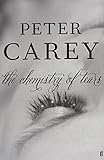
This is my review of The Chemistry of Tears by Peter Carey.

Employed as a conservator at a London museum with a world-famous collection of clocks and wind-up machines, blue-stocking Catherine is grief-stricken over the death of her work colleague and not-so-secret lover Matthew. Her manipulative line manager Eric tries to distract her with the task of reassembling what seems to be a mechanical duck, commissioned in the 1850s by the wealthy (when he is allowed access to the family money) Henry Brandling, who is convinced the "automaton" will aid the recovery of his sickly son. Catherine becomes totally absorbed in the handwritten journals kept by the eccentric Henry on his lengthy trip to Germany to obtain the duck.

The "Catherine chapters" held my attention from the outset. I liked the acerbic take on Barbara Pym "voice", and the very convincing and often moving portrayal of how Catherine is devastated by loss which Carey manages to convey alongside some very entertaining scenes.

The Henry chapters were a different matter. I accept that he may be bordering on insane, and encounters some even nuttier people, in particular the automaton-maker Sumper with his for me tedious accounts of the perhaps even more eccentric designer of such machines, Cruickshank. These chapters have a dreamlike quality, verging at times on nightmare, and Henry's account is often fragmented and lacking in context.

I would have been totally at sea without Google to explain the Victorian obsession with automata, and the various references to smoking monkeys and Vaucanson's "Digesting Duck" plus the Silver Swan on view at Bowes Museum, all of which clearly inspired this novel.

I think Carey is exploring the incongruity, for atheists and rationalists, of how grief is expressed through the chemical reactions of, say, shedding tears, while a cleverly made robotic machine may arouse fear and confusion with "its uncanny lifelike movements". An added twist is how machines, especially the combustion engine, have transformed our lives but may lead to our destruction by pollution – including this aspect as well may be over-ambitious.

Only the relative shortness of this book, Carey's status as a twice Man Booker Prize Winner, and my admiration for his recent "Parrot and Olivier in America" gave me the incentive to persevere. I agree that the ending proves rather abrupt, plus for me it includes a couple of implausible twists which I found hard to take.

I can see why some reviewers have found the novel pretentious. I'm inclined to think that Carey simply lets his imagination roam free, his fame relieving him of any need to kowtow to agents or editors. He makes no concessions to readers, leaving us to extract the brilliant writing and sharp insights from the at times confusing morass.

It was only on reflection after finishing the book that I decided the choice of ending is quite effective, and that overall it is worth reading.

⭐⭐⭐⭐ 4 Stars

A Wry Take on Human Nature

This is my review of Boule de suif (Le Livre de Poche) by Guy de Maupassant.

Considering this was written about a century and a half ago, Maupassant's collection of tales inspired by the Franco-Prussian War is remarkably fresh and vivid. It starts with his most famous "masterpiece" named after the "round as a dumpling" character of "Boule de Suif", the kindhearted prostitute who is so exploited and humiliated by the hypocritical bunch of characters who share a coach with her to escape the conquering Prussian army.

Writing with deceptive simplicity, great clarity and wit, Maupassant captures the sensations of travelling on a coach through the deep snow and winter dark, the periodic hunger and discomfort en route, the initially welcome shelter of the inn, the fear of encountering enemy soldiers. The nine ostensibly highly respectable passengers are given clearly distinct personalities and different social positions , displaying the all too common less attractive aspects of human nature: greed, prejudice, insensitivity, self-interest, and desire to justify their actions. Perhaps they are stereotypes but this makes for an absorbing read in which the author plays cleverly on one's sense of outrage, empathy with "Boule de Suif", despite her unsavoury profession, and wish to see her tormentors pay. Yet would we have behaved any better?

In addition to a detailed introduction, the stories are very thoroughly annotated. I found very useful the explanations of various classical references, the relevant details of the Franco-Prussian War plus some other snippets of information – such as "un pipe en écume" being a meerschaum pipe with a bowl carved out of a substance resembling hardened foam.

If English is your native tongue, there are translations available on Google – oddly enough with some of the mildly risqué passages omitted, I'm not sure why.

⭐⭐⭐⭐⭐ 5 Stars

Another case of More is Less

This is my review of Every Contact Leaves A Trace by Elanor Dymott.

I too obtained this book on the strength of a newspaper review but came to the sad conclusion it is not worth reading.

In a Morse-like setting, without the high body count, the book commences with a man imagining his wife's brutal murder after his discovery of her body six months earlier in the gardens of Worcester College – obligingly illustrated by a neat plan at the end – and making me instantly suspicious that this was written to press the right reader buttons e.g. American seduced by the gleaming spires of Oxford. Also, after such a dramatic little prologue, why proceed to drown us in a morass of verbiage?

I accept that this book is less a murder mystery and more a psychological study of a man discovering facts about his wife after her death. I do not mind slow pace, unappealing main characters or even an author perhaps unconsciously complacent with an elitist sense of having experienced Oxford – all of which could be made to count against, say, the recent Man Booker winner Julian Barnes, although I would not do so. What makes this book intolerable for me is the leaden, long-winded. overwritten prose (evident even in the title), unrelieved by insights, irony or flashes of humour.

⭐⭐ 2 Stars

Playing the Game

This is my review of The Fifth Witness (Mickey Haller Series) by Michael Connelly.

Although the courtroom drama is all too familiar a theme, Michael Connolly uses his legal knowledge as a former police reporter to great effect in this tense and compelling blow-by-blow, endlessly twisting account of a murder trial.

The underlying theme is very topical. His business hit by the "down economy", "Lincoln" lawyer Mickey Haller, so-called after the car he uses as an office, makes a good living by defending people obliged to foreclose on their mortgages in the aftermath of the collapsed housing boom. When one of his clients, the volatile Lisa, is charged with killing Bondurant, a senior official in the home loan company pursuing her, Haller steps in to take her case. I enjoyed the highly competitive, wily but basically decent lawyer's keen observation of others and his use of psychology to manipulate the police, prosecution, defendant,witnesses, colleagues and the judge alike, with varying degrees of success.

There is an interesting contrast between Haller's pragmatic approach, playing games and pushing rules to the limit in order to sow in the jurors' minds the seeds of doubt as to the defendant's innocence, and his inexperienced assistant's mixture of shock over his tactics, and concern that they might in fact be defending a guilty person. The continual sparring between Heller and the female prosecutor Freeman, together with the minefield of his exchanges with the judge, make for an absorbing drama. The book is more than a wisecracking thriller, but raises the moral dilemma of achieving "natural justice" and "the need to act fairly" versus the visceral desire for revenge, not to mention the pros and cons of the US plea bargaining system.

I was first drawn to Connolly's "Harry Bosch" detective thrillers by his striking descriptions of the American way of life and of the Los Angeles cityscape, sprawling into the desert, with the freeways, "All six lanes..clogged with metal, moving at a steady but slow pace. I wouldn't have it any other way. This was my city and this was the way it was supposed to run."

I like Connolly's careful plotting, in which every detail has significance, usually with a twist at the end, and the rounded development of the main characters. In "Nine Dragons", featuring Bosch (who turns out to be Haller's half-brother) I felt Connolly had run out of steam and descended to a mere pot-boiler, but this, the fourth in the Haller series, I believe, is back on form. Hard to fault, apart from the over-sentimental scenes with his idealised (but probably a bit of a pain) ex-wife Maggie and pampered daughter (at 14, shouldn't she be a babysitter rather than needing one?) plus one of the two last-minute twists seems a bit implausible.

⭐⭐⭐⭐ 4 Stars

A Gentler Type of Cormac McCarthy

This is my review of Nightwoods by Charles Frazier.

After the phenomenal success of "Cold Mountain", the odyssey of a soldier's return from the American Civil War, it must be hard for Charles Frazier to achieve comparable success.

Although on a much smaller scale, "Nightwoods" is similar in showing Frazier's gift for spinning a yarn and displaying his deep knowledge of and love for the Appalachian wilderness combined with a sense of small town life in a rural backwater, portrayed with some sharp, witty dialogue and an ability to make unsavoury or even evil characters appear at times in some ways objects of sympathy.

It is sometime round 1960 when Gene Pitney was a rising popstar on the juke box. Luce is a tough young woman who is for some reason living in isolation from the town visible across the lake from the old lodge which she looks after for an old landowner called Stubblefield. Her hard but peaceful routine is disrupted by the appearance of "the stranger children", in fact the badly damaged young twins of her brutally murdered sister Lily. Luce's psychopathic brother -in-law Bud has a particular reason for tracking down these children. Meanwhile, following Stubblefield's death, his ne'er- do- well heir comes back to claim the inheritance. This is clearly the basis for a potentially tense thriller.

I was rapidly sucked in by not only the plot, but also the vivid, poetical descriptions of the mountainous wilderness of North Carolina, the sense of past history back even before the time of the Indians, the survival of a self-sufficient rural way of life, the neglected lodge – a vestige of the wealthy tourists from bygone days – and the inward-looking life of the small town enveloped in the backwoods with only tenuous road connections to the outside world.

Always a page turner, although some reviewers have found it slow at times, the story is never quite predictable since you know that Frazier is capable of including sudden acts of unexpected brutality and horror cheek by jowl with quite soft-centred or even sentimental passages.

Although I was a little disappointed by Frazier's handling of the plot from the point where Luce meets Bud face-to-face, since I thought that the potential drama often fell rather flat, this was offset by some unexpected twists, and I suspect that Frazier is really more interested in reflecting on the effects of "modern progress" and exploring the human psyche than he is in structuring a story. The final pages in practice prove quite tense.

Another slight reservation is that both Luce and Stubblefield Jnr. seem to undergo some rather rapid changes of attitude, but in a relatively short and spare novel perhaps we have to "take this as given" to leave space for Frazier's other ideas.

Highly recommended.

⭐⭐⭐⭐ 4 Stars

Powerful dreamlike sense of place and time

This is my review of Pascali’s Island by Barry Unsworth.

I found this a remarkably well-written and compelling page turner, although I felt let down by the ending.

It is 1908, with the Ottoman Empire in decline and Europe on the brink of the First World War. After twenty years as a poorly paid informer on a Greek island beginning to revolt against Turkish control, Basil Pascali is perhaps losing touch with reality, partly through a life of isolation and deception, partly because his reports have never been acknowledged. So, he imagines that at every turn the Greek islanders wish him ill, and his reports are full of details of daily life which can be of little interest, of irrelevant although beautiful descriptions of the island he knows so well plus some very subversive observations on Turkish rule – corrupt and ossified.

The arrival of Mr. Bowles, the Englishman who claims to be an archaeologist and writer on antiquities, immediately arouses Pascali's suspicions, although he sees conspiracy and deviousness everywhere, even in the behaviour of the artist Lydia whom he loves without any hope of a return of feeling, or the activities of the American Smith, out fishing for sponges in his caïque (lots of wonderfully evocative words in this book). Then, Bowles asks Pascali to act as interpreter for his negotiations to lease some land……..

With a continual sense of suspense, this tightly plotted tale builds up to a predictably tragic climax which left me less moved or satisfied with the denouement than I should have been. I think this is partly because Pascali is so self-controlled and analytical, rarely displaying normal emotion but often admitting to his faults in a rather clinical way. Also, Unsworth's habit of telling the reader what is going to happen tends to diffuse some of the potential drama. Certainly, I found his plotting in his last novel, "Quality of Mercy" much more satisfactory, and his dialogues sharper and more realistic.

I believe Unsworth spent years living on Greek islands, so that this book is a distillation of his own observation of nature and the local people. He is at his best in his remarkably articulate and well-observed descriptions of the quality of light around the island, its changes during the day, and interplay with the air and the sea. The writing is a little mannered, but that fits the period and Pascali's temperament. The repetitious references to, say, the fishermen casting their nets are not only strong metaphors but help to create a hypnotic effect, serving to explain how Pascali is held on the island by a kind of spell.

Some of the philosophical arguments are a bit heavy-going, but Unsworth is good on historical detail. The artist Lydia's realistic style of painting, and rejection of the "colourists" and "Expressionists" who were gaining popularity at the time is probably very authentic. The nationalistic prejudices of the various characters and the stereotyping, say of Bowles as an idealistic and naively honest Englishman (although Pascali sees through him) also reflect attitudes of the time.

⭐⭐⭐⭐ 4 Stars

More is Less

This is my review of Ensemble c’est tout (Litterature Generale) by Anna Gavalda.

A best seller in France and adapted as a film starring the gamine Audrey Tautou and titled in English "Hunting and Gathering", this is the tale of three very talented young people who, having been damaged by their dysfunctional, neglectful or thoughtlessly cruel parents, form an unlikely friendship through which they help each other to achieve fulfilment and happiness.

Camille is a gifted artist, reduced to anoxeria and working as an office cleaner at night. Franck is a boorish and promiscuous chef, whose loud mouth conceals a soft heart and a sense of guilt over abandoning his beloved grandmother Paulette to a soulless old people's home. The aristocratic, for me stereotyped, Philibert, is a walking history book, a stammering figure of fun with obsessive compulsive disorder, who wastes his skills selling postcards.

My judgement may have been jaded by the effort required to read this in the original French. It is certainly a good source of modern slang, colloquial speech, idioms and cultural references, although deciphering some of these was a hard and often fruitless labour. I needed a French speaker on hand to ease the path more than for any other French novel I have ever read.

However, I feel confident in saying that this potentially interesting plot was ruined for me by self-indulgently excessive length and lack of editing of too many banal conversations and incidents, by a mawkish tone and a very loose, clunky structure. Minor scenes are presented in great deal, major incidents glossed over or implied.

The narrative veers between passages of dense prose, such as Part 3 (rationale for these parts eluded me) Chapter 17 in which Camille explains the trauma of her childhood in a lengthy passage of "telling" rather than "showing" and some other chapters which are just a page long – a few slangy phrases in a sea of white space.

The tone is mostly mildly crude or schmaltzy with the occasional flight into pretentiousness. The characters often seem underdeveloped to me. There was missed scope for drama in, for instance, the behaviour of Camille's mother, Philibert's finding of a girlfriend or the role of the drug addict Vincent.

There are a few moving passages, such as Pauline's experience of ageing. Also, some moments of humour, as when Camille makes a coat for the concierge's dog out of Franck's shrunken designer jumper. But a good deal of tedium has to be navigated to dredge up these pearls.

⭐⭐ 2 Stars

Paying Attention to the Living

This is my review of The Beginner’s Goodbye by Anne Tyler.

Only my deep admiration for Anne Tyler could have got me past the opening pages in which Aaron describes people's reactions to his wife Dorothy's return from the dead: some give the couple a wide berth, others try to pretend she isn't there, but a few act normally since they have forgotten that she has died. If you like rational explanations, you could argue this is a satirical twist on how people behave when they meet someone who has just been bereaved.

Unlike some reviewers, I was very glad that this is not mainly a ghost story. I leave it to you to discover whether Dorothy is a phantom, a "Truly Madly Deeply" type figment of Aaron's grief-stricken imagination, or a mixture of the two.

This story soon becomes a very Tylerish examination of dealing with the untimely death of a spouse, Aaron's feelings over time and the reactions of others. It is made all the more effective by her use of wry humour, sharp observation, and understated poignant moments. The characters seem down-to-earth if a bit oddball, but there are frequent hints of deeper, unspoken or suppressed emotions.

Reading it straight after "The Sense of an Ending", this is further evidence of how short books often provide more food for thought than much longer ones. I would have disagreed with those who dismiss this as "not one of her better books", if it had not been for the ending which is a little too pat.

Perhaps it was written mainly as a small piece of catharsis for Tyler's loss of her own husband. Capturing a source of intense pain in a short, easily read, essentially feel good book may be the only way of making it tolerable enough to examine and accept to some extent.

Highly recommended.

⭐⭐⭐⭐ 4 Stars

Riding the Tiger

This is my review of Tiger Head, Snake Tails: China Today, How it Got There and Where it is Heading by Jonathan Fenby.

Having made his name with the popular "A Penguin History of China: the Rise and Fall of a Great Power", Fenby's study of China today focuses on recent social, economic and political events.

Much of the information provided will no doubt be familiar from newspapers and television documentaries: the astonishing speed of urbanisation, with all the attendant problems of pollution and scope for corruption and substandard construction; the, to a westerner, odd blend of nominal communism and capitalism, as displayed in the coastal Special Economic Zones like Shenzhen; the harsh crackdown on any kind of rival belief system, as in the case of the Falun Gong; the current rejection of democracy or free speech as likely to destabilise society, thus hindering economic progress. Fenby uses extensive firsthand obsevation to combine all this into a single book with many often chilling examples e.g. the artist Weiwei probably fell foul of the authorities by daring to suggest in his blog that the death toll of 80,000 in a Sichuan earthquake was due to corruption in building contracts.

Fenby reminds us how the Confucian tradition of keeping "a tight grip", the control freakery of past emperors are perpetuated into the current "top down rule" which is seen as the necessary framework for economic development.

Fenby has also added to my awareness of issues. For instance, I had not considered how the one child policy has created a "time bomb" familiar to the West, in which the labour force will become inadequate to care for all those too old to work. I had not realised how Deng Xiaoping used foreign technology and capital in the 1990's to enable China to avoid a Soviet-style collapse of communism. Yet by 2001, Premier Zhu Rongji had adopted the slogan "reduce the workforce, increase efficiency" with the kind of cuts and unemployment we might associate with a post financial collapse right wing western government.

The book will date quickly, since it makes a point of discussing the candidates just prior to the 2012 election to replace State President Hu Jintao and Prime Minister Wen Jiabao in the ten yearly leadership transition. Ironically, Fenby refers frequently to Bo Xilai, the "princeling in his fiefdom of Chongqing", whom we now know to have been disgraced in 2012, perhaps as a way of halting the progress of an influential figure who hankered after a return to some aspects of Maoism.

Although the facts provided are all relevant, I sometimes found them hard to digest, making the book a little dry. It seems to me to lack a clear structure, and as a result at times rambling, even confusing and often repetitive. When I felt bogged down it proved possible to read the chapters in the "wrong" order in an attempt to rekindle my interest. I suspect it may have been "thrown together" in a hurry, which is a pity.

A map of the key cities and states continually mentioned would have been useful. I resorted to printing a map off the internet to help be locate places and areas.

Although this has increased my understanding of a country likely to affect all our future lives, I wish it had been better constructed, and perhaps more reflective.

⭐⭐⭐⭐ 4 Stars

Self-Delusions of the Defeated

This is my review of The Sense of an Ending by Julian Barnes.

You may ask how 150 pages can justify the Man Booker Prize. This may be on the basis of "less is more", and the author's ability to condense so much insight and provoking thought into a novella. The award may have been for the concise skill of his prose compared to the other less experienced writers on the long-list.

Retired and in his sixties, Tony Webster has played safe, telling himself he was being mature when in fact he was just careful, and missing out on life in the process. The first part of the book recalls his friendship with the precociously brilliant schoolmate Adrian, and his attraction to the enigmatic Veronica. I like the portrayal of the more innocent and sexually uptight world of the 1960s which were in some ways less "Swinging" than people may now imagine. The "too-clever-by-half banter of Tony's public school sixth form is a little pretentious, but may be realistic.

The second part becomes more of a psychological thriller in which Tony tries to explore and come to terms with the repercussions of his triangular relationship with Adrian and Veronica. Barnes arouses a strong sense of tension and expectation but, although I did not manage to guess the denouement, the double twist at the end was something of a letdown. I was too unmoved by the characters to care about them enough.

For me, this book is about how time may distort memories, how in both history and private life, people may delude themselves to make life more bearable. It is also about how, as we approach the end of life, we tend to assess how we have lived – to this extent perhaps it will mean most to older people who have known irrevocable disappointment.

You need to read this book twice to grasp the care with which it is constructed and the full significance of many sentences, but I found the denouement did not satisfy me enough to want to do this. There is a rich field of debate as to what really happened to Adrian and Veronica and why, together with an assessment of the degree of Tony's guilt. I agree with those who argue that Tony's actions are never bad enough for him to bear a heavy blame, but perhaps it is one of the main points that quite trivial events may have disproportionately serious effects.

It could make a good A Level text, both as regards how the facts are revealed, and what they mean.

I would say this deserves praise for quality of prose and ideas, but loses its edge through a needlessly rather weak plotline.

Comment Comment | Permalink

⭐⭐⭐⭐ 4 Stars