Paved with Good Intentions

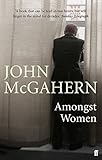
This is my review of Amongst Women by John McGahern.

Aloof and uncompromising, Moran is disappointed with the independent Ireland for which he has fought, and vents his frustration in an ongoing battle to dominate his children, compliant second wife Rose and even his old friend McQuaid who shares his memories of the past. Perhaps Moran only felt alive in his days as a guerrilla leader, perhaps he was traumatised by some of the brutality in which he was caught up.

Although this is one of those tales in which not much happens, I was soon hooked by McGahern's spare prose and subtle ability to convey a sense of place and of human relationships as he describes in minute detail the nuances of family relationships in the rural Ireland of around 1960. On the one hand, I was repelled by the narrow restrictions, the over-concern with convention and religious rituals. On the other, McGahern makes us aware of the value of family ties, working together on the land, taking pleasure in the small simple things of life, enjoying the familiarity and beauty of the farmland. All this is made more poignant by our knowledge of the transience of this way of life, as inevitably the children leave to make a better living in Dublin or London – or to escape the tyranny of a man whom most of them regards as "always…. the very living centre of all parts of their lives".

Moran's bullying, sarcasm and desire to stand on his dignity and have the last word do not endear him to me. Much of the quiet tragedy of this book is the high price he pays for his behaviour in terms of the loss of his old friend McQuaid, even his eldest son. It is quite hard at times to understand how his stoical wife Rose manages to turn the other cheek.

Highly recommended, this is a thought-provoking and moving read which enhances our understanding of ordinary life, with a wry humour to counter what may sound like the downbeat misery of the theme.

⭐⭐⭐⭐⭐ 5 Stars

An Arctic Turn

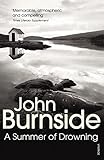
This is my review of A Summer of Drowning by John Burnside.

At first I thought this would be a tale of suicides by drowning and disappearances with a possibly supernatural cause, fed by the folktales of northern Norway and the setting on Kvaløya, a real vaguely clover leaf shaped island west of Tromsø, north of the Arctic Circle where in summer the midnight sun drives people to insomnia, hallucinations, even madness.

Then I decided it is an intense psychological study of Liv, a highly intelligent, observant , introspective girl brought up in unusual isolation by her mother, a talented but selfish and coldly objective artist.

In the end, I could not ignore Liv's conviction that an evil spirit or "huldra" is at work in the body of a local girl. Yet, some events remain unexplained or ambiguous, so that you can, if you choose, attribute them to Liv's possible descent into madness.

What impressed me most is the description of Kvaløya, with its sense of the suspension of time as we know it – there is a good deal in this book about reality being an illusion and vice versa, made credible in this location. Burnside is also very skilled at encouraging us to reflect on the nature of our existence – at first it seems odd, even shocking, that a bright girl like Liv has no friends, wanders about for hours on end doing nothing in particular, but her reflections help us to see that in many ways our frantically busy, occupied, materialistic lives may lack real meaning.

Burnside's poetry gives his prose great intensity. There are many striking images: the arctic terns which follow the sun, dipping into the water for silver fish, the blurring of the land, sea and sky into the same colour, a spirit conjured by a folktale evident through "the tremor in a glass", and so on.

When it comes to the analysis of thoughts, with every look and phrase examined from many angles, yet much left cryptic or open to question, his writing can be a little too much to take. Yet, the intensity, combined with some repetition, contribute to the hypnotic quality of the writing.

Minor criticisms are the tendency to tell us what is going to happen, the prologue which seems to me like the statutory hook required by a publisher – and in this case quite misleading as to the nature of the novel – and the shortcomings of the "dramatic climax".

Burnside is a talented writer and much of this is a gripping read, although I felt that the mixture of the pragmatic with the supernatural ultimately does not quite work. If nothing else, he has introduced me to the wonderful paintings of Harald Sohlberg.

⭐⭐⭐⭐ 4 Stars

Falling Flat

This is my review of The Girl Who Fell From The Sky by Simon Mawer.

My expectations raised by the originality of "The Glass House", this novel proved a disappointment. The adventures of a British woman parachuted into occupied France to work for the Resistance offer the scope for a gripping drama, but it is as if the author has been forced to write for a deadline when he did not feel in the mood.

Why was I so soon and often bored by what should have been by turns exciting and moving? I think it was the lack of a clear evocation of time and place – I never really felt I was in Scotland, or rural France, or Paris during the war of the 1940s. Similarly the characters rarely came alive in my imagination as convincing people. The creation of tension and expression of real feeling are obscured rather than enhanced by a veil of would-be literary writing which stumbles quite often over clunky phrasing. Much of the dialogue is quite dull.

I found myself niggling over minor points, such as the repetition on page 57 (hardback) of "She shrugged the question away". Why did no editor pick this up? Plus the language used in conversation often sounded too modern.

Even when Marian at last gets to France, the narrative drive is too weak to maintain the necessary sense of tension. The potential drama is continually defused by her introspection. This is evident as early as the opening chapter, clearly intended to hook the reader, yet we find her mulling over things like her father's classical allusions which she likes to call illusions when she is about to make her first parachute jump into France! Her lack of motivation to work in Special Operations makes you wonder why on earth she was selected for the role. When a reason is supplied, it seems implausible, and is not sufficiently developed in the plot. Marian does not seem quite real, so I do not care as I should when she is in danger.

⭐⭐⭐ 3 Stars

A man like other men?

This is my review of Bring Up the Bodies by Hilary Mantel.

Since every reader must surely know that Anne Boleyn fails to give Henry V111 a son, and loses her head, while Thomas Cromwell falls from grace, although not in the second part of a planned trilogy, everything hinges on Mantel's ability to breathe life into the characters and embroider the details.

She has entered so fully into the imagined minds of both Cromwell and Henry that she provides exceptionally vivid in-depth portrayals of these two main characters. She has to be able to see Cromwell's better side, and I sometimes feel she has grown to like him too much, this juvenile thug "made good", industrious, clever, manipulative, surprisingly good company, with a soft spot for orphan boys and vulnerable young women. Yet she never lets us forget his underlying ruthlessness, as when he has an almost fond memory of Bishop Fisher, only to recall how, when the man's head would not rot on its pole, Cromwell had it put in a sack and thrown in the Thames.

On page 208 (first hard cover edition) there is a wonderful psychological analysis of Henry who "grew up believing the whole world was his friend and everyone wanted him to be happy. So any pain, any delay, frustration or stroke of ill luck seems to him an anomaly, an outrage." His self-justification, pathetic desire to be "in the right" and to leave all the dirty work to others as regards replacing Anne with Jane Seymour are all too apparent.

Mantel has a good ear for comedy, so some of the dialogues, as when Jane Seymour is being trained by her relatives to enter rooms in a more queenly way, are very amusing.

"Bring up the Bodies" seems more successful than "Wolf Hall" since it is more tightly plotted. In both cases, the book improves as the narrative drive builds up to the dramatic climax, in this case Anne's execution.

Once I had tuned into Mantel's daringly distinctive style, I began to feel the writing is often brilliant, but there were times in the first half when I found her self-indulgently wordy. Significant characters and events tend to be introduced in such an oblique way that you may miss them. The confusing tendency to call Cromwell "he" is still evident, but was it some misguided editor who suggested substituting at times "he; he, Cromwell,"?

An interesting aspect is Cromwell's desire to make radical social reforms, as gaining in confidence he increasingly "runs the country" behind the scenes. The final part in which Henry turns on his faithful servant, only to regret it, will perhaps make a more moving read than anything that has preceded it.

⭐⭐⭐⭐ 4 Stars

Freedom is always for the one who thinks differently

This is my review of Rosa Luxemburg: A Life (Life and times) by Elzbieta Ettinger.

For years I knew of Rosa Luxemburg only as a communist agitator who was assassinated.

This excellent biography which deserves to be much more widely praised and available, portrays her as a remarkably intelligent woman who from the 1890s made herself famous in Europe as a talented journalist and charismatic orator, spreading the cause of socialism. Although she had several lovers, the main influence in her life was Leo Jogiches, who financed her and acted as her mentor at the beginning of her career. An intense man, happiest when organising conspiracies, he was unable to commit to her in the settled home, with marriage and children, which she craved.

Ettinger analyses what influenced Rosa to identify so strongly with the cause of workers, and to reject nationalism: her status as a Jew, a Pole -i.e. brought up in a divided and occupied country-, her lameness, and her observation as a child of poor families living nearby.

Active in the social democratic parties of Poland and Germany, she dared to challenge Lenin, condemning the centralised nature of Soviet communism, whereas she believed that true revolution could only come from the workers themselves. Eventually, her ideas cost her several grim years in prison. It was her role in founding a German Communist Party in the anarchy following the end of the First World War which led to her murder in 1919. Perhaps naively, she did not seem to realise that many workers are motivated most strongly by the desire for material goods.

Rosa was not very interested in "women's movements" since she had the confidence to follow her natural interests, and basked in the admiration she received from the largely male circles in which she moved.

Ettinger does not hide her flaws. In her professional life, Rosa descended into bitter and undignified arguments with some colleagues. On a personal level, her emotionally open letters show her to be at times neurotic or domineering, and she was often too busy to find time for her family, not bothering to visit her dying mother and leaving her ageing father's letters unanswered. The ludicrous lengths she went to hide her affairs – pretending to her family that she was married to Jogiches- have to be accepted in part as a sign of the times.

A minor criticism is that, perhaps to avoid getting bogged down in political theory, Ettinger does not explain the evolution of Rosa's political thinking clearly enough, but the main points shine through, together with her independence and energy.

⭐⭐⭐⭐⭐ 5 Stars

Now meet into sorrow, now madden to crime

This is my review of Rage of the Vulture by Barry Unsworth.

Inspired to read this by a mixture of Unsworth's last books plus his recent death, it is sad to be the first person to review this for more than a decade!

So soon after the Arab Spring this novel seems very topical, although it refers to an earlier period – Constantinople in 1908 with dissident forces returning from abroad and massing against the autocratic Sultan, hiding away in his palace in a time warp with his telescope, harem, eunuchs and maze of secret passages to avoid assassination.

Against this backcloth of historical events is the personal drama of Robert Markham, an introspective man who has been driven to the brink of madness through his guilt over only thinking about saving his own skin when his Armenian fiancée Miriam was murdered twelve years previously. Bent on revenge without quite knowing how to achieve it, Markham is obsessed with the Sultan who epitomises for him the evil force which destroyed both the Armenians and other innocent parties.

Unsworth's prose is carefully crafted, perhaps too much so at times, but at its best conjures up strong visual images, and has the power to evoke vivid impressions of the sheer age of the city, stone mosques in the mist, the wonderful views from boats crossing the waterways, also the poverty and squalor. Unsworth has the ability to dissect a man's motives in minute detail, all the shades of feeling and changes in attitude. Markham is a complex and in some ways rather repellent character, yet he still arouses some sympathy.

The author carries you straight into what is clearly "a good yarn" with a serious, thought-provoking undercurrent, although it may seem a little dated, being in the same vein as Somerset Maugham or E.M. Forster.

The first part of the book worked better for me with its clear structure. Each chapter begins with an account of the Sultan's isolated life and casual cruelty, before moving to the account of Markham's mental disintegration, poisoning all his close personal relationships. Some scenes focus on his son Henry, potentially very like him, a secretive child, whose habit of hiding and spying on people means that he accidentally obtains dangerous knowledge, although he cannot make much sense of it.

The second part is a continuous build-up to a crisis which we are prepared to think will be a tragedy, yet somehow give Markham release. I found this section heavy going, partly because Unsworth feels the need to describe everything in so much detail that it becomes oppressive. Also, the plotting itself loses some of the tight momentum of the earlier chapters. I found myself wanting to skip paragraphs. At least it ends with quite an effective climax and satisfying epilogue.

Despite my reservations, it's a bit depressing to see how the self-effacing Unsworth, without the assistance of modern marketing techniques, has been undervalued in comparison with some of the heavily hyped recent historical blockbusters, which in fact have only a fraction of his subtlety and insight.

⭐⭐⭐⭐ 4 Stars

Quackers

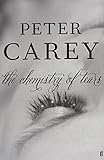
This is my review of The Chemistry of Tears by Peter Carey.

Employed as a conservator at a London museum with a world-famous collection of clocks and wind-up machines, blue-stocking Catherine is grief-stricken over the death of her work colleague and not-so-secret lover Matthew. Her manipulative line manager Eric tries to distract her with the task of reassembling what seems to be a mechanical duck, commissioned in the 1850s by the wealthy (when he is allowed access to the family money) Henry Brandling, who is convinced the "automaton" will aid the recovery of his sickly son. Catherine becomes totally absorbed in the handwritten journals kept by the eccentric Henry on his lengthy trip to Germany to obtain the duck.

The "Catherine chapters" held my attention from the outset. I liked the acerbic take on Barbara Pym "voice", and the very convincing and often moving portrayal of how Catherine is devastated by loss which Carey manages to convey alongside some very entertaining scenes.

The Henry chapters were a different matter. I accept that he may be bordering on insane, and encounters some even nuttier people, in particular the automaton-maker Sumper with his for me tedious accounts of the perhaps even more eccentric designer of such machines, Cruickshank. These chapters have a dreamlike quality, verging at times on nightmare, and Henry's account is often fragmented and lacking in context.

I would have been totally at sea without Google to explain the Victorian obsession with automata, and the various references to smoking monkeys and Vaucanson's "Digesting Duck" plus the Silver Swan on view at Bowes Museum, all of which clearly inspired this novel.

I think Carey is exploring the incongruity, for atheists and rationalists, of how grief is expressed through the chemical reactions of, say, shedding tears, while a cleverly made robotic machine may arouse fear and confusion with "its uncanny lifelike movements". An added twist is how machines, especially the combustion engine, have transformed our lives but may lead to our destruction by pollution – including this aspect as well may be over-ambitious.

Only the relative shortness of this book, Carey's status as a twice Man Booker Prize Winner, and my admiration for his recent "Parrot and Olivier in America" gave me the incentive to persevere. I agree that the ending proves rather abrupt, plus for me it includes a couple of implausible twists which I found hard to take.

I can see why some reviewers have found the novel pretentious. I'm inclined to think that Carey simply lets his imagination roam free, his fame relieving him of any need to kowtow to agents or editors. He makes no concessions to readers, leaving us to extract the brilliant writing and sharp insights from the at times confusing morass.

It was only on reflection after finishing the book that I decided the choice of ending is quite effective, and that overall it is worth reading.

⭐⭐⭐⭐ 4 Stars

A Wry Take on Human Nature

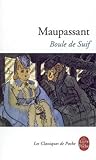
This is my review of Boule de suif (Le Livre de Poche) by Guy de Maupassant.

Considering this was written about a century and a half ago, Maupassant's collection of tales inspired by the Franco-Prussian War is remarkably fresh and vivid. It starts with his most famous "masterpiece" named after the "round as a dumpling" character of "Boule de Suif", the kindhearted prostitute who is so exploited and humiliated by the hypocritical bunch of characters who share a coach with her to escape the conquering Prussian army.

Writing with deceptive simplicity, great clarity and wit, Maupassant captures the sensations of travelling on a coach through the deep snow and winter dark, the periodic hunger and discomfort en route, the initially welcome shelter of the inn, the fear of encountering enemy soldiers. The nine ostensibly highly respectable passengers are given clearly distinct personalities and different social positions , displaying the all too common less attractive aspects of human nature: greed, prejudice, insensitivity, self-interest, and desire to justify their actions. Perhaps they are stereotypes but this makes for an absorbing read in which the author plays cleverly on one's sense of outrage, empathy with "Boule de Suif", despite her unsavoury profession, and wish to see her tormentors pay. Yet would we have behaved any better?

In addition to a detailed introduction, the stories are very thoroughly annotated. I found very useful the explanations of various classical references, the relevant details of the Franco-Prussian War plus some other snippets of information – such as "un pipe en écume" being a meerschaum pipe with a bowl carved out of a substance resembling hardened foam.

If English is your native tongue, there are translations available on Google – oddly enough with some of the mildly risqué passages omitted, I'm not sure why.

⭐⭐⭐⭐⭐ 5 Stars

Another case of More is Less

This is my review of Every Contact Leaves A Trace by Elanor Dymott.

I too obtained this book on the strength of a newspaper review but came to the sad conclusion it is not worth reading.

In a Morse-like setting, without the high body count, the book commences with a man imagining his wife's brutal murder after his discovery of her body six months earlier in the gardens of Worcester College – obligingly illustrated by a neat plan at the end – and making me instantly suspicious that this was written to press the right reader buttons e.g. American seduced by the gleaming spires of Oxford. Also, after such a dramatic little prologue, why proceed to drown us in a morass of verbiage?

I accept that this book is less a murder mystery and more a psychological study of a man discovering facts about his wife after her death. I do not mind slow pace, unappealing main characters or even an author perhaps unconsciously complacent with an elitist sense of having experienced Oxford – all of which could be made to count against, say, the recent Man Booker winner Julian Barnes, although I would not do so. What makes this book intolerable for me is the leaden, long-winded. overwritten prose (evident even in the title), unrelieved by insights, irony or flashes of humour.

⭐⭐ 2 Stars

Playing the Game

This is my review of The Fifth Witness (Mickey Haller Series) by Michael Connelly.

Although the courtroom drama is all too familiar a theme, Michael Connolly uses his legal knowledge as a former police reporter to great effect in this tense and compelling blow-by-blow, endlessly twisting account of a murder trial.

The underlying theme is very topical. His business hit by the "down economy", "Lincoln" lawyer Mickey Haller, so-called after the car he uses as an office, makes a good living by defending people obliged to foreclose on their mortgages in the aftermath of the collapsed housing boom. When one of his clients, the volatile Lisa, is charged with killing Bondurant, a senior official in the home loan company pursuing her, Haller steps in to take her case. I enjoyed the highly competitive, wily but basically decent lawyer's keen observation of others and his use of psychology to manipulate the police, prosecution, defendant,witnesses, colleagues and the judge alike, with varying degrees of success.

There is an interesting contrast between Haller's pragmatic approach, playing games and pushing rules to the limit in order to sow in the jurors' minds the seeds of doubt as to the defendant's innocence, and his inexperienced assistant's mixture of shock over his tactics, and concern that they might in fact be defending a guilty person. The continual sparring between Heller and the female prosecutor Freeman, together with the minefield of his exchanges with the judge, make for an absorbing drama. The book is more than a wisecracking thriller, but raises the moral dilemma of achieving "natural justice" and "the need to act fairly" versus the visceral desire for revenge, not to mention the pros and cons of the US plea bargaining system.

I was first drawn to Connolly's "Harry Bosch" detective thrillers by his striking descriptions of the American way of life and of the Los Angeles cityscape, sprawling into the desert, with the freeways, "All six lanes..clogged with metal, moving at a steady but slow pace. I wouldn't have it any other way. This was my city and this was the way it was supposed to run."

I like Connolly's careful plotting, in which every detail has significance, usually with a twist at the end, and the rounded development of the main characters. In "Nine Dragons", featuring Bosch (who turns out to be Haller's half-brother) I felt Connolly had run out of steam and descended to a mere pot-boiler, but this, the fourth in the Haller series, I believe, is back on form. Hard to fault, apart from the over-sentimental scenes with his idealised (but probably a bit of a pain) ex-wife Maggie and pampered daughter (at 14, shouldn't she be a babysitter rather than needing one?) plus one of the two last-minute twists seems a bit implausible.

⭐⭐⭐⭐ 4 Stars