Greek Tragedy in Mississippi

This is my review of Absalom, Absalom! (Vintage Classics) by William Faulkner.

The self-made Thomas Sutpen achieves his ambition of carving out a plantation for himself in the Mississippi wilderness and acquiring a wife and heir, only to lose it all, partly owing to the calamity of the American Civil War of the 1860s, but also through past events coming back to haunt him. His life is a metaphor for the inward-looking, class divided, prejudiced, proud, stubborn, slave-owning South driven to its knees by defeat in the Civil War, the aftermath still evident when a young neighbour Quentin Compson tries to piece the story together, abetted by his friend Shreve, a Canadian "outsider" who is both fascinated by the South and able to assess it with an objective eye.

Faulkner's stream of consciousness style which must have been groundbreaking in the 1930s carries the reader into the characters' minds, using vivid visual impressions and memories to trigger a chain of fleeting thoughts. I like the way he tells the same story from different at times contradictory viewpoints, often repeating details with a hypnotic persistence, only to advance the tale without warning as another important fact is almost casually thrown in. It is also intriguing to grasp that key characters like Rosa Coldfield may only ever hold some of the pieces of the jigsaw – Faulkner is fascinated with the way people's perceptions vary, memory is distorted and complex motives may remain ambiguous, with actors themselves remaining unsure what they are going to do and why.

Despite some poetic passages of extraordinary brilliance and beauty, some sharp dialogue in the compelling southern idiom and a potentially powerful plot, I feel the work is flawed by a tendency to let experiment tip over into self-indulgent ranting and a descent into melodrama. The unrelenting focus on human degradation, the doom and gloom of the work prove unbearable at times, "the turgid background of a horrible and bloody mischancing of human affairs". Also, the reliance on characters recounting past events tends to defuse the drama of what should be striking events, although I admit that some moments of high tension remain, even when I "knew" what was going to happen.

I can accept the perhaps at times unintentional racism of the piece as being a feature of the period. Faulkner's misogynic tone is hard to excuse.

This book needs to read twice, even several times to be fully appreciated. I wanted to read it the first time without benefit of notes, to get the raw impact, although it probably helps to consult a "study guide" for a second opinion on some of the obscurer passages. I like best the descriptions of the South stripped bare of overblown emotion, "he looked up the slope…where the wet yellow sedge died upward into the rain like melting gold and saw the grove, the clump of cedars on the crest of the hill dissolving into the rain as if the trees had been drawn in ink on a wet blotter." Yet even here is evidence of his verbosity.

⭐⭐⭐⭐ 4 Stars

So many words obscure the light

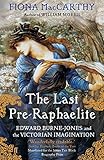
This is my review of The Last Pre-Raphaelite: Edward Burne-Jones and the Victorian Imagination by Fiona MacCarthy.

Burne-Jones sought lifelong escapism into the world of mythical romance as a reaction to the ugliness of a childhood in industrial Birmingham. When his deep friendship with William Morris was finally fractured by the latter's involvement with active socialism, Burne Jones wrote of his desire to take refuge in the artistic work which he could control.

He had some strokes of luck: Rossetti found commissions for him to design stained glass – often for the very wealthy industrialists responsible for the world he hated; Ruskin paid for a couple of trips to Italy where he discovered at that time little-known painters such as Botticelli or Piero della Francesca who were to influence his work, and despite his uncertain income Burne-Jones seems to have been welcomed by her parents as a fiancé for Georgie Macdonald. His repayment for her loyalty was a steamy affair with the flamboyant Greek artist Maria Zambaco, the muse for some of his most famous paintings, as were also some of the pale and interesting younger women with whom he liked to flirt. Highly successful and made a baronet in his lifetime, Burne Jones was a prolific artist, despite his disorganised approach.

It is understandable that Fiona MacCarthy's encyclopaedic knowledge, the result of six year's spent researching Byrne-Jones, led her to produce a work of 536 pages, excluding notes, so heavy that it splits at the seams as you read it (although a Kindle version is available) but I found it on balance a laborious slog not only because of the length but also the structure. The decision to base each chapter on a different location linked to the artist's life in chronological order leads to a fragmentation of themes and repetition of some points. I wanted less description and more analysis and insight that was more than vague suggestions of what might have been the case. What exactly was the goal or philosophy of the Pre-Raphaelites and what was their impact, how did Burne-Jones fit into the group, what was his method of painting and so on? I would have liked more focus on a few major works, illustrated in the text, with a full discussion of each one. I gleaned little more about the painter's personality than may be found in the preface.

If some of the peripheral detail e.g. on the painter's cronies had been omitted, there would have been the space to develop some neglected aspects.

⭐⭐⭐ 3 Stars

Les Misérables – What vision does

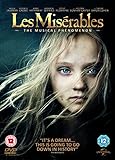
This is my review of Les Misérables [DVD] [2012].

Coming to it with the “clean slate” of not having seen “Les Misérables” on stage, I find it hard to fault this film version of the musical. It succeeds in creating an epic spectacle which also captures the essence of Hugo’s masterpiece, designed to show the suffering of the masses, and to explore the issue of redemption in a world where social condemnation – of a mother abandoned by her lover, or a man forced to steal bread for his sister, can create “hell on earth”.

I was apprehensive about the reported length of three hours which turned out to be more like two-and-a-half, and passed without my feeling bored. Similarly, although I had feared that the delivery of virtually every line by actors rather than professional singers would be cringe-making, I soon realised that the sincerity with which they sing without losing the note gives a raw life to their performance which technically superior classical performances often lack. I admit I would not choose to listen to the film soundtrack alone.

Even if the music leaves you underwhelmed, there is a feast for the eyes and constant source of interest in the technically brilliant, imaginative sets.

Yes, the film is highly emotional, but that reflects the style of Hugo’s day, when being forced to watch the rapid decline and death of friends and relatives was a common experience, and deep poverty and suffering were widespread. The “love at first sight” romance between Cosette and Marius appears less important than the parallel tales which reflect what Hugo was trying to convey “a progress from evil to good, from injustice to justice, from falsehood to truth, from night to day, from appetite to conscience, from corruption to life … The starting point: matter, destination: the soul. The hydra at the beginning, the angel at the end”.

I was impressed by the number and range of “good songs”. Apart from the well-known “I dreamed a dream” sung very movingly by Fantine (Anne Hathaway) who has been reduced to prostitution to feed her child Cosette, there is a rousing chorus delivered by the idealistic young revolutionaries at the barricades, complex love trios and quartets, and some striking solos such as Eddie Redmayne’s “Empty chairs and empty tables” reflecting the feeling of loss and utility in the aftermath of a battle. The child actors perform well: the young Cosette sings beautifully, and the cheeky Gavroche exudes confidence and energy in an Artful Dodger-style role.

Russell Crowe has been criticised for his weak singing, but I found it more than effective for the role of Javet, the inspector obsessed with tracking down Valjean who, sent to gaol for stealing bread, breaks his parole on being released after twenty years, but goes on to become a successful man, dedicated to living a good life. Crowe conveys well Javet’s growing sense of confusion that upholding the law means pursuing a former thief whose actions suggest he is a man of greater integrity than the inspector himself.

⭐⭐⭐⭐⭐ 5 Stars

Savage harshness made complete

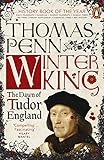
This is my review of Winter King: The Dawn of Tudor England by Thomas Penn.

A reign which may seem less glamorous and colourful than that of his descendants Henry VIII and Elizabeth proves on closer inspection to be highly intriguing. Penn shows how Henry Senior sowed the seeds for a successful dynasty, and captures the spirit of an age still trapped in medieval superstition, but with the stirrings of humanism, democracy and "enlightenment".

Henry Vll's mistrustful and calculating nature must have been influenced by a youth spent on the run from the Yorkists, often at risk of being traded for funds and military aid from whoever was on the English throne during the final years of the Wars of the Roses. Once king, marriage to a Yorkist princess was not enough to consolidate Henry's tenuous claim nor to deter disgruntled nobles from passing off a string of impostors as say, one of the Princes in the Tower with a better claim.

It is perhaps to Henry's credit that he preferred negotiating to war – setting out early in his reign to fight the French, he allowed himself to be bought off with a pension. He grasped that he needed money, both to impress everyone with great pageantry and ritual but also to purchase influence on the continent, not least with the impecunious Hapsburg emperor.

The problem was the methods used to obtain money. In an increasingly harsh network of tyranny, Henry hired a mixture of shrewd lawyers and thugs to devise means of depriving subjects of their wealth – the lands of widows and orphans, the simple-minded, or those whose loyalty was suspected were taken over and the profits siphoned off; to hold office under Henry, it might be necessary to pay a large sum as security for good behaviour; in an increasingly Kafkesque world , ordinary people could be fined on trumped up charges. All this was done through new committees and courts set up outside the common law, undermining Magna Carta, "concerning the liberties of England".

Ironically, when Henry Vlll succeeded, although two of his father's main enforcers, Dudley and Empson were scapegoated, they were condemned by men who were also guilty and "much of the private system of finance and surveillance" which under Henry Vll's "obsessive gaze" had "assumed primacy over the legally constituted exchequer" was simply made official.

Unlike some reviewers, I did not mind that Penn has tried to leaven his scholarly work with somewhat jarring colloquialisms. I was fascinated by "trivial" anecdotes such as Margaret Beaufort's sudden death after her son's coronation feast, "it was the cygnet that did it", or how when a blue carpet was laid out for a royal procession, the London crowd descended on it afterwards to hack off bits as souvenirs.

Extracting the gold from this book was hard going because of a wordy style, combined with Penn's habit of introducing more minor characters than I for one could absorb: X the step-son of Y who had married the widow of Z's brother, and so on. The background to say, the frustrations of the Calais garrison or the ambitions of the famous scholar Erasmus, bog the reader down in excessive detail.

⭐⭐⭐⭐ 4 Stars

Making a gift of cash more acceptable?

This is my review of Amazon.co.uk Gift Card – In a Greeting Card – £30 (Christmas Penguins).

These cards remain a very convenient way of sending gifts which are easy to post, and enable the recipient to treat themselves to something they really want – although I agree that giving this kind of present can seem a bit unimaginative and lazy.

My only criticism is that the choice of pictures is so limited, and I have used up the small number which I like enough to want to put my name to them.

⭐⭐⭐⭐ 4 Stars

Seeing the wood for the trees

This is my review of New Treehouses of the World by Pete Nelson.

As "arboreal architect" Pete Nelson states, "we all know that anyone in their right mind likes treehouses" but he has taken up what remains for most children the stuff of fantasy and applied his considerable vision and energy to constructing a variety of treehouses for the enjoyment of real-life adults. Clearly, most of his clients are wealthy or eccentric, and each treehouse is individually designed to reflect their tastes.

In this well-illustrated book, he photographs examples of treehouses from around the world, ranging from a Cambodian tree shrine, through attractive residences or tourist accommodation to rival a Frank Lloyd Wright design, to "Horace's Cathedral" in Tennessee.

Dedicated to the training of a new generation of treehouse builders, Nelson is keen to develop "sustainable" construction that does not damage trees. Although this book only covers building techniques in passing, many photographs show the skilful use of ropes, and discreet use of bolts and brackets. Nelson's camera has focused on designs which may be bold and original but which are careful to harmonise with the shape and colouring of the surrounding and supporting branches. Houses are often built round trunks which curve or strike up through floors, platforms and roofs.

⭐⭐⭐⭐ 4 Stars

Never quite mad enough

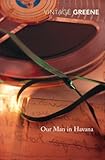
This is my review of Our Man in Havana (Vintage Classics) by Graham Greene.

To read this is to be reminded of the spate of "true classics" written in the mid-C20 when novelists still retained the fluency and eloquence stemming from a classical education which they were free for the first time to apply to the expression of real emotions, and the questioning of conventional values, morality and religion. There was so much to write about this that they felt no need for self-conscious experiments with structure or style.

Written with great prescience only a few months before the Cuban Revolution swept Castro to power in 1959, this black comedy introduces us to the anti-hero Wormold who at first seems pathetic, unable to demonstrate effectively the vacuum cleaners he is attempting to earn a living from selling, allowing himself to be twisted round the finger of his lovely but manipulative daughter Millie. Then we begin to see his unexpected resourcefulness when, bullied into acting as a secret agent for Britain, "our man in Havana", he begins to dream up a false trail of imaginary agents, all requiring payment of course, and even submits drawings of threatening installations, bearing an uncanny resemblance to hoover parts. He astonishes himself with the fertility of his imagination, "how quickly he could reply to any questions about his characters".

Initially, all this subterfuge is simply to indulge Millie's whim for a horse, with the string of extra expenses this entails, yet he gains a simple joy from supplying her wants: he admires in her the spirit which he lacks, and treasures the few remaining years in which he will be able to share her life.

Of course, his colourful reports to London will have unforeseen, perhaps grim or violent ramifications. Yet, ultimately Wormold may be protected by the fear of those in authority of losing face.

Beneath the vivid evocation of a crumbling but picturesque Havana, there are continual hints of a darker and growing violence, such as occasional harassment by the police who back off at the reference to a certain Captain Segura, reputed to carry with him a cigarette case made from the skin of one of his torture victims.

In all the humour and entertaining plot twists there are the usual "grahamgreeneish" insights into morality, faith, the meaning of life, the nature of love and honour. He likens Wormold's growing sense of guilt to a small mouse, to which he may soon become so accustomed that he will let it feed out of his hand. In the end "Would the world be in the mess it is if we were loyal to love and not to countries?" Greene clearly thought so, although perhaps confined this belief to his novels rather than practise it in his own life.

P.S. Does anyone know the full lyrics and tune for the song quoted, which begins "Sane men surround /You, old family friendss/They say the earth is round-/My madness offends./An orange has pips, they say,/An apple has rind./I say that night is day/And I've no axe to grind."?

⭐⭐⭐⭐⭐ 5 Stars

Carrie-ing it off

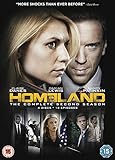
This is my review of Homeland – Season 2 [DVD].

Season 2 of Homeland is faster paced, more exciting yet also less plausible than Season 1 which you need to watch first.

Brody (Damien Lewis) continues to walk the tightrope between his role as a war hero Congressman being groomed to serve as future Vice President under the unscrupulous Walden, and that of a closet Muslim convert manipulated by the fanatical al-Qaeda member Abu Nazir to perpetrate acts of terrorism. Although not fully recovered from her manic episode, her confidence shattered from the mistaken belief that she was "wrong about Brody", CIA agent Carrie Mathison is called back to work on an assignment requiring her unique rapport with a would-be defector in Beirut, and is allowed to stay despite her loose cannon unreliability.

Although increasingly ludicrous, the plot twists are no more so than in many equivalent series. It is also quite amusing to spot the occasional error, as when a supposed Beirut street seems to contain a number of Hebrew shop signs.

"Homeland" stands out for me as the only popular mainstream American drama which avoids an unquestioning, gung-ho, patriotic stance on US foreign policy on the lines of "US good no matter what – Muslim terrorists bad". Apart from the fact that, in real life, Brody would surely have had more counselling, we remain unsure as to what extent he really is a terrorist, and whether his embracing of Islam is the result of brainwashing or a genuine spiritual response. Walden, a former Director of the CIA, now Vice President, and Estes, the Head of CIA Counterterrorism are portrayed as corrupt and amoral "bad men" in contrast to Abu Nazir who sometimes arouses sympathy, and to the complex Brody who at one points expresses the desire to prove that he can be "a good man". In the background, the confusion and shifting emotions of Brody's wife, children and former friends are convincing, adding depth to the thud and blunder main plot.

Although I felt that the final episode was very much a case of putting everything in place for Season 3, at least I can look forward to this as a fresh knotted situation to unpick rather than the "flogging to death" of a worn-out scenario.

⭐⭐⭐⭐ 4 Stars

To the land of Montalbano and Lampedusa

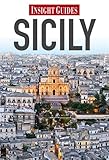
This is my review of Insight Guides: Sicily by Insight Guides.

I have found this guide invaluable for planning a 10 day holiday in Sicily. It is clear, attractively presented with descriptions of the "highlights" to visit, but also an indication of intrigung places "off the beaten track", plenty of photographs to whet one's appetite, useful little maps including a separate "Touring Map", and strikes a good balance between being either too detailed or too sketchy. It also "sets the scene" with the background history and culture of Sicily, a reminder of its past diversity and prosperity, yet remains a manageable size to take along on holiday.

If there is anything missing – and this is a common lack in guidebooks – it is the absence of any detailed suggested 7,10 and 14 day itineraries, and an estimate of driving times between places, although you can of course calculate this from, say, Google maps.

⭐⭐⭐⭐⭐ 5 Stars

Above Prizes?

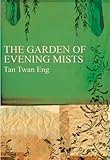
This is my review of The Garden of Evening Mists by Tan Twan Eng.

A Chinese Malayan by birth, Judge Teoh Yun Ling retires to the house at Yugiri in the Cameron Highlands and the "Garden of Evening Mists" developed by the enigmatic Nakamura Aritomo, sometime gardener to the Emperor of Japan. Since she has suffered brutal treatment and lost her sister in a Japanese camp during World War 2, one is curious to learn how she managed to form a bond with Aritomo before his death. Shifting back and forth in time, the story is an account of her recollections, revealing some kind of truth layer by layer, as she follows a friend's advice and attempts to capture her memories before the aphasia with which she has been diagnosed destroys her mind, making her a stranger even to herself.

At first, I was put off by the cumbersome opening chapter, the dwelling on small details, the slow pace and the writer's preoccupation with metaphors which, although sometimes striking, too often seem clunky and distracting, even unintentionally comical – "the waterwheel dialled ceaselessly" and so on.

Then I became hooked by Tan Twan Eng's exquisite poetical descriptions of the garden, his enlightening explanations of the principles of Japanese garden design related to a Buddhist/Taoist philosophy of the meaning of life, linked in turn to woodcuts and the art of tattooing, and by his evocation of life in 1950s Malaya with the interaction of different cultural groups, including an introduction to a neglected aspect of colonial history in the rise of communist terrorism in Malaya in the 1950s. The main characters are well-developed, complex and flawed so that you want to know why they behave as they do, what secrets they may be hiding, how a known fate came to befall them.

I began to think that perhaps this should have won "The Man Booker", or that it may be "above prizes" but in the later chapters, where Yun Ling recalls her experiences in the prison camp or recounts Professor Tatsuji's period as a kamikaze pilot, the book loses some of its originality as the pace quickens and the prose becomes more commonplace – a pale imitation of say, "Empire of the Sun".

The final revelations prove a little contrived yet would have satisfied me if the final twist had not seemed a little too implausible – there is an over-reliance on coincidence in this book. Tan Twan Eng seems to have introduced a denouement only to leave it half-knotted, although I suppose this is a point for discussion in book groups.

After a rocky start, I found this novel absorbing, often a page turner, moving blend of unflinching and sentimental, thought-provoking and very informative as regards Malayan culture understood from the inside. It was useful but disruptive to look up various terms, often employed several times before they are explained in the text, if at all, so brief footnotes would have been helpful. I am also left wondering if some of the (to me) overwritten prose may be due to Tan Twan Eng's fluency in a language other than English, in which this style is highly regarded. His style may also reflect a continued focus in Malaysian study of English literature on the work of poets like Shelley (such as "The Cloud" quoted in the novel).

⭐⭐⭐⭐ 4 Stars