A Month in the Country by J.L. Carr: A sealed room in memory furnished by the past

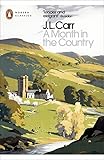
This is my review of A Month in the Country (Penguin Modern Classics) by J.L. Carr.

Shell-shocked by his high-risk role as a signaller in the carnage of the First World War trenches, and depressed by the break-down of his marriage, Tom Birkin immerses himself in the delicate task of revealing an ancient mural thought to be concealed beneath centuries of lime-wash in an ancient parish church. We see Tom’s growing identification with the artist who created what turns out to be a masterpiece. There are vivid descriptions of the different colours used – “Spaynishe white, Baghdad indigo, Cornish malachite, terre verte”, the relative durability of the paints, and the fine balance needed between cleaning the grime of a painted hand, or finding that “just another touch will shift the hand itself”.

The eccentric old lady who has financed his labours in her will, has also left a bequest for the location of the grave of an excommunicated forbear, who must have been buried outside the cemetery. This work is being undertaken by Charles Moon, beneath his ebullient exterior as damaged by his wartime experiences as Tom, but for different reasons. The two men become friends, with Birkin in particular entering into village life, gaining acceptance and renewed health in the process.

Fifty years later, Tom looks back on this brief period during the long, hot summer of 1920, spent in the close-knit North Yorkshire village, in its as yet unspoilt, idyllic setting . This short novel, drips with nostalgia, Hardy without the grim tragedy of Jude and Tess, an evocation of a past way of life, perhaps a little idealised in that the summer weather is too fine, and the gossip a little too affectionate.

At the core of the novel is the unspoken mutual attraction, the meeting of minds, between Tom and Alice Keach, the improbably lovely young “Botticelli’s Primavera” wife of the pale-eyed vicar, with a “cold, cooped-up look about him”. If Tom and Alice fail to grasp the opportunity for a relationship, will they regret it for the rest of their lives? Is their love derived from the dreamlike quality of a transient period, enhanced by memory, and would it fade and become banal if they acted upon it?

Many incidents are culled from Carr’s own life, since he did not baulk at basing his characters on real people, anonymously, of course. So, the village of Oxgodby is based on Carlton Miniott where he grew up. Birkin’s embarrassment at being sent off by the double-booked station-master-cum-Methodist preacher to lead a tiny congregation, is based on an ordeal imposed on the author by his own father. Alice Keach, unaware of her beauty, may well be modelled on some past love of Carr’s whom the secretive author never revealed.

Perfect in style, structure and pace, for such a short work, this atmospheric, bittersweet tale manages to pack in more moments of comedy alternating with poignancy, and perceptive reflections than many a longer novel. In his subtlety, J.L.Carr can even make us feel a little sorry for the Reverend Keach. This is the kind of book one is sad to finish and likely to read again over the years.

⭐⭐⭐⭐⭐ 5 Stars

Trendsetting at the time, but now seems a little dated and overrated

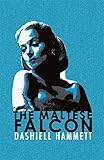
This is my review of The Maltese Falcon (Read a Great Movie) by Dashiell Hammett.

Private detective Sam Spade’s assignment to track a man on behalf of an alluring female client becomes a murder case in which the police regard Spade as a possible suspect. It soon becomes clear that the underlying driving force is the struggle to possess a priceless antique – the Maltese falcon of the title.

Although the name Sam Spade inevitably summons up an image of Humphrey Bogart, the opening paragraph gives a very different picture of a man with yellow-grey eyes (Dashiell Hammett was very keen on striking eye colour) whose features follow a "v-shaped motif", giving the impression of "a blond satan". It is also misleading that he reminds one of Philip Marlowe, since the latter was in fact a later creation, inspired by Raymond Chandler’s admiration for Dashiell Hammett.

Spade lacks Marlowe’s wry humour, and his coldness is emphasised by the fact we cannot know what he is really thinking, since he is described in the third person, always viewed externally. He comes across as an unappealing character: his sexism and homophobia may be accepted as the widely held attitudes of 1920s America, but he is also cynical, callous, and casually brutal. Spade displays no grief when his business partner Archer is gunned down, one of his first acts being to get his business nameplate altered. He strings Archer’s widow along when, having conducted an adulterous affair with Spade, she expects him to marry her. His loyal assistant Effie is shamelessly exploited, rewarded with affection he seems able to turn on like a tap. If a criminal gets up his nose, he is liable to beat him up with over-zealous sadism. Admittedly, he on more than one occasion gets his come-uppance. To achieve his ends, he is prepared to lie, bully, blackmail and bargain. He is prepared to fraternise with crooks to such a degree that the reader is uncertain as to his honesty, although his persistence, shrewdness and powers of deduction are not in doubt.

Perhaps I have read too many American crime novels to appreciate fully what is clearly a groundbreaking work, since its publication in 1930. Born in 1894, Hammett displays a literary style with elements of classical fiction but he also foreshadows the spate of novels about real ordinary people, some "low-life", criminals on the make, others simply struggling to survive in a seedy urban underworld. Chandler describes the author himself as “spare, frugal and hardboiled” and Hammett clearly drew on his own experience as a Pinkerton detective, one of a group of men infamous as strike breakers and union busters.

I like the vivid sense of place with the precise descriptions of the San Francisco streets, and fatty food bolted down at all times of day in cheap diners. After a long, somewhat implausible scene in which farce trumps suspense, the short novel ends fairly abruptly on an unexpected, surprisingly subtle (in view of some previous ham), suitably ambiguous but also rather sad note.

⭐⭐⭐⭐ 4 Stars

Rouge Brésil by Jean-Christophe Rufin – An intriguing tale stifled by verbiage – and at least two hundred pages too long

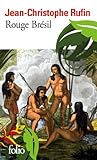
This is my review of Rouge Brésil by Jean-Christophe Rufin.

When Just and his younger sister Colombe are left by their soldier father in the care of an unscrupulous relative, she seizes the chance to send them off on an expedition to found a new French colony in Brazil, children being in demand as future interpreters because of their ability to pick languages up quickly. It is the mid-1500s, and France is keen to curtail Portuguese imperial ambitions in the New World, to gain access to resources, such as the red dye obtainable from Brazilian trees (hence the title) and to convert the savage Indians to Christianity. However, with the Reformation in full spate, what are they to be taught: the old Catholic faith, or which version of Protestantism including the extreme, apparently abstruse, doctrine of Calvin?

The crew on board ship are a motley bunch, including criminals and Protestants escaping persecution, including a crazed band of Anabaptists, so Colombe’s disguise as a boy probably provides much-needed protection. Once the pair’s aristocratic connections become known, they are taken under the wing of the charismatic but unstable commander Villegagnon, based on a real-life character. Having reached their destination in Guanabara Bay, the site of the present-day Rio de Janeiro, Just readily accepts the life of constructing a fortress and learning how to defend it against future attacks. More reflective, Colombe who has been sent to learn the local Tupi language, identifies strongly with the Indians, living in harmony with nature and free from sterile wrangling over Christian rituals and doctrine.

With his experience as a diplomat and human rights’ worker, including a decade spent living in Rio de Janeiro, Rufin has researched the historical period in depth. This novel is a variation on a theme which absorbs him: the dramatic effects of the meeting between very different cultures, and the sense which many of those involved feel of being in a state of limbo, not clearly belonging to either.

Although Rufin creates a convincing impression of life on board ship, I found the first half of this book intolerably tedious. He no doubt intentionally adopts the formal, literary style of a nineteenth century classical novel, peppered with the authentic terms for items of clothing or parts of a ship, culled from histories of the sixteenth century. However, there are too many over-detailed or unnecessary scenes which could have been pruned down or omitted altogether. Colombe is idealised, and seems too mature and articulate for her age. Most of the other characters are caricatures, dialogues wooden and often the action does not seem far removed from a “Boys’ Own” yarn.

However, when the Calvinists whom Villegagnon has requested to assist him prove to be religious bigots, while Colombe’s experience of life with the Indians highlights the hollowness of so-called European “civilisation”, I began to find my interest engaged. It is as if, having waded through to the point where he wants to be, analysing cultural relations, Rufin comes into his own and his writing takes off, presenting points of view from all angles, with the irony becoming sharper. Yet he can never quite avoid straying into the corny or sentimental at the expense of his serious intent.

The descriptions of the landscape, the great bay with the distinctive sugarloaf mountain and forest teeming with unfamiliar vegetation and wildlife are very vivid. There is some thought-provoking philosophy, as when Pay-Lo, the wise old European conveniently gone native, enabling him to explain Indian thought to Colombe, justifies cannibalism. He likens it to the European habit of killing one’s enemies: to eat one’s enemy is merely a logical part of a life lived close to nature in which everything is recycled and returned to the earth to regrow. Rufin has sanitised and glamorised the lives of the Indians somewhat, but they are clearly underestimated by the Huguenots who decide that trying to convert them is as futile as the attempt to bring an antelope to the knowledge of Christ.

Despite the unusual and potentially interesting subject-matter, the novel is too long and laboured. I would have preferred a well-written history of the period.

⭐⭐⭐ 3 Stars

Intriguing tale entangled in verbiage and perhaps two hundred pages too long

This is my review of Brazil Red by Jean-Christophe Rufin.

When Just and his younger sister Colombe are left by their soldier father in the care of an unscrupulous relative, she seizes the chance to send them off on an expedition to found a new French colony in Brazil, children being in demand as future interpreters because of their ability to pick languages up quickly. It is the mid-1500s, and France is keen to curtail Portuguese imperial ambitions in the New World, to gain access to resources, such as the red dye obtainable from Brazilian trees (hence the title) and to convert the savage Indians to Christianity. However, with the Reformation in full spate, what are they to be taught: the old Catholic faith, or which version of Protestantism including the extreme, apparently abstruse, doctrine of Calvin?

The crew on board ship are a motley bunch, including criminals and Protestants escaping persecution, including a crazed band of Anabaptists, so Colombe’s disguise as a boy probably provides much-needed protection. Once the pair’s aristocratic connections become known, they are taken under the wing of the charismatic but unstable commander Villegagnon, based on a real-life character. Having reached their destination in Guanabara Bay, the site of the present-day Rio de Janeiro, Just readily accepts the life of constructing a fortress and learning how to defend it against future attacks. More reflective, Colombe who has been sent to learn the local Tupi language, identifies strongly with the Indians, living in harmony with nature and free from sterile wrangling over Christian rituals and doctrine.

With his experience as a diplomat and human rights’ worker, including a decade spent living in Rio de Janeiro, Rufin has researched the historical period in depth. This novel is a variation on a theme which absorbs him: the dramatic effects of the meeting between very different cultures, and the sense which many of those involved feel of being in a state of limbo, not clearly belonging to either.

Although Rufin creates a convincing impression of life on board ship, I found the first half of this book intolerably tedious. He no doubt intentionally adopts the formal, literary style of a nineteenth century classical novel, peppered with the authentic terms for items of clothing or parts of a ship, culled from histories of the sixteenth century. However, there are too many over-detailed or unnecessary scenes which could have been pruned down or omitted altogether. Colombe is idealised, and seems too mature and articulate for her age. Most of the other characters are caricatures, dialogues wooden and often the action does not seem far removed from a “Boys’ Own” yarn.

However, when the Calvinists whom Villegagnon has requested to assist him prove to be religious bigots, while Colombe’s experience of life with the Indians highlights the hollowness of so-called European “civilisation”, I began to find my interest engaged. It is as if, having waded through to the point where he wants to be, analysing cultural relations, Rufin comes into his own and his writing takes off, presenting points of view from all angles, with the irony becoming sharper. Yet he can never quite avoid straying into the corny or sentimental at the expense of his serious intent.

The descriptions of the landscape, the great bay with the distinctive sugarloaf mountain and forest teeming with unfamiliar vegetation and wildlife are very vivid. There is some thought-provoking philosophy, as when Pay-Lo, the wise old European conveniently gone native, enabling him to explain Indian thought to Colombe, justifies cannibalism. He likens it to the European habit of killing one’s enemies: to eat one’s enemy is merely a logical part of a life lived close to nature in which everything is recycled and returned to the earth to regrow. Rufin has sanitised and glamorised the lives of the Indians somewhat, but they are clearly underestimated by the Huguenots who decide that trying to convert them is as futile as the attempt to bring an antelope to the knowledge of Christ.

Despite the unusual and potentially interesting subject-matter, the novel is too long and laboured. I would have preferred a well-written history of the period.

⭐⭐⭐ 3 Stars

Tears at the heart of existence

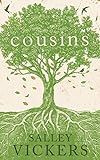
This is my review of Cousins by Salley Vickers.

After the accident which befalls brilliant but troubled, aptly-named Will, his sister Hetta is driven to delve for the chain of events which may have led to it, and to understand its serious repercussions for some family members. The accident is remarkably similar to that suffered years earlier by his Uncle Nat.

Sally Vickers’ approach is ambitious – instead of providing a family saga over three generations or more, she inverts the process by switching between the viewpoints of three women who recall their memories, with distinct personalities and “voices”: Hetta, her aunt Bell, and grandmother Betsy. On reflection, it requires great skill to sustain this approach, gradually revealing facts as in a detective mystery, with the added interest of describing the same situation or character from different viewpoints, some clearly mistaken, or in possession of fewer "facts" than the reader.

The author admits to “plundering and imbibing” experiences from her parents who were lifelong communists, like Betsy’s husband Fred who casually put his political beliefs before the needs of his wife and children, but Sally Vickers’ insight as a psychiatric social worker and psychoanalyst are really what give this novel its “edge”.

Most likely to appeal to readers with an interest in psychological drama in which thought-provoking comments are more important than the plot, however superficially gripping, it is probably necessary to read this a second time to absorb and reflect on all the author’s observations and how they might apply to oneself. It is hard to do this on the first reading partly because intense concentration is needed to grasp all the details, never being quite sure which are important to remember, plus this is a page-turner as regards finding out how it will end, although at times the bleak intensity of it forced me to take a break. The conclusion proves quite philosophically up-beat, perhaps an appropriate reflection of how in reality one moves from anger and denial to positive acceptance.

I agree with readers who feel there are too many characters, some of whom could have been omitted, although others on the periphery who are given such a brief mention as to be forgotten turn out to be important, which suggests they should have been developed in more depth. There often seems to be too much “telling” of details from the past, which could make the reader glaze over mentally, but for the acute perceptions and flashes of wry humour which leap off the page without warning. Although there is less of the strong sense of place to be found in some of her previous novels, the Northumberland coast and Holy Island of St. Cuthbert fame form a recurring background.

The plot is well-structured, starting with the “hook” of Hetta’s conviction that Will is going to die, but we don’t yet know why, and gathering pace to a plausible but not too predictable or neat conclusion. Since the author is clearly so interested in how family members relate to each other, I am unsure to what extent she intends us to feel that their guilt is an unnecessary burden, responsibility for Will’s accident seeming to lie mainly with “outsiders”. I was disappointed that these are portrayed as two-dimensional, almost “pantomime” villains.

Occasionally, the novel strikes too sentimental a note for my liking as when Betsy suggests that the loss of his twin sister at birth meant that “life was never quite right” for Will because of the burden of being a survivor – evident from his newborn “strangely unchildlike”, “relentless frantic wail”.

Recommended overall, including as a book group choice to provoke discussion.

⭐⭐⭐⭐ 4 Stars

“Obstinate questionings of sense and outward things”

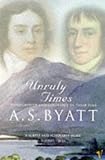
This is my review of Unruly Times: Wordsworth and Coleridge in Their Time by A S Byatt.

Daily life, the structure of society, political views, education and childhood, the literary world and the landscape: these themed chapters explore the response of Wordsworth and Coleridge, the two pioneers of the Romantic Movement, to the unsettled period in which they lived with the fear of political revolution and disruption of industrial development.

The introduction supplies some very astute analysis of the marked differences between their personalities: “Wordsworth, in his innermost self, proud, solitary, courageous and self-regarding was on the surface suspicious and awkward. Coleridge, who lacked self-respect or self-confidence at the deepest level, was on the surface charming, warm, welcoming and quick to relax and involve people…Wordsworth increased Coleridge’s sense of his own value” and Coleridge had a “humanizing influence” on Wordsworth. Both, initially excited by the French Revolution, were so appalled by its violent excesses that they both became much more politically conservative with age, but Wordsworth, as a respected national figure , became ever more “remote, arrogant, self-absorbed and self-praising”, while Coleridge, a much more profound thinker, found his life severely blighted by frequent illness and opium addiction, for which he was too often dismissed contemptuously.

This book is packed with entertaining anecdotes and fascinating observations. In his sincere if somewhat theoretical concern for the deserving poor, Wordsworth’s poem about “The Leech-gatherer” was based on research that they “did not breed fast and were of slow growth” because of dry weather and being gathered too much so that “formerly 2/6 per 100, they are now 30s”.

Both poets agreed that young children should be allowed to develop naturally, with education a process kindling natural curiosity. Coleridge’s observation of his small children makes moving reading (“a little child, a limber elf, singing, dancing to itself”), and his natural skill in teaching them through play sounds quite modern. It is therefore a shock to learn how he abandoned them for long periods, at one point preferring to stay in Germany where he was having a good time studying rather than return to England to comfort a wife grieving over the loss of their infant son.

Wordsworth questioned the desire of Utopian idealists to educate working class girls on enlightened lines since it was likely to make them “unsettled…..indisposed to any kind of hard labour or drudgery. And yet many of them must submit to it or do wrong”. This was arguably true, but not what one might hope for from a Romantic poet.

A.S. Byatt is clearly shocked by Wordsworth’s support for capital punishment on the basis that time spent in the condemned cell gave a fortunate opportunity to repent. Nimbyism is evident in the opposition to construction of railways in his beloved Lake District which would be spoilt by “droves” of working people from Lancashire who would not appreciate the mountains

He opposed the extension of the right to vote, as likely to produce frequent parliaments and “convert the representatives into mere slavish delegates, as they now are in America, under the dictation of ignorant and selfish numbers misled by unprincipled journalists”. In view of the recent shock of democracy producing a Trump victory, these ideas seem remarkably relevant today, even if one disagrees with his opinion.

Perhaps because he tended to consider issues from more angles, Coleridge comes across less clearly than Wordsworth, but as more engaging. Yet even he came to fear democracy as the misguided pursuit of an abstract idea: “the incorporation of individuals into one unnatural state, the deluded subjects of which soon find themselves under a dominion tenfold more oppressive and vexatious than that to which the laws of God and nature attached them”.

The many quotations are often inserted clunkily into the text, and assume more practice in interpreting poetry than most readers are likely to possess. The passages wrapped round these extracts are often indigestible, even disjointed, since they read as if condensed down from detailed notes.

Recommended, but best read with other texts, such as the biographies of Richard Holmes on the Lakeland poets.

⭐⭐⭐⭐ 4 Stars

Entertaining, but does not improve on the dramatic reality

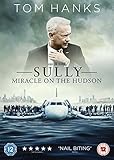
This is my review of Sully: Miracle On The Hudson [DVD + Digital Download] [2017].

This film may be most dramatic for those who have not heard of the US passenger plane which in January 2009 was forced to make an emergency landing in the near freezing waters of the Hudson River, too close for comfort to the densely built up centre of New York. Both engines shut down on impact with a flock of Canada geese, but the skilled pilot Sullenberger (“Sully”) judged correctly that there was insufficient time to reach a nearby runway.

Clint Eastwood, who has proved a skilled director, saw the potential of the celebrated pilot’s memoirs to produce the kind of drama which will make the most nonchalant air passenger a little apprehensive on his or her next flight. Since the survival of all 155 passengers is still widely remembered, the interest lies in developing the technical and psychological aspects of the story. So we see the outwardly cool and collected Sully suffering stress-induced nightmares and visions of the plane crashing 9-11-style into a Manhattan skyscraper. Even if not prepared to admit to any doubts, he is inevitably forced to question the soundness of his actions by the initial report that one of the engines was in fact working. Has he put lives at risk needlessly?

Yet, although there is compelling drama in the scenes of terrified passengers bracing themselves as the plane hurtles towards the water, or forced out to totter on the wings, awaiting rescue, the film, despite being relatively short at 90 plus minutes, often seems essentially quite thin in content. The heavy reliance on flashbacks is fine, but the repetition of some scenes, however dramatic, Sully’s frequent banal telephone conversations with his anxious wife and shots of his younger self learning to fly or succeeding in a difficult landing often seem like efforts to pad the film out.

The tension between the media adulation of Sully’s achievement and the speed with which a censorious National Transportation Safety Board latches on to the charge of pilot error may have been exaggerated to make the story more gripping. However, when I read the details of the real events online, I was surprised that more drama was not made of the recorded details of the rescue. It bothered me that passengers were shown leaving the plane without life-jackets, unless lucky enough to catch one thrown by the cabin crew, a woman even falling into the water with a jacket hooked precariously over one arm. If the evacuation was performed as shown, it would seem that the cabin crew for whom the pilot was responsible were at fault. This is an interesting twist, but unfair if untrue.

Although the graphics used to show the emergency landing are impressive and the technical details to do with use of flight simulators to recreate the forced landing are interesting, dialogues are sometimes hard to hear, and overall the film lacks the spark it could have had. I would as soon have seen a good documentary on the incident.

⭐⭐⭐ 3 Stars

Attractive “organiser” bag, although “medium-sized” rather than “large” as described

This is my review of PRIMEHIDE SOFT LEATHER LARGE CROSSBODY HANDBAG BAG 9 FAB COLOURS ! 985 (Purple).

I like the soft leather and large number of useful compartments which "take the pressure" off the main section. The capacity of the bag is a little smaller than I had hoped, partly because the width is shorter than the depth. So, for instance, I cannot insert a Kindle and small folding umbrella as I would like. On the other hand there is room for all the other essentials, and if there were the capacity to add more, it would be too heavy for the straps. Quality seems good for the price.

Recommended for regular daily use, but not for longer trips where it may be necessary to carry more.

⭐⭐⭐⭐ 4 Stars

The acquired taste of a self-indulgent “rigmarole”

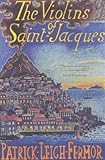
This is my review of The Violins of Saint-Jacques: A Tale of the Antilles by Patrick Leigh Fermor.

In this short novel, written in a continuous chapter-free flow, an elderly artist name Berthe recounts to the narrator the dramatic climax of her time spent fifty years previously on the Caribbean island of Saint-Jacques, ruled as a benevolent dictatorship by the aristocratic expatriate French Count, by whom she was employed as a governess but came to enjoy the status of a respected virtual member of the family, his “confidant and counsellor”. It took me a while to grasp that the island is outlined so sketchily on the map provided, because it is imaginary. This enabled me to overlook some of the worrying geographical inconsistencies (for a travel writer) of having lush forest grow so close to the active volcano forming the core of the island.

Although many devotees of the travel writer Patrick Leigh-Fermor may be delighted by the only novel he ever produced in a prolific writing career, I abandoned it mid-way and had to force myself to finish it. I concede that the second half is better, since it contains more dramatic action, when all the “hazards and sorrows ahead ” begin to crack the surface of the idyllic bubble of exotic privilege which the author has inflated with his literary flourishes at full spate in the first half, largely devoted to the preparations and conduct of a grand Shrove Tuesday ball, no expenses spared.

I understand why some readers revel in Leigh-Fermor’s Rococo prose, which I admit once aroused my curiosity to visit what proved to be the remarkable Austrian monastery of Melk. However, in this context, the verbosity is just too much to take. In the course of a lengthy description of the Count’s background, Leigh-Fermor turns to the memorial slabs of his dead ancestors, the Serindans: “The orgulous record of their gestures…..their impavid patience in adversity…..the splendour of their munificence and their pious ends was incised with a swirling seventeenth-century duplication of long S’s and a cumulative nexus of dog-Latin superlatives which hissed from the shattered slabs like a basketful of snakes”. The “Serindan cognizance” crops up again: “ a shield bearing three greyhounds passant on a bend on a field of cross-crosslets within a tressure flory-counter-flory”. I found myself irritated by the author’s continual flaunting of his erudition and addiction to flamboyant verbal excess, rather than sincerely seeking to create three-dimensional complex characters for whom one might feel real empathy.

The frequent inclusion of Latin tags, and dialogues in French, often with a Creole patois, plus an imitation of the Count’s weak “r”s which the local people have innocently copied, often seem both pretentious and irritating if one cannot understand them. I may be underestimating his intention to write tongue-in-cheek as in the passage about ancient tree trunks, each “half following the spiral convolutions of the other like dancing partners in a waltzing forest; the rising moon entangled overhead in the silver and lanceolate leaves, had frozen these gyrations into immobility.” – A “highly literary simile" which he attributes to Berthe. Perhaps I should excuse the dated character of a book written more than sixty years ago about a period now more than a century past. Yet, in his creation of a dawn of twentieth century period when privileged people still lived complacently in the conspicuous consumption of untrammelled luxury served with unquestioning loyalty by contented slaves, I have the uneasy impression that Leigh Fermor does not question the morality of all this – it reads like a lost world for which he feels a sentimental nostalgia. An extreme example of this is the jovial acceptance of the Count’s practice of “droit de jambage”, a Leigh-Fermor conceit for “droit de seigneur”.

Perhaps, I am taking it too seriously, and should simply laugh at a guest dressed as a swordfish, and a heroine in flight falling over an armadillo.

⭐⭐⭐ 3 Stars

“Golden Hill” by Frances Spufford: Crackling pyrotechnics a tad let down by a concluding damp squib

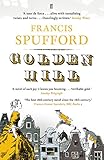
This is my review of Golden Hill by Francis Spufford.

In the parochial little British colony of mid-eighteenth century New York, no one knows what to make of the handsome young new arrival from London, Mr Richard Smith. Is he a provocative conman, or a well-intentioned blunderer? Should the wily merchant Lovell accept his bill of exchange demanding the vast and ruinous sum of a thousand pounds? When the gossip grapevine spreads the word of Smith’s wealth, everyone wants to curry his favour, but a twist of misfortune can quickly set the whole community against him

Francis Spufford has used his research skills as an established writer of non-fiction to recreate in his first novel the minute and vivid detail of a past age which seems to ring true even if it is fact an artful illusion. This is a modern take on a Henry Fielding, Tom Jones kind of fiction, a succession of quirky events, with a sometimes intrusive narrator, but free from the sententious, long-winded moralising of the classics. The author has even taken the bold risk of adopting an eighteenth century turn of phrase, and appears to carry it off. Although some may find the style somewhat contrived and overblown, I was continually impressed by his skill in moulding words into distinctive, original images and thoughts. Often funny, entertaining yet farcical, the narrative keeps returning to the alternating spark and pathos of Smith’s encounters with the sharp-tongued, unpredictable Tabitha Lovell, the bird in a cage of her own making. He is drawn to her fatefully, despite knowing that “there is something very wrong with her”.

He made me realise how the lack of coins in New York obliged people to trade with a bewildering variety of coins of arbitrary value “ a Morisco piece we can’t read, but it weighs in at fourteen pennyweight, sterling, so we’ll call it two-and-six”. He can write a whole page on the simple act of walking in near darkness through a hall and up a staircase: “picture frames set faint rumours of gold around rectangles of darkness or curious glitters too shadowed to make out, as if Lovell had somehow collected, and drowned, a stairwell’s worth of distant constellations”. And so the narrative rattles on through the twists and turns of pursuits of a thief, sinister bonfire celebrations, melodramatic escapes across roof-tops, imprisonment, amateur dramatics, and duelling in the snow.

Francis Spufford could make paint drying sound interesting, as when Smith describes a boat trip up the Hudson River through a fog which shifts from “coagulated grey curtains…. to mere streamers and tatters….. while little cats’-paws of breeze come wrinkling and dabbing…..scuffing the water… from silver to pewter” or observes the winter ice forming on the East River, “into whose depths you could look and see swirls of grey brine and glassy freshwater fused together as still and rigid as the heart of a child’s marble.

Beneath the flippant, tongue-in-cheek portrayal of a varied cast of well-drawn characters with hints of their failings and secrets, run the darker currents of the serious rivalry between the Governor and smoothly menacing, power-hungry Judge De Launcey, the crude and corrupt system of justice, and the contemptuous exploitation of the slaves on whom the prosperity of the colony is based. There is the lurking knowledge that even a happy ending will be short-lived, since the colony is shortly to be blasted apart by the War of Independence with Great Britain.

On finishing this book I was left with a sense of disappointment, partly because the verbal pyrotechnics of this well-plotted page-turner made other novels seem bland. It was also due to my finding the denouement revealing Smith’s much-hinted at but long-kept secret something of an under-developed anti-climax, and the final unsettling twist too clever by half. Yet I did not mind that the ending is inconclusive. In general, for sheer originality and the quality of the writing, this book would make a deserving winner of the Man Booker Prize.

⭐⭐⭐⭐⭐ 5 Stars