History repeating itself

This is my review of Viceroy’s House [DVD] [2017].

In the false calm before the carnage, we see the hundreds of servants in their immaculate “native” uniforms performing the symbolic pageantry of a declining Empire bent on withdrawing from a colony with dignity. I have no idea how faithful this film is to history, but when the world is still riven by fighting between religious factions, this film is a timely reminder of historical bungling from seventy years ago. Yet unlike many humanitarian disasters, it is unclear what actions could have been taken to avoid it.

Hugh Bonneville is well-cast as Lord Mountbatten, the affable, unflappable negotiator brought in to pour oil on the tense meetings between the two adversaries Nehru and Jinnah, the one seeking liberty in the form of a united India, the other set on partition to permit the emergence of Pakistan as a Muslim state.

As British administrators indulge in heated debates as how best to stem the growing tide of unrest, they fail to notice the Indians in attendance hanging on on evey word, to pass on in whispers, only feeding the climate of prejudice and intolerance. The apparently illicit and futile love affair between a young Hindu and his longterm Muslim friend is a perhaps slightly sentimental metaphor for the problem of finding a solution.

In the film, the alleys of Delhi and the poor who throng them are impossibly clean and well-fed, and it must be hard to follow the arguments without prior knowledge of situation, as convincing lookalikes for the Oxbridge-educated Nehru, Jinnar and giggling, barefoot Gandhi make their appearances. Yet this is a visually impressive, well-acted, compelling film reminding us of a tragedy which time has eroded too quickly from memory: the massace of millions during the enforced displacement of 14 million Indians, and the terrible dilemma of having to choose quickly which country to join. There is also the twist at the end when we learn how Mountbatten himself may have been a mere pawn in a cynical exercise.

⭐⭐⭐⭐ 4 Stars

No longer knowing where the real points are

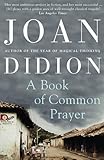
This is my review of A Book of Common Prayer by Joan Didion.

Cynical and hard-boiled Grace Strasser-Mendana is the widow of the former President of the coconut palm Central American Republic of Boca Grande. Having married into one of the island’s “three or four solvent families”, she stays on to manage affairs for her seemingly weak and incompetent relatives, instead of returning to her native North America. Perhaps because she is an anthropologist by training, she becomes fascinated by the Charlotte Douglas, a “norteamericana” like herself who has come to Boca Grande as a tourist, as part of the abortive search for her daughter Marin, who has unaccountably rejected her privileged background to become an anti-capitalist terrorist. Charlotte seems neurotic, at times even crazy, by turns either aimlessly drifting through life via casual affairs or throwing herself with bursts of frenetic energy into do-gooding missions.

At first, I expected this to be a Graham Greene style political-cum-psychological drama. I may have missed something, but for me it turned out to be an endless portrayal of Charlotte’s intense and troubled relationship with two dominating husbands: needy, abusive even violent when drunk, Warren, who perhaps uses alcohol to blank out mental pain and sickness, and the suave, wise-cracking, control-freak lawyer Leonard.

I was initially entertained by the spiky dialogues at cross-purposes, which read like a bizarre mixture of Coward and Pinter, mini playscripts in the series of short chapters. However, once I “had the measure” of the mainly quite unappealing characters, their flaws exaggerated to the point of caricature, there seemed to be no further development and I began to find the novel tedious. In the sketchy plot, many questions remain unanswered, but perhaps "what happens" isn't the point.

I have read that Joan Didion took great pains to hone her work, but although distinctive and original with some passages of remarkably expressive clarity, the overall effect is so contrived, with a mantra-like (prayer book-book like?) repetition of staccato phrases, often included more for rhythmic sound than sense, that it forms a barrier preventing real engagement with the characters. “Charlotte’s breakfasts at the Caribe. Charlotte went to the Caribe for breakfast every morning for a while. She went to the Caribe for breakfast because….” Or another paragraph hypnotically repeating the words “Porter” and “Pontchartrain”.

There is the additional niggling problem with the point of view, since writing in the first person, it is quite implausible that the narrator Grace can reproduce so precisely Charlotte's thoughts, experiences and intimate conversations with others – or perhaps we are meant to think that much of the story is in Grace's imagination.

I agree with those who have found the characters too superficial and cut off from normal “real life” for one to care about them, the only emotion being irritation over their self-absorption. It seems that Joan Didion herself led a somewhat artificial life staying and partying in the houses of Hollywood celebrities, drinking heavily, all of which may have led her to create scenes to which most readers find it hard to relate. We are sucked into anticipating the gradual revelation of plot fragments for us to piece together, but the tendency to tell us what is going to befall Charlotte is the death knell to dramatic tension.

I am left uncertain as to what the author was trying to say about the world through the medium of this unprepossessing cast with their entertaining if stylised, sterile conversations. Although she may have chosen to write novels because of the scope they gave her to be inventive, her sardonic, detached style seems to lend itself more to biting journalism.

While continually sensing her talent, I became impatient with the brittle, shallow use to which it is put.

⭐⭐⭐ 3 Stars

“His Bloody Project” by Graeme Macrae Burnet”: A pitted grindstone

This is my review of His Bloody Project by Graeme Macrae Burnet.

In 1869, Scottish Highlands crofter’s son Roderick Macrae freely confesses to the murder of three members of a neighbouring family, including “Lachlan Broad” who has bullied his father and driven him further into poverty. What could be unbearably bleak proves to be an absorbing and intriguing literary thriller, a form of “whydunnit.

We are given a number of differing viewpoint: the statements by residents of the remote coastal hamlet of Culdie; the lengthy and surprisingly articulate written account of Roderick Macrae himself, making it clear why his schoolteacher was so keen to for him to continue his studies; medical reports with an extract from “Travels in the Border-Lands of Lunacy, by an “acknowledged authority in the then nascent discipline of Criminal Anthropology”, chilling in its unconscious disdain for the “lower classes”; the drama of the courtroom trial and final epilogue on its aftermath.

All this provides a vivid impression of the harsh life in the remotely beautiful setting “with its magnificent vista of the isles of Raasay and Skye”. To an outsider, the houses of Culdie could be mistaken for “byres or pig-sties”, their rough thatch reeking with peat smoke, giving them the appearance of “gently smouldering”. We see the rigid class divide between the landowners and the crofters, with middle men like Lachlan Broad used to extract rents and dues, no questions asked as to methods. So, Lachlan can arbitrarily insist that Roderick and his father return to the water the seaweed they have spent a laborious morning cutting from the rocks to fertiliser their meagre plot.

With its relentless chain of cause and effect, this tale raises interesting questions of how matters might have turned out differently. What if Roderick’s father had possessed the flexibility and imagination to let him travel to Glasgow to be educated? What if Roderick’s two uncles had not been killed in a fishing accident years ago, thus reducing the family’s earning power? Is Roderick mad, bad, or a victim of circumstance? Should he have been judged sane or insane at the time, the latter being his only means of escaping the gallows, for a living fate which could well prove worse? How would we judge him now, with our supposedly more enlightened understanding of human psychology?

The focus on Roderick contrasts with the sketchy development of his sister Jetta’s personality and her parallel fate. Perhaps this is intentional, showing the casual sexism of their society.

My sole minor criticism is that virtually all the characters seem to communicate in a similar style with an unlikely degree of fluency. Yet I agree that the author was wise not to attempt to write dialogues in a Scottish dialect, which would have been distracting. A useful glossary is provided for the small number of local words e.g. “flaughter” meaning spade, but would have been better placed clearly at the beginning.

This well-written, skilfully constructed, subtle and thought-provoking novel deserves its shortlisting for the 2016 Man Booker Prize.

⭐⭐⭐⭐⭐ 5 Stars

Interesting idea but missed the mark for me

This is my review of Toni Erdmann [DVD] [2017].

In this offbeat farce with a serious message, artistic prankster Winfried Conradi is appalled to see how his daughter Ines has become a high-flying workaholic, driven to succeed in a ruthless, corporate world. This is a far cry from his own idealism and lack of materialism, born in a time when Germany was redefining its values after WW2. Ines is by turns embarrassed and furious when he gatecrashes her working life in Bucharest, where she is trying to negotiate a delicate contract which will involve handling the redundancies which will inevitably result from the reorganisation of Romanian oil production on efficient modern lines.

Winfried has been likened in appearance to Dame Edna Everage’s counterpart Les Patterson, but I have to confess being irritated by his trademark fake goofy teeth and mop-like wig. He struck me as the kind of attention-seeking unfunny would-be comic I would avoid like the plague in real life, making it hard to be convinced that there is supposed to be a wise, perceptive, right-thinking character underneath.

The acting is good, particularly the role of the tense Ines, whose sense of the ridiculous, which is perhaps inevitable in the child of such a father, nevertheless breaks through, even at inopportune moments.

This film has been highly praised by the critics, and certainly had many people roaring continually with laughter when I watched the film with a live audience. Yet for me, the film does not really “work”.

It is at least 45 minutes too long with some scenes so protracted, possibly in an attempt to immerse the audience in realism, that their initial dramatic impact is allowed to evaporate. Since the director apparently produced about 100 hours of footage, I appreciate that cutting it down to barely 3 hours must have been a challenge, but the lack of editing seriously weakens the film.

I admit that there are some moving moments, and that the main aim may be to explore the relationship between father and daughter, a serious theme leavened by a comic framework, but I am not sure that the film added much insight over the three hours. Although perhaps too different from her father ever to give up her career and become genuinely laid back, Ines shows from the outset that, despite her uptight exterior, she cannot help laughing at, even joining in, some of her father’s pranks, and is remarkably tolerant towards his excesses.

⭐⭐⭐ 3 Stars

Good service – suitable for use by elderly, if someone else available to iron them on

This is my review of 100 Printed iron-on School Name Tapes Name Tags Labels for Children.

Very rapid, in my case, next-day service and not too expensive. Perhaps a little small and faint for school use where need to identify items quickly. Seem particularly good for elderly people in care, because inobtrusive and so less "humiliating" for those who have been forced to give up their independence.

Too soon to judge how long-lasting these are and whether will retain their adhesiveness. I had to press quite long and hard with a hot iron to ensure each label is stuck on securely, and being so small they are fiddly to manage, particularly since one has to iron through a protective cloth when attaching to synthetic materials. Still, better than sewing on each as in the old days!

⭐⭐⭐⭐ 4 Stars

After humorous opening lacks focus and “misses the mark”

This is my review of Uniques by Dominique Paravel.

“I shouldn’t be here” – the mantra of an overqualified supermarket employee charged with monitoring the security cameras. At least this affords the amusement of observing how people deal with the problem of items accidentally put the wrong trolley, or noticing a little old lady mischievously placing tea in the frozen fish section and salmon with the champagne. This opening chapter is not developed further, but is followed by a series of less humorous portrayals of somewhat alienated individuals caught in some of the depressing aspects of modern life: a single mother with a vicious boss pressurising her to meet targets in a call centre, or a human resources manager forced to lay off staff in a textile factory so that work can be outsourced to cheaper Far Eastern labour.

The only common factor holding the book together is that the rather stereotyped characters live in the same Lyons suburb of Vaise, which has grown up on the muddy banks of the Saône, where their paths sometimes cross, often with them barely noticing each other. The book’s structure is rather odd: Part One with four individual portraits; Part Two with an artist brought up in Lyons, consumed with nostalgia on her return there for the display of her artwork “Uniques”; Part Three a brief history of Vaise which might have been better integrated into the other sections, concluding with final fleeting images of the original four characters, with a few extra ones thrown in. This fragmented approach with no clear plot, left me feeling unengaged. Situations are too often exaggerated and lacking in subtlety, sitting uneasily with the occasional flights into surreal fantasy. The continual flipping in style between farce and poetry is also distracting at times.

The highly praised author has won prizes in France, but this feels like the work of an inexperienced fiction writer without the redeeming “Mockingbird” factor. It was worth reading in French for the practice, but I would not have bothered to persevere with it in translation.

⭐⭐⭐ 3 Stars

Caught in a pigeon tunnel of writing, spying or both?

This is my review of The Pigeon Tunnel: Stories from My Life by John le Carré.

A BBC Radio 4 serialisation of this book caught my attention at the point when Le Carré invites Alec Guinness to lunch with Maurice Oldfield, former Chief of the Secret Service so the actor can get some ideas for the part of George Smiley. The chameleon actor joins with Oldfield in deploring the adverse effect of Le Carré’s books on the Service, mocks Oldfield’s “vulgar cufflinks” after he has gone, but studiously copies these and other aspects of his dress in his portrayal of Smiley.

The chapters can be read in almost any order, providing fragments of anecdote and observation across a wide field. The author comes across as well-connected, casually mentioning friendships with the rich and famous as one might expect from an old Etonian who achieved cult status as a novelist at an early age, yet also critical of the Establishment, with a cynical take on the world and sympathy for the underdog. I agree with other reviewers who sense a remoteness in his personality, a withholding of many aspects of himself in superficially frank memoirs. This may be due to a combination of factors: his mother’s abandonment of her two sons at an early age, his reaction against a flamboyant conman of a father, whose schemes left him frequently broke or in jail plus Le Carré’s time spent working for British Intelligence, compounding his natural secrecy. The book culminates in a long, bitter rant about his father, with his “infinite powers of self-delusion” in which the author perhaps comes closest to revealing his emotions.

Least satisfactory for me are the chapters on intelligence work and spying, not only because of their necessary vagueness but also owing to the indigestible acronyms and department titles from around the world. There is the additional suspicion that it is all a bit of a charade, as borne out by the exposure of “the final official secret” in the last chapter. The most interesting spy-theme chapter covers the author’s notes on Nicholas Elliott’s account of his friend Kim Philby’s confession to having been a Soviet spy. As Le Carré observes, it gives “a window on the British espionage establishment in the post-war years, on its class assumptions and mind-set.

I was more interested in how Le Carré researches his books. Having plotted a pursuit by ferry between Hong Kong and Kowloon only to discover too late it had been replaced by a tunnel, Le Carré now goes to extraordinary lengths to check out his facts and feel the ambience first hand. So, to preserve his authenticity, he travelled to the East Congo when advised that it was unsafe, in order to interview warlords on both sides of the conflict in the Congo. A priest describes how ethnic hatreds can make extremists even amongst his fellow African Brothers: “Thus it was in Rwanda that otherwise good priests were known to summon all Tutsis in their parish to church , which was then torched or bulldozed with the priests’ blessing”. Another chapter finds him trying to draw out a politely uncooperative radicalised German activist, imprisoned in Israel after joining Palestinian terrorists. Afterwards, Le Carré is surprised to realise that the Prison Governor has spoken to the woman in English, despite being fluent in German. She explains, “When she speaks German, I cannot trust myself…You see, I was in Dachau.”

This book probably flits back and forth over too many incidents in a fully-lived life to make a lasting impact but a few insights lodge in the memory., such as Le Carrés reluctance to take part in interviews about himself, except with the charming Bernard Pivot. “First, you invent yourself, then you begin to believe your invention. That is not a process compatible with self-knowledge”.

⭐⭐⭐⭐ 4 Stars

All things pass but it takes time

This is my review of Manchester By The Sea [DVD].

Lee Chandler is forced to abandon his work as a Boston caretaker to deal with a family crisis back in the small town of Manchester on the New England coast, a far cry from its English namesake. Through a series of flashbacks, we gradually piece together the tragedy which destroyed his life as a loving family man, if over-fond of calling his mates round for drinking sessions into the small hours. We begin to understand what drove him away from Manchester in the first place, and numbed his emotions, so that they can only be expressed in occasional destructive outbursts.

Perhaps a little too slow-paced in parts, this realistic and subtle film, by turns painfully moving but also amusing, explores how people react to life stings and arrows. Lee has had more than his fair share of misfortune, and suffers from the inability to communicate his feelings, but his essential decency and perseverance arouse our sympathy and ultimately respect.

⭐⭐⭐⭐ 4 Stars

Visually inventive, freewheeling imagination, but I could not really connect with her wavelength

This is my review of The Hearing Trumpet (Penguin Modern Classics) by Leonora Carrington.

Leonora Carrington defied her wealthy, conventional parents to become an artist, running away to Paris to join a group of Surrealist painters. Her short-lived, intense affair with German Max Ernst was destroyed when he was imprisoned on the outbreak of World War 2, escaping to the security of the States. Her nervous breakdown and appalling treatment in a Madrid asylum, from which she was rescued by the nanny who arrived in a submarine sheds light on the bizarre fantasies of her “modern classic”, “The Hearing Trumpet”. She went on to live for decades in Mexico, married to a Hungarian photographer, and far more famous in her adopted country than the Britain of her birth.

This short novel begins as a quirky satire on old age, showing the frequent lack of sympathy between generations, even the revulsion that youth may feel for old age, and the extent to which the elderly no longer care about conventions and often are far more “with it” than they appear. The ninety-two-year-old narrator Marian Leatherby discovers with the aid of a friend’s gift of a hearing trumpet that her selfish and mean-spirited family plan to put her in a home for senile old ladies. Despite its deceptive appearance, designed, “to trick the old people’s families that we led a childish and peaceful life” and the bogus religious background, Marian is mesmerised by the portrait of the “nun with a leer” which hangs over the dinner table, and entertained by the eccentric little band of residents.

Marian recalls a former admirer from her youth in England: “I remember your white flannels better than I remember you”. As for food: “I never eat meat as I think it wrong to deprive animals of life when they are so difficult to chew anyway”. “People under seventy and over seven are very unreliable if they are not cats”. All this kept me entertained until the verbal surrealism went haywire, as Marian’s world spins into a kind of post-atomic nuclear winter. The author seems to be attacking organised religion and authoritarian fascist governments, whilst harbouring a fascination for romantic legends of the Holy Grail: “the Great Mother cannot return to this planet until the Cup is restored to her filled with the Pneuma, and under the guard of her consort the Horned God”. All this is reminiscent of her paintings with their common theme of angular figures in flowing dresses, with the heads of animals, standing stiffly in artificial landscapes or slightly out of kilter rooms.

Although I admire her originality, I cannot engage with the author’s surrealism. Her sketches for the book strike me as crude and childish, although her paintings are better:in a subjective choice, I like the paintings “Green tea” or “La Dame Ovale”, “The Crow Catcher", and her large sculptures.

I am more interested by Leonora Carrington as an unusual character than in her work. I was intrigued, for instance, by an interview on YouTube between her and a young relative who had tracked her down in Mexico, still lucid and chain-smoking in extreme old age. “You are trying to intellectualise my work too much” was her recurring response, suggesting we try to analyse her more than she intended.

⭐⭐⭐ 3 Stars