This site will share with you hundreds of book and film reviews written since 2009. Also a chance to discuss these reviews together with some of my creative writing to be added.
Since I read this book after visiting the Baltic States, I may be judging it with the wisdom of hindsight, but I regret not consulting it before my holiday, since its systematic, well-illustrated approach is very effective both as an aid to planning and as a step-by-step guide to “making sense” of complex historic city centres like Talinn in Estonia or Riga in Latvia. Perhaps because sites of interest often do not seem to be very clearly signposted in Baltic States, and the written languages are so different from English, there were several occasions when I struggled to work out “where to go and how to get there”, notably the Gauja National Park near Riga and the fascinating Curonian Spit accessible by ferry from Klaipeda. I nearly failed to find the Art Nouveau area in Riga (put off by roadworks on the way) and did miss the historic centre of Klaipeda (arriving late at a disappointing hotel) and the Church of Saint Peter and Paul, “further afield” from the main centre of Vilnius so requiring extra effort to get there on a hot day. If armed with this guide, with its double-page spreads to feature key buildings and detailed maps of specific areas of interest I would not have made any of the above errors and been spared a good deal of frustration.
This book provides an excellent synthesis of useful information, based on sound knowledge of the area. The opening section suggests 14 day itineraries for each country, from which one can pick a shorter version e.g. the 3-4 days I spent in each one. Background history is covered concisely for each country, with an initial section which highlights the common factors for all three e.g. the influence of the Swedes and the Russians. Architectural styles, landscapes and wildlife, and religion are all covered in the same way.
The whole book, including maps, is designed to provide an accessible “at a glance” insight which is very convenient in helping one to “grasp” an overall picture, but the guide also enables one to “drill down” easily to the next level when planning a visit.
Highly recommended.
⭐⭐⭐⭐⭐ 5 Stars
DK Eyewitness Travel Guide Estonia, Latvia and Lithuania
A very attractively produced book about the fisherman who caught the attention of professional artists with the almost childishly simple but evocative paintings and drawings which captured a sense of being at sea with a striking use of colour and line to give a sense of movement. The text provides an engaging portrayal of his life, and the selection of works helps one to understand his appeal.
This compact and well-illustrated guide is useful for a trip to a lesser known part of France, giving plenty of ideas for places to visit, with maps provided.
“The Destroyers” of the title is a reference to the childhood game played by narrator Ian and his friend Charlie, in which they vied for ever more ingenious way of extricating themselves from violent attacks by assassins in black balaclavas. Charlie seems to have carried this lust for risk combined with a sense of immunity into adult life, an ominous recipe for disaster as he tries to establish a business of his own, separate from the construction empire of his ruthless Greek-Cypriot father.
Emotionally scarred by the sense of his father’s rejection in setting up home with a new wife and more favoured children, Ian has rejected capitalism to the extent of trying to side with the exploited workers of his father’s international babyfood company. Penniless, he seeks out Charlie (with whom he has had no contact for eight years!) on the island of Patmos, a photogenic setting for a thriller, in the hopes of obtaining some much-needed cash, only to find himself caught up in a sinister mystery. Less extrovert, with apparently good intentions which only confirm the old adage by paving the way to his personal hell, is Ian a reliable narrator, or will he prove to be the real villain of the piece?
Christopher Bollen may have overreached himself in his ambition. A self-styled fan of Agatha Christie, he clearly aims to achieve not only a page-turning crime mystery, but also an original literary style, analysis of human relationships and sharp social comment in a topical political context, in this case a Greece burdened with austerity, with Patmos a bizarre blend of worldly Orthodox priests, affluent tourists, stoned evangelising hippy Christians and desperate Syrian refugees floating in on leaky boats.
For me, Bollen has only partly succeeded. From the outset, I was alternately dazzled and irritated by the unusual metaphors and unexpected choice of adjectives, which often create an overly contrived, even jarring effect. For instance, writing of a hangover: “Overnight, my mouth has transformed into a shrivelled diving board slung over a septic pool. The grim condominium complex that surrounds it – i.e., the rest of my head- is experiencing a rash of small electrical fires”. On reflection, this may be a string of brilliant analogies, but page after page of pumped up creativity can make for an exhausting read.
Although I never cared much about the characters, they are well-developed, often through some strong dialogue, the suitably twisty plot has been carefully constructed, but despite a few dramatic scenes, some of which are quite implausible, it often drags, and the conclusion, too bent on tying up loose ends, seems rushed and disappointing to the extent of seeming a bit of a “cop-out”. I suppose that the roller-coaster flights of fancy are a fundamental part of the author’s style, so perhaps it is the more redundant, repetitious verbiage that an editor should have honed to reduce the book by a hundred pages or so.
A very clear and useful map for route planning, with the entire area on one side, which makes it easier to track a single route, although the whole map is quite large and has to be refolded continually. Larger scale maps at the bottom of the sheet for the main cities of Kaliningrad (not visited), Vilnius, Riga and Tallinn are also helpful e.g. for trip out of town from Vilnius to Trakai Castle. I also used the index in a form of a booklet including fifteen highlights, which are a good guide as to what to focus on during a visit of a week or two. The city street plans are useful for reaching central city hotels in e.g. Riga and Vilnius, including indication of one way systems. The languages of the Baltic states are so different from English that it is hard to match important landmark sites on the map up with the names used in English guide books The only other problem was that I had to remove the staples to separate out the booklet so I could use it more easily i.e. a small plastic pocket holder would have been more practical and worth a small extra cost.
⭐⭐⭐⭐ 4 Stars
Estonia, Latvia, Lithuania Marco Polo Map (Baltic States) (Marco Polo Maps)
I am sure this is a worthy study of recent historical, political and socio-economic events by a very knowledgeable author. The problem for me was that, apart from a degree of repetition and statement of the self-evident, the style is so turgid that I struggled to read it. I think the author may be writing in English as a second language in which case employment of a lively editor might have helped.
Since visiting the Baltic states has aroused my interest, I may make another attempt to read this later, since there seems to be a dearth of books on this subject.
⭐⭐⭐ 3 Stars
Baltic Facades: Estonia, Latvia and Lithuania since 1945 (Contemporary Worlds)
This well-presented guide with some beautiful illustrations which feed one’s desire to visit the Baltic states provides a readable, concise potted socio-economic, political history of the three Baltic states. I made continual reference to this book both while planning the details of a ten-day itinerary, and when visiting sites. It proved useful, but could have been improved in a few respects.
The approach is to cover each country in turn, with a map at the start of each section. It might have been helpful to have these maps as “pull-outs” grouped at the end for easier reference.
Since the three cities of Tallinn, Riga and Vilnius are likely to be the lynch-pins of a Baltic holiday, more thought could have been given to how best to guide the visitor round them. In every case, the street plan provided for the Old Town needed to be larger scale and clearer, perhaps stored in a wallet at the back which would have added to the cost but been worth it. Coverage of Tallinn was the best, perhaps because it is the smallest place, since I was able to follow the suggested itinerary, although from a different starting point and opposite direction! In Vilnius, I found it particularly hard to grasp the geography of the Old Town from the guide book, and had to make use of supplementary maps obtained from the hotel and Tourist Office. In Riga, I could have missed the Art Nouveau quarter if I had just relied on the guide, since it is in an area set apart from the main part of the Old Town. This definitely merits an extra map and identification of key houses.
Signposting in the Baltic states seems generally lacking by British tourist standards. On a visit to the Gauja National Park, I was at a loss some of the time how to proceed i.e. a clear suggested itinerary in the guide would be useful. I found my way to Turaida Castle by chance. This proved very interesting, but apart from a full-page photo, the guide book does not do it justice. Likewise, a few more practical details would be useful, such as how to get to the fascinating Curonian Spit from Klaipeda, including how best to access views of the sand dunes.
I suspect that guide books are often written by teams of people who have not actually explored in detail themselves the places described, which makes all the difference. There’s an appealing two-page spread of a farmer in rural Lithuania with his horse-drawn plough. This tells you something about an area which as a tourist you may never see, but is less useful than the location of ferry terminals or car parks.
I like the visual appeal of the book, which prompted me both to buy and retain it but perhaps “publisher’s marketing” has taken too much precedence over focus on usefulness. I admit that “Lonely Planet” guides tend to the other extreme as regards practical detail over attractiveness.
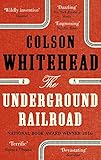
The harrowing blast of the opening sections on the Randall’s Georgia plantation rams home what it meant to be a slave in C19 America: a chattel to be bought, sold or abused on a whim, worked to death, favoured for a while before being discarded, publicly tortured and murdered as an example to others in the event of a failed escape attempt. The pecking order amongst the slaves is also revealed, with battles over the strips of land between huts, vital to grow extra food or keep a goat, the arrogance or bullying on the part of those emboldened by being in the boss’s favour, the general contempt for those too sick, crazed or weak to work.
The heroine Cora only survives abandonment as a child by her mother Martha because her reckless courage is taken by the other slaves as a form of insanity, meaning that she is best left alone. When conditions on the cotton plantation deteriorate even further, Cora is at last motivated to Martha, and escape with fellow-slave Caesar, who has made a vital contact enabling them to disappear on the “underground railway”.
The author’s decision to make this a real train on rails, rather than the network of support which it was in reality, has been described as a stroke of inventive genius. This device could serve to show the dramatic effect on Cora of being propelled rapidly into what is for her an unfamiliar and strikingly different world, although Colson Whitehead does not choose to make much of this aspect. It is a relief to have a break from the intense violence of the plantation. Yet the story of the real underground network is so interesting that it could have stood in its own right without the need for gimmicks or magic realism. I was irritated to be asked to suspend my disbelief: in the state of Georgia where so many were dedicated to capturing runaway slaves, how on earth could a real railway line have remained undetected over the years? Once located, the whole system would have been rendered redundant at a stroke. It would have been more challenging for the writer, also more engaging and fulfilling for the reader to witness Cora working her way across the States with the help of enlightened individuals, gradually learning about the world outside the plantation. Perhaps the worst effect of the invented railway line is that one can no longer judge what else may be purely a flight of Colson Whitehead’s imagination. I do not recall him providing a single date in the main text. The acknowledgements at the end are very scanty. I accept that creative writing can be applied to anything, but an important topic like the gradual process of abolition of slavery calls for a bit more grounding, if only in a solid appendix.
I was interested to see the differences between states without knowing how far they were based on truth: South Carolina seemed liberal, until it became clear that black women were being pressurised to accept sterilisation as a means of keeping the freed former slave population under control. North Carolina was more overtly brutal, with its chilling Friday sessions to hold public lynchings to provide exhibits for the sinister “Freedom Trail”. Even the apparent haven of a utopian community for ex-slaves in Indiana arouses the fear of white neighbours and resentment from those who have bought their freedom and feel threatened by others who have simply run away.
The narrative loses momentum after Cora’s first escape by rail, seeming to drift into the back stories of characters like Ridgeway, the driven slave-chaser who, having failed to track down Martha makes it his business to capture Cora. There is an odd digression into body-snatching which seems to have no connection with the rest of the novel. Characters are generally two-dimensional, the storyline sometimes disjointed and dialogues artificial, used as a means of informing the reader rather than communicating in convincing “voices”.
Perhaps this brutal tale will make most impact on readers who come to it with little or no prior knowledge of the appalling injustice of slavery. The novel appears to have been somewhat over-hyped, but at least it inspired me to research further online about, for instance, Harriet Tubman, the escaped slave who risked her life leading others to freedom.
⭐⭐⭐ 3 Stars
The Underground Railroad: Winner of the Pulitzer Prize for Fiction 2017
Written during the prolonged period of mourning for her husband Modou, as required by Islam, Ramatoulaye’s lengthy letter to her lifelong friend Aïssatou is perhaps never intended to be sent. Containing so many descriptions of events with which Aïssatou is already only too familiar, the letter seems to be in fact a device for a series of reflections on the role of women in Senegal in the 1970s, when the book was first published.
Both originally marrying for love contrary to normal custom, the two Senegalese women have suffered in common the humiliation of their middle-aged husbands’ decisions to take a nubile young second wife, taking advantage of the Muslim encouragement of polygamy. Yet the two friends’ responses have been very different: walking out with her four sons, Aïssatou forges a new career and independent life; despite her education and confidence when talking to a distinguished old flame on equal terms, Ramatoulaye swallows her pride and hangs on, for reasons she gradually explains. After more than two decades of motherhood, her body and looks have been ruined by the birth of twelve children many of whom still depend on her maternal care, she likes her home, perhaps she is partly to blame for her husband’s roving eye, and besides, she still loves him.
Although it is clear why Mariama Bâ Is so highly regarded as an African female writer whose work is widely studied, as a Western C21 woman I find it hard to know how to read it. To what extent is Ramatoulaye meant to be a passive foil to her friend, reflecting the typical attitudes of women born around 1930, socially conditioned to accept a subservient, domesticated back seat role? Despite divorcing her own husband, to what extent was Mariama Bâ with her nine children herself a model for Ramatoulaye? The latter is portrayed as conventional in her attitudes. In a society strongly conditioned by “caste”, natural jealousy of her young “co-wife” Binetou is mixed with contempt for the girl’s low birth, and of her mother’s vulgar eagerness to gain status and material goods through the marriage. Following the custom of having a “griot” or “storyteller” attached to the family, Ramatoulaye tolerates the frequent company of a gossip-peddling fortune teller who interferes in her personal life.
As Ramatoulaye dribbles out the details of her marriage in a somewhat disjointed fashion, often leaving tantalising gaps as to how exactly she makes ends meet or juggles child care with some shadowy career, I became somewhat bored with a situation which seems to have been explained in essence with no sign of developing further. Appearing to have “lost its way”, the novel lapses into a series of cues for didactic reflections on marriage, motherhood and family which might fit better in an essay, or a Sunday colour supplement slot. The appeal of her flowing, almost poetical prose, apparently based on the Senegalese tradition of storytelling, tends to mask the fact that her reflections often seem like platitudes to a Western reader. Perhaps they would have appeared more radical when the book was first published.
I was disappointed by the tendency to stereotype: man are egotistical and often easily manipulated; mothers-in-law are scheming or materialistic, yet the married wives, often wronged, have the monopoly of integrity and endurance
Admittedly, the final pages are given a fillip with some tongue-in-cheek accounts of Ramatoulaye’s attempts to deal with her teenage children. She tends to take the line of least resistance, realising that it is often best to be pragmatic and accept, say, a daughter’s unplanned pregnancy by harnessing the good will of the student who has caused it. Yet when she tries to redress her previous failings as a mother by telling three of her other daughters the facts of life, she senses from their bored reaction that they know them already – or think that they do.
Mariam Bâ is strong on dialogue, which makes it all the more of a pity that so many events are “reported” to the reader. There are also some inconsistent shifts in point of view, as when Ramatoulaye enters the mind of the mother-in-law obsessed by the shame of Aïssatou’s low birth as a mere jeweller’s daughter, which she resolves to counter by grooming a niece as a genteel second wife for her spineless son.
On balance, I liked the sudden digression into a vivid description, the odd sharp insight, the almost soap opera bubbles of family anecdote. If Ramatoulaye appears essentially hidebound, she is capable of occasional flashes of independence as when she rejects an eligible suitor, an old flame who ironically wants to take her as a second wife.



 Antenna Reviews