Disgrace

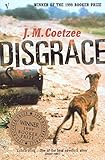
This is my review of Disgrace by J.M. Coetzee.

A friend's fulsome praise for the recently issued film of this book encouraged me to reread it partly because I was so embarrassed at being unable to recall the details of the plot. I now think this was because of the bleakness of the tale, as the main character sinks into a passive acceptance of his waning sexual and academic powers and influence as a result of ageing, and the "reversal of roles" in South Africa as black men gain ascendancy post-Apartheid. This beautifully written book works at several levels, as an examination of both personal morality and commununal responsibility or guilt for the exploitation of one group by another. With his history of preying sexually on young, inexperienced girls, is David Lurie any better than the black rapists who impregnated his daughter, either as a demonstration of new-found power, or through some instinctive desire to spread their seed?

What repelled me about the story was the degree of acceptance of "fate" by both Lurie and his daughter. Still only in his early fifties, he seemed too young to "give up", and even if he had been older, I would have wanted him to "rage against the dying of the light". I accept that the sheer weight of circumstance e.g. the ineffectiveness of the police in solving crimes made it hard to maintain one's resistance. Since Lurie clearly felt no great guilt about casual sex and seducing vulnerable women, it was unclear exactly what the extent of his disgrace was. A part of him seemed to feel that rapists and robbers should not get off scot free just because they might have been treated badly in the past. Yet, at the end, he seemed to compound his downfall, and give up too easily. His embracing of the "lowly task" of disposing of surplus dogs seemed too much of denial of the possibilities of life. The final choice of when a lame dog (which he could have kept as a pet) should be put down may have been an analogy for the state of his own life, but seemed too negative.

What exactly was the point of the scene where Lurie is invited to dine with the father of the student whom he "wronged"? What comparisions does the author wish us to draw between the course of Lurie's life and that of Byron, once a serial seducer but brought low towards the end of his life? There is a great deal to speculate upon, and to discuss in this book.

The plot seems to tail off and meander once Lurie accepts that he can no longer take refuge with his daughter, and drifts back to the city. Perhaps this is a deliberate reflection of the random nature of much of "real life".

Although I could not say I liked this book, I admired it.

⭐⭐⭐⭐ 4 Stars

After You’ve Gone

This is my review of After You’ve Gone by Joan Lingard.

This skilfully written and well constructed book, with many touches of humour and irony, held my attention to the end which, if fairly predictable, gained depth from leaving intriguing questions unanswered. The use of a real seaman's journal from the 1920s gave an authentic air to the extracts read aloud by the heroine from her husband's letters, which formed the heart of the story – letters which ideally would have bound them together only aroused her sense of dissatisfaction, thwarted ambition and suspicion, to the point at which her husband scarcely seemed to be a real person to whom she could relate and should feel loyalty or love. The interplay between the characters was interesting and the portrayal of working class life in Edinburgh seemed convincing. The moments of joy and pathos in the banality of "ordinary life" came through clearly. The plot had a good pace with some points of real tension. This book contained insights on a par with those found in more self-consciously highbrow literature.

⭐⭐⭐⭐⭐ 5 Stars

The Outlander

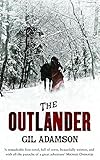
This is my review of The Outlander by Gil Adamson.

This book creates striking, poetic images of the Canadian wilderness and changing weather. It also captures the human will to survive in adversity, and what it must feel like to hallucinate – begin to die from starvation. The realities of living rough are also well described.

Interwoven with the slow place, and focus on introspection and memory, is the bones of quite a gripping plot. The reader knows from the first few pages that the main character is on the run from the two brothers of the husband she has killed. The reasons for this act of violence, and the details of the crime are leaked out judiciously to maintain the suspense. Even when life seems to be improving for the widow, as she is rather awkwardly called throughout, you know that her pursuers are still on the trail. There is sufficient brutality in the tale for you to be uncertain as to whether it will end happily- the author seems capable of bumping off any of the characters. Also, the widow has a certain ambiguity: she is clearly a flawed character, a kleptomaniac for instance, and her degree of guilt, the strength of extenuating circumstances, are unclear.

Although this book deserves praise, my main reservations lie in the fact that the author seems uncertain how to fill in the gap between the arresting beginning, and initially exciting but ultimately rather flat and contrived denouement. She peoples the plot with a number of rather unconvincing, two dimensional characters who are too often caricatures, and some rather tedious and uninteresting incidents. At times I was reminded of a feminist take on Huckleberry Finn e.g. the section spent in Frank with the Reverend, but occasionally it smacked of a kind of Western Mills and Boon – I refer in particular to the romantic passages, and the odd encounter with Henry the Indian and his too good to be true wife.

As already implied, I did not care for the ending (which I cannot give away). If I understood it correctly, it seemed like a somewhat gimmicky contrivance. And why did the ridgerunner need to be so called all the time?

I was also unsure about the depth of psychology intended. I think the author liked her main character, the widow, and we were meant to empathise with her. Yet, on one level, she seemed cold to the point of lacking normal emotions. Had she been "frozen" by her upbringing and driven temporarily insane by post-natal trauma? Her husband did not seem "bad enough" to justify killing him! She generally seemed too rational and calculating to have committed this act, as described.

To end on a positive note, some of the descriptions and turns of phrase to reflect on life were beautiful and memorable.

⭐⭐⭐ 3 Stars

The Children’s Book

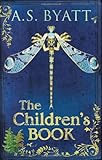
This is my review of The Children’s Book by A S Byatt.

The author's deep knowledge of the arts in Europe as the late Victorian age gave way to the Edwardian makes me hesitate to criticise this lengthy, complex work, and it is easy to see how it came to be shortlisted for the Man Booker. Although I found the opening pages wordy and slightly stilted, what I came to see as an erudite soap opera of a privileged circle whose lives revolved round art and writing gradually sucked me in as the darker forces began to emerge from beneath the idyllic surface. Without giving away too much, we are speaking of casual promiscuity, incest, and the exploitation of others, often in the name of art. Byatt manages to develop and differentiate a large cast of characters,each of whom are brought to the fore in turn as the story evolves. Some of the dialogue was sharp and revealing.

I found the story gripping for chapters at a time, and appreciate this as the kind of story in which a reader can become totally engrossed, entering another world, so as to be sorry when it ends. However, there were a few flaws which arguably cost it the ultimate Man Booker Prize. Byatt has a habit of telling you what is about to happen, rather than let the reader experience the suddent shock of revelation (when this is allowed to happen, it works well). Also, her narration of the historical and political background to the story can be rather didactic and too condensed to make much sense. An example of this is an almost incomprehensible and apparently superfluous description of Lady Asquith's correspondence with Lloyd George. I would have like less of this, giving more time for character development. Having said this, I felt "educated" by the book.

Am I the only reader whose heart sinks when confronted by the prospect of reading a lengthy fairy story? I realise fairy stories are important to the author, and they are relevant to a key character, and the "climax" of the plot but they are an acquired taste.

The length of this book, smacking of self indulgence at times and an inability to prune, makes this book compare unfavourably with the shorter and much more sharply focussed "The Glass Room" – another impressive item on the Man Booker shortlist.

With a more ruthless edit, this book would have been excellent rather than an impressively researched and enjoyable read.

⭐⭐⭐⭐ 4 Stars

The Glass Room

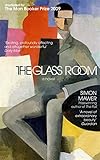
This is my review of The Glass Room by Simon Mawer.

The quality of the writing justifies the inclusion of this imaginative work in the Man-Booker shortlist,and it would have made a worthy winner. Mawer's skill is wide-ranging: the meticulous description which conjures up striking images of, say, Von Abt's glass house, vividly described from his drawing, which gradually rises from the mud of the hillside; the sharp, witty dialogues; the subtle development of a cast of varied characters in all their complexity, strengths and flaws; the underlying sense of menace and insecurity. The intriguing plot soon caught my interest: from the first few pages, it was clear that the early optimisim and good fortune of the wealthy Landauers was doomed, the year being 1929, the husband being Jewish, and their homeland being the newly formed Czechoslavakia, soon to fall under Soviet control.

Although I have no great liking for modern architecture, this book succeeded in enabling me to appreciate the vision that the glass house represented, and something of what architects working in angular lines and non-traditional materials are trying to achieve. I particularly liked the way in which the appearance of the building changed over time as, rather like its occupants, it was battered by external forces.

My criticisms are minor. The initial prologue, foreshadowing the end, added little, and ran the risk of putting readers off, with its slightly mawkish tone, before there had been time for us to be intrigued by the construction of the unusual house and the inevitably eventful and probably tragic fate of its inhabitants.

Although the complex relationship between Liesl and Katalin was explored quite well, Victor's role in the ménage à trois could have been revealed in more depth.

The hints at lesbianism irritated me slightly, since I wondered whether they had been included for effect, and how well the male writer could really handle them.

The plot deteriorated for me towards the end (Part 4) when most of the original characters had slipped away, and, as other readers have noted, the pace seemed to speed up, presumably to "get to the end" without becoming too long-winded, but at the cost of the satisfying, in depth development of characters and situations which marked the early chapters. Tomas and Zdenka were pale shadows of Victor and Katalin, as lovers and "real people", and I would have liked more of Von Abt.

However, the final denouement works reasonably well, bringing together some of the "original" characters, full circle. Although many "loose ends" are tied, a few questions remain unanswered. What exactly happened to Katalin? This adds to the realism and pathos of the work.

I shall certainly look out for more of Mawer's work and appreciate the view that he ranks amongst our best current writers, and has been underestimated to date.

⭐⭐⭐⭐⭐ 5 Stars

When China Rules the World

This is my review of When China Rules The World: The Rise of the Middle Kingdom and the End of the Western World [Greatly updated and expanded] by Martin Jacques.

The fact that China will "overtake" the US in 2027 or thereabouts is clearly a topic of great importance to which we pay too little attention. Martin Jacques is very well-informed, and presents an impressive array of facts – many of which are no doubt already out-of-date in view of China's rapid pace of development. I was interested by his clear exposition of some key points to show how Westerners tend to underestimate the Chinese – the irrelevance to China of the Western-style "nation state" of fairly recent origin, the fact that China is a "civilisation state" which takes the tolerant view of "one civilisation, many systems", the influence of Confucius – even in a nominally communist state – the patient, long-term approach of its wiser leaders, and so on. However, it seemed to me that the same points were reiterated to the point of tedium, although this had the benefit that one could dip into the book at any chapter and get the gist of the whole, plus the repetition helped to fix points in one's mind.

I am not qualified to comment as an expert, but did feel that Jacques dismissed western values, particularly those of the US, in too simplistic a way – yes, it was the country which elected George Bush Junior, but it also gave refuge to Tom Paine, who wrote and debated ideas with Americans of the day in compelling language which still has the power to inspire. I know Jacques has been attacked in the press for glossing over the lack of democracy and neglect of human rights in China. He raises some valid arguments – the fact that the Chinese leadership has made the pragmatic decision to put economic development first, the fact that most western countries achieved development before they instituted democracy, and the fact that the extent of democracy in the west is debatable, particularly when practised on a large scale (as China would need to do) as in the EU. However, I think Jacques could have been more wide-ranging and reflective in his assessment of China. I recall no mention of corruption or brutality (unchecked by democracy!) or suppression of dissent – apart from brief reference to a threat to withdraw investment from Zambia if an election candidate persisted in suggesting that the country was being "colonised" by the Chinese.

On a brief visit to China, I was struck by the ugliness of much of what I saw – it seemed that much of the rich culture and beautiful artifacts of the past had been destroyed in the Cultural Revolution – I formed the impression that there is more beauty in Italy than the whole of China. This brings me to criticise Jacques' casual dismissal of the fall of the Roman and Greek empires, and what little they left, when I would have thought that their abiding influence on language, philosophy, architecture and so on was considerable. He kept referring, uncritically, to the sense of superiority of the Chinese. I would ask whether, even if in "reduced circumstances", western culture would not retain its own justified sense of the value of some things which Jacques seems to dismiss too briefly, such as the concept of the rule of law, or the ideas of the Enlightenment.

It also seemed to me that, by harping on differences, Jacques failed to acknowledge the sympathy which can arise between "thinking" members of different societies.

This potentially excellent book would have gained from a more even-handed approach…..

⭐⭐⭐ 3 Stars

The Wilderness

This is my review of The Wilderness by Samantha Harvey.

The beauty and perceptiveness of the writing gives an insight – insofar as I can judge- into the troubling topic of Alzheimer's, without filling the reader with a grim depression. It is impressive that a young woman can enter into the fragmenting mind of a much older man. Although the story lacks a strong plot as such – it is largely a series of memories and reflections looking back over a lifetime – my interest was held by the way in which information leaks out, with some "key" points not becoming "clear" until the final pages. The most compelling aspect of the book is its conveyance of the false nature of memory, in particular when the mind becomes clouded. The same incident or snatch of converstation is often described several times in different contexts, leaving a sense of confusion as to what has really occurred. Related to this is the way in which a small image – a recurring memory of a peg – can assume more importance thatn a major life-changing event. Then there are the frequent effective descriptions of the destructive effect of the endless confusion in Jake's life – contantly distracted during his attempts to make coffee, he eventually boils the coffee-maker dry.

Many of the descriptions are striking and memorable: the stark beauty of the moors, the evocation of Sara's Jewish culture, Jake's meeting with his adult daughter Alice when he steels himself to admit his Alzheimer's to her, only for us to be shown that the whole elaborate event is a probable figment of his imagination. Many scenes from the past have a dreamlike quality – their plausiblity or otherwise ceases to matter, yet they are deeply significant for our understanding of Jake's life and his condition.

Many of the dialogues are interesting and humorous, weaving in comments on such weighty themes as religion, the Palestinian-Israeli conflict and architecture without becoming sententious. Some of the real love and affection between the main characters – despite any infidelity- is portrayed well. Several themes are interwoven – the book is not just about Alzheimer's but about how people can love each other despite holding very different opinions, about the pain of unrequited love (Eleanor's) and the loneliness of living in an alien culture (Sara's). There is a good deal of wry humour – as in Jake's regular meetings with the coolly professional fox-haired woman doctor, in which he fails to pass her basic tests of his faculties, whilst maintaining an inner stream of complex, albeit twisted perception and logic.

My main reservation is that some of the characters are insufficiently developed and therefore not wholly convincing – the flamboyant Rook and his granddaughter Joy, also Henry as an adult. This is a pity as they clearly have the potential to come alive in our minds as well as Jake, his wife Helen and to some extent the long-suffering Eleanor. Also, although it is probably justified to show Jake's final disintegration, the final pages seem superfluous apart from "tying up a few loose ends" in a story that is all about loose ends.

At the beginning, I wondered whether it would have been better to let the reader deduce the nature of Jake's problem from his erratic behaviour. I felt at times that I had "got the point" and my interest waned – perhaps I was simply tired by the amount of mental energy this book requires. However, whenever I returned to it, I was impressed again by the sheer quality of the writing. This book merits being read quite slowly – or reread to absorb the imagery and dense mesh of ideas which the writer has woven in.

⭐⭐⭐⭐⭐ 5 Stars

The Hidden

This is my review of The Hidden by Tobias Hill.

Hill's prose is unusual, striking and memorable – like poetry, some passages merit rereading. They convey with power and strong visual imagery- the feel and appearance of the landscapes of Greece. I also learned quite a few new words – did you know that "laniary" means canine and "ophidian" indicates "snake" – an apt description for one of the characters? Far from being dull, the inclusion of the anti-hero Ben's "notes for a thesis" are interesting and informative – reminding me of the Spartans' harsh, pragmatic approach to life, and evoking parallels with modern issues of fundamentalism, eugenics and the fanaticism of idealistic groups and cults. The experience of taking part in a dig is described well, again with some interesting insights, such as the fine line between the excitement of a valuable find, and the avaricious desire to possess and profit from it. Some of the dialogue is quite effective in capturing the personalities of the key characters, and their relationships.

On the downside, I agree with those who find the plot a little lacking. Certain critical events seem to happen abruptly, without the potential build up which increase both the tension and their plausibility. Ben seems to make sudden leaps of understanding on evidence which escaped me until then – although I quite enjoy being made "to work" as a reader, and not having everything spelt out too baldly. The final climax is not as shocking as other reviewers have led me to expect. The lack of inverted commas and "he said, she said" etc makes some of the dialogue hard to follow. Even after rereading some passages several times, I was unable to deduce who said what – and some observations seem very obscure. This is at times an unhelpful distraction.

Also, the characters are not developed very fully. and often seem two dimensional or unconvincing. I do not really care what happens to any of them. Some plot lines are left dangling as loose ends, in particular the time Ben spends working in an Athens restaurant, where the tensions built up between his work mates and the proprietor's son do not lead to any dramatic climax.

Overall the quality of the writing is excellent in parts, the story gripped me to the end, but more care over the portrayal of characters and the development of the plot would have made this the outstanding novel, which it falls short of being.

⭐⭐⭐⭐ 4 Stars

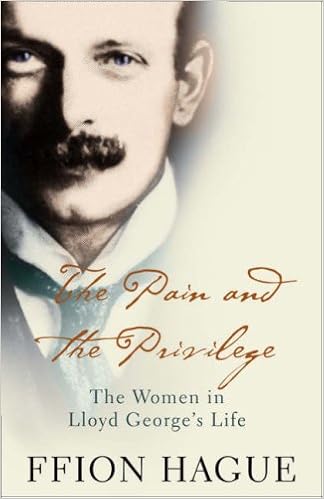
“The Pain and the Privilege: The Women in Lloyd George’s Life” by Ffion Hague – The Pain and the Privilege

This is my review of The Pain and the Privilege: The Women in Lloyd George’s Life by Ffion Hague.

A serialisation of this book on Radio 4 caught my attention. A storyline intriguing enough to succeed as a novel was made all the more interesting through being based on real events – another case of truth being stranger than fiction. How could Lloyd George maintain the active political and moral support of his wife and his mistress when they were both fully aware of the situation even if choosing to delude themselves up to a point? Ffion Hague interprets in a compelling style the complex motivations and emotions involved. The way in which these two women played complementary roles to meet Lloyd George’s needs made me wonder how consciously he chose these two particular people for long-term relationships in an apparent sea of casual promiscuity.
The interplay of the key characters was set in the context of major developments such as the decline of the Liberal Party, the weakening of the power of the Anglican Establishment over Wales, the horror of the First World War and the profound social changes following from it. It was fascinating to realise or to speculate on just how much the wheel keeps turning – insider share dealing, “cash for honours”, the distorting power of the press – when it chose to reveal scandals- reminded me strongly of recent events. The nature of power, and the charismatic influence which some can exert over others was also explored -there were parallels between the excesses of Lloyd George and Clinton, who tarnished noble political ideals, hard work and real steps to make people’s lives better with sordid events in their private lives.

I never had any illusions about Lloyd George’s morality, so did not downgrade the book out of disgust over his self-centred lechery. Although Ffion Hague may have been a little too charitable about his motives e.g. glossing over what some would regard as egotistical conflicts with Asquith which served to destroy the Liberals faster (although the rise of the Labour Party would probably have done it anyway) and downplaying his evident nepotism and cronyism (again, everyone else was probably at it as well), she succeeds in painting all the characters in a sympathetic light. They seemed like real people, with strengths and flaws.

There was irony in spades e.g. in Lloyd George’s jealousy of his mistress Frances Stephenson’s own affair with Tweed, in the way she tried to deceive him as he deceived his own wife, in the fact that her child (who may have been Lloyd George’s or Tweed’s ) may not have given her the pleasure she craved, since the deception in which she ensnared herself made it impossible for her to be entirely straight with the girl, to the detriment of their relationship.

This was a fascinating and thought-provoking book leaving one to ponder at length on the nature of human relationships – not to mention a renewed interest in learning more about the rich history of the early C20. Countless snippets of information interested me such as Lloyd George’s denunciation of the Boer War, because as a put-upon Welshman he could empathise with the independent-minded Boers. As a young man, what would he have said about the wars in Iraq and Afghanistan?

My only minor criticism is a slight lack of editing. I spotted a mistake in a date, a few non-sequiturs, and sometimes became confused by the author’s tendency to dodge back and forth in time. The frequent references to the notes sent by his admiring womenfolk every time they heard Lloyd George speak in the Commons became too repetitious.

But these are small points, and I would rate this as a major achievement and one of the better biographies I have read.

⭐⭐⭐⭐ 4 Stars

The Promise of Happiness

This is my review of The Promise Of Happiness by Justin Cartwright.

This is the first novel by Justin Cartwright that I have read, and I certainly intend to read more. I found some of the incidents e.g. over Daphne's repeated disastrous attempts at fish cooking made me laugh out loud, and many of the exchanges e.g. Pinteresque crossed wires between Charles and his wife very entertaining – humour and pathos were subtly interwoven, reinforcing each other.

Some aspects of modern life were caricatured, but in an amusing way e.g. the adverts to metamorphose dolphins into cars. References to flowers used for the wedding were also quite striking. Overall. I thought the quality of the writing very high – Cartwright wears his learning lightly and "teaches" the reader at times e.g. in philosophy, Shakespeare's use of flower imagery, without being pretentious.

Having recently visited New York, I admired his vivid descriptions of America – the townscapes, and the horror of life in a women's prison, which rang true.

There was a satisfying twist in the plot concerning Juju's guilt, which I cannot reveal for fear of ruining the story for future readers. Although the family was perhaps irritatingly bourgeois for someone (like me) who does not come from that class, the fact that most of the characters were deeply flawed and in some ways unlikeable did not matter. The interest lay in their interactions and thoughts on the world.

I believe Cartwright is a philosopher by training, and I enjoyed the skill with which he wove ideas on potentially dull topics such as utilarianism – more effectively than in many text books on the subject.

Although I think Juju's ex-lover Davis played a significant role in the plot, I felt there was more scope to develop him as a character and perhaps to introduce him earlier.

Charlie was the most likeable character, perhaps too good to be true although flawed in his passive drifting into a marriage to Ana, about which he was clearly ambivalent. I admired Cartwright for sticking to such similar names for a father and son – Charles and Charlie: confusing, as I am sure many editors would say, but realistic.

The sense of loss and disconnection as one approaches middle age was covered in a poignant way which one may need to be over fifty to appreciate.

The irritation and confusion over the break down of "traditional" attitudes and values was also explored in a thought-provoking way.

Apart from my failure to understand the point about Juju writing cheques for the stolen window because her lover-boss had no money (so was it her own money?), I can find little fault with the plot. Maybe it was a bit repetitious in places i.e. in reinforcing impressions of the characters needlessly e.g. Ana the "glamour puss", but the writing succeeded in building up the tension to the dramatic point at which Charles and Juju met face-to-face at the end.

Overall, the plot was very coherent and the quality of thinking and writing excellent. Writing of this order deserves to win prizes.

⭐⭐⭐⭐ 4 Stars