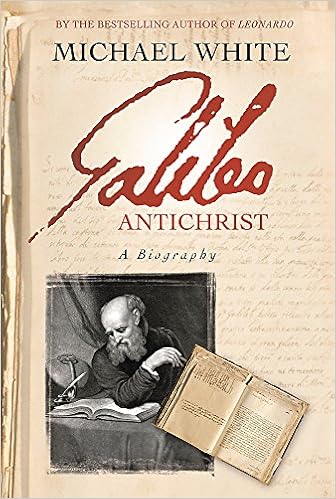
 “I do not feel obliged to believe that the same God who has endowed us with sense, reason, and intellect has intended us to forgo their use.”
Galileo was a man of remarkable intelligence with the misfortune to be born at a time of intense religious bigotry. Nowadays he would no doubt be a media celebrity explaining and debating his many theories, a multi-millionaire through the sale of his inventions and a Nobel prize-winner to boot.
Instead, in the understandable desire to avoid life imprisonment in his old age and possible burning as a heretic, he was browbeaten into a humiliating refutation of his support for the theory of Copernicus that the earth rotates in orbit round a static sun. His scientific approach, based on observable evidence and mathematical calculations foundered on the Catholic Church’s arbitrary insistence on the immutable truth of Aristotle’s flawed deductive reasoning that an all-powerful God kept the sun and planets orbiting round the earth. The supreme irony is that Aristotle was a “heathen” Greek. Another is that Galileo might have avoided punishment if he had been prepared to escape to a Protestant country like the Netherlands or England, even stayed in the more tolerant city of Venice rather than throw in his lot with the Medicis of Florence, who were less prepared to stand up to the Pope.
In this fascinating account, which makes science comprehensible even to a reader with very limited prior knowledge, the author has a tendency to try to capture our imagination with a good deal of speculation. The most significant example of this is his support for a recent theory that the heresy for which Galileo was convicted was in fact a cynical distraction from the issue which really concerned the somewhat unstable Pope Urban VIII and the fanatical Jesuits at the heart of the Vatican. This was that Galileo’s nascent views on the existence and nature of atoms threatened the belief at the heart of Catholic doctrine, which sets it apart from Protestantism: namely, that in Holy Communion, the bread and wine actually become the body and blood of Christ, whilst maintaining their original physical appearance.
Although widely admired in his lifetime, Galileo was no saint. As a young man, he was known as “the Wrangler” for his argumentative approach. Never backward in asserting his intelligence and his contempt for those of lesser intellect who contradicted him, he accumulated a number of enemies who were eager to play a part in his ultimate downfall. To gain a teaching post at the University of Padua, he was prepared to give a lecture estimating the dimensions of Lucifer, a topic he must surely have regarded as somewhat ludicrous.
His curiosity ranged widely to include radical thinking on the behaviour of pendulums, the speed of falling objects, even the cause of the tides, where his thinking was in error. He showed entrepreneurial skills in commercialising his invention of the mathematical compass, a widely used tool for making calculations, driven by the need to support an extended family including his feckless brother with a growing brood of children. Despite being an excellent communicator, Galileo detested teaching: he out-manoeuvred a rival to corner the market in another invention with practical application, one of the first telescopes, and used it as a means of gaining a plum post in the Florence of the Medicis, one of the conditions being that he could give up teaching.
The telescope enabled him to view the moons orbiting Jupiter and the “crackled and wavy” surface of a moon which the Church insisted was a perfect, smooth sphere: Galileo’s critics argued that, if it was covered in mountains and craters, it must be contained in a translucent layer which would make it the “right” shape. It is not surprising that Galileo presented his arguments in debates in which foolish arguments were demolished, but when the “fall guy” voicing views held by the Pope was named Simplicio, based on the Italian word for simpleton, he was clearly sailing to close to the wind.
Galileo’s fateful trial is covered in some detail in translations of a tortuous procedure involving legalistic language and specious theological argument which despite being somewhat dry has the power to enrage the modern reader over the injustice of the situation. Yet with successors like Newton to build on his work, the genie could never be returned to the bottle.
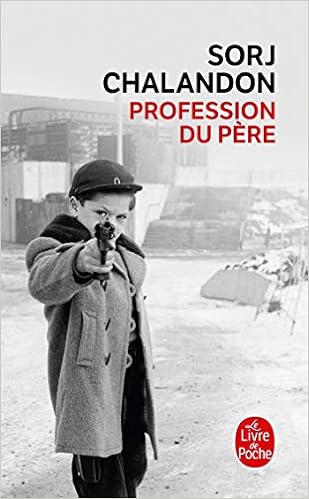 At the funeral of André Choulans there are only two mourners: his long-suffering wife and son Émile, an artist who sketches the crematorium with an odd lack of emotion as they await the coffin. Narrator Émile then proceeds gradually to account for this tragic situation, going back to his childhood, the France of De Gaulle and the stirrings of rebellion in Algeria in 1961. As an impressionable youngster, Émile craved his father’s approval, believing his web of lies and fantasies, but fearing the violence which he might at any moment unleash on his child and wife. Émile suffers the embarrassment each year of being asked to write his father’s profession on a school form. How can he say that he is a secret agent? This is the latest in a string of professions he is too young to question: pastor, pilot, parachutist, judo expert and singer to name a few.
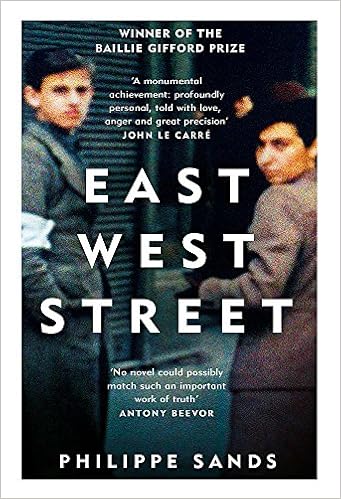 This book made me reflect for the first time how in the early C20 when long-established stable empires were beginning to crumble, “Each country, old or new, was free to treat those who lived within its borders as it wished. International law offered few constraints on the majority’s treatment of minorities, and no rights for individuals”. The European Convention on Human Rights was not signed until 1950.
 Harriet Tyce draws on her experience of working as a barrister in this gripping but unsavoury debut psychological crime thriller.
 To get the most impact from this book, I would advise readers to leave the potentially slightly distracting “Foreword” to the end. Advertised as a sequel to “The Disappearance of Adèle Bédeau”, also featuring Inspector Georges Gorski, this can be read as a stand-alone novel. Reading the two books “in order” may help to clarify Gorski’s personal situation, but I think “The Accident on the A35” has a better pace and more interesting characters and wry humour.
 The opening chapters give a somewhat romanticised view of life in the ancient village of Ein Hod, said to be granted to Palestinian ancestors by Saladin, with flute playing in the olive groves after a day’s harvesting, yet perhaps this serves to heighten the brutal shock of “El Nakba”, the catastrophic expulsion of the Arabs from the land they had occupied for centuries, by soldiers in support of Israeli settlers.
 At first, I was put off by the twee sentimentality and the continual interjections of the coy narrator, who suggested that he might be one of the inhabitants of “la rue triste”. Yet although this short novel is not a page turner, it sucks the reader into the evocative atmosphere of a 1940s Parisian street where life goes on despite the Occupation. The last novel of the prolific French author Robert Sabatier, written in his eighties, this seems to draw on his own memories of growing up in Paris, orphaned young, apprenticed to the printing trade, drawn to literature and poetry, largely self-taught and ending up a writer.
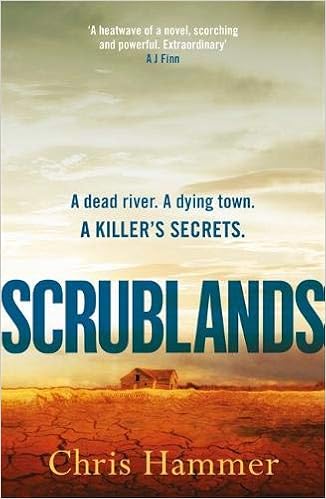 In this debut novel, Chris Hammer makes good use of both his first-hand knowledge of journalistic procedures, and his travels through the Murray-Darling Basin of Eastern Australia to research the impact of the 2008-9 drought.
 Antenna Reviews