“Cheri” by Colette: a question of age.

Cheri (Vintage Classics) by [Colette]

Although I read this in French, I bought the English version featured here to help me cope with some of the more obscure passages in the original French, and as a translation it captures the spirit of the classic novel.

With her wry wit, strong sense of place, concise, vivid descriptions and minute dissection of her characters’ shifting emotions, Colette was a talented writer, even if her novels now seem dated, perhaps in particular this novel set in the Paris of the idle rich around 1900. Too handsome for his own good, both neglected and indulged from birth by his ghastly mother Charlotte, a courtesan who has done well for herself, Chéri (aka Fred!) has for six years been the lover of her rival and friend of a sort, the beautiful, high class “tart with a heart”, Léa, twenty-four years his senior. So what will happen when Charlotte marries him off to a “suitable” young girl? Does Chérie love Léa mainly as the caring mother he never had? Does Léa love Chérie as a means of keeping at bay the physical decline into old age which she does not want to face? Is this the tragedy of two people who, beneath all the banter and bickering, have a genuine love for each other, more than just intensely physical, yet the great difference in their ages makes it impossible for them to make a permanent life together?

I found this quite hard to read in the original French, because of the old-fashioned vocabulary relating to the past culture and fashions of the day, so had to resort to an English translation to check on a few points. For instance, “pneumatiques” turned out to be the “petits bleus” telegrams sent round Paris in metal tubes (via the sewers!).

Apart from Léa and the unfortunate young wife Edmée, the characters are fairly unappealing, not least the petulant, capricious Chéri, clearly unfulfilled, bored and desperately in need of some useful occupation. The dialogues are often quite funny, and the emotionally charged climax in which Léa and Chéri finally express themselves honestly is powerful and revealing, but there is a shallowness to their lives which is rather depressing. Since Colette’s own life was clearly often driven by strong physical passions, I have probably not interpreted the book in the way she had in mind.

An intriguing footnote is that Colette herself had an affair in her late forties with a teenage step-son, I believe after having written this book which perhaps enacts a long-held personal fantasy. This relationship apparently inspired “Le Blé en Herbe, which I would recommend more. The work by Colette which I most admire is the semi-autobiographical, “La Naissance du Jour”.

“Un brillant avenir” by Catherine Cusset: “bitter sweet”

Un brillant avenir (Folio t. 5023) (French Edition) by [Cusset, Catherine]

As an opening hook, the portrayal of Helen, an elderly woman frustrated by her husband’s dementia but traumatised by his sudden death and apparent suicide, may not seem at all compelling. It turns out to be a family saga, with the focus on Helen, née Elena in post-war Communist Romania and destined to marry Jacob, a handsome young Jewish man, in the teeth of the ingrained anti-semitism of Ceaușescu’s bigoted, inward-looking regime, which drives her to seek emigration first to Israel and then the United States to obtain a better future for her adored only son, Alexandru.

Written in a clear and simple style, with a strong focus on the minutiae of daily life, this novel feels very authentic, but too often also banal, even boring. This contrasts with the complexity resulting from the decision to alternate chapters back and forth in time, which proves a little disjointed and confusing at times, giving the reader the benefit of additional insight into events, but at the cost of destroying some of the potential for dramatic tension.

Although Helen is not a particularly likeable character, given to emotional, hysterical, manipulative behaviour, the author develops a detailed character study which enables one to empathise with her at many points in the story and to understand the forces which have shaped her. The same applies to her French daughter-in-law Marie, much more laid back and unconsciously thoughtless with a sense of entitlement born of a more relaxed and free upbringing. The tension between the two women and the relationship which they eventually achieve weaves a strong thread through the narrative.

For me, this reads like a series of short stories based on the same characters, which gradually caught my interest through a few striking incidents. For instance, there is the irony in how, having battled and plotted to get married, Helen and Jacob commit the same error as her parents in trying to prevent their son Alexandru’s marriage to Marie, because she is French, so it is assumed will take their son away to a distant land where he will find it harder to realise his “brilliant career”. Then there is the poignant moment when Helen, in the violent grip of labour, waits in a taxi en route for the hospital while her mother takes an inordinate time to appear: it as this point that Helen decides that her adopted mother cannot, as rumour has it, be her birth mother, since the latter would never let her suffer in this way. Another striking scene is when, having taken advantage of Jacob’s Jewishness to escape to Israel, Helen realises that her precious son is destined for a spell in the Israeli army, where her overactive imagination leaves him in no doubt that he will either be killed or maimed. There is also a convincing and moving portrayal of widowhood.

The novel seems to contain “jewels” of insight and observation, together with some realistic experiences, set in a somewhat tedious paste.

“L’Insoumise de Gaza” by Asmaa Alghoul & Sélim Nassib: “When there’s no choice but to rebel”

L'Insoumise de Gaza (Documents, Actualités, Société) (French Edition) by [Nassib, Sélim, Alghoul, Asmaa]

The eldest of nine, Asmaa Alghoul grew up in the Gaza refugee camp of Rafah where her grandparents had fled after their land was taken by the Israelis. I found it hard to “place” her family; although, as a refugee, she received handouts at school, her father was clearly educated, at times holding down a professional post abroad and teaching at a Gaza university, while her uncles were much more fundamentally religious, supporters of Hamas, some holding quite senior posts. Encouraged to ask questions by her relatively broad-minded father but chastised by the uncles for her lack of piety, by her mother for not doing her homework and her teacher for misbehaving at school, a combination of these factors must have engendered her unusually stubborn, resilient and persistent stance, a prerequisite for a female journalist in the tough, chauvinist environment of the Gaza strip.

Having left an Islamic university because it was too strict, and a less academic, more secular one when her course folded through lack of students, Asmaa quickly found work writing for a newspaper about the plight of Gaza and Palestinian women’s rights, going on to win a succession of international prizes for the courage and quality of her work.

She demonstrates in quite an extreme form the dilemma of the woman who wants to combine marriage and motherhood with a career which involves great commitment flexibility, even danger in the sense of risking arrest and torture for attending a demonstration, or death when trying to cover an Israeli attack. She tends to let her “heart rule her head” in choosing husbands, only to find them to be not as open-minded as she thought. Perhaps she is a little blinkered when it comes to admitting her own fault in the failure of a relationship. She certainly seems to have suffered post-natal depression after the birth of her son, both her children being largely brought up by her own mother, it seems.

She gives a vivid impression of life in the Gaza strip, surprising me at first with her “plague on all your houses” attitude to the various opposing groups who confine the inhabitants in a vice. As a child she refused a sweet from a well-meaning Israeli soldier, “because it contained poison”. Some of her earliest memories were of Israeli soldiers attacking with stones and teargas the house of her extended family, beating her uncles for their connections with Hamas. Years later she was to tell a Jewish American lecturer at Columbia that he was the first Israeli to teach her something.

Yet she also condemns the corruption of Fatah and the Palestinian Organisation, claiming that they pocketed large sums sent by naïve European and American groups to help the Palestinians. One of their number, she claims, even supplied the concrete to build the infamous wall protecting Israel.

Dispelling my belief that Hamas was at least democratically elected to represent Gaza, she describes how they manipulated the system to get enough votes to win. She also describes their repressive fanaticism, driven by control freakery rather than based on any doctrine, in which a woman is continually harassed and manhandled for failing to cover her hair completely with a headscarf, arrested for sitting on the beach fully clad, but with her clothing moulded to her body after bathing in the sea, or tortured for attending a demonstration.

As is no doubt vital for one’s sanity and endurance, there is much humour in the book, as when she manages to flout the taboo on cycling, using the company of some European wars waged by the Israelis in the early C21, culminating in the broken ceasefire of 2014 in which several members of her family were killed, mostly innocent civilians. She writes vividly of her fear of being killed, the sudden and arbitrary nature of death: of her newborn twin nephews, one died and the other survives, but to be haunted by this fact for the rest of his life. Then there is the strange depression which comes in the aftermath of bombardment when all tension is abruptly removed and one can relax. Although she appreciates that all wars must end in peace between enemies, so sees the futility of retaliation, she describes the urge to do so “because our blood is not as cheap as you think”.

No one escapes her fearless, pithy, no-holds-barred analysis, so it is obvious why she has attracted such fierce attacks in return. “What a region!” she writes, in which Islamic State kills people indiscriminately in the name of a perverted interpretation of Islam, whereas Israel does so in the name of its Promised Land. She ends this book on a positive, defiant note but the prospect seems bleak in reality.

Some prior knowledge is needed to appreciate this book fully, although I suppose it could equally well inspire a reader to go away and gen themselves up on an injustice which is allowed to persist through widespread indifference compounded by ignorance.

“Silver Sparrow” by Tayari Jone: “Only lying to people we love”.

Silver Sparrow by [Jones, Tayari]

“My father, James Witherspoon, is a bigamist”. So does narrator Dana hook us into this drama set in African American Atlanta. From early childhood, Dana knows that James has another wife called Laverne, and a daughter Chaurisse, but what lasting damage is done to a five-year-old when told not only that she must not tell other people this, but that she, Dana, is “the one that’s the secret”? Wanting the best for her daughter, resentful that she always comes second as regards receiving her father’s attention and the material benefits he can provide, Dana’s mother Gwendolin seems blind to the additional damage caued by taking Dana on stalking expeditions, to spy on the favoured “first” family. The pair may draw some satisfaction from seeing that Laverne and Chaurisse seem less beautiful and intelligent than their counterparts, but cannot know that, despite their apparent blissful ignorance of James’ deception, they too have their own sorrows.

Rising above the underlying sadness, there are many amusing situations and a humorous tone to the writing, which gets away with the risky device of introducing past conversations involvng third parties into the first person narrative. With a gift for storytelling and strong dialogues, Tayari Jones enables us to empathise with all the characters to some degree. Somewhat belittled by Dana and Gwendolin in the first part, Chaurisse and Laverne come into their own as much more rounded and positive, generous, competent characters in the second half, when Charisse takes over the narrative. Although James rarely appears more than weak, wanting to have his cake and eat it, and exploiting the love of those close to him, the complex tie which binds him to Charisse is also gradually revealed. The psychological drama of the relationship between his two families is further compounded by the strongest bond of all, his friendship from childhood with dependable “Uncle Raleigh”, always on hand to help him maintain his double life, while managing to be the man that both Charisse and Gwendolin sometimes think they probably should have married. The question is, what will happen if the precarious equilibrium which James and Raleigh have managed to construct is ever upset by Laverne and Charisse discovering the truth?

This novel also rings true in its vivid insight into life for black Americans only a step or two on from segregation and inequality, yet also with their own internal social pecking order. One of Charisse’s main regrets over having to leave school early is the loss of her books – second-hand, battered copies handed down by white kids, filled with their notes which her mother painstakingly erases where possible. Raleigh’s light skin, the result of his mother being raped whilst working nights for a white family, mean that he is not quite accepted by either community. James has chosen the role of self-employed chauffeur for its sense of freedom, in control at the wheel. Dana’s seemingly independent-minded friend Ronalda asks her at one point if she really wants to go to the sought-after mixed Holyoke College, where she will know for the first time “what it feels like to be black” and so on.

In this society, boys are definitely more highly prized than girls, one reason why Gwendolin prays fervently that her rival Charisse will not give birth to a son. Generally, boys are shown as more indulged, less responsible than the girls who seem to end up doing the hard graft to provide for their children. The preoccupation with hair, the grim straightening with chemicals versus the easier option of weaves and wigs is also a recurring theme in black female writing, such as Adichie’s “Americana”.

Having also read An American Marriage, I find Tayari Jones an excellent writer, who makes some powerful points without falling into the traps of melodrama or sentimental happy endings. You can read this on two levels: an absorbing exploration of the effects of bigamy or a deeper portrayal of what it means to be a black American.

Crime and Punishment by Dostoevsky: “When hell is the suffering of being unable to love”

Crime and Punishment: Penguin Classics (Penguin Translated Texts) by [Dostoevsky, Fyodor]

As is too widely known to be a spoiler, Raskolnikov, an impoverished ex-student living in the teeming squalor of 1860s St Petersburg, convinces himself that, as men like Napoleon are revered despite the large amount of bloodshed they have caused, he would be morally justified in murdering an unpleasant old money-lender and stealing from her to pay for his education, to relieve his mother and sister of the burden of supporting him and to spend on deserving needy people and good causes. Needless to say, he botches both the murder and the theft, only to be haunted by violent flashbacks and delusions together with the fear of being caught, compounded by his compulsion to confess his crime to others, not out of remorse, but in disgust over his failure as a self-defined “superior” being to carry out the plan effectively. Immature and arrogant, his mind addled by reading too many theories, Raskolnikov is not easy to like.

Apart from being an in-depth “psychological record of a crime” which must have been ground-breaking when first published in instalments in 1868 , this novel is also an indictment of appalling social conditions, more hard-hitting even than Dickens. It continually slips into farcical parodies of the social attitudes and beliefs of the day, including the dissent to which Dostoevsky himself was drawn as a youth. Raskolnikov’s very name means “dissenter” – from the “normal” way of seeing the world.

A recurring theme is the arbitrary, contradictory nature of morality itself. For instance, Raskolnikov is appalled by the debauched behaviour of Arkady Svidrigailov, who has designs on his sister, but this rogue uses the money obtained from the wife he himself may have murdered, to provide substantial help for a number of needy people, something which Raskolnikov has failed to achieve. Raskolnikov’s “dead soul” is ultimately brought to life by the love of the almost saintly Sonya, who nevertheless consented to work as a prostitute to support her penniless family.

I was initially disappointed by the novel’s style which seems quite stilted and artificial. Yet lengthy monologues to provide an “information dump” or develop an argument were a feature of C19 novels. I could understand that Raskolnikov’s “stream of consciousness rants” might be justified as conveying a sense of his mental confusion and agitation. Yet other characters indulge in them as well, perhaps because the male characters are often drunk and the women hysterical and overwrought.

Finding it hard to decide how much my dissatisfaction was due to the shortcomings of the translation, I tried four, ending with the widely praised Penguin translation by Oliver Ready, and thought that Constant Garnett’s early version also looks good , yet all of them jarred or seemed unnatural at times. This made me wonder whether the challenge of translating into another language, even the vastly flexible and nuanced English, from Russian without losing too much of its essence is just too great.

It’s quite interesting to compare translations. For instance, Oliver Ready has the thirty-five year old Investigator Porfiry Petrovich frequently call twenty-three year old Raskolnikov “father” which is explained somewhere in the notes, but sounds odd. In Pevear’s translation, this becomes “old boy” which is marginally easier for an English-speaking reader to accept. If we could ever agree, an amalgam of translations could be superb!

It’s a matter of taste, but despite grasping the ideas Dostoevsky was seeking to develop, I find the work over-emotional, and too filled with jumbled thoughts of the type one might have in reality, but seek a writer who can unravel them. Bleaker and edgier, less sentimental than Dickens, it is on a higher plane of complexity.

I agree with a reviewer who liked the beginning and end the best. The opening part leading to the dreadful crime is focused, the writing in the epilogue has been described as “delicate” and is marked by a clarity and lucidity like the calm after a storm. In-between is a morass of digressions and ramblings punctuated by a few strong scenes of high drama or tension such as when the cunning Chief Investigator Porfiry Petrovich is playing a cat-and-mouse psychological game with the overwrought Raskolnikov, which would not be amiss in a modern detective yarn, or the confrontation near the end between Raskolnikov’s sister Avdotya, who shows a lot more sense than he does, and the manipulative villain Svidrigailov whose one true emotion is his love for her.

What interests me most about the novel is the extent to which it reflects the life of the author himself and the history of the period. I am sure that the more one knows about this, the greater one’s appreciation of the book. Dostoevsky must have been influenced through being sentenced to death by firing squad as a young man for some, to our minds, relatively minor revolt against the censorship of the day, only to be reprieved literally at the last minute, subsequently serving five years hard labour in a Siberian prison.

This should probably be read at least twice: the first time on a wave of momentum to see what happens, the second time more slowly, checking on, say, the copious notes accompanying the Oliver Ready translation.

“The Juliet Stories” by Carrie Snyder – torn between viewpoints

The Juliet Stories

Although described by reviewers as a series of short stories, the first part of this book, set in Nicaragua, reads to me like a novel in its vivid portrayal of an observant, imaginative girl, perhaps destined to be a writer, trying to make sense of an alien world, her perceptions inevitably limited through being only ten years old.

Her idealistic perhaps unconsciously selfish father has uprooted his family from Indiana to Managua in the 1980s, to enable him to work as a peace activist for “Roots of Justice”, dedicated to campaign against the Contra terrorists, supported by President Reagan, who are attacking the recently established left-wing government. Juliet’s beautiful mother Gloria, her continual smoking no doubt a symbol of her stress, apparently only really happy when lost in singing to her own guitar accompaniment, generally seems sharp-tongued and burdened by childcare, most of her limited store of love and attention being being devoted to her infant son Emmanuel.

Meanwhile tomboy Juliet roams with increasing confidence, scrapping and bickering with her brother Keith who seems to adapt more easily to the situation, picking up Spanish quickly and performing better when the pair eventually get sent to school. Although they do not seem close, they share a bond based on their unusual common experience. With the typical irresponsibility of childhood, the two manage to leave Emmanuel behind at a neighbouring house where they have been offered drinks, but he is brought back to them by a group of local girls who handle him much better than Juliet – unlike her, they are only a few years off falling pregnant and becoming mothers.

A good deal of humour stems from Juliet’s perspective as a child: communism is “bad” back home but the Nicaraguan brand is “good” because it involves “sharing”. She learns about poverty and inequality without understanding it: observing how their maid Bianca steals “diapers” and Gloria’s red blouse when she whisks them away to be washed, but how she lives in a slum partly destroyed by recent fighting, and also makes them chicken soup when they fall ill in their father’s absence, admittedly pocketing some of the money taken to buy them food.

Juliet also notices without understanding how her father may be flirting with a young volunteer, overtly infatuated with him while, probably depressed, Gloria falls easy prey to the attentions of a charming married expatriate with a wandering eye.

This evocative and original section of the book, which completely engrossed me, comes to an end when a combination of Keith’s severe illness and the dangerous escalation of Contra activity drive Gloria to insist on returning to the States. The second part appears to be Juliet’s own diary, written with changing points of view and styles as she witnesses her parents’ marriage fall apart and has her own offspring and infidelities. I have struggled to understand why I so quickly lost interest and failed to engage with this change of tack. Perhaps it is because it is too disjointed, characters are introduced abruptly without being developed, points are either too unclear, or explained rather than being left for us to sense.

Oddly, a book reminiscent of “The Poisonwood Bible” has the same flaw to a stronger degree for “western” readers, namely a brilliant, absorbing first part set in a strikingly “different” developing country, with a less successful second part dealing with the more familiar developed world.

“Mourir sur Seine” – a tall ship tale

Mourir sur Seine: Best-seller ebook (ROMAN) (French Edition) by [Bussi, Michel]

This is the third novel by Michel Bussi which I have read partly as a relatively painless way of practising my French, but also because I was so impressed by the originality and ingenuity of “Nymphéas Noirs”.

Trademark features of his works seem to be a strong sense of place to which one can readily relate from firsthand experience, or simply by googling images, and development of some historical theme to trigger or embellish a modern-day crime. In this case we have the Seine at Rouen as the setting for the excitement and visual feast of the “Armada”, the five yearly display of sailing ships from around the world which draws millions of visitors. This is a cue for tales of the pirates, buccaneers-cum-explorers from the past with their “chasse-partie” codes of honour, and dreams of utopia to be funded by booty which too often ended up lost overboard or stolen, to tantalise modern treasure hunters. Added to the mix are the quaint half-timbered houses of Rouen’s historic centre, including the macabre symbols of the plague carved into the ancient beams of the “aître” of Saint-Maclou, together with, in nearby Villequiers in a meander of the Seine, the statue of Victor Hugo, head in hand, and the remarkable stained glass church window portraying pirates boarding a ship.

With the Armada in full swing, a charismatic young Mexican sailor is found stabbed to death, his body marked with five curious tattoos (of a tiger, shark, crocodile etcetera), and branded with a hot iron. Led by Commissaire Gustav Parturel, who had banked on a crime-free period in which to enjoy the Armada with his two young children, the police make heavy weather of what soon becomes an escalating conundrum. Due to a mixture of foolhardy risk-taking and improbable luck, highly sexed journalist Maline Abruzze obtains vital information to help them to identify the arch-villain and avert a worse tragedy.

This may well sound a little hackneyed and corny. Certainly, the characters tend to be either stereotypes like the irascible Parturel whose family life has broken down under the pressure of his devotion to solving crime, or highly caricatured, such as the impossibly handsome Olivier Levasseur (named after a pirate ancestor, needless to say), Director of Press Relations for the Armada, whom the supposedly liberated Maline sets out to seduce before he can take the initiative himself.

The highly contrived and at times rather tediously written plot with its stilted dialogues relies heavily on coincidences, people arriving simultaneously at the same spot, or on highly implausible events which it would create too many spoilers to reveal. It is formulaic in revealing early on a mysterious puppet-master with a female accomplice, and in following the clichéd path to a climax in which he brags about his crimes (just in case we had failed to work them out) with arrogant complacency before carrying out his planned coup de grâce.

The novel seems to be mainly highly rated, presumably by those who in their addiction to crime thrillers are prepared to overlook these shortcomings, but I think that my secondhand copy of “Maman à tort” may well be my last Bussi novel.

“The Lighthouse” – Trapped

The Lighthouse [DVD]

Apparently based loosely on the true story from the 1890s of a Welsh lighthouse keeper who went mad after the death of his colleague , this highly acclaimed film directed by Robert Eggers with a screenplay written with his brother Max also draws on a short story of the same name by Edgar Alan Poe. It is a surreal psychological drama which ramps up the tension as we watch the interactions and inexorable mental disintegration of two men isolated for four weeks, more if bad weather delays the supply ship, in the claustrophobic setting of a rundown lighthouse on a bleak, rocky island off the New England Coast. The drama is intensified by the skilful use of black-and-white scenery, with not a hint of colour, filmed in an almost square frame to reflect the style of C19 early film-making, preceding the development of the wide screen. The men’s features, the wild sea and rocks are all shown in sharp detail, with images only blurred or flashed too quickly to grasp entirely, when intended to feed a sense of ambiguity. The script is play-like and requires close concentration, while the sinister rhythms and thumps of the film score add to a sense of menace.

William Defoe plays the old seadog Thomas Wake, forced to work ashore by an unexplained accident, given to spouting poetry and theatrical rants, who takes a delight in playing mind games and browbeating his new assistant into slaving over all the hard maintenance tasks, whilst jealously guarding for himself the “privilege” of entering the sanctum where the light is housed at the top of the tower. The younger man, Ephraim Winslow, who seems to be a drifter and may be on the run or haunted by some guilty secret, for the most part stoically endures the bullying and hardship, but becomes increasingly obsessed with the desire to see the light at close hand. He is also worried by Wake’s claim that his previous assistant went mad and died, because he has occasional troubling visions, including erotic images of a mermaid and encounters with a bold, malign seabird which he is told it would bring bad luck to kill.

For me, the film was too long, and some of the scenes of drunkenness become tediously repetitive, too “easy” a way of dragging events down to a new low, as the two men resort to alcohol as their only source of nourishment as food supplies run out in the incessant storms which prevent the expected supply ship from reaching them . Although I cannot say I enjoyed the film, which is quite unpleasant, even shocking, at times, relieved only occasionally by humorous moments, William Defoe and Ephraim Wake act brilliantly, it is visually striking, original and imaginative and I can understand why it has been hailed as a masterpiece.

“Silver” by Chris Hammer: a twist too many in the swamps and potions of greed, guilt and revenge?

Silver: Sunday Times Crime Book of the Month by [Hammer, Chris]

Having immersed himself in a book on the complex crimes he helped to solve in the outback town of Riversend, covered in the freestanding bestseller “Scrublands”, hard-bitten former foreign correspondent Martin Scarsden returns after an absence of more than twenty years to his home town of Silver on the east coast of Australia, where his new partner has inherited a dilapidated house in one of the many coincidences on which the novel’s convoluted plot tends to rely.

Gradually, details emerge of the family tragedy which drove Martin to leave Silver at the earliest opportunity, although some missing pieces of the puzzle are not even revealed to him until the final pages. He barely sets foot in town before being diverted from reflecting on the past by the shocking discovery of the body of his close friend from childhood, Jaspar Speight, a local estate agent, found lying in the house Martin’s partner has been renting, making her a prime suspect. In his determination to prove her innocence, Martin becomes involved in the local conflict between speculators out to make money and the native people and visitors to a spiritual retreat wishing to be left free to enjoy the natural beauty of the surf-washed shore where kangaroos graze. In the mesh of sub-plots, there are also recurring themes of revenge and guilt.

As in “Scrublands”, author Chris Hammer is strong on sense of place: “the spotted gums and cabbage tree ferns, the palm trees and staghorns and the cedars trailing vines, bellbirds chiming” in the lingering summer of the subtropical north coast of New South Wales; “the tugging dryness of a drought-ravaged inland left the far side of the coastal plain” –all quite evocative in view of the recent devastating Australian wildfires. He also captures the ambience of a somewhat run-down town with the potential for development, but at the risk of destroying local communities and damaging the environment.

Although the style can be slick and corny at times, Hammer is good at developing Martin’s character to show his changing moods, with his understandable introspection, flashbacks of nostalgia for the past mixed with bitterness, but also his compulsive drive to “get a scoop” even at the cost of appearing ruthless and insensitive (“Seven people dead. And you’re smiling!”), pursuing sometimes dubious means without hesitation in order to achieve an end which is justified if the guilty are caught.

The author puts his long experience as a journalist to good use to show how reporters vie, even within a paper, to be the first get an article published, how they live with the constant fear that a story will turn out to be false, and the risk of losing the trust of colleagues on whom they rely, may even be fired, if they fail to reveal a juicy fact in an attempt to shield someone they love.

Despite moments of high drama, there is too much repetition of banal detail apart from the denouement which ironically seems overly abrupt. The numerous plot twists are often unconvincing or rather confused. The upshot is a novel that alternates oddly between being a page turner and a bit tedious. It did not grip me as much as “Scrublands” which I would recommend reading first (although on reflection this has the same strengths and flaws, so perhaps it was the novelty that hooked me), nor in quite the same league as Jane Harper’s novels also set in Australia.

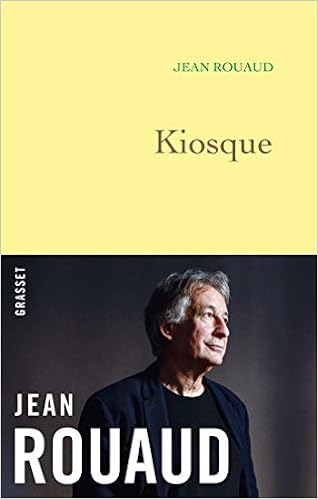
“Kiosque” by Jean Rouaud: when trying too hard is trying

For seven years in the 1980s, Jean Rouaud financed his dream of becoming a published author by working at one of the newspaper kiosks which form such an iconic part of the Paris street scene. These kiosks seem better suited as the subject of, not a book, but a Sunday colour supplement article, illustrated to show how their design has evolved over the years: the domed roof with a curvy green frieze round the edge designed for Haussman’s Paris; the stark angular plexiglas version of the type in which Rouad worked, and the most recent, controversial version of a “walk-in” green structure shielding customers from the elements.

Rouaud has needed to pad the book out, initially with descriptions of the eccentric anarchist friend who ran the stall, the rather sad ageing men employed to run errands, the motley stream of locals who came by for their favourite paper or magazine. He includes chapters on some of the controversial modern architecture of Paris 1980s, to which he seems opposed: the famous pyramid at the Louvre or what we call “The Pompidou Centre” with its pipework displayed on the outside. He writes about his family, but bearing in mind they have been the subject of five previous books, commencing with “Les Champs d’Honneur” which eventually made his name, this seems repetitious.

Having exhausted these themes, he turns more frequently to navel-gazing, wondering why he has such an urge to write, fearing that he will be as unsuccessful as the painter who is reduced to serving on the stall as well, deriving encouragement from other writers who achieved success late like Henry Miller. He tells us how sorting the newspapers has made his writing more organised and controlled, which makes one wonder what on earth it was like before. He continues to agonise over the style he should adopt, clearly wanting both recognition and the freedom to plough his own furrow.

I found this memoir particularly hard going, not just because French is not my first language. Despite implying that he has “toned down” his preferred style, Rouaud’s sentences remain long, sometimes lasting for an entire page, and tortuously garrulous, often performing mind-boggling flits without taking a breath between several tenuously linked ideas – from an Elvis lookalike with his banana-shaped hairstyle to “primitive” Flemish painters. The style seems like a throwback to the past, pretentious and laboured, larded with heavy-handed attempts at humour which invariably turn out overdone. The subject matter oscillates between the banal and the obscure. One minute he is describing in tedious detail the process of sorting magazines, the next referring to some anecdote about an obscure writer from the past, or to an artist with whom we are assumed to be familiar. Are Chardin’s painting of a skate, for instance, or Jan Van de Meyer’s unfinished portrait of Saint Barbara so well known that there’s no need to include photos of them – and why has he digressed into writing about them anyway?

Some themes are interesting, such as Rouaud’s fascination with haiku, and his habit of recording impressions using this form, in his attempt to engage more directly with realism in his first love of poetry (although he cannot abandon the belief that “l’irréalisme poétique” can be the most effective approach). The section on how Flaubert made a transition from romantic writing to “le mot juste” of Madam Bovary could also be quite enlightening, but all these disjointed topics are jumbled together in a mentally exhausting fashion. The whole book seems to be a rambling mess of ideas which needs to be reorganised.

I suppose one could regard this book as a French equivalent of “Flaubert’s Parrot” but Julian Barnes has the knack of doing it much better. Yet this style is clearly an acquired taste which some will enjoy.