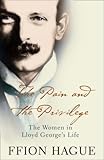
“The Pain and the Privilege: The Women in Lloyd George’s Life” by Ffion Hague – The Pain and the Privilege

This is my review of The Pain and the Privilege: The Women in Lloyd George’s Life by Ffion Hague.
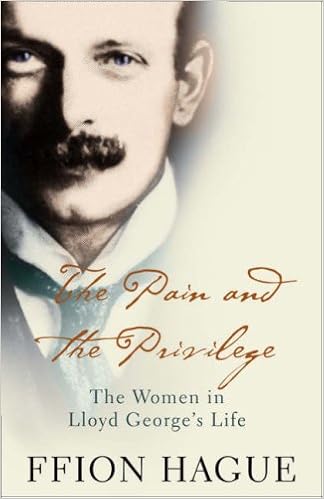
A serialisation of this book on Radio 4 caught my attention. A storyline intriguing enough to succeed as a novel was made all the more interesting through being based on real events – another case of truth being stranger than fiction. How could Lloyd George maintain the active political and moral support of his wife and his mistress when they were both fully aware of the situation even if choosing to delude themselves up to a point? Ffion Hague interprets in a compelling style the complex motivations and emotions involved. The way in which these two women played complementary roles to meet Lloyd George’s needs made me wonder how consciously he chose these two particular people for long-term relationships in an apparent sea of casual promiscuity.

The interplay of the key characters was set in the context of major developments such as the decline of the Liberal Party, the weakening of the power of the Anglican Establishment over Wales, the horror of the First World War and the profound social changes following from it. It was fascinating to realise or to speculate on just how much the wheel keeps turning – insider share dealing, “cash for honours”, the distorting power of the press – when it chose to reveal scandals- reminded me strongly of recent events. The nature of power, and the charismatic influence which some can exert over others was also explored -there were parallels between the excesses of Lloyd George and Clinton, who tarnished noble political ideals, hard work and real steps to make people’s lives better with sordid events in their private lives.

I never had any illusions about Lloyd George’s morality, so did not downgrade the book out of disgust over his self-centred lechery. Although Ffion Hague may have been a little too charitable about his motives e.g. glossing over what some would regard as egotistical conflicts with Asquith which served to destroy the Liberals faster (although the rise of the Labour Party would probably have done it anyway) and downplaying his evident nepotism and cronyism (again, everyone else was probably at it as well), she succeeds in painting all the characters in a sympathetic light. They seemed like real people, with strengths and flaws.

There was irony in spades e.g. in Lloyd George’s jealousy of his mistress Frances Stephenson’s own affair with Tweed, in the way she tried to deceive him as he deceived his own wife, in the fact that her child (who may have been Lloyd George’s or Tweed’s ) may not have given her the pleasure she craved, since the deception in which she ensnared herself made it impossible for her to be entirely straight with the girl, to the detriment of their relationship.

This was a fascinating and thought-provoking book leaving one to ponder at length on the nature of human relationships – not to mention a renewed interest in learning more about the rich history of the early C20. Countless snippets of information interested me such as Lloyd George’s denunciation of the Boer War, because as a put-upon Welshman he could empathise with the independent-minded Boers. As a young man, what would he have said about the wars in Iraq and Afghanistan?

My only minor criticism is a slight lack of editing. I spotted a mistake in a date, a few non-sequiturs, and sometimes became confused by the author’s tendency to dodge back and forth in time. The frequent references to the notes sent by his admiring womenfolk every time they heard Lloyd George speak in the Commons became too repetitious.

But these are small points, and I would rate this as a major achievement and one of the better biographies I have read.

⭐⭐⭐⭐ 4 Stars

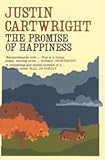
The Promise of Happiness

This is my review of The Promise Of Happiness by Justin Cartwright.

This is the first novel by Justin Cartwright that I have read, and I certainly intend to read more. I found some of the incidents e.g. over Daphne's repeated disastrous attempts at fish cooking made me laugh out loud, and many of the exchanges e.g. Pinteresque crossed wires between Charles and his wife very entertaining – humour and pathos were subtly interwoven, reinforcing each other.

Some aspects of modern life were caricatured, but in an amusing way e.g. the adverts to metamorphose dolphins into cars. References to flowers used for the wedding were also quite striking. Overall. I thought the quality of the writing very high – Cartwright wears his learning lightly and "teaches" the reader at times e.g. in philosophy, Shakespeare's use of flower imagery, without being pretentious.

Having recently visited New York, I admired his vivid descriptions of America – the townscapes, and the horror of life in a women's prison, which rang true.

There was a satisfying twist in the plot concerning Juju's guilt, which I cannot reveal for fear of ruining the story for future readers. Although the family was perhaps irritatingly bourgeois for someone (like me) who does not come from that class, the fact that most of the characters were deeply flawed and in some ways unlikeable did not matter. The interest lay in their interactions and thoughts on the world.

I believe Cartwright is a philosopher by training, and I enjoyed the skill with which he wove ideas on potentially dull topics such as utilarianism – more effectively than in many text books on the subject.

Although I think Juju's ex-lover Davis played a significant role in the plot, I felt there was more scope to develop him as a character and perhaps to introduce him earlier.

Charlie was the most likeable character, perhaps too good to be true although flawed in his passive drifting into a marriage to Ana, about which he was clearly ambivalent. I admired Cartwright for sticking to such similar names for a father and son – Charles and Charlie: confusing, as I am sure many editors would say, but realistic.

The sense of loss and disconnection as one approaches middle age was covered in a poignant way which one may need to be over fifty to appreciate.

The irritation and confusion over the break down of "traditional" attitudes and values was also explored in a thought-provoking way.

Apart from my failure to understand the point about Juju writing cheques for the stolen window because her lover-boss had no money (so was it her own money?), I can find little fault with the plot. Maybe it was a bit repetitious in places i.e. in reinforcing impressions of the characters needlessly e.g. Ana the "glamour puss", but the writing succeeded in building up the tension to the dramatic point at which Charles and Juju met face-to-face at the end.

Overall, the plot was very coherent and the quality of thinking and writing excellent. Writing of this order deserves to win prizes.

⭐⭐⭐⭐ 4 Stars

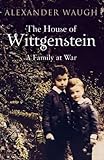
Ludwig Wittgenstein unmasked

This is my review of The House of Wittgenstein: A Family at War by Alexander Waugh.

I read this book on an impulse, having recently become interested in philosophy. However, Ludwig Wittgenstein, although perhaps the most famous member of the family, was not allowed to dominate the tale.

This was more than just the biography of a family, but a window on Viennese life in the dying days of the Hapsburg Empire leading to the Nazi occupation and its aftermath. The story is full of entertaining anecdotes, and reads like a novel. In some ways, the main character, possibly the one with whom the musical author most empathises, is the pianist Paul. He typified the extraordinary determination and eccentricity which marked the dynasty, by succeeding in his driven ambition to become an internationally renowned concert pianist, despite the loss of his left hand in the First World War. Another interesting aspect was the way in which the family used its great wealth, with a strange mixture of philanthropy and greed, only to face the terrible levelling of being deemed Jewish under the Nazi regime. Yet again, the neurosis which bedevilled such an initially privileged group of people is well-explored.

The beautifully translated exchanges between the family members, as recorded in letters, make fascinating reading.

I fear I shall never be able to take Ludwig seriously as a philosopher again, since even he seemed to feel that much of his writing did not make sense, and it appears that his reputation is founded on the magnetic attraction he exerted on the male Cambridge academics of the day. He is portrayed as what we would call bi-polar with some individual and laudable ideas e.g. about the damaging effects of wealth, marred by at times bizarre behaviour e.g. resolving to become a teacher for altruistic reasons, only to beat unconscious a pupil who failed to meet his exacting standards.

⭐⭐⭐⭐ 4 Stars

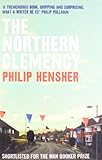
The Northern Clemency

This is my review of The Northern Clemency by Philip Hensher.

I agree with reviewers who have found the book too long and clunky. I did wonder whether the book has been highly regarded by "experts" – even published- because of the author's literary connections. Some of the dialogue was well-observed and amusing in a painful way such as the bullying of Jim by his teenage siblings, or the interrogation of Sandra by the police. All too often, potentially dramatic situations were built up, only to be allowed to drift away – this may of course have been a deliberate comment on real life.

Much of the plot seemed rather pointless and unengaging – again like real life. Did I imagine that Sheffield people were being patronised somewhat? I felt towards the end that I was reading a rather bland soap opera. The constant switching from one point of view to another was interesting where characters were shown to perceive events or each other differently, but meant I did not build up any close empathy with any one character.

Certainly, with some ruthless editing, this could have been transformed into a thought-provoking, possibly memorably quirky novel.

And I never did understand the meaning of the title….

⭐⭐⭐ 3 Stars

Survival by Waspish Wit

This is my review of The Believers (Penguin Street Art) by Zoë Heller.

The characters are more important than the plot in this tale of the very different, admittedly rather exaggerated members of a New York based family, after successful left-wing lawyer Joel collapses in a coma.

Funny, imaginative, well-observed, this novel has the power both to entertain you but also enhance your sympathy for a varied group of initially unsympathetic characters, partly by revealing the complexity of their behaviour and what lies behind their flaws. We see, for instance, the reason for the mother Audrey's addiction to "saying the unsayable like it is" and how she is redeemed by the fact that this cruel honesty both gives her great resilience, and also, when least expected, prompts her to supply the necessary support to others e.g. to her daughter Karla, the most likeable character in the tale. Another reviewer has commented that she found it hard to believe that an innocent young English woman could have grown after forty years into the waspish character of Audrey, but I was fascinated by this example of how people can alter over time, as a reaction to what life throws at them.

Zoe Heller's writing is flawless in its striking imagery, witty, fast-paced exchanges and thought-provoking observations on people's motives and situations. New York is vividly evoked and the plot resists any final frantic attempt at the contrived tying up of loose ends. Instead, it meshes to a conclusion that satisfies by bringing us to partial acceptance and an understanding of the main characters, warts and all.

⭐⭐⭐⭐⭐ 5 Stars

Beautiful writing, flawed plot

This is my review of The Secret Scripture by Sebastian Barry.

I would have rejected this book for its "grim" theme of an old woman dying in a mental asylum, but was obliged to read it as a "book group" choice. From the first page, I began to revise my opinion, struck by the poetic quality of the writing, with unusual and memorable imagery. The sad situation of the central character Roseanne was eased by her own wit and self awareness. The Catholic priest, Father Gaunt, was a wonderfully malign presence through the book.

The story deteriorated for me at the point when Roseanne recalled her life as a young married "normal" woman. The relationships with her husband and his family were underdeveloped and the events leading up to her incarceration were often unclear, even implausible. Without revealing too much, the manner in which she became pregnant and the details of the birth of her child were unconvincing or unrealistic.

The idea that we may have different perceptions and recollections of past events is interesting, but I was irritated that Grene felt the need to spell this out so specifically, rather than leave it to the reader to work this out.

I also agree with reviewers who have found the final denouement far too contrived – almost ludicrous in the piling on of coincidences.

Also, the wise and self aware "voices" used by both Grene and Roseanne were often too similar – and it was unlikely that an old woman asylum-bound for so long would be so lucid.

This tale is much less bleak than other recent Irish novels e.g. The Gathering or The Sea, but although I admire the quality of the writing I would not recommend it strongly. At first I thought it was an interesting take on the timeworn theme of the effects of Catholic bigotry but was left thinking that it had added little to my understanding of this.

⭐⭐⭐ 3 Stars

Found Wanting found wanting

This is my review of Found Wanting by Robert Goddard.

A few years ago, the discovery of Robert Goddard's books saved me from acute boredom when laid up with a broken ankle. Since then, I have loyally read each book as it appears in paperback, but have found the last few offerings disappointing.

I agree with the tenor of many previous reviews that "Found Wanting" (winced over the corny origin of the title revealed near the end) is a pale shadow of Robert Goddard's earlier works. My main criticism is of the style of writing which seems to have been spewed out without much reflection. Rather on the lines of Sansom's "Revelation", or Peter Robinson's detective thrillers, very successful writers appear to grow complacent and churn out tales which they know will be instant bestsellers regardless of quality. This is somewhat insulting to the reader…..

Descriptions of the many cities visited were too often lists of landmarks, I imagined being written with guidebook in hand, although some of the descriptions of the flat snowy Scandinavian countryside were quite good.

Although tempted to discard the book early on, the old Goddard hook began to catch with the questions around the identity of Anastasia, and the familiar convoluted plot twists. I quite liked the cliffhanger at the end of many chapters, and the impossibly tight spots in which the improbably ingenious and courageous Eusden found himself – even if some scenes were implausible – Why on earth did he agree to make himself into a running target at the end? And the romance with Pernille was corny and undeveloped, as was the triangular relationship between his old friend and ex-wife.

I once read a Robert Goddard twice by mistake, which makes me ask whether it wouldn't be better for him to stop and let us reread his best works every few years – but no doubt it is too tempting for him to cash in on the momentum he has created.

⭐⭐⭐ 3 Stars

Byzantium The Early Centuries

This is my review of Byzantium: The Early Centuries: The Early Centuries v. 1 by John Julius Norwich.

Previous reviewers were right. This is an informative and entertaining read. It goes into more detail than I expected for a "non-academic" text, but it held my attention through the frequent little anecdotes. I was left marvelling at the scholarship which gave the writer access to such details, which he then communicated with such effortless ease. The occasional "blanks" where he had to admit that "no one knows what actually happened" make one realise how remarkable it is that we know so much. I plan to read the book again at some stage to absorb all the facts – hard to take it all in fully on a first reading, and have already obtained the second volume to read on.

Perhaps the two main achievements of the book are to help one to understand the significance of Byzantium and to bring home the huge variety and scale of activity going on in the so-called Dark Ages. Amongst other things, the barbarous Vandals and Goths were often surprisingly cultured. Yet, even the great Byzantime emperors could indulge acts of great cruelty, such as cutting off tongues and noses.

Highly recommended…..

⭐⭐⭐⭐⭐ 5 Stars

A Vengeful Longing

This is my review of A Vengeful Longing by R. N. Morris.

This is a cut above the average crime thriller,well-written and creating a vivid sense of life in nineteenth century St.Petersburg, apparently based on close research, even down to the post mortem practices of the day. The background of corruption, bureaucracy, pollution, poverty and vice is developed and sustained without the story becoming too depressing, perhaps because of the hooks of an intriguing plot and the varied cast of characters. Clues are slipped into the complex twisting plot to give an ending which is hard to predict, with the loose ends tied up. There seemed stronger character development than in the first novel, with humorous interplay between the eccentric detective hero Porfiry and his sidekick Virginsky.

However, as with "The Gentle Axe" I am left a little disappointed at the end by some almost ludicrous implausibilities in the plot (not quite so marked this time)- which I cannot reveal for obvious reasons, except it's safe to cite the occasion when Porfiry interrogates a murder suspect in front of a large audience. Some scenes are frankly odd e.g. where Porfiry almost bumps into a civil servant who faints when challenged seemed bizarre at the time. I also find too many of the characters seem to be caricatures, and therefore unconvincing. Perhaps I am guilty of taking the plots too seriously!

So, I am left feeling ambivalent, but recognising that Morris is an original and talented writer in this genre. I just wish that such good writing was applied to slightly more "worthwhile" plots!

⭐⭐⭐⭐ 4 Stars

Mixed feelings

This is my review of The Point of Rescue: Culver Valley Crime Book 3 by Sophie Hannah.

After an intriguing start, the tragi-comedy of working mother's Sally's chaotic life was entertaining and an interesting use of rueful humour to convey the conflicts involved in trying to juggle children and a career. There were some ingenious plot twists – I can't say which genuinely surprised me, without giving too much away. I agree that some of them were implausible.

On the other hand, as with many such books, which will obviously gain a wider readership and massive earnings, I have to ask why the clearly talented author did not spend just a little more time on ironing out the flaws.

The diary entries rapidly became tediously repetitive and almost caricatures of the situation, although you could argue that was intentional. A more serious weakness was the unconvincing love interest between the two police officers, and their odd, inadequately explained and developed psychology. All the other policemen seemed to be caricatures.There was a tendency for key "information giving" conversations to drag on for an implausibly long time given the circumstances e.g one party had to rush off to a meeting, or was driving at high speed on a hunch to save someone's life.

I was also too often aware of the same rather cynical, sarcastic voice coming through too many of the characters. I had no objection to the voice itself, just suspected it was the author's own voice, and felt it needed to be attached to one or two characters, not most of them. I was also unsure about the frequent digressions into amusing but trivial asides at dramatic moments – this with the generally rather shallow and manipulative relationships between key players made me care too little about any of them, and led me to leave the book and move on too lightly.

⭐⭐⭐ 3 Stars