This unusual memoir basically interweaves the contrasting descriptions of flatlands in Britain for which the author feels a particular affinity, with her memories of a troubled childhood in Lahore and its long-term effects on her.
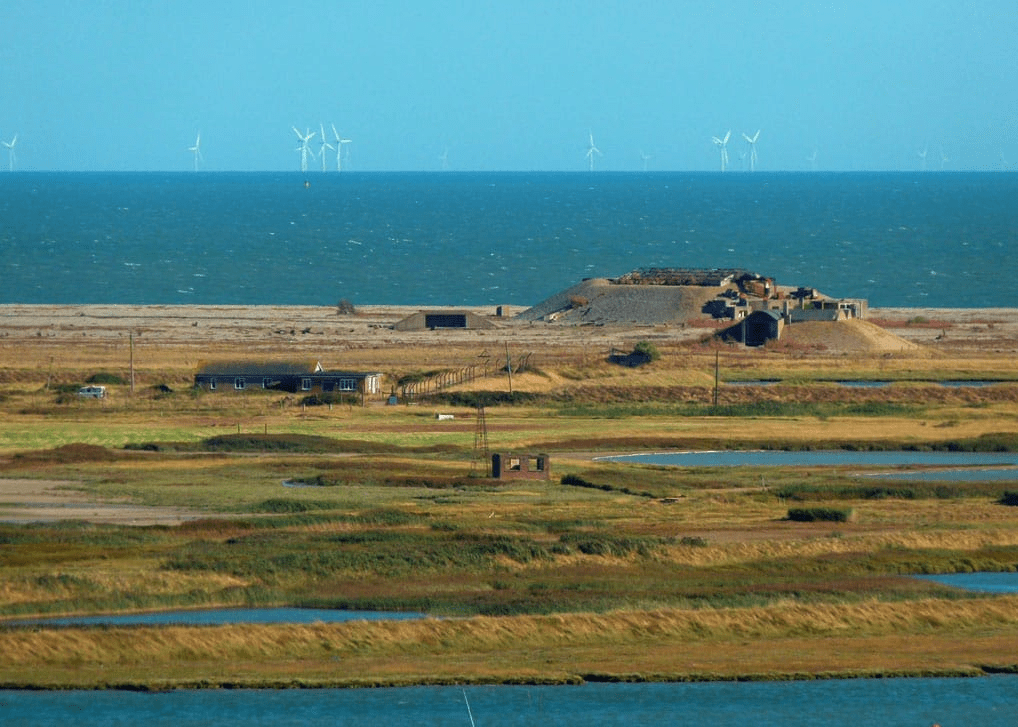
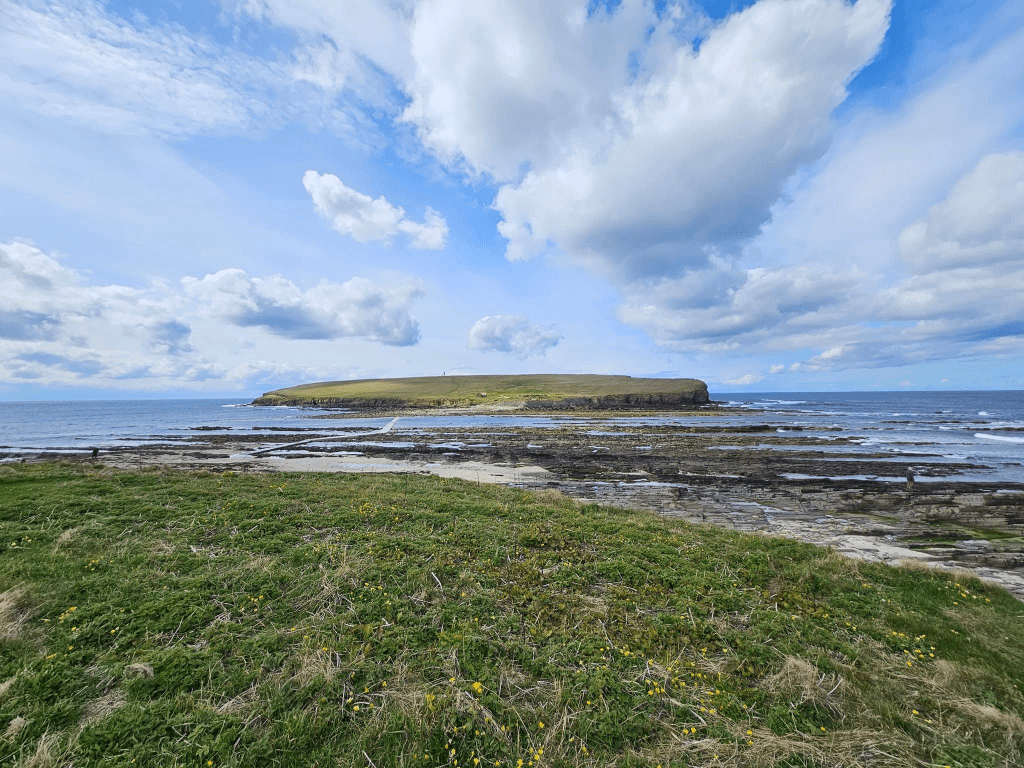
The five areas which Noreen Masud visited are: the fens around Ely and Welney;Orford Ness in Suffolk; Morecambe Bay; some of the Orkney islands and the least remote Newcastle Moor. A chapter is devoted to each one, with descriptions which are closely observed, vivid and poetic with interesting snippets of local history and relevant literary quotations culled from her store of knowledge as an English literature graduate and university lecturer. However, the obsession with “flatness” begins to seem contrived, its value, as compared with mountains and valleys, almost ludicrously overrated, although one realises that it is being used as a means of assisting or understanding better a particular mental state.
The author’s father was a flamboyant, controlling Pakistani doctor who took his British wife to Lahore where they produced four daughters. Perhaps protesting too much, he liked to declare “My girls are my boys”, insisting they should have a good education and careers, but also confining them to the upper floor of a house with chicken wire across the windows, and often subjecting them to insensitive, even violent treatment. She describes him as a fantasist, but reports taking part in incidents which are hard to credit, such as when he used the dining room table to operate on his own father who had just suffered a heart attack, and summoned his young children to assist, with Noreen holding out a white dinner plate to catch “the cut ribbons of my grandfather’s meat”.
Two flat surfaces triggered a lasting desire to be in flat places where Masood could feel sufficiently at peace to reflect calmly and make sense of life. One was the cool flat stone floors of the family home. The other was the empty green space of the park passed on the way to school, improbably existing “in the middle of crowded, parched, shouting Lahore”.
When, aged 16, Masud found herself “disowned” along with her mother and sisters by her irrational, maverick father, she actually benefitted from the move to Britain which provided the freedom to graduate in the English literature which she loved, and opportunities to study at Oxbridge, obtain grants for creative writing and quickly win praise and awards for her published work. This makes her outbursts on, for instance, British racism and ongoing exploitation of other nations, which began under the Empire, seem somewhat ungracious and lacking in insight. After all, many white British people also suffered in the past and continue to do so, while dominant powers the world over have always exploited weaker or less developed countries, while also providing some benefits in the process.
We are told at the end that this book began as “solely, a study of encounters with flat landscapes” and it was only through discussion with her agent that Masud came to realise that “the complex trauma.. sustained… in early life was an element which could not be omitted”.
To quote:
– “cPTSD describes traumatic experience which extends over a length of time….there’s no single traumatic experience such as childhood neglect and prolonged captivity.”
– “I write that cPTSD is like a flat landscape in the sense that there is no single event to point to, there is nothing to look at or focus on and yet there’s something about not being able to look away either.”
No doubt, books about neurodivergence sell well these days, but the continual references to cPTSD (complex post-traumatic stress disorder) lead to excessive repetition, a tendency to woolliness and self-absorption which evaporate one’s sympathy. Her portrayal of personal awkwardness and attempts to relate “normally” to people when she really prefers objects like stones or bones, do not tally with the frequent references to “my friends” and her ability to analyse the people she observes. All this assumes, of course, that she is writing a form of autobiography rather than a fictionalised account.
This book is memorable, may encourage one to visit some of the places covered, and would provoke a good deal of not entirely uncritical discussion for a reading group.
Photos of Orford Ness and The Orkneys respectively.

