
A talented illustrator of children’s stories, the improbably named Halcyon aka Hassie Days finds that contracts have dried up following her decision to focus on caring for her dying father. Together with her sister Margot, she agrees to share their joint inheritance from him on the purchase of a neglected old house in the Shropshire village of Hope Wenlock. This is clearly not a good idea since the two have continued their childhood bickering into adult life, and have very different personalities and aspirations, Margot being smart, materialistic and employed in some form of high finance. It gradually becomes apparent that Hassie is going through a mid-life crisis, triggered by a recent love affair.
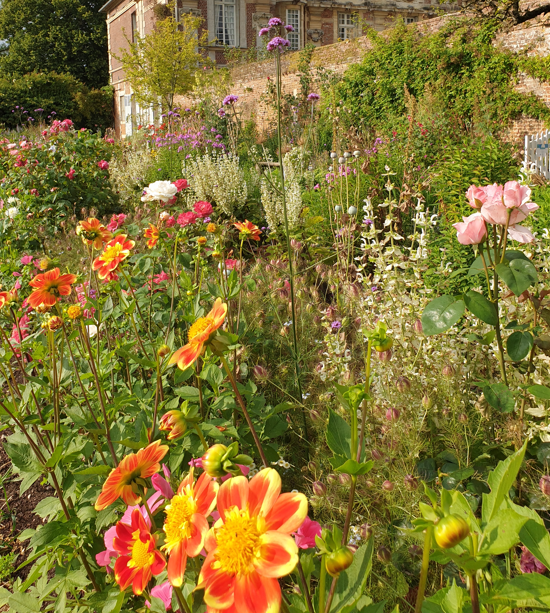
At first, I was hooked by Hassie’s wry humour, and insightful observation of varied local characters, or Margot’s friends, despite the apparent inability to manage her own life. The influences which have made the two sisters so different are intriguing. The descriptions of the scenery around Wenlock edge, and the garden which Hassie transforms with the help of the resourceful Albanian Murat, who may be lying low for reasons connected with immigration, are very vivid and compelling.
However, the last five chapters proved a growing disappointment: “So many things happened in quick succession around this time that I may have got the sequence confused”. I am inclined to speculate with other reviewers as to whether the author was pressed for time to finish, or even struggling to find a happy ending that would not seem too trite. While some loose ends or last minute crises are tied up too neatly, other threads are brought to the fore without being adequately woven into the tale. For instance, the accounts of the C7 abbess, St.Milburga, are rather tedious information dumps. As she reads the journals of Nelly East, the former occupant of the house who was so repressed by her husband, Hassie’s affinity with her seems too sudden and undeveloped. Several incidents appeared implausible, too rushed, or both. Murat remains a two-dimensional character to a frustrating degree.
I could appreciate the process by which Hassie might come to terms with fate, develop a sense of proportion and renewed purpose in life. However, the hint of magic realism, “away with the fairies”, was a step too far.

