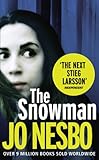
This is my review of The Snowman: A Harry Hole thriller (Oslo Sequence 5) by Jo Nesbo.
Reading the fifth of the Harry Hole series to be translated into English, I was as usual torn between an irresistible compulsion to get to the end, and irritation with myself, since I knew the grand finale would be preposterous, and I should be spending my time on something more challenging, not to mention less at times gratuitously nasty. Perhaps the ludicrous nature of some episodes, or the touches of humour or pathos serve to offset the scenes that leave a dirty taste in the mouth.
However, if you are going to read this genre, Nesbo is one of the best as regards pacy, twisting, nail-biting plots. Also, “The Snowman” is an improvement on the earlier books in the series, in that the characters are more developed, with more space devoted to their inner thoughts – we have Rakel trying to convince herself that she has “moved on” from her relationship with Harry, or the bumptious young policeman Skarre making clumsy chauvinistic passes at an attractive new work colleague, then pretending she wasn’t worth it when he has been rejected.
The quality of the writing and the structure seem to be better. Some odd similes, like the snowflakes which “invaded like an armada from outer space” are acceptable for their exuberant style, although the question remains as to what extent jarring – even incomprehensible – phrases are due to the translator lacking a writer’s flair. There is also less of the confusing flitting back and forth in time.
I still like the distinctive Nordic touch – the inescapable, persistent snow, the pragmatic sexual frankness, the melancholy introversion of many of the characters.
The plot based on a deranged serial killer is perhaps less interesting and original than those based on social or political issues, like “The Redbreast”, although the storyline is handled better.
Whatever you think of the plot, the details as ever stack up neatly at the end. Even though I am getting better at seeing how Nesbo’s mind works, there are still moments of real tension when it seems impossible for a character to survive. Although the drama seem almost strip cartoonish at times, you know that, although Harry will live to appear in another book, he may only pull through at a price, and those close to him may not.
As ever, this is a good read for a long journey or airport-stranded, stuck in hospital situation in which you want to lose yourself without too much effort.
4 Stars