“Don’t Let Go” by Michel Bussi – The risks of revisiting the past

This is my review of Don’t Let Go: Some holidays are paradise, some are murder…. by Michel Bussi.

On holiday in the French tropical paradise of Réunion, Liane Bellion disappears from her hotel room, leaving only evidence of a struggle. As the damning evidence against him mounts, her husband Martial decides to go on the run with the couple’s pampered but bright six-year-old daughter Sopha. This being a novel by Michel Bussi, Martial is unlikely to have murdered his wife, but is unable to prove his innocence, plus he could well have committed some other crime, or be about to do so.

In the same vein as Bussi’s excellent “Nymphéas noirs”, this novel has a remarkably convoluted plot in which the reader can be sure of nothing, except that the author is capable of switching from corny mawkishness to moments of brutal violence or tragic fate from which no character may be spared. Once again, he develops a strong sense of place, in this case a volcanic island with some striking landscapes of deep craters, lava fields encroaching on fields of sugar cane and palm-fringed beaches, scenic tourist spots, which he describes in detail along with the local vegetation and birdlife – all of which can be checked on google images. Even the route Martial takes can be located on “street view”, and the Hotel Alamanda at Saint-Gilles-les-Bains exists in reality.

Bussi also fleshes the story out with details of the social background: the Créoles, descendants of slaves and still exploited as cheap labour in the hotels, the Zarabes, muslims of Indian origin like the driven police officer, Captain Aja Purvi, and the Zoreilles, the “top dogs” from the French mainland.

This is a page-turner until the accumulation of implausible plot twists becomes too much to swallow and by then it is too late to give up. There is also the odd dud scene, such as the clunky debate on the effects of rum on the local population conducted by the hypocritical drinking mates of unlikely police lieutenant Christos. Even more toe-curling are the sex scenes with his voluptuous lover Imelda.

Most of the characters seem somewhat overdrawn: ageing hippy Christos, with his grey pony-tail, smoking pot he has confiscated from Imelda’s borderline-criminal teenage son Nazir; Imelda herself, a Creole Miss Marple to out-class the detectives, but not wise enough to avoid having five children by different feckless men, nor keep clear of danger in her sleuthing; Aja Purvi, humourless in her single-minded ambition, throwing the furniture round in bursts of unprofessional frustration, exploiting her long-suffering husband’s seemingly inexhaustible good will as he somehow combines a teaching career with caring for their two daughters.

The slightly jokey tone perhaps makes one take the occasional bloody murder too lightly. The strongest aspect of the book is the creation of a sense of tension as Martial and Sopha maintain their freedom against the odds. The only subtle relationship in the book is the complex bond between the two as Martial tries to connect with the daughter whose care has always been provided by his overprotective wife, with the constant nagging suggestion that Martial may in fact be even more of a monster than the police believe.

This “reads” better in the original French rather than the very literal but somewhat wooden English translation. For the reasons given above, it is not as effective as “Nymphéas noirs”

⭐⭐⭐ 3 Stars

“The First Man” by Albert Camus – Making sense of a life

This is my review of The First Man (Penguin Modern Classics) by Albert Camus.

If possible, this is best read in French to appreciate fully Camus’ writing.

When forty-year-old Jacques visits his father’s grave, he is taken aback by the realisation that he was only twenty-nine, far younger than his son is now, when killed in the First World War. The compulsion to find out more about his father takes Jacques back to Algiers where he was brought up, but the visit fails to provide many clues as to what his parent was really like. Jacques realises that he will never know his father, who will remain a mystery resulting from his poverty, being one of the anonymous masses despatched in waves to develop North African territory between the sea and the vast expanses of desert. So Jacques must be self-sufficient, “le premier homme”, learning to grow up without a sense of roots and recollections from the past.

The book develops as a moving account of Jacques’ childhood in a close-knit but impoverished family, starved of opportunity, lacking books, newspapers, even a radio, too busy in the struggle to survive to communicate much or reflect life. He craves the affection of his widowed mother who is clearly proud of him, but cannot express her emotions. Isolated by her deafness and illiteracy which means she can only earn a living as a cleaner and washerwoman, the nearest she gets to escape is to sit by the window, watching the world go by. A brief attempt at romance is destroyed when her brother beats up the suitor who threatens the family unit. Jacques’ formidable grandmother’s belief in character- building includes sending him out at the night to catch a chicken in the coop before forcing him to watch its execution. At thirteen, he is denied the pleasures of roaming free in his summer holidays by her insistence on his earning money in the accounts office of a hardware store.

At first I was disappointed to find that this fictionalised autobiography of Albert Camus, in which he sometimes reverts to the characters’ original names, is incomplete – an unedited stream of conscience found at the scene of his fatal car crash, a draft which so dissatisfied him that he intended to burn it. My initial impressions were of a disjointed, often banal and indigestible read, with long sentences in interminable paragraphs of I counted up to eight pages.

I became hooked at the point where Jacques is taken under the wing of primary school teacher M. Bernard, the father figure when he needed one, who sees the boy’s potential and goes out of his way to prepare him for the entrance exam for the lycée, his escape route from a life of grinding poverty, not to mention charming the boy’s grandmother into letting him continue his studies when he could be contributing to the family’s meagre earnings. It is fascinating to see how schools have changed: overhearing Jacques called a “teacher’s pet”, M.Bernard readily admits this, announcing it is the least he can do for comrades killed in the war to favour one of their deserving offspring. When, as honour among pupils requires, Jacques beats up the boy who has mocked him, and the parents complain, Jacques is mortified to be forced to stand in the corner of the school yard for a week with his back to the ball games he loves. M. Bernard sidles up and gives him permission to look across to where the other boy is being punished in the same way.

There are wonderful descriptions of the oppressive, prolonged heat of Algiers in the long summer months, suggesting the germ of the idea for “L’Étranger”, or the joys of childhood, as when Jacques brandishes a palm branch to revel in the feeling of the wind vibrating through his body. A recurring background theme is the effect of colonisation where a centralised French cultural curriculum is imposed without any concessions, together with the uneasy relationship between Arabs and residents of French origin. Also, Jacques’ intense introspection, examining issues from all angles foreshadows Camus’s philosophical writing in later life, as in “La Chute”. In short, this book is not only a vivid portrayal of the life of a bright but emotionally repressed boy in a poverty-stricken but close-knit family, but also a key to the literary works which brought the author fame and criticism.

It repays rereading to tease out the mass of insights and ideas. Invaluable for any student of Camus and his work, the power of its spontaneous flow compensates to some extent for the lack of editing.

⭐⭐⭐⭐ 4 Stars

“Black Moses” by Alain Mabanckou – Savage irony

This is my review of Black Moses: A Novel by Alain Mabanckou.

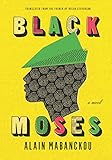
What at first seems like memories of a childhood spent in a Congolese orphanage gradually becomes more surreal, proving by the end to be a kind of fable. A savage indictment of the brutal, corrupt, superstition-ridden and hypocritical regime of Congo-Brazzaville, it employs irony, farce and imaginative, no-holds-barred verve to make its point. The narrator Moses, nicknamed “Little Pepper” for his unorthodox method of dealing with a couple of bullies, befriends a fellow pupil called Bonaventure in the orphanage that mirrors the failings of the wider society of which they are both victims. Whereas Moses becomes more aggressive over time, pursuing a life of crime in order to survive, Bonaventure remains naïve and detached, yet both are eventually judged mad in a crazy world.

The novel has an authentic ring, perhaps because the author grew up in Pointe-Noire, the coastal town he describes so vividly. I like the flights of fancy as when Mabanckou reels off a list of particular food preferences by region, each deplored by all the rest: the Lari eat caterpillars, the Vili adore shark, the Tékés go for dog, and the northern tribes consume crocodile, despite regarding the reptile as sacred. Later on, the author’s imagination runs riot with various remedies supplied by a local healer to cure Petit Piment’s mental problems: cricket’s urine, green mamba’s blood, toad’s saliva, elephant hair mixed with kaolin and sparrow droppings.

I found the style hard-going at times: initially slow-paced, with too much repetition and explanation of events in somewhat unrealistic dialogues as when, sent to the school infirmary to give Moses his medication, assistant Sabine Niangui launches into a lengthy, intimate description of her early life. Events often seem disjointed, and new characters tend to be introduced too abruptly only to disappear as suddenly. Together with the casual violence and frank approach to bodily functions, this may reflect the reality of an orphan’s life, or the general state of affairs in the Congo, but the very prolific Mabanckou does not seem to have the time or inclination to fine-tune his work. Towards the end it is as if he has lost interest in the story, bringing it to a rapid, neatly contrived yet also open-ended conclusion.

Some may enjoy the picaresque inventiveness, but having made its point about the Kafka-meets-1984 state of the Congo, it did not hold my interest, as anything more than an opportunity to practise reading in the original French.

⭐⭐⭐ 3 Stars

“Snowblind” by Ragnar Jonasson: Scandi-gris

This is my review of Snowblind (Dark Iceland) (Dark Iceland 1) by Ragnar Jonasson.

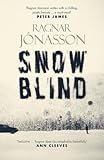
Being a sucker for detective fiction, I was ready to be hooked by this novel set in Siglufjörður, a real but obviously fictionalised small town in northern Iceland. It seems implausible that fresh from police college Ari Thór would leave Reykjavik to accept a post there, without having visited the place or discussed the move with his trainee doctor girlfriend, still less likely that the job would be offered without interview, unless it is very hard to fill. This seems possible in that Ari Thor soon develops misgivings over the isolation of the small town, linked by road to the rest of the world only via a narrow tunnel, together with the apparent lack of any real crime, and the sense of being an outsider heightened by finding himself an instant topic of unbridled gossip in the close-knit community.

Although the book is halfway through before it gains the momentum to become a full-fledged crime mystery, I like the way that Ragnar Jonasson sets the plot against the background of the 2008 financial crisis, referring continually to its implications for ordinary people, and also describes a pattern of life in which Icelanders are often obliged to leave their home towns for work, yet feel drawn back inexorably, partly by the magical beauty of the summers. Although the author writes less than I had expected about the depressing effect of prolonged darkness, he conveys well the claustrophobia created by heavy snowfalls which trap people in their communities. Ari Thór’s immaturity and impulsiveness, his attempts to conceal his inexperience and difficulty in handling his relationships with women all seemed quite convincing and aroused my sympathy.

I suppose this has been called literary fiction because the main characters are developed in some depth, with an attempt to explore their psychology and inner thoughts. The problem for me is that at first there seem to be too many of them, with over-similar “voices”, each revealed in turn in a somewhat indigestible slab of backstory, often involving the traumatic effect of the death of a close relative during the character’s childhood or youth.

Clues are dropped on the way, without being too obvious, and the plot is credible but the “denouement” seems a bit rushed. Also, although the English translation comes across as natural and does not jar, the style tends to be bland and prosaic, so may not do justice to the original.

Scandi-gris rather than noir, this is an easy, entertaining read, with some interesting psychology and a strong sense of place but which lacks tension or striking prose.

⭐⭐⭐ 3 Stars

Thérèse Desqueyroux – Trapped

This is my review of Thérèse Desqueyroux (Penguin Modern Classics) [ Language:English ] by Francois Mauriac.

Inspired from his youth by the real-life case of Blanche Canaby, accused of the attempted murder of her husband, Mauriac developed the classic tale of Thérèse Desqueyroux, a character who fascinated him so much that she figures in two subsequent novels.

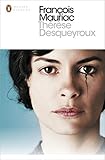
In the opening chapter, the charge of poisoning her husband Bernard is dropped against Thérèse Desqueyroux, after he has lied to “get her off the hook” for the sake of appearances. The rest of this short novel is an exploration of why she committed the crime, and the aftermath of her acquittal. Set in the pine forests of Les Landes near Bordeaux, this is a study of the stifling convention and hypocrisy of bourgeois landowning families in 1920s France. Intelligent and “charming”, if not exactly “jolie”. Thérèse has passively accepted her lot, which is to marry Bernard, son of the neighbouring family and step-brother of the bosom friend Anne for whom she may harbour more than a schoolgirl crush. Prior to marriage, she is quite attracted to Bernard, with the added appeal of his property to be combined with her inheritance. Too late, she realises the extent of his dullness, growing tendency to over-eating and hypochondria, but perhaps worst of all is the sexual contact for which she has not been prepared – in time, his mere physical presence repels her.

Having recently seen the film version of this novel, starring Audrey Tautou, I was reluctant to read this for a book group: although sympathetic to Thérèse’s sense of being trapped, I was alienated by the irrational and excessive nature of her attempt to murder Bernard. Having read the novel, and gained an insight into her thoughts, I continue to regard Thérèse as psychopathic in her coldness, showing a lack of maternal feeling for her daughter Marie, and jealousy towards Anne, stabbing in the heart the photograph of her unsuitable lover and, with an ulterior motive which does not bear close analysis, joining readily in the family plot to separate the pair. When she is driven to contemplate poisoning herself, she is unable to do so, but at least recognises the “monstrous” aspect of this, since she was quite prepared to poison Bernard without compunction.

On the other hand, although I do not think Mauriac adds much to the theme of female repression which has been covered so often – perhaps in part because he finds it hard to get inside a woman’s mind – it is the quality of Mauriac’s writing in the original French, less so translated into English, which impresses me. I like the way he plays with time, mixing together present situations and fleeting thoughts about the past or future in a kind of stream of consciousness which must have seemed quite radical at the time. His portrayal of the pine forests in changing weather, to which Thérèse can clearly relate better than to people, is striking. He tends to write in emotionally violent terms about overwrought dysfunctional characters tied together by social bonds – the title of his famous “Knot of Vipers” being a good example of this. His bitter, vituperative flow, full of images of walking over the still warm ashes of a landscape one has burnt, being frozen in the immense and uniform ice of an oppressive environment or drowning oneself in the crowds of Paris, holds one’s attention, even when having little liking for the characters or even perhaps the author himself.

⭐⭐⭐⭐ 4 Stars

Troubled times somewhat lost in translation

This is my review of The Brethren (Fortunes of France 1) by Robert Merle.

This opening novel in a thirteen part saga of the Huguenot de Siorac family during an unsettled period of French history starting in 1547 has at last been translated into English as “The Brethren”. “Fortune de France” is best read in its original language, if possible, since it conveys more of a sense of the period, of the personalities of the key characters and the alternating humour and pathos of the chain of incidents. By contrast, the English translation which I used to check a few points appears to be a rather wooden literal translation.

The story is told by Pierre, a sometimes hot-blooded but perceptive and questioning narrator. At first, I was a little bored by what seemed like a dry beginning, and thought I would prefer to read a straightforward history of a period which I have never quite grasped: the French Wars of Religion between the Catholics and equally intolerant Protestants.

Quite soon, I became intrigued by the main characters: the contrast between the serious, puritanical Sauveterre, and his more charismatic “blood-brother” Siorac, spontaneous, often generous, yet capricious with a capacity for great inconsistency and callousness. A doctor by training, he risks his life saving his bastard child Samson from a plague-ridden village, only to introduce him into his household as his son, regardless of the feelings of his long-suffering wife. When “the brethren” feel prepared to risk declaring their protestant faith, Siorac tries to get all his children and servants on side, before cornering his wife with the command to abandon her catholic faith, although he knows that she is devoted to it.

There are some daft episodes of three musketeer bravado, but also some tense and moving scenes exploring the psychology of people with complex emotions of jealousy, rivalry, divided loyalties, duty, fear, to which we can relate even when they are bound by very different beliefs and attitudes from our own. Siorac faces the disapproval of a highly regarded doctor with his scepticism over the value of bleeding people as a cure, but when proved right does not point this out since he knows that the other man’s vanity will not let him accept the truth. There are also some interesting and convincing accounts of how the Sioracs fortified their property, related to their (remarkably few) servants and workers, and made a living from the land.

I’m not sure I feel motivated to read any more of the series, but found this a surprisingly good read – in French, but less so in English.

⭐⭐⭐ 3 Stars

Resistance: Memoirs of Occupied France by Agnes Humbert – Fighting to prevent war

This is my review of Resistance: Memoirs of Occupied France: Translated by Barbara Mellor by Agnes Humbert.

Although I read this in French, which I would recommend for the natural, unpretentious style and vivid idioms, these comments may be useful for the English version.

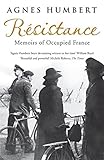
An early feminist with the confidence of a senator's daughter, left-wing with a career in a Paris museum, two grown up sons, divorced from her artist husband, when the Vichy government decided to collaborate with Hitler, Agnes Humbert felt obliged to take action. Her "Journal de Résistance", for practical reasons probably written mainly after many of the events covered, is less about her work typing and distributing propaganda, and much more an account of life as a political prisoner, sent to Germany as a slave worker.

She makes us aware of the ingenuity of prisoners, their overwhelming desire to communicate, and the poignant rapid adaption to a state in which one can barely remember any other way of life. She describes in detail lying on the floor to enable one's voice to pass under the cell door, making a ball out of fruit wrappers, only for a sadistic guard to hear the sound of her playing with it and transfer her to a dirtier cell with no window as a punishment.

The grimmest section is the record of life operating the machinery in a rayon factory, which meant exposure to acid, blistering the skin, damaging eyesight and affecting breathing. This may well have contributed to Humbert's death later in her sixties. Despite her efforts to produce shoddy goods (reels of silk with hidden knots) I could not help noting the irony that her factory work probably contributed more to the Nazi cause than the activities which landed her in prison damaged it.

The final part shows her resilience, regaining a joie de vivre very quickly once freed. Her spirit uncrushed, she challenged the local German women to set up a soup kitchen and hospital for everyone in need, regardless of origin, and was pro-active in denouncing local Nazi activists. Her scathing view of the Poles is a little hard to understand, although one can sympathise with her irritation over the Americans' lack of vigour to see justice done, and their preference for "taking the easy path", not having suffered in war as she had done. At the end, she showed a degree of tolerance, able to see that some Germans were good people despite lacking the courage to resist Hitler.

⭐⭐⭐⭐ 4 Stars

Still Compulsive Reading

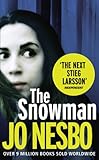
This is my review of The Snowman: A Harry Hole thriller (Oslo Sequence 5) by Jo Nesbo.

Reading the fifth of the Harry Hole series to be translated into English, I was as usual torn between an irresistible compulsion to get to the end, and irritation with myself, since I knew the grand finale would be preposterous, and I should be spending my time on something more challenging, not to mention less at times gratuitously nasty. Perhaps the ludicrous nature of some episodes, or the touches of humour or pathos serve to offset the scenes that leave a dirty taste in the mouth.

However, if you are going to read this genre, Nesbo is one of the best as regards pacy, twisting, nail-biting plots. Also, “The Snowman” is an improvement on the earlier books in the series, in that the characters are more developed, with more space devoted to their inner thoughts – we have Rakel trying to convince herself that she has “moved on” from her relationship with Harry, or the bumptious young policeman Skarre making clumsy chauvinistic passes at an attractive new work colleague, then pretending she wasn’t worth it when he has been rejected.

The quality of the writing and the structure seem to be better. Some odd similes, like the snowflakes which “invaded like an armada from outer space” are acceptable for their exuberant style, although the question remains as to what extent jarring – even incomprehensible – phrases are due to the translator lacking a writer’s flair. There is also less of the confusing flitting back and forth in time.

I still like the distinctive Nordic touch – the inescapable, persistent snow, the pragmatic sexual frankness, the melancholy introversion of many of the characters.

The plot based on a deranged serial killer is perhaps less interesting and original than those based on social or political issues, like “The Redbreast”, although the storyline is handled better.

Whatever you think of the plot, the details as ever stack up neatly at the end. Even though I am getting better at seeing how Nesbo’s mind works, there are still moments of real tension when it seems impossible for a character to survive. Although the drama seem almost strip cartoonish at times, you know that, although Harry will live to appear in another book, he may only pull through at a price, and those close to him may not.

As ever, this is a good read for a long journey or airport-stranded, stuck in hospital situation in which you want to lose yourself without too much effort.

⭐⭐⭐⭐ 4 Stars

“The Master and Margarita” (Penguin Classics) by Mikhail Bulgakov – Lost in Translation?

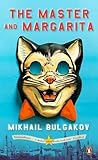
This is my review of The Master and Margarita (Penguin Classics) by Mikhail Bulgakov.

My two star rating is for the over-literal i.e. often jarring and oddly worded translation by Pevear and Volkhonsky. Although I am not a fan of magic realism, I was at first prepared to make an effort with this highly praised classic: the tale of the havoc wrought on the unsuspecting inhabitants of Moscow by the Devil and his acolytes – including an outsize, vodka-swilling, talking cat. With his powers to hear people’s private conversations and inner thoughts, and prey on their weaknesses of greed, envy and fear, not to mention predicting and causing brutal death, only to bring some victims back to life on a whim, the Devil soon has people carted off to the lunatic asylum in droves, including the odd mortal who tries to take a stand. I gathered that all this is meant to be a satire on the evils of Stalin’s regime. Perhaps it was very brave of Bulgakov to write it (only it was not published until after his early death), and also innovative for its day, but it is in the main too dated and stylised to move me. For a reason I do not fully understand, the story is intercut with accounts of the final sentencing by Pilate and crucifixion of Christ, which I gather are extracts from the novel written, but destroyed by a character called “the Master”, after they have been rejected by the publishers whom Bulgakov also wished to parody. Although I found these extracts quite striking and memorable, but am not sure of their relevance to the overall story.

At first, the bizarre chain of events seemed quite witty and entertaining but by about halfway through I decided I could not stand any more and a quick skip through to the end suggested that the book “does not improve” or add to what I had already grasped. So, I took the rare action of abandoning it but have made a note to seek out a better translation, which captures more of what I imagine to be Bulgakov’s clever humour and wry wit, for a later date.

⭐⭐ 2 Stars