Étoile Errante – Wandering Star by J.M.G. Le Clézio – “Le soleil ne brille-t-il pas pour tous?”  (“Doesn’t the sun shine for everyone?”)  

It is 1943, and despite occupation by the Italian army, allied to Nazi Germany, the remote French commune of Saint-Martin-Vésubie, close to the border, seems to be a haven for Jews. Although she has been obliged to adopt the French name Hélène, Esther’s family is not typically Jewish because her father, a former teacher, is a self-styled communist and “pagan” who risks his life guiding refugees along the “Old Salt Road” passes across the Alps into northern Italy. When in due course Esther is obliged to flee in turn with her mother, she falls under the influence of a rabbi, so that, once the war is over , it makes sense for the pair to follow a relative’s advice to emigrate to Jerusalem “to forget” the troubled past. This proves impossible, since the establishment of Israel means displacement of the Palestinians and more strife.

Esther’s brief, chance meeting in Palestine with Nejma, an Arab girl of a similar age, is the device used to link the two characters, even if only tenuously.  Le Clézio portrays them as “wandering  stars”, innocent victims of circumstance uprooted from their homes who happen to be on opposite sides of the conflict. Yet their positions are not equal, for Esther has the means and choice to travel further and create a new life in Canada, although she will always be haunted by memories. Nejma’s story occupies less than a quarter of the novel, making it seem like a digression in the account of  Esther’s life, but it is more moving, since she suffers more in her attempts to survive at the most basic level in or outside the grim camps set up by the United Nations. Her future, which is left unclear, appears bleak.

Despite being very observant, even as a highly educated woman in later life, Esther does not seem to reflect much on how the injustice borne by her people has led to a chain reaction of suffering for others.  It is Nejma who has the insight to see the significance of a dying Arab’s question, “Le soleil ne brille-t-il pas pour tous?”  (“Doesn’t the sun shine for everyone?”)  This is the closest the author comes to “taking sides”.

Perhaps because I read this in December 2023, during the unrelenting bombardment of Gaza triggered by the brutal incursions by Hamas into Israel on October 7th, I was expecting Le Clézio, as a Nobel Prize winner, to give more consideration to the moral issues raised by the conflicts which form the background to this novel.  It appears that he prefers to leave it to us to reflect on these, via his focus on individual lives, which tend to follow a random course, subject to fragmented, disjointed perceptions, as in reality.

From the outset, the lyrical, often repetitive prose creates a hypnotic effect as he describes in great detail the landscapes, sea voyages, small daily events in a village or refugee camp. The reader has to pay close attention, to glean scraps of information to build up a picture of what is going on. One needs a certain amount of general knowledge about, for instance, the Shoah or Holocaust, the belief in “Eretz Israel” leading to the foundation of the modern state in 1948, the Nakba (forced movement and dispossession of the Palestinians) and subsequent conflicts there to appreciate the novel more fully.

However, one can simply read this as a lyrical, impressionistic account of how war makes people rootless and vulnerable but hopefully coming to terms with their situation and gaining greater self-knowledge and control over their lives.

“Midnight Blue” by Simone van der Vlugt: tin-eared over the tin-glazing

In mid C17 Holland, Catrin, a young widow, sells the possessions inherited from her husband Govert, to fund her decision to leave her remote village on the edge of the Dutch polders. This is not only to escape the gossip of neighbours, suspicious about the cause of Govert’s sudden death, but also to see more of the world. Her natural skill as an artist, so far limited to painting flowers on the family’s wooden furniture, soon enables her to gain employment with a potter in Delft.

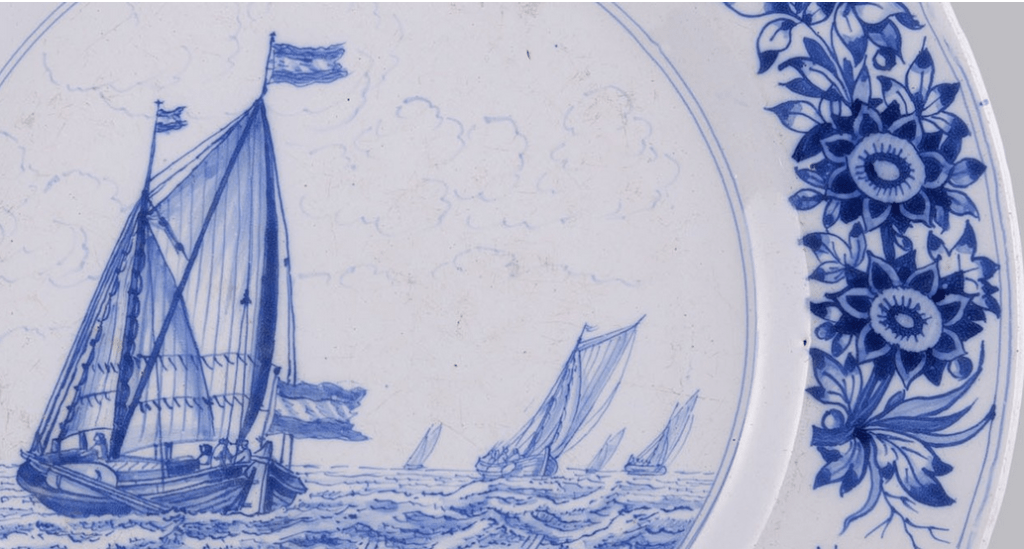
This is the cue for the fascinating history of the Dutch “Golden Age”, initially based on the import of fine white porcelain from China by the East India Company until distant civil wars disrupted the trade. These events encouraged the development of a domestic product, Delft faience with its striking blue images, which replaced the copied or imagined Chinese scenes with the sailing ships, windmills and rural scenes of Holland. All this forms the background to one of the “thrillers” for which the Dutch author is apparently best known.

Meetings with artists already or soon to be famous are shoehorned in: Catlin encounters Rembrandt who notes her true appreciation of art, and Vermeer, who runs an inn with his wife, becomes a friend. Catlin even come across Carel Fabritius the painter of “The Goldfinch”, shortly before he is a victim of the explosion of the gunpowder store which destroyed a quarter of Delft in 1654. Catlin has to endure not only this, but also the plague which devastated cities like Delft the following year, but we know she will survive, being the narrator of this tale of an action-packed eighteen-month period.

Despite being a potentially “good yarn”, this novel seems likely to disappoint readers looking for depth of character, and a certain degree of plausibility in a plot, which swings too often between sentimentality and violent melodrama. It is impossible to judge how much this novel has “lost” in translation from the Dutch, but the frequent clichés and tin-eared use of modern turns of phrase in the dialogues are continually jarring.

“You’re young, beautiful and you obviously have talent”.
“I hope it was the last one that swung it for me”.

Catlin lives in a society in which a woman cannot pursue an apprenticeship to become a master potter, nor sign contracts herself when running a business. People believe that the plague is a punishment from God, which can be kept a bay with certain potions. Yet some of the exchanges would not sound out of place in a modern soap opera.

Despite the obvious flaws, at least Simone van der Vlugt’s historical research seems to be essentially accurate. By coincidence, the art historian Laura Cumming has produced in 2023 “Thunderclap: A Memoir of Art and Life & Sudden Death “ a study of Dutch art featuring Carel Fabritius, which could be of interest who have found this aspect the most rewarding part of “Midnight Blue”.

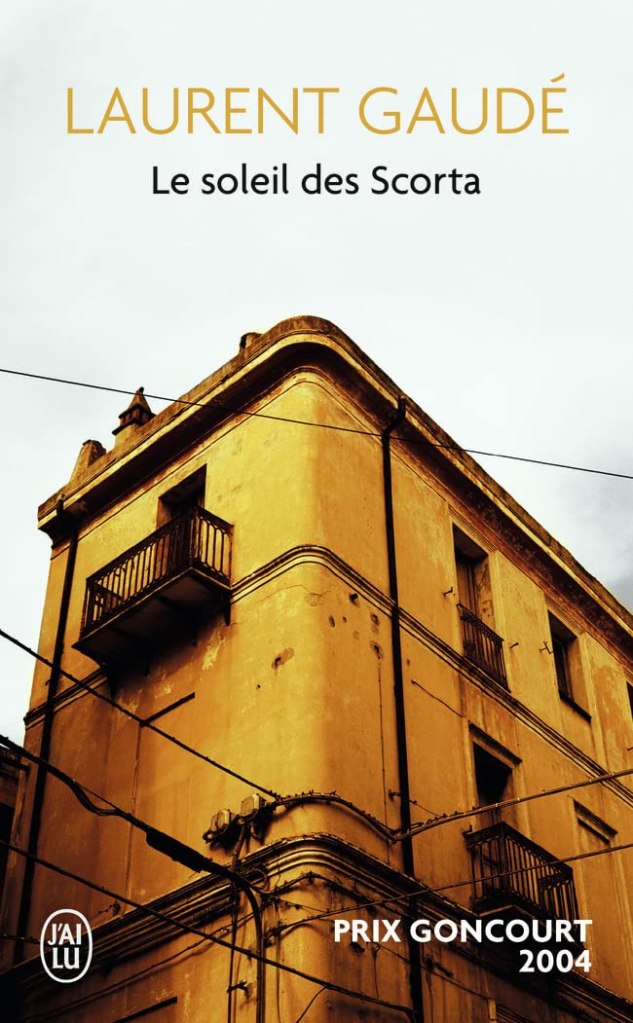
Le Soleil des Scorta by Laurent Gaudé: “There is nothing new under the sun”.

It’s the 1870s in “Les Pouilles”, the arid, sun-scorched heel of Italy’s boot. A weary donkey carries former bandit Luciano Mascalzone, prematurely aged by years in jail, back to his home town of Montepuccio, where he plans to fulfil his dream of “possessing by force” the beautiful Filomena Biscotti, a final crime for which the local men will surely kill him. The opening scenes, with their vivid sense of place and of a simple, sentimental, inward-looking community, quick to deliver rough justice, calls to mind a spaghetti western.

The succeeding chapters which trace Mascalzone’s descendants, the “Scorta” line, through four generations, starting with his bastard son Rocco, resemble a darker version of Daudet’s “Lettres de mon moulin”. They present a series of incidents which reveal the gradual change of a community over a century, focusing on the relations within a family in which each generation feels tied to a land it seems impossible to leave, but where making a living means a struggle to survive. Whether this takes the form of Rocco’s acts of violence and theft by which he enriches himself, or the sheer hard work rebuilding a business selling cigarettes like his grandson Elia, it gives a sense of pride. Those with less drive may be satisfied to labour growing olives, or fishing. Life evolves gradually, but not always for the better: the fishermen’s tradition of supplementing their income with smuggling switches from cigarettes to Albanians or refugees from further afield; the streets of Montepuccio may be lit with electricity, but they are thronged with tourists, and bright young people, including Elia’s daughter Anna, leave to study in the cities of the north.

Striking descriptions of the landscape ring true, since based on Laurent Gaudés own experience of frequent visits there, where his wife’s family and neighbours must have provided the models for his characters. Since he has also made a name as a playwright, it is not surprising that this novel has a distinctly theatrical flavour. One can imagine many of the scenes as stage sets: at one extreme Rocco’s defiant, remarkably vigorous death-bed speech to his startled audience; at the other the family celebration with a huge banquet held on a fishing platform in a rocky cliff, which remains “engraved” ad the high point of the family’s memories.

The story is related in old age by Rocco’s daughter Carmela to Don Salvatore, the once fiery priest and outsider, nicknamed “le Calabrais”, who has softened his jaundiced view of the locals. Sensing the onset of senility, Carmela is anxious to ensure that, after her death, details of the family’s history should be passed on to Anna, including one closely-guarded secret which seems ironical more than shameful, but might indeed dent the reputation of “les Scorta”, if widely known.

Despite its insights into human nature and evocation of a distinctive community, the frequent sentimentality, exaggeration and sheer implausibility of some events may captivate the reader, but make it more like a series of fables or flights of fancy than seriously moving. On the other hand, it makes one reflect on a disappearing way of life which has perhaps been dismissed too readily for its superstition, prejudices and poverty, so undervalued for its strength of ties to family, land and traditional ways of living.

In the English translation, the title is “The House of Scorta”.

“Le Chat” or “The Cat” by Georges Simenon: an impasse in more sense than one

In addition to his detective novels featuring the chief inspector Maigret and other works, Georges Simenon wrote 117 “romans durs”, literally “hard” but described in English as “psychological novels”. One of the best known of these, published towards the end of his writing career, is “Le Chat” or “The Cat”, so popular that it was made into a film in 1971.

“Le Chat” was apparently inspired by a visit to his mother in the 1950s, where Simenon was struck by how she and her partner did not speak to one another, but seemed to express a mutual hatred via the cruelty they inflicted on each other’s pet animals.

From this bizarre situation sprang the tale of two lonely, recently bereaved people in their sixties who happen to live in the same Parisian cul-de-sac and make the mistake of getting married, only to find that their differences in class, taste and habits make them completely incompatible and provoke a profound conflict. The husband Émile Bouin is painted in a more sympathetic light – he’s a simple working man, goodhearted if a bit vulgar, who likes to drink a glass or two in a café and smoke his “nauséabonds” cigars. By contrast, Marguerite is a dainty “petite bourgeoise”, daughter of the founder of a biscuit factory, eventually ruined through a partner’s financial mismanagement. Frail in appearance but with a will of iron, she is portrayed as self-centred, vindictive and superficial.

She detests her husband’s pet Joseph, an independent alley cat who seems to menace her beloved parrot. Despite being deeply religious, she is suspected by Émile of having murdered his cat. This is the beginning of a long-term feud which the pair conduct into their early seventies, communicating solely via written messages. So Émile’s “Attention au beurre” is loaded with meaning – implying malignly that the butter may be poisoned just as Marguerite did away with Joseph. Needless to say, the parrot has come to grief as well, but has been restored to its cage in stuffed form, to trouble Émile‘s conscience.

The monotonous, oppressive life the pair lead is revealed from the outset, and would soon become intolerable even to the reader, but for the continual touches of dark humour. Simenon also captures the nostalgia and melancholy of a former Paris in the 1960s when inner city neighbourhoods of close-knit communities in which people know each other’s business, or think they do, are being disrupted by redevelopment schemes. Even the couple’s cul-de-sac is being demolished by the bulldozer.

Deftly constructed with flashbacks and digressions, Simenon skilfully reveals past events which have shaped the characters, their motivations and emotions, against the atmospheric backdrop of open air cafes and bars, dance halls on the banks of the Seine, or meetings in the Parc Montsouris. Simenon’s clarity of expression and insight hook the reader despite the essential sadness of the theme as it draws to its ironic conclusion.

Simenon embarked on his “romans durs” with the intention of winning The Nobel Prize for Literature, but never achieved this ambition, causing him to change his career from “novelist” to “no profession” in his passport, in a surge of disillusion. The more French novels I read, the more I think he deserved such a prize.

“Une Vie” by Guy de Maupassant: A Woman’s Life

For his first novel, Guy de Maupassant sought the advice of his mentor Flaubert, and there are similarities between his heroine Jeanne and Madam Bovary – both underoccupied, privileged C19 women of whom little is expected except to be married and follow a conventional path with no self-fulfilling goals to give them a sense of purpose. It took Maupassant more than five years to complete Une Vie, by which time Flaubert was dead. Meanwhile, he was producing a spate of short stories and plays, often on risqué themes which would titillate the public and bring him commercial success.

Yet “Une Vie” took more time because it was meant to be different, with its slow-paced focus on the on the inner life of an unremarkable individual. At first, I was a little bored by the banality of Jeanne’s life, as she returns from the narrow education of a convent to the family home where her head is full of naïve, romantic notions. The plot becomes more interesting when she marries the handsome Julien, but her honeymoon in Corsica turns out to be her one true adventure, and indication of how her life might have been. Julien soon proves to be mean with her family’s money, which was probably his reason for marrying her, and unfaithful as well.

Maupassant is particularly successful in entering into the mind of a woman, describing her emotions, even the experience of childbirth. He also creates a strong sense of place in the descriptions of the countryside on the Normandy coast, and some atmospheric scenes. He develops the psychology of his characters to good dramatic effect, as when, during her wedding party, Jeanne’s father is forced to tell her the facts of life, which he does in the most oblique and ineffectual way possible, because her mother cannot bring herself to do it. Then there is the cynical worldliness of the local priest when she confesses to him that she wants another child: part of his advice is to suggest that she pretends to be pregnant as a way of effectively tricking her husband, taken off his guard, into giving her the child that she longs for, but he really does not wish to have.

Jeanne’s acute sensitivity makes her ill-equipped to cope with the relentless sequence of misfortune which dogs her, and in turn unsurprisingly weighs the reader down. Maupassant may well have been unaware of this effect on us, since he was prone to periods of deep depression, being influenced by the philosophy that it is the destiny of mankind to suffer, because the faulty will is more powerful than reason, causing us to make bad decisions.

The author’s own mother also had a philandering husband and suffered depression, but was less passive than Jeanne, and made the decision to separate from him. This, plus the fact that Maupassant had a younger brother who kept getting into debt through gambling, show how much the author used his close relatives as models for Jeanne, Julien and their son Paul.

The essentially rather gloomy “novel of mourning” is leavened with a few somewhat melodramatic events, each of which could have made one of his intriguing short stories. Although not exactly an enjoyable read, this is an interesting experiment, which prompts reflection and lingers in the mind.

La femme rompue – The woman destroyed, by Simone de Beauvoir – feminism through cautionary tales.

In her trilogy of novellas which takes its overall name from the third story, “La femme rompue”, or “The Woman Destroyed”, Simone de Beauvoir, celebrated feminist writer and longstanding companion and lover of Jean Paul Sartre, portrays three women not dealing well with a crisis in later life. In each case, the crisis is due partly to external factors, including the behaviour of others, but also appears to be partly of their own making.

In l’Âge de discretion (The Age of Discretion), the first story, the sixty-something narrator is increasingly disappointed by her husband’s premature acceptance of ageing and being “past it”, and depressed by the unexpectedly lukewarm reception of her new work. Her complacency is shattered by the discovery that her son Phillipe has rejected the academic profession into which she has steered him, and the left-wing values of his parents, for a career making money. De Beauvoir’s clear, expressive prose with its sharp dialogues explores every facet of the narrator’s changing emotions as the facts are gradually revealed.

She contrives to create some sympathy for the woman, even while exposing the full extent of her failings: she often appears to be an unreliable witness, is jealous of the suspected influence on Philippe of his partner Irène, has sought to control Philippe too much herself, and proves overemotional and extreme in her reactions when she cannot have her way.

The same mixed response applies to Monique in “La Femme Rompue”, although I feel rather more sympathy for her as the growing sense that she has lost connection with her husband triggers his confession that there is indeed “another woman” in his life, but not one that Monique can respect – as if that would really ease her pain. Published in the 1960s, it would seem that de Beauvoir is writing this as a cautionary tale for women who put all their eggs in the basket of sacrificing a career to support a husband and children, running the risk of losing all of these, with nothing to fall back on.

I was least satisfied with the shortest story, “Monologue”, in which a dense stream of consciousness is spouted by an ageing woman who has gone mad in her desire for revenge on those who have wronged her. It is exhausting and tedious (perhaps intentionally!) and somewhat confusing if read in French as a second language. This bleak, disjointed recital seems simplistic in suggesting that the narrator’s sense of her mother’s neglect and preference for her brother when she was growing up can be blamed as the initial cause of a chain of dysfunctional relationships, including with her own daughter. “Monologue” differs from the other novellas, in that it reads like an exercise in creative writing, which lacks authenticity because De Beauvoir is too cool and controlled to identify with her crazed character.

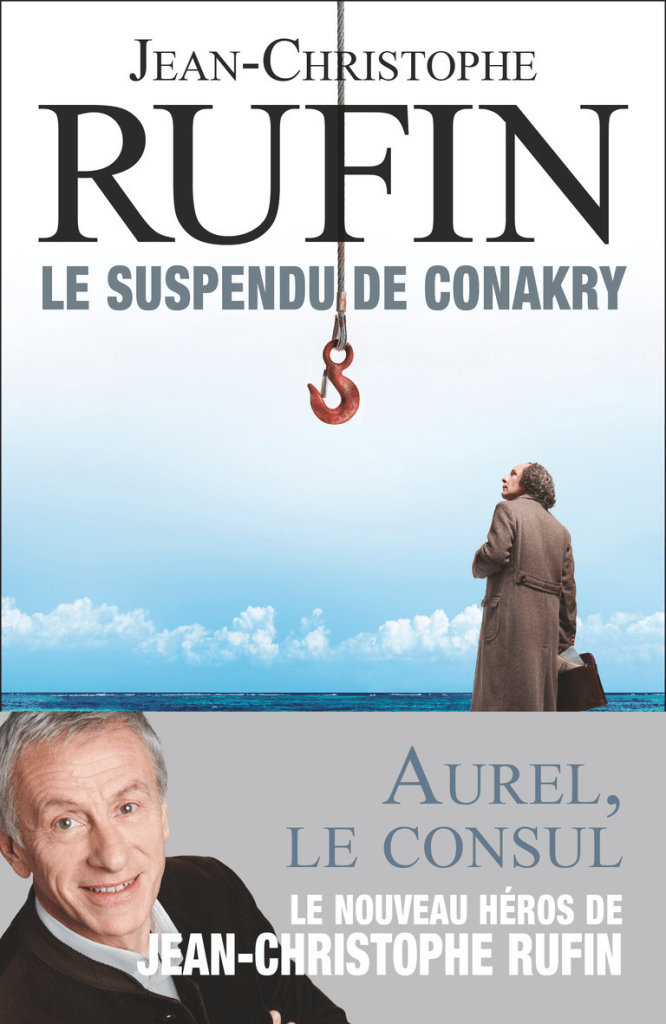
“Le suspendu de Conakry” by Jean-Christophe Rufin: run-of-the-mill

The quay of Conakry harbour is crowded with Guineans, mesmerised by the spectacle of a body suspended from the mast of a sailing boat in an apparent vicious act of revenge, but for what reason? The victim is a wealthy Frenchman who may have had a large amount of money stashed on board after selling his business, so was theft the main motive? Bored in his job, with secret dreams of being a detective, the unlikely consul at the local French embassy,  Aurel Timescu, cannot resist the unexpected opportunity to investigate the crime unofficially in his manager’s convenient absence.

The first in a series which has proved popular, this novel marks a change in direction for author Jean-Christophe Rufin. With an impressive career path as a doctor playing a leading role in Médecins Sans Frontières, and as a diplomat, his past novels have been located in a variety of countries, but tend to focus on serious themes and moral issues.  In some ways, “Le suspendu de Conakry” follows this pattern, with its references to the corruption and lack of freedom in  formerly communist Romania, Aurel’s country of origin,  to  the problems of post-colonial Guinea and the insidious network of the international drug trade.

However, as detective fiction it seems quite formulaic: divorced anti-hero with a drink problem, on bad terms with his boss. Habitually wearing an ankle-length mac in a country with an average temperature of over 80° F, Aurel is widely mocked and underestimated.  Yet he somehow manages to establish a rapport with hints of possible romance with Jocelyne, the murder victim’s glamorous sister. This is despite behaving like a gauche adolescent in her company. Although Rufin has claimed when interviewed that Aurel is based on embassy staff he has met, he seems to have carried absurdity too far.

The plot is rather thin and banal, with Aurel largely relying on information he deploys young  local men, like Hassan who works for the embassy, to glean by quizzing possible witnesses and suspects.  There is a potentially interesting twist in  Aurel’s persistent attempt to understand the psychology of Jacques Mayères. Influenced by his Romanian culture which fosters a belief in ghosts, he even imagines that Jacques is looking at him from a photograph.  This apparently assists Aurel to work out how the crime occurred but the  eventual denouement seems implausible  and contrived in too many respects. For the most part slow-paced, the novel concludes abruptly, still dangling a few loose ends. 

This proves an easy read which leaves one feeling dissatisfied, because some promising ingredients  could have been handled better.

“Violeta” by Isabel Allende: a testament of age

Inveterate storyteller Isabel Allende’s “Violeta” resembles her previous novel “A Long Petal of the Sea” in recounting the main character’s long life against a background of turbulent social and political change in Chile.

Violeta writes towards the end, “I was born in 1920, during the influenza pandemic, and I’m going to die in 2020, during the outbreak of coronavirus”. A spoilt child in a prosperous family, Violeta is “sorted out” by her governess Miss Taylor, a young Catholic woman from Ireland, one of the first in a series of insufficiently developed and not always totally convincing characters. When her father’s rash approach to financing his businesses reduces him to bankruptcy and suicide, his family has to decamp to a remote rural area to avoid the shame, and make ends meet. The impoverished lives of the local people fail to awaken Violeta’s social conscience at this stage. Instead, she grows up to demonstrate a shrewder business sense than her father, and forsakes a decent but dull husband to run off with Julian Bravo, a charismatic pilot, who proves to be a rogue. And so she is caught up in a personal family drama while Chile moves from a Socialist experiment dubbed Communist, to a vicious fascist dictatorship designed to repress it.

Although written in conventional chapters, the novel purports to be in the form of a letter which Violeta writes to a younger man called Camilo, whose identity is not revealed until near the end. This device proves the novel’s main flaw, in that the meandering recollections lead to “telling” rather than “showing”, and past events are stripped of their dramatic tensions. Writing in the first person limits Violeta’s ability to portray scenes where she was not present, so descriptions of scenes, emotions, or reported conversations do not ring true and fail to grip or move us as they could.

I am not sure whether it is Isabel Allende’s intention, but for much of the novel, Violeta reveals herself to be a self-centred character, who continually exploits others for her own ends. There always seems to be some obliging woman around to perform the chores she dislikes. Although she grows to despise him, Violeta relies on Julian Bravo’s dubious connections to get their son out of the clutches of the dictatorship, but goes on to engineer his downfall, trading on the knowledge that he will never suspect her of this. Describing her business success to Camilo, she casually mentions profiteering from those forced to flee the regime, by purchasing their properties cheaply in order to sell them for much more later. It takes the proof of the regime’s murder of someone she loves to convert her, late in life, to spending her wealth on good causes.

Many readers will probably accept the novel’s rambling structure, and it may serve to raise awareness of Chile, a beautiful yet troubled land. Although the subject matter is potentially interesting, a tighter focus on fewer strands and characters would have made for a more satisfying read.

La promesse de l’aube (Promise at Dawn) by Romain Gary: when fact needs no fiction

Romain Gary was a popular and prolific author, the only writer to win Le prix Goncourt a second time, by dint of assuming the pen name Émile Ajar, an imaginary person whom he persuaded a young relative to impersonate. The deception was not revealed until after his death.

This autobiography proves to be a version of his childhood and wartime experience as an airman in which it is impossible to distinguish embellished fact from fiction. Its central theme is the intense relationship with his mother, a volatile, overemotional former actress of Russian-Jewish descent. Abandoned by her husband between the two World Wars, she was obliged to slave away at a variety of jobs, from flogging fake jewellery at one extreme to running a successful upmarket dressmaking salon and later managing a hotel at the other.

As her son came to realise, all her frustrated ambition was channelled into him. From an early age, she parroted her unfailing belief that he would become famous, the only question being in what field. A fortune was spent equipping him with skills as a musician or singer, until his lack of talent became undeniable. Instruction in riding, fencing and shooting came into play. Painting was discouraged since she viewed artists as generally penniless and often syphilitic. She condoned her son’s desire to become a writer, but predicted the only remaining areas of achievement she could conceive: to become a great soldier, or a diplomat. In due course, Romain was decorated for his wartime service, and gained employment as an ambassador, thus providing evidence for the importance of having unfailing belief in one’s children and encouraging them to aspire to great things – but in this case, at what cost?

There was a further self-serving aspect of his mother’s love. Struck by his resemblance to a former lover (his real father?), she constantly urged him to look upwards in a certain manner. Even as a small boy, dressed in the silk shirts and velvet suits from a previous age to accompany her to the opera, he was instructed in all the etiquette required to be her future escort, in the absence of a husband.

It is astonishing that he did not become the laughing stock of his peers and emotionally damaged by all this. Yet perhaps he was. Apart from the many occasions when he was embarrassed by his mother’s effusive love, or furious over being obliged to depend on her financially while he was trying to write his masterpiece, when she became seriously ill, he was clearly stressed by the need to succeed while she was still alive, all the more difficult since World War ll had broken out. His emotional ties to his mother ran so deep that he even described her as if physically present, by turns approving and admonishing, during his wartime spell with the Free French in Africa.

The novel is packed with amusing, if far-fetched anecdotes. As a small boy seeking to impress eight-year-old Valentine, did he actually consume snails in their shells, and chunks of his own rubber sandals, which landed him in hospital? Did he and the rival for her affections really take turns to push each other onto a fourth floor window with just sufficient pressure to swing their legs over the edge, without falling to a certain death? Meeting by chance years later, both by then diplomats, was he really on the point of repeating this mad exploit, just before he was fortunately called away?

There is a brilliant description of his mother, in her role of hotel manager in Nice, terrorising the stallholders on her daily visit to the marché de la Buffa, a she passes judgement on their produce: elle “tâtait une escalope, méditait sur l’âme d’un melon, rejetait avec mépris une pièce de bœuf dont flop mou sur le marbre prenait un accent d’humiliation” and so on.

Yet this account of a life sufficiently interesting not to require any spicing up soon began to pall owing to the repetition, the verbosity, the odd mixture of exaggerated self-denigration and conceit, the frequent digression into an issue like his need to achieve, expounded in a paragraph of two pages or more of overblown prose. All this made for an exhausting read.

If it is to your taste, and you can stomach Gary’s somewhat sexist behaviour, which is what some reviewers may mean when describing the book as “dated”, you can read this to be entertained by the succession of implausible and at times unsavoury vignettes and exploits. I am most intrigued by the psychology behind all this. He wrote, to quote the English translation, “I do not often indulge in lying, because, for me, a lie has a sickly flavour of impotence: it leaves me too far away from the mark.” Yet the account is full of lies and deceptions, which he may have slipped into as a way of dealing with his mother’s overpowering love and belief that France was the model land where he would succeed.

It is hard to know how much he was traumatised by the shocking death rate amongst his fellow wartime pilots. Despite observing more than once how, no matter how bad things are, he keeps smiling, this is the man who, at the age of sixty-eight, decided to shoot himself fatally.

“A Long Petal of the Sea”: telling history by Isabel Allende

A lesser known aspect of the complicated Spanish Civil War is that, as half a million dissidents streamed over the Pyrenees into France to escape Franco’s fascist regime, the Chilean poet Pablo Neruda arranged for “The Winnipeg”, an old cargo ship, to carry two thousand of them to Chile where they docked on the day the Second World War was declared in Europe.

A subsequent friendship with Victor Per, one of the passengers, inspired Isabel Allende to write this novel, based on his memories. Although described as a fictional account, it is unclear exactly what has been invented, particularly since the author has her hero Victor Dalmau form friendships with real people like Neruda himself, and her own relative, one-time President Allende.

Like “Victor Dalmau”, did the “real” Victor actually save a severely wounded soldier by gently massaging his heart with his fingers? Did he agree to marry his brother’s pregnant girlfriend after he was killed in battle, to enable her to escape to a new life in Chile?

Although this novel is quite readable, and I learned some interesting history in the process, I never felt fully engaged. The characters appear somewhat two-dimensional, revealing no more than what the narrator tells us about them. The plot seems fragmented and unfocused, no doubt through the need to cover several decades of a lifetime. Victor and his wife Roser are clearly very successful, possibly like the author and those she is accustomed to mixing with, and they rub along together quite well. Victor becomes a respected doctor, and his wife a successful musician, but we never really learn the process by which this occurred. They both have affairs in their open marriage, without the friction or tension one might expect. When Chile swings to the right under Pinochet’s harsh regime, Dalmau is denounced by a neighbour and spends time in a concentration camp. Even such a dramatic situation as this is covered briefly in a fairly matter of fact way.

As others have observed, the slices of history based on research sit alongside the fictionalised relationships. I would have preferred a shorter novel showing more about how the couple achieved success in a new country, with more emotional involvement between the characters, and scenes on which I could reflect, and draw my own conclusions about their relationships.

This may be a minority view, since the novel has been very well received.