Written for Japanese Teenagers?

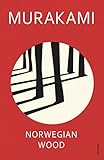
This is my review of Norwegian Wood by Haruki Murakami.

It may help to be 19 or/and Japanese to appreciate this book fully.

At first, I was struck by the power of the uncluttered prose, well-preserved in the excellent translation by Jay Rubin. I enjoyed the vivid descriptions of the Japanese landscape, which I have never seen, and of life at Tokyo University in the late '60s, which tallied in many respects with my memories of studying in the UK at the same time – the half-baked demonstrations, extreme left-wing student leavers who became bourgeois overnight on graduating, and the young people drifting in and out of relationships on the edge of a life which they were unsure how to live. I was surprised how westernised Japan seemed as regards culture, yet this was clearly a superficial layer over deeper traditions and attitudes.

By the middle of "Norwegian Wood" I became bored, as the narrator Watanabe provided a sounding board for a succession of mixed up women, with their self-absorbed and often cringe-making sexual revelations. Although I liked Watanbe, as a thoughtful and essentially level-headed person with a wry sense of humour, the book seemed a little misogynistic to me in that the women were all portrayed as in some ways weaker, and in need of his affection and support.

Once Watanbe had met Midori, I thought I knew how the book would end, but there seemed insufficient development, and a lack of structure and plot, to get there. The focus on suicide was oppressive, although it may be realistic for Japan where I believe young people are very pressurised to study at school, plus there have been recent examples of a "suicide cult" in Britain. The tragedy of a young person's life being blighted by the death of a close friend or lover is tragic, but I am not sure that Murakimi explored this as fully and subtly as he might have done. It all got diluted with appearing "hip and sexy" to paraphrase reviews on the back cover.

Despite my reservations, I shall probably try another of Marukami's books, since I admire his style of writing.

⭐⭐⭐ 3 Stars

“The Master and Margarita” (Penguin Classics) by Mikhail Bulgakov – Lost in Translation?

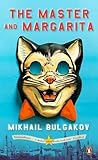
This is my review of The Master and Margarita (Penguin Classics) by Mikhail Bulgakov.

My two star rating is for the over-literal i.e. often jarring and oddly worded translation by Pevear and Volkhonsky. Although I am not a fan of magic realism, I was at first prepared to make an effort with this highly praised classic: the tale of the havoc wrought on the unsuspecting inhabitants of Moscow by the Devil and his acolytes – including an outsize, vodka-swilling, talking cat. With his powers to hear people’s private conversations and inner thoughts, and prey on their weaknesses of greed, envy and fear, not to mention predicting and causing brutal death, only to bring some victims back to life on a whim, the Devil soon has people carted off to the lunatic asylum in droves, including the odd mortal who tries to take a stand. I gathered that all this is meant to be a satire on the evils of Stalin’s regime. Perhaps it was very brave of Bulgakov to write it (only it was not published until after his early death), and also innovative for its day, but it is in the main too dated and stylised to move me. For a reason I do not fully understand, the story is intercut with accounts of the final sentencing by Pilate and crucifixion of Christ, which I gather are extracts from the novel written, but destroyed by a character called “the Master”, after they have been rejected by the publishers whom Bulgakov also wished to parody. Although I found these extracts quite striking and memorable, but am not sure of their relevance to the overall story.

At first, the bizarre chain of events seemed quite witty and entertaining but by about halfway through I decided I could not stand any more and a quick skip through to the end suggested that the book “does not improve” or add to what I had already grasped. So, I took the rare action of abandoning it but have made a note to seek out a better translation, which captures more of what I imagine to be Bulgakov’s clever humour and wry wit, for a later date.

⭐⭐ 2 Stars

Master and Man in America

This is my review of Parrot and Olivier in America by Peter Carey.

That this is an old-fashioned "good yarn" was not initially clear to me because, being the work of a twice Booker prize-winner who has chosen to use the style of the early C19 in which the story is set, the sentiments and language tend to be quite wordy and flowery.

The narration alternates between the two main characters. Olivier is the delicate, pampered French aristocratic, whose overprotective mother, traumatised by the guillotining of her close relatives, insists on packing him off to America to escape the risk of prison or worse in a politically volatile France. Parrott, the wily, hard-bitten servant in thrall to the manipulative Monsieur, a close friend of "Maman", is sent off to look after, and also spy on Olivier. From an initial mutual dislike, an understanding and "modern" friendship grows, of the type that could only occur in the New World.

After wading through the first chapter about Olivier, which I found very stiff and unnatural (perhaps intentionally in view of his family's fossilised values), I got used to the style of writing, and became absorbed in the characters and the plot. Many scenes and dialogues are very entertaining or imaginative (sometimes a bit too far-fetched!), and there is some powerful drama, as in the scene where men leap, their bodies on fire, out of a blazing building. Descriptions of Dartmoor where Parrot spent some of his childhood are very vivid, and his nostalgia for life with his long-dead father is moving.

Some of the minor characters are rather sketchy, even unconvincing, although Godefroy father and daughter are "flesh and blood" representatives of a new-style "meritocracy". I could never quite believe in the beautiful Mathilde's apparently unquenchable love for the much older, grizzled Parrott, who for much of the book seems to be something of a loser. However, Olivier and Parrott are portrayed as complex characters, and we see how their emotions are formed and changed by experience. I found myself in sympathy with Parrott, portrayed as a man who survives against the odds, but is tortured by his lack of achievement as an artist.

It is interesting to think about what life must have been like for the children of aristocrats who survived the first violent waves of killings in the French Revolution. It was unclear how long the restored monarchy in France would last and one could be penalised for having chosen to stay in the country and keep a low profile, rather than flee into exile with the remnants of the royal family. Also, it was uncertain what sort of democracy might be established in France and what its effects would be. So, Olivier, whose official excuse for being in America is to study prisons, actually becomes fascinated with recording this new democracy . He is in fact modelled loosely on the writer De Tocqueville.

I like the way in which Parrott adapts easily to American life, and takes the opportunity to advance in life, whereas Olivier is unable to shed totally the constraints of his formal, convention-ridden upbringing. Yet, he has the last word because he can predict how "democracy will not ripen well", the "perfidious press" will feed people's ignorance, and "the public squares will be occupied by an uneducated class who will not be able to quote a line of Shakespeare." Although he is a hopeless snob, when you think how things have turned out under Bush Jnr and the prospect of Palin, he has a point.

I was distracted by minor discrepancies e.g. Parrot says on p.109 he has lived with Mathilde for six years, but implies on p.163 that it is only two. There is also a tad too much reliance on coincidences. The language can be a bit too convoluted at times, but I think that is to create a C19 atmosphere.

Overall, this is an entertaining, often funny and moving read, which proves thought-provoking at the end. It would make a worthy Booker winner.

⭐⭐⭐⭐⭐ 5 Stars

Things made clear

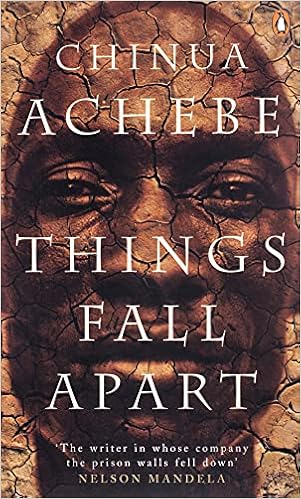
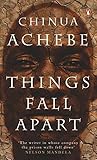
This is my review of Things Fall Apart (Penguin Red Classics) by Chinua Achebe.

Although already a classic, this short and well-constructed novel deserves to be better known. The deceptively simple, crystal clear prose which lends itself to being read aloud has the power to bring alive, even for an urbanised C21 westerner, what it was like to live in a “primitive” West African tribe on the brink of destruction by the well-intentioned but insensitive and arrogant imperialist administrators and missionaries.

Without being in any way patronising, tedious or glamorising tribal life, we are brought to appreciate the humanity and dignity of these people, even though they do not comply with our cultural norms. We begin to understand the rhythm of cultivation based on the yam, the closeness to nature – there are beautiful descriptions of the different types of rain and wind, the complexity of the social networks which bind the tribe together. It is easy to identify with the variety of characters and their distinctive personalities and shifting emotions, very like our own. So, the sudden moments of barbarity are chilling as when Okonkwo, understandably frustrated over no longer being able to control events, is described in passing as drinking wine from the human head gained in battle. Similarly, the dominance of superstition- the sacrifice of twins and mutiliation of deceased infants to discourage them from returning, are shocking. Yet you can see how people essentially “no different from us” may fall into this way of thinking as a way of explaining or coping with events when they do not have access to “science” or “rational explanations”.

There are moments of humour, such as the fact that one may recognise an “ancestor” in a fearsome mask as one’s husband by his gait, but would never dream of admitting this – rather as a child might pretend now not to know that Father Christmas is really his father dressed up. Also, some of the traditional sayings and old stories are very funny and entertaining.

The book succeeds in arousing some shame and anger at the way in which the British undervalued, failed to understand and destroyed this way of life, and played a part in replacing it with a fractured, corrupt “bastardised western” culture which has led to some horrendous civil strife.

⭐⭐⭐⭐⭐ 5 Stars

Unsure how to react……

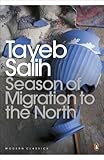
This is my review of Season of Migration to the North (Penguin Modern Classics) by Tayeb Salih.

This beautifully written translation (so presumably the original language is also beautiful) can be read in one sitting, although rushing it is likely to mean getting less out of it. Most vivid for me are the descriptions of life in a remote village on the floodplain of the Nile, and the terrible heat of the Saharan sun. I particularly like the scene at nightfall in the desert, when it was at last cool enough for people to come alive, so that, nomads and travellers alike, were drawn together in an impromptu feast of eating and dancing.

However, I think the aim of the story is to explore the interaction between "western" and North African Islamic culture. In some ways it seems to me quite dated: published in the 60s, it describes a Britain that was still imperialist, very class divided and far less "multicultural" and concerned with issues of sexual and racial equality than is now the case. So, what I take to be one man's fictional taking of vengeance on the west by seducing and betraying unstable English women seems in some ways less shocking than the current real situation in which disaffected muslims may be driven to terrorism. "The Reluctant Fundamentalist" is more relevant now.

I do not fully understand this work. The ways in which talented people from developing countries may suffer or be damaged by colonisation seemed to me to get muddled up with the individual drama of a Mustafa, a flawed, even psychopathic individual who gets drawn into sexual violence for reasons which may have little to do with the arrogance of westerners encountered – some of whom were good to him, plus there is the contrast of the narrator who seems able to cope with the cultural shock of being educated in the west.

The climax of the book in which the narrator enters the locked room to find Mustafa's ultimate secrets seemed to me to be exaggerated and ludicrous.

In the end, I am left a little disappointed, since the book begins with such promise. The final chapter is an interesting allegory, in which perhaps the Nile – powerful life giver yet also potential destroyer is likened to "alien western culture".

I can see that this book can give rise to stimulating discussion e.g. about the position of women – their abuse in both "north" and "south" – as Salih chooses to make the division, the respective values of different cultures – even what the novel is really about. However, I could wish that the author had not chosen to focus so much on the sexual relations between apparently disturbed individuals.

⭐⭐⭐ 3 Stars

Stilted nostalgia – perhaps damaged in translation

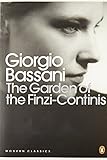
This is my review of The Garden of the Finzi-Continis (Penguin Modern Classics) by Giorgio Bassani.

This book probably needs to be read in Italian to be fully appreciated, since the prose comes across as over-flowery in translation. Despite this, the at times over-meticulous descriptions create evocative images with a sense of nostalgia for old Italian towns and the dusty estates of doomed aristocrats in 1930s Italy. The rise of Fascism, with its evils not yet understood, and the growing menace to the complex Jewish community are also outlined quite well, although it would have been more dramatic not to have had the fates of the key protagonists spelt out so baldly from the outset. By contrast, the way in which certain relationships were hinted at but left to the reader to guess was interesting.

The prologue to this translation, which I read last, informs us that Bassani struggled to write. Apart from such touching scenes as the hero's late night conversation with his father, or the details of some of his "squabbles" with the source of his infatuation, Micol, I found many of the exchanges quite stilted and the portrayal of relationships "underdeveloped". I therefore concluded that Bassani's style works quite well for describing scenes, but is less good for human relationships – although perhaps he is accurate in suggesting a certain formality in relationships in that period. I was puzzled that the hero seems quite "coy" in some ways in his relationship with Micol, but appears unphased by a quick visit to a prostitute, clearly implying this was not the first one but he saw no need to mention this before, and it struck me as odd that he passed over "the deed" in a brief clause.

The book makes no concessions, with many erudite references to Italian writers and works which can mean little to the great majority of readers. Again, this may reflect acccurately the nature of education for upper class people of the day.

Last but not least, the extremely long and complex sentences wore me down, to the extent I probably would not have finished the book if not obliged to do so for a reading group. I struggled on in the expectation of "something happening", but much of the book was about not a great deal. Bassani was forever announcing "some significant point" which proved to be nothing much.

My feelings are mixed. I see why this is a classic, but it could have been more dramatic, moving and unusual – the theme of "thwarted first love" is after all a well-worn one. I am left with a few insights e.g. in the opening chapter which describes a visit to Etruscan tombs, a child asks why we care so little about the long dead, and more about those recently so.

I realise that some of my reservations may be due to the quality of the McKendrick translation.

⭐⭐⭐ 3 Stars