Hardy with a Hint of Draughtsman’s Contract

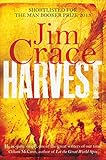
This is my review of Harvest by Jim Crace.

In a remote unnamed English hamlet at an unspecified location and time, somewhere around the 1600s, perhaps, the "accidental" burning of the master's dovecotes is blamed on a family of squatters. The ensuing chain of disastrous events plays out against the long-term tragedy of the inexorable forces of change, by which common land, felled woodland and cornfields are to be enclosed for sheep-farming, destroying in the process a stable community in which everyone has a place.

The sustained sense of tension makes this a page turner, even though I suspected the ending would be a will-o-the-wisp. Suspense combined with Crace's striking, original, often poetical language carries you along almost too quickly. You need to read more slowly, or more than once, to grasp the full force of his prose.

Narrator Walter Thirsk's insight and articulate flow of words is explained by a connection since childhood with kindly but weak Master Kent. In what proves a type of fable or morality tale, Thirsk symbolises the human flaw of good intentions rarely put into practice. He may also be an unreliable narrator, lying even to himself at times over the degree of his devious self-interest.

Crace captures the spirit of a lost way of life without glamorising it. Some wry snatches of humour and sharp character studies add spice to the tale. "Harvest" highlights the danger and skin-deep nature of civilisation in rural England, where "might was right", and a landowner could punish and mistreat tenants with impunity. Crace conveys a poignant sense of loss over the destruction of the harmony of people working together, as in the remarkable description of the harvest in the opening pages, and of their deep knowledge and appreciation of nature. At the same time, we are not spared the harsh reality of "Turd and Turf", the filth and hardship of daily life.

Although I would have liked a stronger dramatic conclusion to this tightly plotted tale, Crace is not concerned to impress us with a final twist. The terms "hallucinatory" and "hypnotic" used by professional reviewers are very apt. Claimed to be the last book in a highly regarded body of work, this deserves its place on the Man Booker shortlist.

⭐⭐⭐⭐⭐ 5 Stars

“The Strongman: Vladimir Putin and the Struggle for Russia” by Angus Roxburgh – Kaa’s self delusions over the Bandar-log

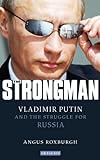
This is my review of The Strongman: Vladimir Putin and the Struggle for Russia by Angus Roxburgh.

More readable than many crime thrillers, this mixture of clear analysis with entertaining anecdotes has an authentic ring, Roxburgh being a former BBC Moscow correspondent and sometime PR advisor to Putin’s press secretary.

He acknowledges Putin’s initial success in restoring law and order, curtailing the power of the oligarchs who hijacked Russia’s rapid adoption of capitalism in the 1990s, stabilising the economy, reducing debt, achieving growth (admittedly with the aid of high Russian oil and gas prices) and even in supporting the Americans in their fight against Afghanistan – perhaps not in itself a good thing.

Roxburgh expands on the depressing recent turn of events as an increasingly authoritarian leader establishes the “vertical of power”, appoints cronies to senior positions in key industries, and turns a blind eye to, if not exactly ordering, the liquidation of anyone who dares to criticise corruption in such chilling cases as the shooting of the journalist Anna Politovskaya and the killing in prison of the young lawyer Sergei Magnitsky, “arrested by the very officials he had accused of fraud”.

Thought to have accumulated a vast personal fortune, Putin seeks to retain personal majority support as president partly by impressing people with his often stage-managed macho exploits, but also by resorting to ballot-rigging and laws to restrict the freedom of speech, conscience and mass media, “the fundamental elements of a civilised society” which he promised on first coming to power. Opposition is still too fragmented to bring him down, and he can dismiss the disaffected middle classes as the tools of western influence. Roxburgh is particularly interesting on the comparisons between Putin and his one-term presidential stooge, Medvedev, who seems more liberal and flexible, but unable to stand against him.

Roxburgh is fair-minded in showing how the West has repeatedly failed to see matters from the Russians’ perspective, to sense, for instance, how humiliated they felt to be excluded from NATO when former Eastern Bloc countries have been admitted, and to be regarded as the enemy against which NATO must protect itself. The author points out how the US has repeatedly tried to get Russia to give up nuclear weapons, without relinquishing its own one-sided plans for anti-missile defence. How can Putin be expected to take lessons over Chechnya from a government that went to war with Iraq on spurious grounds, without UN approval and which makes drone attacks on Pakistan?

After an almost naïve expectation of being welcomed by the West, it is sad to see Putin growing hardened and bitter in his sense of rejection borne of a mutual lack of understanding. It is no criticism of Roxburgh that he has no solutions to offer except, “the evidence of history suggest that pragmatic engagement is the only chance of success…..that in the end Russia will reform from within, not under outside pressure”.

⭐⭐⭐⭐⭐ 5 Stars

“Fragile Empire: How Russia Fell In and Out of Love with Vladimir Putin” by Ben Judah – Is Russia somehow cursed?

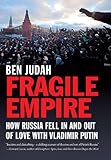
This is my review of Fragile Empire: How Russia Fell In and Out of Love with Vladimir Putin by Ben Judah.

Aged barely three when the Soviet Union collapsed, how did Ben Judah manage to interview so many people, from oligarchs and former leading politicians to the destitute unemployed of the failed collective farms near the Chinese border? Clearly, he must have enormous energy and confidence, aided by fluency in Russian.

He covers quite effectively Putin’s sudden and unexpected rise to power. For years an unremarkable KGB official, Putin was in the “right place at the right time” when Russia needed a strong leader after the “Wild West” capitalism of the 1990s in which many people lost their secure jobs or savings to become destitute, law and order broke down and outlying republics began to revolt. “After ten years of total chaos….he brought social order and economic stability”, with a marked rise in living standards for many, aided by the rising revenue from oil exports.

The strongest section is the very topical information on how Russians have fallen out of love with their modern “Tsar”. The opposition slogan, “a party of crooks and thieves” has adhered firmly to Putin’s “United Russia”. Shocked by corruption and the inefficiency of the over-centralised “vertical” control of power from Moscow, with its lack of concern for peripheral regions treated like colonies, many people have become disgusted by Putin’s personal enrichment, his transparently devious moves to wangle a third term or more as President. They begin to see through the PR fantasies which portray him as an athletic sex symbol catching outsize pike and guiding flocks of geese to safety.

Judah does not try to conceal the flaws and divisions in the opposition. The charismatic Navalny sounds like a bigoted skinhead in his Islamophobia. He is bitterly attacked for his lack of interest in visiting neglected areas like Birobidzhan near the Chinese border. Demonstrators in Moscow are widely dismissed as privileged middle classes who feel more in common with Europe where they holiday frequently than with the rest of Russia. To show how “Moscow is not Russia,” Judah travels to some of the least developed areas like Siberian Tuva, where male life expectancy is lower than Gabon in Africa, and murder rates exceed those of Central America. “To stay in power Putin knows he must divide the nation, preventing the Moscow opposition from linking up with the discontent in the rest of the country”. Portraying Russia as one of history’s greatest failures, he makes fascinating comparisons with China which he sees as managing its economic transition more effectively.

Too young to be saddled with baggage from the Soviet era, Judah’s focus on the last two decades gives the book a sense of immediacy. However, there is a need for a bit more context, as regards explaining more clearly why communism collapsed with such apparent speed, the reasons for Gorbachev’s sudden demise, the policies of the main “opposition” parties and the names of their leaders. A glossary would have been useful.

The main and rather serious shortcoming of this book is the slapdash journalistic style. The lack of editing is revealed where some paragraphs are repeated verbatim, but it matters more where the meaning is obscured by dodgy syntax, non sequiturs and misuse of words. I’m sure Ben Judah has a great future but he could learn a thing or two from the style of “the old Russian hand”, Angus Roxburgh’s “The Strongman” to which I have now resorted to fill some of the gaps. We need more of the coherent analysis evident in Judah’s concluding chapter.

⭐⭐⭐⭐ 4 Stars

“Teaching people not to think”

This is my review of Iron Curtain: The Crushing of Eastern Europe 1944-56 by Anne Applebaum.

Would Eisenhower have allowed the Russians to take Berlin in order to spare his troops if he had foreseen that the Soviets would go on to impose Communism on Eastern Europe for almost half a century? With a focus on Poland, Hungary and East Germany, Anne Applebaum draws on the memoirs of people who lived through the period, to dissect the evidence for how the USSR managed to crush opposition: mass deportations to fit nationalities within the "correct" boundaries, promotion of "Moscow men" into key positions, indoctrination of the young, suppression of the Catholic church, control of the media, to name a few aspects. Repression grew under the "High Stalinism" of the early 50s once the complacent belief that east Europeans would vote for communism was seen to be a delusion.

The chapters take a thematic approach, working logically from such topics as communists and policemen through politics and economics to issues of "socialist realism", "ideal" planned cities, and reluctant collaborators. So, you can pick out what catches your interest, although it is most valuable to follow the author's train of thought. With the clear aspiration to be taken seriously as an academic work, this may contain too much detail for the general reader to retain, and the unpronounceable Polish names do not help, but Anne Applebaum is always cogent and relevant.

I was particularly interested in the exploration of how "the need to conform to a mendacious political reality left many people haunted by the sense that they were leading double lives". Freudian psychoanalysis was taboo in the USSR, and therefore in due course banned in, for instance, Hungary as well, because it was "too focused on the individual", eventually dismissed in the chillingly humourless jargon of the regime as "the domestic psychology of imperialism". We read of a boy's terror when his father angrily pointed out that the arrest of a general in a show trial did not mean that he was guilty. This "banal truth" felt "like an earthquake" for if his father was right, the authorities must be arresting innocent citizens, but surely, only an enemy could think this was the case……

The helpful glossary of abbreviations and acronyms of the often suppressed political parties and of the notorious secret police organisations could have been supplemented with a reference list of the main individuals mentioned, and a timeline of events. The chapter on the abortive revolutions of the mid-fifties could have been expanded, although perhaps they are dealt with briefly since already well-covered elsewhere. Yet these are minor criticisms of a fascinating analysis which merits being kept on one's shelf as an ongoing reminder of the folly of the attempts to develop a "perfect" society through the exercise of unquestioned, unbending authority, not to mention the dangerous cult of the "supreme leader" in a society which ironically suppresses individuality.

⭐⭐⭐⭐⭐ 5 Stars

Ring of uncomfortable truth

This is my review of A Dangerous Delusion: Why the West Is Wrong About Nuclear Iran by Peter Oborne,David Morrison.

It surprised me that this hard-hitting attack on US and UK policy towards Iran is the work not of a John Pilger-type polemicist, but of two journalists, one of whom has worked for the Daily Telegraph.

This short book makes uncomfortable reading as it hammers out arguments backed by apparently valid sources: the US overthrew a democratically elected President Mossadeq in the `50s, replacing him with the puppet Shah who was allowed to acquire nuclear reactors with a view to generating electricity. When he was in turn ousted for a regime "that wasn't to the west's taste", although Iran had signed the Nuclear Non-Proliferation Treaty (NPT), offered to "abide by the rules" in producing enriched uranium for civilian purposes and even assisted the US after 9/11, the US has persisted in misrepresenting Iran as an aggressive power hell-bent on acquiring a nuclear bomb, using this as justification for harsh sanctions which have caused ordinary Iranians considerable hardship. Meanwhile, the US has practised double standards in permitting its allies Israel and India to obtain nuclear weapons after refusing to sign the NPT.

I appreciate the viewpoint of the reviewer who felt that this book does not address sufficiently the reasons why the US may justifiably fear the nuclear arming of a powerful Islamic state, but one could argue that, in trying to redress the balance of misinformation fed through the western media, and to reduce the ignorance of the general public, the authors must focus on the "dangerous delusion" of the title, since if "the west is wrong about nuclear Iran" the price is the counterproductive provocation of the very hostility and negative action that is feared.

⭐⭐⭐⭐ 4 Stars

Promising much but delivering less

This is my review of When the Money Runs Out: The End of Western Affluence by Stephen D. King.

Frustrated by politicians' refusal to admit that western economies may be in permanent decline, and their wrangling over austerity versus stimulus as the key to restoring growth which may be a chimera, I leapt eagerly on King's topical book.

I like King's rejection of economists' recent preoccupation with obscure models, and his concern to take historical, political and social factors into account, although I think some of his analyses would make academics in these disciplines wince.

The most original aspects seem to be his comparisons between the current situation and previous events, such as the decline after a period of promising growth of both Argentina and Japan, the bubble of "subprime" investment in the original American railroads, or the crises of the 1990s from which "Tiger economies" like South Korea or Malaysia, recovered quickly owing to their lack of a sense of entitlement, or so the author claims.

His examination of the recent financial crisis is clear, but has already been well-covered elsewhere. Yet his approach to economic terms seems inconsistent: the "loss aversion" which occurs in periods of stagnation is defined at some length, but I am not aware that he explains at any point how bond yields work, or the difference between monetary and fiscal policies, all crucial to an understanding of the economy. A glossary of economic terms would have been useful.

There is a good deal of space-taking repetition and some of his observations seem unduly subjective and perhaps a little confused, such as frequent references to the guilty role of "baby boomers" who are "having their cake and eating it". Does he expect this group to opt for early euthanasia so they can hand their ill-gotten share of resources on to the next generation?

I was disappointed by his recommended policies, which are presented in a rather rushed and woolly fashion in the final chapter. Some, too complex to explain fully here, on say, rating creditors for the quality of their decisions, or setting up "fiscal clubs" or encouraging more mobility of labour seem too theoretical, taking little account of the realities of nationalism, democracy or the implications for local services. Other policies seem based on flimsy arguments: I am unconvinced that banks have been forced to pursue risky ventures promising higher profits by the need to subsidise such "social commitments" as ATMs, or telephone and internet banking services for small savers.

⭐⭐⭐ 3 Stars

“Within a moment of great rebellion”

This is my review of Perilous Question: The Drama of the Great Reform Bill 1832 by Lady Antonia Fraser.

Bubbling over with knowledge of the period, Antonia Fraser kindles our interest in what may seem a dry old piece of legislation by relating it to the events and personalities of the day. In a Parliament dominated by aristocrats, even the Whigs' desire to give some political representation to rapidly growing industrial cities like Birmingham was based on a pragmatic aim to avoid public revolt, after the grim precedent within living memory of the excesses of the French Revolution. Any thoughts of universal suffrage or a secret ballot were still the dangerous ideas of the "Radicals". It is startling to discover that the Reform Act only extended the franchise from 3.2% to 4.7% of the population!

Although other reviewers have praised the "novel-like" style of the book, I found the continual digressions into the family connections, appearances and verbatim comments of the main – and some minor – characters quite hard to digest. A glossary would have been really useful. More seriously, these often rambling discursions tended to get in the way of a proper understanding of the three Reform Bills which led to the 1832 Act itself. At no point does the book clearly explain exactly what was in each Bill and why. Neither is there a full explanation of the conditions which made the Reform Act necessary, with an indication of earlier efforts to improve the electoral system. Antonia Fraser's celebrity raises one's expectations, so that it is disappointing that this may also elevate her above being asked to submit her work to a thorough edit.

The book improved for me from Chapter 9, the point where England explodes into widespread riots after the Lords' first rejection of the Bill, largely because of opposition from the Bishops. To think how much ordinary people cared about it, when our latest widespread riots were largely about looting chain stores! Chapter 10 is particularly gripping with accounts of anarchy in Bristol, where soldiers held back out of sympathy for the mob. The official death toll was twelve, "but the number of rioters who died was probably more like 400". In view of some recent media scandals, I was struck by the scurrilous press attacks on the German Queen Adelaide who was thought to have influenced King William IV against reform. The extent of his power is intriguing – he could refuse to create the extra peers necessary to get the Bill passed. Yet, 180 years on, some continue to argue for the maintenance of unelected peers, and appointed lords still occupy key posts in our Government…..

⭐⭐⭐⭐ 4 Stars

Sadly no rabbit

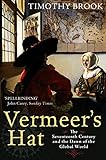
This is my review of Vermeer’s Hat: The Seventeenth Century and the Dawn of the Global World by Timothy Brook.

The idea of using paintings mainly by Vermeer as a cue to explore aspects of the development of trade in the seventeenth century and "the dawn of the global world" is an interesting approach. Although I was expecting the focus to be on the Dutch East India company, there is a good deal about French and Portuguese colonisation.

One problem for me was that the links often seem too tenuous. Vermeer's hat serves as "the door inside the painting which we will open", the point being that it is probably made of beaver which became available when the Frenchman Champlain began to trade with the Huron Indians in the course of his search in what is now Canada for a route through to the Pacific and the wealth of China. Too much of the commentary on the paintings is speculation: "..we don't know whether he owned that particular hat".. his wife was hard up after his death "and might well have sold it" and so on.

There's a kind of banality in much of the analysis: "the stories I have told in these pages have revolved around the effects of trade on the world, and on ordinary people. But between the world and ordinary people is the state which was powerfully affected by the history of trade and had powerful effects in turn". Isn't the reader likely to know this already? Is this an example of an academic underestimating the general reader?

Perhaps an avoidable downside of its thematic approach, the book rambled too much for me and I was left frustrated by the dullness of what could have been gripping.

⭐⭐⭐ 3 Stars

Lost Lessons of Truth Stranger than Fiction

This is my review of Return of a King: The Battle for Afghanistan by William Dalrymple.

Fearing Russian designs on India in "The Great Game", the British tried to gain influence in the potential Achilles' heel of Afghanistan. Ignoring expert advice, they chose the wrong side in reinstating the honourable but hidebound Shah Shuja whom they imagined would be more malleable than the shrewd reigning monarch Dost Mohammed.

If this regime change reminds you of more recent events, there are also parallels in the lack of strategic planning and a "longer view", and neglect of the topography, climate and culture of the area. In breathtaking arrogance admittedly combined with crazy courage, the first 1839 British invasion of Afghanistan set off in winter, ignoring the several feet of snow in the mountains, omitting to clear rough terrain for gun carriages or to protect themselves against ambush and constant sniping once they entered the narrow mountain passes. The problem was compounded by the thousands of camp followers, women and children with presumably no means of support if they stayed behind.

If the detail is often overwhelming, the quirky truth which is stranger than fiction grips one's attention: three hundred camels needed to carry the military wine cellar whilst elsewhere troops could not advance owing to lack of camels to transport vital supplies. One regiment even brought its own foxhounds, which somehow survived to hunt jackals later!

It is all the more poignant that, having reached Kabul after suffering terrible privations yet still gaining the upper hand, the army squandered its advantage under dithering leadership so that in the ill-advised, typically chaotic eventual retreat only one man made it back to Jalalabad, not counting the thousands left behind as captives.

In what resembles an epic novel, Dalrymple describes how the British sent an Army of Retribution to salvage a little honour by taking brutal reprisals which would now be regarded as the most vicious war crimes, but in the end the government wrote off the vast sums spent on the unsuccessful regime change.

Apart from the numerous astonishing anecdotes and vivid character studies, one of the most interesting aspects of the book is the extensive quoting from the colourful prose of the historians of the day: "Abdullah Khan Achakzsi…..launched an attack like a fierce lion or the serpent that inhabits the scented grass".

Although Dalrymple supplies a list of all the main characters with accompanying explanations, I found this too indigestible as an opener, and recommend keeping your own notes of "who's who".

My only criticism is the inadequate maps. Also, apart from the reduced weight, this is less suitable for a Kindle in that maps and family trees are illegible on the small screen, plus it's too fiddly checking out details from previous pages as is often necessary in this type of book. It's also harder to appreciate on the Kindle that the main text is shorter than it seems, the last 30 per cent of the book being notes.

This is a fascinating account, although it focuses narrowly on 1839-42. For a wider sweep, try "Butcher and Bolt" by David Loyn.

⭐⭐⭐⭐⭐ 5 Stars

Revealer of secrets

This is my review of Egyptian Hieroglyphs for Complete Beginners: The Revolutionary New Approach to Reading the Monuments by Bill Manley.

A visit to Egyptian temples where at least some hieroglyphics have survived the vandalism of fanatics from other religions is likely to kindle an interest in this subject. In a book that is attractively presented as you would expect from Thames and Hudson, but not too expensive since it is illustrated in black-and-white, Bill Manley succeeds in explaining the principles of hieroglyphics from scratch.

I have no idea how an expert would rate it, but I found it easy to grasp that many picture symbols in fact represent sounds: an owl is "m" and a ripple of water "n". You need to digest each principle before moving on to the next step, since Manley quickly introduces complications: 2 sound and then 3 sound signs, moving on the the "difficult to grasp" concept of "sound complements" which I found hard to understand as I was trying to go too fast. Then, there are the ideograms, or elements of "picture writing" such as the representation of the god Anubis as a dog lying on a shrine. Other symbols with a special sign added denote whole words, such as "mouth".

It is fascinating to realise that, whilst spoken Egyptian obviously had vowels, these were rarely written in the hieroglyphics, which in sense form "word skeletons" of consonants – like text speak! Also, hieroglyphics can be read in either direction, according to the direction in which the symbols are facing. Although knowledge of how to read this ancient script was lost for centuries, its similarities to Egyptian Coptic eventually provided the key to translating it.

If you do not wish to work systematically through the book, a good deal of enjoyment can be gained from browsing with a focus on lists of words and annotated diagrams which interpret inscriptions on famous monuments. What makes this book both distinctive and successful as an absorbing introduction is that the chapters are designed round a number of stelae – carvings – selected from monuments erected between 3000 and 1100 BC. Avoiding the risk of becoming a dry grammar, Manley takes care to include an explanation of Egyptian culture along with the language instruction.

An experienced teacher, the author is clever in his approach, since skimming through the book whets your appetite to make the effort to get to grips with the detail and so obtain the satisfaction of getting more out of viewing monuments in the future.

⭐⭐⭐⭐⭐ 5 Stars