Paved with good intentions

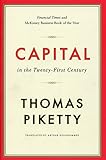
This is my review of Capital in the Twenty-First Century by Thomas Piketty,Arthur Goldhammer.

The Industrial Revolution saw an increase in inequality resulting from increased capital accumulation by the wealthy. The economist Kuznets misread the evidence in arguing that an "advanced phase" of industry would lead to a more equal spread of wealth, for "the sharp reduction in income equality in rich countries between 1914-1945 was due to the violent economic and political shocks resulting from two world wars…. The resurgence of inequality after the1980s was due to political shifts as regards taxation and regulation of finance". Piketty aims to enhance his academic credentials by analysing and presenting a vast amount of data between 1700-2010 to explain the above more fully and to support his central thesis that there is no natural, spontaneous process to prevent destabilising, inegalitarian forces from prevailing permanently.

At first, the style seems very clear, well-translated, with minimal use of obscure formulae beloved by economists and graphs which relate to actual numbers on the axes rather than indicate trends, although Piketty admits that such complex data over long periods of time comes with many caveats. He tends to reiterate points, which apart from reinforcing learning helps readers who wish to dip into chapter sections. However, such repetition adds significantly to the length of the book.

Length seems a major problem. If I were an economics student, I would not wish to trawl through so much verbiage to glean the useful nuggets of knowledge. As a general reader, although the history of wealth distribution is quite interesting, I am most concerned about the final section on regulating capital, that is, the reduction of destabilising inequalities of wealth in this century. Here, I find the author skirting round the problem in a woolly and diffuse fashion, as in the single 25 page chapter (out of 577 pages, excluding notes) in which he considers aspects of "A Global Tax on Capital" which he introduces, not for the first time, as a utopian idea "which it is hard to imagine the nations of the world agreeing to any time soon". Other chapters in this section each go off at a tangent without being clearly related to the book's central theme of "capital", such as Chapter 14, "Rethinking the Progressive Income Tax" which is confined to examples from the US, France, Germany and Britain .

The author's heart is in the right place but since the arguments for redistribution are controversial, they need to be thought through and presented more strongly. A shorter book would have been more effective: the first part his research, the second his reasoned case. How many of the purchasers who made this a best-seller have actually read it?

⭐⭐⭐ 3 Stars

Dividing the world

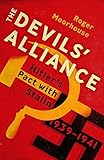
This is my review of The Devils’ Alliance: Hitler’s Pact with Stalin, 1939-1941 by Roger Moorhouse.

This readable and informative analysis of the infamous 1939 Nazi-Soviet Non-Aggression Pact covers an aspect often confined to a few paragraphs in a history of the Second World War. In upsetting "the ideological clarity of the bipolar world of communist versus fascist", this Pact dismayed many in both camps, justified to communists by the specious argument that: "Soviet leaders had a responsibility to the working class of the world to defend the USSR and could, if necessary, for this reason make an alliance with the devil himself".

On one hand, mistrustful of imperial Britain and the US, Stalin felt more comfortable with an agreement that would leave Europe to exhaust itself through conflict at little cost to the USSR. He also saw a chance to regain and occupy eastern Europe – parts of Poland, the Baltic States, Finland and Bessarabia (from Romania), sanctioned by the secret protocol which his henchman Molotov signed with the Germans, but always denied.

On the other hand, the Pact gave Hitler the confidence to fight on a single front in 1940, sweeping through the Low Countries, France and Norway, humiliating Britain in the process. The map showing Europe largely under Axis control or neutral in June 1941 reminds us of how scaring it must have been to be living in the UK at this time.

By then, the stage was set for Operation Barbarossa, since the unnatural alliance had fractured under Hitler's fears over the long-term Soviet designs on Europe, and his hubristic underestimate of the risks involved in overextending his forces in the throes of a Russian winter. Moorhouse points out the irony of the German troops' advance into Russia, fed by Soviet grain, tanks fuelled by Soviet oil, boots made of rubber transported on Soviet trains, weapons made from Soviet manganese-hardened-steel as a result of the mutually beneficial trade under the Pact. In turn, the surprisingly effective Russian tanks had been manufactured with machine tools imported from Germany.

Moorhouse shows how there was little to choose between the two powers as regards their callous and brutal resettlement policies for those judged to have unacceptable views or the wrong ethnic origin. He cites the two trainloads of Polish refugees travelling opposite ways on the Nazi-Soviet frontier, "each group astonished that the other was fleeing into the zone they were trying to escape". He also reminds us how, until Gorbachev's regime, discussion of the Nazi-Soviet Pact was taboo, the new histories of the 1960s covering it only briefly with "the expected omissions, evasions and justifications".

Moorhouse has chosen to omit concluding references to the Germans' defeat in Russia after the carnage of their initial blitzkrieg, and to the new alliance formed by Stalin with the UK and USA. Neither is there an attempt to speculate on the course which events might have taken if this alliance had been formed earlier, instead of a pact with the Germans.

⭐⭐⭐⭐⭐ 5 Stars

From the dim ruins of the Enlightenment project

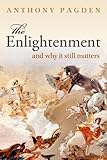
This is my review of The Enlightenment: And Why it Still Matters by Anthony Pagden.

In the eighteenth century, conditions combined to create a demand for the right to think for oneself. Avoiding simple clear-cut definitions, Anthony Pagden deploys his encylopaedic knowledge to explore the factors which gave rise to the enlightenment, its complexity, strengths and weaknesses and why it is still relevant. A scholarly page-turner, which somehow manages to be engrossing yet flawed, this is a book to keep on one's shelf and revisit from time to time, as it includes too many ideas to grasp in a single reading.

Each chapter is like an encounter with a passionate expert thinking aloud as his mind flips back and forth, linking the ideas of respective "lumières" with extensive quotations and frequent little digressions and asides "(more of him later)". No philosopher or thinker is introduced without a few nuggets of potted history, which tends to be distracting. Despite the author's penchant for convoluted sentences, his approach is gripping and thought-provoking, but can create a kind of overstimulated mental fog. A reader with some prior knowledge of the main enlightenment thinkers is likely to cope best. I decided that the best course is to read this through once to get an overview and then study chapter by chapter to fix some key insights. I could have done with a chart to show the dates of the various philosophers to clarify exactly who was influencing whom, and to note their respective works, often with long and similar titles.

Some assertions seem open to question, but it is perhaps no bad thing to face the challenge of explaining why one questions a certain argument. The typos noted by other reviewers did make me wonder whether the proofreader(s) hadn't become too numbed by the spate of information and ideas to check the sense properly, but this is a minor point. The major criticism is that the book is somewhat chaotic in structure, repetitious and longer than it needs to be – but Pagden certainly conveys a sense of the enduring fascination of the subject matter.

I was looking forward to the "Conclusion: Enlightenment and its enemies", but Pagden seems to have run out of steam at the end, not dissecting "communitarianism" and the Catholic philosopher MacIntyre as forensically as he does the earlier anti-enlightenment thinkers and ending with a final confirmation of continued relevance which seems rather woolly, I suppose due to the sad fact that our enlightenment has not built on that of our visionary eighteenth century ancestors to the degree that they might reasonably have hoped.

⭐⭐⭐⭐ 4 Stars

Asking of Fortune more than she can grant

This is my review of Napoleon the Great by Andrew Roberts.

I embarked on this great slab of a historical biography – 820 pages excluding sources and notes – in an attempt to understand to what extent Napoleon was truly "great", particularly after reading a popular biography of Josephine which seemed to sell him short.

In the course of wading through the mud and slaughter of his interminable military campaigns, I concluded that he was a remarkable man whose greatness stemmed from enormous energy and vision, insatiable curiosity, the capacity to absorb a huge volume of facts, the confidence to take risks in putting ideas into practice, great tactical skill, flexibility and speed in conducting campaigns – when he had a single enemy to contend with and a small enough army to control personally – undeniable courage, a keen sense of self-publicity and understanding of how to motivate men at all levels – this sometimes deserted him – through a mixture of praise, rewards and decisive orders when needed. He was also capable of moments of refreshing candour and regret as to his shortcomings, and possessed a sense of humour and charm which captivated even some of his enemies.

On the downside, his desire to emulate Caesar and Alexander the Great may have led to megalomania, his attention to detail made him a control freak, as Emperor he made himself an unbridled political dictator, although he listened to the opinions of others and adopted a more democratic approach towards the end when he was fatally weakened. His continual exaggeration of enemy losses and playing down of his own may have been judicious PR, but suggests a failure to face up to his frequent squandering of the lives of the men he had inspired to follow him. He was a male chauvinist – although perhaps most men were at the time – and he made some major errors.

The most costly of these was the attempt to fight on two fronts simultaneously – Russia and Spain, and to allow himself to be lured as far as Moscow, over-extending his supply lines and then underestimating the time needed to limp back to France before the onset of winter. The shocking death toll of more than half a million soldiers, and the destruction of his horses made it hard to put up an effective defence with fast-moving cavalry when the extent of his conquests set most of the rest of Europe against him. He picked the wrong issues for stubborn obsessions, such as an unworkable scheme to block trade with Britain with which he annoyed the Tsar by trying to impose it on Russia, or the rejection of fairly reasonable peace terms when his luck had run out.

In an academic yet mainly very readable text, the author fired me with some of his own enthusiasm for Napoleon. I found myself rooting for him and wishing he had desisted from some campaigns to build his reputation as a social reformer – even as a prisoner on Elba, he arranged the provision of fresh water, improvement of roads, irrigation schemes, etcetera. He may of course have been in a cleft stick, in that he had to wage war to avoid being overrun by belligerent neighbours outraged by his assumption of a crown.

I realise that many chapters on military campaigns are unavoidable, and was impressed to learn that the author had clearly tramped many of the sixty main battle sites in person, but I found the information perhaps inevitably too condensed with indigestible lists of names of commanders, companies, details of troop movements, villages and rivers. It is frustrating that maps are not always supplied, and when included, often omit place names mentioned in the text, an indication of location, topography and scale to help one understand the course of events. I did not want to interrupt my reading to go and search for these details elsewhere. It would have been helpful to include more of the factual information in clear tables, charts and timelines – together with better maps- for easier reference.

Overall, this is an impressive work which has increased my understanding and appreciation of a fascinating historical figure.

⭐⭐⭐⭐⭐ 5 Stars

By chance or design

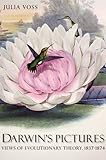
This is my review of Darwin’s Pictures: Views of Evolutionary Theory, 1837-1874 by Julia Voss,Lori Lantz.

The eye-catching cover showing a pair of stylised hummingbirds on a water lily masks a well-translated from German if at times long-winded academic exploration of the evolutionary theory revealed in the pictures produced by Darwin and his contemporaries.

A prolific collector of specimens on his five year voyage on the Beagle, Darwin often lacked the knowledge to identify them correctly. So, it was the ornithologist Gould back in London who accurately classified the famous Galapagos finches with their distinctive beaks which provided early evidence for evolution, of which Gould himself ironically became an opponent, in the belief that such beautiful creatures as hummingbirds must have been designed by God.

Endearing in his shortcomings, Darwin failed to appreciate the importance of the locals' observation that the tortoises on each Galapagos island had a distinctive patterned shell. So, the creatures were taken aboard The Beagle for their meat and the shells discarded over the side. On his own admission a poor draughtsman, Darwin spent years back home constructing messy but ground-breaking diagrams to show evolution, such as the foldout chart from the 1859 Origin of Species, with neither origin nor end, but a focus on chance variation with the adaption and flourishing of some species at the expense of others. Unable to accept such vagueness, followers like Haeckel developed this idea into a clearly drawn tree culminating at the top with man, with gorilla, orangutan and gibbon on branches just below – a clear hierarchy which Darwin did not emphasise himself. It is fascinating to realise that gorillas were only being discovered by explorers at around the 1850s, so that the idea of humans somehow evolving from such a fearsome beast was hard to take in a society brought up to believe that man had been created by God only a few thousands of years before.

Although not very assertive in speaking out against religious beliefs, Darwin was troubled by the influential Duke of Argyll's clam that the perfection of the peacock's tail could only be explained by the existence of a Creator. Through painstaking drawings of patterns on the "argus pheasants" tail feathers, Darwin convinced himself that not only could these patterns evolve, but this perfection itself was a myth.

This book could have been made more accessible for the general reader, but it was probably the author's prime and understandable aim to further her academic reputation. As it is, the book provides some fascinating information on not only evolution but also Victorians' attitudes towards their origins and also how emotions might be expressed by both them and the domestic animals they had increasingly begun to keep – another research topic pursued by the ever-inquisitive Darwin.

⭐⭐⭐⭐ 4 Stars

Seeing the wood for the trees

This is my review of Henry VIII (Penguin Monarchs): The Quest for Fame by John Guy.

The "Penguin Monarchs" series sets out to provide a separate concise and readable introduction to each of the British rulers from Athelstan to Elizabeth ll, written by a different specialist in each case. Well-known for his accessible coverage of the Tudor period, John Guy has chosen to focus on Henry's quest for fame. This was not achieved in quite the fashion intended, since he is mainly infamous for his often mistreated six wives, whereas his desire to be crowned in Paris as the rightful King of France or to become the "the arbiter of international disputes" came to nothing.

Perhaps because the details are quite condensed, the author succeeds in highlighting some key aspects of Henry's personality and the motivation for his actions. Charismatic in his youth, handsome, shrewd, interested in the arts yet also athletic, prepared to promote competent men of lowly origin like Wolsey or Cromwell, he could have left a positive legacy. Yet, childhood experiences of Yorkist rebellions triggered the fear which bred his almost paranoid mistrust of others, perhaps also fed by his calculating father's cynical example. With the additional effects of the physical excesses which ruined his health, and the impatience and arrogance which made some see him as "the most dangerous and cruel man in the world", inevitably many of his policies became corrupted.

To free England from papal authority and end the greed of the great monasteries may have been beneficial in the long-term, but these ideas were the unintended by-product of Henry's obsession to find a way to divorce an infertile wife for one who could provide the male heir needed to secure not only his dynasty but the security of the realm. Also, to use the monks' plundered wealth to finance unnecessary and abortive wars or to execute those who would not renounce the old faith were indefensible acts. Henry's concern to judge people via the legal system and to legalise change using Parliament was laudable but the resultant manipulation of justice by his henchmen and crushing of true democracy were tyrannical. His belief that the King of England really was Christ's deputy ironically led him to seek to re-impose what was in effect a form of Catholicism without the Pope.

The author's concluding points are telling: Henry's vast and costly wardrobe designed to impress, Holbein's portraits which revealed "the sitter's soul" in an unflattering way which Henry perhaps fortunately failed to observe, and, in true "Ozymandias" style, the grandiose planned mausoleum left unassembled in a workshop until the bronze was sold off a century later – to fund a future war. There's also a useful bibliography at the end for those who wish to know more.

⭐⭐⭐⭐ 4 Stars

Dubious means to questionable ends

This is my review of World War Two: Behind Closed Doors: Stalin, the Nazis and the West by Laurence Rees.

This is a fascinating examination of the relations between Churchill, Stalin and Roosevelt. I had always assumed that after the defeat of Hitler it was too much hassle for the Allies to press on and drive the Soviet Communists out of Eastern Europe, particularly since they had shown themselves to be such resilient and determined fighters. It was a shock to realise how readily Churchill accepted the USSR’s retention of eastern Poland which it had overrun during its notorious pact with the Nazis in 1939-41. His glib rationalisation that Poland would simply be taking “two steps westward” was all the more ironical since it was the German occupation of western Poland which had “necessitated” the Second World War in the first place.

Churchill was also devious in appeasing Stalin by implying that he was about to launch a Second Front in France – thereby taking some of the pressure off the Soviets fighting in Eastern Europe – when he clearly had no intention of doing so. Despite his many faults and atrocities, Stalin was justified in resenting how the Soviets ended up bearing the brunt of the bloody battles with Germany, as indicated by the shocking disparity between the Russian and Allied death tolls.

In yet another ironic twist, Churchill and Roosevelt both failed to see how much they were being manipulated by the wily Stalin. They even harboured the illusion that Stalin’s hands were tied by some shadowy Politburo in the background. To observers, Stalin’s mastery was often all too evident. As Eden commented, “If I had to pick a team to go into a conference room, Stalin would be my first choice.” Although the author reminds us of the Kafkaesque repression of free speech in the USSR and punishment of able people who might pose some kind of threat to Stalin, Western leaders turned a blind eye to, for instance, the evidence that it was the Soviets who had massacred Poles in the Katyn area. On the other hand, what else could the West do when faced by the need to stop the Nazis? It is possible that, without Russia as any ally, Hitler would have conquered Britain.

Churchill’s ruthlessness is evident in his political decision to order the despatch of convoys to supply the Russians once they had become allies, even though he knew of the high risk of German attacks in Arctic waters: for him, a 50% or more success rate made it worthwhile. Even more pitiless, Stalin ordered the wholesale and undiscriminating deportation of the Crimean Tatars to the hostile arid wastes of Uzbekistan, because some of them had collaborated with Germans but it was too much effort to identify them accurately.

Although this is an unsystematic and therefore only partial account of World War 2, it is a book well worth reading both for those who thought they knew about the War and for others too young to remember it. The only caveat is whether time would be better spent trying to understand the terrible wars which are still raging at present.

⭐⭐⭐⭐⭐ 5 Stars

In These Times: Living in Britain through Napoleon’s Wars, 1793–1815 by Jenny Uglow – The devil in the detail

This is my review of In These Times: Living in Britain through Napoleon’s Wars, 1793–1815 by Jenny Uglow.

I was drawn to this book by admiration for Jenny Uglow’s excellent biography of Charles ll and my fascination with the Napoleonic period. The author has set out to write a social history from the viewpoint of a wide range of people living in Britain at a time when, in addition to the threat of a remarkably successful military opponent, they had to contend with the throes of the Industrial Revolution and a growing demand for democracy.

Using a framework of themed chapters, each ending with an impressive list of sources researched, Jenny Uglow quotes widely from letters and journals, and recounts the exploits of those who may not have had much truck with writing, such as the blacksmith who led a group of “labourers wearing skirts to look like housewives” who “marched through villages crying ‘We cannot starve”, and wrecked a mill that was supplying the navy rather than the people of Devon. He was hanged at the same mill “with great ceremony”, whereas other ringleaders sometimes escaped with the lesser punishment of transportation.

Jenny Uglow contrasts a hidebound parson who feared that the French Revolution would spark unrest in England, with the respectable, liberal-minded men who joined more anarchic colleagues in urban pressure groups calling for political reform. At first quite nonchalant about a foreign uprising which he expected to be short-lived, first minister of state William Pitt was driven in due course to take a tougher line, banning societies and public meetings and suppressing free speech as ferociously as a modern dictator. The author is good on the direct effects of the war with France, such as the way troops waiting in coastal ports for the order to attack commandeered so much food that the local people began to go hungry.

I was less impressed by chapters which seemed to ramble off at a tangent into a morass of detail. An example of this is “Warp and Weft” which seems to belong more to a book specifically on the Industrial Revolution. I learned that “to add strength to the cotton, weavers added `fustian’, wool or linen yarns, to make the warp”, and that Robert Peel, son of a future Prime Minister, employed in his factories children who had no shoes or stockings, visiting Poor Law Guardians being informed “if they gave them shoes they would run away”. These points had to be teased out of a mass of information on a few weavers and mill owners – arbitrarily chosen except perhaps that they happened to have left records.

The brain can only absorb so much “dissociated” fact and it becomes distracting to be continually asking, “Why am I reading this? What does it have do with the impact of Napoleon on the lives of ordinary people in the British Isles?” I realise that this is a question of taste, and some people thrive on detail, plus it may be of value to students, but I would have preferred a shorter text with a stronger focus on the Napoleonic Wars and their impact on Britain. I coped with the book by skipping through some passages to find what interested me, but that is not entirely satisfactory in what I do not think is intended to be a reference work.

⭐⭐⭐⭐ 4 Stars

Vanishing for the Vote: Suffrage, Citizenship and the Battle for the Census by Jill Liddington. Fascinating theme but too much disjointed description

This is my review of Vanishing for the Vote: Suffrage, Citizenship and the Battle for the Census by Jill Liddington.

It is a fascinating and now little-remembered fact that, furious over not counting for the vote, many women threatened to opt out of being counted in the 1911 election, of particular importance to the Liberal government as a source of information for their welfare reforms. The researcher Jill Liddington provides only recently available examples of 1911 census forms from different parts of the country in which the mother of a household has mysteriously “vanished”. Her academic findings have been worked up into a book intended to remedy the tendency for the suffragettes to be given far too brief coverage in histories of early C20 Britain. This may appeal to those who can find evidence of specific communities or families of local interest to them. I, for instance, homed in on the Bristol-Bath area. However, I found that like most of the other chapters, in the course of shifting the focus from the general to the particular, the book becomes too disjointed and bitty, too much banal description rather than analysis. The book’s main achievement is to inspire me to go in search of a more coherent and profound study of the fight to get women the vote.

⭐⭐⭐ 3 Stars

“To go on with vigour and to hope for the best”

This is my review of William Pitt the Younger: A Biography by William Hague.

"Apparently uninterested in sexual relationships…in music, art, society or modern languages and literature", Pitt the Younger does not prove a very engrossing subject for a near-600 page biography. The fascination lies in the late eighteenth century times though which he lived.

The stellar reputation of his father, "The Great Commoner" elevated to the title of the Earl of Chatham, and the hothouse classical education which honed his debating skills, gave Pitt the confidence and eloquence to take on the role of First Minister at the age of only twenty-four, although this was less remarkable at a time when the Commons was dominated by the sons of peers bent on advancing their fortunes and waiting to inherit titles.

One of Pitt's main talents was for prudent budget management and paying off national deficits, which chimes with present-day preoccupations. Sadly, the pressure of European wars and need to oppose the menace of Napoleon caused this to unravel into renewed debt and largescale borrowing, the invention of a form of income tax being one of Pitt's innovations.

Regarded as personally incorruptible "honest Billy", Pitt resorted from the outset to offering peerages as a way of getting supporters on side, on a scale which makes the recent MPs' expense scandal look like chicken feed. For a man with such an eye of administrative detail, the chaos of his personal finances is also surprising, but Hague explains this as the result of his workaholic obsession with the holding of power to serve his country. The excessive consumption of alcohol which contributed to his early death at forty-six may also have contributed to his negligence over personal affairs. This was not entirely his own fault, as from an early age he was encouraged to dose his frequent periods of ill-health with a daily bottle of port.

Although sociable within his circle of loyal friends, Pitt often seemed stiff and arrogant in public. It is tantalising that no explanation survives of the "decisive and insurmountable obstacles" which prevented him from marrying Eleanor Eden, the woman to whom he came closest to "courting".

Sadly, many of the Pitt's early causes – abolition of the slave trade, Catholic emancipation and parliamentary reform – foundered, either because he accepted the need to be pragmatic or perhaps lost his youthful idealism. Some of his patchy success seems to have been the chance benefit of indecision or procrastination. Perhaps it was inevitable that the sheer length of time in office was accompanied by a decline in his reputation, the final hammer-blow being the defeat of his fickle Europeans allies at Ulm in 1805. It was interesting to note how much support depended on the British providing subsidies for the armies of other nations.

There is much more meat in Hague's description of a Parliament without clear parties as we know them (although they are currently in a state of flux) and a King George III still retaining a considerable degree of power to obstruct matters – refusing to accept the republican thorn in the flesh Charles Fox as a minister, or sabotaging Pitt's attempts to give Irish Catholics the right to hold office. Pitt's dependence for political survival on the sanity and survival of the king is all too clear.

The minute detail, inclusion of many friends' and politicians' names, before and after ennoblement, and extensive quotations from the convoluted prose favoured in the C18, make this a demanding read at times. I would have liked a little more background context, say on the evolution of the "Whigs" and embryonic Tories; more on the prevailing political situation in the rest of Europe and its colonies and a "glossary" of contemporary politicians would have been useful.

Overall, it is an impressively researched if at times somewhat dry biography.

⭐⭐⭐⭐ 4 Stars