An acquired taste

This is my review of Lords of the Horizons : A History of the Ottoman Empire by Jason Goodwin.

Apart from the obvious fact of being Islamic, the former Ottoman Empire is fascinating in its method of operating on very different lines from the rest of Europe. Instead of a power structure based on feudalism and inheritance, it developed the “boy tribute” system which took “the finest Christian youths” into the Sultan’s service, up to the level of the Grand Vizier. The problem of jockeying for the one position which did involve succession was solved by legal fratricide: the Sultan’s heir, the only person allowed to inherit, was permitted to order the murder of any scheming brothers who might seek to supplant him. The Ottomans did not seek to impose their culture on conquered groups, but simply to gain loyalty and tax revenues: the Chians were only forced to convert their churches to mosques after they had consistently failed to pay their dues. The detailed and pragmatic organisation which enabled the Turks’ remarkable success eventually made for a sclerotic Empire, “the Sick Man of Europe”, which collapsed after the First World War, leaving little lasting trace of the “centuries of peace and discretion” it had created.

Jason Goodwin is clearly very knowledgeable and passionate about the Ottomans, and his quirky style may help to convey a sense of their exoticism to Western eyes. “Western camps were babels of disorder, drunkenness and debauchery. The Ottoman camp was a tea party disturbed by nothing louder than the sound of mallet on tent peg, the camels’ cough, the bubbling of cauldrons filled with rice”. Some readers will love this style, but I was continually irked by the endless passages of hyperbole, the questionable assertions – “if Tartars made the best slavers, then Circassians unquestionably made the best slaves” – the rambling Old Testament-style lists of places and tribes, the continual, often abrupt switching around in time and topic, with a lack of clarity as to dates and the location of places. Instead of likening Constantinople to the head of a dog when explaining its land and sea defences in the siege of 1453, why not just supply a map – unpoetic, perhaps, but effective? Sometimes the book reads like notes on different subjects rapidly slotted together without much editing.

“Across the higher ranges of the Balkans lay a tangle of Vlachs (shepherds) – the limping Vlachs, Black Vlachs, Albano-Vlachs, Arumanians, the Sarakatsans who roamed deep into Anatolia; some who protested they were not Vlachs at all, and others who pretended to be Vlachs, and some who gave wickedness a country, Klephtouria, and some …….who were thought dirtier than anyone in the world, and one (according to Eliot in the late nineteenth century) who built himself a summer residence in the hills and proved so houseproud that he repaired a broken window with a new piece of glass instead of a sheet of brown paper, “a proceeding, I believe, unique in the Levant”. And this is just an extract from yet another lengthy piece of verbiage which left me wondering why on earth I was bothering to read it.

The author seems to have made a conscious attempt to break away from a conventional academic history and create a kind of verbal collage to provide a sense of the character of the Ottoman Empire, but for me it is too fragmented and incoherent.

⭐⭐⭐ 3 Stars

What comes of reason?

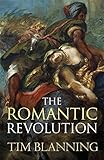
This is my review of The Romantic Revolution by Prof. Tim Blanning.

Although “by its nature, romanticism does not lend itself to precise definition”, this is a coherent and very readable introduction. Blanning even manages to interest a reader like me who finds romantic poetry and art too full of mawkish sentimentality and overblown emotion. My initial aim was simply to understand how romanticism arose as a backlash against the “cold and sterile” rationality of the C18 Enlightenment, which Blanning admits is an over-simplification.

Rousseau with his originality and “insistence on doing everything from the inside”, the “Sturm und Drang” movement in Germany and English poets like Blake and Coleridge all in their various ways attacked the Enlightenment developments of philosophy, science and mathematics as being too concerned with what could be measured and proved. Coleridge criticised rationally educated people who “were marked by a microscopic acuteness, but when they looked at great things, all became blank and they saw nothing”. He suggested that the souls of five hundred Newtons would go to the making up of one Shakespeare or Milton.

John Locke in particular was condemned for maintaining that at birth, the human mind was “white paper, void of all characters, without any ideas”. This seemed to put too much importance on development through the senses, involving social engineering, as opposed to Baudelaire’s view that romanticism lies “in a way of feeling”. It was also a focus on individual creativity from the inside out, which would give free rein to geniuses like “the romantic hero” Beethoven, or more arguably Wagner, who maintained, “Only religion and art can educate a nation – what use is science which analyses everything and explains nothing?”

The Enlightenment was also seen as hostile to history, a clear example of this being the French Revolution with its violence and imposition of a new order, treating society like a system for which the past could be erased.

With the downgrading of organised religion in the C18, art in its various forms could fill the gap, and the exploration of this forms the bulk of the book. Blanning writes of the composers who became the “high priests” of art; the poetic imagination which knows “how like a dream imagination is, how it loves nights, and solitude”, the same being applicable to writers and painters. The fascination with insanity, linked to the idea of “the mad genius” and the interest in folk art, folk dancing and folk songs are also covered. Even landscapes could become romantic, such as the Rhine and the Alps. It is easy to see how all this could feed the nationalism of German or Italian unification, fed by myths of past heroes.

In a final chapter linking to the present, Blanning shows how the force of technological change eventually forced romanticism to cede to modernism, giving the Enlightenment “the last laugh” – yet suggests in a somewhat rushed conclusion that there is now a renewed reaction to the culture of reason.

My only minor criticism is that the author makes too great a demand on the reader by flitting between examples without making the chronology clear. I like his heavy use of well-chosen quotations which create a vivid sense of romanticism in its varied aspects.

⭐⭐⭐⭐⭐ 5 Stars

“Return: A Palestinian Memoir” by Ghada Karmi – Telling right from wrong

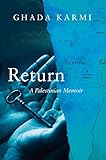
This is my review of Return: A Palestinian Memoir by Ghada Karmi.

Forced to leave Jerusalem as a child under the 1948 Nakba or Palestinian Exodus, Ghada Karmi felt the need to experience life in one of the semi-independent areas set up on Palestinian soil under the Oslo Accords of the 1990s. In 2005 she moved to Ramallah in the West Bank to worked as a consultant in media and communications for the Palestinian Authority.

As she might have foreseen, this proved to be a privileged sinecure in a closed bubble of complacent bureaucrats and politicians bent on furthering their status and material interests without rocking the boat, of expatriates caught up in romanticised demonstrations against an Israeli occupation which did not affect them personally, and poorly paid junior staff who kept their heads down for fear of losing their hard-to-obtain jobs.

Despite this, she managed to witness examples of ongoing injustice: camps like those in Gaza, “islands of memory in an erased landscape”, increasingly the sole places where isolation and hardship keep the fight for an independent state alive; Qalqilya, a town on the Green Line between pre-1967 Israel and the West Bank, surrounded by a twenty-five foot wall with razor wire and watchtowers ironically reminiscent of a concentration camp, but justified by the need to keep suicide bombers out of Israel and to protect settlers from their Arab neighbours; one of the few farms in Hebron still Palestinian-owned, where the defiant owner agonised over his withered vines, deprived of water by the Israeli authorities which disconnected his piped water supply and blocked his well, as part of the process of connecting the surrounding Israeli settlers.

Ghada Karmi made me realise for the first time how many Palestinians live outside camps, assimilated over time into countries like Jordan and Israel, inevitably resigned to the situation even if it makes them second-class citizens. She portrays the West Bank as a land of self-delusion: there is no sense of solidarity with Gaza, and many bright young people are employed by NGOs, precariously dependent on grants of foreign aid, to produce detailed research reports which remain unused. Likewise, frequent references to the conferences and political initiatives are depressing since we know now they failed to achieve any progress. It all seems like a displacement activity to allow the Israelis to consolidate their displacement of Palestinians. I was also intrigued to learn that middle class West Bank families wish to get their children educated at American universities, undeterred by the irony that it was US support which protected and empowered Israel.

I was interested in the views of Ghada Karmi’s ageing father: when she expresses concern over the apparent increase in traditional Islam as a “retreat into the past” which will “play into the hands of the West”, he counters that it is the West which has armed Israel and left the Arabs “dependent and enslaved” – “Islam is all they have left”. Sadly, this is the closest we get to her sole major omission: an epilogue updating events on the rise of a democratically Hamas and the increase in fundamentalist terrorism in the Middle East.

Although the author comes across at times as a self-absorbed and possibly difficult person, her intellect rises above understandable emotion to provide a revealing and thought-provoking analysis of an ongoing injustice which left me, like her, with a sense of “gut-wrenching despair” which needs to be more widely understood.

⭐⭐⭐⭐⭐ 5 Stars

The false path to gold for public lavatories

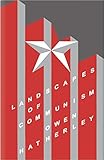
This is my review of Landscapes of Communism: A History Through Buildings by Owen Hatherley.

4 stars for subject matter.

For what might be more accurately called “townscapes", journalist Owen Hatherley presents a detailed, at times indigestible, analysis of Soviet era architecture. Despite limited finances, he managed to roam quite widely with firsthand impressions of cities including Moscow, Berlin, Kiev during the recent demonstrations on the Maidan, the remains of Ceaucescu’s Bucharest, Warsaw, Vilnius, even Shanghai.

Each starting with a relevant quotation, the chapters are themed: the “magistrales” or wide boulevards cut through cities to permit state-orchestrated demonstrations of power; the massive, impersonal to the point of soulless suburban blocks of apartments to house large numbers of workers as fast as possible; “houses of the people” to encourage suitable social activities; palatial metros, some stations ironically built in Moscow at the height of Stalin’s Reign of Terror. There is even a chapter on quirky examples of improvisation: extra rooms tacked onto the sides of high-rise flats, and self-managed tower blocks in New Belgrade like the Genex, resembling two enormous linked grain silos. Themes are set in context by an initial introduction on the nature and aims of Soviet architecture.

I learned a good deal from this book. I had not realised how much Soviet styles varied in a relatively short period and liked Paperny’s useful if simplistic definition of “Culture One” Modernism, dynamic, with horizontal structures, low, long and linear, as opposed to “Culture Two” Stalinist, with its “monumental, solid, massive, immovable” vertical structures. These harked back to past grandeur for the frontages of “people’s palaces”, intended as spacious flats for ordinary workers as in East Berlin’s flagship project, Stalinallee, together with major buildings like Moscow State University with their stepped ziggurats and the “Socialist Realism” of the huge, stylised statues of patriotic workers.

I had not considered how “Utopian Soviet planners” rejected distinct urban quarters as a survival of “obsolete capitalist structures”, so that individuality was only possible through chance variations in a site. Even under Krushchev’s less extreme regime, decrees led to an “International Style” extending between the far-flung borders with Scandinavia, Afghanistan and Japan, with identical standardised plans down to the use of the same mass-produced doorknob.

Ironically, the “social condensers” constructed to provide under one roof a variety of activities to create good socialist citizens often became rare examples of creative, “one-off” architecture, such as Melnikov’s Rusakov Workers' Centre in Moscow.

I accept that for reasons of economy only small, grainy black-and-white photographs are used, but they are often not placed right next to the relevant text. Some buildings, like the famous Dessau-Törten cubic houses of Gropius are described without the inclusion of any photograph at all, which is like a radio programme explaining how to make a complicated origami bird. Hatherley’s prose is a little too leaden to get away with this. Key points may be lost in his verbose and sometimes opaque style. Hatherley’s lack of clarity matters because it is confusing. The omission of the construction dates of many developments discussed is also unhelpful.

Concepts like Modernism and Constructivism need concise definitions, and a glossary of terms (Potemkin village, phalanstery – both very interesting) and architects would have been useful for reference. The book would have been more effective with fewer examples, each with a better photograph and concise text. When I took the trouble to find buildings on Google images, I could understand much better what the author was getting at, but it is cumbersome to read a book in this way.

⭐⭐⭐⭐ 4 Stars

“Red Fortress: The Secret Heart of Russia’s History” by Catherine Merridale – Bedevilled by detail

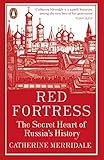
This is my review of Red Fortress: The Secret Heart of Russia’s History by Catherine Merridale.

For enthusiasm and research, Catherine Merridale deserves five stars, but despite having visited Moscow both before and after the collapse of Communism, and been inside the Kremlin, I found this history hard going.

The opening chapters seem padded out, since there is little to say about the rural backwater of Moscow and the wooden fortification of the initial Kremlin when Kiev was the centre of activity for the region. In the later Middle Ages, the political rulers on one hand and religious patriarchs on the other are hard to distinguish, with the exception of Ivan the Terrible who tried without success to interest Elizabeth 1 of England in marriage.

For me, the book begins to come alive from the time of Peter the Great in the C17, through Napoleon’s destruction of Moscow to the impact of Communism and Putin setting out to harness the aura of the “red fortress” to cement his authority. Perhaps this is because it is easier to engage with people and ideas rather than often arbitrarily selected facts about buildings. I accept that this book may be invaluable for students, but for the general reader it is somewhat longwinded with a good deal of dry detail outside the entertaining anecdotes, which makes for a somewhat indigestible potted history.

⭐⭐⭐ 3 Stars

Survival in the unreality of Orwellian reality

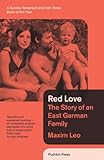
This is my review of Red Love: The Story of an East German Family (B-Format Paperback) by Maxim Leo.

When Maxim Leo and his girlfriend were arrested by the East Berlin police in a final fatuous show of strength before the Wall was opened, she happened to have in her pocket an illegal church newspaper which had been given to Maxim by one of his parents' friends, who had written a piece in it about her reasons for leaving the Communist Party. Maxim was ashamed how quickly he caved in to pressure and "confessed" to all this, although the ultimate irony was that the friend herself turned out to be an informer for the Stasi. It seems that it was hard to avoid being roped into this role – even Maxim's parents almost drifted into performing odd tasks for the Stasi. In another example of the sinister idiocy of the Communist regime, Maxim was denied a place to study for a professional qualification, since his liberal-minded artist father Wolf shouted at his headmistress for allowing machine gun training using live bullets on a school trip to "military camp".

The ludicrous twists of life under a communist regime are legion: on returning from fighting in the German army, Wolf's father Werner makes an arbitrary decision at a tram stop over which line of work to pursue – teaching in a vocational school or stage-set painting: the first tram to arrive takes him east to the teacher training college in the Soviet zone, later blocked off behind the infamous Wall, so he becomes a Communist by chance, this being the best way of "getting on" in the GDR. Maxim's maternal grandfather Gerhard fought for the French resistance in his youth, but opts for life in East Germany because, in his rejection of fascism he convinces himself that communism will create a fairer society. Thus, Gerhard and Werner, who come by very different routes to support the same surreally oppressive and sclerotic system, subject their families to lives of petty restriction and doublethink. It takes Maxim's sensitive, academic mother Anne years to be able to break free psychologically and think for herself. This causes many arguments with her independent-minded husband Wolf. Yet, ironically he finds it much harder to come to terms with freedom when the two Germanies are combined – he seems to feel the need for authority to fight against.

This is a fascinating, wry and often moving account of three generations of an East Berlin family, researched by the author after the fall of the Wall and when it was almost too late to gain first-hand information from his grandparents, who had at least left some written records. Maxim seems to have survived remarkably unscathed mentally by the stress of belonging to an intellectual bourgeois family in a communist regime, perhaps partly because his grandfather Gerhard's status gave him an advantage at times e.g. to get permission to travel abroad, Gerhard's family was in fact relatively quite well off, and, despite all the infighting, Maxim clearly received a good deal of love and attention, particularly from his parents.

My only minor reservation is over what I find to be the irritating tendency to use the "historic present" most of the time. The translator has presumably done this in order to maintain a sense of immediacy as in the original German. Some sentences do not seem to "fit in" to the text, and odd translations such as "fat blanket" for "thick blanket" have already been noted in reviews.

⭐⭐⭐⭐⭐ 5 Stars

“Putin Mystique Inside Russia’s Power Cult” by Anna Arutunyan” – “A leader only as corrupt as the system that produces him”?

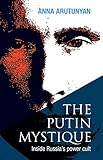
This is my review of Putin Mystique Inside Russia’s Power Cult by Anna Arutunyan.

A Moscow-based Russian-born journalist who was raised and educated in the States, Anna Arutunyan seems unusually well-placed to interpret Putin’s mystique in a way that Western readers can readily grasp. Although this book contains some fascinating information if you are prepared to make the effort to glean it, I was disappointed to find that the disjointed journalese makes for an often confusing and laborious read.

We are familiar with photographs of a macho Putin displaying his muscular torso as he rides on horseback through the wilderness, or wades in a river to catch salmon, of him diving in the Black Sea to retrieve ancient Greek urns in what proved to be a staged stunt, or co-piloting a plane to dump gallons of water to extinguish a forest fire. This personality cult which began in around 2001 is partly a top down process of which Anna Arutanin provides further examples: Kremlin ideologist Surkov’s organised demonstrations of support by the activist youth group “Nashi” whose members were rewarded with payment or career opportunities; the elaborate charade in which Putin showed his concern for alumina factory workers demanding their pay by berating on film the oligarch Deripaska who had halted production at their workplace. This included forcing him to sign a probably fake contract and even throwing a pen at him, for which humiliation Deripaska was compensated by some massive monetary bail-outs. The author also identifies more spontaneous actions with commerce in mind, such as the “pin-up” calendar showing the twelve moods of Putin or the erotic calendar of obligingly posed girls presented to him for his birthday. Having been groomed by the oligarch Berezovsky to take over as a President who would provide some stability and order after the chaos of Yeltsin’s regime, Putin adapted readily to mirror the kind leader many Russians wanted to look up to.

The Russians have a history of developing a cult round their leaders as a means of keeping control in a vast, often harsh land of scattered and ethnically diverse people. “Russia may never have had the close-knit communities that foster democracy and legal institutions”. So, we see the persistence of a “patrimonial” rather than a legal-rational state. The Tsars were often venerated like gods, with their subjects literally prostrating themselves in their presence; the Stalinist cult was developed by his inner Bolshevik circle before “spilling out” in a nationwide adulation which in a form of “doublethink” was not incompatible with viewing him as a “bloody tyrant”.

This book was published too late to cover the shocking murder of the charismatic Boris Nemtsov, but the failure to analyse the recent annexation of the Crimea and the issues raised by the poisoning of Litvinenko, along with the murder of a number of investigative journalists critical of the regime, are glaring omissions. Perhaps there are boundaries the author prefers not to cross: although her portrayal of Putin is negative, precise accusations of a serious nature are avoided and charges often veiled. It is suggested, for instance, that widespread financial corruption and human rights’ violations are often beyond Putin’s control, despite the “myth of his omnipotence”, because they are conducted by people on whom he depends to keep order – as in the case of the Chechnyan strongman Ramzan Kadyrov. In reporting recent middle-class protests against Putin’s “corrupt, authoritarian and self-serving regime”, the author suggests that Putin’s opponent, rising star Navalny has himself shown signs of developing a personality cult, including an aggressive stance and the favouring of questions from supporters, as if this somehow weakens criticisms of “the Putin mystique”.

One of Putin’s reactions to the recent backlash has been to align himself more closely with the Church, a respected institution since its recent revival. This may explain the harsh crackdown on “Pussy Riot”, the girl band who performed their blasphemous anti-Putin ditty in a Moscow Cathedral.

⭐⭐⭐ 3 Stars

Sowing dragons’ teeth

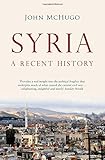
This is my review of Syria: A Recent History by John McHugo.

Drawing on firsthand experience of living in Syria, John McHugo has produced an informative analysis of the facts leading up to its tragic civil war. His detailed focus starts in the early twentieth century, just beyond the reach of living memory. When the Ottoman Empire crumbled after the First World War, a critical opportunity was missed to create, under King Faisal who had shown himself to be reasonably competent, an Arab state with the logical boundaries of Greater Syria, now divided between modern-day Syria, Lebanon, Jordan, Palestine, Israel and parts of southern Turkey. Instead, France and Britain were allowed to play imperial politics and carve up the territory along the notorious Sykes-Picot line, agreed in secret and, like too many other Middle Eastern borders, running across territories with no regard for ethnic groupings or geography.

Although McHugo accepts that an independent Arab state established in the 1920s might well have lapsed into tribal and religious conflict, and acknowledges the corruption which has fed unrest, he makes clear the West's part in inadvertently bringing about the current crisis. The disproportionate support for the Israeli cause without ensuring justice for the Palestinians has had complex consequences, such as the provocation of Israel's occupation of Syria's Golan heights, and the influx of Arab refugees into partly Christian Lebanon. This set up explosive tensions which Syria sought to resolve at the cost of antagonising the Palestinian leader Yasser Arafat rather than accept the Achilles heel of a weakened Lebanon through which Israel could attack Syria.

Instead of seeking a comprehensive and statesmanlike approach, the West confined itself to a somewhat blinkered preoccupation during the Cold War with attempts to gain the upper hand over the Soviet Union in the Middle East. "Once America had both Egypt and Israel as its allies as well as friendly relations with numerous other Arab governments….it did not need Syria" – which reacted by obtaining vital arms from Russia.

The author explains Ba'athism as an originally idealistic movement based on the three goals of unity, freedom and socialism – which of course must have been perceived as a threat by some Western powers. Yet when the Ba'ath party overrode elected politicians to gain power, it consolidated its position with nepotism and cronyism, thus undermining its founding ideals and reputation.

McHugh devotes two chapters to Hafez al-Assad, one of the pragmatic, ruthless secular Arab leaders who kept tribal and religious differences in check in the final decades of the C20. His son Bashir al-Assad seems to have attempted a more democratic approach on gaining office, but been driven by the pressure of events to adopt a more brutal and authoritarian approach, with less skill than his father.

McHugh ends on the bleak note that the most likely alternative to a victory by the regime is a descent into warlordism. The recent rise of Isis which has gained influence since the author went to press makes the effects of this anarchic outcome all the more grim. This book may sound like a depressing read at a time when Europe seems to be turning a blind eye to the political and economic chaos on its borders, but it has a positive effect in raising one's understanding of the complex chain of events, and increasing one's respect and sympathy for the Syrian people.

⭐⭐⭐⭐⭐ 5 Stars

A great traveller in the world

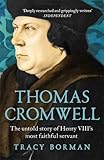
This is my review of Thomas Cromwell: The untold story of Henry VIII’s most faithful servant by Tracy Borman.

Thomas Cromwell is perhaps best known for the Dissolution of the Monasteries, both to raise money for Henry Vlll and to disband subversive centres of loyalty to the Pope. He also masterminded the legislation required to make the King head of the Church of England and to declare invalid his first marriage to Catherine of Aragon.

Tracy Borman portrays Cromwell as a man of contrasts. He was ruthless in disposing of enemies by "act of attainder" which meant they could be convicted and executed without the right to put their case in court. He used torture to extort a probably false confession that the circle of young men surrounding Anne Boleyn, including her own brother, had been her lovers. Yet when his friend the poet Thomas Wyatt was inadvertently arrested in this affair, Cromwell found the time to reassure and get him released. There is irrefutable evidence that Cromwell took bribes, for instance in return for letting farmers stay on their lands affected by dissolution of religious houses. When enlarging his property at Austin Friars, he moved the garden fences to encroach twenty-two feet on neighbours' land, confident that no one would dare to challenge a rising star in the King's service. Yet he regularly ensured that dozens of poor people were fed at his gate, and often helped friends and acquaintances in trouble.

Largely self-taught, highly intelligent with a remarkable capacity for hard work, Cromwell also possessed a perhaps unexpected wit and charm. In the poisonous, back-stabbing hothouse of the Tudor court where Cromwell was despised for his working class origins as a blacksmith's son, he had to be a tough risk-taker to achieve what he did, although arguably he went too far in frustrating and humiliating his nemesis the mighty Duke of Norfolk. Ostensibly Cromwell's undoing was the unfortunate choice of an unattractive fourth bride for Henry, "the Flanders mare", Anne of Cleves. In fact, he overreached himself in deviating from his usual pragmatism to follow a sincere belief – his continued support for the introduction of Protestantism, one of his main achievements being the installation of an bible in English in a large number of churches. This alarmed a King who was at heart a conventional Catholic (papacy apart) and allowed himself to be convinced that Cromwell was plotting his downfall. Capricious and paranoid with advancing age, "a little over seven months after the former chief minister's execution" the king was heard to reproach his ministers for having persuaded him "upon light pretexts" to execute " the most faithful servant he ever had".

Tracy Borman has made a complex history accessible to those with no prior knowledge, also providing enough fresh detail to hold an informed reader. My sole criticism is the lack of consistency in including some quotations in modern spelling, others in the written anarchy of the day which make them hard to read, together with the way many words have changed in usage. Cromwell's spelling seems particularly mangled: " your most….obbeysand ….subiett and most lamentable seruant and prysoner".

⭐⭐⭐⭐⭐ 5 Stars

Getting heated over cool reason

This is my review of A Revolution of the Mind: Radical Enlightenment and the Intellectual Origins of Modern Democracy by Jonathan Israel.

A prolific expert on the Enlightenment, Jonathan Israel tends to produce books of daunting length, so this is relatively short at about 240 pages. He is keen to prove that historians have tended to neglect, even deny, the profound ideological influence of radical Enlightenment C18 thinkers on the outbreak of the French Revolution. Only the diffusion of works by such writers as Diderot and d'Holbach, designed to achieve a revolution of ideas as the first step to real change, can explain the events triggered by the meeting of the Estates General in 1789.

Jonathan Israel explores in detail the "irreconcilable" division between the Radical and Moderate Enlightenments. The former believed in the use of reason, with a secular morality divorced from the distorting effects of superstitious religions, although some radical thinkers appreciated ethical Christian teaching. They called for equality, which required a representative democracy, freed from the self-seeking tyranny of kings and aristocrats, for tolerance and freedom of expression. To the moderates, this was at best over-optimistic and naïve. Tradition and the existing order were essential to maintain the fabric of society and God-given moral values. It is interesting to realise that the revered Voltaire belonged to this camp, corresponding with Frederick the Great of Prussia to deplore the idea of giving "enlightenment" to ordinary people who would be unable to cope with it. Similarly, the "moderate" Locke's support for the equality of the soul but not of physical status, meant that he could invest in the North American slave trade with a clear conscience and advocate the establishment of a new nobility in the Carolinas.

Ironically, members of the Counter-Enlightenment converged with the bloody French dictator Robespierre in condemning the Radical Enlightenment as a clinical, mechanistic approach to society, seeking to subvert natural human sentiment.

Frequent convoluted sentences and condensed ideas together with a tendency to list philosophers or their works call for prior knowledge and make for a challenging read. I found the best way to deal with the book was to skim through once for an overview, and then to work back through more slowly to grasp some of the more complex ideas, such as Spinoza's controversial and fundamental theory that mind and body are "one substance" or material, thus "reducing God and nature to the same thing, excluding all miracles and spirits separate from bodies, and evoking reason as the soul guide to human life, jettisoning tradition".

The result is that I have learned a good deal about the complexity of the Enlightenment and the conflicting ideas of its main protagonists. Writers on this fascinating theme tend to focus on different aspects, presenting contrasting views of philosophers and ranging over a wide field in a discursive and often confusing fashion, so piecing one's knowledge together from a variety of sources feels like gluing together a collection of shattered pots with intriguing designs.

⭐⭐⭐⭐ 4 Stars