Re-entrance to a plauditry

This is my review of Soul of the Age: The Life, Mind and World of William Shakespeare by Jonathan Bate.

Sequenced to follow the seven phases of a man’s life in the famous “All the world’s a stage” soliliquy, chapters takes the form of themed essays.

Readers will be struck by different revelations and insights in the spate of ideas. I realised for the first time that it was the banning of the cycles of medieval mystery plays by the Protestant Reformation which created a vacuum into which Shakespeare could present his new plays, untrammelled by dogma, relatively free to range over a wide range of topics and ideas.

I liked the idea of Shakespeare continually drawing on his Warwickshire roots. So, when culling ideas for “As You Like It” from a prose romance called “Rosalynd”, he turned the forests of the Ardennes into Arden. When insulted for his lowly origins by an educated, now forgotten rival playwright, who called him “an upstart crow beautified with our feathers”, Shakespeare took humorous revenge in “The Comedy of Errors” with a punning dialogue on “breaking in with a crow without feather” that is to say, a crowbar. The exchange is much more entertaining when you know the context.

It was the father of a friend of Shakespeare’s who translated into English details of the universe according to Copernicus, with the sun at the centre. When the accepted belief was in the “necessary correspondence between the order of the cosmos and that of the state”, Shakespeare showed his independence of mind and flexibility of thought in giving humorous irony to to Edmund in “King Lear”:

“when we are sick in fortune – often the surfeits of our own behaviour – we make guilty of our disaster the sun, the moon and stars, as if we were villains of necessity…..My father compounded with my mother under the dragon’s tail and my nativity was under Ursa Major, so that it follows I am rough and lecherous”.

Just before the abortive coup which ended in his execution, the Earl of Essex may have been inspired to sedition by Shakespeare’s Richard II: if Shakespeare had been sent to the Tower for this, great works such as Othello, Lear, Macbeth and the Tempest might never have been written. As it was, eighteen of his major plays which did not appear in print in his lifetime would probably have been lost if two colleagues from the Company of King’s Men to which he belonged had not ensured their publication after his death.

We see Shakespeare daring to experiment with the ideas of Montaigne, exploring a range of philosophies including the Epicurean view, suspected because of its association with atheism: the need to give vent to one’s feelings rather than maintain Stoical patience, for “Sorrow concealed, like an oven stopped, Doth burn the heart to cinders where it is.”

There are gaps in our knowledge of Shakespeare. Was he obliged to steer clear of King James’s court for a while since he had syphilis? Yet we have many remarkable details, such as the amount a colleague left him in his will, the fact that his energy was exhausting, but there was widespread admiration for his “wit” in the widest sense of linguistic talent, humour, imagination and judgement. So, the author’s occasional attempts at surmise seem like unnecessary contrivance.

With his astonishing knowledge of Shakespeare’s life and works, perhaps Jonathan Bate may be forgiven a convoluted style and a weight of detail which is sometimes too much to absorb. This book has helped me to appreciate Shakespeare’s wit and insight, filling me with good intentions to revisit his sonnets, even study some of his plays again.

⭐⭐⭐⭐ 4 Stars

From Catholic monarchy versus social justice to “bleak chic”

This is my review of The History of Modern France: From the Revolution to the War with Terror by Jonathan Fenby.

Observing the newly restored Bourbon King Louis XVIII’s reluctant choice of ministers, the devious Talleyrand leaning on the arm of brutal Fouché , Chateaubriand described “vice leaning on the arm of crime”. A Christmas Eve dinner during the Prussian siege of Paris in 1871 included, elephant consommé and bear ribs in pepper sauce from slaughtered zoo animals, along with the more mundane stuffed donkey’ s head and roast cat with rats. These entertaining asides spice up Jonathan Fenby’s broad sweep from the ill-fated attempt to restore the monarchy, after Napoleon’s final defeat in 1815, in the shape of the unimaginative, ageing brother of the guillotined Louis XV1, to the economic decline under the unpopular socialist President Hollande, aggravated by terrorist events like the attack on the satirical magazine Charlie Hebdo.

Throughout the book, I kept seeing parallels between past popular revolts and the present unrest: left-wing republicans trying to limit working hours, although the modern-day 35 hours a week was a ten hour day in the Paris of 1848; C19 Parisians uprooting trees to form barricades, and today’s CGT unionists burning tyres outside power stations in protest against legislation to make organisations more competitive, with the irony of a modern socialist government seeming to work on the side of employers. Of course, the paradox of the First Republic of 1848 was far keener, “a reminder of how eminently respectable republicans turned the troops on their own people motivated primarily by the desire for a decent livelihood.”

Jonathan Fenby is most readable when he focuses on particular people or events: the succession of four monarchs, including the well-intentioned “Citizen King” Louis-Philippe, whose approach to reform was too moderate to appease the republican genie let out of the bottle, particularly in 1848, the Year of Revolutions, which perhaps the author could have explained more. Napoleon’s step-nephew (I think, a few family trees would have been useful) managed to hold power for eighteen years as France’s last monarch, and presided over some much-needed economic progress and restoration of national standing, despite being dismissed by Bismarck as “a sphinx without riddles” and criticised for his amoral pragmatism. The humiliation of his loss of the Franco-Prussian War in 1870 is an aspect of the ongoing rivalry between the two countries either side of the Rhine: now, France suffers by comparison with Germany as regards growth rates and trade deficits.

Fenby paints a fascinating portrait of De Gaulle, who comes across as an egotistical dictator, alternating as is often the case between arrogant certainty and melancholy, profoundly ungrateful for the help received from Britain and America, presumably a constant reminder of his own impotence when France was occupied in WW2.

The price of covering so much is a text at times so condensed as to become indigestible and occasionally unclear, particularly in the period 1870-1939 which I found hard going. I accept that forty-two governments between two world wars, with a system resulting in short-lived coalitions, is hard to cover adequately. Fenby tries to aid clarity with subheadings, boxes to feature somewhat arbitrarily chosen individuals, and day-by-day accounts of some key periods of unrest. However, I could have done with a glossary of the large number of players involved, a timeline of key events, plus an explanation of the current French voting system, to avoid the need to refer elsewhere.

Fenby leaves us with a rather bleak picture of a depressed country which despite its sense of being special, has fallen behind as it prefers “to reject economic modernisation in favour of defence of tradition”. Although the Republic has been accepted since 1870 as the regime that divides the French the least, the warring factions remain: “the country invariably opts for right over left with occasional eruptions to prove that the revolutionary legacy is not dead”. I would have preferred more of this kind of an analysis, perhaps a two volume history with a break in 1945, to give more space to develop themes.

⭐⭐⭐⭐ 4 Stars

Puncturing our blissful ignorance

This is my review of The Egyptians: A Radical Story by Jack Shenker.

Journalist Jack Shenker embedded himself in the society of ordinary Egyptians before the Arab Spring burst into life, the better to understand the pressures for change. Quoting George Orwell’s exhortation, “Beware my partisanship” in “Homage to Catalonia”, Jack Shenker readily admits that his own book “takes sides”.

The essence of his argument is that global capitalist free market policies, have led to a “neoliberal restructuring” of Egypt which has resulted in a “mass transfer of wealth from the poor and middle classes to the rich and impoverished vast swathes of its citizenry". This has involved western governments, aid organisations, development banks and businessmen in dubious alliances, playing “a key role in both financing and legitimizing Middle Eastern despots including Egypt”. The replacement of Mubarak by Morsi was a cosmetic change which did not alter the fundamental system in that there is clear evidence of repression increasing under the latter. This helps to explain what was inadequately reported in the western press as the somewhat perverse rejection of a “democratically elected” new leader without waiting for him to be voted out. Although it may appear to supporters of greater justice and equality for Egypt that the situation is deteriorating once again under Sisi, Shenker argues that in an admittedly unstable “one step forward, two steps back” situation, Tony Blair’s argument that the revolution has “come full circle”, is “dead”, “failed”, and “officially over”, is too simplistic: local “revolutions” in villages and factories began decades before the famous occupation of Tahrir Square, and are still continuing in a drive for change which will take years. The revolution consists of much more than Tahrir Square which, although clearly a “media-friendly window on Egypt’s turmoil”, was most significant as an example of the creative community action which drives long-term change.

Some will be at odds with Jack Shenker’s rejection of free market capitalism, and find his belief in “Occupy”-style social change a little naïve. They may join with the western leaders who pragmatically prefer the authoritarian control of men like Mubarak or Sisi to the revolutionary chaos of say, Libya which has allowed ISIS to flourish. However, it is evident that the Egyptian developments triggered by western investment including the World Bank, IMF, USAID and European Investment Bank, and often involving the privatisation of state assets, have not “trickled down” to the poor. As described in the Epilogue, the 2015 “Egypt the Future” Conference at the International Congress Centre in Sharm el-Sheikh is cringe-making: Martin Sorrell’s “country branding” seems a world away from the daily reality of bare subsistence, lack of basic amenities, forcible evictions and arbitrary imprisonment for wearing a T-shirt with a subversive motif.

Despite the fascinating subject matter, the prose is often indigestible and repetitive, crying out for a sharp edit. To take at random a couple of interesting points that are explained much better in other sentences: “The Egyptians are a people who abrogate their voice to the stagecraft of procedural democracy”….. “Security forces have exploited tropes of passive femininity to target both men and women attempting to emasculate the former through sexual assaults and reimpose state-centric masculinities in the process.”

Although at times hard-going, this book has made me think. I find myself reflecting on how “neo-liberal” policies have led to zero hours contracts in the UK, and the desecration of the London skyline with tower blocks for absentee foreign investors, yet this of course pales into significance in comparison with the suffering and repression of millions of Egyptians. Examples include the brutal reversal of Nasser's land reforms, the eviction of peasants from their plots and urban dwellers from the unofficial "shanty towns" they have been obliged to construct for themselves, the cynical mass sale of undervalued state assets to the benefit of wealthy Egyptians and foreign investors, projects to divert Nile water to foreign exporting agribusinesses at the expense of farmers seeking to feed themselves and the local community, arbitrary arrest and brutal beatings to discourage dissent, even payment of thugs to rape female protestors, and so on.

⭐⭐⭐⭐ 4 Stars

“Capturing the truth of life …in brushstrokes on the verge of dissolution”

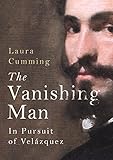
This is my review of The Vanishing Man: In Pursuit of Velazquez by Laura Cumming.

Art critic Laura Cumming has a gift for helping us to appreciate paintings more fully,

She has a particular feeling for “Las Meninas”, the enigmatic masterpiece by Velasquez which mingles “the watchers and the watched”, bringing us, the onlookers into the picture: the Spanish Infanta in a group of maidservants and court dwarves make direct eye contact with us, except that they may in fact be observing the king and queen, glimpsed Arnolfini portrait-style in a background mirror, who may once have stood where we now stand, being painted by Velasquez himself, portrayed with his palette at a huge canvas to one side. His brushlike tapering fingers merging into the brush itself, “no more than a darting streak of white” – “the whole painting has been set in motion by its delicate tip, which effectively vanishes”.

Laura Cummings continually marvels at how often sketchy and thin brushwork when viewed close up, could create such fine detail of clothing with sheen of silk and transparent white collars. Faces are so expressive that they seem alive, startling us with their modernity: the portrait of the misnamed Pope Innocent X disconcerted viewers, as if they were meeting him in the flesh. Philip IV of Spain preferred not to submit to the unflinching truthfulness of Velazquez’s portraits as he grew old, but retained the court painter he had employed as a very young man, although for the last decade of his life Velasquez was promoted to High Chamberlain and seems to have produced relatively few works yet of high quality, including Las Meninas .

Although held in high regard, Velasquez was not free to travel, gaining permission for only two admittedly lengthy visits to Italy, but retained his artistic independence in the convention-ridden Spanish court. His most striking portraits are of ordinary people: the dignified water-seller, realistic drops of liquid trickling down the curved side of a ceramic pot; the old woman frying eggs in which the translucent fluid can be seen in the process of solidifying into white; the dwarves portrayed with dignity; self-assured Moorish assistant who chose to remain with Velasquez despite gaining his freedom; actor Pablo de Valladolid casting his shadow on a void which serves to focus us on his theatrical presence. Ever experimental, the painter even produced an inspiration for impressionism in the outdoor scene of the Medici Gardens, tall cypresses rising above a white cloth draped over a balconied terrace with a crudely boarded-up archway.

Since comparatively little is known about Velasquez, the book often seems padded out with overblown speculation and a detailed sub-plot regarding the obsessive efforts of Reading printer John Snare to gain recognition for the portrait he had acquired of the youthful prince destined to become Charles 1. Whether or not this is a genuine Velasquez, the tale demonstrates how the casual, inconsistent description and classification of paintings together with a lack of x-rays and other dating techniques made it so hard to attribute them accurately until well into the C20, if then. It would of course have helped if Velasquez had signed his work. It is also disturbing to read about the dealer who, having “cleaned up” a “Velasquez” to make it more attractive to a buyer, had it darkened and aged to fetch a better price to suit the tastes of a wealthy alternative bidder.

Although the colour plates are of good quality, the main weakness of a generally fascinating book is the need for more of them, and better cross-referencing with the text, even if this added a little to the price. The small black and white photographs integrated in the text do scant justice to the painter’s work. I had to make a note of some titles of paintings described at length so that I could search for their images on line.

⭐⭐⭐⭐ 4 Stars

Never quite what they expected

This is my review of Between Two Worlds: How the English Became Americans by Malcolm Gaskill.

This is a detailed study of the colonisation of the Atlantic shores of North America by some 350,000 English migrants during the seventeenth century. With the Mayflower in mind, we may tend to think of them mainly as Puritan dissidents seeking religious freedom in Utopian communities, but many were adventurers and entrepreneurs lured by the prospect of developing fertile lands or the labouring poor hit by population pressure in England, who together with “reprieved felons, prisoners of war, kidnapped children and adolescents” often found themselves “pressed into indentured service” as a replacement of the old feudal system. Malcolm Gaskill presents the contrasts between the New England settlements creating a jumbled geography of English place names, the tobacco plantations of Virginia, and sugar plantations of the West Indies with their growing reliance on African slave labour.

I had not appreciated the extent to which settlers fought each other: those arriving to claim a grant of land might find it already being farmed by earlier arrivals. The subsequent brutal genocide of the native Indians may be understood, although clearly not condoned, as a response to the bloody raids in which bands of Indian, sometimes in league with the French, would creep out of the woods to wipe out a New England settlement. Clearly, the colonies suffered from the lack of realism of successive monarchs and establishment figures who supported ventures without supplying sufficient resources to give a reasonable chance of success. “Colonial news was old news” so that by the time a pioneer reached home with favourable reports, life back in say, Jamestown could have become very grim. Another aspect I had failed to consider was the extent to which different nonconformist groups carried their differences into the New World. Legislation against Catholics in England drove them to emigrate too, with the result that Maryland became feared as “too Catholic” by some Virginians, compounding the problem that it was regarded as encroaching on their rightful territory.

Malcolm Gaskill is clearly hugely knowledgeable on his subject, which he has chosen to explore through a tidal flow of specific examples, ordinary individuals and incidents, often quoting verbatim from original texts. He creates vivid snapshot impressions of pioneer life: images of euphoria turning to despair as the harsh, winters set in, or the unexpected short-lived paradise of gorging on Maine lobsters and swapping the heads for beaver skins with the initially well-disposed because yet to be abused Indians who rowed out to meet settlers.

My problem was the author's bombarding of the reader with a disjointed, indigestible switching between different characters, topics, regions, even in the same paragraph, with analysis which often seems either self-evident or somewhat woolly. I found myself trying to get round this by using the index to follow threads which intrigued me, such as the fate of one Mary Rowlandson who fired on Indian attackers to defend her home, only to be taken prisoner, yet survived to write a best-seller on her ordeal, mentored by the wonderfully named Increase Mather. Too much effort is needed to sift out a coherent grasp of, for instance, relations with the Indians or an analysis of the “witch trials” which seem so much more extreme than equivalent prejudice in C17 England.

I am also puzzled that the author did not extend his coverage up to the American War of Independence, nor include a little more background on the opponents of English colonisation, notably the French and specific Indian tribes.

⭐⭐⭐ 3 Stars

Rambling about the world in quest of adventures

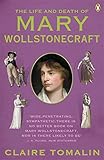
This is my review of The Life and Death of Mary Wollstonecraft by Claire Tomalin.

After somehow failing to appreciate Mary Wollstonecraft’s importance, perhaps because of the anti-feminist backlash which arose after her death and dominated British society until the C20, I have at last been won over by Claire Tomalin’s excellent biography, rightly praised by the historian Plumb: “There is no better book on Mary Wollstonecraft, nor is there likely to be”.

Mary is portrayed very honestly, warts and all, as often controlling and opinionated, in her youth prone to dominating less intelligent and assertive girls, yet demanding their affection. Once she had discovered the sexual attraction of men, she could repel them with her intensity, even naively suggesting on at least two occasions some kind of “ménage à trois”, and in turn was bitterly disappointed by their preference for relationships with pretty but less clever women, although they seem to have enjoyed the stimulus of her conversation. On finding herself pregnant for a second time, her insistence on marriage to the philosopher-writer Godwin seems in contradiction to her feminist principles, but she cannot be blamed for seeking some security after being driven to attempted suicides (she was prone to depression) over the humiliation of abandonment by her fickle lover Imlay, leaving her with a small daughter.

On a more positive side, Mary was courageous if foolhardy, setting off alone to experience first-hand the French Revolution in Paris despite the danger of the psychopathic Robespierre and the guillotine, or to Scandinavia with a baby and nursemaid in tow, to help solve Imlay’s financial problems. An original thinker on the basis of experience of unfair treatment as a girl and of her reading rather than formal education, she displayed a surprising confidence, being one of the first to launch into print against Edmund Burke’s attack on the Dissenters as a dangerous force likely to bring dangerous revolution in England: her “A Vindication of the Rights of Man” brought her instant fame, on a par with Thomas Paine. Determined to support herself, she was not afraid to approach her influential publisher Johnson with a request for work.

Ironically, her widowed husband Godwin not only tarnished her reputation by his frankness over her practice of “free love” but belittled her in stating, “The strength of her mind lay in intuition….yet in the strict sense of the term, she reasoned little”. In fact, what shines out across the span of more than two centuries is the coherence of her thoughts, her wry wit and eloquence. For instance, while acknowledging the violence of the French Revolution, she justified the need to achieve greater quality: “to preclude from the chance of improvement the greater part of the citizens of the state…can be considered in no other light than as monstrous tyranny…. for all the advantages of civilisation cannot be felt unless it pervades the whole mass.”

The death in childbirth of a vigorous, healthy woman who had recently found happiness was very poignant, but Mary would have been furious had she lived to read such observations from female writers as “ “in the education of girls we must teach them more caution than is necessary for boys…they must trust to the experience of others… must adapt themselves to what is”, “girls should be more inured to restraint than boys”, “must soon perceive the impossibility of their rambling about the world in quest of adventures”.

⭐⭐⭐⭐⭐ 5 Stars

Rising to many challenges

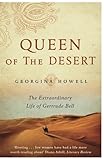
This is my review of Queen of the Desert: The Extraordinary Life of Gertrude Bell by Georgina Howell.

The great wealth of the steel-making Bell family gave Gertrude the means, confidence and connections to pursue a succession of interests. After becoming the first woman to be awarded a First in Modern History at Oxford, Gertrude found the conventions of upper class life in late Victorian England far too constraining. She became a linguist, translator of Persian poetry, mountaineer who achieved a number of “first” ascents of challenging peaks, archaeologist, desert traveller, writer, intelligence officer, confidante of King Faisal in the newly formed Iraq of the 1920s and Director of Antiquities who established a museum in Baghdad.

She was clearly enthralled by the romance of Arab desert culture, not least the handsome sheikhs in their striking robes, who may have accepted her because she was so unlike any other woman they had ever met: when she came to their tents bearing gifts and wearing evening dress, they called her “the Khatun” or “Desert Queen” but when she appeared in breeches riding astride she probably seemed to them more like a man.

Georgina Howell’s heavy use of lengthy extracts from letters and reports is as effective as she intended in conveying a sense of Gertrude’s ability to communicate, great energy, enthusiasm and wry wit. We gain a strong sense of a determined, opinionated woman who was often unconsciously snobbish – anticipating the need to correct the governess likely to call napkins "serviettes" – and contemptuous of “quite pleasant little wives” who meekly conformed.

At times, I was aware of repetition, or longwinded description that is hard to digest, but in the main the author’s marshalling of a mass of information is quite impressive. I find her a little too uncritical of Gertrude’s active campaigning as founding secretary of the Women’s National Anti-Suffrage League in 1908: the idea that do-gooding visits with her mother to the homes of the working poor had convinced her that women “at the end of their tether” managing families on a tight budget simply did not have time to gain the education to vote seems patronising, even hypocritical in someone so resolved on fulfilment in her own life.

Yet, Gertrude was in some ways quite conventional: in her early twenties, she accepted her parents’ rejection of a fiancé considered to lack the means to support her, although his death in ambiguous circumstances shortly afterwards must have haunted her. Love was the one area in which success eluded her – a prolonged affair was doomed since it was with a married man who clearly had no intention of leaving his wife, while despite her physical bravery it seems Gertrude could not find the courage to consummate their relationship.

Perhaps owing to lack of evidence, Georgina Howell glosses over Gertrude’s probable suicide on finding herself in her late fifties having run out of fresh challenges with only the bleak prospect of a painful death from decades of chain-smoking. I often had a sense of a life frenetically packed with activity which masked an inner unsatisfied longing.

I suspect that Gertrude’s role in the formation of an independent, “democratic” Iraq is slightly exaggerated, but it is a fascinating tale which inspires me to read more about Arab history. The parallels with today are very striking: the unstable union of tribes over which Faisal attempted to hold sway, the reluctance to accept British support in keeping control, the difficulty of defining a border with Turkey and accommodating the Kurds, the divisive Shia-Sunni conflicts prompting Gertrude’s “blackest hatred” for Ibn Saud’s Akhwan (now Wahabis) “with their horrible fanatical appeal to a medieval faith…. the worst example of an omnipotent religious sanction”.

⭐⭐⭐⭐ 4 Stars

“Footsteps” by Richard Holmes: Leading a lobster on a blue silk ribbon

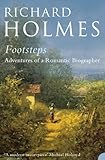
This is my review of Footsteps by Richard Holmes.

“Age of Wonder”, the brilliant biography of the lives of enlightenment scientists who inspired Romantic poets like Coleridge and Shelley prompted me to read “Footsteps” published by Richard Holmes thirty years earlier. This short book is a series of four essays describing his forensic retracing of the journeys and temporary resting places at key stages in the lives four famous writers.

In 1964, a precocious eighteen-year-old Holmes, at times somewhat pretentious in his desire to develop a written style, wanders through the beautiful wilderness of the French Cevennes in the wake of Robert Louis Stephenson and his long-suffering and frankly abused donkey Modestine. Four years later, as a Cambridge graduate rejecting the security and status of a well-paid conventional career, Holmes sets off for Paris to draw some parallels between the idealistic youthful hippy revolution of 1968 and the cataclysm of the French Revolution, with a focus on Mary Wollstonecraft, the feminist icon who in fact was unable to prevent her life being controlled to some degree by dominant men, but who experienced some of the most terrifying aspects of the “Reign of Terror” under Robespierre, unlike Wordsworth who had scuttled back to the safety of the Lake District. In 1972, Holmes loses himself in Italy in order to explore the self-imposed exile of Shelley. Finally in 1976, a fascination for what C19 photography can reveal to a biographer leads Holmes to immerse himself at the risk of his own sanity, in the life of the gifted but troubled Gérard de Nerval: “one is tempted to say that, had Nerval been born earlier he would have been saved by religions; had he been born later he would have been saved by psychoanalysis”.

What makes Holmes’ biographies so remarkable is his capacity to “get under the skin” and seem to inhabit the minds of his subjects. In “Footsteps” he includes interesting reflections on the at times all-absorbing to the point of obsession process of biography, as he begin to understand it. He perceives himself as “a sort of tramp permanently knocking at the kitchen window and secretly hoping he will be invited in for supper” or even as a ghost of past writers.

More than simply the collection of factual material, there is the “creation of a fictional or imaginary relationship between the biographer and his subject… a degree of more or less conscious identification with the subject”. He identifies the “moment of personal disillusion” when the biographer is “excluded from or thown out of the fictional rapport he has established” by a lack of reliable evidence. So, in the absence of “proof”, I was surprised by his theory that Shelley had an affair with his wife’s friend Claire Clairemont which led to a miscarriage, after which the poet adopted a foundling child born on the same day only to have it fostered elsewhere and die soon afterwards.

Perhaps inevitably, the essay format makes for a somewhat fragmented work, and the autobiographical passages can appear contrived and an almost irritating distraction from his subjects. “Footsteps” is a seedbed for the later flowering of a masterpiece like “Age of Wonder”, and it has made me want to read more of Mary Wollstonecraft’s clear, perceptive and remarkably “modern” work, and brought me to appreciate more the tragedy of Shelley’s circle and the genius of his poetry, realising that I have been too quick to reject Romantic poetry for its flowery sentimentality.

⭐⭐⭐⭐ 4 Stars

Sidelined or overrun?

This is my review of The Edge: Is the Military Dominance of the West Coming to an End? by Mark Urban.

Mark Urban expresses in clear, concise terms his concern over the West’s recent sharp contraction in its capacity to defend its own populations, and others, from attack by the expansionist, intolerant and undemocratic enemies currently on the increase. He suggests that the West has been too complacent and premature in scaling down its military capacity after the collapse of communism and apparent end of the Cold War in the ‘90s. For instance, despite its heavy dependence on sea trade, the UK has for the first time in centuries cut back on its commitment to sea power, resting on the shaky, even false assumptions of the “protective power of the US, the technological superiority of the West, and the absent of direct threats to the security of the British Isles”. Although some of his statistics are unavoidably already out-of-date, and the book was written before the rapid upsurge of migrants into Europe, and the appalling attack by ISIS on Paris in November 2015, his theme is very timely.

Even western politicians who foresaw the “loss of edge”, made poor use of their residual advantage in, for instance, their clumsy dealings with Russia in the 1990s when there was a chance to develop capitalism on a sound basis and a strong positive alliance after the fall of communism. Also, the negative fall-out from the botched US/European interventions in Afghanistan and Iraq is all too well-known, with its inevitable effect of turning public opinion against further military attempts to maintain western style democracy and values in countries which may not really want them.

Perhaps in the desire not to weaken his essential message, Mark Urban does not explore the inevitability of the US “monopolar” power giving way to a “multipolar” world in which China and India become major players which European countries vie with each other to court, despite their abuses of human rights. Nor does he spend much time on the dilemma that the West’s “edge” has never been morally justifiable and has often been misused, as in sowing the seeds of the intractable conflicts in the Middle East .

Urban’s central argument is that, apart from a continued lead in innovation and technology, the West’s loss of “edge” is already undermining the ability to agree on “everything from climate change to how a pariah state is handled. In such a future international dystopia, problems will escalate faster and potentially to more devastating effect. More actors – state and otherwise – will be in possession of … nuclear, chemical and biological arms….. Politically disunited, prosperous and practically undefended, Europe starts to look distinctly vulnerable.” He warns against the tendency for Western leaders to “speechify” rather than form coherent plans, to undermine their promised defence spending by implementing cuts. So, “they will more often find themselves watching from the sidelines as ungoverned space expands and the values prized in liberal democracies are violated”.

⭐⭐⭐⭐ 4 Stars

“Three Men in a Boat: To Say Nothing of the Dog” (Penguin Classics) by Jerome K. Jerome – Messing about on the river

This is my review of Three Men in a Boat: To Say Nothing of the Dog (Penguin Classics) by Jerome K. Jerome.

When I read this as quite a young child, it seemed hilarious. I’m referring, for instance, to George and Harris rushing round in search of the butter, until realising that one of them had sat in it. Struggling dutifully through it more recently for a book group, it seemed rather silly and very dated, although I could still laugh at the succession of locals claiming to have caught the ever weightier trout encased on a pub wall, only for it to turn out to be made of plaster, when one of the clumsy three accidentally knocked it down.

I found a bit of research on the story much more interesting. Publication in 1889 was earlier than I had imagined i.e. not Edwardian. After the passing of the 1870 Education Act, and the extension of cheap rail fares giving people ready access the Thames, there was a sharp increase in the demand for amusing, easily read books and in the appreciation of boating as a pastime. This was perhaps a comic novel ahead of its time, much Victorian reading matter still being a bit sententious and worthy. So, there was a sharp contrast between the popularity of the book (which has never been out of print), and the snooty response of critics, even in Punch.

The author himself came from a once prosperous middle-class family which had fallen on hard times. So, despite his grammar school education, he had to start work as a young teenager, which obviously gave him a wide experience of life and the ability to relate to ordinary people. His unusual name was partly due to his father Jerome Clapp adding another Jerome to make it sound more distinguished. The “Klapka” came from a Hungarian who lodged with the family for a while.

I can see that what is really a series of amusing anecdotes, observations on daily life and snippets of local history on the areas bordering the Thames is appealing to us now in its innocence and nostalgic portrayal of a lost age. This probably remains a classic which you should read, the younger the better, although I doubt if a tale of three gormless middle-aged men rowing up the Thames more than a century ago would appeal much to this audience.

⭐⭐⭐ 3 Stars