Wolf Hall – an entertaining and high class soap opera

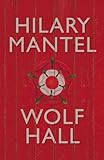
This is my review of Wolf Hall by Hilary Mantel.

Wolf Hall gives a different slant on the well-known tale of Henry VIII and Anne Boleyn by taking the viewpoint of Thomas Cromwell, and transforming him from a sinister, unappealing villain into a complex, intriguing character who, if not exactly likeable, commands respect. Hilary Mantel has clearly come to love her unlikely hero, even making him into something of an "homme fatal" with a stream of women appreciating his charms – or perhaps respecting his power – Mary Boleyn makes a (not very convincing) pass at him, Jane Seymour finds him sympathetic and so on. Although clearly materialistic, manipulative and ruthless, Cromwell has a soft spot for children, women who have hit hard times and young men in his service, he can engage with people at all levels, and has a natural desire to turn his hand to any practical task which is at times almost comical for a man of his hard-won status. We see how the king and the nobility come to use Cromwell – the super-competent, lateral-thinging, can-do fixer – whilst despising him for his low birth. Yet even when he is at the height of his powers, he hears the inner voice reminding him that he may be brought low, like the unseen fist which once felled him in his youth.

The book evokes powerful sensory images of life in the sixteenth century – the sounds and smells, the unfamiliar food and long-lost customs, the muddy roads, the appalling brutality of public executions. Many in the large cast of characters are well-developed as distinct personalities warts and all: the bluff, tactless Norfolk; unworldly, cerebral Archbishop Cranmer who somehow manages to acquire an illicit wife; Anne Boleyn, clever,calculating, yet driven to tantrums in her deep sense of insecurity. Mantel captures Henry's charisma, combined with the casual cruelty arising from his understandable fear of being deposed without a male heir, and qualms about breaking free from the Catholic church mixed with the irrestible temptation of tapping the wealth of the monasteries, made possible by Cromwell's genius for organisation.

The author's take on Thomas More was particularly interesting: a man normally portrayed as a principled saint is presented as a religious fanatic and sadistic torturer of those who do not hold his views, also cruelly sarcastic to his wife, critising her to his dinner guests in the Latin she cannot understand. His execution forms a moving climax to the end of the book, preceded by some well-written scenes in which Cromwell, whose complex feelings for More include some sympathy based on the length of their acquaintance, uses his powers of argument to try to induce More to recant: the pragmatist against the idealist.

I also found the dialogues very entertaining and play-like – witty and clever, often causing me to laugh out loud.

This book needs to be read slowly to appreciate it fully – a problem if you have borrowed it from the library with no prospect of renewal. My opinion of it improved as I read further and I would like to read it again – the highest accolade for a book BUT I share some of the criticisms made. The continual reference to Cromwell as "he" amongst all the others is very confusing. It is annoying to be obliged to reread a passage twice or more to get the sense. Also, some allusions to previous scenes require the reader to have picked up and retained some small detail which could easily have been overlooked. As a result, a few passages did not make sense to me – good editing would have prevented this. I also agree that the style was at times rather stilted. This was very noticeable in the early chapters, also to the extent of putting me off continuing. The dodging about in time – recording Wolsey's downfall before the events leading to it, and introducing the lords sent to arrest him before developing them as clear characters, created a sense of confusion which detracted from the overall book. I agree that it would have been worth knowing a little more about how Cromwell came to work for Wolsey.

Finally, the ending seemed rather limp – definitely leaving the way open for a sequel or two. And why was it called Wolf Hall (the home of the Seymours) which features very little in the book? – I assume it was to point to a sequel in which Cromwell, whilst drawn to Jane Seymour as a future bride sees the scope for her to be Henry's next victim -or perhaps the increasingly ruthless Henry steals her from under Cromwell's nose.

⭐⭐⭐⭐ 4 Stars

When China Rules the World

This is my review of When China Rules The World: The Rise of the Middle Kingdom and the End of the Western World [Greatly updated and expanded] by Martin Jacques.

The fact that China will "overtake" the US in 2027 or thereabouts is clearly a topic of great importance to which we pay too little attention. Martin Jacques is very well-informed, and presents an impressive array of facts – many of which are no doubt already out-of-date in view of China's rapid pace of development. I was interested by his clear exposition of some key points to show how Westerners tend to underestimate the Chinese – the irrelevance to China of the Western-style "nation state" of fairly recent origin, the fact that China is a "civilisation state" which takes the tolerant view of "one civilisation, many systems", the influence of Confucius – even in a nominally communist state – the patient, long-term approach of its wiser leaders, and so on. However, it seemed to me that the same points were reiterated to the point of tedium, although this had the benefit that one could dip into the book at any chapter and get the gist of the whole, plus the repetition helped to fix points in one's mind.

I am not qualified to comment as an expert, but did feel that Jacques dismissed western values, particularly those of the US, in too simplistic a way – yes, it was the country which elected George Bush Junior, but it also gave refuge to Tom Paine, who wrote and debated ideas with Americans of the day in compelling language which still has the power to inspire. I know Jacques has been attacked in the press for glossing over the lack of democracy and neglect of human rights in China. He raises some valid arguments – the fact that the Chinese leadership has made the pragmatic decision to put economic development first, the fact that most western countries achieved development before they instituted democracy, and the fact that the extent of democracy in the west is debatable, particularly when practised on a large scale (as China would need to do) as in the EU. However, I think Jacques could have been more wide-ranging and reflective in his assessment of China. I recall no mention of corruption or brutality (unchecked by democracy!) or suppression of dissent – apart from brief reference to a threat to withdraw investment from Zambia if an election candidate persisted in suggesting that the country was being "colonised" by the Chinese.

On a brief visit to China, I was struck by the ugliness of much of what I saw – it seemed that much of the rich culture and beautiful artifacts of the past had been destroyed in the Cultural Revolution – I formed the impression that there is more beauty in Italy than the whole of China. This brings me to criticise Jacques' casual dismissal of the fall of the Roman and Greek empires, and what little they left, when I would have thought that their abiding influence on language, philosophy, architecture and so on was considerable. He kept referring, uncritically, to the sense of superiority of the Chinese. I would ask whether, even if in "reduced circumstances", western culture would not retain its own justified sense of the value of some things which Jacques seems to dismiss too briefly, such as the concept of the rule of law, or the ideas of the Enlightenment.

It also seemed to me that, by harping on differences, Jacques failed to acknowledge the sympathy which can arise between "thinking" members of different societies.

This potentially excellent book would have gained from a more even-handed approach…..

⭐⭐⭐ 3 Stars

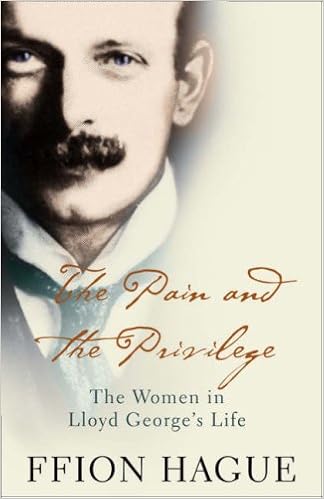
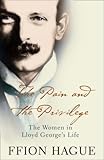
“The Pain and the Privilege: The Women in Lloyd George’s Life” by Ffion Hague – The Pain and the Privilege

This is my review of The Pain and the Privilege: The Women in Lloyd George’s Life by Ffion Hague.

A serialisation of this book on Radio 4 caught my attention. A storyline intriguing enough to succeed as a novel was made all the more interesting through being based on real events – another case of truth being stranger than fiction. How could Lloyd George maintain the active political and moral support of his wife and his mistress when they were both fully aware of the situation even if choosing to delude themselves up to a point? Ffion Hague interprets in a compelling style the complex motivations and emotions involved. The way in which these two women played complementary roles to meet Lloyd George’s needs made me wonder how consciously he chose these two particular people for long-term relationships in an apparent sea of casual promiscuity.
The interplay of the key characters was set in the context of major developments such as the decline of the Liberal Party, the weakening of the power of the Anglican Establishment over Wales, the horror of the First World War and the profound social changes following from it. It was fascinating to realise or to speculate on just how much the wheel keeps turning – insider share dealing, “cash for honours”, the distorting power of the press – when it chose to reveal scandals- reminded me strongly of recent events. The nature of power, and the charismatic influence which some can exert over others was also explored -there were parallels between the excesses of Lloyd George and Clinton, who tarnished noble political ideals, hard work and real steps to make people’s lives better with sordid events in their private lives.

I never had any illusions about Lloyd George’s morality, so did not downgrade the book out of disgust over his self-centred lechery. Although Ffion Hague may have been a little too charitable about his motives e.g. glossing over what some would regard as egotistical conflicts with Asquith which served to destroy the Liberals faster (although the rise of the Labour Party would probably have done it anyway) and downplaying his evident nepotism and cronyism (again, everyone else was probably at it as well), she succeeds in painting all the characters in a sympathetic light. They seemed like real people, with strengths and flaws.

There was irony in spades e.g. in Lloyd George’s jealousy of his mistress Frances Stephenson’s own affair with Tweed, in the way she tried to deceive him as he deceived his own wife, in the fact that her child (who may have been Lloyd George’s or Tweed’s ) may not have given her the pleasure she craved, since the deception in which she ensnared herself made it impossible for her to be entirely straight with the girl, to the detriment of their relationship.

This was a fascinating and thought-provoking book leaving one to ponder at length on the nature of human relationships – not to mention a renewed interest in learning more about the rich history of the early C20. Countless snippets of information interested me such as Lloyd George’s denunciation of the Boer War, because as a put-upon Welshman he could empathise with the independent-minded Boers. As a young man, what would he have said about the wars in Iraq and Afghanistan?

My only minor criticism is a slight lack of editing. I spotted a mistake in a date, a few non-sequiturs, and sometimes became confused by the author’s tendency to dodge back and forth in time. The frequent references to the notes sent by his admiring womenfolk every time they heard Lloyd George speak in the Commons became too repetitious.

But these are small points, and I would rate this as a major achievement and one of the better biographies I have read.

⭐⭐⭐⭐ 4 Stars

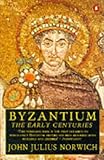
Byzantium The Early Centuries

This is my review of Byzantium: The Early Centuries: The Early Centuries v. 1 by John Julius Norwich.

Previous reviewers were right. This is an informative and entertaining read. It goes into more detail than I expected for a "non-academic" text, but it held my attention through the frequent little anecdotes. I was left marvelling at the scholarship which gave the writer access to such details, which he then communicated with such effortless ease. The occasional "blanks" where he had to admit that "no one knows what actually happened" make one realise how remarkable it is that we know so much. I plan to read the book again at some stage to absorb all the facts – hard to take it all in fully on a first reading, and have already obtained the second volume to read on.

Perhaps the two main achievements of the book are to help one to understand the significance of Byzantium and to bring home the huge variety and scale of activity going on in the so-called Dark Ages. Amongst other things, the barbarous Vandals and Goths were often surprisingly cultured. Yet, even the great Byzantime emperors could indulge acts of great cruelty, such as cutting off tongues and noses.

Highly recommended…..

⭐⭐⭐⭐⭐ 5 Stars

Curate’s egg

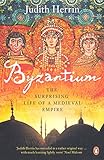
This is my review of Byzantium: The Surprising Life of a Medieval Empire by Judith Herrin.

Inspired by the recent exhibition in London, I bought this to gain some deeper knowledge of a civilisation which I know to have been very important. The book brought home to me how influential Byzantium was, and the poignancy of our general ignorance of a "lost" way of life which still influences us to a surprising degree in various ways.

Although it provided some useful insights, this book fell short in the excessive reference to tedious lists of details, and a somewhat wooden style. The frequent repetition resulting from the thematic approach was also irritating – although I could have done with more of it when it came to explaining some of the obscure points of religious belief. The text seemed driven by an academic need to "mention everything" rather than select some key points of interest and difference.

⭐⭐⭐ 3 Stars