Because it’s there

This is my review of Into The Silence: The Great War, Mallory and the Conquest of Everest by Wade Davis.

There is no need to be a mountaineer to appreciate this account of the early attempts to scale Mount Everest. Wearing a Tweed jacket, making reluctant use of heavy oxygen canisters because he had seen their benefit in action, but lacking the nylon ropes, hi-tech crampons and other paraphernalia now available to reach the summit, George Mallory and his companion Andrew Irvine disappeared in 1924, leaving the tantalising question as to whether they had managed to reach the top.

This is less a biography of Mallory, more a study of the exploration in the context of the 1920s, in particular the grim legacy of the First World War, its horror and folly described here with particular harsh clarity: the British Establishment saw the conquest of Everest as an antidote to what Churchill called "a dissolution..weakening of bonds…decay of faith" plus climbers like Mallory diced with death quite casually having seen it close at hand so often but somehow survived the trenches.

The British Empire seemed to dominate the world, although the cracks were starting to show, so it was still possible for Curzon, Viceroy of India, to assert an Englishman's natural right to be first to the top of Everest! A skilful climber was forced out of one team because he had been a conscientious objector.

Since what is now known to be the easier route through Nepal was barred, the expeditions of 1921-24 approach through Tibet, encountering all the wild beauty and mystery of this unfamiliar culture, from the fields of wild clematis to the barren valley trails marked with stone shrines and inhabited by hermits whose self-denial seemed a waste of time to the mountaineers, although they appreciated in turn that the local people thought the same of their activities. Respectful of mountain deities and demons, the Tibetans even lacked a word for "summit".

With blow-by-blow day-to-day accounts, Wade Davis supplies often fascinating detail of the planning of the expeditions, problems over porters and pack animals, difficulties of surveying the mountains accurately to find a suitable route to the top, the relationships between the climbers – great camaraderie versus frequent friction-, the hardship and often foolhardy bravery of the ascents, the unappetising sound of the meagre rations of fried sardines and cocoa, agonies of frostbite, thirst, and having to turn back close to the summit rather than risk getting benighted on an exposed precipice and above all, the astonishing first sight of the high peaks when the unpredictable clouds and mists disappeared.

The author conveys a strong sense of what it must have felt like to climb: the grind, the exhilaration, the sudden unexpected accidents, the shock after surviving a fall, the exhaustion, the awareness of self-imposed folly, the total physical and mental collapse of some, for others the compulsion to press on.

I found it quite hard to follow the precise details of the routes with the various camps set up on the way, which is a pity as it destroys one's enjoyment of some key sections. I overcame this difficulty by looking up maps and cross-sections on Google Images, but it is a pity Wade Davis and his publisher did not agree to include these in the text, with appropriate photographs, or they could have developed a website to provide this useful information.

This book really brings home how much the early ascents were based on trial and error, and how commercial and political pressures added to a tendency to be over-ambitious, as climbers persisted in aiming for the summit with inadequate resources and preparation.

⭐⭐⭐⭐ 4 Stars

A Perverted Goldfish Bowl

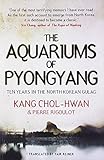
This is my review of The Aquariums of Pyongyang: Ten Years in the North Korean Gulag by Kang Chol-Hwan,Pierre Rigoulot.

This is the gripping memoir, despite a somewhat clunky translation at times, of one the first North Koreans to claim asylum in the South, after escaping via China in 1992. He is untypical in belonging to a wealthy family: his grandfather made money after emigrating to Japan, but allowed himself to be persuaded to return to North Korea by his fanatically pro-Communist wife. They soon learned their error, with the grandfather being forced to hand over his millions to the Government, and ultimately losing his life in prison for the crime of criticising the inefficiency of the North Korean distribution system. His close family were also punished with a decade spent in Yodok, a harsh concentration camp designed to re-educate the relatives of traitors.

I was already familiar with the grim facts about life in North Korea through Barbara Demitz's "Nothing to Envy", which is based on the American journalist's interviews with a number of refugees who also made it to the South, again via China. I thought "The Aquariums of Pyongyang" might be more authentic in that it would be less "fictionalised" with the device of imagined dialogues and recreation of people's thoughts. Although this is the case, Kang Chol-Hwan focuses mainly on the exhausting and soul-destroying routine of life in the camp: the use of "team targets" and "snitches" to keep people in line, the sadistic teachers, the shocking public executions which adults were forced to watch and even participate in at times, by stoning the "criminals", the farcical "self-criticism" sessions, enforced adulation of the "Dear Leader" Kim Il-sung and over all else the obsession with obtaining food, even resorting to eating rats.

There is less exploration of how ordinary people in general survive in the warped dictatorship of North Korea. Kang Chol-Hwan mentions the famines of later years, but does not discuss exactly how they arose. Also, once released, he managed to have access to a relatively good material standard of living, partly through the use of family money and goods imported from Japan to provide the endless bribes needed, also through his own black market business activities.

Kang Chol-Hwan does not portray himself as a particular likeable person, but perhaps this is understandable in view of the brutalising experience of the camp. His final adult years in North Korea and ultimate escape are covered rather hastily, maybe to protect others; he acknowledges with some guilt that relatives and acquaintances must have been sent to the camps because of his defection. It is also interesting to learn of his initial shock over the sexual freedom of life in the west (although he claims to have lived off a Korean brothel-keeper resident in China, and benefited from her contacts to board a ship to South Korea) and over the wasteful consumption of his newfound home country. As an observer from an alien culture, he provides a useful yardstick by which to judge capitalist society and its values.

Overall, this is informative and thought-provoking, but gives a rather limited picture, perhaps because the author spent so much of his time in one camp.

⭐⭐⭐⭐ 4 Stars

The Present echoes the Past

This is my review of The Search for Modern China by Jonathan D Spence.

This is an excellent history of modern China, very readable despite the small print and thin pages. Admittedly, it requires a good deal of time and dedication, but repays the effort. Clearly very knowledgeable but modest with it, Spence knows what points to select from a mass of detail to convey a clear understanding of how and why China evolved from a vast empire, which had turned its face inward against western-style development, to the world's largest communist state, now rapidly embracing economic growth.

He starts with the decline of the late Ming dynasty in the late C17, enough to capture the flavour of a highly centralised, bureaucratic, top-down society which has been the nature of China since the first unified Qin dynasty of 221BC, but he doesn't make the mistake of getting bogged down in detail that far back.

In the subsequent Qing dynasty, we see the first painful enforced contacts with the west, including the shameful role of the British, in flogging opium to save having to spend silver on purchasing Chinese goods. In addition to the usual problems of natural disasters and the difficulty of collecting taxes in such a vast area, the Qing had to contend with major rebellions but managed to survive for a surprisingly long time up to 1912, partly owing to the effectiveness of some impressive campaigns under remarkable Confucian-trained leaders, motivated by their loyalty to traditional Chinese values. Despite this, and a belated willingness to reform, the Qing eventually fell, leading to a prolonged period of chaotic civil war between a succession of warlords.

It is clear that the impetus for radical change came from men who, from the C19, had the opportunity to travel abroad where they could gain access to western political ideas of both liberal representative democracy – an alien concept in China – and Marxist-Leninism. Spence provides a clear analytical account of the rise to power of the Guomindang movement, inspired by Sun Yat-sen and led by Chiang Kai-shek until his exile to Taiwan. He traces the development of the communist People's Republic of China, by no means a foregone conclusion. The machinations of leaders like Mao Zedong as they tighten their grip on power, the Orwellian twists in accepted views make fascinating reading, even to those familiar with the basic facts. To quote Spence on the abrupt fall from favour of Lin Biao under Mao Zedong's regime: "The credulity of the Chinese people had been stretched beyond all possible boundaries as leader after leader had been first praised to the skies and then vilified."

Deng Xiaoping is an intriguing character, as he steers his vast nation towards economic development with periodic crackdowns on free speech, the most shocking and tragic being the killing or wounding of thousands in Tiananmen Square – worse violence perhaps than any single incident in the recent "Arab Spring".

Every section starts with a useful summary, and there is a full glossary at the end in the likely event of your finding it hard to retain the confusingly similar names of many people and places. Although there are many maps to describe the numerous military campaigns, I would have liked a brief section at the outset to highlight key aspects of the geography.

I am most interested in present-day China, but this book provides an essential foundation to understanding this country's complex mix of sophistication and barbarity – developing beautiful artefacts hundreds of years before say the UK, only to smash them wantonly in the misnamed Cultural Revolution of the 1970s. The historical approach enables us to appreciate how the protests of the Chinese who spoke out against repression in the 1970s and 1980s echo those of the past, not just the anti-Guomindang and the anti-Qing of the late C19, but even the Ming loyalists of the C17.

Last updated in 1999, this seminal work is now due for a brief update to cover recent developments as China invests in Africa and copes with the effects of global recession.

⭐⭐⭐⭐⭐ 5 Stars

Serendipitous Overload

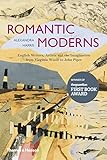
This is my review of Romantic Moderns: English Writers, Artists and the Imagination from Virginia Woolf to John Piper by Alexandra Harris.

I was troubled by the dilettantish nature of this book which seems to lack a clear aim. For the most part, the text flits about like a butterfly, drawn randomly from one alluring flower to the next.

The best aspect is the full colour photographs of 1930s paintings, in particular John Piper’s striking collages of British landscapes. I enjoyed Chapter 1 on artists like John Piper’s flirtation with abstract art, until his fascination with landscape won out . As his French contemporary Hélion observed, abstract art was proving to be a system “cracking at the seams….life budding mysteriously though it”. This would have made an informative chapter in, say, an analysis of abstract art in British painting, but the next chapter changes tack to the early use of concrete in apartment blocks. It soon sets the book’s pattern of being too superficial and lacking in context, for instance, there is no reference to important influences like Le Corbusier, nor to the future wave of brutalist concrete architecture of the 1960s-80s. Instead, Chapter 2 degenerates into scrappy sections on completely different topics, like Victorian pubs, so they are hard to read since they lack a coherent theme.

Thereafter, each chapter stands alone, covering some aspect of English life , mainly from the viewpoint of artists and writers in the 1930s. The wide-ranging topics include views on Victoriana, food, the state of English art in the broadest sense, the weather, village life, landscapes, or the influence of houses on artists, but all covered in a very rambling and disjointed fashion. If you are largely unfamiliar with the references, you are likely to feel overloaded and rather bored. If you have some prior knowledge you may well feel you would like to concentrate more on fewer topics. There is little regard to the social and economic context of this period of dramatic change. The focus is very much on the middle and upper classes living in the countryside or prosperous urban areas.

The chapters cannot even be called essays because they are often broken into shorter sections, further obviating the need for the author to develop a theme properly . For instance, Chapter 10 could have been an intriguing study of the landscape of 1930s Britain as captured by artists for the Shell-Mex advertisements intended to encourage new car-owners to use more petrol. In fact, this aspect is lost in a mass of verbiage with some kind of oblique connection to writing about, sculpting with regard to or drawing landscapes.

I found this book was only readable if I dipped into the odd section of interest. I was left enjoying the illustrations, but very irritated by the unfocused text. I agree with other reviewers who have regretted the lack of an objective and clear-sighted editor.

⭐⭐⭐ 3 Stars

Modern Orwellian Nightmare

This is my review of Nothing to Envy: Real Lives in North Korea by Barbara Demick.

The title is an ironic take on the brainwashing of North Koreans to think that there is "nothing to envy" in other countries. Based on lengthy conversations with a handful of those who managed to escape to South Korea via China before the border was tightened up, this book provides a very convincing picture of life in the world's "last undiluted bastion of communism". It has defied expectation in surviving into the C21 even though the inefficient systems leave many people malnourished, forced to forage for weeds as food, and reduced to squatting blankly, staring straight ahead "as if they are waiting..for something to change". Behind the artificial showcase of the parts of Pyongyang that foreigners are allowed to see, life seems bleak indeed.

The book begins with the striking observation that viewed from a satellite by night, North Korea is "curiously lacking in light" owing to the inability to pay for electricity.

Making a mockery of communism, we learn how people have been classified as members of the "hostile class" and denied education and work opportunities if they have "tainted blood", which could simply be the result of having a father unlucky enough to have been brought from south of the border as a POW after the Korean War. Again contrary to pure Marxism, the head of state is regarded as an infallible god-like figure: people weep extravagantly at his death out of fear of failure to conform to the expected tide of grief, and perhaps some still believe the idea that he might return to life if they cry hard enough.

We sense the continual risk of being denounced and sent to a prison for some minor offence, which could include failing to keep sufficiently clean the obligatory pictures of Kim Il-Sung or Kim Jong-il, or daring to listen to South Korean television – inspectors come to check you have not removed the paper tape over the tuning buttons, but a long thin sewing needle may serve to twiddle them, such is human ingenuity when persecuted. Then there is the lunacy of a state being unable to provide its people with basic food, but still trying to prevent them from setting up their own private enterprise which will save them from starving. Hopefully things are beginning to change, marked by a recent protest, "Give us food or let us trade!"

The author is good on people's dawning realisation of the extent to which they have been misled, and also on exactly how some people managed to escape to South Korea and the problems of adjustment they have faced there – not least the guilt over punishment of relatives left behind.

The only aspect of the book which troubled me was the embroidery of memories to create dialogues and inner thoughts which must be in part fictionalised. The basic details are too fascinating for this to be necessary. The American journalese also grates at times, and an index would have been useful but overall this is a very readable book on an important theme.

It left me ashamed of my comfortable life, and much more sympathetic towards economic migrants, with respect for their resilience.

⭐⭐⭐⭐ 4 Stars

Compelling Theme, Mediocre Delivery

This is my review of Stasiland: Stories from Behind the Berlin Wall by Anna Funder.

I came to this much-hyped book with high expectations. The stories of East Germans who lived the wrong side of the Berlin Wall provide a chilling reminder of how the Stasi stalked, persecuted, imprisoned and tortured those suspected of subversion or guilty of infringing the petty and oppressive restrictions of a state dominated by bigoted control freaks.

We read of the talented student who was failed in her examinations and denied employment because she had an Italian boyfriend; the woman who was denied the right to visit her sick child in hospital, separated from him by the arbitrary construction of the wall, unless she agreed to lure into a trap a young west German who had been helping people to escape: she refused and was haunted by the decision for the rest of her life; the man who resigned in disgust from the Stasi, only to find himself falsely represented to his wife as a pornographer, on which false grounds she was forced to divorce him, or risk losing access to her son.

The author is good on the bizarre operations of the large number of Stasi agents. "Touch nose with hand or handkerchief" meant, "Watch out, subject is coming!" East Berliners could be fined simply for having a television aerial angled towards the west. It will take an estimated 375 years at the current rate of work to piece together all the files torn in pieces by the Stasi as they tried to cover their tracks when the wall came down. Far too many of former Stasi members still hold positions of influence in society. The final irony is that some people voice a highly selective nostalgia for a time when prices were lower, and life more secure for those who managed to toe the line.

Sadly,the writer often distracts us from the full horror, pain and lunacy of the stories with her clunky, jarring prose. In the final acknowledgements, she names the "great friends who provided a much needed sense of normal life" in Berlin. So, why do they not feature in the book? Why does she portray herself as a loner apart from beery pub crawls, who rents a soulless under-furnished flat in Berlin? Too many of the characters, in particular the small number of ex-Stasi men, seem caricatures and many of the stories do not ring true at times. My charitable conclusion is that this is because they are in some cases a pastiche of reality, but the truth here must be more telling than any contrived story.

In short, this is an important and compelling theme, marred by mediocre delivery.

⭐⭐⭐ 3 Stars

The Human Experience of Hell

This is my review of All Hell Let Loose: The World at War 1939-1945 by Max Hastings.

Is there a need for another book on the Second World War? For those yet to read one, this will be a good choice, since it provides a synthesis of more than three decades of investigation, research and writing on this theme. Also, as a journalist, Max Hastings writes in a more engaging style than many academic historians.

Although the chapters trace the facts systematically from the invasion of Poland to the fall of Japan, Hastings's main focus is on human experience. The plentiful, often dramatic and moving photographs are of civilians rather than generals and political leaders. He also quotes movingly from the correspondence of ordinary people whose lives were cut short by the war, from the lieutenant who mused how the experience of commanding a battleship, even if it ended in death, was far more fulfilling than slaving in a dull London office, to the seventeen-year-old boy, begging his mother to do her utmost to get him released from service back into a safe job at home.

Hastings reminds us of the full extent of the war, in which fifteen million Chinese died at the hands of the Japanese, and a surprising range of countries suffered heavy casualties. He points out how the Germans lost far more soldiers to the Russians than to the other Allies, and how the demands made by soldiers for food from the civilian population added to the intense hardship of ordinary people. The unimaginable horror of war, until one has experienced it, the fear, fatalism and futility are demonstrated too powerfully for anyone to overlook. For instance, he describes how soldiers were forced to walk on the faces of dead colleagues squashed into the trench floor.

In what he sees as a just war, Hastings focuses on the fact that it was only partly won, since the price of victory was that Eastern Europe (including the Poland which ironically triggered the debacle), although wrested from Nazi control, remained in Soviet hands at the end. He provides fascinating evidence of Churchill's unrealistic desire to continue the struggle, even using defeated Wehrmacht soldiers, but the Russians simply had too many troops on the ground.

I was interested in the ambivalence of the Imperial subjects in India and the Far East, who only supported the British with reluctance since they knew that a Fascist victory would be even worse.

The one "imbalance" may be relatively too little space given to those who suffered in the Holocaust.

Overall, I am not sure that Hastings provides much that is not already known, but he succeeds in arousing our sympathy and respect for those forced to endure the War. Although he is now turning his attention further back to the First World War, it might be more beneficial if he were to apply his forensic skills to the issues of today, say the crisis in Europe, but perhaps there is a strange comfort in reviewing the past through modern eyes.

⭐⭐⭐⭐⭐ 5 Stars

The Human Experience of Hell

This is my review of All Hell Let Loose: The World at War 1939-1945 by Max Hastings.

Is there a need for another book on the Second World War? For those yet to read one, this will be a good choice, since it provides a synthesis of more than three decades of investigation, research and writing on this theme. Also, as a journalist, Max Hastings writes in a more engaging style than many academic historians.

Although the chapters trace the facts systematically from the invasion of Poland to the fall of Japan, Hastings's main focus is on human experience. The plentiful, often dramatic and moving photographs are of civilians rather than generals and political leaders. He also quotes movingly from the correspondence of ordinary people whose lives were cut short by the war, from the lieutenant who mused how the experience of commanding a battleship, even if it ended in death, was far more fulfilling than slaving in a dull London office, to the seventeen-year-old boy, begging his mother to do her utmost to get him released from service back into a safe job at home.

Hastings reminds us of the full extent of the war, in which fifteen million Chinese died at the hands of the Japanese, and a surprising range of countries suffered heavy casualties. He points out how the Germans lost far more soldiers to the Russians than to the other Allies, and how the demands made by soldiers for food from the civilian population added to the intense hardship of ordinary people. The unimaginable horror of war, until one has experienced it, the fear, fatalism and futility are demonstrated too powerfully for anyone to overlook. For instance, he describes how soldiers were forced to walk on the faces of dead colleagues squashed into the trench floor.

In what he sees as a just war, Hastings focuses on the fact that it was only partly won, since the price of victory was that Eastern Europe (including the Poland which ironically triggered the debacle), although wrested from Nazi control, remained in Soviet hands at the end. He provides fascinating evidence of Churchill's unrealistic desire to continue the struggle, even using defeated Wehrmacht soldiers, but the Russians simply had too many troops on the ground.

I was interested in the ambivalence of the Imperial subjects in India and the Far East, who only supported the British with reluctance since they knew that a Fascist victory would be even worse.

The one "imbalance" may be relatively too little space given to those who suffered in the Holocaust.

Overall, I am not sure that Hastings provides much that is not already known, but he succeeds in arousing our sympathy and respect for those forced to endure the War. Although he is now turning his attention further back to the First World War, it might be more beneficial if he were to apply his forensic skills to the issues of today, say the crisis in Europe, but perhaps there is a strange comfort in reviewing the past through modern eyes.

⭐⭐⭐⭐⭐ 5 Stars

Did Garibaldi do Italy a Great Disservice?

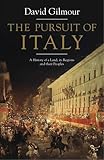
This is my review of The Pursuit of Italy: A History of a Land, its Regions and their Peoples by David Gilmour.

"Italy," complained Napoleon,"is too long." It is hard not to warm to a book that begins in this vein. I think that Gilmour's aim is to show not only how Italy came into existence as a single nation state, but why it has proved so difficult both to achieve and sustain unification. Even now, the economic and social divide between north and south remains far stronger and more bitter than that of England.

The author uses his obvious knowledge and enthusiasm for Italy to create a popular history in which each chapter is like a self-contained essay, drawing not only on key events but also on the diverse geography, different regions, peoples and cultures of Italy. For instance, after World War 2, five peripheral regions had to be given special status, including a good deal of autonomy to stem strong separatist demands based on physical separation, as for Sicily and Sardinia, or different languages, as in northern areas speaking mainly French, Italian or Slovene. There are some useful maps to help identify the various regions.

I appreciate why Gilmour felt that a full analysis required him to go back in time to the Bronze Age traders travelling through Alpine passes. After an initial chapter to spell out the physical and social diversity of Italy, he moves systematically forward in time, with a unifying theme for each chapter e.g. the various empires which dominated Italy, starting with the Romans; the growth of city states from the Middle Ages or the period from C15 when Italy was a battleground for foreign warring armies.

Some chapters e.g. 5 on "Disputed Italies" proved hard to follow without a level of background knowledge which would have made it unnecessary to read the book in the first place! I can see that Gilmour wanted to avoid getting bogged down in facts, but perhaps needed to think himself more into the position of a willing reader who may not know enough about the history of say, the Hapsburgs in Austria and Spain versus the French dynasties to understand their complex activities, warring and installing puppets on Italian soil, from 1494 to the early 1800s.

I resorted to reading the chapters in reverse order. Perhaps because they interest him most, Gilmour seems to write best about more recent events such as the modern resurgence of "centrifugal Italy" and the rapid rise of the racist and divisive Northern League under Bossi. Once I had absorbed all the fascinating events from say, Garibaldi through Mussolini to Berlusconi, I had the motivation to go back further in time and make the effort to understand the more distant, important yet often less engaging detail which underpins the current situation.

Overall, this is quite an ambitious work, which might benefit from a slightly clearer stated aim, and sometimes becomes too fragmented in its attempts to provide a synthesis, but on balance it is for the most part informative and readable.

It ends on a provocative note. Despite creating "much of the world's greatest art, architecture and music and…one of its finest cuisines" and possessing "some of its most beautiful landscapes and many of its most stylish manufactures", united Italy has never lived up to its founders hopes, "predestined" by its history and geography "to be a disappointment….never as good as the sum of its people".

⭐⭐⭐⭐ 4 Stars

Another Case of Truth more Dramatic than Fiction

This is my review of The Sinking of the Laconia and the U-Boat War: Disaster in the Mid-Atlantic by James Duffy.

A recent television drama on the sinking of the Laconia during WW2 prompted me to obtain this book. With the aim of putting the already well-documented Laconia incident in context, it provides plenty of examples to show that Hartenstein, Captain of the U-boat U-156 which torpedoed the Laconia, was not alone in putting himself out in the attempt to rescure survivors once they had ceased any attempt to retaliate. German U-boat crews regularly pulled people out of the water, helped them into lifeboats or even on board the submarine, provided food, blankets, medical aid when needed and gave directions to the nearest coast, helped to repair lifeboats, even towed them to passing ships that would take them to safety.

What has made the Laconia incident so striking is the sheer number of survivors, meaning that Hartenstein did not have the capacity and enough supplies to meet their needs without calling for help. As photographs bear out, at one point the entire deck of the sub was crowded with some 200 survivors. There is also the issue of their composition: the Laconia was found to be carrying up to 1800 Italian prisoners of war. The fact that many were trapped below decks as the Laconia sunk was likely to cause diplomatic tension between the Germans and their Italian allies, so Hartenstein was under pressure to do what he could to save the rest.

If Hartenstein had been able to carry out his plan of calling on available U-boats and enemy "Allied" craft to relieve him of his human burden, virtually all those surviving the inital onslaught would have been saved. Sadly, an American bomber on the mid-Atlantic refuelling base of Ascension Island was given by officers who were probably not in full possession of the facts the terse and fateful order "Sink sub at once". Hartenstein had no option but to order the survivors to jump overboard, cut loose the lifeboats, and make a rapid dive for his own crew's survival.

Although the level of detail is sometimes too much for a general reader to take, this book is full of fascinating information. To reduce the risk of attack, ships used to follow a zigzag course, very wasteful of fuel. Only on moonless nights could they risk travel in a straight line, with all lights blacked out. The subs used diesel fuel at the surface but battery power under water. They faced risks on a daily basis when it was necessary to rise to the surface to use diesel power to recharge these batteries.

After the Laconia incident, Admiral Donitz was obliged to issue the infamous "Laconia Order" forbidding U-boats from taking enemy survivors on board. For this he suffered opprobrium, and was imprisoned after the war for his aggressive attacks on Allied shipping. However, Donitz probably refused in the sense of managing not to obey Hitler's order for U-boat commanders to kill the crews of sunken ships, even if they were on lifeboats.

This book leaves it to us to debate the morality of launching a torpedo with the aim of killing as many people as possible, but then risking one's own life to save the survivors of this action. Hartenstein, a brave and humane man with the misfortune to live under the authority of a crazy dictator lost his own life when the U-156 was blown up a few months later.

⭐⭐⭐⭐ 4 Stars