Gainsborough – A Portrait by James Hamilton

“I’m sick of Portraits and wish very much to take my Viol da Gamba and walk off to some sweet Village where I can paint Landskips and enjoy the very End of Life in quietness and ease.”

Thomas Gainsborough claimed to prefer painting landscapes, but is best known as a leading and very prolific C18 portrait painter. After moving to London in later life, and famous enough to be invited to paint George III and Queen Charlotte, he became quite well off.

Hamilton’s opening chapter portrays Gainsborough as sociable, charming and generous, but also subject to mood swings, and bursts of rage, as when he slashed a canvas which a client had rejected. His friend the actor Garrick’s description of his mind as like a “steam engine overcharged” with genius implies a manic quality. As a young man, he was more harshly criticised as “very dissolute…inordinately fond of women”, which eventually seems to have led to an attack of venereal disease which nearly killed him. He was also often in debt, despite his high work rate, painting “upon his feet….during five or six hours every day”, and a wife who came with a useful annual annuity, the result of being the illegitimate daughter of a prince. Hamilton suggests that the cost of keeping his wife and daughters as well-dressed “advertisements” for his work was initially more than he could afford!

In later life, Gainsborough could chat informally to the king with ease, but was too unorthodox to “play the game” as a member of The Royal Academy, to the extent that when he complained about the way his pictures were being hung at the 1784 Academy Exhibition, he was simply ordered to take them down!

Although at pains to write a biography, Hamilton’s expertise as an art historian has led him to analyse in some detail the painter’s work, with coloured plates usefully provided for many of the examples, but often too small in the paperback edition to appreciate sufficiently. So it is worth looking up images of them online. Gainsborough’s portraits of the gentry and aristocrats are often rather stiff, and the backgrounds may be of greater interest, as in the famous painting of Mr. and Mrs Andrews crammed one side of arable fields clearly depicted the husband’s new farming methods. Beautiful, elaborate dresses, displaying skill in painting silks and velvets, were often added afterwards, neither belonging to or ever worn by the sitters. Some of the most striking portraits, with a photographic quality of realism, focus on the faces of friends, who often had to wait months to receive them as gifts, since they were painted in between more lucrative commissions.

One of the most fascinating aspects, although we have to wait to Chapter 25 to discover it, is Gainsborough’s unusual approach to painting. He liked to work in darkened rooms, lit only by flickering candlelight, with a large canvas tied loosely to a frame so that it billowed slightly like a sail, while the sitter’s head was positioned only inches away from the painting of it. Gainsborough worked with great physical energy, continually stepping backwards and forwards. Most extraordinary of all, he is reputed to have painted at times with long-handled, six foot brushes, which must have been larger, ordinary brushes tied to flexible handles of say, willow or hazel.

Another intriguing fact is that, whereas from boyhood, growing up in Suffolk he painted landscapes from observation of nature, later on he would construct landscapes to copy, using heads of brocolli for trees. Endlessly experimental, he would use his fingers, bits of sponge, even on an impulse sugar-tongs to apply paint.

Hamilton creates a strong sense of place as regards where Gainsborough spent most of his life. As a boy, it was Sudbury in Suffolk, where the once prosperous wool and cloth weaving trade had declined, leaving a politically corrupt sytem and discontented population. It was only the small inheritance from an uncle who had made money from property ownership in the depressed town which enabled Gainsborough, aged only 13, to escape to London as an apprenticed engraver – “some light, handy craft trade”.

The descriptions of Bath are fascinating, particularly if one happens to live there. There is the irony of the unhealthy nature of a spa town with the smoke from coal fires trapped in the valley, “set so deep …air was apt to stagnate”. In summer, “the air was thick with the chalk and dust thrown up by traffic….which in the wet and cold of winter became a deep mire”. Those who came to take the waters would have been better off staying at home in view of the sedan chairs used to transport the gouty and rheumatic, which were reduced to boxes of sodden leather in the frequent rainy days.

Apart from the sensitive, appealing portraits of his two daughters when little girls, and one of his wife as an older woman, with a direct, quizzical gaze, Gainsborough’s immediate family members remain two-dimensional. He is described as hen-pecked, but perhaps his wife had good reason to control his income from portraits. It is unclear why Hamilton calls the daughters “troublesome”. The elder daughter may have inherited a more extreme form of the painter’s possibly somewhat manic personality. For her to be considered “mad” may have led to her short-lived marriage being a failure, with her younger sister being forced into the role of a spinster carer. Probably, there is simply a lack of information to explore these family dynamics further. Yet there is a vivid image of Thomas wondering how best to dispose of his deceased brother Humphey’s invention of a by then rotting steam engine. Clearly, they were talented members of an “ordinary” family.

Similarly, I would have liked Gainsborugh’s uneasy relationship with Joshua Reynolds to have been presented more fully and clearly. Was it more than the case of an orthodox President of the Royal Academy criticising Gainsborough, even after his death, for “a want of precision and finishing” which Hamilton sees as “brave, flamboyant exuberance”?

Overall, the biography is meticulously researched and a mine of information. Yet reading it proves a laborious task at times, largely through a lack of rigorous editing to remove the frequent repetition, tedious lists of, say, lients or paintings, and long-winded digressions. I found Gainsborough’s chequered relationship with The Royal Academy too fragmented and hard to follow. The tendency to speculate in the absence of evidence or impossibilty of knowing how Gainsborough could have reacted to the present could also be quite irritating.

Despite these reservations, I recommend this biography, having gleaned a great deal from it.

This Thing of Darkness by Harry Thompson – A Masterpiece Overlooked as was Fitzroy.

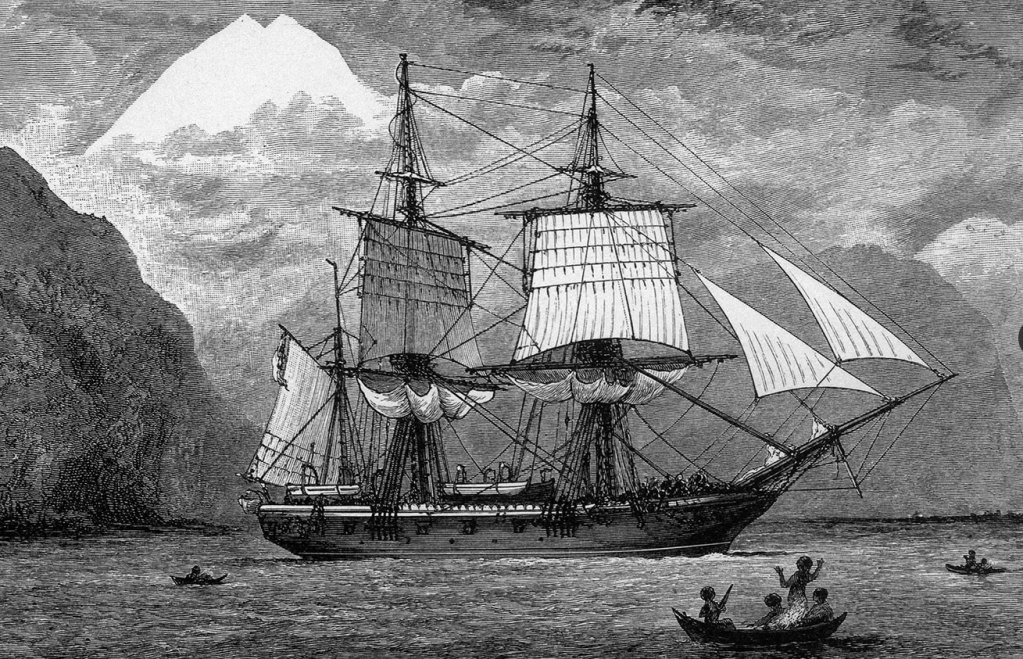
At 750 pages, this is a megatherium of a historical novel, to cite the name of the giant fossilised sloth which Darwin comes across during his five- year exploration of South America while employed as a naturalist aboard the survey ship, HMS Beagle. In the span of almost four decades from 1828, it is hard to keep track of the vast cast of characters, many of whom only appear briefly from time to time. Women play a minor role, and tend to be passive stereotypes, but that reflects life at the time.

Although Darwin is the most famous, the focus is on Robert Fitzroy, appointed Captain of the Beagle at the age of twenty-three, not only for his aristocratic connections, but also his brilliant performance as a student at the Royal Naval College. His first task is to complete the survey of the complex coast of Patagonia, with the harsh climate which drove his predecessor mad. The novel brings home the enormity of the task of mapping a continent with the limited equipment available, the cultural gulf between the Europeans and the various tribes they encounter, and the human cost of the well-intentioned desire to achieve “progress” complicated by the innate human drives of competition, domination and greed.

A central theme is the relationship between Fitzroy and Darwin, forced into close companionship for months on end in the cramped confines of a sailing ship. A bone of contention between them is the explanation of the variations in the creatures observed on their travels, whether alive or preserved in layers of exposed rock. Initially destined to be a clergyman, and troubled by his conclusions, Darwin finds it increasingly hard to deny the existence of some kind of evolution, as we now call it. Fitzroy, despite his analytical mind, cannot give up his belief that surviving species remain as they were first created by God, with only limited changes through adaptation to different environments.

Frustrated by the government’s refusal to fund further voyages of the Beagle, he resolves to finance them himself, running up excessive debts in the process. Constantly dealing with dramatic changes in the weather, he begins to see patterns, and while employed in later life at the Board of Trade sets up a weather forecasting system to issue storm warnings which save lives. Pressure from the owners of fishing fleets, concerned by the loss of earnings when forecasts keep their boats in port, lead to abandonment of then daily weather reports. This proves the last straw for a man who has suffered throughout his adult life from periods of depression.

At times of stress, Fitzroy suffers brief but severe manic episodes, which put both him and his men at risk. At a time of such prejudice against madness, it is surprising that he is not demoted for that reason. The extreme loyalty he arouses in his crew may partly explain this. The practice of sending little boys, as young as ten (or twelve in his case) off to sea to learn the ropes may have aggravated his instability.

Darwin is more balanced, and ultimately more successful. Yet he is presented in an unflattering light. His fellow officers on The Beagle generously bring him examples of unusual creatures they have found, but when these are shipped off to England, it is Darwin who receives all the credit, never acknowledging their contribution.

This novel is based on such detailed research on sailing 19th century ships in often atrocious weather conditions, and on every aspect of the varied landscapes and society of South America at the time, as well as the contrasting vivid portrayal of London and the rural south of England, that I imagined the author must be some nerdish eccentric. In fact, Harry Thompson was a highly successful television producer and comedy writer, who produced, for example, “Have I Got News for You”. His sense of farce pervades this book with flashes of irony and dark humour which lighten the theme.

By the age of 45, he had also found time to write a string of books, including biographies and this debut novel, “This Thing of Darkness”, which arguably deserved to win the Booker Prize rather than merely be longlisted. Ironically, the winner was John Banville’s “The Sea”, so different that the two novels seem to defy comparison in the same contest.

What might Harry Thompson have gone on to achieve, had he not died prematurely of lung cancer, never having been a smoker? It is a pity that many people will lack the time to embark on this book, or be deterred by its length. Reading it proves an absorbing, immersive experience, creating a powerful sense of many different places, and enabling us to identify with characters despite the accepted attitudes, value and knowledge of their day. Admittedly , in some dramatic scenes of near-death experiences, the derring-do may seem overdone; otherwise, the tedium and hardship of long days at sea, or struggling over unfamiliar, harsh terrain feels oppressive, but authentic. The political corruption of the period is all too similar to that of today – plus ça change!

Thompson really succeeds in bringing a fascinating period of history alive. This novel is a remarkable achievement, moving and informative, that will linger in the mind.

Remembering Babylon by David Malouf: Living in a world where a sense of the presence of those who have gone before is lacking

Written by the internationally admired novelist and poet David Malouf, this is an unusual take on the interactions between the European colonists and the native Aborigines in C19 Queensland.

The central character, Gemmy Fairley, is based on the life of James Morrill, a sailor who was shipwrecked and washed up on the Queensland coast where he lived for sixteen years with the Aborigines, before returning to the settlers’ “civilisation”. Both men announce themselves with the same words, “Don’t shoot! I am a British object!”, but the Gemmy of Malouf’s imagination seems to be a more poignant and touching character who seems to have adapted quite easily to Aborigine life, after an even harder childhood as an orphan exploited by a London rat-catcher.

At first, Gemmy is a source of curiosity and amusement, but in an isolated, insecure white immigrant community, he soon arouses suspicion mingled with a repulsion which is heightened by the nature of his difference – physically damaged by adversity, he is between two cultures, a white man who looks and behaves like a native. In a community which lives in a constant sense of fear of the unknown, uneasily aware of the presence of elusive, possibly menacing strangers, they dare not trust him, particularly when he is reported to have received a visit from a couple of Aborigines.

In this subtle psychological drama, Malouf tends to portray the Aborigines in a more sympathetic light, as more sensitive and empathic than the white settlers, although they remain more two-dimensional than the latter. The Aborigine couple “were concerned that in coming here, among these ghostly white creatures, he might have slipped back into the thinner world of wraiths and demons he had escaped, though never completely in his days with them. They had come to reclaim him; but lightly, bringing what would feed his spirit”. As tensions rise in the colonial village, those who have supported Gemmy feel rejected by the community, but disillusioned with their former friends in return.

The Minister, Mr Frazer, makes use of Gemmy’s local knowledge and labour to dig up the unfamiliar local plants he wishes to study. This gives him the idea of developing a market for local fruit and vegetables, but the plan is bound to wither in the face of a Governor who thinks only of imposing his own British culture.

By turns disturbing and beautiful, carefully crafted, Malouf’s prose needs to be read slowly, like a poem, to appreciate more fully the vivid pictures created of Queensland, to note the small details which may prove relevant later and to understand fully the thoughts he wishes to convey.

From the outset, I felt that the novel which focuses on small insights was building up slowly to a powerful climax but this drifted away in the last three chapters which seem disjointed, rushed and too disconnected from what has gone before, featuring insufficiently developed relationships, or characters who have not even appeared previously. Perhaps the author is simply most interested in showing how , for instance, a single incident may have particular significance in one’s memory; a person may have a lasting influence which may be hard to grasp, perhaps only when it is too late.

This novel is worth reading for the quality of the writing and observation, and the issues it addresses, although I would rate “The Conversations at Curlew Creek” more highly from the viewpoint of structure. ”Remembering Babylon” could be a good choice for a book group, since it could spark discussion over the experience of being a colonial settler, the relationships with indigenous groups, and the psychology of individuals in groups under pressure, or living in a world where they need, but do not have, “a sense of the presence of those who have gone before”.

“To the Lake” by Kapka Kassabova: transported to another world

Fascinated by Kapka Kassabova’s “Borders”, an evocative portrayal of the little-known area of Thrace split between Bulgaria, where she lived as a child, Greece and Turkey, I was keen to read “To the Lake” which promised to be in a similar vein. The focus is in fact on two lakes, Ohrid and Prespa, connected by underground springs, which lie partly in the little-known republic renamed in 2019 as “Northern Macedonia”. The lake region is also shared with Albania, and in the case of Prespa with Greece as well. Centuries of conflict, migration and mingling mean that families of Macedonian origin, in whole or part, are to be found in all these countries, creating the kind of mixture after which a “salade macédoine” is named.

Ohrid is more of a tourist area, with atmospheric monasteries like St.Naum and former cave churches with ancient, too often desecrated murals, accessed by stone steps from the shore. Yet there is the persistent shadow of the national boundary which Macedonian boats cannot cross for fear of entering Albanian water. In the wilder Prespa area, the Greeks claim that the shadow is cast literally by the mountains, to darken the Albanian portion of the lake. Putting humans to shame, a large population of pelicans coexist amicably with the cormorants, who apparently share with them the fish they dive deep into the lake to catch.

Athough the name “Makedonia” probably comes from the word “tall” to describe the “Macedons” of antiquity, it is often claimed to mean “sorrow” and “strife”, from the Slavic word “maka”. Even local place names reflect this, like the “Mean Valley”, where soldiers suffered so badly scaling the slopes with heavy equipment in deep snow, overlooked by a peak called “Coffin”.

Convinced that what she calls “unprocessed trauma” has been passed down through generations of women on her mother’s Macedonian side of the family, Kapka Kassabova felt compelled to return to the lake region in order to understand the past, and break the pattern of depression, undiagnosed pain and fatigue, wanderlust and eternal longing “for something”.

If this sounds bleak, not to say neurotic, she finds healing in the end, waxing philosophical with lake water metaphors. “Every possibility is still at the source. All it asks of you is to stop struggling. Wade in..and free yourself of the burden you’ve been carrying for centuries…become anything….at one with the water…though what you are in the end is water, a spring that renews itself every second as it rushes in ecstasy to the lake.”

The author’s style is often poetic, although at times overintense. A “macédoine” of travelogue, history, geography, memories, anecdotes laced with humour and poignancy, legends and frequent encounters with the locals, or returning emigrants, all combine to create a vivid impression of a beautiful, remote, complex land. Admittedly, the detail tends to be so fragmented that the reader needs to consult Wikipedia and some good maps to gain a coherent sense of the overall chronology and geography. Yet the author succeeds in generating empathy for migrants, rage against regimes which needlessly impose pointless , cruel restrictions, a heightened awareness of cultures outside our own – and above all, the desire to visit the area.

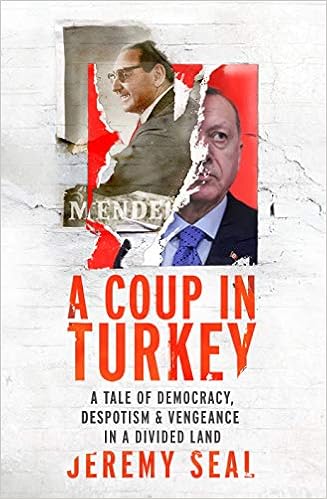
“A coup in Turkey” by Jeremy Seal: Repeating history

Since the decaying Ottoman Empire’s collapse after the First World War, Turkey has been dominated by autocratic, ambitious leaders with differing visions apart from a common penchant for grand infrastructure projects, from Kemal Atatürk’s creation of a new capital in Ankara, to Erdoğan’s airports, high-speed railways, and Çamlıca Mosque, the largest in Turkey, complete with art gallery, library, and a conference hall.

Travel writer Jeremy Seal has drawn on a deep knowledge and love of the country to focus on the long-forgotten decade of the 1950s in which the rise and fall of Prime Minister Adnan Menderes – Adnan Bey – reveals a good deal about the tensions which have led Turkey from Atatürk’s dream of a modern, progressive secular republic to the current reality of Erdoğan’s nominal democracy with revived support for Islam, probably reflecting the wishes of the majority, but which has also suppressed free speech and slipped into corruption.

A charismatic, successful cotton farmer, Menderes risked helping to found a new Democrat Party in the aftermath of the Second World War. Attacking an authoritarian Republican Party which had been Atatürk’s legacy, he asserted, “governments that do their work well have no reason to fear freedom of the press”. Gaining power as Prime Minister, Menderes prioritised improving the lives of villagers subjected to secular education when what they really needed was clean water, electricity and more productive farms. Although he was loved for “restoring to right-thinking religious folk the things they wanted, like mosques”, to paraphrase Erdoğan, who has followed his example, perhaps from the same desire to increase political support, the practical reforms unfortunately misfired. Imported steel ploughs led to soil erosion, and unrealistic price guarantees for wheat crops bankrupted the Treasury.

Menderes compounded his errors: relying on popular support to the detriment of Turkey’s “influencers”, academics, journalists and military leaders; arguably wasting money on vanity projects such as mosques; laying himself open to charges of immorality through his many affairs in Istanbul, neglecting his loyal wife. Under pressure, he sadly went the way of too many other politicians in becoming authoritarian. The last straw was the granting of special powers to seize the property and order the imprisonment of those who resisted the work of a commission set up to investigate the “destructive and illegal” activities of the rival Republican Party.

Although Atatürk had theoretically banned the army from involvement in politics, it conducted the 1960 coup in which Menderes and many other Democrats were imprisoned on an island prior to a prolonged trial of questionable legality, leading to his rushed execution in a bungled “compromise” in which most of the other death sentences were commuted in the face of international condemnation. Before imprisonment broke his health, Menderes insisted that he had been democratically elected, and was supported by the “National Will”. Certainly, he retained widespread support, although some must have been turned against him by the distortion of facts, such as the creation of “false martyrs” – claimed to have been massacred” during protests against his regime , but in fact killed by “failures of the army’s own safety practices”.

The author contrasts this with the failed coup of 2016 in which the “National Will” of public pressure in the streets helped to foil the attempted military takeover of the news media.

This novel has been widely praised and contains interesting information which should be better known. So why was I disappointed? Frequent digressions and anecdotes are no doubt intended to flesh out an appreciation of Turkish society, but combined with the continual dodging back and forth in time, they create a disjointed, even confusing effect. Imagined conversations at dramatic points prove stilted and jarring. In his evident sympathy for Menderes, Jeremy Seal may have let him off too lightly. For instance, did he really “secretly stoke a demonstration in Istanbul in favour of Turkish claims on Cyprus, to the point of instructing local police and military units “not to intervene” and was he “behind the Salonica bomb” explosion? I would have liked less on the Gatwick air crash he survived, and the grim details of his last days, and more analytical overview of the fascinating period which brought Turkey from Atatürk to the present situation.

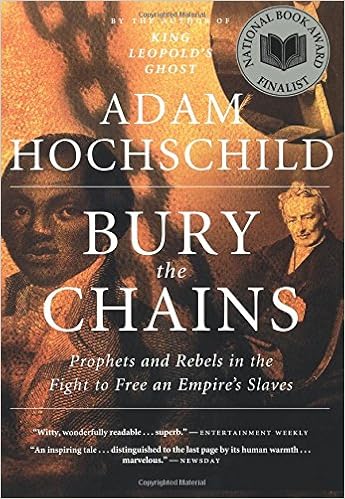
“Bury the Chains” by Alan Hochschild: Understanding the Past

Called Saint Wilberforce, even King Wilberforce by slaves in the West Indies, the man often credited with leading the British movement for the abolition of slavery is portrayed here as deeply conservative: he was against giving more British people the vote, expected women to be submissive, and argued against a cruel slave trade rather than for “too rapid” an emancipation, even at one point voting against the liberation of children born to slaves. He was mainly useful to the abolitionist cause as an MP, close friend to the Prime Minister William Pitt, and a compelling speaker.

This highly readable yet deeply researched “narrative history” focuses on the lesser known characters who in fact played a more fundamental part in the long battle to end the inhumane trade on which many people in the late C18 believed the British economy depended. Author Adam Hochsfield apparently set out with the aim of writing about John Newton who evolved from the callous captain of a slave ship to an Anglican clergyman, rueful abolitionist and writer of “Amazing Grace”. Through his research, the author came to realise that the real force behind the movement was Thomas Clarkson whose prize-winning essay in Latin on the slave trade brought him to the Damascene conversion “that if the contents of the Essay were true it was time that some person should see these calamities to their end”. This led him to travel thousands of miles on horseback to seek out and gain testimonies from those who had witnessed the horrors of the slave trade, and in many cases perpetrated or suffered them directly.

I was surprised by the amount and intensity of interest in slavery amongst workers in the industrial cities like Birmingham, prepared to attend meetings and sign petitions against slavery. Even children brought up in liberal households often gave up eating sugar. It was a different matter in the ports grown rich on the trade: on a tour to promote his autobiography, the remarkable Equiano, the former slave kidnapped from Nigeria who had bought his freedom and became a respected campaigner, asked the influential Josiah Wedgwood to come to his aid if he was seized by a press gang in the slave ship port of Bristol. White Britons were also at risk of being kidnapped and forced to join the Navy, and sailors on slave ships suffered brutal discipline and physical hardship, factors which further fed opposition to the slave trade.

Despite the mountain of evidence collected, including the infamous diagram of the slave ship in which slaves were packed with no room to move, which so shocked even the Tsar of Russia, apparently seeing no parallel between the plight of slaves and his own serfs, it proved impossible to end slavery in British territories until the reform of Parliament in 1832 created enough broadminded MPs to outweigh those whose family wealth depended on the income from plantations.

The case for change was also strengthened by the “crisis in the sugar colonies” caused by the increase in violent rebellions by the slaves in West Indian plantations, which meant they could no longer be relied upon as a source of wealth: St Domingue, now Haiti, “the jewel of the European colonies”, with its rich soil at one time producing a third of the world’s sugar and more than half its coffee, set the trend with its ultimately successful struggle for its independence from France.

Although freedom was clearly a necessity on moral and humane grounds, too often former slaves found themselves no better off in material terms. Those who fought for the British in the American War of Independence in exchange for freedom, had to take such drastic measures as escaping to a grim life in Nova Scotia to escape recapture by slave masters when the fighting was over. Others found that the Utopia of a free state in Sierra Leone was a myth, with the settlement of “Freetown” within sight of Bance Island, the notorious slave trading post for those captured inland and brought to the coast for transport to the West Indies and America.

Although apparently belittled by some academics for being too anecdotal, my sole criticism is that it does not explain with sufficient clarity the crucial 1807 Slave Trade Act which brought the slave trade to an end. Otherwise, this impressive book brings the key players alive, sets the fight for abolition in the context of the times, and encourages reflection on the issues raised.

Of the great campaigners, only Clarkson lived to see the “real victory” in 1838, when some 800,000 slaves in the British Empire became officially free, having first served for a further six years as “apprentices” for their former masters, who were also compensated with £20 million in government bonds, under a scheme including a Church of England plantation. Obliged to pay for rent and food, ex-slaves often remained impoverished but they were free, one of the first steps in changing the status quo and achieving greater social justice.

Border- a journey to the edge of Europe by Kapka Kassabova

Border: A Journey to the Edge of Europe

The border area west of the Black Sea between Bulgaria, where the author Kapka Kassabova grew up under a communist regime, with Turkey and Greece to the south, is a mystery to most people. Situated on the edge of Europe, it has been fated to lie on the edge of a succession of empires: Greek, Ottoman and Soviet, suffering continual invasion and domination, with enforced transfers of Greeks into Turkey and vice versa, now replaced by the stream of refugees from ravaged areas like Syria, trying to reach Germany or the UK by a backdoor remote mountainous route. Since her own family was forced out as economic migrants, I think during the messy collapse of communism, travelling as far afield as New Zealand, she displays a strong empathy for migrants of all kinds.
As a child, the author resented the restrictions which prevented her from crossing the border near her Black Sea holiday resort into nearby Turkey. She was intrigued by the East Germans known by the locals as “sandals”, who crept off into the forested granite hills of Strandja in the hope of finding a way round the electrified barbed wire border fence, only to be betrayed by shepherds or shot by border guards.

Thirty years later, nostalgia for the countryside brought her back, to stay in a succession of places, starting with the “The Village in the Valley”, presumably unnamed to preserve people’s privacy, now decimated by the mass population exit “in the brutal freefall of 1990s post-Communism”, completing the effects of an earlier flight of Greek-speaking people in exchange for Bulgarian refugees from Turkey in what the author calls “the merry-go-round of exchange of population”. Although this is fascinating, I was frequently left unclear about the sequence of events.

The lack of clarity, combined with frequent digression into anecdotes and folktales, and a picaresque map which omits most place-names to focus on specific features of her stories such as “The Spring of the White-Legged Maiden” or “Felix’s Cliff”, create an avoidable confusion which is my main criticism of the book.

The compensation, is the creation of a kind of magical, haunting quality in which we learn say, about “agiasma”, Greek for the holy springs, at one of which the author was taken to watch the fire-walkers, still keeping alive the tradition of fire worship.

Sometimes the supernatural “goes over the top” for my taste, as in the convoluted tale of the “Tomb of Basket”, the excavation of which was thwarted by terrifying night-time visions of “three-dimensional spectral projections” coming out of the rock to approach the terrified observers “who got the hell out of there”.

More prosaic is the anecdote of the Turkish “chesma” or roadside fountain where she meets a shady character, whom she realises too late must have developed his secluded rural “gangster-baroque” hideaway on the proceeds of spying and wheeler-dealing for the former Stasi-like State Security.

I was intrigued by the C6 rock monastery of Saint Nicholas, protected from further vandalism by a self-appointed, unpaid guard who turns out to be not only a despised gypsy but a Muslim, who observes, “Church or mosque, it’s all the same. A place of God and silence. You have to treat it with respect”. We are reminded that the reason for persecuting the gypsies over the centuries was that, in roaming around with their horses, they avoided paying tax. Hence the failed decree to ban gypsy acrobats from having horses.

Then there was her stay in “The Village where you lived for ever” in the Rhodope Mountains inhabited by the Pomaks. Descendants of long-ago converts to Islam and therefore persecuted as a kind of “fifth column” in Bulgaria, despite their Slavic or ethnic Bulgar origin, at various times having both Christianity and name changes forced upon them. Near here is “The Judgement” border cliff from which “inconvenient people have been pushed into the mist since the beginning of people”. I was moved by the tale of the Czechs trying to escape from Communism who left some money for the lunch they stole from a shepherd. His dilemma was whether to turn a blind eye and risk being punished for failing a test of his loyalty, or to report the theft and be commended. Having chosen the latter, he was haunted for the rest of a life. Or did the Czechs arrive in Greece safely, if hungry?
Kapka Kassabova has an appealing honesty, even if sometimes verging on neurosis. When it was time to move on from “the Village in the Valley” she writes: “I had worried that I was at heart a deracinated, drifting person, despite my delusion or being at home everywhere. That although I no longer belonged here, in the broken country of my youth, it was where I secretly belonged the most. That I fancied myself as an observer, but even after twenty years away, I was still a participant and always would be. That I had no distance from anything and cared too much about the doomed. That the Village in the Valley felt like paradise but might be purgatory. That I couldn’t tell the difference. That I felt tainted , yet full of love for this plundered place”.

In selecting points for this review, I appreciate once again the book’s strong sense of place and social history. This is made all the more poignant by the fact that, if inspired to visit this area, we would lack the knowledge and access to local guides to experience it as the author has. Also, how long can its character survive as people die out in the “villages of dingy, inscrutable beauty” while the current Turkish regime attacks the southern slopes of Strandja “like a wrecking ball” with gigantic quarries and cement works, and a coastal nuclear plant, all in the name of progress.

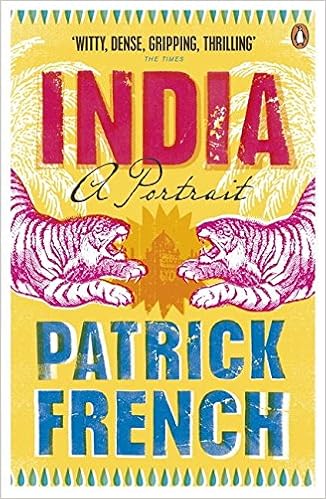
India by Patrick French: Nation, Wealth and Society

Although published in 2011, before the rise of Hindu nationalism under President Modi and resultant surge in the persecution of Muslims which Patrick French could not foresee, this book remains worth reading as a clear, informative and wide-ranging introduction to a fascinating and complex country.

With many anecdotes, he creates a strong, authentic sense of place, starting with the old man in his apricot orchard, recalling how when Nehru visited the newly independent northern border region of Ladakh, there were no roads, so he had to land by plane, something the locals had never seen before, so they simply put their hands together and prayed to it. At the other end of the scale are the computer whizz kid Indian graduates who have made such a contribution to Silicon Valley in the US, some claiming that their early grounding in abstract Hindu philosophy has helped them to make “mental leaps in the virtual world”.

Commencing with a useful potted history of the creation in 1947 of what was initially meant to be a secular democracy, and an explanation of the complex politics, with MPs now increasingly determined by family links, French moves on to the early problems caused by a well-intentioned but over-bureaucratic socialist system of central planning, with enterprise often stifled by the need to obtain permits to import or manufacture products.

The benefits of the subsequent liberalisation have “lifted large numbers out of extreme poverty” but the rise in population has left about the same number of poor people. There seems to be a widening gap: “By 2008 four of the eight richest people alive were Indian”, there is a “dynamic middle class, but “people….still die, finding that eating rats or ground mango kernels does not save them from starvation”.

The issue of caste in all its complex degrees of exclusion runs through the text: the Chuhras who have had to do “hereditary work sweeping, cleaning, dealing with dead animals…” then scraping up the leftover food after weddings, the “joothan” to boil and store for late. In the unconscious insensitivity of his much vaunted personal sacrifice, Gandhi wished to be reborn an untouchable “to share their sorrow, sufferings and the affronts levelled at them”. With the perhaps questionable observation that “compassion is not a Hindu concept” French describes the plight of a “Dalit” (low caste) worker who, for seeking to leave his job with an unpaid debt, was fitted with heavy metal fetters, forcing him to spend years breaking stones in a quarry, until he was saved by some activists during a political campaign.

French covers relations with Pakistan and the position of Indian Muslims, who are surprisingly almost as numerous as Pakistanis. They are described by one of their own leaders as the most backward community in India “economically, educationally and socially”, largely because the most disadvantaged were left behind in the 1947 Partition. Yet, this self-same leader defended the persistence of archaic Muslim codes in India which supported his personal power, even at the cost of feeding resentment among conservative Hindus that they could not enjoy similar “separatist privilege”.

Occasionally the book gets bogged down too long in one issue, and the final chapter seems a somewhat rushed catch-all for all the outstanding points the author wanted to include, but overall this is highly recommended.

“Travellers in the third Reich” by Julia Boyd: wonderland through the looking glass

Only months after the end of World War One, travel brochures were urging American tourists to visit Germany, and many British travellers needed little encouragement to holiday in a country they had been brought up to admire with “its cathedrals.. castles…art treasures..Bach, Beethoven and Wagner.” Since the trench warfare had mostly taken place beyond its borders, German towns were in the main intact, and the landscape “still beautiful and largely unscathed”.

Paperback

Visitors from abroad were initially surprised by the “civility” and friendliness of the German people: “how can they, outwardly at least, bear so little grudge against the people who have beaten them?” When a sense of betrayal set in, largely against “the Kaiser, their politicians and generals and especially… the Treaty of Versailles” foreign observers often felt some sympathy over its harsh and humiliating terms, likely to prove counterproductive in the longer term, as proved to be the case with the rampant inflation, and the rapid rise of “the chief agitator…a man of low origin”, namely Adolf Hitler.

Even those made incredulous, scornful or uneasy over the Führer’s overwrought rants and grandiose staged appearances and the rapturous mass hysteria which they generated, were impressed by the apparent rapid achievements of his regime, harnessing the innate German efficiency and industry to regenerate the country. Towns were conspicuously clean and well-kept, the Youth Movement encouraged team spirit and a healthy love of nature in the rising generation, and transport was transformed by the construction of at first underused “autobahns” far in advance of say, the British motorway system.

Others were quick to see the potential danger of the underlying fascist nationalism, in some ways hard to distinguish from the authoritarian communism to which it was fiercely opposed – until the brief notorious pact with Russia when it suited the Nazis. Some travellers were blind to the growing persecution of the Jewish population, perhaps in part because anti-Semitism was quite strong in their home countries at the time, but as laws were passed to deprive Jews progressively of their jobs and rights, anger and revulsion against Hitler’s government took root.

Some like the French author Jacques Chardonne were carried away by an utterly distorted view of the “moral beauty” of German society: “courage, will, self-denial, decency and various forms of health”. He even had a romantic view of the SS as “militant monks…. they do not seem to feel sorrow, or fear, or hunger or desire: they are the angels of war come down for a moment from the heaven of Niflheim (in Norse mythology) to help people to perform a task that is too difficult for them”. More pragmatic visitors could see how, by late 1941, physical conditions for ordinary Germans had often deteriorated to the point of making life not worth living.

Yet right to the outbreak of war, people who should have known better failed to take a stand. Even an elderly Lloyd George, flattered during a meeting by Hitler’s praise for his statesmanship in World War One, returned home to shower him with fulsome praise: “a magnetic, dynamic personality…the George Washington of Germany who won independence from his country’s oppressors, while remaining unquestionably a man of peace”. Also, despite avoiding the risk of sitting with Hitler in the Wagner box at the Bayreuth Festival, the conductor Sir Thomas Beecham could not resist the temptation to show off his new London Philharmonic Orchestra in Germany, all expenses paid, as the price of a PR campaign by the Germans to gain acceptance.

This meticulously researched and very readable book creates a vivid sense of life in Germany in the two decades between the World Wars, giving great insight into the causes and effects of the fateful Third Reich. Since it can be hard to keep track of the vast and varied cast of letter and diary writers, it is worth referring to the glossary of characters supplied at the back.

The final brief chapters covering the war itself inevitably rely heavily on the British women who happen to have married Germans. One describes the ludicrous yet poignant irony of an old British friend “dropping by” on his way to “take Kiel” at the end of the war.

“Second-hand time” by Nobel Prize winner Svetlana Alexievich: “Cracking the mystery wrapped in an enigma”

Second-hand Time by [Alexievich, Svetlana]

This is an amalgam of largely unedited and at times remarkably frank, no-holds-barred interviews with individuals and fragments of conversations with groups living in the former Soviet Union after the collapse of communism in the early 1990s. The author’s personal experience of life in Belarus, and her obvious listening skills no doubt helped to draw people out.

Patterns emerge from the diverse accounts. Despite the violence, physical hardship and social oppression, those who lived under Stalin’s regime retain a nostalgia for the past which may at first seem surprising. It must be partly due to conditioning from an early age with the propaganda of patriotic songs:
“World capital, our capital/Like the Kremlin’s stars you glow/You’re the pride of the whole cosmos/Granite beauty our Moscow”.

Yet it also seems related to the past pride in being part of an empire, the sense of purpose in helping to build it through fighting on the winning side against Germany, working with one’s hands to develop it, sending Gargarin as the first man into space. There is also the lost “dream of equality and brotherhood”, and drive to “create Heaven on Earth” – the pining for community spirit and mutual support, overlooking the practice of informing on friends and neighbours. The “sovok” (Soviet man) remains appalled by the current lack of idealism, the preoccupation with obtaining consumer goods (“A Mercedes is no kind of dream”) and rewards for the crooks who control the new market system.

Then there are those born after Stalin’s death in 1953, who grew up reading forbidden books, and conducting endless debates in the kitchen about how life might be changed for the better, half-joking over the risk of a bugged light fitting. They were initially seduced by Gorbachev’s “Perestroika”, even daring on his behalf to brave the tanks on the streets in the abortive coup against him. This made their disillusion all the deeper when the unchained capitalism of the 1990s made them the victims of crooks and violent gangsters, creating large-scale unemployment for the first time, forcing even the skilled and educated to sell their possessions and work as cleaners or flog goods smuggled in from Europe, and reducing to destitution pensioners whose savings had become worthless.

I think the title “second-hand time” refers to the irony of how events have come round full circle in some ways: Russia is ruled in 2020 by an ex-KGB man who has made himself into a modern equivalent of an autocratic Tsar. There is even a “new cult of Stalin” with “everything Soviet back in style, but in the commercialised form of Soviet cafes, Soviet salami, Soviet-themed TV shows, even tourist trips to Stalin’s camps. Young people are reading Marx by choice.

The book also covers the horrors of civil war in areas like Armenia and Chechnya, where different ethnic groups who had previously intermingled came to blows once the iron hand of communist control was removed. The second-class treatment, racial and religious discrimination against migrants like the Tajik street cleaners of Moscow is another troubling aspect of recent change.

Does the lack of editing not only create a book of nearly 700 pages, too long for many people to find the time to read it, but also make for excessive repetition, or does the latter serve to reinforce important impressions? I am not sure what a reader with no prior knowledge would make of all this. Even with the useful chronology of political events from 1953, it is sometimes hard to keep track of exactly what people are referring to. Yet I kept coming across sharp observations and vivid insights which encouraged me to read on. I regret that the author did not do more to sift these out for the reader, although you may feel that the rambling, contradictory nature of the text adds to its power.

It sometimes seems as if the typical Russian man is addicted to vodka, continually beating his wife and children. Women are portrayed as neurotic, hysterical and superstitious, with a self-destructive urge to nurture inadequate men, particularly prisoners, down on their luck, who will inevitably repay their kindness with brutality in due course. Westerners, it seems, can never really understand the tortured, sentimental Russian soul…..But despite the frequent oppressive bleakness, this book encourages readers to form their own understanding of a complex situation of mingled brutal tragedy and poignant humanity. It proves a very powerful and informative aid to grasping the current nature of Russian society and how it has come about.