Precipice by Robert Harris: A Study of Obsession

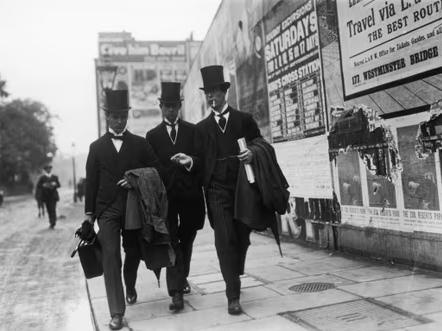
The First World War may seem an overused theme for a novel, but Robert Harris approaches it from a fresh angle by portraying the real life situation of a British Prime Minister under great political stress, as strongly resisted demands for Irish Home Rule were eclipsed by the imminent threat of strife in Europe in the summer of 1914. Herbert Asquith found relief in an unwise affair with an aristocratic socialite less than half his age. He was known to enjoy the company of pretty young women, described by his sharp-tongued wife Margot as his “harem”, but Venetia Stanley was different with her obvious intelligence and ability to act as a sounding board for his concerns.

At times it is hard to credit how Asquith was able to walk about without any apparent security guards, or find time for long afternoon drives with Venetia in the countryside, cocooned behind blinds in the back of his chauffeur-driven Mercedes. Most extraordinary, at a time when London households might receive up to 12 postal deliveries a day, as Asquith’s obsession with Venetia grew, he wrote several times a week, on at least one occasion four times in a single day. With an increasing lack of caution, he gave her unique access to classified information, including telegrams, details of military plans or sensitive issues which were being covered up.

Venetia kept more than 500 of these letters, which have survived to be selected for inclusion in a skilful blend of fact and fiction, for Asquith himself later destroyed Venetia’s replies. Robert Harris has also been obliged to invent Paul Deemer, the imaginary policeman who is transferred to a secret team to investigate the apparent security leaks from the Prime Minister’s office. In later chapters, Deemer feels ineasy as a voyeur, intercepting love letters laced with sensitive information which amount to the politician with the highest office in the land committing a serious offence. Why is Asquith doing this, and can Venetia be trusted? What damage will be caused if the situation comes to light? If it remains concealed, what are the unintended consequences?

Certain aspects of the plot, involving Deemer for instance, seem too contrived. Some reviewers have found the pace unduly slow, or felt unable to care enough about the main characters: a self-indulgent older man and pampered, aimless younger woman. There are moments of high tension, although inevitably sapped for readers wise after the event, such as the disastrous Dardanelles campaign which portrays Churchill in a poor light.

The plot may be thin, but the author is probably more concerned to capture a sense of time and place: a deferential society in which wealthy, privileged people were above the law, protected from the need to face up to their actions; a world where intelligent young women were discouraged from pursuing any ambition or self-fulfilment other than marriage to suitably rich man. Yet an unexpected tragic and pointless war gave them the scope to do “men’s jobs” and widen their horizons.
This is essentially a psychological study of obsession, in which, while seeing their flaws, we can feel some sympathy for Venetia, Asquith, and even his wife Margot, clearly wronged, but portrayed as irritating and unpleasant. We may feel relief over the shift in Venetia’s thinking as she begins to find Asquith’s neediness oppressive, but her decisions at the end seem highly questionable.

The House of Doors by Tan Twan Eng- when each door opens into a different theme………..

It is common practice for a successful writer to fictionalise the life of some celebrated author from the past. In this case, Malaysian novelist Tan Twan Eng, three times long- or shortlisted for the Booker Prize, has focused on Somerset Maugham, the acerbic, acute observer of human failings, who became a bestselling novelist and famous playwright in the first half of the C20, but is now in the process of being forgotten – unless “The House of Doors” revives interest in him, especially if it is made into a film.

Born in Penang, qualified in law in London, Tan Twan Eng is well-placed  to recreate the meeting of east and west in early C20 Malaya, against the backdrop of the Chinese mainland in turmoil. The focus is on a fortnight in 1921, when Maugham and his secretary/lover, the flamboyant Gerald Haxton, are the house guests of  expat barrister Robert Hamlyn and his wife Lesley, who is unusual in having been brought up in Penang. Initially underestimating Lesley, Willie Maugham finds her to be the source of intriguing local stories, like the scandalous murder trial from the recent past, which will provide the material for him to restore his finances after a disastrous investment, and hopefully retain Gerald’s affections in the process.

This bald summary does not do justice to a complex tale with perhaps too many threads, quite skilfully interwoven, although the reader may find it hard to categorise.  On the face of it, this is a book in which not much happens: at a deeper level, there are continual dramas at an international to personal level.

Lesley’s friendship with the visiting exiled political leader Sun Yat-Sen sometimes reads like a potted history of China on the brink of a Communist revolution, but at least I was made aware of his significance for the first time.

With his sham marriage, Willie portrays the stress of leading a double life, behind a mask, forever fearful of being exposed and disgraced like Oscar Wilde. Lesley represents the other side of the coin: a women who has to find a way of coming to terms with her husband’s infidelity with another man, in an era when divorce was not an option socially. Ironically, this situation leads to her discovering a greater degree of personal fulfilment than might otherwise have been possible.

Apart from the meticulous plotting, with the habit of dropping clues which only become clear much later on, so one has to keep concentrating, it is the written style which sets this novel apart.  I sense that the author has aimed to write in the style of Maugham, inevitably using the type of incident which he would have found intriguing and likely to appeal to his readers.

The  unusual choice of verbs, original metaphors and similes, although occasionally overdone,  are generally very effective, particularly in creating through the mind’s eye scenes of places one has never visited. Even small incidents are described with care. Take the simple action of unwrapping a book: “I cut the twine with my fruit knife, inserted its tip into a fold of the wrapping and with two or three brisk strokes filleted the package open”…. “The blackened kettle was brooding on a charcoal stove, steam whispering from its spout”.

When “Willie pressed his palm to the hard, crocodilian bark” of the  three hundred years old raintree in Robert’s garden,  “the intricate filigree of branches and leaves reminded him of the network of bronchiole and alveoli in a set of lungs”, a clear reference to his previous career as a doctor.

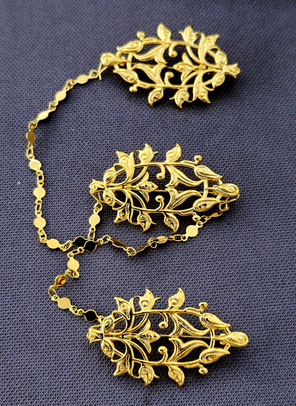
Tan Twan Eng’s own legal training gives the cross-examination in the murder trial an authentic ring, and may also account for  his close attention to detail, for example when introducing us to Malaysian cultures. The precision of his descriptions of the traditional c18 shophouses in Penang with their distinctive “five foot way” paved with brightly patterned terracotta tiles at ground level,  and the timber louvred shutters above can be confirmed by countless photos on the internet.  The ink and watercolour drawings of particular streets, also viewable online, are a model for the paintings Lesley drew in her youth. Even the “kerongsang”, set of three brooches used to fasten the “kebaya” is described fully, when Lesley’s new mood of assertiveness leads her to wear traditional dress.

It may have been a combination of deep reflection over the “the right word” and the structure of the story, not to mention the need for a suitably rich and  inspiring theme that have led Tan Twan Eng to produce “only” three novels in a span of sixteen years. Yet the resulting combination of quality of writing, insights into human nature and thought-provoking themes makes “The House of Doors” worth reading.

“Hamnet” by Maggie O’Farrell

Hamnet: Winner of the Women's Prize for Fiction 2020 by [Maggie O'Farrell]

This is an original and inventive take on Shakespeare’s relations with his family, whom history has it lived in Stratford while he was for the most part working in London. The playwright is described as the father of Hamnet, the husband of Agnes (better known to us as Anne), the son of John: in never naming him as Shakespeare, Maggie O’Farrell creates the freedom to take all the dramatic licence she chooses to interpret his life.

The chapter alternates between two different periods of time. Firstly, we meet Hamnet, bright eleven-year-old with a tendency to daydream, in search of an adult to look after his frail twin sister Judith who has been taken ill suddenly. Then we are switched fifteen years or so back in time to his father, an unfulfilled youth, bullied by his father, a Stratford glove-maker who has lost his good reputation through shady deals. Forced to work as a Latin tutor to help pay his father’s debts, he becomes infatuated with Agnes, an intriguing older woman who flies a kestrel hawk and is skilled in the use of herbs to cure ailments. She in turn sees something remarkable in him, the dilemma being that he can only realise his talent as a playwright in London, a place where she cannot live, ostensibly because the plague-ridden capital is too risky for Judith’s fragile health, but in reality because Agnes is only at ease in a natural world of trees, wildlife and herbs.

This is essentially an exploration of the nature of grief and how people are affected by it, with Agnes the central character. Hamnet’s role is to be the source of that grief. The back cover blurb in the paperback edition reveals the boy’s fate, perhaps on the assumption that it is common knowledge that Shakespeare’s only son died, raising the tantalising question of whether, and if so how, this tragic fact led to the production of a play called Hamlet only a few years afterwards.

Some may find the slow pace and minute detail tedious at times – as in the description of the layout of John’s house in the opening chapter, but this serves to give strong visual images of a vividly imagined Elizabethan world, as lived by ordinary people, which must have involved a good deal of research. Similarly, the focus on Agnes’s psychic powers – her ability to divine so much about a person simply by pressing the muscle between thumb and forefinger – may not appeal. Ironically, when it comes to foreseeing the future for her twins, these powers let her down. Yet, combined with a style which is often reminiscent of a folktale, the supernatural element recreates a sense of the superstition which dominated people’s lives in Tudor times, in the absence of a scientific way of explaining their situation. The presence of ghosts is easier to imagine when death is so common, and all this chimes with the magical themes running through Shakespeare’s plays including of course the ghost of Hamlet’s father.

The style is often expressive and poetic, as in the case of Anne’s hawk as first seen by “Shakespeare”: “Its stance is hunched, shrugged as if assailed by rain”. Descriptions are complemented with sharp dialogues and thoughts which reveal rounded personalities: Agnes’s surprisingly supportive brother Bartholomew, her stroppy teenage daughter Susanna, her mother-in-law Mary with whom a mutual understanding grows despite their different natures – and moments of insight and humour in all the sadness.

My main reservation is that moving passages too often seem overwritten, although I feel guilty in saying this, after reading of the acute sickness and brushes with death which the author herself and her own children have suffered. I also found the contrast somewhat jarring between her “literary” passages and those with a child’s story book repetition and turn of phrase: “Three heavy knocks to the door…..boom, boom, boom”. Admittedly, when Anne’s husband returns home unexpectedly after a long absence, and “booms in his biggest, loudest voice” this reflects his other extrovert life on the stage of the London Globe.

Overall, it is an absorbing, thought-provoking read, with even the foreknowledge of the intolerable loss of an appealing child one wants to see survive made bearable in time by the reminder or realisation that inevitable sorrow and joy are inextricably linked in life, in which all things pass.

Along with “The Plague” by Camus, this is a timely book to read during or in the aftermath of a pandemic. Perhaps recent experiences make us more attuned to the feelings of past generations who had to live with a vulnerability to disease and untimely death which we thought we had overcome.

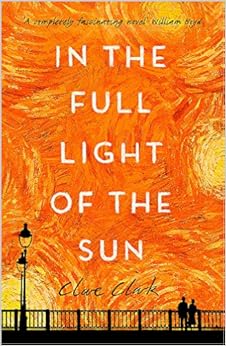
“In the Full Light of the Sun” by Clare Clark – fascinating theme but confused plot

Against a backdrop of rampant inflation and corruption, “madness spreading like gas”, in 1920s Berlin, famous art critic Julius Köhler-Schultz is in the throes of a bitter divorce from his much younger wife, who has decamped with their small son and “the only painting in the world” Julius “could not bear to live without”, a self-portrait of Van Gogh. In this vulnerable state he falls under the spell of a charismatic young art dealer, Matthias Rachman, but is he quite what he seems? Julius also supports the artistic ambitions of talented but troubled teenager Emmeline Eberhardt.
This novel was inspired by the long-forgotten but once famous case of Otto Wacker, the German dancer who was eventually tried for knowingly selling fake Van Gogh paintings, always after compromising the reputation of some expert by gaining his authentication. Initially I was impressed by the novel’s very strong sense of time and place, and the slow-burning build-up of suspense. It was therefore a shock to be plummeted into Part 2 with an abrupt switch to the viewpoint of Emmeline whose drunken agonising over unrequited lesbian love becomes somewhat tedious, although no doubt a true reflection of one aspect of inter-war Berlin. By the time I reached Part 3 in the form of the diary of lawyer Frank Berzacki, forced to face up to the Nazi regime’s inexorable crushing of Jewish rights, I realised that the author has deliberately inverted what one expects of a plot. Instead of setting an art crime at the forefront, this is obliquely referred to throughout the book, generally secondary to the inner thoughts and concerns of the three main characters in turn.

Can one ever be sure a painting is not a fake? Are the eye-watering sums paid for some art justified? Such questions woven into a historical thriller about possible fraud should make an absorbing read, so why did I find it frustrating, the middle section in particular such heavy going? I could forgive the frequently overblown or mawkish style whenever the author touches on passionate feelings, because this is offset by the many striking, poetical images, particularly in Emmeline’s section which I suppose is a way of portraying her artistic eye. She describes a flock of starlings: “ a vast rippling cape…surging and wheeling, stretching into swooping curves, twisting in helixes, rising in streamers on the wind, the whisper-roar of their wings like the sea or the thrumming of a thousand fingers on a thousand paper drums”.

The three sections are welded together in an unwieldy structure. Too many mostly thinly sketched and often unnecessary characters, and minor incidents which pad the novel up to over four hundred pages, tend to overwhelm or drive out the plot, in which key events take place “off stage” and so remain confused or unclear and left for the reader to surmise. I would have preferred the author’s painstaking research applied to a factual portrayal of art in interwar Germany.

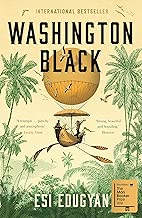
Washington Black by Esi Edugyan: relentless quest

Washington Black: Shortlisted for the Man Booker Prize 2018

Born into captivity in 1818 on the inaptly named Faith Plantation in Barbados, George Washington Black wields a hoe to weed the fields from the age of two, progressing to cutting the sugar cane by the time he was ten years old, with only Big Kit, the tough, superstitious slave woman from Dahomey to look out for him. The arrival of a sadistic new master in the form of Erasmus Wilde brings a turn for the worse in an already bleak situation, Big Kit tells “Wash” of her plan to kill them both, as a means of escape back to freedom in their African “homeland”, but fortunately for him, holds back from committing this extreme act. Wash then catches the eye of the master’s brother Christopher, known as “Titch”, a very different man, liberal-minded and obsessed with scientific discoveries, including the perfection of his “cloud-cutter”, a kind of hot air balloon for which Wash will “provide ballast” but also prove useful as an assistant, with a natural talent for drawing.

When Wash and Titch are forced eventually to escape from the plantation, the book becomes a mixture of adventure yarn and right-of-passage novel. The scene moves from Barbados to England, even Morocco, via America and Nova Scotia. Undoubtedly original and imaginative, the prose includes some striking passages, such as the description of the octopus which Wash encounters and catches when he has somewhat unbelievably dived down to the shallow seabed with minimal training.

I chose to read it partly because I was so impressed by Esi Edugyan’s earlier work, Half Blood Blues, with the added incentive that both books were shortlisted for the Man Booker Prize. However, I have a number of reservations. The plot hinges on some highly implausible dramatic incidents, which I suppose could be accepted on a par with “magic realism”, but there is also a reliance on far too many unlikely coincidences. It is frustrating to know that the book was inspired by real events, without knowing exactly what they were.

I realise that the dialogues may be intended to reflect the speech of the period, but they often seem stilted and artificial, while apart from Wash, the characters are not developed as rounded, convincing individuals. Although Wash is a sympathetic hero, I did not believe that an illiterate and brutalised slave could narrate this tale at the age of only eighteen, using such a sophisticated vocabulary and displaying so great a level of knowledge and understanding, based on perhaps a maximum of four years in Titch’s company, spending the rest of the time in unskilled manual labour. This seems like yet another case of a first person narrator being given the “voice” of the author, a problem which could have been avoided by writing the whole thing in the third person.

In its defence, the book also includes some intriguing themes, such as the extent to which, perhaps because of suffering in early life, some of the main characters cannot sustain or even form relationships, and are driven to wander rootlessly through life, even viewing death as a means of escape to freedom. Another is how, even when he is technically free, Wash may still be exploited by white men who perceive themselves as liberal and anti-slavery.

In the case of this uneven novel with brilliant patches, duller tracts which lack narrative drive, and an ambiguous ending, I was left a little unsure as to what the author was trying to achieve.

“Laetitia Rodd and the Case of the Wandering Scholar” by Kate Saunders

Laetitia Rodd and the Case of the Wandering Scholar (A Laetitia Rodd Mystery Book 2) by [Saunders, Kate]

Widow of an archdeacon, Laetitia Rodd may have lost her social standing and comfortable lifestyle, but is not one to wallow in regrets. Instead, she relishes the opportunity to undertake investigations for her wealthy barrister brother, not only for the chance to earn a little but also for the intriguing situations in which they involve her, such as the chance to reunite the wealthy but terminally ill Jacob Welland with his brother Joshua, the “wandering scholar” of the title with whom he fell out too long ago “over a woman”. Before she manages to solve the mystery surrounding Joshua, she is distracted by the need to prove the innocence of two acquaintances accused of a murder of which she cannot believe them to be guilty, although the evidence against them is troubling.

This modern take on a Victorian detective story reminds me of Wilkie Collins’ “The Woman in White”. With its meandering plot loaded with often larger than life characters, it is an entertaining if lightweight read, made worthwhile by a strong sense of place and time, and a well-developed, sympathetic narrator in the form of Laetitia Rodd. She has a wry sense of humour, not taking herself too seriously. Although bound by the conventions and religious piety of the 1850s, she is fundamentally open-minded, admittedly as imagined by a C21 rather than C19 writer. When Inspector Blackbeard apologises for bringing her a cup of tea bought from a “not very genteel” stall, she has the sense to drink it because she is thirsty. If a servant suddenly inherits money which raises him into a different social class, she tries to help him to integrate rather than treat him with disdain. Similarly, if friends commits adultery or even murder, she tries to understand what led them to do so. While remaining essentially conventional and devout, she is open to other points of view, and to questioning her own.

The plot is tied up quite neatly at the end, leaving me with only a couple of minor queries. I like the way the author has brought together events both real and fictional from the period to weave into her plot: the story of the “poor Oxford scholar” in Mathew Arnold’s poem, who “tired of knocking at preferment’s door” went off to live with the gipsies where he imagines, like Joshua, that he can live according to the “ancient rhythms of passing seasons, outside the pressures of the modern world”; the ingrained social inequality of Victorian society for which a Tennyson poem, “Locksley Hall” provides a recurring metaphor, “every door is barred with gold, and opens but to golden keys”; the notorious murderer Eugene Aram, portrayed in Bulwer-Lytton’s 1832 novel as a romantic hero who killed to obtain the money he needed to get on in the world, justifying his crime because it enabled him to do good. So, this engaging detective yarn has an authentic, serious core, in raising complex moral dilemmas.