Melodramama

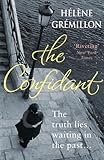
This is my review of The Confidant by Hélène Grémillon,Alison Anderson (Translator).

A thirty-something book editor, Camille assumes that an unsigned manuscript has been sent to her through the post in error. When more arrive, she speculates that the author, "Louis" may be seeking a backdoor method of getting his work published. Ultimately, she is convinced that his story has some intimate connection with her own life.

Louis writes of his childhood sweetheart Annie, who offers naively to be the surrogate mother for "Madame M" the wealthy woman whose generosity to Annie is underlain by an obsessive desire to have a baby. This domestic drama coincides with the outbreak of World War 2 and the occupation of Paris.

Clearly, there are sufficient issues here for a novel that is both gripping and moving and many readers seem to have found this to be the case. So, since this is also a prizewinning French bestseller, translated into many languages, why did I dislike it? I think it is because, lacking much in the way of description, dialogue or subtle character development, this is reduced to a tedious telling of too often melodramatic, contrived and therefore unconvincing events.

I did not mind the use of four different "points of view", saved to some extent from confusion (at least in the French edition I read)by the use of alternating fonts for Louis and Camille, or a fancy line top and bottom of the page to denote "Madame M's" lengthy confession, but having Annie's account of her dealings with Madame M "revealed" to Camille through the third party Louis proves a clunky device.

The final pages resort to yet more ploys – a sudden lapse into free verse in order to tell yet again rather than reveal a last twist. This forced me to search back through earlier chapters to confirm clues that I had missed, perhaps because I was concentrating on reading in my second language of French, although I still think some of these should have been developed more strongly. Overall, I am left with the impression of a tale which, like an amateurishly knitted jumper, needed to be unravelled and remade prior to publication.

⭐⭐ 2 Stars

The price of progress

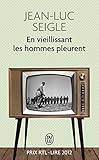
This is my review of En Vieillissant Les Hommes Pleurent (Prix Rtl-lire 2012) by Jean-Luc Seigle.

This is a poignant study of a family living in rural France near Clermont Ferrand in 1961 when France was undergoing a period of rapid change. Fifty-something Albert Chassaing has many reasons for his mid-life crisis. Descended from generations of peasant farmers, he has to work at the Michelin tyre factory to make ends meet. His smallholding is to be swallowed up in “remembrement”, sold off for amalgamation into a larger unit of operation. He is drifting apart from his glamorous much younger wife Suzanne, who seems to be over-friendly with the postman Paul. Whereas Albert clings to the past, Suzanne, an orphan with no roots, embraces modern consumer goods, the latest being the television on which she can watch an interview with beloved son Henri who has gone to fight in Algeria. This only serves to remind Albert of the humiliation of the German occupation of France, and his experiences defending the fortress of Schoenenbourg on the Maginot Line, about which he has remained unnaturally silent, being a man given to bottling up his emotions.

So it is that on the very first page, we learn of Albert’s desire “to finish it all”. How seriously should we take this, as he begins to plan for his end by, for instance, ensuring that the bookish son Gilles whom he loves but cannot really understand, will be well-supported? Will he find the motivation to overcome his “want of courage” to take his own life? Will the frequent moments of humour in the book eventually win out over the bleak undertow?

I am not sure that Seigle has developed the interesting plot as fully as he might have done. It seems a bit of a handicap to be unfamiliar with Balzac’s Eugenie Grandet, which bookworm Gilles uses to interpret his family life. There is a fair amount of “telling” in the narration and the final chapter is a didactic piece on the Maginot line which seems awkwardly tacked onto the novel, rather than integrated as a potentially fascinating and relevant part of the story. Despite this, there are some striking passages and thought-provoking observations, such as the scene where Albert revisits the field in which his father, as a robust child, was hitched to the plough in place of the horse which the family could not afford, and made to complete his task under cover of night so that none should see the shame of this. Yet, Albert values the image of his father’s work whereas his own sons have no idea how he spends his time on a production line, locked away indoors.

⭐⭐⭐⭐ 4 Stars

Un Secret by Philippe Grimbert: Therapeutic autobiography outweighs fictional aspect

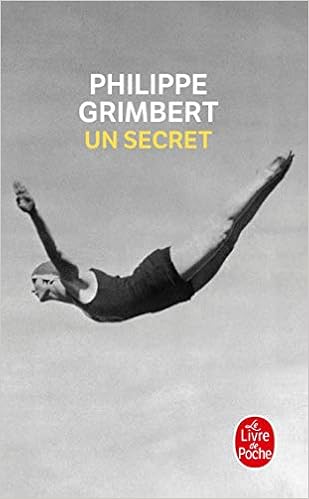
This is my review of Un secret (Ldp Litterature) by Philippe Grimbert.

Growing up in Paris just after World War 2, a sickly only child imagines having the kind of athletic, successful brother in whom his father could have taken pride. Keen to integrate into French society, to the extent of changing “Grinberg” to “Grimbert”, his Jewish parents ironically conform to an Aryan stereotype of physical beauty and fitness. It is not until his mid-teens that the narrator learns “a secret”, which dramatically alters his perception of his family.
Based on a true story, although you have to research this fact for yourself, it presents a poignant, at times harrowing, situation, perhaps too short on detail for a simple autobiography. Grimbert is creative to the extent of imagining two alternative paths by which his parents met, fell in love and married. He imagines them on one hand living relatively unscathed through the Nazi occupation of France, on the other suffering the ignominy of having to wear yellow stars and seeking escape to the “Zone Libre”. He also chooses to change the identity of the person who reveals the secret to him.

Although I admired the stark brevity of his style, and appreciated the full horror of the family tragedy, some aspects disappointed me. Grimbert does not feel the need to develop the personalities of his parents’ relatives, so they remain a sometimes confusing set of names. The story is based on a large amount of “telling” of events, with little revelation through dialogue or acting out of scenes. In the process, a good deal of potential drama is left untapped.

So, I rate it highly not as a piece of fiction but rather as a mixture of autobiography and therapeutic exercise by a man whose experience of psychological trauma in his own family prompted him to become a psychoanalyst as an adult. This story lends itself to study at school to enable teenagers to understand moral dilemmas particularly in Nazi-occupied France

⭐⭐⭐⭐ 4 Stars

“L’Étranger” or “The Outsider” by Camus: frappant sur la porte du malheur sous un soleil insoutenable

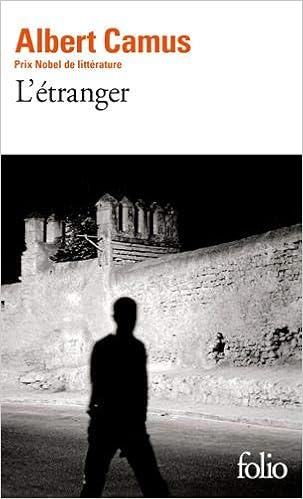
This is my review of “L’Étranger”, translated as  The Outsider (Penguin Modern Classics) by Albert Camus.

Meursault is a young Algerian `pied-noir’ given to observing the world with a clinical detachment. He enjoys a largely physical relationship with his girlfriend Marie who shares his love of swimming and, since Meursault does not judge others, he has an easy, tolerant acceptance of people, including his unsavoury neighbours the aged Salamano, dependent on the pathetic dog which he continually abuses, and the sadistic pimp Raymond.

From the outset there are somewhat chilling indicators of Meursault’s unusual and amoral attitude to life. He renews his relationship with Marie and goes to see a comedy film with her the day after attending his mother’s funeral. Then, on an afternoon of intense heat, in an almost hallucinatory state of mind, he commits a serious crime for which he appears to feel no remorse.

In the second part of the book largely given over to his very artificial, theatrical trial, we see how Meursault, the outsider, is incriminated as much for how he has behaved in the past – not weeping at his mother’s funeral – as for his offence. As he begins to reflect on his situation, we see him in a more sympathetic light.

This famous novel which has attracted a huge amount of attention, may be read on different levels. It could just be the tale, written in clear, minimalist prose, of a man whose lack of ‘normal’ emotions and values, combined with extreme honesty, seal his fate. On another plane, it illustrates Camus’s preoccupation with the absurdity of man’s desire for reasons and ‘rational behaviour’ in a world without meaning. Meursault’s accusers have set up arbitrary conventions and rules by which to judge him, but Meursault himself, although for a while afraid of death, is able to come to terms with the essential unimportance of everyone’s life, regardless of the value accorded to it by others.

It is also interesting to compare the simplicity of this first novel with the complexity and more self-conscious philosophical digressions of one of Camus’s last works, `La Chute’. Both culminate in very powerful final sections, and both need to be read more than once to appreciate them. Camus is a little too bleak for me, but definitely worth reading.

⭐⭐⭐⭐⭐ 5 Stars

“The Fall” by Albert Camus: A false prophet in the desert

This is my review of The Fall (Penguin Modern Classics) by Albert Camus.

Although I read this in French, thus making it harder for me to understand Camus’s message yet also getting the benefit of the original language, I hope these comments may be of interest to those reading the book in the English translation.

Jean-Baptiste Clamence, his name a wordplay on “John the Baptist crying in the wilderness” buttonholes strangers in a seedy Amsterdam bar to tell them of his fall from grace as a successful Parisian lawyer to a man obsessed with his two-faced duplicity and his moral guilt worse in some ways than that of a common criminal. His psychological crisis has been triggered by another fall, that of a young woman into the Seine, whom he did nothing to save when he heard her cries. The question is, would he do any better if this incident were to be repeated?

The tale is full of digressions and twisted logic, witty, at times contradictory quotations. It is not surprising that there are differing, often opposed or confusing, interpretations of this philosophical fable, based on the ideas of absurdism, defined as the conflict between the human desire to find value and meaning in life and the inability to find it. A fascinating issue raised by Camus is how to lead a moral life if one is unable to believe in a god, but all attempts to make rules about right and wrong are arbitrary.

Having read some passages two or three times, I am still working to understand this book. For me it is a satire in which Clamence goes off the rails at the end as a kind of crazy, manic devil in a magnificently written final section. My take is that Clamence is on the wrong track with his desire to judge and control. The ability to accept one’s own inevitable shortcomings is clearly key, but what if one is given to the level of excess of the highly self-indulgent and unlikeable Clamence?

One’s understanding of this book is clearly increased by some knowledge of Christianity and the alternatives of communism, humanism and existentialism all of which Camus seems to lambast at some point, along with bourgeois complacency. This begs the question as to how much a truly great book should have some self-evident meaning without the aid of this knowledge. It seems to me that Camus was still working ideas out for himself in this book, and that at the end some were still incomplete.

⭐⭐⭐⭐ 4 Stars

At one with nature and at odds with man

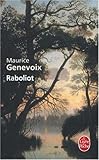
This is my review of Raboliot (Ldp Litterature) by Genevoix.

For Pierre Fouques, nicknamed "Raboliot", born and bred in rural Sologne, poaching is a way of life. Unable to accept that this is under threat, he becomes addicted to the challenge and risk of outwitting the malicious police officer Bourrel even at the price of neglecting his weak, gentle wife and three young children. The inexorable fate of this flawed yet sympathetic antihero reminds me of the novels of Thomas Hardy, together with the vivid descriptions of the landscape and rural life. Genevoix was a great admirer of Maupassant, which is reflected in his strong narrative drive and the clarity of his prose, despite a peppering of local dialect words not to be found in the dictionary.

Since I have no interest in poaching, still less hunting, I was surprised how absorbing I found the long, climactic description of a daring if not rash poaching expedition. The time Genevoix spent living in Sologne, mixing with the locals, has borne fruit in the authentic voice used to describe, for instance, the process of salvaging valuable young fish from dried up ponds, leaving the marauding "perches d'Amérique to perish; the branches silhouetted against changing patches of sky; the breeze rippling the gold-tipped rye; the sun setting over the undulating fields and lakes; the shapes of pheasants roosting in an oak tree at night, and so on.

As with Maupassant, the story is strong on the subtle changing relationships between people, and the shifting attitudes of various characters, as in real life. With wonderful descriptions of the father-in-law's house packed with expertly stuffed birds, we see how the eccentric taxidermist is at first prepared to shelter Raboliot from the law, urging him to act "honourably" and accept a short prison sentence, whilst at the same time recalling his own glory days as a youthful poacher.

Although I understand the views that this book is overlong and the endless mists, undergrowth and slaughter of small rabbits can get a bit tedious, there is a strong case for reading an old classic – this won the Prix Goncourt in 1925 – which has the power to transport you to an unfamiliar way of life with its ambience, sights, scents and sounds. Since Genevoix survived the brutality of World War 1 as a very young man, his immersion in the beauty of nature is understandable, and its redness in tooth and claw perhaps relatively minor.

In some academic studies, Raboliot the poacher has been elevated to provide a symbol in the debate over national versus regional identity in France, a symbol that rejects heroically the strong centralizing dogma of the Third Republic. However, I prefer to view "Raboliot" as a simple battle of wills between an obsessive, authoritarian townie policeman and a simple man with a deep love and knowledge of a countryside and way of life he fights to retain.

⭐⭐⭐⭐⭐ 5 Stars

Qui sommes-nous au juste?

This is my review of Ce Que Le Jour Doit a La Nuit by Yasmina Khadra.

When Younes is transported from dire poverty in the slums of 1930s colonial Algeria to live under the new name of Jonas with his prosperous uncle, good looks ease his path but do not save him from the snobbery of new acquaintances who will never forget he is an Arab. The story is strong on descriptions of native poverty, and also on Jonas's conflicted emotions and loyalties when civil war breaks out over the demand for Algerian independence. Jonas is continually drawn back to his old home, haunted by memories of relatives and neighbours. Under pressure, he feels impelled to speak out on behalf of the oppressed Arabs, he even begins to learn about the history of the struggle, but although you may be carried along by the expectation that he is about to take up arms against his former friends, this may not be in his passive and introspective nature.

Against the background of the deteriorating political and social situation, Khadra confronts Jonas with a moral dilemma which changes the course of his whole life. I sympathise with readers who are unconvinced by his behaviour – which is of course necessary to sustain the plot – and admit to finding him almost masochistic, wallowing in adverse situations.

The story seems long, often repetitive and over-reliant on coincidences. The passages describing carefree teenage years with friends are rather dull and stereotyped, although perhaps necessary as rose-tinted memories on which he can dwell in later life. The style of emotional passages is somewhat overblown. This suggests the likelihood of a rather sentimental film version, which I plan to avoid.

The text is cliché-ridden, a mixed blessing for a non-French reader: I noted many idioms, but it was time-consuming looking them up. Does Khadra use so many stock platitudes because he was taught English as a second language? Khadra is of course a man, who adopted the female pseudonym of `Yasmina' to avoid adverse repercussions whilst he was still employed by the Algerian army.

The novel fosters a greater appreciation of the term `Nostalgerie', coined to describe the tendency of 'pieds-noirs', exiled in France, to exaggerate the pleasures of life in pre-independence Algeria, refusing to face up to recent changes, rather like some of the characters at the end of this novel, although not Khadra himself.

Jonas reaches some telling conclusions about life, but these might have come better at the end. For me, the dramatic climax and appropriate ending is Chapter 17, which could have been revamped to come after Chapter 19, thus removing the Final Section 4, set in the early C21, which ties up loose ends, but drags the story on too long into the realms of sentimentality and leaving nothing to the imagination.

Much shorter, more tightly written and plotted, `Les Hirondelles de Kaboul' seems a considerably more profound and moving work, perhaps ironically in view of Khadra's Algerian origins.

⭐⭐⭐⭐ 4 Stars

Culture clash

This is my review of Sept histoires qui reviennent de loin (Folio) (French Edition) by Jean-Christophe Rufin.

Rufin’s impressive career as a doctor, with involvement in Médecins sans frontières, and as a diplomat have provided ample material for these short stories, often set in former colonies such as Sri Lanka or Mozambique, or involving migrants from France Outre Mer trying to adjust to life in l’Hexagone.

Varied in subject matter, the stories share a clear style, vivid descriptions of places, touches of humour with an underlying serious concern over moral dilemmas and man’s inhumanity to man, and a gift for building up a sense of anticipation. The denouement is generally predictable but that does not detract significantly from the enjoyment of the skill of the telling.

One of the best stories for me was “Les Naufragés” narrated by a woman consumed with nostalgia who cannot come to terms with changes to the island of Mauritius where she grew up in a world of white colonial privilege which is now giving way to the claiming of rights by the local people – to the extent of erecting a statue of Shiva on the secluded beach where she likes to swim. She persuades her husband to help remove the offending statue, but we know this is a vain attempt to deny the fact that, like the symbolic Paul and Virginie in the famous tale, the white residents of the island are all “les enfants d’un naufrage”, the wreck of their former lives.

Another is “Garde-robe”, topical in view of David Cameron’s recent highlighting of the plight of the Tamils in Sri Lanka where the story is set. In a lively dialogue seasoned with ironic humour, a man explains his distress over the discovery that an amiable servant on whom he has come to depend heavily should hold such rigid and bigoted views, and has probably been actively involved in violent acts in support of the rebels. He describes his fruitless attempts to convince the man that in adopting the criminal methods of a corrupt state, the rebels are in danger of becoming worse than those they wish to replace.

There are lighter tales, such as “Le refuge de Del Pietro” about an obsessive mountaineer. Also one very different and apparently autobiographical “Nuit de garde” about a young doctor who bears the heavy responsibility for declaring formally that a patient is dead, even though it is obvious to much more experienced underlings that this is the case. In the hierarchical world of medicine, his role is like that of a priest.

I understand the view that, given a style that is consistently objective and stripped of passion, some readers may feel a sense of disengagement which prevents them from relating strongly with the characters, but I feel that many, although clearly flawed, also evoke sympathy.

⭐⭐⭐⭐⭐ 5 Stars

La Liseuse by Paul Fournel: Making madeleines into petit beurre LU

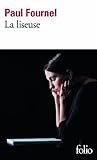
This is my review of La Liseuse by Paul Fournel.

What happens when Robert Dubois, the middle-aged, stuck in his ways editor of a Paris publishing firm, is given an e-reader by a young intern at the behest of the whizz kid accountant who has taken over the business? This is mainly a device to enable Fournel’s lively imagination to range over the effects of technology on literature. At the press of a button, a page disappears. Does it exist any more? It is no longer possible to mark comments in the margin with a pencil. If he wants his wife to read a particular book, he will have to lend her his “liseuse”, leaving himself nothing to read, together with the sneaking fear she may read something else altogether from what he has intended. Then there is the scope to alter the text: turning Proust’s madeleines into petit beurre LU biscuits.

This satirical novella introduces us to a number of neurotic authors and provides a sounding board for the author’s opinions, often expressed in flowing and poetic prose: the publisher’s resentment over being prevented from reading great works by the continual need to identify new books for a future one may not live to see, where one may be blamed for one’s choices; the fact that, when an author has a success, people want him to recreate the same book over and over again; the lack of demand for French literature in England, perhaps because it is not offered to readers there; the joy of finding bookshops which do not offer discounts and three for two deals, “ne jouent pas le jeu du commerce, juste celui de livres.”

Plot and character development are of little interest to Fournel. The sudden leaps between scenes are often confusing and the price to be paid for all this is that the reader does not engage strongly with the characters.

The frequent cultural references make this book challenging for a non-French reader. The device of writing in the form of a sestina – which means that the 36 chapters each end with one of six chosen words, “lue”, “crème”, “editeur”, “faute”, “moi”, “soir” in a complex cycle seemed pointless and a bit pretentious. This is all part of Fournel’s involvement with “L’Oulipo”, a movement of writers who subject themselves to various “mathematical” constraints.

Apart from the flashes of humour and quirky thinking – getting the local butcher to weigh the e-reader and find that the world’s great literature amounts to 730 gm – what won me over was the quality of Fournel’s writing over say, the experience of eating an artichoke, travelling in the London underground or, as a “townie” enduring the countryside: “la campagne ressemble terriblement à la campagne…une épaisse tartine d’ennui vert posée à même le sol”.

⭐⭐⭐⭐ 4 Stars

Not much beyond the punchline.

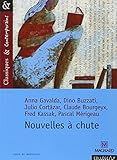
This is my review of Nouvelles a chute by Collectif.

All the short stories in this little book meet the requirement to have an unexpected or surprising ending, as promised by the title. I assume from the annotations to explain less familiar vocabulary and the questions at the end that this is designed for French school students who have to learn how to analyse a text. I feel a bit sorry for them as regards how this could destroy one's simple enjoyment of a story.

I imagine the book could be useful for "A Level" class discussion in England, and the stories went down quite well in my French group for British adults. The tales by various successful modern writers are on diverse themes, but tend to have in common the approach of developing a particular situation in depth, such as a man enjoying the habit of taking a girl out for a meal, or the plight of a small boy bullied by his playmates. They also share the trick of leading the reader into some kind of misconception, which is abruptly shattered at the end.

I cannot say more without introducing spoilers, but it is perhaps a limitation of these tales that, if you remove the "surprise factor" at the end, there is not much left to consider.

⭐⭐⭐⭐ 4 Stars