The risks of happiness

This is my review of Delicacy: Film Tie-in Edition by David Foenkinos.

Beautiful Nathalie, whose kneecaps alone make men swoon, has an idyllic marriage to handsome high-flier François, a burgeoning career in her own right, and the sense of proportion to rise above the jealousy of work colleagues. What could go wrong? Yet, "Such happiness can make you afraid". Disaster inevitably strikes. The rest of this light romance is the tale of Nathalie first failing to come to terms with sudden bereavement, then finding unlikely happiness with a man whom her scandalised colleagues regard as totally unworthy.

There is plenty of wry humour in this story, and some moving insights into grief, as when Nathalie is struck by the placement of a book mark: the pages before belong to the time when François was still alive, those after to when he ceased to exist – to such a degree that she might have imagined him.

Although David Foenkinos seems capable of writing what you might call "literary fiction", he seems to be playing to the gallery here with some gimmicky formulae, such as interspersing the main text with short chapters, some only a sentence in length, by way of digression. For instance, after a passing reference to astrology, Chapter 34 is a list of Nathalie's small work team – most of whom we never meet – and their star signs. On another occasion, after a character has punched someone, a "chapter" gives us the result of one of Mohammed Ali's matches.

More serious charges are that the somewhat two-dimensional characters seem to fall in love out of lust or emotional neediness, and that the author tends to tell us what we should think about them rather than reveal it.

This is an easy read in French with some useful idioms, but if French were my native language, I would not wish to spend time on "La délicatesse", nor would I bother with it in translation. It has lent itself to a light-weight film starring Audrey Tautou, but the fact I cannot remember how its plot varies from the original book speaks volumes.

⭐⭐⭐ 3 Stars

An unlived life

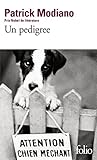
This is my review of Pedigree (Folio) by Patrick Modiano.

The publication of a debut novel in his early twenties set Modiano on course for his unexpected winning of the Nobel Prize for Literature almost half a century later. “A Pedigree” differs from his other novels, often attacked as the same tale retold, in being an autobiography of his first twenty-one years. Yet it could be said it is in the same vein as the others, being in essence part of an ongoing search for identity.

In a postscript, he describes how his first two decades formed a life which did not feel like his own – “tout défilait en transparence and je ne pouvais pas encore vivre ma vie”. He portrays this sense of disengagement with “a simple film of facts and gestures” in which there is nothing to confess or clarify, he has no interest in introspection or examining his conscience. The more things are obscure or inexplicable, the more interest they hold for him, whereas he tends to look for mysteries where there are none. The only event which Modiano admits to having affected him deeply is the death of his brother, aged ten, for which he provides no explanation.

As a result, the prose is often reduced to reeling off lists of his mother’s friends, his father’s business associates, the books he has read, and so on, a tendency also very noticeable in “Dora Bruder”, the only other book of his I have read. The problem with this approach is that it makes for an intolerably boring read.

Modiano’s early life was clearly dysfunctional and in many respects sad. Yet this must also have been very significant in forming him as a person and a writer, and could surely have been presented in a much more moving and gripping way. Estranged from early on, his parents occupied two apartments, one above the other, with a connecting internal staircase which was initially walled in and then destroyed when the animosity grew more intense. Modiano’s mother was a Flemish actress with a maternal love bypass, often so strapped for cash that she begged from friends or encouraged her son to steal goods for sale. She is portrayed as almost cruel in her neglectfulness, yet her friendship with the avant garde writer Queneau may have given Modiano the vital break in his writing career.

By contrast, his Jewish father was insensitive in his control-freakery, dismissing his son’s literary ambitions and bent on giving him a good academic education, yet always in grim boarding schools. Modiano wonders what drove this obsession to get his son out of his life on his own terms, and imagines “une autre vie” in which as adults they could have walked openly arm in arm, the father delighting in his son’s success, the son discovering details of his father’s mysterious path. Yet, the father’s Jewish origins must also have shaped Modiano’s writing. Escaping deportation from Paris in an undercover life selling items on the black market, the father went on to become a financial backer of shady deals, which cannot have been very successful since the bailiffs sometimes came to call.

The book contains some striking passages which break the mould of tedium when least expected, but for me these are pearls in a barren, disjointed series of lists and descriptions which make a short novel seem interminable. The ideas behind Modiano’s work, the attempt to write a different type of novel are interesting, but reaching the end left me with a sense of relief, akin to no longer being poked in the eye.

⭐⭐ 2 Stars

“The Foundling Boy” by Michel Déon – Calm before the storm

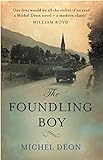
This is my review of The Foundling Boy by Michel Déon.

A C20 take on “Tom Jones”, this novel’s original French title of “Le jeune homme vert”, denoting the hero Jean’s initial natural naivety, has been lost in translation to become, “The Foundling Boy”.

Jean is discovered in a Moses basket on the doorstep of a simple, kindly childless couple. The wife Jeanne claims him as her own to bring up, taking a stand against the attempted interference of Mme de Courseau, the imperious lady of the local manor. Jean turns out to be handsome, robust, charming and irresistible to women, yet somehow manages to remain fundamentally decent and unassuming. Despite doing quite well in his school leaving exam, Jean begins to drift through life with no clear aim. He takes the opportunity to travel, mainly to England where he accepts the hospitality of some wealthy or dubious (sometimes both) characters. When he needs money to live, or wishes to stay near his parents in rural Normandy, Jean works at a variety of dead-end jobs of the kitchen porter or nightclub bouncer variety. In the process, he learns a good deal about life, human nature and love. The urge also grows to discover his real parentage: he is not too bothered about the identity of the father which may never be known, but is keen to know who is mother is. The insights jotted in his private journal reveal a certain cynicism. For instance, he notes that keeping friends separate from one another is often a good idea.

The story rambles along with so many digressions that I began to suspect the author of padding out a thin plot. Some of the early chapters are hardly about Jean at all, but rather the local landowner Antoine Courseau. Bored with his cold wife and the duties of his inheritance, Antoine keeps taking off, often at high speed, in his latest Bugatti, drawn inexorably to the warmth and light of the Mediterranean coast and to his waitress lover Marie-Dévote. Perhaps a little shell-shocked by World War 1, Antoine seeks out old comrades-in-arms with whom he has more in common than his family.

The appeal of this book lies its powerful evocation of time and place, in particular France on the brink of World War 2, sleepwalking into disaster with the complacent assumption that, if it comes to it, the Germans will be beaten back in a few weeks. The coverage of events in England is less convincing, as are some of the more exotic characters leading an often extravagant lifestyle such as the mysterious Prince with his black chauffeur Salah, or the conman Palfy.

The author’s tendency to reveal the future fate of a particular character, or to note whether or not he/she will reappear in the story later is an irritating distraction – like having an over-enthusiastic person leaning over your shoulder to tell you what’s going to happen next – and this unnecessary device tends to break any sense of immersion in the story.

Yet, despite this and the occasional “longueurs”, I enjoyed many of the vivid descriptions, quirky characters, wry humour and amusing incidents enough to want to read the sequel, “The Foundling’s War” – “Les Vingt Ans du jeune homme vert” in French. Written very much from a man’s viewpoint e.g. of women, I suspect this is likely to appeal more to male readers.

⭐⭐⭐⭐ 4 Stars

“Le Jeune homme vert” (Folio) (French Edition) by Michel Déon – Une vie pleine de promesses

This is my review of Le Jeune homme vert (Folio) (French Edition) by Michel Déon.

A C20 take on “Tom Jones”, this novel’s original French title of “Le jeune homme vert”, denoting the hero Jean’s initial natural naivety, has been lost in translation to become, “The Foundling Boy”.

Jean is discovered in a Moses basket on the doorstep of a simple, kindly childless couple. The wife Jeanne claims him as her own to bring up, taking a stand against the attempted interference of Mme de Courseau, the imperious lady of the local manor. Jean turns out to be handsome, robust, charming and irresistible to women, yet somehow manages to remain fundamentally decent and unassuming. Despite doing quite well in his school leaving exam, Jean begins to drift through life with no clear aim. He takes the opportunity to travel, mainly to England where he accepts the hospitality of some wealthy or dubious (sometimes both) characters. When he needs money to live, or wishes to stay near his parents in rural Normandy, Jean works at a variety of dead-end jobs of the kitchen porter or nightclub bouncer variety. In the process, he learns a good deal about life, human nature and love. The urge also grows to discover his real parentage: he is not too bothered about the identity of the father which may never be known, but is keen to know who is mother is. The insights jotted in his private journal reveal a certain cynicism. For instance, he notes that keeping friends separate from one another is often a good idea.

The story rambles along with so many digressions that I began to suspect the author of padding out a thin plot. Some of the early chapters are hardly about Jean at all, but rather the local landowner Antoine Courseau. Bored with his cold wife and the duties of his inheritance, Antoine keeps taking off, often at high speed, in his latest Bugatti, drawn inexorably to the warmth and light of the Mediterranean coast and to his waitress lover Marie-Dévote. Perhaps a little shell-shocked by World War 1, Antoine seeks out old comrades-in-arms with whom he has more in common than his family.

The appeal of this book lies its powerful evocation of time and place, in particular France on the brink of World War 2, sleepwalking into disaster with the complacent assumption that, if it comes to it, the Germans will be beaten back in a few weeks. The coverage of events in England is less convincing, as are some of the more exotic characters leading an often extravagant lifestyle such as the mysterious Prince with his black chauffeur Salah, or the conman Palfy.

The author’s tendency to reveal the future fate of a particular character, or to note whether or not he/she will reappear in the story later is an irritating distraction – like having an over-enthusiastic person leaning over your shoulder to tell you what’s going to happen next – and this unnecessary device tends to break any sense of immersion in the story.

Yet, despite this and the occasional “longueurs”, I enjoyed many of the vivid descriptions, quirky characters, wry humour and amusing incidents enough to want to read the sequel, “The Foundling’s War” – “Les Vingt Ans du jeune homme vert” in French. Written very much from a man’s viewpoint e.g. of women, I suspect it is likely to appeal more to male readers.

⭐⭐⭐⭐ 4 Stars

“Don’t give up on idealism”

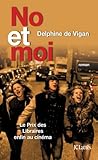
This is my review of No et moi (Littérature française) (French Edition) by Delphine (de) Vigan.

An abnormally high IQ has landed thirteen-year-old Lou in a class two years ahead of her age where, physically small by any standard, she is an introverted loner, with the added burden of being an only child whose mother has been traumatised by a recent family tragedy. Terrified by the prospect of having to give a presentation, Lou blurts out her proposed theme of “the homeless” based on a real interview. She has in mind No, a down-and-out eighteen-year-old who haunts the Austerlitz railway station in Paris, where she has aroused Lou’s interest and stimulated her overactive imagination.

It is apparent from the outset that the strong rapport and friendship which develops between the two is unlikely to lead to a happy ending in the real world. This well-developed story is saved from mawkishness by the humorous aspects of Lou’s eccentric hobbies and her tendency to take people too literally at times, together with what she learns about life from her dealings with No. Lou’s sense of outrage over the plight of the homeless makes one regret one’s own adult loss of idealism. Her anguish that reality is not like one’s utopian dreams is replaced by acceptance, even whilst observing the madness of the “normal”, “sane” world.

This story works well as a novel for both teenagers and adult readers, particularly those wishing to put their French to use in a very readable text. There are a few false notes, such as initial suggestions that Lou might be autistic, whereas she struck me as far too neat and conformist in class, well-organised and empathetic for this to be the case. Her crush on the handsome but rebellious seventeen-year-old Lucas, who has been held back for two years in the same class, is convincing but their relationship seems a little corny at times. It is of course necessary to the plot for Lucas to have neglectful parents who have left him home alone in a flat where the three main characters can hang out free from adult interference.

⭐⭐⭐⭐ 4 Stars

Self- Portrait or Model?

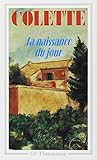
This is my review of La Naissance Du Jour (Garnier-Flammarion) by Colette.

This is the first book I have read by Colette and I gather it is not regarded as her best. Published in 1928 when she was in her fifties and established in her fame, this has a poetical, stream of consciousness style, beautiful and original when applied to the landscape and climate of coastal Provence, to her passion for gardening and cats, but somewhat precious, at times tedious, when the theme is the nature of love, and her relationship with her mother.

There is a good deal of falsity here, although it is hard to say to what extent Colette is deluding herself or deceiving the reader. The book begins, ends and is punctuated with letters from her deceased "muse" of a mother, yet I believe that Colette edited these letters to suit her purpose and, despite repeated claims of her admiration, apparently found her mother impossible in real life.

In a blurring of autobiography and fiction, Colette claims to have given up love, but her innate sensuality belies this, together with the vanity which makes her unable to resist seducing and encouraging for long enough to cause havoc, her handsome neighbour Vial, despite plans to marry him off to a young painter called Hélène who is besotted with him, but devastated by the belief that Colette is his mistress, which again Colette does not deny. This triangular love affair appears to be completely fictional and may have been intended as a cue for Colette to explore love and renunciation, although it mainly serves to show her as egotistical and capricious. This romantic thread is impressionistic and ambiguous, perhaps in keeping with the novel's style, and so open to different interpretations, which could be a strength although it may leave the reader frustrated by its lack of development.

This novel needs to be read more than once to appreciate it fully. It encourages discussion, assisted by a knowledge of Colette's life. It told me little about relationships, but is memorable – if read in the original French – for its sensual evocation of nature – "un jour qui coule en instants bleus et or…. une tristesse de soleil" – and of cats in all their fascinating movements and moods. I like the little touches of wry humour as when a neighbour protests over Hélène feeding Colette's cat with moths burnt in a lamp. To paraphrase: "Why not?" Colette snorts. "They're made of fat and roasted. Naturally I wouldn't set out to grill moths for cats, but you can't stop them flying into lamps".

My four stars were given after a period of reflection with a sense of relief at having finished the book. The reading of it in French (as a second language) was an ordeal, with the striking, evocative passages of prose obstructed by frustrating paragraphs I was unsure I had understood without the aid of a English translation, which only confirmed my lack of sympathy for her more over-the-top rants about ageing and love.

⭐⭐⭐⭐ 4 Stars

Troubled times

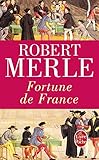
This is my review of Fortune De France 1 (Fiction, Poetry & Drama) by Merle.

This opening novel in a thirteen part saga of the Huguenot de Siorac family during an unsettled period of French history starting in 1547 has at last been translated into English as "The Brethren". "Fortune de France" is best read in its original language, if possible, since it conveys more of a sense of the period, of the personalities of the key characters and the alternating humour and pathos of the chain of incidents. By contrast, the English translation which I used to check a few points appears to be a rather wooden literal translation.

The story is told by Pierre, a sometimes hot-blooded but perceptive and questioning narrator. At first, I was a little bored by what seemed like a dry beginning, and thought I would prefer to read a straightforward history of a period which I have never quite grasped: the French Wars of Religion between the Catholics and equally intolerant Protestants.

Quite soon, I became intrigued by the main characters: the contrast between the serious, puritanical Sauveterre, and his more charismatic "blood-brother" Siorac, spontaneous, often generous, yet capricious with a capacity for great inconsistency and callousness. A doctor by training, he risks his life saving his bastard child Samson from a plague-ridden village, only to introduce him into his household as his son, regardless of the feelings of his long-suffering wife. When "the brethren" feel prepared to risk declaring their protestant faith, Siorac tries to get all his children and servants on side, before cornering his wife with the command to abandon her catholic faith, although he knows that she is devoted to it.

There are some daft episodes of three musketeer bravado, but also some tense and moving scenes exploring the psychology of people with complex emotions of jealousy, rivalry, divided loyalties, duty, fear, to which we can relate even when they are bound by very different beliefs and attitudes from our own. Siorac faces the disapproval of a highly regarded doctor with his scepticism over the value of bleeding people as a cure, but when proved right does not point this out since he knows that the other man's vanity will not let him accept the truth. There are also some interesting and convincing accounts of how the Sioracs fortified their property, related to their (remarkably few) servants and workers, and made a living from the land.

I'm not sure I feel motivated to read any more of the series, but found this a surprisingly good read – in French, but less so in English.

⭐⭐⭐⭐ 4 Stars

A saga of crocodiles animal and human

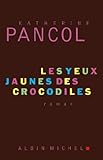
This is my review of Les Yeux jaunes des crocodiles (LITT.GENERALE) (French Edition) by Katherine Pancol.

Lacking in self-esteem, overweight, frumpy and only happy when immersed in research of her beloved C12 history, Josephine musters the anger to send packing her charming but philandering and unemployed dreamer of a husband Antoine. Desperate for money to pay the bills, she agrees to a piece of deception to feed the vanity of her beautiful, wealthy but bored elder sister Iris who has pretended to an admiring editor that she is writing a book. Josephine will produce a novel set, of course, in the C12 and Iris will claim authorship and market it.

This French soap opera is often too tongue in cheek or over-the-top to be taken very seriously, particularly when, at the time of writing this, truth is more ludicrous than fiction in the form of a scorned former First Lady's revenge kiss-and-tell book on a serving President Hollande. The strongest passages are Josephine's relations with her sister and her two daughers, in particular the adolescent Hortense: beautiful, immature and manipulative as her Aunt Iris yet also chilling in her precocious insights. Antoine's attempt to make a living managing a crocodile farm (hence the title) in Africa is a quirky thread which could have been developed more.

The book is too long. Some threads are quite tedious, such as the content of Josephine's novel, which would surely never have been such a resounding success judging by the descriptions. Some of the male love interest is unconvincing – the women are in general made of sterner stuff than the men. A plot-line involving the mystery in the life of Josephine's friend Shirley proves to be utterly implausible and crass. Despite these flaws, and against my better judgement, I found much of the story entertaining, often funny yet sufficiently poignant to make one care about the fate of the main characters, apart from the shamelessly stereotyped villains like Josephine's appalling mother, nicknamed "Toothpick" by her put-upon husband's tart-with-a-heart mistress, Josiane. The final scene is effective, paving the way for future novels.

This is worth reading for the French idioms and current slang, although I believe that the English translation is full of Americanisms likely to detract from the authentic French flavour which adds to the book's appeal.

⭐⭐⭐⭐ 4 Stars

“Je marche avec mon temps”

This is my review of Au Bon Beurre Ou Dix Ans De La Vie d’UN Cremier (Folio) by Luc Dutourd.

This cynical satire reveals the opportunism and greed which explain many people's willing cooperation with the Nazis under occupation in wartime France. Homesick for Paris, and readily convinced that the Germans are "decent" people, Charles-Hubert and Julie Poissonard return to their creamery, which also sells groceries, and set about stock-piling food to sell at exorbitant prices when rationing comes into force. Industrious but ruthless, they survive a few minor setbacks like being caught watering the milk, to end the war as millionaires laden with tasteless luxuries – a baby grand pianola, stuffed stag's head, leather-bound collections of unread books together with shelves of "faux livres" to give a flavour of this. A Rubens has only been acquired because Charles-Hubert has heard that the painter's work is popular.

On the way they have performed some mean acts without admitting any fault to themselves: Julie denouces to the Nazis a customer's son who has just escaped from POW camp in Germany. She feeds her half-starved maid before the girl is required to wait on the family at dinner simply so that she will not be tempted to steal food.

This story may be a little overlong, making its point early on, and perhaps losing it's narrative pace in the middle with the digressions into the adventures of Léon Lecuyer, the earnest young man of principle who serves as a foil to the pragmatic Poissonards. Yet the reader is carried along by Dutourd's wry wit and lively literary style, as displayed in his quirky description of the excessive hoards of food almost coming alive as they age: "les saucissons se pétrifiaient…les légumes sec….émettaient un murmure incessant: le riz répondaient aux lentilles, qui dialoguaient avec les pois cassés et les fèves et tout cela fourmait une harmonie de craquement légers….une symphonie chuchotée qui accompagnait l'évocation ralentie de ce monde immobile". Yet, beneath this lyrical whimsy, there lies an acid attack on not only the shop-keepers, but the aristocrats who played the system. As one well-connected survivor observes: "Who did a noble marry in 1700? With a farmer's daughter. And in 1900? With a Jewess. Today, it's with the daughter of a dairyman. I'm keeping up with the times? Don't you want to see me a minister?" (His path greased with the dairyman's money).

These unsavoury characters manage to judge just the right time to start vilifying Hitler and supporting De Gaulle. You may hope in vain to see them get their comeuppance.

This story may be a little overlong, making its point early on, and perhaps losing it's narrative pace in the middle with the digressions into the adventures of Léon Lecuyer, the earnest young man of principle who serves as a foil to the pragmatic Poissonards.

⭐⭐⭐⭐ 4 Stars

The will to survive

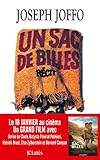
This is my review of Un sac de billes (Romans contemporains) (French Edition) by Joseph Joffo.

Not yet teenagers at the outbreak of World War 2, Joseph Joffo and his older brother Maurice, resilient and resourceful beyond their years, managed to keep one step ahead of Nazis and French collaborators and escape deportation. The decision to send the two boys away from Paris to cross into the "zone libre" with neither correct papers nor enough money may appear utter folly on their parents' part. Yet, the pair managed to survive this first challenge through a mixture of good luck, the kindness and humanity of strangers, and Maurice's wily realisation that, having been shown a safe path across the border for a fee, he could guide others in turn and gain a useful night's earnings.

What seemed at first like a game gradually became arduous each time, having found a safe haven, the boys had to move on. Matters reached a grim low point when they were for a while held by a band of Nazis and repeatedly questioned in an attempt to break them down to make the admission of being Jewish. As a final irony, Joseph spent the last months of the war working living and attending the Catholic mass with his employer, an ardent supporter of Pétain and the idea of a united Europe under the Germans – which, as Joffo notes, has in a way come to pass.

Even if some scenes have been embellished a little, this is an inspiring and moving tale, an excellent choice as an A Level text, since it portrays so vividly a human tragedy which should not be forgotten. It is also bursting with useful French idioms. In the final pages, the normally ebullient Joffo writes of his eventual realisation that he would not come out of the war unscathed: "they" had taken not his life, but perhaps something worse, his childhood, by killing in him the child he could have been.

I enjoyed reading the postscript to the novel, written half a century later, in which Joffo summarises his answers to questions commonly posed. For instance, in denying his Jewishness in order to save his life, was he forfeiting the right to be Jewish, as maintained by a Spanish rabbi? Tolerant and pragmatic to the end, Joffo prefers the view that a man who has renounced his faith can always reclaim it,citing Maimonidies to the effectthat the first duty of a Jew is to save his life, and if necessary deny his faith, provided he remains true to it in his heart.

⭐⭐⭐⭐⭐ 5 Stars