Si tu savais tout ça, tu ferais quoi?

This is my review of La liste de mes envies (Littérature française) (French Edition) by Grégoire Delacourt.

“How can you do such a disgusting job – I work in advertising – and write such lovely books?” This sentence in the gushing postscript to the French version of this short novel explains the growing sense of unease I had experienced when reading it. This story is a marketable product pitched at female readers by an author with a knack for adopting the “voice” of “ordinary”, admittedly somewhat stereotyped, women, and for identifying an intriguing situation on which to build a bitter-sweet scenario.

In this case we have Jocelyne, owner of a small haberdashery in Arras, slipping into slightly overweight middle age with the dull and on occasion boorish husband she still seems to love, with two now adult children who have “flown the nest”. She seems to have had more than her fair share of misfortune: the loss of her mother and her father’s onset of illness when she was still a teenager put paid to her youthful ambitions, leaving her with low self esteem and a nagging sense of having made too little of her life. Into this rather unpromising situation falls the bolt from the blue of a huge lottery win, raising the dilemma we all share as to how we would spend this, if given the chance. Jocelyne’s periodic “wish lists” – progressing from “a lamp for the hall table” to “spend a fortnight in London with my daughter”, highlight the common inability to think on a grand enough scale, particularly if one is accustomed to put one needs second. Eventually, she only lists a Porsche as a “folly” that will please her husband.

There are some interesting aspects to the story: her fear that the money will destroy what is good in her life, her awareness that the most valuable things in life cannot be bought with money, that the planning of purchases over time can be more satisfying than a huge spending spree, money no object. The presumably intentional irony is that her knitting and sewing blog which costs nothing does more good in the world than the huge cheque she has won. Is it also intentional irony that the man she loves is so unworthy of her devotion, or are we meant to think that love itself is simply what counts more than money?

In the end, the novel disappoints by proving too shallow and sentimental, aptly described by the wonderful French word “guimauve” – marshmallows and mushiness. The two main male characters – husband and shadowy male love interest – are both too underdeveloped to be convincing and the plot drifts to a limp and disappointing ending.

⭐⭐⭐ 3 Stars

Still retains a surprising power to grip

This is my review of Au Bonheur des Dames (French Edition) by Émile Zola.

Since I associate Zola with grim, unrelenting tales of exploited coal miners, the theme of a Paris department store dedicated to delighting women seemed at first uncharacteristically tame and frothy. In fact, behind its plate glass and eye-catching displays, “Au Bonheur des Dames” proves to be as dominating and exploitative as any industrial factory, its shop assistants, clerks, packers and delivery men mere cogs in the machinery, as controlled as any industrial worker, on the mass production line of retailing.

Beneath his charm and apparent empathy with women and their love of fashion, inspired entrepreneur Octave Mouret is in fact a cynical manipulator: he is not only a casual seducer, but views his female customers as an inexhaustible captive market to be dazzled by his marketing ploys and all too readily induced to fritter away their husbands’ money on the material goods he displays with such alluring skill. His sponsor Baron Hartmann warns him that one day women will “get their revenge” but Mouret is knocked off course where he least expects it by the sweet, unsophisticated but stoical country girl Denise Baudu, who is quick to grasp that the department store is a part of inexorable progress, but steadfastly sticks to her personal principles.

In vivid if wordy descriptions, Zola describes how the magnificent store looms over the surrounding gloomy alleys, further cutting them out from the sun. These are the haunts of the resentful traditional shopkeepers who persist in their stubborn and ultimately fruitless struggle to survive, when they cannot realistically hope to compete with Mouret’s drastic discounts and huge variety of goods. The scale and brightness of his store, with the light pouring in through glazed roofs, and the Lowry-style bustle on the metal staircases and galleries, as far as the eye can see, creates the idea of a self-contained community, which Zola sometimes calls a “phalanstery” after the C19 ideas of Charles Fourier for a utopian community.

Yet, although the workers are housed and fed in a paternalistic way, the shop is far from utopian: staff are not allowed to have visitors in their rooms, women have to leave when they become pregnant, and in the summer months of slack demand, assistants are dismissed for the slightest imagined misdemeanour. Not surprisingly, they often resort to scams to swindle the store, and the smallest rumour or incident is exaggerated and spread on the gossip grapevine. Although the customers look down on the assistants who must be ladylike without being accepted as ladies, they often behave badly, not merely overspending on luxuries and abusing the “returns” policy, but even resorting to shop-lifting.

Just as the store seems very topical in these times of zero hours contracts, class divides and the ravages of competition, Zola’s characters are real in their flaws and complexity. There are also some moments of comedy amongst the exhausting materialism of the store contrasting with the suffering of the impoverished small shopkeepers.

The novel is best read in French, although the exhaustive lists of specialised fabrics and some of the dated procedures forced me to resort to English translations. These vary a good deal in quality, so it is advisable to check them out before purchase. Some come with interesting introductions, to be read afterwards to avoid spoilers.

⭐⭐⭐⭐⭐ 5 Stars

Still retains a surprising power to grip, at least in the original French!

This is my review of Au Bonheur des Dames (The Ladies’ Delight) (Penguin Classics) by Émile Zola.

I gave this five stars in the original French. This English version is quite good and includes an interesting introduction to be read afterwards in the interest of avoiding spoiliers.

Since I associate Zola with grim, unrelenting tales of exploited coal miners, the theme of a Paris department store dedicated to delighting women seemed at first uncharacteristically tame and frothy. In fact, behind its plate glass and eye-catching displays, “Au Bonheur des Dames” proves to be as dominating and exploitative as any industrial factory, its shop assistants, clerks, packers and delivery men mere cogs in the machinery, as controlled as any industrial worker, on the mass production line of retailing.

Beneath his charm and apparent empathy with women and their love of fashion, inspired entrepreneur Octave Mouret is in fact a cynical manipulator: he is not only a casual seducer, but views his female customers as an inexhaustible captive market to be dazzled by his marketing ploys and all too readily induced to fritter away their husbands’ money on the material goods he displays with such alluring skill. His sponsor Baron Hartmann warns him that one day women will “get their revenge” but Mouret is knocked off course where he least expects it by the sweet, unsophisticated but stoical country girl Denise Baudu, who is quick to grasp that the department store is a part of inexorable progress, but steadfastly sticks to her personal principles.

In vivid if wordy descriptions, Zola describes how the magnificent store looms over the surrounding gloomy alleys, further cutting them out from the sun. These are the haunts of the resentful traditional shopkeepers who persist in their stubborn and ultimately fruitless struggle to survive, when they cannot realistically hope to compete with Mouret’s drastic discounts and huge variety of goods. The scale and brightness of his store, with the light pouring in through glazed roofs, and the Lowry-style bustle on the metal staircases and galleries, as far as the eye can see, creates the idea of a self-contained community, which Zola sometimes calls a “phalanstery” after the C19 ideas of Charles Fourier for a utopian community.

Yet, although the workers are housed and fed in a paternalistic way, the shop is far from utopian: staff are not allowed to have visitors in their rooms, women have to leave when they become pregnant, and in the summer months of slack demand, assistants are dismissed for the slightest imagined misdemeanour. Not surprisingly, they often resort to scams to swindle the store, and the smallest rumour or incident is exaggerated and spread on the gossip grapevine. Although the customers look down on the assistants who must be ladylike without being accepted as ladies, they often behave badly, not merely overspending on luxuries and abusing the “returns” policy, but even resorting to shop-lifting.

Just as the store seems very topical in these times of zero hours contracts, class divides and the ravages of competition, Zola’s characters are real in their flaws and complexity. There are also some moments of comedy amongst the exhausting materialism of the store contrasting with the suffering of the impoverished small shopkeepers.

The novel is best read in French, although the exhaustive lists of specialised fabrics and some of the dated procedures forced me to resort to English translations. These vary a good deal in quality, so it is advisable to check them out before purchase.

⭐⭐⭐⭐ 4 Stars

Fighting to live again

This is my review of The Great Swindle: Au revoir la-haut (English edition) by Pierre Lemaitre.

Unlikely comrades, wealthy, handsome, artistic Edouard and humble, nervous accounts clerk Albert are thrown together in the horror of the French trenches at the end of the First World War, where they have the misfortune of being under the command of the ruthless Henri Aulnay-Pradelle, who will stop at nothing to exploit the situation to enhance his reputation and enrich himself. When the two men find themselves in a desperate situation after the war, Albert is eventually persuaded to assist Edouard in a bold but crazy “great swindle”, the title of this French novel in translation. Their motivations are mixed: the need for money, temptation of great wealth, desire for revenge against a society which has given them a raw deal, or in Edouard’s case the “buzz” and sheer fun of the risk as an escape from the bleakness of everyday existence.

This well-plotted, ingenious, imaginative and darkly humorous yarn is not only a page turner which keeps one guessing to the last page, but also provides a vivid portrayal of the aftermath of a war in which many people were on the make, and more effort was put into memorials for the dead than providing for the wounded and shell-shocked survivors. Most of the main characters are very fully developed, with complex personalities and shifting emotions. In the midst of his wry cynicism, the author manages to arouse our sympathy and a sense of poignancy for the flawed characters and sufferings of Albert, Edouard and the stern father who has rejected him, M. Péricourt.

Lemaître is well-known for his noir crime thrillers, and there are elements of the macabre in this novel together with the knowledge that he is quite capable of dispensing with any of the characters, and that Albert and Edouard, corrupted through force of circumstance, will not necessarily win out at the end of the day.

A minor criticism is that the early chapters tend to be rather slow and spell out incidents in repetitious detail. However, the narrative gradually gathers pace as “the plot thickens” and I became engrossed as it twisted to the final denouement.

Although the English translation seems to have well done, preserving the sardonic tone of the original, it is worth reading this in the original French if possible, partly to get a stronger flavour of the times, but also because it’s a rich source of idioms and clichés. Ironically, I read this by chance in parallel with Pat Barker’s World War 1 novel “Toby’s Room”, which is partly about young men being suffering from terrible facial injuries: I doubt if two novels on a similar theme could be more different in structure and style, but although less “literary” I found Lemaître’s novel more engaging and moving.

⭐⭐⭐⭐⭐ 5 Stars

Life encroaching on art

This is my review of Le Quatrieme Mur (Prix Goncourt Des LycEens 2013) by Sorj Chalandon.

The “fourth wall” of the title is the invisible barrier between the imagined world of the cast on stage and the reality of the audience and the outside world. It is 1982, and French historian Georges whose true love is the theatre promises his dying friend the enigmatic pacifist, Greek Jew Samuel Akounis that he will stage Anouilh’s “Antigone” during a negotiated cease-fire in a bombed Beirut cinema using actors drawn from opposing Lebanese groups: Antigone will be played by a Palestinian refugee, her lover by a Muslim Druze, her autocratic father by a Christian phalangist, his guards by Shiites and so on. Georges’ wife Aurora, understandably dismisses this as a dangerous folly, and the explosive flash-forward of the opening chapter indicates from the outset that the project will not end well.

Its achievement or otherwise does not really seem to be the point: just as Anouilh used the Greek tragedy to honour the French resistance to Nazi domination, Chalandon seeks to reinterpret it through the drama of the futile, self-perpetuating Lebanese conflict. It is not merely a simple case of individuals who have been conditioned to hate each other laying aside their grievances. Ironically, each player is persuaded or permitted to take part by a different cultural interpretation of the Greek tragedy. Yet when a resurgence of violence breaks through the fourth wall, roles are reversed and distorted as real life becomes the drama.

This novel is often theatrical and soaked in symbolism, as when Samuel gives Georges sand from Jaffa for the Palestinian actors who have been forced to leave their land – this has an obvious parallel with the earth Antigone insists on scattering over her brother’s corpse in defiance of her father Creon.

Some of the most powerful passages are descriptions of the Palestinian camps and the tension created by snipers, reflecting Chalandon’s background as a journalist. There are some strong play-like dialogues, although I agree with the reviewer who found a lack of development in the characters who tend to be stereotypes of the groups they represent. After somewhat rambling and disjointed opening chapters, this novel turns out to be both original and to have a carefully constructed plot which falls into place at the end like pieces of a puzzle. Yet it is undermined for me by the “stagey” approach permeating many scenes, rendering them artificial and contrived with a reduced potential to move the reader. I often found the sentimentality mixed with extreme violence quite distasteful, as when a sniper insists that Georges grasps his leg to feel the vibrations when he fires his weapon, only to start quoting Victor Hugo. Is this intended to redeem him by suggesting that he is a man with a soul despite his brutality?

I am not usually put off a book by my dislike of the main character, but in this case was often repelled by the self-absorbed, naïve, misguided, unstable narrator, clearly “turned on” by violence, who casually abandons the wife and child he professes to adore, who falls for his leading lady and lets everyone know it, who lies to people because he is too cowardly to admit the truth, not to mention his casual exposure to great risk of the driver Marwan who loyally assists a project about which he is profoundly sceptical.

The novel irritated me as I read it, but left me with a sense of ambiguity both as to what the author intended and what I actually drew from it.

⭐⭐⭐⭐ 4 Stars

Avoir le cafard et pas la ratatouille

This is my review of Entre les murs (Collection Folio (Gallimard)) by Francois Begaudeau.

François Bégaudeau’s portrayal of a young teacher’s struggle to teach French to a multi-ethnic class of fourteen-year-olds in a tough Parisian suburb was made into a Palme d’Or-winning film. I found the film more effective, in that the teenage pupils who improvised their role for weeks to get into their parts are very convincing, while the inspired director Laurent Cantet manages to select characters and scenes from the book to create a much stronger narrative than the original.

In a succession of short scenes over the course of a school year, Bégaudeau’s book uses continual repetition to create a surreal, groundhog day sense of the claustrophobic world of teaching: in the staffroom, Bastien forever eats dry cake, and the rest spend their time cadging change for the defective coffee machine, asking how to produce double-sided sheets on the erratic photocopier, and despairing over their classes in Pinteresque conversations. As for the class, Souleymane persists in coming to each lesson with his hood over his hat, the disaffected Dico keeps pestering for a transfer to another class, and Bégaudeau’s attempt to teach his pupils arcane points of grammar, as prescribed by the state, or the rather more useful ability to reason, are scuppered by their ignorance of basic vocabulary. Yet, they can be remarkably perceptive at times, and their constant complaint to Bégaudeau, “Vous charriez trop” seems justified in some ways. Although he clearly wants to teach them to think, and has a soft spot for the more cooperative students and the bright, extrovert dynamo Sandra, the system is against him. “I slept badly” is a cue for an outburst of sarcasm or worse on his part, as when he calls students “imbeciles” or accuses girls of “having the attitude of a slut”. At times, he loses all dignity in a slanging match verging on violence with the insolent Dico who get under his skin, for whom he regularly abandons his class to drag the youth before the Principal – a well-intentioned but ineffectual man who reminds me of President Hollande.

In this tragi-comedy, the teachers resemble the pupils too closely: with the three rings in one ear and tee-shirts with motifs of fire-breathing dragons and unicorns, is Leopold clearly distinguishable from a student? Also, the staff express themselves in such a slangy, colloquial way that one wonders how the students can ever learn good practice.

The book is hard for a non-French reader because of all the “argot” and unfamiliar practices but made me curious as to the contrasts with British secondary education. The French system seems much more complicated, yet alarmingly democratic in, for instance, having student representatives at certain review meetings such as “le conseil de classe”. Since many of the scenes are very funny, one can read this purely as a tragi-comic farce, but underlying it all is the dilemma of how to teach a diverse group effectively, as implied by the twenty-two probing questions on best practice which form one chapter.

⭐⭐⭐⭐ 4 Stars

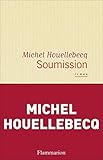
“Soumission” by Michel Houellebecq -Brilliant idea dissipated by a maverick skilled wordsmith into a satirical sexual fantasy

This is my review of Soumission by Michel Houellebecq.

My initial prejudice against Houellebecq, fed by critical reviews accusing him of vulgarity, obscenity, misogyny, even racism and islamophobia, was rapidly dispelled by his expressive, fluid prose and the wry sense of humour he applies not only to French society but also to himself in a self-deprecating way.

There is huge potential in his idea of a Muslim president gaining power in the France of 2022 as the unintended consequence of a misalliance between the left and right intended to keep out the National Front. I was disappointed to find that this theme was not developed in any depth or breadth. Although the book’s coincidental publication on the day of the Charlie Hebdo massacre and the author’s suggestion of the suppression of civil unrest in an upmarket Parisian square chime with recent real events, the course of events seems much gentler, milder and more “soft-centred” than that which France is suffering in November 2015 (the time of writing this).

The imagined Saudi-backed “Islamisation” of France serves only as a backdrop to the mid-life crisis of a forty-something Parisian academic who appears to be a parody of Houellebecq himself.

François is self-absorbed, verging on alcoholism in his isolation without close friends, unable to sustain a sexual relationship so forced to resort to pornography and kinky exploits with female escorts – all somewhat repellent and tedious for many readers, including me, and of interest only to extend if not exactly improve one’s French. François shows an appalling lack of concern over news of his estranged mother’s death and burial in a “pauper’s grave”, and it turns out that Houellebecq has very fraught dealings with his own mother who abandoned him to the care of others when he was very young, apparently causing him long-lasting emotional damage.

The narrator François lives off the reputation of his student thesis on the late C19 writer Huysmans with whose satirical wit and erudition both he and it would seem Houellebecq identify strongly. At one point, François suspects that his atheist hero Huysmans joined a Trappist order in later life for the material comforts this would bring, and in similar vein he “collaborates” with the authoritarian and corrupt new Islamic university system because it will provide him with the chance to choose three nubile young submissive student brides.

Switching continually between intellectualism and porn, the book is filled with digressions into the lives of long-dead writers like Bloy and Guénon about whom I learned for the first time, which combine with the ivory-tower nature of François’ existence to weaken the dramatic pace of the novel. There are fascinating little snippets of information, like the description of the Gallo-Roman “Arène de Lutèce” hidden away in the Latin Quarter. In the sometimes disconcerting blend of fiction and fact, Houellebecq tends to set scenes in identifiable buildings, and refers in often bordering on libellous turns to modern-day politicians alongside his imaginary creations.

The “submission” of the title applies to that of women, which is in turn compared to that required of Muslims to Allah. I suspect the novel will offend many Muslims as a cynical distortion of their faith, in fact it is likely to prove an unsettling read for most people. I trust it is intended to be tongue-in cheek and not largely a chauvinistic male sexual fantasy.

⭐⭐⭐ 3 Stars

A brilliant idea for a novel dissipated by a maverick of a skilled wordsmith into satirical sexual fantasy

This is my review of Submission by Michel Houellebecq.

My initial prejudice against Houellebecq, fed by critical reviews accusing him of vulgarity, obscenity, misogyny, even racism and islamophobia, was rapidly dispelled by his expressive, fluid prose and the wry sense of humour he applies not only to French society but also to himself in a self-deprecating way.

There is huge potential in his idea of a Muslim president gaining power in the France of 2022 as the unintended consequence of a misalliance between the left and right intended to keep out the National Front. I was disappointed to find that this theme was not developed in any depth or breadth. Although the book’s coincidental publication on the day of the Charlie Hebdo massacre and the author’s suggestion of the suppression of civil unrest in an upmarket Parisian square chime with recent real events, the course of events seems much gentler, milder and more “soft-centred” than that which France is suffering in November 2015 (the time of writing this).

The imagined Saudi-backed “Islamisation” of France serves only as a backdrop to the mid-life crisis of a forty-something Parisian academic who appears to be a parody of Houellebecq himself.

François is self-absorbed, verging on alcoholism in his isolation without close friends, unable to sustain a sexual relationship so forced to resort to pornography and kinky exploits with female escorts – all somewhat repellent and tedious for many readers, including me, and of interest only to extend if not exactly improve one’s French. François shows an appalling lack of concern over news of his estranged mother’s death and burial in a “pauper’s grave”, and it turns out that Houellebecq has very fraught dealings with his own mother who abandoned him to the care of others when he was very young, apparently causing him long-lasting emotional damage.

The narrator François lives off the reputation of his student thesis on the late C19 writer Huysmans with whose satirical wit and erudition both he and it would seem Houellebecq identify strongly. At one point, François suspects that his atheist hero Huysmans joined a Trappist order in later life for the material comforts this would bring, and in similar vein he “collaborates” with the authoritarian and corrupt new Islamic university system because it will provide him with the chance to choose three nubile young submissive student brides.

Switching continually between intellectualism and porn, the book is filled with digressions into the lives of long-dead writers like Bloy and Guénon about whom I learned for the first time, which combine with the ivory-tower nature of François’ existence to weaken the dramatic pace of the novel. There are fascinating little snippets of information, like the description of the Gallo-Roman “Arène de Lutèce” hidden away in the Latin Quarter. In the sometimes disconcerting blend of fiction and fact, Houellebecq tends to set scenes in identifiable buildings, and refers in often bordering on libellous turns to modern-day politicians alongside his imaginary creations.

The “submission” of the title applies to that of women, which is in turn compared to that required of Muslims to Allah. I suspect the novel will offend many Muslims as a cynical distortion of their faith, in fact it is likely to prove an unsettling read for most people. I trust it is intended to be tongue-in cheek and not largely a chauvinistic male sexual fantasy.

⭐⭐⭐ 3 Stars

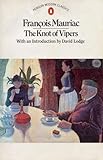
The Knot of Vipers by François Mauriac: Cutting the knot of vipers

This is my review of The Knot of Vipers (Modern Classics) by Francois Mauriac.

An ageing and embittered miser, Louis is obsessed with his determination to ensure that not a single member of his family inherits a penny of his considerable wealth. Why does he hate his wife and offspring so much? Is he right to believe that he is loathed in return? To what extent is this situation his fault? As Louis’ plans begin to unravel combined with a sense of his mortality, he begins to see life a little differently. Questions arise as to whether people can really change, or is it a case of merely wishing to do so, or even self-delusion?

After a slow start to set the scene and explain Louis’ upbringing and early love for his wife Isa after a childhood and youth of loneliness and isolation, this becomes an intense and gripping psychological study in the context of the snobbish, self-satisfied, devoutly Catholic bourgeois families of the Bordeaux region whom Mauriac does not seem to have tired of dissecting. His flowing prose is a pleasure to read, with his sharp irony contrasting with almost poetical descriptions of the countryside – the smell of burning pines on the air and mists over the vines, timber and wine forming the basis of the economy.

There is a double tragedy at the heart of this novel. Although it may be hard to credit, Louis’ love for his wife is destroyed by his devastation over the discovery that she had a previous lover, even though it was probably only the passing infatuation of a very young girl. His inflexible nature combined with a lack of experience prevent him from adopting a sense of proportion. His inability to “forgive” his wife drives a wedge between them, probably causing her a degree of unhappiness of which he is unaware, and blinding Louis to a love for him she may have had to suppress. Mauriac contrives to make us feel some sympathy for both these characters in due course, if the not for their son and their daughter’s husband.

Mauriac was content to be called “a Catholic writer” and the essence of this novel is that Louis, a freethinking atheist, is repelled by the smug hypocrisy of the Catholic family into which he has married. He is further infuriated by what he sees as his wife’s indoctrination of their children against his wishes, poignantly perceiving this as a way of alienating them from him. Yet Mauriac would have us believe that, despite his flaws, Louis may be more truly spiritual than the rest of them, and if he really is the sinner they make him out to be, he is all the more deserving of “God’s grace”.

Even if the reader is also an atheist, it is possible to find the story moving and thought-provoking. Although most of the characters are unappealing, with a tendency to create their own unhappiness, this novel is not depressing by reason of its psychological insight and the quality of the prose. I prefer this novel to the other two famous works of Mauriac, his favourite “Thérèse Desqueyroux” and “Le Mystère Frontenac” which I believe he wrote as an antidote to the intensely emotional “Knot of vipers” but which seems somewhat bland in comparison.

⭐⭐⭐⭐⭐ 5 Stars

The Siberian who preferred olives

This is my review of Le Testament Francais (Fiction, poetry & drama) by MAKINE.

Admiration for Makine's short novel "La Musique d'un vie" in English translation inspired me to embark on the much longer multiple prize-winning "Testament français" in French.

It describes a sensitive Russian boy who spends summers in Siberia with the half-French grandmother Charlotte who regales him with anecdotes of Paris in the years leading up to the First World War. She backs them up with memorabilia from a battered trunk which hold the allure of an Aladdin's Cave for the boy. Unsurprisingly, he grows up with a sense of being split between two cultures, the harsh "reality" of Communist Russia holding less appeal than nostalgic memories of a past France. As a teenager, tired of his peers' mockery of his eccentricity, the boy makes a brief effort to break free from Charlotte's influence, but comes to realise how much he values it. It is a moot point to what extent Charlotte is responsible for nourishing his artistic sense as a writer, or aggravating a degree of mental imbalance.

This novel has a clearly autobiographical basis: following the disappearance of Russian parents, presumed to have been deported, Makine was brought up in Siberia by his half-French grandmother, who filled him with the language and culture of France absorbed from her childhood visits to Paris. After seeking asylum in Paris in his thirties and living on the breadline as a struggling writer, Makine resorted to the pretence that his early novels had been translated from Russian, since publishers would not believe that he could have written with such fluency and feeling in French.

A great admirer of Proust, Makine has imitated his style in "Testament français", which is short on plot, more a series of impressions, feelings and incidents. Particularly in the early chapters, I found the prose pretentious, with a cloying sentimentality. It was hard to believe that a boy of nine or so would be so enthralled by state dinners to welcome the Tsar and his wife to Paris in the 1890s, events about which Charlotte herself must have learned second-hand. And would the boy really have been so entranced by the sycophantic verse of José Maria de Heredia of which eight stanzas are included in the text? I was by turns irritated and bored by the repetition and exaggeration of ordinary images – a faded photo on the back of a newspaper cutting from the early 1900s of three demure young ladies in dark discreet dresses, over which the now teenage boy almost faints with emotion from the experience of mentally insinuating himself into their world, captured by click of the camera's shutter.

The writing seems most real to me when the narrator focuses on his own direct experience without any attempt at imitative artifice. For instance, there is a striking description of a sudden but fleeting storm bursting over the Russian steppe, to be replaced quickly by calm sunshine. He is probably very accurate in describing male obsession with female physical sexuality, although in the process the narrator appears very male chauvinist, to add to his intense self-absorption. The passages describing the sense of wanting to be both Russian and French are often quite powerful, and there are flashes of wry humour and insight. Although most characters apart from Charlotte and the narrator are thinly drawn, there are some vivid portraits, as of his tough, coarse, pragmatic aunt, a typical product and survivor of the Stalin era, unchanged even twenty years after the dictator's death.

Makine is a talented writer, and I shall probably read more of his work, but found this one too much of a chore. There is an English translation entitled "Dreams of my Russian Summers" which loses the point of the original title as revealed at the end.

⭐⭐⭐ 3 Stars