Sense of loss of sense

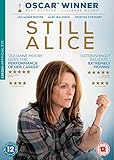
This is my review of Still Alice [DVD] [2014].

Alice is a highly regarded academic at Columbia University, celebrated for her publications, who has managed to find time to raise three children with her similarly talented husband. Her obsession with playing word games on her phone and her conspicuous inability to find a vital word during an important lecture are the first hints of the onset of “early stage Alzheimers”, all the more devastating since she is barely fifty and unusually ambitious and driven in what she still wants to achieve. The supreme irony is that her specialism is linguistics, her fascination with words and communication.

Julianne Moore deserves her Oscar in showing Alice in a succession of emotions from disbelief and rising anxiety, through fear and frustration to a kind of ultimate acceptance. The film is realistic in showing the differing reactions of her children, both to her and each other as regards how best to treat her. Her changing relationship with her husband is also convincing: he promises to be there for her, but to what extent can he be expected to give up his own intellectual activities and career prospects as she finds herself not only unable to work, but incapable of concentrating on anything – wanting only to spend her last months of lucidity with him on the beach where they enjoyed their first romance thirty years before.

This often unbearably moving film considers subtly the question of the point at which we cease to be ourselves and may reasonably have our lives organised by others to suit their priorities. The drama ends on as positive a note as can be hoped. Perhaps some of our sadness in watching it is the knowledge that some similar fate may lie in store for us, but with less loving support.

⭐⭐⭐⭐⭐ 5 Stars

Call of the wild

This is my review of Wild [DVD] [2014].

"Wild" opens with Cheryl Strayed hiking the arduous 1100 mile Pacific Crest Trail from Mexico to Canada with a monstrous backpack, feet bloodied by ill-fitting boots, never knowing whether the next incident will be a mishap or encounter with an act of kindness or passing friendship. The film is based on the best-selling real-life memoir of a woman who embarked on this challenge as a way of "saving herself" after a failed marriage, destroyed by her descent into drug addiction and promiscuity. The reasons for this decline – although she comes to regard it as part of the process of developing -, in particular the sudden loss of the person she loves most, are gradually revealed. We learn about her past in a series of flashbacks, some so fleeting as to be almost subliminal. Despite abandoning college, Cheryl has a deep love and knowledge of poetry and literature, some of which she cannot bear to discard to lighten her pack. The literary messages she leaves in the books stored en route – intended to keep track of walkers – make a deep impression on other hikers even the rowdy threesome of boys she meets towards the end. Apart from the mixture of poignancy and humour, the scenery is remarkable, with dramatic changes of both topography, from mountain and crater lake to grassy plains, and climate – hot sun, drenching rain and snow. I was also struck by the emptiness of the wilderness, as Cheryl seemed to hike without seeing another soul for days on end, only to have the odd sudden intimate encounter, sometimes uplifting, occasionally a menacing reminder of her vulnerability.

Reese Witherspoon puts in an excellent performance as Cheryl – despite being in her late thirties, she retains a youthful, girlish quality. Laura Dern is also very effective as her inspirational mother with an indestructible love of each new day of life.

My only reservation is that, in changing the facts of Cheryl's past life a little perhaps to make the plot tighter, sadder and more dramatic, some areas of confusion have been introduced unnecessarily, which I found annoying.

⭐⭐⭐⭐ 4 Stars

A powerful reminder of injustice ever with us

This is my review of Selma [DVD].

Well-acted, with a cast who often uncannily "look the part" and sound it in the case of David Oyelowo as Martin Luther King, this is a powerful and moving reconstruction of the charismatic preacher's 1965 campaign in the Alabama town of Selma to obtain the right for Negroes to register for the vote. A focused approach is probably more effective than a lengthy "Lincoln"-style biopic of his complex life which might have overloaded the viewer and either exaggerated him as a saint or demeaned him by an overemphasis on his Achilles heel of womanising – the sin he could neither refrain from nor admit to publicly.

Dedicated to non-violence, King apparently saw Selma as an ideal place for a march to the capital of Montgomery via the Edmund Pettis Bridge. He knew that the Selma Police Chief was a "pitbull" and that Governor George Wallace's refusal to allow the march would not be overridden legally. In other words, King was creating the scene of possible carnage which, viewed on States-wide television would provoke outrage and gain vital support for his cause. Yet, although a shrewd politician and inspiring orator, he also suffered periods of personal doubt, particularly when faced by the brutal murder of his supporters.

Some scenes would have benefitted from sharper editing, and they require a good deal of prior knowledge. A younger viewer might be confused by the brief appearance of Malcolm X – who was hostile to King's pacifism, calling him an "Uncle Tom" – or about the politics of the time, with crusty Democrat Johnson (Tom Wilkinson) absorbed by Vietnam, and resting on the laurels of introducing the Civil Rights Act without worrying too much about the details of its implementation: with Alabama still segregated, he asks King, how can he expect the right for Negroes to vote there?

Many scenes are strong. On a small scale, we see Orpah Winfrey as a determined black nurse trying to jump the hurdles against registering for the vote: she even knows there are 67 local councillors, but falls at the impossible barrier of naming them. Then we see King, using his Nobel status to gain access to the White House, progressing from respectful petitioning to fearless exhortation that Johnson should use his authority as President to force the issue. Johnson may be shown in an unfairly poor light for much of the film but it makes good drama, as does sinister Governor Wallace (played by yet another Brit, Tim Roth), whose concern for the poor is marred by an obsessive racism.

The scenes of violence, such as the break-up of the Selma march, are shot with painful realism, evoking a sense of shame over the injustice suffered by black Americans in what has been called the world's greatest democracy. King's speeches, in particular outside the Montgomery Capitol are also very moving, although they are paraphrasing of the originals for which it seems the film rights have been sold to Spielberg for a film yet to be made: one can only hope the money has been used on a good cause. The skilful insertion of a few moments of real film footage demonstrate the accuracy of the dramatised version.

A further menacing touch is the continual appearance on-screen of terse reports on King's movements, obtained from the bugging ordered by J Edgar Hoover – also, the attempts to drive a wedge between King and his longsuffering wife Coretta (excellent performance from Carmen Ejogo).

⭐⭐⭐⭐ 4 Stars

Violets where his mangled body lay

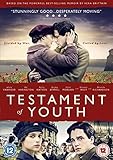
This is my review of Testament of Youth [DVD] [2014] [2015].

It is probably an advantage not to have read Vera Brittain's celebrated First World War autobiography on which this film is based, since it means one can come to it without inflated expectations. Born into a prosperous Edwardian household, strong-minded Vera battles to be allowed to apply for Oxford where, in 1914, women are permitted to attend lectures but still not take degrees. Despite her intention to avoid the conventional path of marriage she falls for one of her brother Edward's friends, Roland Leighton who like her has ambitions to write, in his case as a poet. When war is declared, all the young men of her acquaintance who are fit for service feel honour-bound to enlist. Since Edward has supported her case for Oxford, she returns the favour by arguing fiercely for her father to let him join up, finding the clincher she may live to regret, "Let him be a man". A stint as a nurse on the Front opens her eyes to the chaos and waste of war.

Seen mainly from Vera's viewpoint, the course of events is saved from intolerable sadness by moments of humour and fascinating touches of period detail. There are telling situations such as Roland's behaviour when he returns on leave, masking his preoccupation with the horror of war behind a mixture of bravado and moodiness. Many moving scenes compensate for others which seem a little wooden, but perhaps the latter reflect accurately the "stiff upper lip" restraint of the period. Also, in keeping closely to Vera Brittain's text, the film may have become too restricted as a drama.

Since "Testament of Youth" was an early exposé of the futility of war, it is perhaps surprising that it was not made into a feature film long ago. Its power has been somewhat diminished by our familiarity with the facts, but there is still particular poignancy in Vera's experience of World War One, and it is an effective introduction for anyone finding out about it for the first time.

⭐⭐⭐⭐ 4 Stars

Doing one’s best

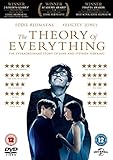
This is my review of The Theory Of Everything [DVD] [2015].

Despite or perhaps because of my admiration for Steven Hawking's brilliance and the courageous determination shared with his former wife, now Jane Wilde, I was ambivalent about watching a film which I feared would be harrowing and intrusive as regards some of the more intimate aspects of motor neurone disease. In fact, it is a sensitive and moving portrayal of their lives from their first meeting when he was embarking on a PhD and about to be hit with the unexpected diagnosis of MND with two years to live.

The film is based on Jane Wilde's book, and in a radio interview I heard her approval of the production with particular praise for Felicity Jones's brilliant imitation of her own gestures and voice, including her clipped diction from a 1950s upbringing in an academic household. Eddie Redmayne also manages to assume with remarkable skill the appearance of Hawking as seen on television. It does not trouble me that he is not a genuinely disabled actor and I would think it hard to employ one since Hawking has to be shown in steady decline from the apparently healthy only slightly clumsy young man at the outset.

Since this is a commercial film, it touches fairly superficially on Hawking's mind-bending scientific theories and the grimmer details of managing his physical decline. The pain of the latter is shown in subtle ways as when, struggling to get him to co-operate over the use of a grossly inadequate letter-board to communicate after it has been necessary to give him a tracheotomy, Jane dissolves into silent tears. So, it becomes in essence the story of his relationship with his wife, with her part in the drama equal to his. Tragically, neither can fully express themselves, he because of his disability and she out of love, a sense of duty and her unusually reserved and self-controlled personality.

The tragedy is highlighted by the fact that, perhaps in particular if one is a woman, one tends to identify mostly with Jane's exhaustion as she struggles to care for him, bring up their three children, and produce her own PhD in odd disrupted moments at the kitchen table. Having insisted on caring for a man only predicted to have two years to live, it is ironically her support which played a major part in keeping him alive. When asked in an interview how matters could have been improved, she stated that it would have helped if Hawking had been prepared to discuss his illness with her, if she had received a great deal more assistance in caring for him, and if the nurses eventually hired had been more carefully vetted. The film is faithful to the truth in making all this clear, yet manages to do so with frequent touches of wry humour.

Although Hawking probably had to be selfish and take his wife for granted to survive, the film made me wonder whether his decision to divorce her to marry his nurse was in fact an act of generosity, in freeing Jane to marry the supportive family friend whom she had come to love. There are other interpretations, of course. Posing such questions feels prurient, but this is the inevitable result of making those who are still very much alive the subject of a mainstream film.

⭐⭐⭐⭐⭐ 5 Stars

Caught in the light

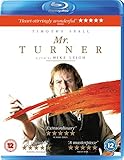
This is my review of Mr. Turner (Two-Disc Special Edition) [DVD] [2014].

We are introduced to Mr Turner as a middle-aged man, with only hints of his past life as the talented son of a Cockney barber, or his rise to fame as a painter entertained by aristocrats and displayed at the Royal Academy. Nor is there any clear explanation of his messy personal life, with inconvenient visits from a shrewish ex-mistress, justifiably angry over his neglect of her and their two daughters, one now with a child of her own.

Timothy Spall portrays Turner as eccentric and boorish, yet capable of deep affection as shown to the jolly old father who mixes his paints and makes up picture frames, in between shopping for a pig's head in the local market. Perhaps Turner's misogyny, also suggested by the casual sexual exploitation of his downtrodden and doting servant Hannah, stems from the trauma of having a schizophrenic mother carted off to Bedlam when he was a small boy. However, painting is not the sole channel of his sensitivity and vision: he can be moved to tears by Dido's Lament, and, admittedly in a drunken haze, shows empathy for poor Effie, the oppressed wife of Ruskin, portrayed here as a ghastly prig whom Turner delights us by taking down a peg or two.

Although we are shown Turner ageing, pained to hear the public turning against his later more abstract works, and finding solace in a secretive relationship with the Widow Booth, this film is a series of scenes which combine to form a vivid impression not only of Turner as a man but also of early nineteenth century life. The film's attention to period detail is impressive with the inclusion of a myriad of characters who may appear only in passing. It is like being a fly on the wall, or bird in flight, observing Turner silhouetted against the kind of sunset light which endlessly fascinated him, leaning on the rail of a ferry bound for Margate, weaving his way along narrow crowded quays to Mrs Booths' lodging, greeting other great painters at the Royal Academy or being rowed towards the Temeraire as friends joke over the likelihood of his painting it: "I shall cogitate upon it," he drawls.

We see Turner's insatiable curiosity as when he visits a photographer for the first time, quizzing the supercilious man who mistakes him initially for an ignoramus. Or when, showing a respect for women when they demonstrate talent, he invites a natural philosopher home to demonstrate how nails may be magnetized by the colours of the spectrum – at the forefront of scientific thinking at the time.

Most scenes are low-key, often quirky yet revealing, such as Turner being pestered for money by an unsuccessful painter, or the pails set round his domestic display room to catch the drips of rainwater through the ceiling. There are also some powerful dramatic scenes, as when Turner rejects a wealthy businessman's offer to buy up his works for a vast sum, since he has resolved to leave them to the nation to be viewed "gratis". Sadly, they were not to be retained in one place as he had hoped.

On reflection, I decided this is an outstanding film which makes one think about Turner as a man, flawed and complex, and want to find out more about him and his times. Yet, the massive hyping made me expect to be impressed, so that some of the earlier scenes, such as the improbably atrocious music at an aristocratic soirée were a disappointment.

⭐⭐⭐⭐⭐ 5 Stars

Three hundred dollars’ worth

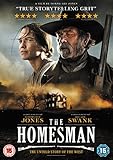
This is my review of The Homesman [DVD] [2014].

In an unusual take on a mid-nineteenth century western, Hilary Swank produces a striking performance as Mary Bee Cuddy, an industrious and competent woman who is making a success of farming in a remote Nebraskan pioneer community. Although men respect her, no one is prepared to take such a bossy and plain woman as a wife. Instead, they trek east to find pretty, submissive women who are often completely unsuited to the hard rural life where there is no social security net to help those driven mad in the face of persistent crop failure, loneliness, infant mortality or perhaps the sheer scale of the treeless landscape which often resembles an ocean beneath the vast skies.

Mary Bee agrees to accompany three such "crazy" women on the demanding five week trek back east to the care of a kindly Iowan pastor. Realising that she cannot achieve this single-handed, she saves from a lynching the disreputable "George Briggs", no doubt one of many aliases, played by Tommy Lee Jones who also directs the picture. The outcome of the journey proves quite unpredictable, with a twist which viewers may find hard to accept, but which makes sense on reflection.

Apart from being well-acted, with superb photography and a haunting opening musical theme, this film has stunning photography of the bleak beauty of the Nebraskan high plains, some moments of comedy, but is essentially a grim tale. At times it regresses into a standard "shoot `em or burn `em" western, and some scenes designed to explain further the women's insanity are hard to take, and a little too disjointed. However, overall, the film's unusual theme makes it worth watching. It made me think more deeply than before about the particular plight of women trapped in pioneering communities about which they must often have been misled in advance. It also presents a somewhat nihilistic view of life in which people nevertheless continue to do good, perhaps in spite of themselves, achieving small successes even if they are soon forgotten. The inconclusive ending is very apt.

⭐⭐⭐⭐ 4 Stars

The Imitation Game – Perhaps pale but interesting imitation

This is my review of The Imitation Game [DVD].

It is common knowledge that Turing was an outstanding mathematician who played a key role during WW2 in developing a form of early computer (based on the Polish “bomba”) to crack the German codes which protected vital military intelligence. This may have shortened the war by two years and saved an estimated 14 million lives. The full extent of his contribution concealed by the Official Secrets’ Act, Turing ran up against the law in the early 1950s when he admitted to homosexual acts during the investigation of a burglary of his house, and chose the punishment of chemical castration rather than prison, to enable him to continue his work. Sadly, he seems to have committed suicide, perhaps to escape the side effects of the medication, or to ease his loneliness.

This is clearly a rich field for an often tense and moving drama – also managing to include a good deal of humour – , which sandwiches the wartime events between scenes of his school days and ultimate arrest. One does not know to what extent he really was an autistic child whose “oddness” and literal-mindedness singled him out for bullying. We see him courting mockery by separating orange carrots from green peas, and finding a welcome refuge in a relationship with another pupil Christopher, whose name is eventually used for the code-crunching machine. Again, the film may exaggerate the extent of Turing’s initial unpopularity at Bletchley Park, for his arrogance and stubborn focus on his machine, unleavened by the ability to socialise or recognise a joke. It seems that, in real life, it was a group decision to get support for the machine by writing to Churchill, but that would have been less dramatic in the film than Turing acting as a loner.

Unlike some reviewers, I did not find the existence of a Soviet spy in Turing’s team at all implausible. It is an interesting idea that this might have been a ploy favoured by MI6 to get information to Russia which was supposed to be an ally at the time. I was also fascinated by a dilemma which I had not considered before: after the code was broken, the knowledge gained could not be put to immediate and total use, since that would have alerted the Germans to the fact, and merely led them to switch to another code which might prove even harder to crack. We are shown how even Turing was chastened by the knowledge of the arbitrary power over life and death which this gave the code-breakers – although was it they who in practice made this choice?

The film is well-acted, with a strong and complex relationship developed between Turing and the gifted and unconventional mathematician Joan Clarke, prepared for them to love each other “in their own way”. The weakest aspect was coverage of Turing’s arrest and subsequent treatment in the early 1950s which seemed rushed and unclear in places. Although it may have altered, simplified and distorted many details into a kind of “faction”, the film does a good job in making a complex and abstruse technical theme essentially comprehensible in outline and interesting to a wide audience, and in showing the tragedy of a brilliant man being treated badly for his eccentricity (which may not have been the case to the extent shown) and persecuted for his homosexuality, which most certainly occurred.

⭐⭐⭐⭐ 4 Stars

Caught in the light

This is my review of Mr Turner [Blu-ray] [2014].

We are introduced to Mr Turner as a middle-aged man, with only hints of his past life as the talented son of a Cockney barber, or his rise to fame as a painter entertained by aristocrats and displayed at the Royal Academy. Nor is there any clear explanation of his messy personal life, with inconvenient visits from a shrewish ex-mistress, justifiably angry over his neglect of her and their two daughters, one now with a child of her own.

Timothy Spall portrays Turner as eccentric and boorish, yet capable of deep affection as shown to the jolly old father who mixes his paints and makes up picture frames, in between shopping for a pig's head in the local market. Perhaps Turner's misogyny, also suggested by the casual sexual exploitation of his downtrodden and doting servant Hannah, stems from the trauma of having a schizophrenic mother carted off to Bedlam when he was a small boy. However, painting is not the sole channel of his sensitivity and vision: he can be moved to tears by Dido's Lament, and, admittedly in a drunken haze, shows empathy for poor Effie, the oppressed wife of Ruskin, portrayed here as a ghastly prig whom Turner delights us by taking down a peg or two.

Although we are shown Turner ageing, pained to hear the public turning against his later more abstract works, and finding solace in a secretive relationship with the Widow Booth, this film is a series of scenes which combine to form a vivid impression not only of Turner as a man but also of early nineteenth century life. The film's attention to period detail is impressive with the inclusion of a myriad of characters who may appear only in passing. It is like being a fly on the wall, or bird in flight, observing Turner silhouetted against the kind of sunset light which endlessly fascinated him, leaning on the rail of a ferry bound for Margate, weaving his way along narrow crowded quays to Mrs Booths' lodging, greeting other great painters at the Royal Academy or being rowed towards the Temeraire as friends joke over the likelihood of his painting it: "I shall cogitate upon it," he drawls.

We see Turner's insatiable curiosity as when he visits a photographer for the first time, quizzing the supercilious man who mistakes him initially for an ignoramus. Or when, showing a respect for women when they demonstrate talent, he invites a natural philosopher home to demonstrate how nails may be magnetized by the colours of the spectrum – at the forefront of scientific thinking at the time.

Most scenes are low-key, often quirky yet revealing, such as Turner being pestered for money by an unsuccessful painter, or the pails set round his domestic display room to catch the drips of rainwater through the ceiling. There are also some powerful dramatic scenes, as when Turner rejects a wealthy businessman's offer to buy up his works for a vast sum, since he has resolved to leave them to the nation to be viewed "gratis". Sadly, they were not to be retained in one place as he had hoped.

On reflection, I decided this is an outstanding film which makes one think about Turner as a man, flawed and complex, and want to find out more about him and his times. Yet, the massive hyping made me expect to be impressed, so that some of the earlier scenes, such as the improbably atrocious music at an aristocratic soirée were a disappointment.

⭐⭐⭐⭐⭐ 5 Stars

Justice between a rock and a hard place

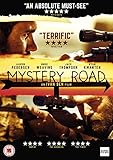
This is my review of Mystery Road [DVD].

Of Aboriginal birth, Jay Swan has returned from a training course to work as a detective in a god forsaken outback Queensland community. Forced, ostensibly owing to staff shortages, to investigate alone the murder of a young “native” girl, Jay finds himself caught between the rock of his work colleagues’ prejudice and apparent desire to conceal some of their own shady dealings with local criminals, and the hard place of being regarded as a traitor by the native community where he grew up, everyone being a “cousin” or “brother” but reluctant to talk. He is even unable to get any information out of his daughter Crystal, now living with his estranged wife. A friend of the dead girl, it becomes painfully clear to Jay that Crystal is involved with the drug-dealing, even prostitution of the white low-lifes who are corrupting the vulnerable Aboriginal community already fractured by generations of mistreatment at the hands of white settlers.

In this slow-moving, understated film, with excellent acting from Aaron Pedersen as Jay, we are shown the workings of this outback community, with the growing evidence stacked against an honest law enforcer being able to obtain justice. The filming of the vast, flat, barren landscape with the occasional dramatic rocky scarp is very striking. Apart from a few brutal stereotypes, the characters of individuals, whether victims or villains, are often subtly developed: Jay’s bitter alcoholic ex- wife, a local drug-dealer whom he is rather unconvincingly allowed to question alone, or his boss, who may be a weak conniver or even an arch rogue. The tragedy of the Aborigines’ plight is portrayed with a conscious-churning clarity.

It was therefore a disappointment to me that the director chose to resolve Jay’s impasse with the climax of a stagy western shootout, of the kind where the good guys would in reality have been wiped out in the first few seconds.

My four stars are therefore for the work as a whole and the acting, not for the shoot-out which ruined it for me, by abruptly turning the film into an American-style western. I have to admit that many reviewers have admired this move for the quality of the direction and its arguable symbolism.

⭐⭐⭐⭐ 4 Stars