“The Descendants” DVD – Tarnished Paradise

This is my review of The Descendants DVD.

I came to this film with no great expectations, having heard it panned by some critics, apart from praise for George Clooney’s strong presence to carry it. In fact, I found an absorbing, often amusing tale, and, if I was not deeply moved as I perhaps should have been, the story has stayed in my mind, and my opinion of the direction has risen on reflection.

What could be a morbid or mawkish tale is saved by humour, often at unlikely points, and by some excellent acting from the whole cast, not just from George Clooney. He plays Matt, a workaholic lawyer who has to cope with his two difficult daughters when his wife is left brain-damaged in a coma following an accident water-skiing. To cap it all, his elder daughter Alex reveals that her mother has been having an affair with an unknown man. Appalled that he had no inkling of this, Clooney is at once consumed with the desire to discover the man’s identity, and confront him.

A further twist is Matt’s role as trustee for a family landholding in one of the few remaining unspoilt stretches of coast in Hawaii. Passed down through the generations from a marriage long ago between a Hawaiian princess and a western missionary, this land is now seen by the descendants, (hence the film’s title) who have mostly blown all their wealth, as an opportunity to sell to developers for a fat profit. What will Matt decide, and why?

The Hawaiian setting, with the need to hop round between islands by plane, Clooney sporting a succession of flowery shirts, adds character to the tale. The lush green hills, vividly blooming shrubs and the beautiful sunlit coastline are offset by the American influence which has spawned ugly concrete urban tower blocks, commercialised the local food and made the traditional music sound like country and western, and by the evidence of a poor underclass such as you would find in other places which make no claim to be paradise.

Perhaps it is a weakness in the plot that the sick wife, indulged in the past by her domineering rough diamond father, evokes so little sympathy, while Clooney always appears decent and principled, although largely clueless when it comes to managing his daughters who run rings round him to get their own way, until the reality of their mother’s illness undermines their self-absorption.

I was not bored by the slow pace but felt that some of the final scenes could have been cut.

⭐⭐⭐⭐ 4 Stars

Speechless

This is my review of The Artist [DVD].

Entirely in black and white, and largely without speech, this modern film made in the style of a silent movie is a clever and entertaining take on the effect of the arrival of the "talkies" on "George Valentin", the over-confident established star of Hollywood silent films of the 1920s. Just as these did, it relies heavily on appropriate musical scores – at one point we see an orchestra playing just below the screen, as a rapt audience watches the wordless drama.

It made me realise how much can be conveyed simply by facial expressions and body language, although all movements need to be slightly larger than life.

As we watch George disintegrating, forced to observe the mercurial rise of the vivacious, yet kindhearted Peppy Miller, and to realise too late that he has made a fatal mistake in laughing at talking films, we expect a happy ending, at least of a sort. However, there are also many humorous touches, striking visual effects, such as when George watches himself on film from behind the screen, or is sucked down very symbolically into filmic quicksand, and there are even some genuinely moving moments on the way, assisted by the best actor of them all, George's performing dog. As someone quips, if only he could talk!

⭐⭐⭐⭐⭐ 5 Stars

Looking Back in Sorrow or Anger?

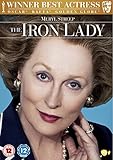
This is my review of The Iron Lady [DVD].

Meryl Streep lives up to expectations with her strikingly accurate recreation of Margaret Thatcher, at least as she has appeared in the media. It is interesting to be reminded of the violence of the 1980s – the Poll Tax riots, the IRA hunger strikers and bombing of the Grand Hotel in Brighton, the bitter Miners' Strike, the tensions and mishaps of the Falklands War offset by the exaggerated euphoria over the eventual victory. However, all this is covered so quickly that I am not sure what those too young to remember will make of it.

The best yet most controversial aspect of this film is the portrayal of the former Prime Minister as an old lady suffering from dementia, often imagining that her husband Denis is still alive, a dramatic ploy for remembering her past life and revealing her personality through imaginary exchanges with him, ably although perhaps too sympathetically portrayed by Jim Broadbent.

These scenes of dementia about a person still living left me feeling a little uneasy. Perhaps they are based on a recent book by Carol Thatcher, but I understand the family has not given their approval for the film. Maybe the "Anyone for Denis?" stage show paved the way for this kind of intrusion into their lives. I noticed that Mark Thatcher has a remarkably low profile in the story, possibly with avoidance of lawsuits in mind.

There is perhaps too much focus on Thatcher as an elderly lady, giving too little time to develop past events. The process by which she becomes Prime Minister is rushed through, perhaps so as not to bore the audience. Some important aspects of her premiership are neglected. I would have liked more about her famous lack of humour, more on her relationship with Ronald Reagan and her dealings with EU partners – "We want our money back" – possibly a bit, not too much, about monetary policy. Her cabinet ministers come across mainly as grey ciphers, and perhaps more of them could have been clearly differentiated for the benefit of those who remember them.

Thatcher is shown as descending into megalomania, largely responsible for her downfall. Yet, the film does succeed in arousing some sympathy for a woman who had to overcome the snobbish prejudice of the old style Tory party to become the first female British head of government.

⭐⭐⭐ 3 Stars

Sundrenched French nostalgia for a Provençal tale by Pagnol

This is my review of The Well-Digger’s Daughter [DVD].

Set in the sundrenched Provence countryside near the town of Salon at the outbreak of World War 2, this soft-centred but often surprisingly moving tale follows the well-worn trail of the innocent young girl who falls for a wealthy cad. In this case, Patricia, daughter of a simple but fiercely proud well-digger finds herself pregnant after Jacques, spoiled son of the owner of the local hardware store, has been sent off to fight at the front. How will her father react when he learns that his "angelic princess" is no better than other girls? Will Jacques's doting mother feel her son should "do the decent thing" and marry the girl? As the well-digger observes, "You can't trust people who sell tools but don't use them."

Patricia is more than just a pretty face. In addition to receiving a period of education in Paris with a wealthy benefactor, she has a strong sense of honesty and integrity which may pierce Jacques's worldly cynicism, although you wonder whether he would be capable of being faithful to her in the long run.

There are some entertaining further plot twists in the dogged devotion to Patricia of Félipe,assistant to the well-digger Pascal. In turn, Félipe is loved in longsuffering silence by Patricia's younger sister Amanda. Then there is Pascal's blend of shrewdness and stubborn stupidity, his rueful shouldering of the burden of six daughters after his wife's death.

We see an exploration of some of the dilemmas of French rural society. It is shameful for a daughter to have a bastard child, yet a man's dearest wish is to have a boy child to bear his surname, even if at one remove as a grandson….

The film is well-directed by the respected French actor Daniel Auteuil who also plays the role of the well-digger, apparently drawing on his native southern accent. Although his acting may seem a little over the top at times, I have met Frenchmen prone to the vivid expression of such deep and rapid shifts of emotion.

Recommended as a watchable and entertaining if lightweight drama.

⭐⭐⭐⭐ 4 Stars

We have a Pope – Holy Smoke and Mirrors

This is my review of We Have A Pope [DVD].

During the film the audience around me laughed continually, the opening scenes of red-robed cardinals filing in to vote on the next pope are very striking, and the end of the film is well-judged and moving. The basic plot idea is good: an unassuming old prelate, sensitively played by the octogenarian Michel Piccoli, prays not to be elected pope, which seems unlikely in view of the odds. When his worst fear is realised, he suffers a panic attack on the famous balcony, seconds before his announcement to a vast, eager crowd. A celebrated psychoanalyst, who happens to be an atheist, is called in to cure him, but the reluctant pontiff succeeds in escaping into the Rome crowds.

At this point, the plot loses its way. Despite the many amusing incidents and some expressive acting, it is unclear whether the film is meant to be pure comedy and farce – as in the overlong and therefore tedious scene where the psychoanalyst organises a volleyball championship to keep the cardinals occupied while held in seclusion pending the pope’s reappearance – or an attempt to explore deeper issues beneath a light-hearted veneer. It therefore misses the mark on both counts. What is the director’s intended message? He portrays a church steeped in magnificent but archaic and empty ritual, bedevilled with cynical politicking and obscene wealth, not to mention the self-indulgent, elderly male cardinals, yet I don’t think the film is meant to be anti-Catholic.

The film is certainly about a simple man’s sense of unworthiness but fails to develop this. The unwilling pope demonstrates himself time and time again not to be up to the job, which makes for a thin drama. I expected that he would show himself to be a truly good man, assisting the ordinary people he encounters with his wisdom. Instead, he appears self-absorbed, petulant under pressure and clinically depressed. Far from experiencing the lives of ordinary, real people, he gets mixed up in a theatrical troupe spouting Chekhov and it turns out he would really like to have been an actor but was rejected for drama school – another jibe at the catholic priesthood, it seems.

I do not object to the prominent role the director has given himself as the flamboyant psychiatrist, but it might have been better if he had remained in the wings to take stock of the film’s intended and actual impact.

Les émotifs anonymes – Romantics Anonymous

This is my review of Les émotifs anonymes (FR IMPORT).

Titled “Romantics Anonymous” in English, this short film introduces us to Jean-René, the chronically shy owner of a failing chocolate factory who pays regular visits to a shrink in an attempt to overcome his inability to relate to others. He hires Angélique, a hypersensitive young woman, as a totally unsuitable sales rep, not realising that she possesses a rare talent for making irresistible chocolates which can save his business. Unable to cope with personal recognition and being the centre of attention, she has managed to pass herself off as a mere go-between ferrying what have become widely celebrated chocolates made by an imaginary elusive “hermit” to a confectioner who is “in” on her secret but whose death has forced her to seek another job.

In this short, lightweight comedy, much of the humour revolves around Jean-René trying to fulfil basic tasks to develop his social skills: steeling himself to touch people, or to take Angelique out for a meal. We realise why he brings a suitcase to the restaurant and hides it in the gents: he needs to rush off every few minutes to change his shirt, as he is “burning up” over the stress of the meeting.

Similarly, we see Angélique taking her problems to a support group full of ironical situations, such as when the girl who “can’t say no” proudly tells the others that she has managed to resist a man’s advances, only for it to become sadly apparent that she has destroyed what sounds like a genuine relationship which she should have encouraged.

The incidents are too exaggerated for anyone to take offence over laughing at what is in fact a real problem for many people. Overall, the film is quite well-made, and it is all “wonderfully French” apart from the jarring, glaringly inappropriate English pop music inserted to cover some scenes.

Can Jean-René overcome his gaucheness sufficiently to stop driving Angélique away because she thinks she has “done something wrong”? Can two such emotional people find happiness together? The outcome is not really in doubt. If it all sounds too trivial, you can at least take the opportunity to practise your French comprehension.

⭐⭐⭐ 3 Stars

More of a Shallow Blue Lake

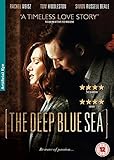
This is my review of The Deep Blue Sea [2011] [DVD].

Although I was expecting a brittle and dated unhappy love affair, this remake of Rattigan's play proves quite moving up to a point. Set around 1950, the film starts with the attempted suicide of Hester Collyer, privileged wife of a high court judge who has sacrificed her reputation and material comforts to live in a dreary flat with Freddie, a former wartime pilot who beneath his charming veneer is finding it hard to adjust to a mundane life in civvy street .

The plot gradually reveals through a series of flashbacks how Hester has been reduced to despair. At first, it is hard to understand how this beautiful young woman could have married such a stiff man as William Collyer, not to mention the fact he is old enough to be her father. Then we wonder how such a cultured woman can be so infatuated with a man like Freddie who, apart from his thoughtless neglect of her, prefers downing pints and singing along in a working class pub to visiting an art gallery with her or listening to classical music. Is it just a question of passion and lust, applied through fate to a man who cannot make her happy in the long-term?

Although acted with great sensitivity by Rachel Weisz, Hester is an odd mixture of sophisticated self-possession and neediness, and comes across at times as just a "poor little rich girl". By contrast, the two men, ably played by Simon Russell Beale and newcomer Tom Hiddleston reveal complex reactions in a way that eventually arouses as much, if not more, sympathy.

The set plays close attention to period detail, although the Barber score at the beginning is too loud and intrusive, as is too often the case with films, and the flashback to people taking refuge in an underground station during the Blitz is too much of a romanticised tableau.

A modern version of the theme of a married woman forming a passionate physical attachment to an "unsuitable" man is covered with more depth and subtlety in "Leaving", the French drama starring Kristin Scott Thomas. "The Deep Blue Sea" left me feeling rather sad, but a little dissatisfied as if Rattigan's drama had not achieved its potential.

⭐⭐⭐ 3 Stars

Et Tu Stephen?

This is my review of The Ides of March [DVD].

What do you do if your idol seems to have feet of clay? How do you take revenge and at what price when others try to destroy your prospects to protect their own?

Ambitious yet idealistic young press manager Stephen Myers (Ryan Gosling) is convinced that he has found a man he can trust and admire in the form of Governor Mike Morris (George Clooney), a charismatic, liberal Democrat candidate running for the US Presidency.

For all his confidence and self-assurance, Stephen has a lot to learn about the ruthless tactics of those who have been in the game longer. Matters begin to go awry when the main Democrat rival's strategist, Duffy, makes a bid for Stephen's talents. Morris's campaign manager, Zara, sets a surprisingly high store by loyalty and a pushy journalist, Ida Horowicz, adds to Stephen's problems. There are tense encounters with sharp dialogue delivered by some great actors, not least Philip Seymour Hoffman and Paul Giamatti in the roles of Zara and Duffy. A further twist is provided by Stephen's unwise affair with a beautiful young intern.

The storyline is slow-paced at first, with a good deal of mumbled jargon likely to make a non-American viewer long for subtitles, although one can get the gist. The plot speeds up and becomes gripping, then ends abruptly, leaving you first surprised, then caught up in considering the issues raised before the inevitable "but what about?" questions surface as you begin to see flaws in the plot.

Overall, this is an absorbing political drama about issues of loyalty, how the desire for power corrupts, to what extent the ends justify the means. The modern fable raises some complex moral issues and leaves you to decide what is likely to happen next and why.

⭐⭐⭐⭐ 4 Stars

Sweet sorrow

This is my review of Leaving [DVD] [2009].

This is a fresh and moving take on the familiar theme of an unfulfilled woman sacrificing family and properous home for her obsession with an unsuitable lover. We expect tragedy from the opening scene of Suzanne, played as subtly as ever by Kristin Scott Thomas, slipping out of bed and out of sight, only for us to hear a gunshot. The film is never tedious or depressing because of the well-paced plot and clearly drawn characters.

Our sympathies are divided. We feel for Suzanne as she seeks happiness away from her controlling husband, even though we know that she is being devious, selfish and on a practical note ill-advised in choosing an unsuitable lover in the shape of a "bit of rough" immigrant handyman with a prison record, with whom she has little in common apart from sex and whom she at times seems to manipulate for her own advantage, not considering the risks she is asking him to run on her behalf. Her actions, well-intentioned or criminal, tend to have unintended damaging consequences.

On the other hand, although he rides roughshod over his wife's needs, one feels for the husband who understandably in some ways tries to use his position of power and influence to cling on to the wife he wants to possess, and may genuinely love.

We also empathise with the lover, vulnerable despite his physical strength, and with Suzanne's teenage children, torn between their parents' distress, all put under pressure in the chain of events.

In short, this is an intriguing drama of complex emotions, well-acted, with an unpredictable twist at the end.

⭐⭐⭐⭐⭐ 5 Stars

Can’t turn a blind eye

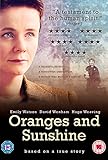
This is my review of Oranges and Sunshine [DVD].

The cruel deception of thousands of British children in care, misinformed that they were orphans and then transported to Australia as a cost-saving policy continued until as recently as 1970. A documentary of this would be shocking enough, but the director Jim Loach, carrying on his father Ken's tradition, achieves an even more powerful effect by making this a docudrama.

Emily Watson gives a convincing and moving performance as the determined real-life social worker Margaret Humphreys who discovered by chance that this injustice existed, and that many children had suffered hardship, even abuse, providing cheap labour for the Christian Brothers in Australia. Her establishment of the Child Migrants Trust has helped to put many naturalised Australians back in touch with their birth parents in Britain after decades of separation, but the indelible effects of childhood trauma often remain. We see the irony that Humphreys' dedication to making amends for the cruelty of others was often at the expense of giving enough time to her own children.

This thought-provoking and well-made film is worth seeing. It may leave you depressed for a while but we can't pretend ostrich-like that this never happened.

⭐⭐⭐⭐ 4 Stars