A visual display that makes you want to read the book

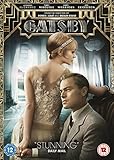
This is my review of The Great Gatsby [DVD] [2013].

The reviewer Peter Bradshaw's description of Baz Luhrmann as "a man who can't see a nuance without calling security for it to be thrown off his set" is quite telling, but if you accept that the director's trademark is flamboyant excess, you could argue that the extravagant parties thrown by the wealthy Gatsby, the wild, escapist behaviour of "the bright young things" in the Jazz Age following the privations of World War 1, and the unthinking self-indulgence of the very rich, all lend themselves to Luhrmann's bombastic approach.

He is faithful to the details of the story, which is a "good yarn" as well as being a comment on the snobbery and corruption of 1920s American society which he develops to some extent. With events seen through the eyes of the narrator Nick Carraway (unclear why he is so poor when his cousin Daisy clearly comes from an established family accustomed to wealth), we do not at first understand his huge respect for Gatsby, to the extent of labelling him "great". We gradually come to grasp the irony of Gatsby's use of vast, recently gained wealth to try to rekindle an old love, his delusion that money can be used to regain the happiness of a past infatuation and the poignancy of "true love" blighted by the fate of "bad timing" yet still providing opportunities for honourable personal sacrifices which may go unnoticed.

I accept that this may be a shallow interpretation to those who know and love the novel, but if the film succeeds in introducing people to it, and inspires some, like me, to read Scott Fitzgerald for the first time, Luhrmann has achieved something more than simple entertainment, as he did with Romeo and Juliet.

⭐⭐⭐ 3 Stars

Too refractory

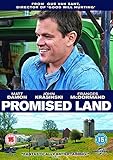
This is my review of Promised Land [DVD] [2012].

Reminiscent of Erin Brockovich but not nearly as effective, this is one of those dramas on a topical environmental theme. Matt Damon plays Steve Butler, a salesman whose success in persuading hard-up American farmers to sign contracts with a major fracking company is based on personal experience. When the closure of a caterpillar assembly plant brought depression to his own home town, it was the cheques from a fracking firm's gas extraction that gave the local farmers the opportunity to buy their kids a decent education and escape to a better life.

Inevitably, the time comes when Steve encounters major local opposition. Although it is surprising that he and his pragmatic female colleague Sue Thomason seem so ill-prepared for this, the drama develops quite well, managing to portray the pair as both sympathetic and morally compromised. Despite other reviewers' criticisms of the ending, I found it contained a neat twist which prevented the film from ending up too corny or predictable.

There are entertaining scenes and wry touches but, perhaps because fracking is a dry subject, some incidents seemed pointless padding intended to "lighten things up" yet missing the mark. The direction struck me as wooden at times, and I often felt unengaged, although interested in the issue.

A sense of rural America comes across strongly. I particularly liked the homemade shop sign proclaiming, "Guns, Groceries, Guitars and Gas". The use of folky-sounding music in the background which proved to be Milk Carton Kids' tracks like "Snake Eyes" proved a welcome discovery.

I was left feeling this was a missed opportunity to create what could have been a gripping film, with the relationships between the main characters and the arguments on both sides more strongly developed. It was as if the director was scared of boring the audience and, lacking the courage of his convictions, undestimated them.

⭐⭐⭐ 3 Stars

Strings attached

This is my review of A Late Quartet [DVD] [2012].

The "Fugue" String Quartet have played together for a quarter of a century, so it is a shock when the founder member, cellist Peter, announces that he has early-stage Parkinson's disease so will need to retire. Reacting with a mixture of denial and doubts as to whether they can continue without him, or wish to do so, the bombshell releases negative forces in the rest of the group – long-suppressed rivalry, jealousies and resentment surface abruptly.

With beautiful filming of Central Park in the snow and the interior of spacious old brownstone apartments, the main characters all put in convincing and moving performances, not least in their ability to appear to play string instruments, although I have no idea how a skilled musician would view this. The scenes are based on the rehearsal of Beethoven's last String Quartet, Opus 131, a fitting background to the theme of the film. It seems to convey very convincingly the joys and sacrifices of life in a close-knit quartet in which one must sink one's individuality to achieve the benefits of collaboration and the chance to perform far more, at a more satisfying level, than might be the case as a soloist – a point I had not considered.

Although it may appeal mainly to older viewers who are close to experiencing the effects of ageing and intimations of mortality themselves, there is also a good deal of humour with some tense moments, as normally highly disciplined musicians act out of character and indulge themselves with potentially disastrous consequences.

⭐⭐⭐⭐⭐ 5 Stars

Sins of the fathers

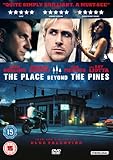
This is my review of The Place Beyond The Pines [DVD] [2013].

Luke, a young man whose only assets are good looks and skilful motorcycle stunt riding, finds that he has made a girlfriend pregnant. He is filled with an unexpected urge to care for his son, even if it means breaking the law to obtain enough money to persuade Romina to leave her current man.

Although you may think you are in for a cops and robbers tale which is bound to end in tragedy, the plot switches abruptly to a new theme about police corruption, centred on a fresh main character, Avery, the ambitious young officer who wants to combine police work with his legal qualifications to achieve high political office. Luke and Avery are opposites, one poor and disadvantaged, the other wealthy with influential connections. Yet both have a son of the same age, and ironically, in his pursuit of personal success, Avery may be the less caring, with what could be disastrous consequences. These are developed in the third part of the film, which moves on to include the next generation.

With a rambling and at times under-edited structure, the whole piece feels like watching three separate films played sequentially. Although I agree with those who have found it overlong, there are some moments of high tension. Some of the scenes seem very realistic and natural as well as moving, although the final section involving the teenage sons is less convincing. Overall, it is about the effects of class and fate, and a modern interpretation of the timeworn theme of how "the sins of the father are visited upon the son".

⭐⭐⭐⭐ 4 Stars

Dans la Maison / In the House – Life-destroying creative art?

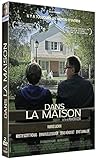
This is my review of In the House (Dans la maison).

A jaded teacher of literature is stirred out of boredom by the one piece of written homework that stands out from the rest. He and his wife are intrigued by the boy’s account of making friends with a fellow student in order to get inside his comfortable middle-class world, to see what it is like “in the house”, “dans la maison”. Each episode ends with the tantalising “à suivre”, “to be continued….”

Although, like her husband, hooked on the stories, the wife is uneasy about the ethics of all this. Is the boy’s objectivity somewhat chilling, his behaviour sinister, or are the accounts even true? An unsuccessful writer himself, the teacher suppresses any doubts in what becomes an obsession to develop the boy’s talents as a writer. Does the teacher have other subconscious motives? In the relationship between the teacher and the student, who is being manipulated? A parallel thread is the wife’s entertaining attempts to make a success of the avant garde art gallery which she manages.

Well-acted with some original visual techniques and a witty dialogue, this combines comedy, suspense, pathos with a dash of surrealism to create one of the best films I have seen for a while, all the more so for being unexpected.

⭐⭐⭐⭐⭐ 5 Stars

Perils of Pill Popping

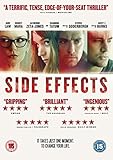
This is my review of Side Effects [DVD] (2003).

A beautiful young woman remains clinically depressed even after her husband is released from jail for insider training. A failed suicide attempt brings her to the attention of a caring but ambitious psychiatrist (Jude Law) and it seems we are set for an exposé of the US drug industry, by turns reducing everyone to casual pill popping, often ruining the lives of vulnerable patients whose sickness is relieved only at the price of grim side effects, and corrupting medical professionals in the process. In short, this starts off very much in the same vein as the director Soderbergh's crusading Erin Brockovich with its attack on corporate environmental polluters.

Halfway through, the film takes a sharp turn to become a complicated and fast-moving thriller of the type which causes you to risk missing a point if you spend too much time trying to work out the previous clue. It was entertaining at the time but left me feeling dissatisfied with too many somewhat implausible plot twists.

This is well-acted, skilfully filmed, is hard to review without giving away too much of the plot but would have been much more powerful if it had kept to the moral dilemmas of modern psychiatric medicine.

⭐⭐⭐ 3 Stars

More than impure greed?

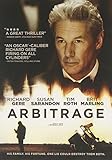
This is my review of Arbitrage [DVD] [2012] [Region 1] [US Import] [NTSC].

Not expecting too much after some lukewarm reviews, this proved to be a well-made drama, part psychological study, part thriller, a tart comment on the greed and sharp practice recently revealed in the world of hedge fund trading.

Although not quite in the same league as Bernard Madoff, Robert Miller appears to be a successful and ruthless business tycoon. At the outset, we see him celebrate his sixtieth birthday in style with his apparently loving wife and family but the cracks in the facade soon begin to show. Miller’s angry frustration over the elusive James Mayfield’s reluctance to sign the contract for a major purchase is explained once we realise that an old associate of Miller’s is threatening to pull the plug on a business loan, without which a large hole in the company accounts will be exposed.

When Miller goes to seek solace with his beautiful but possibly loose-cannon mistress, events begin to spiral out of control in a series of mishaps. Is Miller wily enough to save himself when fate seems to have turned against him so abruptly?

There are several dramatic exchanges between, for instance, Miller and the persistent detective played by Tim Roth, or Miller and the young black man he turns to for help, improbably until the reason is explained. Although you can enjoy this as a lightweight piece of entertainment, this film explores the personalities of the main characters and moral issues raised by the pursuit of wealth, power and personal satisfaction. Is Miller more than a cold-hearted money-grubber who has to win every battle?

⭐⭐⭐⭐ 4 Stars

Vote on a knife-edge

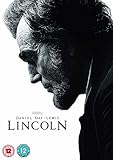
This is my review of Lincoln [DVD].

Based on Dorothy Kearns excellent "A Team of Rivals", this film is wisely focused on a specific period to make it more manageable, namely the final few months of the traumatic American Civil War and Lincoln's controversial decision to pass a "Thirteenth Amendment" giving a blanket freedom to all slaves, rather than try to end the bloodshed by negotiating a peace with the South which stopped short of abolition.

Clearly designed to instruct us, the film proves heavy-going at times: some of the political debates and meetings are couched in complex language of the day delivered at speed and so hard to absorb, some complicated points could have been made a little clearer and some sets are perhaps realistic for the period but too dark to engage the viewer. Spielberg may be guilty of making a fascinating situation unduly dull.

I have heard reviewers criticise the lack of significant black anti-slavery campaigners who were active at the time, and this appears to be a serious omission. The opening scene of Lincoln fraternising with soldiers spouting his speeches struck me as contrived, and the decision to report rather than show Lincoln's assassination at the end also seemed a missed dramatic opportunity, and underplayed the irony of his untimely death before he had a chance to manage the peace.

On the plus side, there are strong performances from the lead actors with Daniel Day Lewis unquestionably outstanding, his high-pitched voice apparently a deliberate choice based on research. He conveys Lincoln's charisma: his "common touch", lack of affectation, penchant for telling stories (which drove some people mad), very broad-minded approach with a desire to hear different sides of the argument which laid him open to a charge of indecisiveness, but occasional flashes of steel. We see something of his oratory and obvious integrity, although he was capable of quite cynical wheeler-dealing, in this case employing shady characters to persuade Democrats (we have to keep reminding ourselves that this was the pro-slavery party) to vote for the Thirteenth Amendment in return for government posts.

Although the film is not as moving as it should be, there are some effective scenes such as Lincoln's son concluding that he must fight, Lincoln arguing with his wife over his son's right to fight in the war or Lincoln reviewing the horrors of battle first-hand. There is a little humour in some of the repartee, although I found the scenes with the three fixers trying to get Democrats to vote against slavery bordered on slapstick.

⭐⭐⭐⭐ 4 Stars

Les Misérables – What vision does

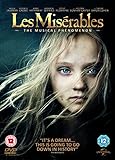
This is my review of Les Misérables [DVD] [2012].

Coming to it with the “clean slate” of not having seen “Les Misérables” on stage, I find it hard to fault this film version of the musical. It succeeds in creating an epic spectacle which also captures the essence of Hugo’s masterpiece, designed to show the suffering of the masses, and to explore the issue of redemption in a world where social condemnation – of a mother abandoned by her lover, or a man forced to steal bread for his sister, can create “hell on earth”.

I was apprehensive about the reported length of three hours which turned out to be more like two-and-a-half, and passed without my feeling bored. Similarly, although I had feared that the delivery of virtually every line by actors rather than professional singers would be cringe-making, I soon realised that the sincerity with which they sing without losing the note gives a raw life to their performance which technically superior classical performances often lack. I admit I would not choose to listen to the film soundtrack alone.

Even if the music leaves you underwhelmed, there is a feast for the eyes and constant source of interest in the technically brilliant, imaginative sets.

Yes, the film is highly emotional, but that reflects the style of Hugo’s day, when being forced to watch the rapid decline and death of friends and relatives was a common experience, and deep poverty and suffering were widespread. The “love at first sight” romance between Cosette and Marius appears less important than the parallel tales which reflect what Hugo was trying to convey “a progress from evil to good, from injustice to justice, from falsehood to truth, from night to day, from appetite to conscience, from corruption to life … The starting point: matter, destination: the soul. The hydra at the beginning, the angel at the end”.

I was impressed by the number and range of “good songs”. Apart from the well-known “I dreamed a dream” sung very movingly by Fantine (Anne Hathaway) who has been reduced to prostitution to feed her child Cosette, there is a rousing chorus delivered by the idealistic young revolutionaries at the barricades, complex love trios and quartets, and some striking solos such as Eddie Redmayne’s “Empty chairs and empty tables” reflecting the feeling of loss and utility in the aftermath of a battle. The child actors perform well: the young Cosette sings beautifully, and the cheeky Gavroche exudes confidence and energy in an Artful Dodger-style role.

Russell Crowe has been criticised for his weak singing, but I found it more than effective for the role of Javet, the inspector obsessed with tracking down Valjean who, sent to gaol for stealing bread, breaks his parole on being released after twenty years, but goes on to become a successful man, dedicated to living a good life. Crowe conveys well Javet’s growing sense of confusion that upholding the law means pursuing a former thief whose actions suggest he is a man of greater integrity than the inspector himself.

⭐⭐⭐⭐⭐ 5 Stars

Seeing more with another dimension

This is my review of Life of Pi [DVD].

Not having read the bestselling book on which this film is based, I came to the cinema with no great expectations, apart from thinking, as proved the case, that judging by the trailer this would be an excellent theme for 3D film and the use of CGI.

From the outside we are transported to the magical beauty of the Botanical Gardens of Pondicherry, where the oddly named hero Pi's father runs a zoo. Political pressures cause him to take a Japanese ship for French-speaking Canada, with his animals caged in the hold, but disaster strikes when the vessel sinks in a storm and Pi finds himself in a waking nightmare, confined to a lifeboat with a ferocious Bengal tiger inappropriately named "Richard Parker".

We know that Pi will survive the ensuing Odyssey, since he is narrating the tale years later to a young writer, but that does not detract from the tension of his struggle to exist, leavened by moments of humour and the astonishing beauty of vast starlit skies, oceans suffused with phosphorescence and a passing school of leaping dolphins. The striking scenes give you a real sense of Pi's loneliness, leading to a subtle identification with the tiger, and of his increasing sense of closeness to the natural world. This in turn helps you to appreciate how such experiences may give people a "sense of god", and Pi is, as we know, very susceptible to spiritual experiences anyway.

At some points the story turns to magical realism, which the computer graphics makes wonderfully vivid and somehow more plausible than might be the case in a novel. The mind plays tricks on people under stress, so we are left uncertain as to whether Pi may have imagined or even invented the story to replace a more mundane and sordid truth.

I recommend this film which can be enjoyed both as simple entertainment, or taken on a deeper level. But to do it justice, you must see it in 3D.

⭐⭐⭐⭐⭐ 5 Stars