Let this cup pass

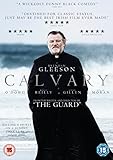
This is my review of Calvary [DVD] [2014].

On the bleakly beautiful coast of Sligo, Father Lavelle ministers to his eccentric flock of sinners with compassion leavened by dry wit, and tolerates his blinkered sidekick. A widower and former alcoholic, Lavelle is no unworldly paragon of virtue. In the opening scene, a disembodied voice in the confessional box calmly announces the intention of killing him on the beach the following Sunday, not in spite of but because of the fact that Lavelle is essentially a good man. This will be some kind of confused way of obtaining closure for childhood abuse at the hands of another priest. How should Lavelle respond to this threat?

The film follows the course of Lavelle's life for the following week with an element of "whodunnit" in advance. Can we guess the identity of the would-be assassin? This is not really the point, which is whether, in modern fractured and increasingly secular Ireland, the sacrifice or "Calvary" of a Catholic priest can have any meaning. By turns satirical and serious, and overall quite original, the film is patchily successful – some characters are too caricatured and the dialogue is at times somewhat contrived, as in the case of the local police chief's grotesquely camp and sinister lover – or that's what I took him to be.

The one small detail which grated on me was a local corrupt banker's apparent ownership of Holbein's painting "The Ambassadors", which everyone knows to be in the National Gallery, London – I accept this may have been intended as a touch of humour. Overall, the film is worth watching, although it takes a period of reflection to form a judgement on the ending. The musical soundtrack is also good.

⭐⭐⭐⭐ 4 Stars

The Past – Ties that bind

This is my review of The Past [DVD].

Expectations raised by Iranian director Asghar Farhadi’s earlier film, “The Separation” are not disappointed. “The Past” is an absorbing, subtle and complex drama of relationships set in the everyday world of a Parisian suburb where ordinary people have to juggle the needs of work and childcare with sorting out their emotional lives. Shifting between the characters’ different perspectives, it manages to arouse empathy for them all in the process. Even with subtitles, the dialogue is excellent, reminding me of a very accessible Pinter play.

For reasons which are never fully explained, four years previously Iranian Ahmed left his French pharmacist wife Marie and her two daughters with whom he gets on well, although he is not their father. The film opens with his return to Paris at Marie’s request to sign their divorce papers. Yet it is clear from the outset that, although they both regard their marriage as over, a natural intimacy between them still remains, they know each other so well. Marie can instruct Ahmed to help her drive by changing gear, since her arm is too painful for this. She even asks him to find out what is bugging her teenage daughter Lucie. It is not surprising that Marie’s new lover Samir feels resentful and excluded. He is also trapped in the tragic effects of an ill-considered action taken by his wife, and the wonderfully acted scenes of his small son witnessing the drama of dysfunctional adult relationships and trying to make sense of them are poignant in the extreme. The little boy continually tries to apply the rules he has just learned only to find that some new factor contradicts them. Having learned the need to apologise for his bad behaviour, he then has to grasp that some adult breaches are simply too grave to be pardoned.

Despite the need to move on, the past creates a web of relationships, obligations and consequences of earlier actions which cannot be escaped. To what extent are we culpable if others misconstrue what we do or cannot accept our acts of selfishness? Is it necessary to confess to behaviour which has caused suffering, or are white lies sometimes the least damaging policy? Ahmed at times seems like living proof that “the way to hell is paid with good intentions” since his insistence on honesty risks making matters worse.

Rather like real life, the pain and anguish in this film are made bearable by touches of humour, curiosity as to how the plot will reveal its twists, the consistent high quality of the acting – the children’s performances are very realistic – the minutely observed details of the domestic scenes, and moments capturing the joy of living, as when Ahmed serves up his mouth-watering traditional Iranian dishes.

⭐⭐⭐⭐⭐ 5 Stars

Le Goût Des Autres – The power of humour to enable us to understand life better

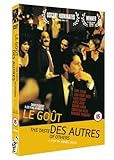
This is my review of Le Goût Des Autres [DVD].

In this film which deserves both its awards and to be better known in Britain, the talented Agnès Jaoui and Jean-Pierre Bacri co-wrote and acted two of the main parts. Bacri plays Jean-Jacques Castella, the wealthy factory-owner who comfort eats to replace an undefined hole in his life. A dabbler in interior design, his wife swathes their home in frills and competing flowery patterns, and obliges him to share her affections with a lap dog. On a reluctant visit to the theatre, he is smitten by the performance of an actress who happens to be earning extra cash as his English teacher to prepare him for an important business deal, and who could not be more different from his wife. In what looks like a doomed attempt to form a relationship, he latches on to her group of bohemian arty friends who have as much contempt for his taste as he is bemused by theirs.

The often funny yet moving main theme is underpinned by the triangular relationship between his naïve chauffeur who struggles to play the flute despite a lack of aptitude, his hard-bitten temporary bodyguard and the hash-dealing barmaid and borderline tart with a heart, played by Jaoui.

It’s a pity there are not more films like this near flawless work, with an ending that subtly avoids overstatement, pointing the audience in a certain direction, with a “feel good” factor which steers clear of any mawkish sentimentality.

⭐⭐⭐⭐⭐ 5 Stars

There but for fortune

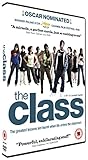
This is my review of The Class [DVD] [2008].

Based on the autobiography of an idealistic and individualistic young French teacher who plays himself in the film and drawing on many hours of improvisation with pupils in a "tough" multi-ethnic Parisian school, so skilfully directed that it makes a drama seem like a fly-on-the-wall documentary, "Entre les Murs" or "The Class" will strike a chord if not raise goose bumps in anyone who has taught in this environment. The film captures to perfection the claustrophobic, unrelenting, intense, absorbing, frustrating, exhausting, addictive world of teaching in an inner city secondary school. Most of the teachers are young and casually dressed by Govian standards. Yet perhaps unrealistic rules of iron lie beneath the velvet glove. By turns hilarious and disturbing, this could trigger many debates on teaching methods, what to teach adolescents, how far to accommodate different cultures, the pros and cons of integrating "bright kids" into diverse social groups at the price of failing to stretch them.

We see Monsieur Marin's patient persistence in encouraging his pupils to think and express themselves effectively, continually trying to find ways round their hostility to traditional French culture and realising that his ignorance of theirs is a frequent cause of misunderstanding. The camaraderie of the staffroom is often fractured by fundamental differences in opinion: the teacher who wants Marin's class to read a French novel to tie in with history lessons on the Enlightenment, which Marin tactfully suggests the students will find "tough"; the same teacher's absolute views of rules to be followed, whereas the liberal Marin prefers a more flexible approach. A staff meeting, demonstrates the familiar situation in which teachers seem more exercised over the cost of the coffee machine than agreement of a penalty system for naughty pupils.

There are examples of "political correctness" delivered with a mask of courteous objectivity which may unintentionally lead to injustice. In one scene, teachers discussing student grades are distracted by but do nothing to reprove two giggling student representatives elected to listen to the process, apparently without a clear code of conduct as to how they should behave in the meeting and afterwards. This seemed to me the one serious false note in the film. Or does it reflect French school practice?

A storyline gradually emerges, focusing on a moody Arab boy who cannot manage his anger. Despite Marin's empathy for him, and even a small heart-warming breakthrough on a piece of work, an unfortunate chain of events leads to a climax which Marin, in a rare lapse which I found a little hard to believe, has inadvertently helped to trigger.

A near perfect film, highly recommended.

⭐⭐⭐⭐⭐ 5 Stars

The Art of Concealment

This is my review of The Invisible Woman [DVD] [2014].

Worth watching, this film is fairly true to Claire Tomalin’s respected biography of Nellie Tiernan, the eighteen-year-old from a talented but hard up acting family, who caught the eye of Dickens at the height of his fame in his mid-forties. Perhaps inevitably, the film loses an element of subtlety in making explicit what Tomalin only surmises, such as the fact that Nellie miscarried a child by Dickens.

Ralph Fiennes conveys a strong sense of Dickens’ charisma, his hyperactivity, and callous treatment of his wife once he became obsessed with Nellie. Felicity Jones portrays well the qualities that captivated Dickens: not just her beauty and youthful enjoyment of life, but a sensitive and reflective intellect that made her a real companion, able to discuss his work with him. One of the most poignant parts of the film is where we see how she is knowingly trapped like a fly in amber, a kept woman in an overlarge house from which a view of Windsor Castle ‘seems to float’ as in a dream. She has to become invisible to safeguard the great man’s reputation.

It does not add to the tale of the relationship to sandwich it in lengthy flashbacks between scenes of Nellie in later life as the wife of a schoolmaster in 1880s Margate, haunted by memories of Dickens. Part of the problem is that she looks too young (she was in her forties by then). However, I was interested to discover that in 1876, six years after the death of Dickens, she married at the age of thirty-seven a man twelve years her junior, passing herself off as twenty-three i.e. she must have looked youthful for her age.

I was surprised that the film does not make clear the thirteen year duration of her relationship with Dickens, until his death. More could have been made of her role as a possible inspiration for some of his later heroines, not just Estella in Great Expectations. The greatest missed opportunity seemed to me the omission of Dickens’ death: according to Tomalin, he became ill at Tiernan’s house and, to avoid a scandal, had to be put in a cab to be taken to his home, where he died in the presence of his family, as convention demanded.

⭐⭐⭐⭐ 4 Stars

Another man of constant sorrow

This is my review of Inside Llewyn Davis [DVD] [2014].

As you would expect from a Coen brothers film, this is a poignant, yet often funny, quirky take on the life of a young man trying to establish himself as a solo folk singer in early 1960s New York. The haunting opening song, "Hang me, Oh hang me" displays his talent and individuality, but also the problem that it is not the type of music that makes money. His often negative, cynical and grouchy personality does not help.

Penniless and homeless, Davis is obliged to cadge each night's sleep on the couch – or floor – of yet another friend whose goodwill he has not yet abused beyond recall. The recent death of his singing partner may give him reason to be depressed and moody, but one senses he has always been uncompromising and prickly. Yet, his concern not to abandon an appealing ginger cat that gets locked out of a friend's apartment shows he is not totally self-absorbed. Despite his many shortcomings, we are somehow made to want him to succeed. Will he remain a loser or will the Dylan sound-alike who appears at the end mark the beginning of a more receptive climate for his music?

There is just one section of this film that does not work for me. I understand the need to portray the tedium of a long drive across dead flat land to Chicago in the company of a shrewd but boorish old jazz man played by John Boorman and his handsome but dull chauffeur-cum-factotum and perhaps something more, but this went on far too long. Then a potentially interesting situation in which Davis agrees to drive a stranger back to New York so he can sleep but takes a detour on the way to see an old flame ends so abruptly it as if a section of the plot has been crudely cut.

The film will appeal for its soundtrack alone to lovers of 1960s folk music.

⭐⭐⭐⭐ 4 Stars

Off the rails

This is my review of The Railway Man [DVD] [2013].

Based on the 1995 memoir of Eric Lomax, the Royal Signals Officer who was tortured by the Japanese when deployed on the construction of the infamous Burma railway, this film uses flashbacks to show the reasons for his emotional repression with violent outbursts of post traumatic stress decades after the event. Colin Firth, a master in this kind of role, plays the older Lomax, with Jeremy Irvine putting in a strong performance as his younger self, earnest, floppy-haired and prepared with quiet bravery to take the rap for the assembly of an illicit radio receiver. Nicole Kidman assumes a convincing English accent to play the sympathetic new wife who is determined to extract Lomax from his mental agony. When Lomax discovers in the 1980s that Takashi Nagase, the young interpreter who played a key part in his torture, is still alive, working, of all things, as a guide at the Kanchanaburi War Museum (close to the famous bridge on the river Kwai) he is initially bent on revenge as a means of exorcising his demons.

I was disappointed by the first half: dialogues often seem stilted as in the "Brief Encounter" style meeting on a train between Lomax and his future wife Patti. Lomax looks much younger than the fellow officers with whom he has kept in contact, and he could have done with a few more scars and grey hairs. The sets "back home" have more of a 1950s feel than the 1980s as I remember them. Worst of all, the earlier scenes in the jungle are often confusing or hammy, apart from the final harrowing torture in the dreaded hut. Overall, the script and direction often appear wooden until the final resolution.

The film was saved for me by the second part of the film which is unpredictable, moving and well-developed. Throughout, the scenery is beautiful, both in the Kwai valley, despite the horror of the slave labour and brutality, and in the scenery around Lomax's stark grey house overlooking a golden beach and the sea at, I think, Berwick-upon-Tweed.

I have read that, in fact, Lomax had a first wife for the best part of forty years, whom he left for Patti, and two daughters, all largely omitted from his memoir. I understand why the director let this stand, in order perhaps to create a tighter and more focused drama, but this has been at the price of concealing and neglecting other lives directly blighted by what Lomax suffered.

The film may not do justice to the highly acclaimed autobiography.

⭐⭐⭐ 3 Stars

In the land of the free

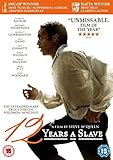
This is my review of 12 Years A Slave [DVD] [2013].

Solomon Northup, the son of a former slave, was a free man living in upstate New York when he was tricked, kidnapped and sold into slavery in 1841. He spent twelve years working for a series of masters in the sugar and cotton plantations of the swampy Louisiana bayou country until regaining his freedom against the odds. This film is based on the account of his experiences, written in conjunction with a white lawyer called David Wilson, and authenticated, including in part by the drunken and sadistic Mr Epps, his final master.

With his artist's eye , McQueen brings out the beauty of the natural landscape, red sunrise over the river, hanging branches draped in Spanish moss, or the rhythmic power of the paddle-steamer, carving furrows through the sparkling water as it transports the captives to their harsh destiny. This film renounces any sentimentality, ramming home the fact that slaves were regarded as property so could be treated without any consideration or mercy. The only reason for keeping them alive was because an owner had paid good money for them, and they could earn more for him through their labour. We see how Mr Epps could terrorise a female slave with whom he had become sexually obsessed, whilst his wife tormented the poor woman at the same time out of jealousy.

Everyone will learn something different from this drama. In my case, it was the extent to which slaves were punished for being literate, since this was seen as giving access to knowledge and revolt. Ironically, slaves were then despised for the ignorance in which they were held. Also, when their stories were written with the help of a white people, it was claimed that hardships had been exaggerated by abolitionists to strengthen their case.

The violent beatings are hard to witness. It's debatable whether these scenes are too long, the rationale being that this brings home the intolerable brutality endured. One striking moment is when the hero has to burn, out of fear of discovery, a letter which he has taken great pains to produce, in perhaps his last chance to get help. Another is when, having resolutely refused to sing the haunting spirituals, the only emotional outlet for slaves, Northup at last gives in, belting the song out lustily in his anger.

Chitwetel Ejiofor deserves all the praise that has been heaped on him, with his expressive face conveying in turn disbelief, fear, anger, despair, hope and even loss at the point of his release when he has to leave behind to suffer alone someone for whom he has come to care.

⭐⭐⭐⭐⭐ 5 Stars

The Girl on the Train – Fateful Freewheeling

This is my review of The Girl on the Train [DVD] [2009].

Triggered by the real-life incident of a girl who claimed to be the victim of an anti-semitic attack in Paris, this is a tale of cause and effect, the consequences of a random conjunction of events.

Beautiful but scatty, Jeanne’s half-hearted attempts to obtain work as a secretary lead by chance to an interview at the office of successful Jewish lawyer Samuel Bleistein, sometime admirer of her widowed mother played by Catherine Deneuve. Jeanne’s habit of rollerblading everywhere, red hair blowing in the wind, brings her to the notice of an enigmatic, uncomfortably direct and determined young man, Frank. Through a sequence of events, we see how Jeanne is driven to take a dramatic course of action but her motivation for this remained unclear to me.

Beautifully shot with many passing insights into human behaviour and relations, some moments of humour, shock over unexpected violence, or pathos (such as sympathy for Bleistein’s grandson Nathan with his self-absorbed, capricious parents), the film has a fragmented quality, and one observes it without feeling very moved. Although the sense of building up to some kind of dramatic climax held my attention, the rather flat, admittedly realistic ending left me feeling a little dissatisfied.

⭐⭐⭐⭐ 4 Stars

Hanging on for dear life

This is my review of Gravity [Blu-ray] [2013] [Region Free].

This technically brilliant film contains beautiful shots of the earth viewed from space, there are some tense moments as the two space workers (Clooney and Bullock) struggle to survive when they find themselves stranded after a disaster not of their making and it is intriguing to watch them floating about surrounded by a motley collection of objects and dealing with weightlessness in a matter of fact way, at least until calamity strikes. As with most adventure films, the desire to create ever more exciting situations sends plausibility spinning into the outer galaxies and it is probably an advantage to be ignorant of some of the basic laws of physics. At the end, despite the ludicrous twists, the film succeeds in leaving you with a sobering sense of mortality combined with the strengh of the will to survive.

“Gravity” is definitely greatly enhanced if seen on a large screen in 3D.

⭐⭐⭐⭐ 4 Stars