The Children’s Book

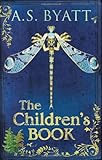
This is my review of The Children’s Book by A S Byatt.

The author's deep knowledge of the arts in Europe as the late Victorian age gave way to the Edwardian makes me hesitate to criticise this lengthy, complex work, and it is easy to see how it came to be shortlisted for the Man Booker. Although I found the opening pages wordy and slightly stilted, what I came to see as an erudite soap opera of a privileged circle whose lives revolved round art and writing gradually sucked me in as the darker forces began to emerge from beneath the idyllic surface. Without giving away too much, we are speaking of casual promiscuity, incest, and the exploitation of others, often in the name of art. Byatt manages to develop and differentiate a large cast of characters,each of whom are brought to the fore in turn as the story evolves. Some of the dialogue was sharp and revealing.

I found the story gripping for chapters at a time, and appreciate this as the kind of story in which a reader can become totally engrossed, entering another world, so as to be sorry when it ends. However, there were a few flaws which arguably cost it the ultimate Man Booker Prize. Byatt has a habit of telling you what is about to happen, rather than let the reader experience the suddent shock of revelation (when this is allowed to happen, it works well). Also, her narration of the historical and political background to the story can be rather didactic and too condensed to make much sense. An example of this is an almost incomprehensible and apparently superfluous description of Lady Asquith's correspondence with Lloyd George. I would have like less of this, giving more time for character development. Having said this, I felt "educated" by the book.

Am I the only reader whose heart sinks when confronted by the prospect of reading a lengthy fairy story? I realise fairy stories are important to the author, and they are relevant to a key character, and the "climax" of the plot but they are an acquired taste.

The length of this book, smacking of self indulgence at times and an inability to prune, makes this book compare unfavourably with the shorter and much more sharply focussed "The Glass Room" – another impressive item on the Man Booker shortlist.

With a more ruthless edit, this book would have been excellent rather than an impressively researched and enjoyable read.

⭐⭐⭐⭐ 4 Stars

The Glass Room

This is my review of The Glass Room by Simon Mawer.

The quality of the writing justifies the inclusion of this imaginative work in the Man-Booker shortlist,and it would have made a worthy winner. Mawer's skill is wide-ranging: the meticulous description which conjures up striking images of, say, Von Abt's glass house, vividly described from his drawing, which gradually rises from the mud of the hillside; the sharp, witty dialogues; the subtle development of a cast of varied characters in all their complexity, strengths and flaws; the underlying sense of menace and insecurity. The intriguing plot soon caught my interest: from the first few pages, it was clear that the early optimisim and good fortune of the wealthy Landauers was doomed, the year being 1929, the husband being Jewish, and their homeland being the newly formed Czechoslavakia, soon to fall under Soviet control.

Although I have no great liking for modern architecture, this book succeeded in enabling me to appreciate the vision that the glass house represented, and something of what architects working in angular lines and non-traditional materials are trying to achieve. I particularly liked the way in which the appearance of the building changed over time as, rather like its occupants, it was battered by external forces.

My criticisms are minor. The initial prologue, foreshadowing the end, added little, and ran the risk of putting readers off, with its slightly mawkish tone, before there had been time for us to be intrigued by the construction of the unusual house and the inevitably eventful and probably tragic fate of its inhabitants.

Although the complex relationship between Liesl and Katalin was explored quite well, Victor's role in the ménage à trois could have been revealed in more depth.

The hints at lesbianism irritated me slightly, since I wondered whether they had been included for effect, and how well the male writer could really handle them.

The plot deteriorated for me towards the end (Part 4) when most of the original characters had slipped away, and, as other readers have noted, the pace seemed to speed up, presumably to "get to the end" without becoming too long-winded, but at the cost of the satisfying, in depth development of characters and situations which marked the early chapters. Tomas and Zdenka were pale shadows of Victor and Katalin, as lovers and "real people", and I would have liked more of Von Abt.

However, the final denouement works reasonably well, bringing together some of the "original" characters, full circle. Although many "loose ends" are tied, a few questions remain unanswered. What exactly happened to Katalin? This adds to the realism and pathos of the work.

I shall certainly look out for more of Mawer's work and appreciate the view that he ranks amongst our best current writers, and has been underestimated to date.

⭐⭐⭐⭐⭐ 5 Stars

The Wilderness

This is my review of The Wilderness by Samantha Harvey.

The beauty and perceptiveness of the writing gives an insight – insofar as I can judge- into the troubling topic of Alzheimer's, without filling the reader with a grim depression. It is impressive that a young woman can enter into the fragmenting mind of a much older man. Although the story lacks a strong plot as such – it is largely a series of memories and reflections looking back over a lifetime – my interest was held by the way in which information leaks out, with some "key" points not becoming "clear" until the final pages. The most compelling aspect of the book is its conveyance of the false nature of memory, in particular when the mind becomes clouded. The same incident or snatch of converstation is often described several times in different contexts, leaving a sense of confusion as to what has really occurred. Related to this is the way in which a small image – a recurring memory of a peg – can assume more importance thatn a major life-changing event. Then there are the frequent effective descriptions of the destructive effect of the endless confusion in Jake's life – contantly distracted during his attempts to make coffee, he eventually boils the coffee-maker dry.

Many of the descriptions are striking and memorable: the stark beauty of the moors, the evocation of Sara's Jewish culture, Jake's meeting with his adult daughter Alice when he steels himself to admit his Alzheimer's to her, only for us to be shown that the whole elaborate event is a probable figment of his imagination. Many scenes from the past have a dreamlike quality – their plausiblity or otherwise ceases to matter, yet they are deeply significant for our understanding of Jake's life and his condition.

Many of the dialogues are interesting and humorous, weaving in comments on such weighty themes as religion, the Palestinian-Israeli conflict and architecture without becoming sententious. Some of the real love and affection between the main characters – despite any infidelity- is portrayed well. Several themes are interwoven – the book is not just about Alzheimer's but about how people can love each other despite holding very different opinions, about the pain of unrequited love (Eleanor's) and the loneliness of living in an alien culture (Sara's). There is a good deal of wry humour – as in Jake's regular meetings with the coolly professional fox-haired woman doctor, in which he fails to pass her basic tests of his faculties, whilst maintaining an inner stream of complex, albeit twisted perception and logic.

My main reservation is that some of the characters are insufficiently developed and therefore not wholly convincing – the flamboyant Rook and his granddaughter Joy, also Henry as an adult. This is a pity as they clearly have the potential to come alive in our minds as well as Jake, his wife Helen and to some extent the long-suffering Eleanor. Also, although it is probably justified to show Jake's final disintegration, the final pages seem superfluous apart from "tying up a few loose ends" in a story that is all about loose ends.

At the beginning, I wondered whether it would have been better to let the reader deduce the nature of Jake's problem from his erratic behaviour. I felt at times that I had "got the point" and my interest waned – perhaps I was simply tired by the amount of mental energy this book requires. However, whenever I returned to it, I was impressed again by the sheer quality of the writing. This book merits being read quite slowly – or reread to absorb the imagery and dense mesh of ideas which the writer has woven in.

⭐⭐⭐⭐⭐ 5 Stars

The Hidden

This is my review of The Hidden by Tobias Hill.

Hill's prose is unusual, striking and memorable – like poetry, some passages merit rereading. They convey with power and strong visual imagery- the feel and appearance of the landscapes of Greece. I also learned quite a few new words – did you know that "laniary" means canine and "ophidian" indicates "snake" – an apt description for one of the characters? Far from being dull, the inclusion of the anti-hero Ben's "notes for a thesis" are interesting and informative – reminding me of the Spartans' harsh, pragmatic approach to life, and evoking parallels with modern issues of fundamentalism, eugenics and the fanaticism of idealistic groups and cults. The experience of taking part in a dig is described well, again with some interesting insights, such as the fine line between the excitement of a valuable find, and the avaricious desire to possess and profit from it. Some of the dialogue is quite effective in capturing the personalities of the key characters, and their relationships.

On the downside, I agree with those who find the plot a little lacking. Certain critical events seem to happen abruptly, without the potential build up which increase both the tension and their plausibility. Ben seems to make sudden leaps of understanding on evidence which escaped me until then – although I quite enjoy being made "to work" as a reader, and not having everything spelt out too baldly. The final climax is not as shocking as other reviewers have led me to expect. The lack of inverted commas and "he said, she said" etc makes some of the dialogue hard to follow. Even after rereading some passages several times, I was unable to deduce who said what – and some observations seem very obscure. This is at times an unhelpful distraction.

Also, the characters are not developed very fully. and often seem two dimensional or unconvincing. I do not really care what happens to any of them. Some plot lines are left dangling as loose ends, in particular the time Ben spends working in an Athens restaurant, where the tensions built up between his work mates and the proprietor's son do not lead to any dramatic climax.

Overall the quality of the writing is excellent in parts, the story gripped me to the end, but more care over the portrayal of characters and the development of the plot would have made this the outstanding novel, which it falls short of being.

⭐⭐⭐⭐ 4 Stars

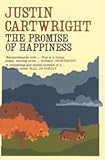
The Promise of Happiness

This is my review of The Promise Of Happiness by Justin Cartwright.

This is the first novel by Justin Cartwright that I have read, and I certainly intend to read more. I found some of the incidents e.g. over Daphne's repeated disastrous attempts at fish cooking made me laugh out loud, and many of the exchanges e.g. Pinteresque crossed wires between Charles and his wife very entertaining – humour and pathos were subtly interwoven, reinforcing each other.

Some aspects of modern life were caricatured, but in an amusing way e.g. the adverts to metamorphose dolphins into cars. References to flowers used for the wedding were also quite striking. Overall. I thought the quality of the writing very high – Cartwright wears his learning lightly and "teaches" the reader at times e.g. in philosophy, Shakespeare's use of flower imagery, without being pretentious.

Having recently visited New York, I admired his vivid descriptions of America – the townscapes, and the horror of life in a women's prison, which rang true.

There was a satisfying twist in the plot concerning Juju's guilt, which I cannot reveal for fear of ruining the story for future readers. Although the family was perhaps irritatingly bourgeois for someone (like me) who does not come from that class, the fact that most of the characters were deeply flawed and in some ways unlikeable did not matter. The interest lay in their interactions and thoughts on the world.

I believe Cartwright is a philosopher by training, and I enjoyed the skill with which he wove ideas on potentially dull topics such as utilarianism – more effectively than in many text books on the subject.

Although I think Juju's ex-lover Davis played a significant role in the plot, I felt there was more scope to develop him as a character and perhaps to introduce him earlier.

Charlie was the most likeable character, perhaps too good to be true although flawed in his passive drifting into a marriage to Ana, about which he was clearly ambivalent. I admired Cartwright for sticking to such similar names for a father and son – Charles and Charlie: confusing, as I am sure many editors would say, but realistic.

The sense of loss and disconnection as one approaches middle age was covered in a poignant way which one may need to be over fifty to appreciate.

The irritation and confusion over the break down of "traditional" attitudes and values was also explored in a thought-provoking way.

Apart from my failure to understand the point about Juju writing cheques for the stolen window because her lover-boss had no money (so was it her own money?), I can find little fault with the plot. Maybe it was a bit repetitious in places i.e. in reinforcing impressions of the characters needlessly e.g. Ana the "glamour puss", but the writing succeeded in building up the tension to the dramatic point at which Charles and Juju met face-to-face at the end.

Overall, the plot was very coherent and the quality of thinking and writing excellent. Writing of this order deserves to win prizes.

⭐⭐⭐⭐ 4 Stars

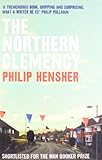
The Northern Clemency

This is my review of The Northern Clemency by Philip Hensher.

I agree with reviewers who have found the book too long and clunky. I did wonder whether the book has been highly regarded by "experts" – even published- because of the author's literary connections. Some of the dialogue was well-observed and amusing in a painful way such as the bullying of Jim by his teenage siblings, or the interrogation of Sandra by the police. All too often, potentially dramatic situations were built up, only to be allowed to drift away – this may of course have been a deliberate comment on real life.

Much of the plot seemed rather pointless and unengaging – again like real life. Did I imagine that Sheffield people were being patronised somewhat? I felt towards the end that I was reading a rather bland soap opera. The constant switching from one point of view to another was interesting where characters were shown to perceive events or each other differently, but meant I did not build up any close empathy with any one character.

Certainly, with some ruthless editing, this could have been transformed into a thought-provoking, possibly memorably quirky novel.

And I never did understand the meaning of the title….

⭐⭐⭐ 3 Stars

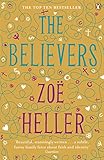
Survival by Waspish Wit

This is my review of The Believers (Penguin Street Art) by Zoë Heller.

The characters are more important than the plot in this tale of the very different, admittedly rather exaggerated members of a New York based family, after successful left-wing lawyer Joel collapses in a coma.

Funny, imaginative, well-observed, this novel has the power both to entertain you but also enhance your sympathy for a varied group of initially unsympathetic characters, partly by revealing the complexity of their behaviour and what lies behind their flaws. We see, for instance, the reason for the mother Audrey's addiction to "saying the unsayable like it is" and how she is redeemed by the fact that this cruel honesty both gives her great resilience, and also, when least expected, prompts her to supply the necessary support to others e.g. to her daughter Karla, the most likeable character in the tale. Another reviewer has commented that she found it hard to believe that an innocent young English woman could have grown after forty years into the waspish character of Audrey, but I was fascinated by this example of how people can alter over time, as a reaction to what life throws at them.

Zoe Heller's writing is flawless in its striking imagery, witty, fast-paced exchanges and thought-provoking observations on people's motives and situations. New York is vividly evoked and the plot resists any final frantic attempt at the contrived tying up of loose ends. Instead, it meshes to a conclusion that satisfies by bringing us to partial acceptance and an understanding of the main characters, warts and all.

⭐⭐⭐⭐⭐ 5 Stars

Beautiful writing, flawed plot

This is my review of The Secret Scripture by Sebastian Barry.

I would have rejected this book for its "grim" theme of an old woman dying in a mental asylum, but was obliged to read it as a "book group" choice. From the first page, I began to revise my opinion, struck by the poetic quality of the writing, with unusual and memorable imagery. The sad situation of the central character Roseanne was eased by her own wit and self awareness. The Catholic priest, Father Gaunt, was a wonderfully malign presence through the book.

The story deteriorated for me at the point when Roseanne recalled her life as a young married "normal" woman. The relationships with her husband and his family were underdeveloped and the events leading up to her incarceration were often unclear, even implausible. Without revealing too much, the manner in which she became pregnant and the details of the birth of her child were unconvincing or unrealistic.

The idea that we may have different perceptions and recollections of past events is interesting, but I was irritated that Grene felt the need to spell this out so specifically, rather than leave it to the reader to work this out.

I also agree with reviewers who have found the final denouement far too contrived – almost ludicrous in the piling on of coincidences.

Also, the wise and self aware "voices" used by both Grene and Roseanne were often too similar – and it was unlikely that an old woman asylum-bound for so long would be so lucid.

This tale is much less bleak than other recent Irish novels e.g. The Gathering or The Sea, but although I admire the quality of the writing I would not recommend it strongly. At first I thought it was an interesting take on the timeworn theme of the effects of Catholic bigotry but was left thinking that it had added little to my understanding of this.

⭐⭐⭐ 3 Stars

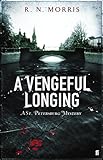
A Vengeful Longing

This is my review of A Vengeful Longing by R. N. Morris.

This is a cut above the average crime thriller,well-written and creating a vivid sense of life in nineteenth century St.Petersburg, apparently based on close research, even down to the post mortem practices of the day. The background of corruption, bureaucracy, pollution, poverty and vice is developed and sustained without the story becoming too depressing, perhaps because of the hooks of an intriguing plot and the varied cast of characters. Clues are slipped into the complex twisting plot to give an ending which is hard to predict, with the loose ends tied up. There seemed stronger character development than in the first novel, with humorous interplay between the eccentric detective hero Porfiry and his sidekick Virginsky.

However, as with "The Gentle Axe" I am left a little disappointed at the end by some almost ludicrous implausibilities in the plot (not quite so marked this time)- which I cannot reveal for obvious reasons, except it's safe to cite the occasion when Porfiry interrogates a murder suspect in front of a large audience. Some scenes are frankly odd e.g. where Porfiry almost bumps into a civil servant who faints when challenged seemed bizarre at the time. I also find too many of the characters seem to be caricatures, and therefore unconvincing. Perhaps I am guilty of taking the plots too seriously!

So, I am left feeling ambivalent, but recognising that Morris is an original and talented writer in this genre. I just wish that such good writing was applied to slightly more "worthwhile" plots!

⭐⭐⭐⭐ 4 Stars

Mixed feelings

This is my review of The Point of Rescue: Culver Valley Crime Book 3 by Sophie Hannah.

After an intriguing start, the tragi-comedy of working mother's Sally's chaotic life was entertaining and an interesting use of rueful humour to convey the conflicts involved in trying to juggle children and a career. There were some ingenious plot twists – I can't say which genuinely surprised me, without giving too much away. I agree that some of them were implausible.

On the other hand, as with many such books, which will obviously gain a wider readership and massive earnings, I have to ask why the clearly talented author did not spend just a little more time on ironing out the flaws.

The diary entries rapidly became tediously repetitive and almost caricatures of the situation, although you could argue that was intentional. A more serious weakness was the unconvincing love interest between the two police officers, and their odd, inadequately explained and developed psychology. All the other policemen seemed to be caricatures.There was a tendency for key "information giving" conversations to drag on for an implausibly long time given the circumstances e.g one party had to rush off to a meeting, or was driving at high speed on a hunch to save someone's life.

I was also too often aware of the same rather cynical, sarcastic voice coming through too many of the characters. I had no objection to the voice itself, just suspected it was the author's own voice, and felt it needed to be attached to one or two characters, not most of them. I was also unsure about the frequent digressions into amusing but trivial asides at dramatic moments – this with the generally rather shallow and manipulative relationships between key players made me care too little about any of them, and led me to leave the book and move on too lightly.

⭐⭐⭐ 3 Stars