A man like other men?

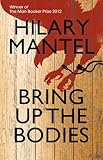
This is my review of Bring Up the Bodies by Hilary Mantel.

Since every reader must surely know that Anne Boleyn fails to give Henry V111 a son, and loses her head, while Thomas Cromwell falls from grace, although not in the second part of a planned trilogy, everything hinges on Mantel's ability to breathe life into the characters and embroider the details.

She has entered so fully into the imagined minds of both Cromwell and Henry that she provides exceptionally vivid in-depth portrayals of these two main characters. She has to be able to see Cromwell's better side, and I sometimes feel she has grown to like him too much, this juvenile thug "made good", industrious, clever, manipulative, surprisingly good company, with a soft spot for orphan boys and vulnerable young women. Yet she never lets us forget his underlying ruthlessness, as when he has an almost fond memory of Bishop Fisher, only to recall how, when the man's head would not rot on its pole, Cromwell had it put in a sack and thrown in the Thames.

On page 208 (first hard cover edition) there is a wonderful psychological analysis of Henry who "grew up believing the whole world was his friend and everyone wanted him to be happy. So any pain, any delay, frustration or stroke of ill luck seems to him an anomaly, an outrage." His self-justification, pathetic desire to be "in the right" and to leave all the dirty work to others as regards replacing Anne with Jane Seymour are all too apparent.

Mantel has a good ear for comedy, so some of the dialogues, as when Jane Seymour is being trained by her relatives to enter rooms in a more queenly way, are very amusing.

"Bring up the Bodies" seems more successful than "Wolf Hall" since it is more tightly plotted. In both cases, the book improves as the narrative drive builds up to the dramatic climax, in this case Anne's execution.

Once I had tuned into Mantel's daringly distinctive style, I began to feel the writing is often brilliant, but there were times in the first half when I found her self-indulgently wordy. Significant characters and events tend to be introduced in such an oblique way that you may miss them. The confusing tendency to call Cromwell "he" is still evident, but was it some misguided editor who suggested substituting at times "he; he, Cromwell,"?

An interesting aspect is Cromwell's desire to make radical social reforms, as gaining in confidence he increasingly "runs the country" behind the scenes. The final part in which Henry turns on his faithful servant, only to regret it, will perhaps make a more moving read than anything that has preceded it.

⭐⭐⭐⭐ 4 Stars

Quackers

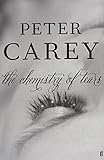
This is my review of The Chemistry of Tears by Peter Carey.

Employed as a conservator at a London museum with a world-famous collection of clocks and wind-up machines, blue-stocking Catherine is grief-stricken over the death of her work colleague and not-so-secret lover Matthew. Her manipulative line manager Eric tries to distract her with the task of reassembling what seems to be a mechanical duck, commissioned in the 1850s by the wealthy (when he is allowed access to the family money) Henry Brandling, who is convinced the "automaton" will aid the recovery of his sickly son. Catherine becomes totally absorbed in the handwritten journals kept by the eccentric Henry on his lengthy trip to Germany to obtain the duck.

The "Catherine chapters" held my attention from the outset. I liked the acerbic take on Barbara Pym "voice", and the very convincing and often moving portrayal of how Catherine is devastated by loss which Carey manages to convey alongside some very entertaining scenes.

The Henry chapters were a different matter. I accept that he may be bordering on insane, and encounters some even nuttier people, in particular the automaton-maker Sumper with his for me tedious accounts of the perhaps even more eccentric designer of such machines, Cruickshank. These chapters have a dreamlike quality, verging at times on nightmare, and Henry's account is often fragmented and lacking in context.

I would have been totally at sea without Google to explain the Victorian obsession with automata, and the various references to smoking monkeys and Vaucanson's "Digesting Duck" plus the Silver Swan on view at Bowes Museum, all of which clearly inspired this novel.

I think Carey is exploring the incongruity, for atheists and rationalists, of how grief is expressed through the chemical reactions of, say, shedding tears, while a cleverly made robotic machine may arouse fear and confusion with "its uncanny lifelike movements". An added twist is how machines, especially the combustion engine, have transformed our lives but may lead to our destruction by pollution – including this aspect as well may be over-ambitious.

Only the relative shortness of this book, Carey's status as a twice Man Booker Prize Winner, and my admiration for his recent "Parrot and Olivier in America" gave me the incentive to persevere. I agree that the ending proves rather abrupt, plus for me it includes a couple of implausible twists which I found hard to take.

I can see why some reviewers have found the novel pretentious. I'm inclined to think that Carey simply lets his imagination roam free, his fame relieving him of any need to kowtow to agents or editors. He makes no concessions to readers, leaving us to extract the brilliant writing and sharp insights from the at times confusing morass.

It was only on reflection after finishing the book that I decided the choice of ending is quite effective, and that overall it is worth reading.

⭐⭐⭐⭐ 4 Stars

A Gentler Type of Cormac McCarthy

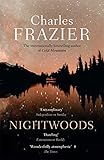
This is my review of Nightwoods by Charles Frazier.

After the phenomenal success of "Cold Mountain", the odyssey of a soldier's return from the American Civil War, it must be hard for Charles Frazier to achieve comparable success.

Although on a much smaller scale, "Nightwoods" is similar in showing Frazier's gift for spinning a yarn and displaying his deep knowledge of and love for the Appalachian wilderness combined with a sense of small town life in a rural backwater, portrayed with some sharp, witty dialogue and an ability to make unsavoury or even evil characters appear at times in some ways objects of sympathy.

It is sometime round 1960 when Gene Pitney was a rising popstar on the juke box. Luce is a tough young woman who is for some reason living in isolation from the town visible across the lake from the old lodge which she looks after for an old landowner called Stubblefield. Her hard but peaceful routine is disrupted by the appearance of "the stranger children", in fact the badly damaged young twins of her brutally murdered sister Lily. Luce's psychopathic brother -in-law Bud has a particular reason for tracking down these children. Meanwhile, following Stubblefield's death, his ne'er- do- well heir comes back to claim the inheritance. This is clearly the basis for a potentially tense thriller.

I was rapidly sucked in by not only the plot, but also the vivid, poetical descriptions of the mountainous wilderness of North Carolina, the sense of past history back even before the time of the Indians, the survival of a self-sufficient rural way of life, the neglected lodge – a vestige of the wealthy tourists from bygone days – and the inward-looking life of the small town enveloped in the backwoods with only tenuous road connections to the outside world.

Always a page turner, although some reviewers have found it slow at times, the story is never quite predictable since you know that Frazier is capable of including sudden acts of unexpected brutality and horror cheek by jowl with quite soft-centred or even sentimental passages.

Although I was a little disappointed by Frazier's handling of the plot from the point where Luce meets Bud face-to-face, since I thought that the potential drama often fell rather flat, this was offset by some unexpected twists, and I suspect that Frazier is really more interested in reflecting on the effects of "modern progress" and exploring the human psyche than he is in structuring a story. The final pages in practice prove quite tense.

Another slight reservation is that both Luce and Stubblefield Jnr. seem to undergo some rather rapid changes of attitude, but in a relatively short and spare novel perhaps we have to "take this as given" to leave space for Frazier's other ideas.

Highly recommended.

⭐⭐⭐⭐ 4 Stars

Powerful dreamlike sense of place and time

This is my review of Pascali’s Island by Barry Unsworth.

I found this a remarkably well-written and compelling page turner, although I felt let down by the ending.

It is 1908, with the Ottoman Empire in decline and Europe on the brink of the First World War. After twenty years as a poorly paid informer on a Greek island beginning to revolt against Turkish control, Basil Pascali is perhaps losing touch with reality, partly through a life of isolation and deception, partly because his reports have never been acknowledged. So, he imagines that at every turn the Greek islanders wish him ill, and his reports are full of details of daily life which can be of little interest, of irrelevant although beautiful descriptions of the island he knows so well plus some very subversive observations on Turkish rule – corrupt and ossified.

The arrival of Mr. Bowles, the Englishman who claims to be an archaeologist and writer on antiquities, immediately arouses Pascali's suspicions, although he sees conspiracy and deviousness everywhere, even in the behaviour of the artist Lydia whom he loves without any hope of a return of feeling, or the activities of the American Smith, out fishing for sponges in his caïque (lots of wonderfully evocative words in this book). Then, Bowles asks Pascali to act as interpreter for his negotiations to lease some land……..

With a continual sense of suspense, this tightly plotted tale builds up to a predictably tragic climax which left me less moved or satisfied with the denouement than I should have been. I think this is partly because Pascali is so self-controlled and analytical, rarely displaying normal emotion but often admitting to his faults in a rather clinical way. Also, Unsworth's habit of telling the reader what is going to happen tends to diffuse some of the potential drama. Certainly, I found his plotting in his last novel, "Quality of Mercy" much more satisfactory, and his dialogues sharper and more realistic.

I believe Unsworth spent years living on Greek islands, so that this book is a distillation of his own observation of nature and the local people. He is at his best in his remarkably articulate and well-observed descriptions of the quality of light around the island, its changes during the day, and interplay with the air and the sea. The writing is a little mannered, but that fits the period and Pascali's temperament. The repetitious references to, say, the fishermen casting their nets are not only strong metaphors but help to create a hypnotic effect, serving to explain how Pascali is held on the island by a kind of spell.

Some of the philosophical arguments are a bit heavy-going, but Unsworth is good on historical detail. The artist Lydia's realistic style of painting, and rejection of the "colourists" and "Expressionists" who were gaining popularity at the time is probably very authentic. The nationalistic prejudices of the various characters and the stereotyping, say of Bowles as an idealistic and naively honest Englishman (although Pascali sees through him) also reflect attitudes of the time.

⭐⭐⭐⭐ 4 Stars

Paying Attention to the Living

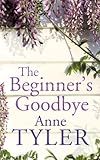
This is my review of The Beginner’s Goodbye by Anne Tyler.

Only my deep admiration for Anne Tyler could have got me past the opening pages in which Aaron describes people's reactions to his wife Dorothy's return from the dead: some give the couple a wide berth, others try to pretend she isn't there, but a few act normally since they have forgotten that she has died. If you like rational explanations, you could argue this is a satirical twist on how people behave when they meet someone who has just been bereaved.

Unlike some reviewers, I was very glad that this is not mainly a ghost story. I leave it to you to discover whether Dorothy is a phantom, a "Truly Madly Deeply" type figment of Aaron's grief-stricken imagination, or a mixture of the two.

This story soon becomes a very Tylerish examination of dealing with the untimely death of a spouse, Aaron's feelings over time and the reactions of others. It is made all the more effective by her use of wry humour, sharp observation, and understated poignant moments. The characters seem down-to-earth if a bit oddball, but there are frequent hints of deeper, unspoken or suppressed emotions.

Reading it straight after "The Sense of an Ending", this is further evidence of how short books often provide more food for thought than much longer ones. I would have disagreed with those who dismiss this as "not one of her better books", if it had not been for the ending which is a little too pat.

Perhaps it was written mainly as a small piece of catharsis for Tyler's loss of her own husband. Capturing a source of intense pain in a short, easily read, essentially feel good book may be the only way of making it tolerable enough to examine and accept to some extent.

Highly recommended.

⭐⭐⭐⭐ 4 Stars

Self-Delusions of the Defeated

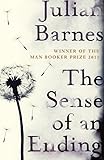
This is my review of The Sense of an Ending by Julian Barnes.

You may ask how 150 pages can justify the Man Booker Prize. This may be on the basis of "less is more", and the author's ability to condense so much insight and provoking thought into a novella. The award may have been for the concise skill of his prose compared to the other less experienced writers on the long-list.

Retired and in his sixties, Tony Webster has played safe, telling himself he was being mature when in fact he was just careful, and missing out on life in the process. The first part of the book recalls his friendship with the precociously brilliant schoolmate Adrian, and his attraction to the enigmatic Veronica. I like the portrayal of the more innocent and sexually uptight world of the 1960s which were in some ways less "Swinging" than people may now imagine. The "too-clever-by-half banter of Tony's public school sixth form is a little pretentious, but may be realistic.

The second part becomes more of a psychological thriller in which Tony tries to explore and come to terms with the repercussions of his triangular relationship with Adrian and Veronica. Barnes arouses a strong sense of tension and expectation but, although I did not manage to guess the denouement, the double twist at the end was something of a letdown. I was too unmoved by the characters to care about them enough.

For me, this book is about how time may distort memories, how in both history and private life, people may delude themselves to make life more bearable. It is also about how, as we approach the end of life, we tend to assess how we have lived – to this extent perhaps it will mean most to older people who have known irrevocable disappointment.

You need to read this book twice to grasp the care with which it is constructed and the full significance of many sentences, but I found the denouement did not satisfy me enough to want to do this. There is a rich field of debate as to what really happened to Adrian and Veronica and why, together with an assessment of the degree of Tony's guilt. I agree with those who argue that Tony's actions are never bad enough for him to bear a heavy blame, but perhaps it is one of the main points that quite trivial events may have disproportionately serious effects.

It could make a good A Level text, both as regards how the facts are revealed, and what they mean.

I would say this deserves praise for quality of prose and ideas, but loses its edge through a needlessly rather weak plotline.

Comment Comment | Permalink

⭐⭐⭐⭐ 4 Stars

Thorne in the Flesh – “Dr Thorne” by Anthony Trollope

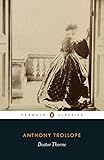
This is my review of Doctor Thorne (Classics) by Anthony Trollope.

Telling that more than 150 years after its publication, no Amazon reviewer to date has given this less than 4 stars.

In this entertaining soap opera of life amongst the Victorian upper classes, Trollope creates what is still for the most part a page turner through his detailed exploration of the thoughts and motives of characters who come alive on the page, his realistic, lively dialogues and creation of ludicrously comical situations offset by occasional scenes of real pathos.

It is interesting to learn from Ruth Rendell’s introduction to the Penguin Classic version, that Trollope cared only for creating “personages impregnated with traits of character which are known…..in a picture of common life”. For him, the plot was of lesser importance, merely providing a vehicle for the cast of players.

The plot is straightforward, apparently suggested by his brother: the Greshams are proud of their “ancient lineage” but the current Squire has managed his finances badly, aggravated by the extravagance of Lady Arabella, the mixed blessing of a wife from the aristocratic De Courcy family. The heir, Frank Gresham, is expected to save the situation by “marrying money” and duly sent off to court the heiress of an ointment manufacturer, but Frank has fallen in love with his childhood playmate Mary Thorne, the penniless niece of Dr. Thorne, with the added guilty secret of being the bastard daughter of his renegade deceased brother.

This is the framework for a social drama which exposes the snobbery and hypocrisy of the Victorian middle and upper classes. It was vital to have “good blood” to be accepted, but a bootmaker’s daughter could marry into an aristocratic family if she brought enough money with her. Ironically, their extravagance and parasitic lifestyle made many “great” families dependent on the very lower class people whom they despised for making their money from industry or trade.

Although the characters often seem very modern in their expression of emotion, we see how the now largely neglected concepts such as honour governed their lives. Dr. Thorne knows that his niece will inherit great wealth if a certain young man dies before he is 25, but is bound both to conceal the fact, so that Mary may be loved purely for herself and to do everything in his power to keep that young man alive, thus possibly denying Mary of her route to happiness.

You may criticise Trollope for ultimately accepting the values of his society, yet it is clear that he questions them.

This third novel in the “Barchester Chronicles” is distinctive in having few clergymen as characters, and forms a bridge between “The Warden” with its parochial focus on the lives of a small circle of people, and the later “Palliser novels” which present a more glittering world of aristocrats and public life. I find Trollope most compelling when he is describing the trials and dilemmas of ordinary people, like Septimus Harding and his little band of almsmen in “The Warden” or in this case Dr. Thorne, full of integrity, down-to-earth, but proud to a fault, scandalising foolish snobs by mixing his own medicines like a “common apothecary” and pragmatically charging a fixed fee for a visit, struggling to manage the alcoholism of his old friend Roger Scatcherd and his pathetic son Louis, or engaging in affectionate and surprisingly frank and equal exchanges with his niece Mary – although, being at heart a man of his time, he does not take her into his confidence over the truth of her social position, in its good or bad aspects.

The opening “scene-setting” chapters of this book are needlessly heavy going: Trollope apologises for them without seeing the need for a simple rewrite. The happy ending is never really in doubt, although we know Trollope is capable of occasional harsh fates for essentially good people. However, it is the development of the story outlined above that carries you through a book which you may feel a little sad to finish. I for one prefer Trollope to Jane Austen – perhaps because he had more experience of life, his characters seem more real flesh-and-blood.

⭐⭐⭐⭐ 4 Stars

A Perfectly Good Yarn

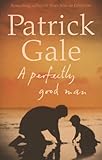
This is my review of A Perfectly Good Man by Patrick Gale.

Earnest, well-intentioned, bookish and almost comically impractical, unconscious of the good looks which attract women to his aid, Barnaby Johnson has probably become a vicar for the wrong reasons.

This is the kind of tale that relies heavily on the way in which the facts are revealed, often through small hints and clues. Moving back and forth in time, each chapter focuses on one of the seven main characters at a given age, so that we gradually learn about their interrelationships, insights on life, and different perceptions of certain events and of each other. There is pleasure to be gained from "knowing more than the characters" at many points in the story, being aware, for instance, that two people are fated to have an affair, or to drift apart.

Frequently very funny, the narrative may turn like quicksilver to move or even shock the reader. When you analyse it, not that much happens, yet this is unarguably a page turner, which gives pause for thought, as to the way in which events have often profound and unforeseen effects and as regards human resilience and the capacity to survive and feel quite positive despite adversity.

Unfolding against the background of a vividly evoked Cornwall, the author apparently describes real villages, churches and old tin mining areas in the vicinity of Penzance. By contrast, real events are only hinted at. For instance, we know that when 11 year old Carrie goes up to London with her father Barnaby on a tin miners' demo against Margaret Thatcher, the news is full of the American space shuttle disaster, so it must be 1986….So, you find yourself working out the dates of other chapters. Just occasionally, there is a small glitch. For instance, when Barnaby is 29, Carrie surely cannot be more than four and so seems unlikely to be capable of making the wooden birthday gift as described.

Although generally very entertaining, the characters tend to be caricatures or stereotypes, and some of the minor players, such as Carrie's friend Morwenna, are too thinly sketched. I was struck by the feminine tone of the male writer, his insight, for instance, into the thoughts of Barnaby's stolidly practical yet privately sensitive wife Dorothy, and realised that Patrick Gale must be gay – I felt that the book strikes an overly sentimental note only when he touches on topics which must be dear to his heart, like the church blessing of a civil union between two young women.

Overall, any reservations are quite minor. Although I agree with reviewers who have thought that the story could have probed deeper and the ending may seem a little too "feel good", it is very readable with a no doubt deceptively easy flow of words over which Gale has probably laboured with great care.

⭐⭐⭐⭐ 4 Stars

The Price of Innocence

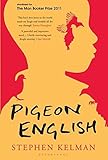
This is my review of Pigeon English by Stephen Kelman.

I avoided this novel for a while, fearing it might be exploitative of the recent Damilola Taylor tragedy, another example of truth being more searing than fiction. I have now read it for a book group, with an eye to deciding where I stand on the controversy over its shortlisting for the Man Booker.

As far as I can tell, Stephen Kelman makes a good job of getting into the mind of Harrison Opoku an inquisitive, impressionable, well-intentioned but vulnerable eleven-year-old boy uprooted from Ghana and thrown into the life of a tough inner London suburb, complete with grafittied tower blocks, menacing teenage street gangs and comprehensives ineffectual in the face of dysfunctional youth culture.

Harrison is both shocked and fascinated by the police crime scene marking the fatal stabbing of a boy at his school. As clues about the identity of the killer begin to emerge, Harrison naively sets about playing the part of a juvenile detective, unaware of the fact that many people already know or suspect who the attacker is, but are too scared to say anything.

Harrison's take on the world is by turns both very funny and poignant. I enjoyed his sparky exchanges with his sister. His frequent forgivable misreadings of situations alternate with some astute observations of the grim urban world which is "the norm" for too many children. An innocent "clean slate", he is singing hymns in church one minute, hanging out with an alcoholic thief and longing to own his dangerous dog "Asbo" the next, never seeing the incongruity of this. As teenage gang members bully and goad him to prove himself prepared to break the law, we fear he will be sucked into their sick world of knives, guns and gratuitous violence, but a basic decency always seems to return him to a better path – we even see him maturing a little from his experiences as the book builds to a possibly unexpected but on reflection inevitable conclusion.

Like some other readers, I was quite irritated by the occasional but increasingly frequent appearance of the philosophising italics-using pigeon who seems invested with some kind of all-knowing spirit. The little pictures of signs, and double page spread of T-shirt slogans are a little too gimmicky.

A more serious reservation is that I am unsure how authentically Ghanaian Harrison's language is, and I agree that many of the other characters are caricatures, and there could have been more backstory about Harri's family, which could have been skilfully implied in his account of various scenes.

I do not mind that the story proceeds in a series of disjointed episodes, since overall they carry the story forward to a finale which leaves a few loose ends on which readers are left to speculate.

This often feels like a book for teenagers rather than adults. It would make a powerful tool for raising awareness through class discussion, although the frequent swearing would probably get it banned for this purpose. However, I am not convinced it has the quality of prose, or originality to deserve a Booker-type award.

⭐⭐⭐⭐ 4 Stars

What is Truth?

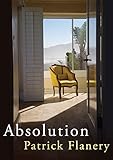
This is my review of Absolution by Patrick Flanery.

Set in post-apartheid South Africa, "Absolution" focuses on the celebrated but prickly novelist Clare Wald, who has permitted the little-known young Sam Leroux to interview her for a biography on the thin basis that "I've read your articles and don't think you're an imbecile".

Flanery succeeds in building up a sense of suspense and secrets to be revealed. Born to a liberal family, how did Clare manage to stay in South Africa and continue to write without falling foul of the authorities? For what sins does she crave absolution? She is clearly haunted both by the death of her sister Nora and the disappearance of her daughter Laura, for whose terrorist leanings she feels in some ways responsible. Does she recognise Sam, and what is his role in her past? What is Sam's ulterior motive in seeking her out? Why do these two find it hard to ask each other the questions which they need answered?

The story unfolds against a background of disappointing yet perhaps inevitable ongoing corruption and violence, with a vivid portrayal of the insecurity felt by whites in modern South Africa combined with a residual excessive privilege, the continual fear of robbery and elaborate security precautions which make them virtual prisoners in their luxurious homes.

The core of the book is an examination of the difficulty of knowing the truth about events, on both a personal and a political level, despite the work of the "Truth and Reconciliation Committee". This is due to people's differing perceptions of the same event, the gaps in memory caused by trauma, the desire to cover one's tracks, or to spare the feelings of others.

What other reviewers have seen as deep and impressive complexity appears to me to be unnecessary convolution. The use of four main parallel plot strands, combined with the device of describing the same event in different ways, makes for confusion at times. There is too much repetition of certain thoughts and memories, whilst details of some key events are left vague – perhaps this is intentional. Ironically, after leaving so much open to interpretation for so many pages, the end seems to spell out too prescriptively what the reader is supposed to think.

The important political and moral discussions between Clare and Sam often seem too wordy, earnest and stilted. I grew tired of Clare's endless tortured dreams and visitations from ghosts. Overall, there seems to be too much reporting or recalling of events, not enough acted out as scenes.

I agree with the reviewer who felt that this first novel has been written with literary awards in mind. The result is a little uneven with some striking, if studied, descriptions alternating with passages which seem slipshod and in need of further editing. I also agree that some of the philosophising about the nature of truth at the end is a little lame.

To conclude on a positive note, for an American to absorb and convey a sense of South Africa, the scenery, vegetation, lifestyle and atmosphere, seems quite an achievement.

⭐⭐⭐⭐ 4 Stars