“The Sea” by John Banville

“A poet is, before anything else, a person who is passionately in love with language.” W.H.Auden

By coincidence, I read this novel immediately after Virginia Woolf’s groundbreaking stream of consciousness, “Mrs. Dalloway”. Despite many differences, and being written close to a century apart, there are striking similarities: both consist largely of flashbacks and reminiscences, with nostalgia for something lost. Although both lead up to a sudden tragedy, it is described more briefly, even casually than many minor incidents and this is because the act of writing about how one observes and experiences the world, and captures thought processes in words, is more important to both authors than plot.

John Banville can “do” plot, since he also writes crime fiction under the name of Benjamin Black, regarding it as a “craft”, “cheap fiction”, but uses his own name to create, as an “artist” works like “The Sea” for which he won the 2005 Booker Prize. His prose is more conventionally structured than Woolf’s but very lyrical, even poetic, original, sharply observed with touches of black humour, and peppered with unfamiliar words like leporine, losel and mephitic as in “blue shale giving off its mephitic whiff of ash and gas”. Some I had to underline to look up later rather than disrupt the flow. Now “mephitic” means foul-smelling or noxious, so why not use a term everyone will understand? I concluded charitably that this was not a sign of pretentiousness, but a genuine fascination with rarely used words.

The novel is narrated by Max Morden, the pseudonym of a man probably in late middle age who has somehow escaped his working class roots, married a woman who inherits the fortune her father made in perhaps questionable business, and become an art historian. None of this rings quite true but what is important is Max’s grief over his wife’s recent death from cancer. Unable to find much solace in his prickly relationship with his daughter, who is also grieving, he seeks relief by taking refuge in “Ballyless”, a small Irish coastal resort. This is where his parents took him to stay every summer (until his father left the family home), and Max made the acquaintance of a more affluent family, the Graces, who rented a house called The Cedars, where rooms are now let out by the landlady, Miss Vavasour.

Aware of the difference between his parent’s cheap wooden chalet and The Cedars, Max is soon infatuated with Mrs. Grace who “walked at a languorous slouch”…and “smelled of sweat, and cold cream, and faintly of cooking fat. Just another woman, in fact, and a mother at that. Yet (to him) in all her ordinariness as remote and remotely desirable as any painted lady with unicorn and book”. He is wary of Mr. Grace who is portrayed as a kind of middle-aged Pan, and “fascinated and at the same time slightly repelled” by the children, because of their relationship as twins, intimate, “like magnets” even when at loggerheads – Myles, who is mute and irritating in his attention-seeking, and Chloe, assertive and unpredictable. Then there is the young woman Rose, employed to keep an eye on the pair.

Apart from Rose, none of these characters is very appealing but Max analyses them and himself, very expressively. You could say that this is like the earlier part of a “coming of age” novel, which carries the reader along, free of any division into chapters. It is not until less than twenty pages from the end that we reach the event, reminiscent of L.P Hartley’s “The Go-Between”, which we realise has haunted Max, all his life, perhaps even more than the death of a wife he did not feel he really ever knew.

As is often the case, the most significant event has an unreal quality,
“All that followed I see in miniature, in a sort of cameo, or one of those rounded views, looked on from above, at the off-centre of which the old painters would depict the moment of a drama in such tiny detail as hardly to be noticed between the blue and gold expanses of sea and sky. I lingered a moment on the bench, breathing.”

So, a novel to be admired for its style, the quality of the writing, the insights which express thoughts one has been unable to articulate so well oneself and the evocative power of past memories. Yet somehow, it may leave one unmoved, I think because one does not relate to the characters sufficiently, and some of the situations seem too contrived.

Mrs Dalloway by Virginia Woolf: provoking thought

Published a century ago in 1925, “Mrs Dalloway” may sound too dated and trivial, in describing a day in the life of Clarissa, a privileged, upper class woman who is preparing for an evening party. With an army of servants to do the actual work, she has time to wander round Bond St. and St. James’s Park, observing with fascination the world recently restored to peace after the ravages of the First World War, yet feeling invisible, continually drifting into nostalgic flashbacks. When young, should she have married Peter Walsh, who challenged her to think and take risks in life, or was she right to become the wife of conventional, materially successful Richard? Had her intense early friendship with a charismatic girl called Sally Seton really been her only experience of true love?

Virginia Woolf has attracted interest as one of the pioneers of “the modern novel”. Certainly, her writing is experimental, varied and original, run through with a common thread of “stream of consciousness” or what she called “free indirect discourse”. Written through a third person narrator, this is the attempt to capture a person’s often unexpected and confused train of thought, the sudden leaps, blank spaces and interruptions. Reading Woolf requires continuous concentration to avoid spinning out of mental control, a passenger clinging on without a seatbelt only to land back unexpectedly on a track of clear, down-to-earth prose. One striking example of this is where Peter Walsh hears a “bubbling, burbling song…. like water spouting…. from a shape like a rusty pump” which turns out to be an old beggar woman to whom he gives a coin – yet this small incident is expanded over several pages to trigger, no doubt, a great variety of responses in different readers.

Woolf liked to complicate the issue by switching the point of view without warning, which serves to supply different interpretations of the same situation. So, partly during a chance visit from Peter Walsh, we see him and Clarissa observing each other, on the verge of regretting what might have been, yet probably indulging in self-delusion. It seems that Woolf was critical of writers like James Joyce, whom she studied carefully, but found wanting, too “confined to the short-term”, in his focus on the thoughts of a single character.

Plot seems incidental, apart from Woolf’s introduction of another, on the face of it very different, character in the form of Septimus Smith, about whom Clarissa is made aware without ever meeting him. He is a bright young working-class clerk who has survived the First World War physically, but is severely shell-shocked. This was a condition little understood at the time, which aroused her concern, perhaps because of the mental problems which enabled her to portray a psychotic state of mind so acutely. Her experiences fed a strong dislike of authoritarian, opinionated medical men, like the oppressive Dr. Bradshaw. Some of the most moving passages are the relationship between Septimus and his sweet young Italians wife Rezia, uncomprehending but empathetic, whom Bradshaw views as an impediment to the young man’s recovery, when the reverse is the case.

Virginia Woolf wrote later that Septimus was Clarissa’s “double”, and she vacillated as to which one of them would finally give up a life which was both loved and an intolerable burden. While able to understand why what we would now call PTSD might drive Septimus to suicide, I could not identify with Clarissa feeling “glad” that he possessed the courage which she lacked to commit an act of “defiance”, and “embrace” death. I’ve simplified her reaction, but it still seems confused when analysed in greater depth. Yet perhaps the mixture of clarity and misperception in her thought processes is the main point.

The novel culminates in a lengthy account of the party, in which Woolf applies her barbed wit, no doubt parodying many of her well-heeled acquaintances: “She must go up to Lady Bradshaw (in grey and silver, balancing like a sea lion at the edge of its tank, barking for invitations, Duchesses, the typical successful man’s wife)….” This, together with the inconclusive and rather bland ending, further obscure the nature of the connection between Clarissa and Septimus. I would judge this a major shortcoming in the novel, if it did not appear arrogant to criticise such an admired work.

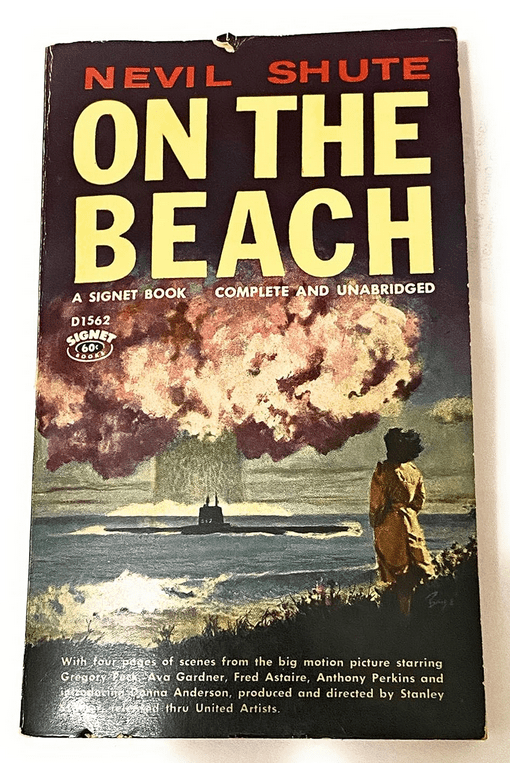
“On the Beach” by Nevil Shute

“This is the way the world ends”

British author Nevile Shute’s classic novel “On the Beach” was published in 1957, the year in which the UK Campaign for Nuclear Disarmament was launched, both reflecting the growing public alarm over the risk of a Third World War likely to involve atomic bombs, as the Cold War came to a head. Having emigrated to Australia, Shute set the novel largely around Melbourne on the far southern coast.

In the opening pages, we may wonder why naval officer Peter Holmes has been unemployed for months, can no longer drive his prized Morris Minor and uses a bicycle with a trailer of his own design to collect milk from a local farm. It soon becomes apparent that during a violent and ill-judged chain reaction in  the previous year of 1962, so many countries  north of the Equator launched nuclear  “cobalt” bombs that virtually no one can have survived in  the entire northern hemisphere. Now there is evidence that massive quantities of deadly radioactive dust are being carried inexorably southwards by the winds – it is only a matter of time before they reach the Melbourne area.

Shute’s style is plain and direct, even plodding, with a focus on minute detail, perhaps a product of his training as an engineer. All of this can combine to create quite a banal effect. However, although perhaps not intentionally, this adds to the sense of people subjected to a threat which often seems unreal and hard to believe.

The novel is essentially about how people react to this type of situation. Peter’s wife Mary lives in a domestic bubble, ever more preoccupied with planning and replanting her garden even when told that everyone in the area has only as a matter of weeks to live. From the outset, her feisty friend Moira seeks refuge in parties and alcohol. Moira’s father continues to spread muck on his farm to make the grass grow evenly and labours to construct a new fence on his land. Peter’s American boss Dwight speaks of his wife and children back home as if they are still alive, buying them presents. Overall, most people seem remarkably passive, perhaps because fatalistic. One could of course argue that to carry on regardless is the best course if there is no alternative. It is only when they actually see others falling ill and dying that some opt to risk their lives in the dangerous sport of motor racing, and the system of law and order finally crumbles

This potentially powerful theme is weakened by being somewhat repetitive, with the lengthy descriptions of the submarine Scorpion travelling thousands of miles under Dwight’s command, tasked with reporting on the scale of visible damage, together with any evidence of human life. Owing to the fear of contamination, only coastal settlements can be viewed through a periscope from a “safe” distance, with shouted messages through a megaphone the sole means of attempted communication.

The sometimes corny dialogue and dated attitudes may be an accurate reflection of life at the time, and inaccuracies over the nature of a nuclear calamity on such a scale are excusable. We may find it implausible that, for months, life in and around the small town of Falmouth seems to carry on much as usual despite a lack of petrol – a shortage of socks being one of the first signs of economic collapse to cause concern.  Yet we need to remember the problems of obtaining information and maintaining communications only a few decades before the largescale development of the internet and mobile phone.

Also, perhaps Nevile Shute’s main concern was to shake readers out of their complacency in ignoring the writing on the wall before it was too late. “On the Beach” has renewed relevance now, when increased instability in the Middle East, and Ukraine and growing tensions between superpowers feed fears of a Third World War and spark concerns over a nuclear calamity.

Despite moments of humour, I found this a depressing read, since from the outset the outcome seems inescapable. It lacks the quality of writing and insights of, for instance, “The Plague” (La peste)  by Camus to which I could relate strongly during Covid, but of course involves a less apocalyptic situation, and concludes on a slightly more hopeful and positive note.

It’s worth knowing that the book’s title was a Royal Navy term to mean “retirement from service”.  It also appears in T.S.Eliot’s poem, “The Hollow Men” which includes the lines:

“In this last of meeting places
We grope together
And avoid speech
Gathered on this beach of the tumid river.                                                                                                                                                                                                     This is the way the world ends
Not with a bang but a whimper”.

This Thing of Darkness by Harry Thompson – A Masterpiece Overlooked as was Fitzroy.

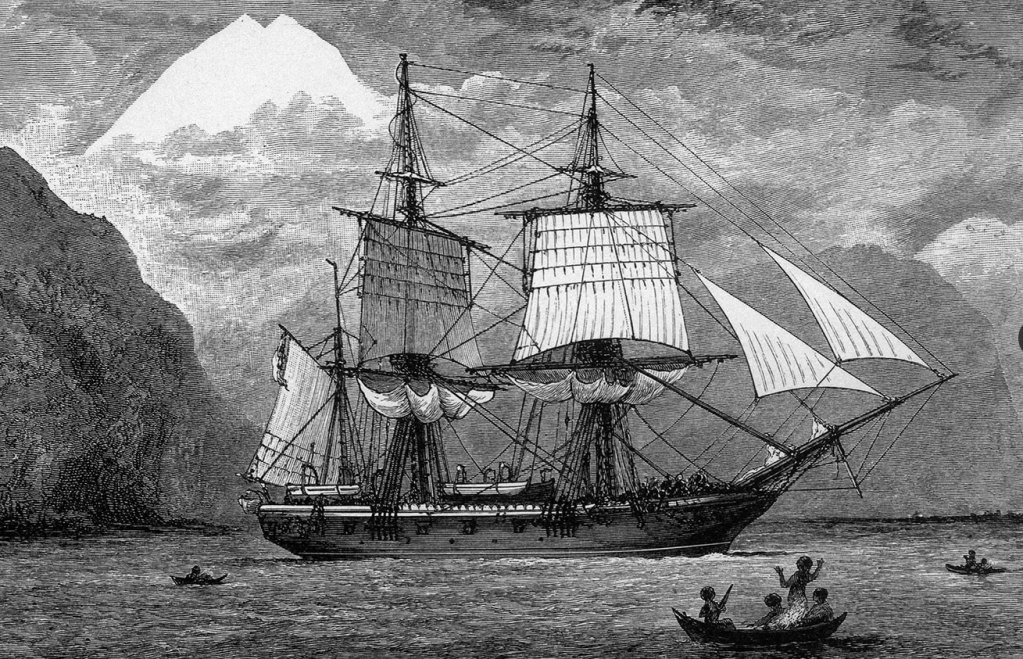
At 750 pages, this is a megatherium of a historical novel, to cite the name of the giant fossilised sloth which Darwin comes across during his five- year exploration of South America while employed as a naturalist aboard the survey ship, HMS Beagle. In the span of almost four decades from 1828, it is hard to keep track of the vast cast of characters, many of whom only appear briefly from time to time. Women play a minor role, and tend to be passive stereotypes, but that reflects life at the time.

Although Darwin is the most famous, the focus is on Robert Fitzroy, appointed Captain of the Beagle at the age of twenty-three, not only for his aristocratic connections, but also his brilliant performance as a student at the Royal Naval College. His first task is to complete the survey of the complex coast of Patagonia, with the harsh climate which drove his predecessor mad. The novel brings home the enormity of the task of mapping a continent with the limited equipment available, the cultural gulf between the Europeans and the various tribes they encounter, and the human cost of the well-intentioned desire to achieve “progress” complicated by the innate human drives of competition, domination and greed.

A central theme is the relationship between Fitzroy and Darwin, forced into close companionship for months on end in the cramped confines of a sailing ship. A bone of contention between them is the explanation of the variations in the creatures observed on their travels, whether alive or preserved in layers of exposed rock. Initially destined to be a clergyman, and troubled by his conclusions, Darwin finds it increasingly hard to deny the existence of some kind of evolution, as we now call it. Fitzroy, despite his analytical mind, cannot give up his belief that surviving species remain as they were first created by God, with only limited changes through adaptation to different environments.

Frustrated by the government’s refusal to fund further voyages of the Beagle, he resolves to finance them himself, running up excessive debts in the process. Constantly dealing with dramatic changes in the weather, he begins to see patterns, and while employed in later life at the Board of Trade sets up a weather forecasting system to issue storm warnings which save lives. Pressure from the owners of fishing fleets, concerned by the loss of earnings when forecasts keep their boats in port, lead to abandonment of then daily weather reports. This proves the last straw for a man who has suffered throughout his adult life from periods of depression.

At times of stress, Fitzroy suffers brief but severe manic episodes, which put both him and his men at risk. At a time of such prejudice against madness, it is surprising that he is not demoted for that reason. The extreme loyalty he arouses in his crew may partly explain this. The practice of sending little boys, as young as ten (or twelve in his case) off to sea to learn the ropes may have aggravated his instability.

Darwin is more balanced, and ultimately more successful. Yet he is presented in an unflattering light. His fellow officers on The Beagle generously bring him examples of unusual creatures they have found, but when these are shipped off to England, it is Darwin who receives all the credit, never acknowledging their contribution.

This novel is based on such detailed research on sailing 19th century ships in often atrocious weather conditions, and on every aspect of the varied landscapes and society of South America at the time, as well as the contrasting vivid portrayal of London and the rural south of England, that I imagined the author must be some nerdish eccentric. In fact, Harry Thompson was a highly successful television producer and comedy writer, who produced, for example, “Have I Got News for You”. His sense of farce pervades this book with flashes of irony and dark humour which lighten the theme.

By the age of 45, he had also found time to write a string of books, including biographies and this debut novel, “This Thing of Darkness”, which arguably deserved to win the Booker Prize rather than merely be longlisted. Ironically, the winner was John Banville’s “The Sea”, so different that the two novels seem to defy comparison in the same contest.

What might Harry Thompson have gone on to achieve, had he not died prematurely of lung cancer, never having been a smoker? It is a pity that many people will lack the time to embark on this book, or be deterred by its length. Reading it proves an absorbing, immersive experience, creating a powerful sense of many different places, and enabling us to identify with characters despite the accepted attitudes, value and knowledge of their day. Admittedly , in some dramatic scenes of near-death experiences, the derring-do may seem overdone; otherwise, the tedium and hardship of long days at sea, or struggling over unfamiliar, harsh terrain feels oppressive, but authentic. The political corruption of the period is all too similar to that of today – plus ça change!

Thompson really succeeds in bringing a fascinating period of history alive. This novel is a remarkable achievement, moving and informative, that will linger in the mind.

“In a Summer Season” by Elizabeth Taylor: Caught on a cultural watershed

Although still in print, the novelist Elizabeth Taylor seems to be generally overlooked, and perhaps on the brink of being forgotten unless some director is inspired to make a film of one of her books, as was the late Dan Ireland for “Mrs Palfrey at the Claremont” in 2006, establishing this as perhaps her best-known work. Taylor was probably resigned to be eclipsed from the outset by the coincidence of sharing her name with the film star who shot to fame in “National Velvet” in 1944, shortly before the publication of the first of the author’s twelve novels, “At Mrs. Lippincote’s”.

Despite having been described as “her most sex-infused work”, Taylor’s eighth novel, “In a Summer Season”, published in 1961, reminds me of Jane Austen as she might have written if living in the 1930s-1950s. Although the tale switches between arguably too many points of view, Taylor’s heroine is wealthy forty-something Kate Heron, recently widowed after a happy marriage, who has set tongues wagging in the local community by marrying Dermot, handsome and charming, but ten years her junior, and unable to hold down a job.

The main characters are not quite as aristocratic as Austen’s, although some casually count the odd titled friend, and Kate’s former father-in-law, the crusty Sir Alfred, has been knighted for his rags-to-riches success as a factory owner. They tend to fall into two groups: well-heeled and living on unearned income on one hand, on the other, like retired teacher Aunt Ethel, or Kate’s new husband Dermot, ruefully or resentfully aware of being obliged to trade on the good will of richer relatives.

While Austen’s focus is on young women’s attempts to find suitable husbands in the confined world of country houses and the Bath Assembly Rooms, Kate occupies a spacious house with a telescope providing a view of Windsor Castle, a live-in cook, daughter at boarding school and son moodily learning the ropes in the factory he is expected to inherit. The main issue is whether everyone is correct in assuming that her marriage to Dermot is doomed to fail, the question being when and how. Combined with sub-plots, this may all sound too trivial and dated to be worth reading. Yet, as with Austen, what raises this novel above unendurable banality is Taylor’s skill in combining comedy, acerbic wit and poignancy, although her acute observations are expressed through the thoughts and dialogues of her characters rather than the explanations of an older-style, sometimes intrusive narrator.

Another difference is that Taylor is more experimental in deliberately playing down plot narration , preferring to focus on particular scenes. So it is that, for instance, the two major events in the plot are only referred to, or inferred – in fact never fully explained – after they occur. Instead, the detail lies in apparently minor scenes, like Kate’s visits to the hairdresser “Elbaire”, the uncharitable atmosphere at the sorting of clothes for the village church jumble sale, or the accepted ritual of “seeing off” the children at Waterloo Station for the autumn term return to boarding school, with the firmly repressed fleeting doubts as to the justification for sending one’s offspring away in this fashion.

From this approach, we learn a good deal about the characters’ thoughts, the degree of self-delusion, and their views on each other – generally, they are more clear-sighted about the latter than themselves. Taylor also conveys the behaviour and outlook of people living in the 1950s very vividly, although she confines herself to a narrow and privileged section of society. Of course, the world has changed so much since then, that it may be difficult for readers under say forty to feel engaged.

I am particularly intrigued by the fact that this book was published in 1961 at a time of sea change, when the author could have gone either way between a “genteel” novel which formed a natural progression on from Jane Austen, and the “kitchen sink realism” of working class drama, with the abandonment of conventions. Elizabeth Taylor chose to “play safe” and stay “in line” with writers like Barbara Pym, rather than join the ranks of the “ground-breaking” works like John Osborne’s “Look Back in Anger” (1956), Shelagh Delaney’s “A Taste of Honey”, or Lynne Reid Banks’ “The L-shaped Room” (1960). Admittedly, the acute sexual desire which is what attracts Kate to Dermot is described, but she remains essentially conformist, expecting to live as an appendage to a husband, accommodating his wants, rather than seeking independent self-fulfilment. The only somewhat caricatured “modern” touch is provided by Araminta, a neighbour’s uninhibited daughter who is training to be a model in London.

Although she lived into the 1970s, perhaps “The Swinging Sixties”, the pill and certainly the Sexual Discrimination Act, to name a few changes, came a little too late for Taylor to make the adjustment to an edgier style. However, it seems that in fact she was quietly radical in her thinking. It comes as a surprise to learn that, as a young woman, she belonged to the Communist Party, and she remained an atheist and a Labour voter in later life. So, it must have been a conscious choice to omit any evidence of this from the novel, apart from Kate’s atheism which did not prevent her from making wedding “vows before the God she does not believe in, without the slightest hesitation”, to quote Aunt Ethel.

It is a fair observation that a psychological study of privileged people can be as moving and insightful as one about those struggling in poverty, and Taylor does not shy away from displaying a capacity for ruthlessness when it comes to achieving her chosen (if somewhat abrupt and contrived) ending.

What is certain is that, if alive today, Elizabeth Taylor could have written some gripping soap operas.

“After Leaving Mr. Mackenzie” by Jean Rhys: a talent to give consideration to an apparently wasted life

Jean Rhys is best known for “The Wide Sargasso Sea”, which reimagines and brings to the fore a sympathetic portrayal of the a character who plays a minor but menacing part in “Jane Eyre”: “the mad woman in the attic”, Mr Rochester’s wife “Bertha”. I was unaware that this was written when Rhys was in her seventies, bringing a fame and much-needed income which she felt had come too late. Lack of money and being “let down” by men in her early adult life, together with the experience of being an outsider, as a woman brought up in the West Indies, but moving to England and Paris, must all have provided material for her early novels, such as “After Leaving Mr. Mackenzie”, published in 1931 when Rhys was about forty.

In 1920s Paris and London, in a world recovering form the First World War but drifting into recession, women had limited opportunities, being expected to follow the conventional path of marriage and children. Although we have to piece together the backstory of the anti-heroine Julia Martin, it is clear that she has chosen not to conform, marrying a man with whom she can drift round Europe, but not rely upon to provide for her. Since leaving him, she has resorted to scrounging off a succession of former and new, casual lovers. When the latest of these, a certain Mr. Mackenzie decides he has salved his conscience and paid her off with a sufficient number of weekly allowances, she turns to her increasingly unsupportive relatives: the dutiful sister embittered through caring for their dying mother, and a sanctimonious uncle.

The previous death of Julia’s young child may be seen as an excuse for her behaviour, although Jean Rhys does not explicitly suggest this, post-natal depression and concern over “mental health” not featuring much in the 1920s. From our C21 stance, Julia’s apathy, failure to manage her affairs, and the blunting of her sadness with wine and brandy may test our patience. I am not sure at what point Jean Rhys became the impoverished alcoholic with the personal experience to convey both Julia’s weakness and vulnerability, and the reactions it evokes in others.

Yet, although it is undeniably bleak, and if it had been much more than a novella in length, I would have been unlikely to finish it, I was carried along by the authentic ring of the author’s clear, spare prose, touched with wry humour. Despite the radical change in life styles, the novel seems modern in its directness. It enables you to visualise and sense interwar Paris and London, and to enter the shifting thoughts of all the flawed characters involved. Jean Rhys has the skill and humanity to enable us to empathise with them all to varying degrees, although her focus is on Julia, who observes her surroundings acutely, but blanks out the bigger picture, rather than face up to the practicalities of improving her situation. In a society in which a woman’s looks count for too much, the inevitable fading of Julia’s youthful appeal is for her the last straw.

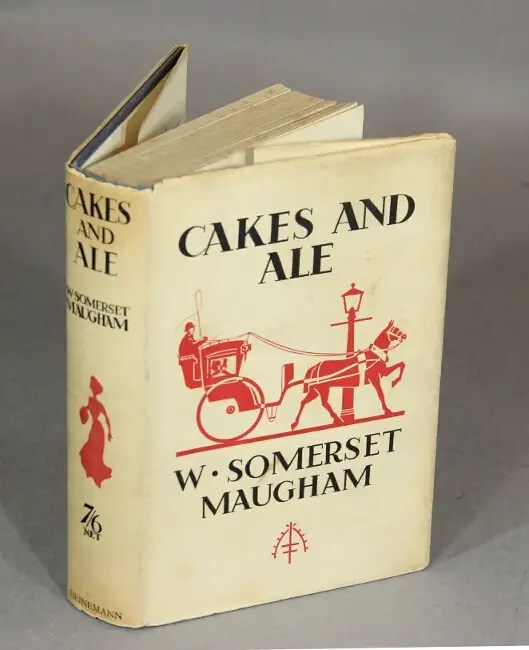
Cakes and Ale by W. Somerset Maugham – Fickle fame

Said to be the most highly paid novelist in the world in the 1930s, W. Somerset Maugham’s popularity has withered to the extent that he seems on the verge of being forgotten. Judging by “Cakes and Ale”, this would not have surprised him, for the novel is a satire on his literary world as he saw it, in which an author’s success depended, not on the merit of his books, but rather the arbitrary support, or rejection, of influential sponsors and critics. The reputation of the most highly regarded writer was likely sink into oblivion on his death.

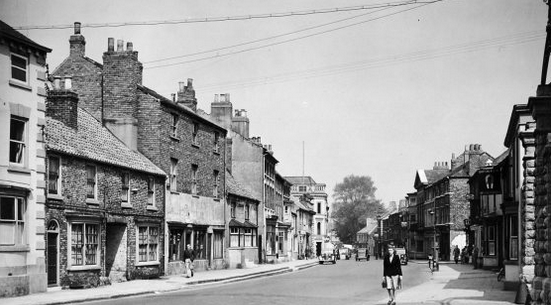
Published in 1930, when Maugham was in his fifties, “Cakes and Ale” came to be his favourite book, perhaps because of its strong autobiographical element, since he draws on his own experience as an orphan brought up by stuffy relatives in Whitstable, and later as a medical student until his success as a writer enabled him to give this up.

The book caused an uproar when published since it seemed to be a thinly disguised  parody of Thomas Hardy and his relations with his first wife, used to portray the fictional Edward Driffield, who comes from humble origins, burdened by an unfortunate marriage to Rosie, a “common” and none too faithful barmaid. For this, he was accused of “trampling on Thomas Hardy’s grave”.  He was also condemned for too obviously using the writer Hugh Walpole, supposedly a close friend, as the model for the self-serving writer Alroy Kear, who agrees to write a sanitised version of Hardy’s first marriage for his widow Frances to get published.

Maugham denied that any of this was the case, claiming that Driffield was inspired by an obscure writer whose name he couldn’t recall who came to live in Whitstable.  Alroy Kear was a pastiche of several writers while Rosie was a character who developed in his mind over many years, perhaps triggered by the “obscure writer’s” wife, shunned in the prim world of Whitstable, although Rosie seems to have had more of the nature of Maugham’s one-time lover, the actress Ethelwyn or “Sue” Jones, whom he loved mainly because “she was beautiful and honest”.

So the criticism that Maugham was “quite unable to work with someone actual to work upon” seems justified, although the models used may not have been correctly identified.

I found the descriptions of class-ridden, gossipy, judgemental late C19 Whitstable, where everyone knew each other’s business, quite evocative, particularly as Maugham shows how it has evolved over time when he revisits it decades later.  Life as a poor medical student in London is also well-drawn. The dialogues reveal Maugham’s sharp, sardonic humour and talent as a playwright, although it is never quite clear to what extent he shares the snobbery and prejudices of most of his characters, apart from Rosie.

By contrast, the lengthy analysis of the literary world seems more like a tedious essay, with Maugham over-grinding an axe in an often pompous and stilted style. Very little happens in a book which would have made more of an impact as a novella, once Maugham decided it could not be contained in his original plan for a short story.  Styles have clearly changed, but the plot lacks structure, as Maugham’s creator rambles through his reminiscences.

Yet every now and again, one is struck by some insight into the past: on a visit to Whitstable after decades of absence, “Knowing English inns, I ordered a fried sole and grilled chop”. In a chance meeting with the local doctor with whom he had gone to school, Maugham reveals how the status of the medical profession has changed as he observes: “I judged from the look of him that he had lived, with incessant toil and penury. He had the peculiar manner of a country doctor, bluff, hearty and unctuous. His life was over. I had plans…I was full of schemes for the future…Yet to others I must seem the elderly man that he seemed to me. I was so shaken that I had not the presence of mind to ask about his brothers whom as a child I played with….”

Then there is the crux of the tale in which Maugham “begins to meditate upon the writer’s life”, which in fact he has been doing quite a lot throughout the book. “It is full of tribulation. First he must endure poverty and the world’s indifference, then having achieved a measure of success, he must submit with good grace to its hazards. He depends on a fickle public”. And so on…. “But he has one compensation. Whenever he has anything on his mind…..in short any emotion or any perplexing thought, he has only to put it down in black and white, using it as the theme of a story, or the decoration of an essay, to forget all about it. He is the only free man”.   

If Maugham had developed this conclusion more fully, yet concisely, I would have found it more deserving to be regarded as a classic.

“Three Hours” by Rosamund Upton: Missing the Mark

Based on the 1999 Columbine High School massacre in 1999, the location is a private school in rural Somerset. Perhaps because the author is a former scriptwriter, this novel has a visual, filmic quality, being presented in mostly short scenes, continually switching into flashbacks to fill in the details of various characters. This became overdone at points where the book degenerates into notes – such as a list of newspaper headlines likely to stir up prejudice against Muslims in Britain, or of Trump’s inflammatory tweets.

The novel opens dramatically following the shooting of the headmaster. We are given his increasingly confused thoughts, interspersed with those of the pupils who frantically try to save him, and other staff members taking refuge in various parts of the site, too scared to move. However, I was disappointed that the psychology of the two perpetrators of the crime is never developed and explored sufficently.

In focusing in a period of just three hours in the school morning, the author builds up the tension, as the killer’s footsteps can be heard pacing up and down the corridor, pausing outside the door which cannot keep him (or her) out for very long.

The geography of the site is described in painstaking but hard to visualise detail. It is clearly complicated, with buildings like the junior school or the pottery room set apart – as proves necessary for the plot, but I could have done with the map which the authors of many such novels tend to provide.

The idea of confining the story to a timespan of three hours is interesting, and it is quite tightly plotted, but I found the style too sentimental at times, even “soft-centred”, and so incongruous for such a grim situation, although I did not think it was deliberately intended to create a jarring contrast.

One’s view of a book is always partly a matter of taste, and this one is very popular. However, I was put off by the bleak theme, some overly contrived scenes, not least some admittedly ingenious aspects of the climax, and too shallow treatment of what motivated the villains of the piece.

“Red Sky in Morning” by Paul Lynch: brutal brilliance

Set in C19 rural Ireland and America, this is the tale of Coyle, a poor, uneducated man who does not baulk at acts of violence when faced with injustice, or the need to survive, but is also gentle in his love for his wife and his little daughter. After accidentally causing the death of the landowner’s malicious son Hamilton, responsible for serving him notice to quit for no apparent reason, Coyle is forced to go on the run, with the foreman Faller and a couple of henchman in hot pursuit. It is unclear why Faller has such an implacable desire to avenge the death of such an unworthy character, nor what may have moulded the wily, vindictive +Faller into a personification of evil. So as Coyle endures the rigour of an Atlantic crossing, and the hardships of life in a gang of exploited Irish immigrants constructing an American railroad, based on real events at “Duffy’s Cut” in 1832, we know that the two men’s paths will ultimately cross again.

What may sound like a familiar, even hackneyed plot, is transformed by the power of Paul Lynch’s prose, remarkable in its original and lyrical stream of consciousness. Like poetry, almost every paragraph repays reading twice or more to absorb and reflect upon it. This often runs counter to the urge to turn the page not only to discover how events will turn out, but perhaps also to escape exposure to their too frequent gratuitous violence and bleakness. The latter are sometimes eased by gentle moments, when Coyle recalls his wife, or fingers the ribbon which is his only keepsake of his daughter. Yet overall, the acute observations and insights tend to be overwhelmed by scenes of brutality or acute suffering.

Quotations out of context are unlikely to do justice the writing, but here are brief descriptions of a storm and its aftermath.

These words evoke vivid images and authentic emotions, drawing on the author’s experience as a film critic.

Although I have yet to read “Prophet Song”, Paul Lynch seems to be a worthy winner of the Booker Prize for a quality of writing fed by his copious reading since early childhood, and very much in the vein of Cormac McCarthy, but with his own twist, the articulacy and skilful way with words found in so many Irish writers. “Red Sky at Morning” contains these ingredients, although being his first published novel, it may not be the best. Perhaps at times, the verbal pyrotechnics are a little too contrived, but this may be inevitable if a writer is prepared to take risks, pushing the limits of what words can convey.

It’s interesting to compare his style with that of Graham Greene, who aimed to achieve in his writing “a kind of verbal transparency which refuses to allow language to become a character in its own right” – hence the sentences which have been described as “lean and lucid”. In “Red Sky at Morning”, the words seem almost an end in themselves. The conclusion to be drawn seems to be simply, as Coyle’s wife reluctantly observes, that “all you can do in this life is to learn to accept loss”. Combined with the ambiguous, incongruously upbeat “Epilogue”, this left me dissatisfied. In view of the current state of the world, perhaps the author is justified in what he himself has called his “tragic world view”, but while having huge admiration for his talent, this is hard to take in large doses.

“The Quiet American” by Graham Greene: mixed motives

Fed by fear of the draft which deterred young Brits from going to America, and a spate of excellent but harrowing films, my memories of the Vietnam War are limited to the doomed efforts of the American government to drive the Communists out of the north in the 1960s. In fact, this war lasted from 1955-75, and was preceded by the shorter first Indo-China about which my knowledge is very shaky. This is the period in which Graham Greene sets his classic, “The Quiet American”, to which I turned with a huge sense of relief after struggling through a few superficial, over-hyped modern novels.

The narrator is Fowler, a cynical British journalist, although we never quite learn what disappointments have driven him so far from his native land. He finds solace in opium and his beautiful young mistress Phuong – a relationship which may seem exploitative to readers seventy years on. He reports objectively on the attempts by the French to prevent the insurgency of the Communist Việt Minh into their Far Eastern colony, showing great foresight in observing that the increasing American involvement will come to nothing, and “in five hundred years there may be no New York or London, but they’ll be growing paddy in these fields, they’ll be carrying their produce to market on long poles wearing their pointed hats”.

Fowler is therefore irritated by what he sees as the naivety of Pyle, an idealistic young American, newly arrived in Vietnam to work for the Economic Aid Mission. It becomes apparent that he may even be a menace, through his desire to meddle in the situation via direct action, by promoting a “Third Force”, as advocated by a writer he much admires.

As Fowler tries to warn him, “We are the old colonial peoples, Pyle, but we’ve learned a bit of reality, we’ve learned not to play with matches. This Third Force – it comes out of a book, that’s all. General Thé’s only a bandit with a few thousand men, he’s not a national democracy”.

Fowler’s growing animosity is fuelled by Pyle’s infatuation with Phuong, whom he wishes to marry and save from what seems to him a sad fate if she stays with Fowler – too old and separated from a wife who refuses to divorce him.

It is not a spoiler to reveal Pyle’s murder, which is reported at the outset. The intrigue lies in the revelation of how this comes about, and the question of the extent of Fowler’s involvement in it, and of the degree to which an action can be justified if the motives are suspect. This psychological drama plays out against vivid images of life in Vietnam of the 1950s, from the cities to the tense encounters with the enemy in the countryside. As a reader, one can simply be absorbed in Fowler’s personal crisis, without always being entirely clear about the various power groups involved. On the other hand, the novel is an opportunity to understand a past conflict more clearly, and consider parallels with the present.

In around 180 pages of tight prose peppered with wry observation and convincing dialogue (except perhaps when Fowler is telling Pyle about love while the two men take refuge in a watch tower), Greene transports us into a different world. To absorb all this, the book needs to be read slowly, more than once. It is a masterpiece, perhaps in danger of being forgotten beneath piles of more recent mediocre undemanding fiction.